Finite Games vs. Infinite Games
Infinite games have no final victory. Why health, relationships and personal growth call for persistence rather than a race to the finish.
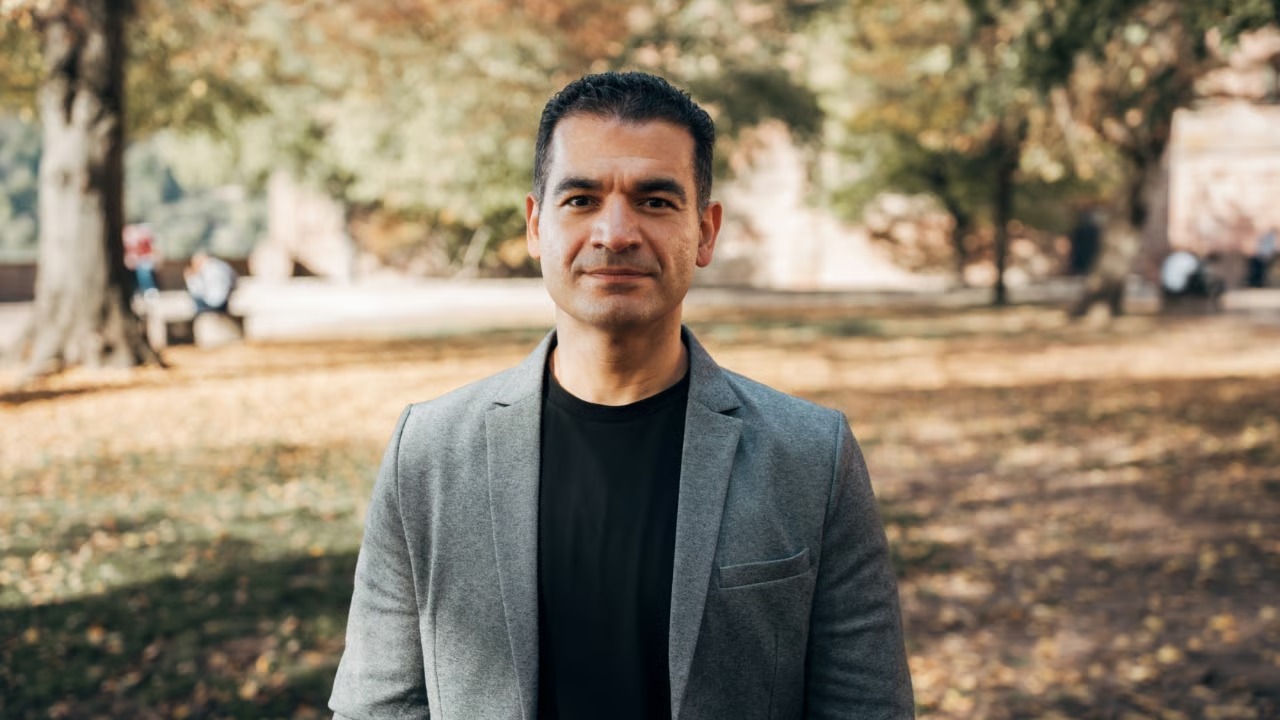
Finite Games and Infinite Games in Everyday Life
Finite Games vs. Infinite Games is one of the most powerful concepts for understanding why we fail in certain areas of life despite giving it our all. We all know finite games: a football match, a degree, a project. There’s a start, an end, a winner, and a loser. But what happens when we apply this way of thinking to areas like health, relationships, or personal development? In episode 97 of Project Mindset, Reza Mehman explains why this is a huge mistake. He shows why an infinite mindset is far more beneficial in many areas of life than constantly striving for a finish line. This episode provides a shift in perspective that can sustainably change how you approach sports, relationships, and your career.
Infinite games: the episode in brief
In one sentence: Health, relationships and careers have no final winner or endpoint. Treating them as finite games can lead us astray.
Short summary: Reza Mehman distinguishes between finite games (games with clear rules, a start, and an end) and infinite games (games without a winner or endpoint). The problem for many people is that they transfer the finite game mindset to areas like health, relationships, and career. The solution lies in developing an infinite mindset, where the focus isn’t on winning, but on staying in the game sustainably.
Detailed summary: In this episode, Reza Mehman explains the concept of finite games versus infinite games. Finite games, like sports or education, have clear rules, a starting point, and an endpoint. Infinite games, like health and relationships, function completely differently: there is no winner, no loser, and no endpoint. Trying to “win” an argument in a partnership is detrimental to the relationship. Instead of focusing on short-term sprints, one should act in a way that allows for long-term, sustainable progress.
Context: Who, What, Why
Who is speaking: Reza Mehman, host of the Project Mindset podcast, shares his personal experiences and reflections on the topic of finite and infinite games.
What is it about: This episode explores the concepts of finite and infinite games and reveals why we apply the wrong mindset in many areas of life. Reza opens the episode with an anecdote about YouTuber Frank Krueger, who consciously holds back professionally but never in his family life.
Why is this relevant? Many people set goals with a defined end date and then wonder why they relapse after achieving them. This concept helps develop more sustainable strategies for health, relationships, and career.
Three key questions of the episode:
- In which areas of life does a finite game make sense, and in which does it not?
- Why is it harmful to treat relationships and health like a competition?
- How do you develop an infinite mindset that focuses on sustainability rather than short-term victories?
Table of contents
- Introduction – Why the winner’s mindset doesn’t work everywhere
- Summary – The episode in one, three, and five sentences
- context – Background information on speaker, topic and relevance
- Table of contents – Overview of all sections
- Topics and classification – The central themes of the episode
- Key messages – Key findings at a glance
- Frequently Asked Questions – Answers to the most important questions
- Highlight quotes – The most defining statements from the episode
- Transcript – Full transcript of the episode
- Keywords – Relevant search terms and tags
- Names and terms – Index of important terms and people
- Quotable passage – For sharing and quoting
Topics and classification
1. Finite Games vs. Infinite Games als Denkmodell
The episode’s central concept: Finite games have clear rules, a start, and an end. Infinite games have no winner and no conclusion. The problem arises when the wrong mindset is applied to the wrong area.
Keywords: Finite Games, Infinite Games, Mindset, finite games, infinite games
2. Health as an endless game
Reza explains why short-term sprints in sports and nutrition don’t work in the long run. Anyone who works solely towards a goal like “10 kilograms in six months” loses motivation after reaching that goal. The yo-yo effect is a typical result of finite-game thinking in the health sector.
Keywords: health, sustainable weight loss, yo-yo effect, sports motivation
3. Relationships and the Infinite Mindset
In partnerships and friendships, there are no winners. Always wanting to be right in arguments damages the relationship in the long run. The key is to act in a way that allows the relationship to continue and grow after a disagreement.
Keywords: relationship, partnership, discussion, conflict resolution
4. Setting priorities: The story of Frank Krueger
YouTuber Frank Krueger deliberately holds back in his career, but never when it comes to his family. This anecdote illustrates how one can consciously decide which areas of life are non-negotiable.
Keywords: Prioritaeten, Familie, Work-Life-Balance, Frank Krueger
5. Career and Purpose as an Endless Game
An infinite mindset can also help at work. Focusing only on a target can make us lose sight of our wider purpose. Instead, one should work in a way that allows them to learn something new every day and maintain the enjoyment of the process.
Keywords: career, purpose, lifelong learning, profession
Key messages
- Finite games have clear rules, a start, an end, and a winner. Infinite games have no end and no winner.
- The problem for many people is that they transfer the mindset of finite games to infinite games.
- Health is an infinite game: those who only work towards a short-term goal and then stop, fall behind.
- In relationships, there is no winning or losing. Whoever tries to “win” an argument will ultimately lose the relationship.
- It makes more sense to train and eat in a way that you can maintain sustainably, rather than doing short-term sprints.
- Frank Krueger shows: You can put the handbrake on at work, but never at home with your family.
- An infinite mindset also pays off in one’s career: learning something new every day, instead of just working towards a final goal.
- One should be aware of which games in life are finite and which are infinite, and act accordingly.
- Consistency beats intensity: It’s better to do a little something every day than to sprint and then do nothing.
Frequently Asked Questions
What are Finite Games and Infinite Games?
Finite games have clear rules, a defined start and end point, and winners and losers. Examples include football matches, exams, or projects. Infinite games have no clear end point and no winner. Examples include health, relationships, and personal development. The goal in infinite games is to stay in the game as long as possible.
Why is health an infinite game?
Health has no end point. While you can set a short-term goal, like losing 10 kilograms in six months, you have to keep going after reaching that goal. Those who stop risk a yo-yo effect. Therefore, it’s more sensible to design your exercise and diet in a way that you can maintain sustainably and permanently.
Why shouldn’t you try to win in relationships?
Relationships are like infinite games. Always wanting to be right in an argument and making your partner feel like a loser will damage the relationship in the long run. The goal of a relationship is to nurture it and elevate it to a higher level, not to win individual arguments.
What is the Infinite Mindset?
The Infinite Mindset means not striving for a specific endpoint or victory, but acting in a way that ensures long-term, sustainable participation. It’s about consistency rather than short-term sprints, about perseverance rather than winning.
How can you apply the Infinite Mindset in everyday life?
You can apply the Infinite Mindset by consciously asking yourself: Is this area of life a finite or an infinite game? With health, you train in a way that allows you to maintain it long-term. With relationships, you act in a way that allows the relationship to continue after a conflict. In your career, you work in a way that allows you to learn something new every day and never lose the enjoyment.
Who is Frank Krueger and what does he have to do with this topic?
Frank Krueger is a YouTuber with a DIY channel who used to be a teacher and made the leap to content creator. He was a guest on episode 33 of Project Mindset. His example demonstrates the Infinite Mindset in practice: He holds back professionally to protect his creativity, but never when it comes to his family.
What is the difference between sprint thinking and infinite-game thinking?
Sprinting means pushing yourself to the limit for a short period and then easing off. Infinite-game thinking means staying consistent and sustained without overexerting yourself. Reza emphasizes that, for example, you shouldn’t completely exhaust yourself during exercise and then do nothing for two weeks, but rather do something moderate every day.
Highlight quotes
“In many areas of life you can put on the handbrake, but he will never do it in the family sphere.”
– Reza Mehman (about Frank Krueger)
“Infinite Games is basically about staying in the game for as long as possible.”
– Reza Mehman
“Our problem, and I believe this is a problem for many people today, is that we are transferring the mindset of a finite game to an infinite game.”
– Reza Mehman
“There is no winning or losing. It’s an endless game. The whole point of a relationship is to continue that relationship.”
– Reza Mehman
“I train in this way, or I act in this way, I eat in such a way that I can sustainably persevere, because there is no winner in this case.”
– Reza Mehman
“I work in such a way that it becomes an endless game for me and I simply never lose the fun of this game.”
– Reza Mehman
“We should be aware of which games in life are finite and which games are virtually infinite, and I then act within this context.”
– Reza Mehman
The full conversation
Hi everyone and welcome to Project Mindset, the channel for all those who know that with the right mindset, anything is possible. Before I get to today’s podcast topic, I have a little story to tell. I recently met up with Frank Krüger again. He’s the YouTuber I had on my podcast a while back. That was episode number 33. We had a really interesting conversation. Basically, we talked about his life story, how he started out as a teacher and then made the switch to becoming a YouTuber.
He has a DIY channel. Feel free to check it out. Like I said, it’s episode number 33. And back then we talked a lot about family, about the whole mindset thing. I’d say it’s about making an uncertain decision from a position of security and actually going through with it. So, the switch from being a teacher, essentially a civil servant—what I’d say is probably the most secure job in the world, teaching in Germany—to becoming a YouTuber. Probably one of the most uncertain jobs there is.
And back then, we talked a lot about this topic, but also about family. Family is hugely important to him. He said that almost everything he does is aimed at creating the life he wants for his wife and children. And now, since we met recently, we gave each other some updates.
Consciously reducing one’s workload
He told me that making YouTube videos as a content creator put him under a lot of stress. He constantly had to produce new videos and other content. And that he’s now slowing down a bit, or rather, putting on the handbrake, so he doesn’t lose his creativity. And in that context, he said something very interesting, which is what I’m getting at.
He said that in many areas of life you can put on the handbrake, but he will never do it in the family sphere, meaning, for example, when it comes to his kids or time with his wife, he will never put on the handbrake there, but he has no problem saying that he is now doing a little less, for example, in his job as a YouTuber, as a creator, and will probably earn a little less as well, but he will never do it in his private life.
I found that super interesting, I definitely took note, and I wanted to share it with you briefly before I start today’s podcast. Maybe it will get you thinking, like it did me. Great, today’s podcast episode is actually about the following. I’ve called it Finite Games versus Infinite Games, meaning finite games versus infinite games. What I mean by that is, we’re all familiar with finite games. These are things that have a starting point and therefore an end point.
What makes a game finite
This could be a completely normal football match, a basketball match, so in the realm of sports, for example, there is a start and an end, there is a winner, there are rules and so on and so forth that one can follow, and in the end, after a certain time, the game is over and someone has won or someone has lost..
Applied to other areas, even our education, whether it’s high school graduation, university studies, or whatever, has a start somewhere, and you work towards a certain end to achieve a certain result, and then it’s over. This permeates pretty much, I would say, most areas of life, such as sports, education, and so on, projects that you’re trying to complete, or events that you’re planning. It’s also reflected in our mindset: I’ll work until retirement, and then work is over. So here too, people want to do something for 40 years before they have to stop working.
In these finite games, it looks like this: there’s a final point, and after that, it doesn’t continue. It’s a finite game, and I think many of us have internalized that concept too much, because we’re now applying it to many other areas as well.
Infinite games have no fixed end point.
There are also Infinite Games, meaning games that last forever. In these, there is no winner or loser, no end time. Of course, realistically, there is an end time for our lives, but if you observe the course of life, there is no game, so to speak, or point in time where you can say, for example, about health, “I’ve won the health game,” or relationships are another very good example: “I’ve won the relationship game.”
Infinite Games is basically about staying in the game as long as possible, so to speak. If I relate this to the topic of health, I can of course say, “I want to lose 10 kilograms in the next six months, get physically fit, and also pay attention to my diet, and so on and so forth.”
But what happens after the six months, when I’ve reached my goal? Have I won then? Maybe I’ve won this short sprint, but after that I actually have to keep going, because otherwise I’ll fall back again, and in the end, a yo-yo effect might be much worse than, for example, staying consistently at a relatively high level, i.e., weight level.
Why a goal doesn’t have to be the end
Yo-yo dieting can also be unhealthy. That’s the point with these “infinite games,” like the ones you have in your health, for example. It makes no sense to work towards a goal and then say, “That’s it, I’ve won, I’ve achieved it, and now I’m not doing anything anymore.” A good example is the realm of relationships in life—partnerships, marriages, and so on. There’s no real winning or losing there. So, if I have a discussion with my partner, and I try to reach a conclusion where I “win” the argument, thinking I was right and my partner was wrong, and therefore I’ve won, that’s fundamentally pointless because there is no winning or losing.
It’s a never-ending game. The whole point of a relationship is to continue it. That means, when I think about topics like relationships, I have to make decisions and act in a way that, even during arguments, doesn’t lead to a breakup, or to making it impossible to look each other in the eye, or leaving me as the winner and the other person as the loser. Ideally, you want to stay in the relationship; that’s why it doesn’t make any sense.
Continued
That means you have to consider it an infinite game. And our problem, I think for many people today, is that we transfer the mindset of a finite game to an infinite game. This happens in many situations. I sometimes catch myself doing this, even with good friends, for example. I very rarely argue with good friends, but I sometimes catch myself thinking, “Ah, now I really want to be right.” Yes, in the end I might be right about the content, but if the relationship with a friend suffers because, for example, we’ve had an argument of some kind, then it just doesn’t make any sense.
That means you can act and speak in such a way that after a discussion, things can continue normally. This relationship, this friendship, the romantic relationship, or whatever it may be. And that’s the point: not always trying to put an end to something. Especially with topics like health and relationships, it makes no sense to be in a finite mindset; you need to be in an infinite mindset instead. For example, when it comes to exercise, I don’t completely exhaust myself and then do nothing for two days or two weeks. Instead, it’s about doing a little something every day, eating healthily every day.
Staying in the game long-term
Sure, there are occasional exceptions. You can eat unhealthily now and then, or take a few days off. But basically, it’s about approaching the sport as if you’re going to do it indefinitely, not saying, “Okay, I’ll do a sprint for six months and then it’s all over.” Instead, you train in a way that allows you to sustain the long term, because there are no winners in this case. The point is simply to stick with it.
This applies to many areas of life, where there might be an end, a start, or a conclusion. So I believe even in the professional world, you can act in such a way that you say, okay, I work every day, for example, but I work in such a way that there’s no end in sight, because then you’re just working towards a goal, and when the goal is reached, you’ve lost sight of the purpose behind it. I work in such a way that I learn something new every day. I work in such a way that it becomes an endless game for me, and I simply never lose the enjoyment of it.
Applying the concept to one’s own life
I’d heard this concept on another podcast before. I adapted it a bit to my own life situation, where I think it makes the most sense for me, but I found it incredibly interesting to understand. Because I’m naturally wired to want to win and so on, but that doesn’t make sense in every area. I’ve also had phases in my life where I was maybe a bit lazier, did a little less exercise, and then told myself, okay, I’ll stick with it for three months and then I can ease up a bit.
But that’s not the point. If I think that way in all areas of life, that I first go on a sprint and then somehow take it easy, chill out, and so on, that makes no sense at all. It’s better to consistently try to do something regularly. You’re not trying to show your partner, “Yes, I won this argument,” but rather working on perhaps bringing the relationship to a different level where you can have more normal discussions with each other.
Continuing relationships together
That’s so much more productive, it contributes so much more to this Infinite Games mindset, instead of saying, okay, every discussion is worth fighting over. I have to win, I have to show the other person how great I am, that I always make the right decisions, and so on. That doesn’t make any sense to me anymore. I think we should be aware of which games in life are finite and which are practically infinite, and then act accordingly. Great, everyone, that’s all for today’s podcast episode.
I hope you were able to take something away from this. If so, I would be very grateful if you could talk about it with your friends and family, and if you could leave me a like or a review, because that’s the only way Project Mindset can continue to grow. We’ll talk again soon, and until then, don’t forget, mindset is everything.
This transcript was automatically generated using Whisper AI and may contain occasional errors.
Keywords
Tags: Finite Games, Infinite Games, Mindset, Health, Relationships, Sustainability, Project Mindset, Reza Mehman, Personal Development, Motivation, Sports, Career
Names and terms
Reza Mehman, Frank Krueger, Project Mindset, Finite Games, Infinite Games, Infinite Mindset, Yo-yo effect, YouTuber, Creator, Do-It-Yourself channel, Work-life balance, Purpose, Sustainability, Sprint thinking, Consistency
Quotable passage
Many people transfer the mindset of finite games to areas where there is no winner and no end point.
Health, relationships, and personal development are endless games where the goal is to stay in the game as long as possible.
Those who always want to be right in a discussion with their partner may win the argument, but will lose the relationship in the long run.
Consistency beats intensity: It’s better to do a little something every day than to sprint and then give up.
You can find further perspectives on everyday life and personal development at Project Mindset.
Prefer listening? Explore the original Project Mindset podcast recordings.