

Visualize your goals: Aisha Vibes’ success story
Aisha Vibes on music, visualisation and going all in: her journey from a frozen yoghurt shop to Apple Music and a career as an artist.
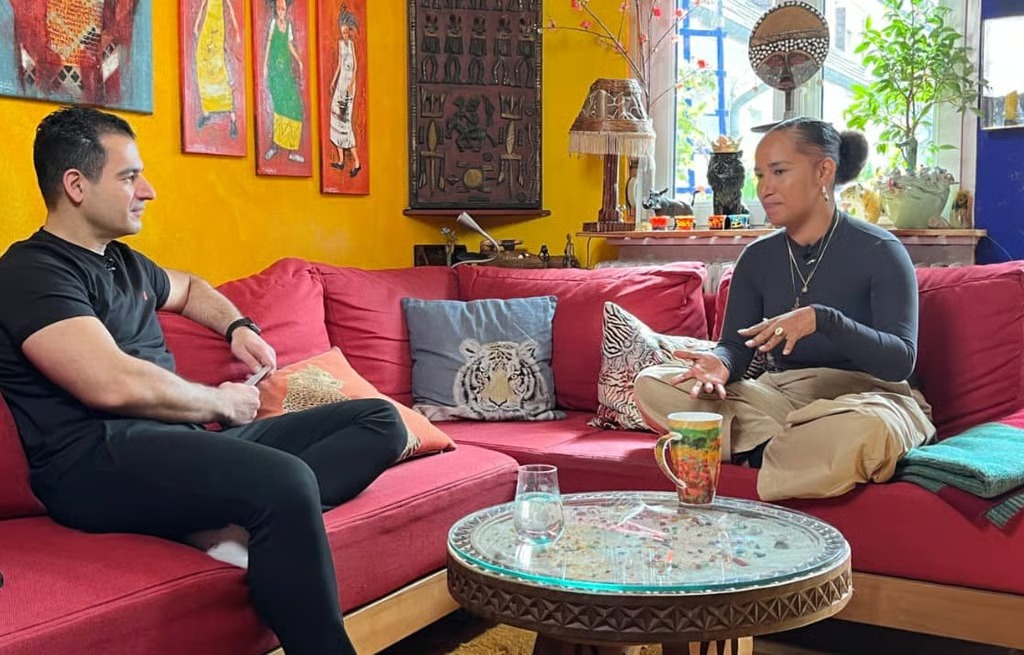
Music and Mindset: A Conversation with Aisha Vibes
Visualizing goals and dreams can be the key to an extraordinary success story. In this episode of Project Mindset, Reza Mehman talks with music artist Aisha Vibes about her impressive rise in the music industry. Aisha was discovered in a frozen yogurt shop in Heidelberg, then worked as a presenter for Apple Music, and finally went all in on her music career. Together, they discuss the power of manifestation, gratitude, dealing with setbacks, and why you should never hide your talent. Aisha shares honest insights into her personal journey and explains how she turned her dreams into reality step by step through consistent visualization. An inspiring conversation for anyone seeking the courage to forge their own path.
Aisha Vibes: the episode in brief
In one sentence: Aisha Vibes tells how, through visualization, gratitude, and the courage to take risks, she went from running a frozen yogurt shop to becoming a successful music artist.
In three sentences: Aisha Vibes was discovered in a frozen yogurt shop in Heidelberg and launched a career as a radio presenter, later joining Apple Music. Despite secure jobs, she quit everything to fully dedicate herself to her music career, realizing that this was the only way she could truly be happy. Through consistent visualization and manifestation, coupled with hard work and a strong belief in herself, she transformed her dreams into reality.
In five sentences: Aisha Vibes grew up in Heidelberg in a musical family and dreamed of a music career from a young age. After various odd jobs, she was discovered in a frozen yogurt shop and began a career in radio, which eventually led her to Apple Music. Although she was successful there, she felt an inner dissatisfaction because her own music wasn’t getting enough attention. With the courage to leave secure jobs, she went all in on her artistic career and experienced how a freestyle rap went viral on Instagram. Aisha emphasizes that visualization, gratitude, and honesty with herself are the most important building blocks of her success.
Context: Who, What, Why
Who is speaking: Reza Mehman, host of Project Mindset, in conversation with Aisha Vibes, a music artist from Heidelberg who lives and works in Berlin.
What is it about: Aisha Vibes shares her extraordinary success story in the music industry. From being discovered in a frozen yogurt shop to hosting a show on Apple Music, to deciding to go all in and become a musician. Key themes include visualization, manifestation, gratitude, dealing with setbacks, and finding your passion.
Why relevant: This episode offers authentic insights into building a music career and connects this to universal mindset themes such as self-confidence, risk-taking, and the power of positive thinking. Aisha’s story shows that extraordinary careers rarely follow a straight path and that self-belief and visualization can deliver real results.
Three key questions of the episode:
- How can visualization and manifestation help achieve professional and personal goals?
- When is the right time to leave a secure job to follow your passion?
- How do you deal with defeats and setbacks on the road to success?
Table of contents
- Introduction – Overview of the conversation with Aisha Vibes
- Summary – Key points at a glance
- context – Who is speaking and why it is relevant
- Table of contents – Navigation through the episode
- Topics and classification – The central topics
- Key messages – The most important findings
- Frequently Asked Questions – Answers to key questions
- Highlight quotes – The strongest statements
- Transcript – Complete conversation
- Keywords – SEO-relevant keywords
- Names and terms – Important references
- Quotable passage – For sharing and quoting
Topics and classification
1. Visualization and Manifestation
Aisha Vibes describes in detail how she consistently visualized her goals and turned them into reality step by step. From vision boards to writing down dreams daily, she explains how thoughts can become reality.
Keywords: Visualization, Manifestation, Vision Board, Visualizing Goals
2. Career building in the music industry
From being discovered in frozen yogurt via radio and Apple Music to her own music career, Aisha’s journey shows that success in the music industry often comes via unexpected detours.
Keywords: Music career, Music artist, Music industry, Apple Music
3. Courageous decisions and willingness to take risks
Aisha quit secure jobs to go all-in on her passion. She speaks openly about why it’s sometimes necessary to give up security to reach your full potential.
Keywords: Risk-taking, resignation, following one’s passion,going all-in
4. Gratitude and self-reflection
A central element in Aisha’s mindset is gratitude. She explains how daily gratitude has changed her perspective and why honesty with oneself is the first step towards change.
Keywords: Gratitude, self-reflection, mindset, personal growth
5. Origin, identity and self-acceptance
Aisha speaks openly about her multicultural background, dealing with shame about one’s origins, and why it is important to be proud of one’s roots.
Keywords: origin, identity, shame about origin, self-acceptance, multiculturalism
Key messages
- Visualization and manifestation are powerful tools: those who repeatedly relive their goals mentally increase the likelihood of achieving them.
- Extraordinary careers rarely follow a straight path. Aisha’s journey led from frozen yogurt, radio, and Apple Music to her own music career.
- You should only quit your secure job when you have a clear vision and are ready to face the consequences.
- “Don’t hide your magic” means showing your talent to the world, even if you have self-doubt and fear of rejection.
- Gratitude is a skill that can be practiced daily and positively changes the entire mindset.
- Honesty towards oneself is the basic prerequisite for personal growth and true success.
- Recognizing toxic people in one’s own environment and distancing oneself from them is crucial for one’s own development.
- You find your passion by trying as many different things as possible and listening to your inner feeling.
- Defeats are inevitable, but how we deal with them defines long-term success.
- One’s own origins should not be a source of shame, but rather seen as a source of strength and uniqueness.
Frequently Asked Questions
How was Aisha Vibes discovered?
Aisha Vibes worked in a frozen yogurt shop on Zieglerstrasse in Heidelberg. There she met a customer who worked in radio. He was impressed by her open, communicative nature and suggested she become a presenter. This is how her radio career began,which later led to Apple Music and eventually to her own music career.
What does visualization and manifestation mean according to Aisha Vibes?
Aisha Vibes describes visualization as the conscious, repeated imagining of one’s goals and dreams. She uses vision boards and writes down her goals daily. For her, manifestation means that these visualized thoughts become reality through hard work and belief in oneself. She emphasizes that many of her professional milestones have become reality in this way.
Why did Aisha Vibes quit her secure job at Apple Music?
Aisha realized that despite having a good job, she wasn’t happy because her own music was being neglected. She felt an inner dissatisfaction and knew that she could only reach her full potential as a full-time artist. The decision came when she realized that the security of her job was preventing her from pursuing her true dream.
Was bedeutet “Dont hide your magic”?
“Don’t hide your magic” is Aisha’s motto. It means showing your talent and uniqueness to the world instead of holding back for fear of rejection or self-doubt. Aisha emphasizes that many exceptionally talented people sit at home, afraid to show their true colors because they think there are already too many others. Her advice: Just do it and show your talent.
How does one find their passion, according to Aisha Vibes?
Aisha recommends trying as many different things as possible and listening to your inner feelings. You’ll recognize your passion by the fact that you feel alive and lose track of time.It’s important not to let the opinions of others limit you and to be honest with yourself.
How does Aisha Vibes deal with defeats?
Aisha views setbacks as an inevitable part of the path to success. She allows herself to feel disappointed, but doesn’t let them get her down. Instead, she uses setbacks as motivation to work even harder towards her goals. For her, how she deals with defeat is what defines long-term success.
What role does gratitude play in Aisha Vibes’ mindset?
Gratitude is a central part of Aisha Vibes’ daily life. She practices conscious gratitude by regularly reminding herself of what she has already achieved and what she is grateful for. According to Aisha, gratitude changes one’s entire perspective and helps to remain positive even during difficult times.
What does Missy Elliott have to do with Aisha Vibes?
Missy Elliott, one of the world’s most famous hip-hop artists, liked and shared a dance video by Aisha Vibes on Instagram. For Aisha, this was a special moment, demonstrating how social media can open unexpected doors and how talent can gain international attention through digital platforms.
Highlight quotes
“Don’t hide your magic. If I hadn’t heard this sentence, I would never have held the camera in front of my face and uploaded it.”
– Aisha Vibes
“I think I’ve always been drawn to this because I’ve always believed in it and, even as a child, I always thought that one day I would achieve it.”
– Aisha Vibes
“Actually, I want one of my songs to be presented here.What’s the point of this?”
– Aisha Vibes
“If you grow up in Heidelberg, then of course you’re also surrounded by all the Americans who are pumping all the hip-hop and all the R&B.”
– Aisha Vibes
“I wanted to do what I wanted, not what anyone told me I had to do to be successful.”
– Aisha Vibes
“When you suddenly have a job that you have from Monday to Friday, I had absolutely no energy left, not for talking, not for writing, not for anything.”
– Aisha Vibes
“Visualizing and manifesting are relatively new topics for me, which I have only been dealing with for a few years, but which I now believe in very, very, very strongly.”
– Reza Mehman
The full conversation
Hi everyone and welcome to Project Mindset. Today I have a fantastic interview for you with the musician Aicha Vipes. An incredibly inspiring and wonderful person. We had a very pleasant conversation, naturally about mindset, but also about her music career. A little spoiler: she was discovered in a frozen yogurt shop in Heidelberg and later worked as a presenter for Apple Music, eventually managing to focus entirely on her music career.
It was incredibly interesting and exciting to see how she structured the whole thing. There were also some very, very interesting things about mindset. We talked about visualization and manifestation. These are relatively new areas for me, as I’ve only been exploring them for a few years, but I’ve come to believe in them very, very, very strongly. For example, visualizing a thought in some way, visualizing it again and again, until, if you’ve put enough work into that thought, it manifests in reality.
And we talked about topics like that too. It was super interesting. But I’ve rambled on enough now. I hope you enjoy today’s podcast episode. Don’t hide your magic. If I hadn’t heard that sentence, I never would have held the camera up to my face and uploaded it. And that’s why I can only recommend it to all those incredibly talented people who are sitting at home, overthinking things, thinking, “Oh, there are already a thousand people doing this, so why should I do it too?” and blah blah blah.
Welcome to the conversation with Aisha Vibes
Don’t hide your magic. Done. And just like, you know,show your talent. Hi, I have Albs. Thank you so much for your time today. You’re welcome. I’m so glad you’re here. Yes, awesome. I know you’re usually more of a Berlin person, but you’re originally from Heidelberg. Absolutely. And we’re in Heidelberg today. Yes. This location is amazing too. Yes. It’s really great here. And for me personally, it’s a huge honor, as a Heidelberg native, to be speaking with a Heidelberg native who, I would say, is currently more than just a breakthrough artist.
So, you’ve released quite a few songs now that are super successful. Your story is incredibly interesting. If you do a little online research about you, you’ll immediately see that you used to work at a frozen yogurt shop, were discovered there, and got your own radio show. Yeah. Then you posted a German rap freestyle on Instagram that went viral. That’s how you got into writing your own songs. Missy Elliott even posted your dance video once.
How the musical journey began
Yay! I think the story is amazing. Maybe you could elaborate a bit? Yes. How did this incredible, not only funny, but also kind of success story come about? How did it happen? Well, I think I’ve always been drawn to it because I’ve always believed in it, and even as a child, I always thought that someday I’d make it. I don’t know exactly how or what yet, but music has always played an important role in my life. Both my parents are musicians, so even as a child, I was always very, very close to music.
Growing up in Heidelberg, you’re naturally surrounded by all the Americans who were blasting hip-hop and R&B. So, I was always exposed to different influences: from my mother, then classical music; from my father, Caribbean and African music. Music was just constantly around me, even as a child, and that’s why it was always incredibly interesting for me to pursue it someday. And yeah, I think I did, yeah, right, back then there were pop stars on TV.
Early dreams and role models
Of course, I always watched that as a kid, and I always thought, one day I’ll be 16 and one day I’ll go there too and do that, and that will be my big break, because back then, the No Angels, the Broses, and all those guys really had careers. Some of them were even from Heidelberg, I think, is that right? Who was from Heidelberg? The Roses, I think there was one of them, I think, from Heidelberg. Really?
Well, it’s possible, I don’t remember right now, but it’s possible, yes, and I did that when I was 16. I turned 16 and ran straight there to the casting and was somehow among the last 10, but then I dropped out because this whole competition thing wasn’t really for me and I tried out lots of different things.
I sang with bands, tried to start my own bands,made music with some homies in the basement and other stuff, was even briefly signed, which wasn’t so great in the end because I think it’s a classic artist trap that many fall into when you’re still young and don’t really know how all the contracts work, and I know it’s really important to involve a lawyer before you sign anything.
Continued
It all happened way too fast. I thought, this is my moment, okay, I’ll sign, and then you’re suddenly trapped in some contract for four or five years and basically have to do what you’re told. And that was, of course, especially difficult for an artist like me, because I simply wanted to do what I wanted and not what someone else told me I had to do to be successful..
But yes, four years later that was over, then I did other things and I always had side jobs because I lived at home here, where we are now, for a relatively long time, and of course I always wanted to earn money and not be a burden on my parents, and then at some point I worked in the frozen yogurt shop on Zieglerstrasse, which had just opened relatively recently.
I was just walking by one day and saw a flyer and thought, yeah, okay, that’s another side job I can do to earn some extra cash. And then I met someone who worked in radio and he said to me, “Your personality, the way you speak, your energy and all that—have you ever thought about becoming a presenter?” And I was like, “No, because I’ve honestly never thought about it.”
The desire to stand on stage oneself
I always wanted to be an artist, a musician, on stage, not somewhere unseen, where I couldn’t really interact with people. That’s always been my vision. So, how did he come in and say you’d be a good fit as a presenter, or how did that happen? No, it’s a funny story, because he came in and wanted a frozen yogurt without any toppings. Okay. And toppings are really important for frozen yogurt.
And when I have a job, I take it seriously, it’s very important to me. That’s why I discussed it with him. I was constantly discussing things with the customers because I’m simply a person who likes to talk and chat. And when I was there all day, you often end up sitting in the back alone, cutting fruit and stuff. So when customers come in, the first thing you do is ask, “What’s up? How are you today?” I really enjoyed the job, I have to say, I really did.
A meeting in the frozen yogurt shop
And yes, that’s the luck of it, of course, when you’re in a place where you can be yourself; I think you attract certain things. And what attracted me at that moment was that someone spoke to me and thought, “Wow, the way you talk and all your energy, I can totally imagine you on the radio.” At first, I was like, “No.” But then I actually googled it at home. So, I googled what a radio presenter earns.
And that was obviously more than just frozen yogurt. And yeah, then I went and it all happened super fast. Suddenly I was on the morning show, and then I was on the morning show again, which is actually the prime-time radio show, which I thought was really crazy. And mornings weren’t my thing at all. First, I was doing a radio morning show. I think my alarm went off at four o’clock or something. All my friends said I wouldn’t be able to keep that up for more than three weeks or so.
And to be honest, that’s how I felt too, because I thought, no way, never, never, I can do that. Sometimes I’d just stay up after the studio and then go straight to work the next morning. But I stuck with it, for almost a whole year, almost. And then I got an offer from Planet. Exactly. Amazing. And then I had my own show in the afternoon. That was much more relaxed, of course. And thankfully, much better time-wise too.
Getting started in radio
And yes, and then I had my own show. I’d always been involved with music in some way and interviewed tons of artists, including many international artists and stars, whom I never thought, oh my God, that I’d ever be in the same room with. And suddenly they were walking into my room, so to speak. You know, and I was interviewing them. I thought that was pretty cool, but it was always bittersweet for me because on the one hand, I thought it was pretty cool, and on the other hand, I thought it was pretty uncool that I wasn’t the one on the other side, because I always thought, I have that talent too.
You know, I stand here all day presenting 100 new songs from 100 artists and stuff. But what I really want is for one of my songs to be presented. What’s the point of that? And how did you divide your time back then? I mean, with the job you just mentioned as a presenter, and actually what you would have liked to do. I didn’t have time for what I would have liked to do, and I realized that because when you suddenly have a job that you have from Monday to Friday, and that was in Frankfurt, no less.
Continued
That means I was commuting, sitting in the car for a total of two and a half hours every day, driving to work. Then I sat there for my four-hour live show. You’re sitting there the whole time, and then you drive another hour and a half back. I was completely exhausted. There was no energy left for talking, writing or doing anything. I just couldn’t do any of it. And that’s when I realized that it wasn’t making me happy anymore, because I couldn’t balance it with making music at the same time.
How long did you do that then? I think I was at Planet for three years in total, right? Yes,because I have to say, everyone at Planet, the whole team there, were incredibly fun people. It was really enjoyable to go to work because of the people who were there. They were actually the main reason, I have to be honest, why I stayed there so long, because I saw so much going on in my own circle of friends who had jobs with terrible bosses, colleagues, or whatever, and I had the funniest people around me who really supported and celebrated me for who I am. And at Planet, I was always allowed to sing jingles.
Support from the parents’ home
I was allowed to do whatever I wanted, and if I had any idea for anything, they pushed it and supported it in some way. They always worked with me on anything related to singing. So they definitely made sure that I wasn’t just a presenter, but that people outside the company knew I was at least a singing presenter. I think you were also a presenter at Apple Music. Right, that came later, and it was a crazy coincidence because I had made this freestyle video in German while I was working there, which I then uploaded.
Which then went viral? Exactly, yes. Which then went viral. Maybe let me tell you the story again. It was a German freestyle you did, a rap freestyle, so to speak, which you recorded spontaneously. I heard about it back then, and it went super viral. Yeah, I didn’t take it seriously at all at the time, to be honest. I just… but funnily enough, it started a little bit before that. My friends started kind of pushing me, saying things like, “If you look at my Instagram page, people don’t even know what you’re capable of. You should write some songs again, or film yourself singing,” and stuff like that.
A freestyle on Instagram
I’d already started to do something like that, singing into the camera or sort of posting a little bit. And then on that particular day, I just rapped to this Biggie beat, I think it was, right into the camera, without putting any effort into it. When I watch it now, I find it so cringeworthy. I think to myself, oh my god, if I were to do that again, I would have put in so much more effort, thought about it so much more, even about what I was saying here and there.
But I think that’s why it worked in that moment, because I didn’t think about it and just did it once. And then within a week, I somehow went from 8,000 followers to 30,000, 40,000 followers. It’s always like that, so it suddenly happened so fast. And it was just like, oh my God, what’s happening here? Oh shit. Okay, German rap, freestyle. Okay, come on, I’ll do another one. And then I did another one. And it just kept growing. So it was also the first time in my life that something musically worked.
The reactions to one’s own music
So it worked in the sense that suddenly so many people were saying,”Oh my God, you’re the coolest, and where’s your music? What’s up? And why do we have to go on Instagram to hear your music?” But you only went to Apple Music after that? Yeah. How did that happen? So why didn’t you just go all in, I mean, and say, “Now I’m only going to make music.” That’s when it started. When I realized that, when I started getting that kind of hype, I thought, okay, okay, okay, this is my moment.
But as an artist, you experience that moment so often in your life, where you think, “This is the moment, this is the moment.” And at some point, you stop trusting that feeling 100%. But even so, it was a different moment than ever before because suddenly so many people were looking at me. And then I got a message from Apple Music, from someone who actually worked at Apple Music, but she messaged me through Instagram, saying, “Hey, I’m so-and-so from Apple Music,” and so on.
Contact with Apple Music
Do you have time to chat with me and blah, blah, blah? And I was like, oh, cool, they want to see my freestyles. Of course, they want to be me now. They want to do something with me and blah, blah, blah. I’m getting away from this radio job. And then, yeah, the conversation turned back to me being a presenter. And that was it for me. Were you a little disappointed? I was so disappointed that it really took a lot of people to persuade me to do it at all, because I didn’t want to do it.
Continued
Because for me it was like, no, I want to do this now. Now I have the opportunity to do my art, so to speak, even if the art is a bit different in this case, because suddenly it’s rap in German and no longer singing in English. I thought to myself, this is what I really want to do now. I can’t just switch gears again and do presenting. But did you do it anyway? I did it anyway because in the end it was negotiated so that I only had to do it once a week.
And I got the same money as, or even a little more than, I got before as a regular presenter. So for me, it was like hitting the jackpot, you know, because many artists, especially newcomers, struggle to finance things, to get money from anywhere to pay for production and videos. And I have this job that I only have to do once a week, and I can pay for all of that on the side.
A decision in retrospect
Looking back, would you do it the same way again, or would you decide differently? I would do it exactly the same way again. It was a really good decision, even though it took a long time for it to click in my head that it was a good decision. It was great because all the first videos I released—Undercover, Alioub, and so on—were financed by my job at the time. I wouldn’t have had that money. I think I still would have managed somehow,because I already had people’s attention, to do it all on a low budget and everything.
But I also wanted to have an awesome video. I finally wanted to be able to pay the people who had been doing all sorts of crap for me for free. You know, it’s a completely different feeling. When you’re in a moment like that, where you feel, okay, now I’ve had a breakthrough, now is my moment, like you said, are you sometimes afraid of maybe making the wrong decision, of ruining everything, or are you so convinced of it?
Questioning the secure job
That’s how I am. Yeah, I’m not really afraid of it. That’s why I’m afraid. I was only scared when I finally quit my Apple Music job after about two years. Two years is a long time. It’s definitely a long time. And I moved to Berlin, and that made everything easier. I could afford a nice apartment and all that. So I was able to ease into it really smoothly, without having to sleep on someone’s couch and deal with the hustle and stress that so many newcomers and artists have. I didn’t have that.
I was living the high life. Paying for my music videos was within my means. Paying for my apartment was not a problem. I had no money problems. Everything was great. And I remember that I only had to do it once a week, and so, of course, everyone around me was saying, “You’d be stupid to quit.” How could you, how could you quit a job you only do once a week? You know, everyone’s struggling with jobs like that, already on the verge of breaking down, Monday to Friday and all. And there I was, thinking, “That one day is one too many.”
Financial security and personal wishes
Some of my friends’ comments felt really stupid to me, because I saw it too, of course. What a blessing it was to have earned so much with so little effort, and I had to learn to appreciate it and tell myself, hey, you didn’t give up for years and worked on your dream. And this is it. Now you can pick the mangoes from your tree, so to speak, you know, while everyone else was saying safety, safety, safety.
I’m studying, I have a steady job, I do this and that. I said, no, I’m not doing that, because I’ll become well-known and famous eventually. And then, when I quit that job, or rather, when I wanted to quit, that was the first time I was scared, because I thought, wow, I’ve been used to a relatively regular income for almost five years now. I bought a cool car. My apartment looks amazing and all that. If I don’t have all that anymore and I’m really just an artist, then a lot of what I’ve gotten used to will probably disappear.
When those around you advise against quitting
And then, of course, when people like your own mother say things like, “You only do it once a week, that’s not much.” You know, everyone was like that, and I wouldn’t quit that job. And I was like, “That one week is stressing me out so much.” I can’t, I always wanted to be an artist, and I still want to be an artist, and I don’t want people to see me as a presenter in any capacity anymore, because otherwise I’ll always be the presenter who plays music and won’t be properly perceived as an artist.
Continued
That was the biggest problem for me the whole time. This, okay, she’s a presenter, she’s a presenter, she’s not a presenter, she’s more like a frozen yogurt vendor, actually. She just sort of stumbled into it, you know? And so, I’m happy that I did well and it was an amazing experience. But for me it was always like, no, I’m an artist at heart, and I just had to jump right into this uncertainty. But I was definitely scared.
That’s a really recurring theme in my podcast, the question of “Who am I?” How do I see myself? What do I want to embody? It’s funny that you just said you saw yourself more as a frozen yogurt vendor than a TV presenter. I find that hilarious. But you’ve always seen yourself as an artist, a musician, from the very beginning. I wonder, when I think about my goals, which are getting bigger and further away now, how I manage to stay focused on achieving them.
Putting everything into their own music
And now I see you’ve essentially turned down jobs where you would have, or had, a secure income. How did it come to this? I understand you want to be a singer, an artist, but how did you get to the point where you said, okay, no, that’s it, I’m quitting. Was it a gradual process? Did you wake up one morning and think, “No, I’m doing this now. Enough is enough.” No, it was a gradual process of feeling uneasy. So, no matter how incredibly fortunate I was to have this job, and how amazing it was that I could do it, it didn’t make me happy.
And you can… How do you define happiness? How do you define being happy? Simply being able to look in the mirror in the morning and just say to myself, yes, that’s you, and you’re doing exactly what you want right now, and that makes you happy. I couldn’t do that during that time because I was always either… when I still had the job at Planet and all that, and this isn’t meant to sound dramatic at all, because, like I said, I definitely got my good things out of it and had some amazing moments, and also many moments where I thought, oh my God, how lucky I am to have this job right now.
Time pressure and the question of one’s own life
But the longer you do this, and the less you actually do what you really want to do, the more unhappy you’ll become. And you’re getting older, too. And then all these things happen,where you’re usually told that you have to be a certain age to be a newcomer, and now you’re getting a bit older, approaching 30, and they say things like, “I don’t know if you can still work as a newcomer,” and so on. Pressure then builds up inside you. And this pressure ultimately boils down to the realization that you only have this one life and you should live it exactly the way you want to.
No matter what friends say, or what people on the sidelines say, or even what a parent says, it’s your life and you have to make this decision for yourself. And it just crept up on me little by little, so that after work, after that one day a week—it still sounds a bit ridiculous, but whatever. Imagine, that one day a week, it was always Wednesday, I think—that I started feeling stressed on Sundays, that I already realized on Sundays, “Man, on Wednesday I really want to do this and that,” and blah blah blah.
Why the job kept me busy all week
And now on Wednesday I have to interview some other artists again and chat with them about their careers. I really don’t want to do that, you know? And then I really realized how it had taken over my week and how I couldn’t properly relax and focus on my own work because I was just too mentally stressed about that day coming up. And it’s actually ridiculous because, like I said, it wasn’t even an eight- or ten-hour workday.
Because of the pandemic, I recorded this show from home. And with the interviews and everything, which were staggered, it took maybe six hours a day. But I completely understand. I know a lot of people who are unhappy in their jobs and still do them because they think, “Okay, I don’t have any other option, or where else am I supposed to earn money?” So I can totally understand why even doing this once a week is so difficult.
The conflict of interest between moderation and music
Yes, and above all, I think what was really annoying for me was that it was a conflict of interest. I think if it had been a job that had absolutely nothing to do with music, once a week, I think it would have been different. Because sometimes, I have to be honest, as an artist, it’s really good to do something completely different. To just unplug from all that artist stress and music, and not have to produce something, and I have to do this and that, and it has to be well-received, and blah blah blah, and do something completely different.
Continued
But when, in this conflict, your job also involves constantly interviewing other artists, talking to them about their careers, their music, and so on—I think that’s what stressed me out even more deep down. I have another question about that. Was it more important to you that you see yourself as an artist,or was it at least as important to you that others also recognize and see you as an artist?
So, what was the relationship like for you personally? For me, well, because I… How was it that it wasn’t important for others to see you as an artist? That was definitely important to me. It started with me thinking, what do people out there think? They see me as a presenter, not as an artist. Shit, shit, shit. And then at some point, that all flipped. I don’t even remember what the exact trigger was that made me stop giving a damn what other people thought.
Be honest with yourself
And that all that mattered to me was, what do I think about myself? What would happen if, despite everything, I looked in the mirror every morning and knew, “No, today I’m not being honest with myself”? How would that feel? What do you think? I believe that the soul would eventually rot. That sounds very dramatic. But I believe that ultimately, if you don’t pursue the things you truly want to do, the things that fulfill you and make you happy, then an increasingly dark cloud simply forms over you, and you drag that cloud with you throughout your life, and it just keeps growing.
And the people around you, they eventually get caught in that cloud too, because… I also believe that… What’s the German word for contagious again? Ansteckend (contagious). Contagious, yes, I think it’s very contagious. And that’s why people who are dissatisfied with their own lives are often quite toxic to other people who are actually in good energies and good spaces, because their cloud is simply too big for them, or I always try to see it that way, like a light.
People who give or take energy
I always get the feeling that people who do what they love and act on their convictions are truly light-hearted, but they often attract these shadowy figures, the people with dark clouds. Because ultimately, everyone wants light. Nobody wants to sit in the dark. And then those shadowy figures gravitate towards the light-hearted. And if you let too many of these cloud-bound people around you, your flame fades, it gets smaller and smaller. That’s why it’s so important to… Yes, it always sounds like a silly cliché, but I think it’s crucial to know who you let into your life and who you don’t.
100 percent. It’s also called a calendar saying, by the way, or so I’ve heard. There’s something to those sayings. You’re the average of the five people you hang out with. Do you recognize it immediately when you have negative people around you? Or has it ever happened that it just took a long time? Yeah, crazy. I only just realized that this one person… Yeah. I have to admit, even with myself, in my own social circle, I only noticed it after years, or some kind of feeling, a lifetime.
Recognizing which contacts are beneficial
Okay, this person isn’t really good for me. Yeah, yeah, yeah, yeah. I mean, it wasn’t always like that from the beginning. Because a lot of people just know really well how to present themselves, without their inner cloud. Let me put it that way, you know? And it’s not even… I don’t even think that these clouds, these dark cloud people, mean any harm or that they want to drag other people into them. But they’re people who often haven’t followed what they actually wanted.
Because of… There are thousands of reasons for this, and they’re often understandable. You know? Whether it’s society, your environment, family, or culture. There’s so much that restricts you from childhood onward, preventing you from doing what you actually want. It tries to tell you there are rules, and if you don’t follow them, then this and that will happen, and blah, blah, blah. People constantly live in fear and therefore don’t dare to do many things. How do I find what I want, or what my passion is?
How to find your own passion
That’s a good question. That’s a very good question. I know a few people—I don’t want to exaggerate—but actually, in the podcasting world, people sometimes approach me and say things like, “Hey, I also often talk about pursuing one’s passion,” and sometimes they say, “Yeah, I totally understand what you mean, but I don’t know what my passion is. So how do I find out?” Then we talk. I was recently talking to someone who works in IT, and after a long conversation, it came up three times—something he’d always been aware of—that he’d actually like to do something in film.
Continued
So he first had to talk about it, discuss it, so that he even knew where he actually wanted to go or what his passion was. Yes, I honestly don’t have the answer, because I’ve actually asked myself that quite often in conversations with people who haven’t asked that. Because for me, since I’ve always known what I want to do and what my passion is, I simply can’t imagine what it’s like not to know and to be so lost, so to speak.
But I see that in so many other people and I’m like, hey, shit, it’s getting worse and worse for us now with social media, and you have a thousand different influences and impressions, so I’m thinking, if we had grown up with social media, maybe I would be, hey, lost, we would be lost, so I’m sorry, but the new generation, you’re lost. There’s no going back, you’re screwed. No, because I really think, so crazy, if you’re a kid these days and so much information is thrown at you on these little screens,how are you supposed to make a decision?
Distraction and foreign dreams
How are you even supposed to figure out what you really want? Too many distractions. Too many distractions and you start wanting other people’s dreams because you see them sharing their fake lives on social media, and then, as a kid, you think, “Wow, that’s exactly what I want,” because you see, “Oh, look, there are so many likes, so many, I don’t know what, look, she’s living such a lavish life and all that. I want that.” But deep down, maybe that’s not what you really want, and you actually want something else, but then you don’t know.
I really don’t know how this new generation copes with it and how they manage. But you also mentioned social media. In another context, you once said, “Don’t hide your magic.” Magic, yes. Exactly. Can you briefly explain that? Because I found it super interesting, because I think social media plays a part in that. Yes, that brings us back to the nice point that everything has advantages and disadvantages, because those were the nasty disadvantages of social media.
Don’t hide your magic
On the other hand, it obviously gives you the opportunity to showcase your talents, if you have any. And a colleague of mine once said to me, “Don’t hide your magic.” He really meant, “Wow, you have so many talents that the world just doesn’t see because you’re not sharing them. But now you have the opportunity to share them through your platform. So you’d better do it.” And that actually motivated me. It was definitely something in my head when I did that freestyle, because I thought, “When I look at what they’re doing in the German music industry, I just think it’s so shitty.”
So, asshole, that’s probably how you sound right now. I like that you’re not an asshole. But it comes out so easily, you know, that I just thought, yeah, then just do it, show me how it’s actually done. And that’s why I always try to advise everyone, other nu-chamber artists or people who want to do something with music and stuff. Then I go on their Instagram and see great photos of them, where I think, yeah, great. And now, what good does that do you?
Show off your talent regularly
If you’re an amazing singer, then show that you’re an amazing singer. Upload videos of yourself singing amazingly. That’s it, and then keep doing that. And that goes for other talented people too. Now there’s just the opportunity to showcase that talent. It’s just that there’s an overabundance of it. But I still believe it’s possible to stand out. Don’t hide your magic. Exactly. Okay. Of course, that also includes knowing what the magic is in you. Yes, exactly.
And if you’re just loose, if you can’t categorize it, then it’s incredibly difficult. That’s why I haven’t really figured it out yet. You’d really have to talk to someone who took a long time to figure out what they actually wanted. And then ask them, I think that would be really interesting. I’d also like to talk to someone like that and know, okay, it took you longer to figure that out. How did you figure it out?
Because at some point you just do it and then realize, oh, this is totally awesome. What an amazing feeling I get when I do this! Like back then with Leroy, when we made our first videos, music videos, I don’t know what to call them. We had such a massive dopamine rush when we watched what we’d created. We were really like other people probably have to watch or listen to Existing to feel that way.
Continued
And we were like, oh my god, we completely freaked out during every scene. And then I think to myself, those are the moments when you realize, this is exactly what I want to do. You know? Absolutely, absolutely. You’ve already mentioned the topic of Blast a few times, and from our preliminary conversation, I know you’re a grateful person. Well, me too. I think gratitude is actually one of those things where, if you really feel it inside, you attract good things. 100 percent, yes. That you attract that, so to speak, good things.
Could you elaborate a little on what gratitude means to you, how you deal with it? I think that for me, a big part of why I feel so buoyed is that since I was three years old, my parents took me to Ghana every year, or rather, we went there together. We all went to Ghana as a family because it was important to my parents that we knew our roots, that we knew where we came from, and how everything is connected to my dad’s side of the family.
Experiences from Ghana
And when you see how different a world it was over there, especially 30 years ago, is now, when you go to Ghana, it looks like LA. You know what I mean? Yeah, it smells awful. But back then it wasn’t like that. And when you see how, with how few things, people are still happy and relaxed, you eventually feel really embarrassed to complain about things when you come back to Germany.
100 percent. Yeah, and then you really realize, wow, that’s crazy. I’m whining about it now because I don’t have the latest iPhone. You know what I mean? And I don’t know, someone over there the same age as me would still be absolutely thrilled with a Nokia 3310. You know? And yeah, that just makes you realize how incredibly blessed you are, because no matter how much I love Ghana and how much I definitely want to live there someday, I feel absolutely blessed that I was able to grow up in Germany, go to school here, and not over there.
Gratitude in small moments
How often do you think about it, that you’re grateful for what’s around you each day, or each week, or however you want to put it? I’m incredibly grateful for everything that’s going on around me. Is it something you do every day? Yes, yes, yes. I think I think about it in little moments. Sometimes, sometimes it just comes out of the blue. I’m often grateful when I’m sitting in my car because I love driving so much. Even as a kid, I always wanted to drive, because I was always like, “I have to get my driver’s license when I’m 18. Driving felt essential to me.” I love cars and driving so much.
The bigger the car, the cooler I think it is. Someday, when I have a tour bus, I want to drive it myself. And quite often, when I get into my… Yes, Leroy, yes. Quite often, when I get into my car, I’m so excited that I can drive. It’s totally, totally ridiculous. Because I often laugh at myself, thinking, “I’ve been driving since I was 18, but it’s still like this,” like yesterday, for example. I drove from Berlin to Heidelberg, six hours.
Enjoyment of everyday possibilities
And I was sitting in my car and just thought, wow, I have a car. I have a car. I have my own car. How cool is that? I was able to get my driver’s license. You know? Awesome. I’m driving from my apartment in Berlin right now. Sometimes I really become aware of it when I have these brief moments just for myself. Like, oh wow. I’m driving from my apartment in Berlin, which is totally nice. There is a new studio in my life now. I have my own studio right here in Berlin.
Wow. I’m sitting here in my own car. Four days ago, I landed from Zanzibar. The flight was in business class. I don’t usually tell anyone that, but it’s like, oh my god. Can you teach someone to be grateful? Yes, I think you have to start with the simplest things. You have to learn not just to be grateful for a car and a business class flight and a studio or whatever, but you have to start being grateful for the really little things you have in your life, or even for the people you have in your life.
Gratitude for good friendships
Not just material things, but also the human things in general. How often do I find myself thinking, “Oh my God, how amazing are good friendships? How great it is to have people you can talk to about anything, or who you can call when you’re feeling down, or who are happy for your success instead of being upset or something?” Or I’m always excited when I manage to build little DIY projects or something like that.
Continued
I’m someone who gets incredibly excited when I find a really beautiful stone. I still feel like a five-year-old, you know,the one who’s been out at the playground and then comes home and Mom says, “Look at these beautiful stones!” But I love stones. I still do. And when I find a really beautiful one, I’m incredibly grateful that I found it. Yeah, amazing. I was actually convinced for a long time that you could teach someone gratitude, so to speak.
But lately, I’ve been getting the impression it’s almost a personality thing. I mean, I actually had a conversation with someone a few days ago. This person was complaining a lot about how everything is awful here—so many taxes, the weather, everything, just awful overall. I listened for a few minutes and at some point said, hey, but we’re in a country where I can go to the sink and drink tap water without being afraid of anything happening to me.
Opportunities and personal freedom
So just imagine that. In how many countries on earth is it even possible to do something like that? Or I can go out at night without immediately being afraid of being mugged or whatever. I don’t think you can consciously change that in someone, even if they’re older. That’s why I asked earlier. I think if anyone can change it, it’s only themselves, because that’s just how they are. I always have the feeling that we’re all programmed from childhood, through our upbringing, our environment, and everything else, like a chip or a computer.
So, we all have our own individual programs, so to speak, in our brains, which have developed over the years. And it’s incredibly difficult to reprogram. It’s not easy, once you’re used to that mindset, that life, that standard, whatever, to even getting used to the idea that things could work differently. What would you like to reprogram about yourself? My reliability.
It’s still there. So it’s getting better. But it’s still the case that because my life is so incredibly unpredictable and it’s super hard to plan with me, what I meant earlier—I understand that it’s difficult for business people to invest in someone when that person stands there and says, “Well, I can’t promise you anything. We’ll see what happens.” I go with the flow. No business person would say, “Okay, I’ll just give you all my money.”
Spontaneous appointments and planning
And then everyone’s like, okay, we’d rather go with the people who actually have a plan. But because of that, something can always come up for me, or some appointment might suddenly pop up, even though I’ve already made plans, and then this happens, and then that happens, and so on and so forth. And that often ends in chaos. So now that I have a team around me who take care of my calendar and all that stuff, it’s much easier and much more relaxed for me because I don’t have to do that anymore.
But yeah, I’ve definitely always found it difficult to make plans with me, and I’m just a person. Unfortunately, I feel one way today and I might feel another tomorrow. So, for example, if I feel like going shopping tomorrow, I don’t know, then it’s very possible that I’ll wake up tomorrow and not feel like going shopping at all. And then I’m just the kind of person who, well, I don’t know, I might not feel like it today, and if you have someone on the other side who was counting on you going shopping tomorrow, then that’s just…wack.
Creative chaos and helpful structure
And that’s why I hope things will settle down a bit more for me. You just mentioned chaos. Do you still cope well with chaos? To be honest, I feel much more comfortable that way. I mean, if I have too much structure around me, I get like that. I noticed it the first time I lived with a friend who was super tidy and clean, and the first thing she did in the morning was vacuum. Everything in our apartment was in its proper place and perfect.
And I felt really uncomfortable because I couldn’t be myself, because I come home and just want to throw things around. And it’s my freedom, and that’s how I want to be. But I’m realizing that for my career, it’s really important to have people who bring structure to the table. I couldn’t rely on my chaos. And you can rely on structure and planning to some extent. That’s why it’s so important to have a balance. By the way, on your social media channel, Instagram, I noticed—and I think this is hilarious—Aicha, you have some great vibes on Instagram.
Continued
It’s really fun to follow, to listen to. I’m also a little embarrassed. It’s really fun to watch, to listen. One of the reasons is that you don’t take yourself too seriously. So you can make fun of yourself. You make fun of others. You really enjoy doing it. Nevertheless, the question is, how important is it to you that you project a certain image to the outside world, what others think of you? Because on the one hand, you want to be an artist who perhaps also stands for a particular issue. On the other hand, you probably also don’t want to be taken seriously anymore and just want to have fun.
How do you find the balance between being taken seriously, being taken seriously by others, and still doing what you feel like doing in that moment? I find it incredibly surprising how many people still take me seriously, to be honest. Sometimes I think to myself, what comes out of me is amazing, that they can still take me seriously. I think that’s probably the balance between my freestyles and my personality on Instagram, with my music.
Self-confidence in music and everyday life
Because even though I say funny things in the songs or do things with a wink, I think you can definitely hear the confidence and self-assurance in the tracks. But if you just see me as a person, then I’m simply a clown. I just want to laugh and talk nonsense all day long. So, of course, I also have intense moments where I’m super deep and want to be. But for me, it’s all about having fun, and my boundary with my sense of shame—well, you could ask yourself, there are no boundaries.
What do you take completely seriously? If I notice that people I’m interested in are taking something seriously, then I can switch gears very quickly, definitely. Like, okay, this isn’t funny anymore, okay, this isn’t a joke. Because it’s definitely important to me that the people I’m interested in don’t get the feeling that you can only ever be funny with vibes and that they don’t take anything seriously and it’s all just wack. That’s for sure. And I also take my career one hundred percent seriously.
Continuously release your own music
Definitely. It’s really important to me, even though I don’t really have a plan right now, to just release music as consistently as possible, because otherwise I can’t take myself seriously as an artist anymore. I can’t just say, “Hey, I’m only an artist now, I’m not doing all those presenting jobs anymore,” and then I’m not releasing any songs. I had a six-month break between my first and second song, I think, and it made me feel like, “Oh my God, oh my God, I’m not doing what I’m supposed to be doing.”
Because when you’re self-employed and not signed, you naturally have the freedom and are your own boss. And sometimes it’s pretty hard being your own boss because you have to push yourself to say, “This is still a job.” And if you want to be an artist, then release music. I get that impression, and maybe I’m completely wrong. What you also take seriously, I think, is your heritage, your origins. Oh yes. That’s at least the impression I get when I look at social media now—to what extent, exactly, to what extent does your heritage play a role?
Identity between different cultures
So, what does this all mean for you? Let me give you a little background. I’m originally from Iran, but I have to say, I naturally feel German. I came here when I was two years old and grew up here. Of course, I carry the Iranian culture from home within me. Now I’m at a kind of crossroads. We talked about this briefly earlier. How much of my Iranian culture do I pass on to my children? I want to pass it on, of course, but I also want them to be familiar with the structures here, to be adapted, and to understand why.
At first, certain behaviors were very difficult for me to understand. Of course, I was raised differently at home during my early years than some aspects of society here. So, the issue of politeness plays a role, but that’s a different story. Do you find Germans polite? Um, not as polite as Iranians, I’d say. I think we take politeness a bit too seriously in Iran. It starts with something as simple as this: Iranians don’t sit with their backs to older people or with their feet sticking out, or anywhere else for that matter.
Questioning cultural habits
These are the little things, the little things that are important to us, or generally in our culture, but which you can also question. Like, hey, is it really that important? Or, I think I’ve mentioned something before, years ago when I was a bit younger, I had a friend visiting. He ate at my mother’s house. My mother cooks really, really, really, really delicious food for me personally. And he ate it and said, “Oh, that doesn’t taste bad.”
Continued
With us, it’s an insult. You’d say, yeah, it doesn’t taste good like that, but it’s not bad either, something in between. But for a German pronunciation, I think it’s pretty good. But if you don’t know that, if you don’t know the translation in your native language, then it’s pretty intense. Exactly, those are the little things, the subtleties, where I think, OK, I don’t need to overdo it with what I’m passing on to my kids. Because here, for example, there’s a different language, a different kind of communication with the people around me.
Hence the question, because I’ve noticed that heritage, origin, is important to you. Absolutely. Why? Well, I’ve always felt more African than German. Where and why? I think it’s actually different with my brother. Or maybe I just have that feeling with both of my brothers. I should probably ask them sometime. But I think we’ve even talked about it before. I’m also the only one of my siblings who went to Ghana every year.
The connection to Ghanaian culture
So, it was really important for me to always be there because I’ve always loved the culture and the energy there, because everything about it is so special – the people laugh loudly, they’re friendly, they’re funny, they just have that vibe. Ghana is just a vibe for me. You know? And then, in contrast, here in Germany. It just doesn’t compare, you know? And I’ve always felt my personality fit better there than here, even though I was always white over there and Black here, and yeah, that classic mixed-race problem.
So where do I actually belong now? But in Ghana, if you’re a foreigner, you’re actually celebrated and loved even more, unlike in Germany,where it’s not like you’re a foreigner and that’s why you’re like this, you know? And it’s not like you don’t belong here, but rather, hey, you’re different, cool, come here, you know? That is why, I don’t know. And I also had this feeling for a long time as a teenager, because back then it was really uncool to be African.
Identity during youth
It was especially bad back then, when the Americans were here and all that. For a while during my youth, I’d say around 14, 15, 16, I didn’t even mention that I was from Ghana because then you’re surrounded by all these Americans, and the Americans have this image of African people as not wearing clothes, always running around naked—they have a completely distorted view of Africa. And you don’t want to be uncool, you know? Did that make you uncomfortable?
Yes, it was really uncomfortable for me. And now I’m so uncomfortable that it was uncomfortable for me, because I’m just so proud now. And that’s when this switch happened. I just started not to think about America like that anymore. I think a lot of people from the ’90s, or who were born in the ’90s, went through a phase of thinking, “Wow, America is the place to be. And we all want to go to America. And it’s the coolest place, and the coolest people are there, and all those rappers and everything. They’re so cool.”
American influences in Heidelberg
Wow, they can all play BAFgeball. I don’t know what we were thinking. Yeah, but I think that was in Heidelberg too, right? There were the Americans stationed in Heidelberg. They were the cool kids around here. Exactly, they were so cool. They were so cool. We wanted to be friends with all of them. And we actually were friends with a lot of them. They were exactly as cool as we thought they were. And then it was really like, wow, yeah, we wanted to belong. Everyone automatically assumed I was American, just because of my skin colour, you know.
And I don’t know when or how this switch came about, where I just… I think it was when I started to experience more of the reality from America, with all the racism and the whole “as a Black person, you’re not free there” thing. And in Ghana, as a Black person, you’re just super free, you know? And there were several things that became clear to me, several beautiful things that I noticed in Ghana about the culture and the people, so that at some point, like, huh?
Appreciating one’s own roots
Screw the Americans, dude. Screw them, man. I ‘m from Africa. So what? Yeah, it kind of came about. And it just kept growing stronger. Every year I went back to Ghana and got to know my culture and the country better, and realized what I’m actually doing there every year.From the infrastructure to everything else, wow, that makes me so proud. You know? And it’s so interesting. I often bring up the topic of shame about one’s origins in the podcast, especially with people I have who aren’t native Germans, where they sometimes say, “Yeah, I’m not from that country.”
Continued
For example, I had someone from Afghanistan visiting who said he was from Colombia because he didn’t want to simply say he was from Afghanistan. It’s a recurring theme, and I’ve really wondered how to prevent this shame about one’s origins from arising. Because I want my children to be able to say someday, “Yes, of course, my father is Iranian,” and that’s perfectly fine. Iran is portrayed in a terrible light in the media. But I still want my children to be able to say it without any problems, without it being uncomfortable.
I have no idea, she’s still too young. I don’t know what “a few years” means. But what would you say to someone who carries this issue of shame about their origins? How can they end that? I think it’s important to be familiar with one’s origins in some way. I think it’s important that—I know that for all people with origins because of war, you know, wars in some countries and such—it’s simply not possible for everyone to say, “Wow, I go there once a year or more often to learn about it.”
Experience culture firsthand
But I keep realizing how important it was for me personally to always be in Ghana and to get to know that culture firsthand, not just through stories from my dad or relatives, but to actually be there. On the ground, you know? And to experience it. That is why I think that if it is at all possible for people—because it breaks my heart—I sometimes see mixed-race people, who are also half Ghanaian, half German, but who didn’t grow up with both parents and therefore only knew German culture, who sometimes don’t even have that strong interest or need to go to Ghana.
And I’m like, oh my God, what? You have no idea what you’re missing, but they never experienced that with their parents, they didn’t grow up there, and that’s why they have no connection to their country. And that’s why I think the most important thing to develop a connection is to actually be there, if at all possible. Like I said, I understand that there are countries where there’s war, where it’s dangerous, and I don’t know where that’s just not possible.
To bring children closer to their roots
But if it’s possible, then I think it’s really important, as a parent, to connect your children to their roots and say, “Here and here, this and that is what goes on.” And then, I think, as a child,you really learn to appreciate and love that. Are we going to look a little more into the future now? Do I need a plan? What can we expect to hear in the next few years? All from you? You’ll hear English music from me? Yes, so you’re switching from German to English. I’m not doing a complete switch.
I will definitely continue making German music. But I’m realizing now, just like I told you earlier with Apple Music, that there’s something inside me that’s always been there, that I also want to make music in English. I really want to sing in English and make the music that’s truly close to my heart and that puts me in a good mood every day, because I also believe that music is an important factor that can really influence your mindset.
Music and one’s own mood
So I think that depending on what kind of music you listen to most, it can really influence your mood. And I firmly believe that because I start blasting Afrobeats in the morning, music I want to dance and laugh to, and where the sun is shining in my head even if it’s hailing outside, that does something to me. And that’s the kind of music I really want to make, no matter how awesome I think it is, these beats and these songs that make you want to really bob your head and stuff.
That’s so cool. And I’ll keep doing it for a while. But for my soul and my inner light, I definitely have to make English music too. Do you think it will be difficult for your followers, for the people who listen to you, to adjust again? Honestly, I don’t think so, because I’ve always mixed a lot of English into my German songs. I’ve been told so many times, “Stop mixing it all the time and decide which language to use.”
German and English in music
And that’s why I think I’ve basically already trained them all for it. You know, maybe at some point it’ll be completely in English, and even if they don’t like the English stuff, because it’ll definitely be a completely different vibe. I always hear that from my friends who listen to my English stuff, it’s so intense, it’s like a different person. You just sound completely different, you know. There are still the German tracks playing alongside it, of course.
Continued
That’s why I’m not just going to leave people out in the cold and say, okay, bye, I’m doing something completely different now. But I definitely have to do it. Just to have some inner balance. I think it’s amazing how everything always comes across so easily and smoothly with you. That feels really cool to me. I know from a preliminary conversation we had that, naturally, in the context of your music production, your life as an artist, you sometimes experience a kind of, well, how do you put it, fail, fuck up.
You told me about that one photoshoot. Could you briefly describe what happened, but what I’m particularly interested in is how you react to a situation like that, when something goes completely wrong with your music business? She was at a photoshoot. Right, we were on Santorini, on an island. Exactly, and how do you deal with a situation like that, mindset-wise? Do you see it as a failure, as a learning experience, and will you do something different or plan differently in the future, even though you’re not really a planner?
An artists’ camp on Santorini
Yeah, you never noticed. Exactly, I was on Santorini, on an island, doing an artist camp and wanted to shoot a music video at the same time, and on day two we rented a place. An artist camp means being there with several people. Exactly, so yeah, it basically means renting a house and taking two producers or something with me, maybe some other artists, friends of mine I’m interested in collaborating with, maybe something like that.
In this case, I had Megalow and Red Child with me; I know them both well, and I thought, hey, they can probably bring something along too. And then I had two more from my team with me—or rather, there are only three of us. Jilly and Terry took care of doing the shopping and organizing things so that we artists could just focus on ourselves. May I just say, the location was also important, because you mentioned it was a place you’d known since childhood, no, since your youth.
Yeah, definitely youth. Black Rock Studios, I think I saw that somewhere with some superstars. I don’t know if that’s right, I have no idea, I even thought I’d seen it with Justin Bieber or something. I actually saw a picture of him hanging on the wall somewhere there. Just a huge house on this dreamy island, with a massive studio built into the ground floor and room for 10 to 15 people, a huge pool outside and all that stuff, just a dream.
A long-cherished studio dream
And I saw that back then and thought to myself, someday I’ll go to Black Rock Studios too, someday I’ll be able to afford it. Or I don’t even know what I was thinking. I mean, I thought to myself, someday I’ll be able to afford it, or rather, I thought to myself, someday I’ll be so famous that Black Rock Studios will just invite me. Probably something like that. But you really visualized yourself going there. Yeah, yeah, yeah, totally. I always visualize things really intensely.
I’m also a total dreamer, always. And yeah, fast forward. I made it and we were on this island. And then, on day two of six, a really bad accident happened, in which one of my team members broke 13 ribs. One of my dancers knocked out her teeth. So it was truly the worst thing I’ve ever seen,because it happened almost right in front of the house. And we ran out because one of my dancers, as we came in, said there’d been an accident, and asked everyone not to panic.
An accident changes the journey
Blah, blah, blah. And I was like, yeah, someone must have twisted their ankle or something. I don’t know, it just came out and the girls were lying in a pool of blood, literally. You couldn’t even see their faces because everything was covered in blood. And wow, that was just a really, really, really shocking moment. And then they had to go to the hospital. It took ages until they were all sick. And then, of course, the whole vibe of us all being there the night before. I’ll never forget that.
We were all by the pool and we were all so grateful. And everyone came up to me and said, “Hey, Vibes, hey, thank you for letting us be a part of this. Wow, look where we are. Look what we’ve achieved, that we can all be here together now.” We were so incredibly grateful the night before, that it’s so amazing that the next day… everything just flipped, just like that, in seconds, it was all gone. And yeah, and of course, it was. I just cried my first reaction.
Continued
I was totally panicking. I was just so worried about my friends, because most of the people I work with have really become good friends of mine. And then to see them there like that and not know what’s happening? Is there even a hospital here that can take care of them? Will they even survive? I don’t know. It’s all my fault. A real, total crisis. The girls then sent me really sweet videos from the hospital the next morning.
So, please, you know, the one with the knocked-out tooth, please go to the studio and make music. That’s why we came here. They were really sweet to me, saying, “Hey, we want you to, we’ll figure it out somehow,” and so on. Man, it was a nightmare. The whole vibe of that stay completely crashed. I couldn’t even think about making any music or appreciating it anymore; I was just thinking, “Why is this happening now? Why is this happening now?”
Because I’m always convinced that everything happens for a reason. But then there are just some blows of fate where you just stand there and think, “No, there’s no reason for this. There’s no reason for this. This has just gone really badly wrong, and I don’t see why I should look for any reasons for it. Fuck this shit.” So, I was really overwhelmed with emotions, but my focus was still on my head. What did I do wrong?
After the shock, reflect
What did I do wrong from the beginning, and what? This absolutely must not happen again next time, so that something like this doesn’t happen again. You went into it with a structured approach,thinking things through. Yes, actually. I can do that in an emergency. Yes, that was it. What would you say? What did you actually do wrong? You couldn’t have done anything wrong. Well, I think what I did wrong was inviting way too many people to this camp, making plans that were way too big. You see, as soon as I have plans, something like this happens.
I had plans because I said, “We’ll do it there.” After all, if you subtract the flight and everything, it was basically only five days. And in my head, I always knew how much time we already need for the music we make. And the fact is, something was bothering me out there. Okay. The fact is, I then thought, “Oh, that’s a good idea to shoot another music video,” even though I know what a lot of work it is to shoot music videos. And then abroad, too. That’s why I also had a cameraman and a makeup artist with me.
Responsibility for one’s own team
You know, it all sounds expensive. I flew everyone in so I could not only make the music, but also shoot this music video in between. And that was the first thing that crossed my mind, that wasn’t smart. I should have just focused on that. Go to Santorini and make music, not shoot a video and blah blah blah. That could have been done if there had been more time and several days. But the output should really just be making music and focusing on that.
And that was the first mistake. I was way too crazy, completely insane at that moment. Now we’re going to Santorini. Yes, you still want to come? Okay, you still want to come? All right, come on. It just happened that way. No, relax. That was definitely mistake number one, and mistake number two was that I never thought about insurance. When I did get it, nothing ever went wrong, so it never occurred to me, hmm, maybe I should do that.
But then I actually realized it. That’s why it’s funny. I’m currently working on a campaign with an insurance company, and they love the story. They’re like, “Yeah, absolutely perfect.” Can you tell the story again? So everyone knows why they need insurance now. Wow, how funny, OK. Yeah, totally. You just said it, I find the topic of visualization incredibly interesting. I didn’t really understand what it was all about before. Manifesting, visualizing, and so on.
Visualization from a personal perspective
At first, when you’re not that deeply involved, you tend to think in very esoteric terms and who knows what else. But over time, as I got older, I realized I first need to visualize what I want. That creates incredible clarity. You just mentioned Black Rocks, for example. I also need to visualize certain goals before I know what I need to do to achieve them. Absolutely.Could you give me some information on how you approach visualization?
Continued
So, you approach it this way? I have to use the word “structured” again. Do you approach it in a structured way? Are you saying, “Now I have to visualize how I achieve the goal,” or is it more of a flow state? Can you elaborate on that a bit? Well, it’s not structured manifesting; it’s actually just free-flowing. There are simply moments when I just feel like it’s time to really visualize a few things in my mind and truly, intensely desire them.
It’s really no different than praying or something like that for other people. I always think to myself, it’s practically the same thing. Some people pray to a god or gods or some higher power or whatever. It’s the same for me; for me, it’s the universe, but that’s also a force, so to speak, that I believe hears me when I say things. And while I don’t do it every single night before going to sleep or anything, I do have moments now. My manager is super spiritual, and she’s always like, “Tomorrow at 2 p.m. is the new moon,” and then blah blah blah, and so on, and that’s the perfect moment to manifest.
Rituals and personal structure
Don’t forget that, write it in the group like that and so on. That’s actually why she managed to structure my manifestation, because now she always says, okay, this is the best moment, so to speak, to do it. Chili. But yeah, but before that I was actually just doing it randomly in moments when I felt, especially in moments when I felt blessed..
So, there was this time when I was in Zanzibar, and for the last two days it just poured and rained, and I was sitting in a bungalow and it was raining so heavily, and I found it so beautiful and calming to just have this rain, and I’d had plenty of sun in the days before anyway, and I really thought that, and often in moments like that, when it rains or when there’s a thunderstorm or when it’s windy or something, then it feels to me like this, then I suddenly feel so connected to nature, and then I have this feeling, a bit of a magical moment.
Yes, exactly. And then I think, I think, now the universe is listening. I think this is the moment. Yes, and then I do it. But I also often write down dreams, actually, because on paper, on any old piece of paper, it doesn’t have to be all beautiful and blah blah blah. That’s actually quite simple, and it’s also funny, because I heard about it in an interview with Erika Badu sometime, I think I was maybe 18, 17, 18 or so. There was an interview with her and she said, um.
Write down your wishes
I saw that and I was like, oh, okay, wow, okay, I’ll try it. When Erika said so, then I started writing notes like this.I wished I wanted blah blah blah here and there, then I hid them and found them years later. And every single time, literally until now, every time I’ve found one of those notes, everything written on it has become reality. And I had a funny moment with my manager once because I found one of those notes at home about a year ago and I was like, oh shit, then I took a picture of it and sent it to her, and it had several things written on it.
I want to be an independent artist. Radio is no longer where I want to work. I want to get my finances under control. Of course, I also want to stay healthy, and blah blah blah here and there. And as the very last point at the bottom, it said, “I want to meet Anthony Joshua.” The boxer? Exactly, yes. I used to think he was my future husband. And then I sent it to her, and then she called me, and she was like, wow, everything on that piece of paper is correct. Look, that’s about Anthony Joshua. And I was like, no, no, I’ve already met him.
A written goal becomes concrete
Because I drove everyone crazy at work back then, at Planet. I had to get to know Anthony Joshua before I somehow managed to do that. And she was like, what? My answer was, yeah. And then she said, how did you come up with the idea of always writing these things down? I said, Erika Badu once said that in an interview, and she said I have to do years of workshops on spirituality to somehow learn how to manifest. And you saw a shitty YouTube video by Erika Badu.
That was so awesome, man. But do you see those kinds of topics as spiritual? Yeah, actually. Because we’re really into that, especially now, which is why I think it’s so cool that my manager is like that too. She explains a lot of things to me, including the thing with my stones and stuff. For her, it’s the same. They’re not just any old stones, they’re energies, energies that can help you in your life, in your consciousness, if you wear them.
Personal symbols and trust
When I fly, I always have stones with me because they somehow feel safer, like, exactly. Yeah, because that’s kind of my connection to the top. I don’t know if it’s because they’re made of earth or soil. I can’t really explain it, but it just feels safer. Awesome, Eicher, I could talk to you for hours. Really fascinating. I think you’ve got loads of funny stories stored away.
Continued
Maybe we can meet up sometime for a part 2. Definitely. But I don’t want to take up too much of your time today before I get to my final question. Where can people find you online if they want to follow you? Where can they listen to your music? You just have to type Eicher Vibes into any platform, so A, I, S, H, A. Vibes ending in S. And yeah, everywhere: Apple Music, Spotify. Crazy.Now I don’t even have to anymore because I used to work for Apple Music. That’s why I trained myself.
See, I’m programmed here again, always mentioning Apple Music first. I got in trouble for that. But yes, I’m also on Spotify and definitely on YouTube. Exactly, so basically everywhere. On Instagram too. It’s always Eicher Vibes, all agreed. That’s the quickest way to find me. Great. Now we come to the final question I ask every guest. Including you, of course. What mindset has had the biggest and most positive impact on your life? Don’t hide your magic. If I hadn’t heard that sentence, I never would have held the camera up to my face and uploaded it.
And that’s why I can only recommend it to all those incredibly talented people who are sitting at home, overthinking things, thinking, “Oh, there are already a thousand people doing this. So why should I do it too?” And so on. Don’t hide your magic. That’s it. And just like, you know, show your talent. Awesome. Eicher. Thanks a million for your time. Thank you. It was great fun. Hope to see you again soon. Yes, hopefully.
This transcript was automatically generated using Whisper AI and may contain occasional errors.
Keywords
Tags: Visualization, Manifestation, Aisha Vibes, Music Career, Mindset, Apple Music, Success Story, Gratitude, Finding Passion, Don’t Hide Your Magic, Heidelberg, Music Artist, Risk-Taking, Self-Confidence, Vision Board, Setbacks, Origins, Project Mindset, Reza Mehman
Names and terms
Aisha Vibes, Reza Mehman, Project Mindset, Heidelberg, Berlin, Frankfurt, Apple Music, Planet Radio, Missy Elliott, No Angels, BroSis, Popstars, Frozen Yoghurt, Zieglerstrasse Heidelberg, Morning Show, Vision Board, Manifestation, Visualisierung, R&B, Hip-Hop, Deutsch-Rap, Freestyle, Instagram, YouTube, LinkedIn
Quotable passage
Aisha Vibes was discovered in a frozen yogurt shop in Heidelberg and from there built a remarkable career in the music industry.
From radio presenting to Apple Music to her own music career, her journey shows that success rarely follows a straight path, but can be achieved through visualization and hard work.
Their motto “Don’t hide your magic” encourages everyone who holds back their talent out of fear or self-doubt to take the first step.
For Aisha, gratitude, honesty with oneself, and the courage to give up security are the most important building blocks of a fulfilling life.
Explore more interviews and personal reflections on the English blog, or listen to the original Project Mindset podcast recordings.

