Go with the flow: Use your momentum
Go with the flow: why recognising the waves in your life can help you conserve energy and make the most of your momentum.
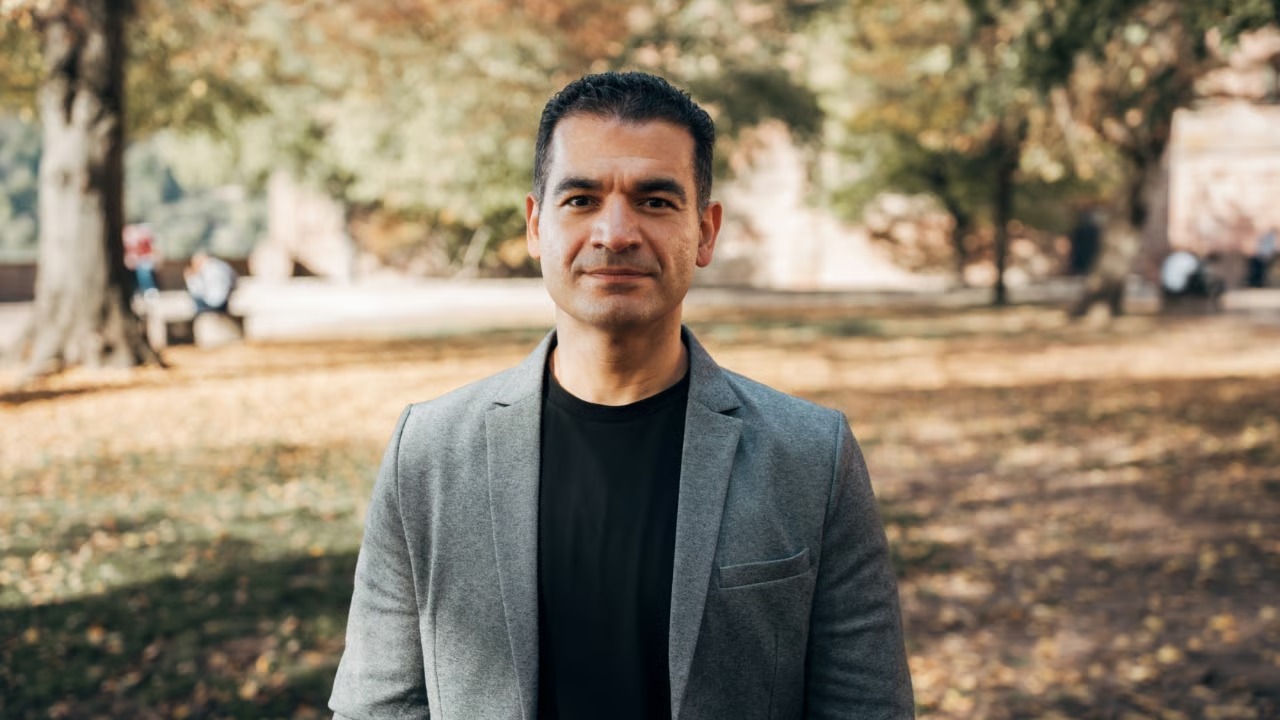
Understanding “go with the flow” in everyday life
Going with the flow is more than just a saying. Reza Mehman revisits a story from “The Cafe at the Edge of the World.” It suggests swimming with life’s waves rather than constantly fighting them. The sea turtle demonstrates this: it doesn’t waste energy fighting the current but uses the momentum when it’s flowing in its direction. This principle can be applied to work, sports, and life in general. Reza shares personal experiences from basketball and his professional life, showing how to recognize when to go full throttle and when it’s wiser to stay put. He also includes a charming story about his son that beautifully illustrates the law of attraction.
Go with the flow: the episode in brief
Core idea: Use your natural momentum in good phases. Conserve energy in difficult times rather than always fighting the current.
Short summary: Reza Mehman explains the turtle principle from “The Cafe at the Edge of the World.” The turtle conserves energy rather than fighting the waves. It moves when the current flows in its direction. This principle can be applied to all areas of life, whether at work, in sports, or in personal relationships. Notice when you are in flow and when you are not. That awareness can help you use your energy more wisely over time.
Detailed summary: Episode 88 of Project Mindset focuses on the principle of “going with the flow” and the art of recognizing and utilizing one’s momentum. Reza begins with a story about his son receiving tips at a bakery. He connects this experience with the idea of being open to opportunities. Reza then describes the book’s turtle principle. The turtle uses the backwash to its advantage rather than fighting the waves.
He applies this principle to basketball and work. Some days every shot goes in; other days nothing works. Unnecessary arguments on difficult days can simply drain energy. The core message is: recognize your flow, go full throttle when the momentum is right, and conserve your energy when the waves are against you.
Context: Who, What, Why
Who is speaking? Reza Mehman, host of the Project Mindset podcast, shares personal experiences and insights about mindset and personal development.
What is it about? To illustrate the principle of “Go with the flow”, i.e., the ability to recognize one’s own momentum and use energy accordingly, inspired by the turtle parable from “The Cafe at the Edge of the World”.
Why is this relevant? Many people exhaust themselves by fighting against resistance instead of strategically going with the flow. This principle can be crucial in professional, sporting, and private life.
Three key questions from this episode:
- How do I know if I’m in the flow or fighting against the current?
- How can I apply the turtle principle to my everyday life and work?
- What role do openness and the law of attraction play in personal success?
Table of contents
- Introduction – What this episode is about
- Summary – The core message in brief
- context – Background and relevance of the episode
- Topics and classification – The central topics
- Key messages – The most important findings
- Frequently Asked Questions – Answers to key questions
- Highlight quotes – The best quotes from the episode
- Transcript – The full episode to read
- Keywords – Relevant search terms
- Names and terms – Important references
- quotable passage – For sharing and quoting
Topics and classification
1. The Turtle Principle: Use energy wisely
The tortoise from “The Cafe at the Edge of the World” never fights against the current, but uses the backwash to gain momentum. A powerful image for the strategic use of energy in everyday life.
Keywords: Turtle principle, energy management, Cafe at the Edge of the World
2. Recognize and utilize momentum
There are phases in life when everything flows smoothly, and phases when nothing works. Recognizing your momentum allows you to go full throttle in good times and consciously conserve energy in bad times.
Keywords: Momentum, Flow state, going full throttle
3. Law of Attraction and Openness
Reza uses his son as an example to show how openness and a positive attitude lead to receiving more. The law of attraction begins with one’s inner attitude.
Keywords: Law of Attraction, Openness
4. Application to work and sports
Recognising your flow can help in basketball and at work. Reza reflects on making better decisions and preserving energy for other parts of life.
Keywords: Flow at work, sports and mindset, stress management
5. Change your relationship with money
Reza shares his changed perspective on money and recommends the book “Happy Money” by Ken Honda. A friendly relationship with money can change one’s attractiveness.
Keywords: Happy Money, Ken Honda, relationship with money
Key messages
- The turtle never fights against the current, but paddles just enough to stay in place, and goes full throttle when the wave flows in its direction.
- Recognizing momentum is one of the most important skills: In good phases you should go all in, in bad phases it is enough to hold your own point of view.
- The more open you are to something, the more you attract it. This applies to money just as much as to other areas of life.
- Fighting against the waves of life is exhausting but yields little progress. Strategic waiting and targeted action are more effective.
- Stress from one area of life should not be transferred to other areas such as relationships, family, or friendships.
- The flow principle is also evident in sports: some days you hit everything, other days nothing. Those who recognize this adjust their behavior accordingly.
- The principle from Judo of using the opponent’s energy can be applied to many life situations.
- A changed relationship with money, moving away from ambivalence towards openness, can positively influence one’s financial situation.
- Staying put also means not making things worse when things aren’t going well.
Frequently Asked Questions
What does “Go with the flow” mean in the context of mindset?
“Go with the flow” means recognizing your own momentum and swimming with the natural current of life instead of fighting against it. In good times, you go full throttle; in difficult times, you conserve energy and hold your position.
What is the turtle principle from “The Cafe at the Edge of the World”?
The turtle in the sea paddles against an oncoming wave just enough to stay in place. But when the wave flows back out to sea, it uses the current and goes full speed ahead to move forward with minimal energy expenditure.
How can I recognize my personal momentum?
Pay attention to whether things are flowing smoothly or if you feel like you’re fighting against resistance. If everything is going well and you’re achieving results, you’re in a flow state. If, despite great effort, there’s hardly any progress, it’s time to conserve energy and wait for the next flow state.
What does the Law of Attraction have to do with the Flow Principle?
Both concepts are based on the idea that inner openness and the right attitude influence external success. Those who are open to possibilities and don’t tense up attract more positive results and recognize their natural flow more easily.
How can I apply the flow principle in my work?
On days when you encounter a lot of resistance at work, it’s more sensible to stand your ground and avoid unnecessary discussions, rather than wasting energy. On good days, however, you should push yourself harder to compensate for the weaker days.
What does Reza Mehman recommend regarding the relationship with money?
Reza recommends cultivating an open and friendly relationship with money. He refers to Ken Honda’s book “Happy Money,” which helped him change his perspective on money. The more open you are to the topic, the more naturally it flows.
Why shouldn’t you carry stress into other areas of your life?
Fighting against the waves and losing energy in the process can negatively impact relationships, child-rearing, and friendships. Staying put also means protecting other areas of life.
What does judo have in common with the flow principle?
In judo, you use your opponent’s energy instead of fighting against it. If your opponent is coming towards you, you use their momentum to bring them down. The flow principle works exactly the same way: you use the available energy and flow instead of wasting your own strength.
Highlight quotes
“The turtle doesn’t really fight against the waves when it’s in the sea. When a wave comes towards it, it paddles just enough to stay in place.”
– Reza Mehman
“But when a wave flows back out to sea, it goes full throttle, uses the momentum, and paddles, so to speak, for its life to get ahead as quickly as possible.”
– Reza Mehman
“The more open you are to accepting this money, believe me, the more money people will hand you.”
– Reza Mehman
“Staying put might mean not breaking anything anymore. But if things go well, it means going all in.”
– Reza Mehman
“There’s a flow you have during the day or in a certain period of your life. And you can go with that.”
– Reza Mehman
“I know that if I put a lot of energy into it now, for example unnecessary discussions with colleagues, I know I would hardly make any progress.”
– Reza Mehman
“If you want to attract money, you have to handle money accordingly.”
– Reza Mehman
The full conversation
Hi everyone and welcome to Project Mindset, the channel for all those who know that with the right mindset, anything is possible. Before we get to today’s podcast topic, I have a super interesting story to tell. A while ago, I was at my mother’s bakery with my little one, who’s about five and a half years old now. It’s a cute little organic bakery, decorated in an old-fashioned style, and I really like it there.
And my little one was absolutely thrilled, just like my mother. My little one went to her at the till and helped a bit with selling the things that were there. He basically handed out the product, took the money, put it in the till, and so on and so forth. And the funny thing was….
The first few times, he started doing this, for example, when he received the money and a small tip, but he didn’t really want to accept the tip. I was surprised, so I said, “Hey, it’s perfectly fine if someone wants to give you money, then you accept it.” But even so, the following times he was a bit shy and didn’t want to accept the money. I told him, “The friendlier you are, the more open you are to accepting this money, believe me, the more money people will press into your hand for your piggy bank.”
A story about openness and tipping
Okay, I explained it a bit more, using flowery language and more flowery language, so he really understood what I meant. And sure enough, he always accepted the money very kindly, and the tips actually increased. The first few times it was around 10 cents, then 5 cents. People thought it was incredibly sweet, of course..
So, there was this little boy standing at the checkout, and at some point he actually even got a two-euro tip, and after that we slowly stopped chatting because we had to leave. The interesting thing was that the more open he was about the topic, I noticed, the more money he received. And for me, that’s a typical example of the law of attraction—the more open a man is to a topic, the more he’ll be able to get money from him. And I know from my own experience—I think I was like that myself a few years ago—you have this strange, unusual behavior. You have this strange, perhaps even somewhat ambivalent, relationship with the topic of money. Everyone knows you need money to live and to be able to afford certain things.
On the one hand, you want more money, but on the other hand, you have this strange relationship with it. I also know people in my circle who are excessively frugal, or who don’t treat themselves to anything because they think they have to save the money, and so on and so forth. And I now have completely different opinions and a different relationship with money. I think.
Thoughts on personal money management
If you want to attract money, you have to handle it responsibly, not waste it on things that aren’t worth it, and so on and so forth. But I changed my attitude towards money, at least for myself, some time ago. I also have a book recommendation in this context: it’s by Ken Honda, a Japanese author. The book has a strange title: “Happy Money.” I don’t remember where I read it, even after reading it..
Whether it’s a good book or not, I know at least that it gave me a lot of insights and perspectives on how to approach the topic of money. It’s not about keeping a financial budget and so on. The book is a bit strange; it’s basically about having a friendly relationship with money, but I think I understood what the author meant. Whether it’s a good book, I don’t know, so if you buy it, please don’t tell me it wasn’t a good book. I, for one, liked it and it helped me change my relationship with money a little.
What I mean by Go with the Flow
Okay, today’s topic isn’t really about money. Today’s topic is something I only learned about later in life, and I’ve called it “Go with the Flow.” Let me give you an example of what I mean. I play basketball every Wednesday at a club near me..
And there are days when I feel like I can’t hit anything at all, even though I’ve been playing for what feels like 25 or 30 years. There are days when I feel like I can’t hit anything, and then there are days when I feel like I can hit everything, every shot from every position, no matter how, whether running, standing still, and so on and so forth. But then, as I said, there are days when even the simplest things go wrong. That’s super interesting to me. It certainly has various factors, of course, like how tired I am that day, or if I went to the gym that day and did a little chest work, for example. Then I noticed that my power percentage definitely wasn’t that good.
Perceiving one’s own flow
But what I’ve become aware of over time, or rather over the years, is that there’s a flow you experience during the day, or during a certain period of your life, and you can go with it. And then sometimes there’s no flow at all, where you can’t really go with it. And there’s a great example that describes this “go with the flow” a bit more precisely. Perhaps you know the book *The Cafe at the Edge of the World*..
I think the book is okay. The hype around it feels a little excessive to me. I think it’s alright; it has a fast-paced story and is entertaining, so it’s fine. But I also don’t think it’s the most groundbreaking book ever on the topic of mindset, if I’m being honest, but anyway, that’s another topic.
The Turtle and the Waves
And in this book, there’s an example from the turtle that I found very memorable. It describes how the turtle doesn’t actually fight against the waves when there are more of them than the waves coming towards it. Instead, when a wave comes towards it, it paddles just enough to stay put. So, it’s also about conserving energy. But when a wave flows back out to sea, it goes full speed ahead, using the momentum and paddling for its life to get ahead as quickly as possible.
Coping with difficult phases
I find that incredibly interesting; it was also very memorable for me because I think we all know that feeling: a wave, a life wave, comes towards us, and you can either fight it with a lot of energy, which of course exhausts you, especially if the wave is particularly strong, and you hardly make any progress. There are phases in life where everything is flowing, the momentum is there, and then I would go all out, so to speak, and ride that wave. Perhaps this is also one of the core principles in many sports, for example, judo, where you use the opponent’s energy. So, if the opponent is coming towards you with their movement, you use their energy to, for example, make them fall.
Applying the principle to everyday work
And I think that translates really well to one’s own life. So, the basketball example: in my work environment, there are days when I feel like I’m facing a lot of resistance. Then I can ask myself, “Do I fight against it, or do I just try to maintain my position, stay put, and at least not fall behind?” I also know that if I invest a lot of energy, for example, in unnecessary discussions with colleagues or other employees, I know I’ll hardly make any progress..
So maybe it makes more sense for me to take it a bit easier today and definitely not let this wave drain energy from other areas of my life. For example, many people bring stress home with them, then have problems in their relationships, maybe with their children or parenting, and then behave differently with friends, and so on and so forth. So staying put might mean not breaking any more things.
Consciously use good phases
And then, when things are going well, for example, when there’s a good phase at work, and to stick with the example, you go all in and say, “Hey, things are going particularly well right now, so I’m going to push even harder to make even more progress.” You might have a little less time for other things for a while, but you know you’re making good progress right now and can compensate for the days when you weren’t as successful.
Momentum and fluctuating daily form
I personally always find the topic of momentum important. You can generate momentum, but everyone knows that there are days, there are phases in life, when you just feel like you’re not making any progress and you don’t really know why. For me, in basketball, the best example is that there are days when I just can’t score and I don’t know why.
Learning from basketball
I notice it too – it’s not just me, it’s my teammates who also play. Sometimes it’s like this: some people realize they’re not scoring, and you can really tell they’re more relaxed on those days or try to focus on other things. And then there are those who just don’t get it, they’re simply not having a good day, and they just keep missing, getting frustrated that they’re not scoring. Then I wonder, “Hey, don’t you realize it? Maybe you should just relax instead of trying to score.”
The right energy for the moment
But well, I think everyone sees it differently. Personally, I find this turtle example from the book “Coffee at the Edge of the World” really memorable. When a wave comes towards me, I expend just as much energy to, for example, stay put. And when the wave flows back out to sea, I go all in and go with it, using the energy even more, even full throttle, than I might otherwise do, so that I can move forward even further.
To conclude the episode
Great guys, that’s it for today’s podcast. As always, if you have any comments or feedback, please write to me at hello@projectmeinzeit.de. I’m always very happy to hear from you. I always reply, I promise, and of course, I’d also be happy if you could leave me a like, because that’s the only way Project Meinzeit can continue to grow. We’ll talk again next week, and don’t forget, until then, meinzeit is everything!
This transcript was automatically generated using Whisper AI and may contain occasional errors.
Keywords
Tags: Go with the flow, Use momentum, Turtle principle, The Cafe at the Edge of the World, Flow state, Law of Attraction, Mindset, Energy management, Project mindset, Reza Mehman, Happy Money, Ken Honda, Stress management, Personal development
Names and terms
Reza Mehman, Project Mindset, The Cafe at the Edge of the World, Turtle Principle, Go with the Flow, Momentum, Flow State, Law of Attraction, Ken Honda, Happy Money, Judo, Basketball, Energy Management, Stress Management, Personal Development
quotable passage
The turtle in the sea never fights against the waves; it only paddles just enough to stay in place.
As the wave flows back out to sea, it accelerates and uses the momentum to move forward as quickly as possible.
That is the art of life: Recognize when you are fighting against the current and save your energy for the moment when everything flows in your direction.
Those who use this natural flow to their advantage will get further in the long run than someone who constantly exhausts themselves against the waves.
You can find more personal stories and perspectives at Project Mindset.
Prefer listening? Explore the original Project Mindset podcast recordings.