The German Mindset: Sustainability & Technologies
The German mindset faces global challenges. Five guests at Dinner im Schloss discuss sustainability, technology and the future we want to build.
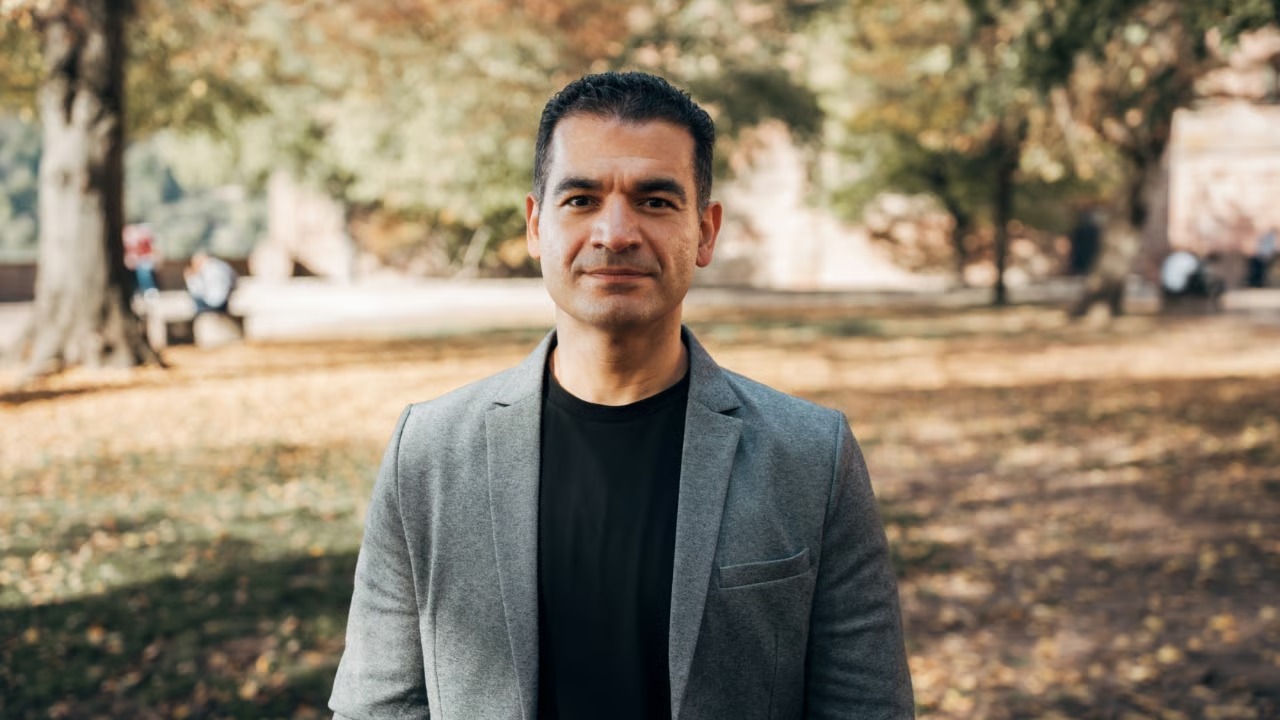
Introduction
The German mindset is being put to the test: Are we truly well-positioned in global competition when it comes to sustainability and technology? In this special Project Mindset episode, Reza Mehman invites five distinguished guests to a “Dinner at the Castle” to discuss precisely this question. Mayor Prof. Dr. Eckart Wuerzner explains how Heidelberg aims to become climate-neutral by 2040. Anahita Thoms from Baker McKenzie puts Germany’s sustainability record into perspective in an international context. Cawa Younosi from SAP, Christian Wiens from Getsafe, and AI expert Olga Mordvinova contribute the perspectives of corporations, startups, and technology companies. Together, they examine what Germany must do to remain competitive while simultaneously leaving a livable world for future generations. An episode that stimulates reflection and provides concrete impetus for action.
German mindset: the episode in brief
In one sentence: Five decision-makers from politics, business and technology discuss at the “Dinner in the Castle” where Germany stands in global competition regarding sustainability and technologies, and what needs to change.
In three sentences: Germany lags considerably behind in sustainability and technology compared to other countries. While cities like Heidelberg are implementing pioneering climate neutrality projects and corporations like SAP are integrating sustainability into their DNA, speed, risk appetite, and political will are lacking. The discussion shows that only a combination of regulation, innovation, investment, and a new mindset can make Germany fit for the future.
In five sentences: Germany is under pressure in global competition regarding sustainability and key technologies such as artificial intelligence. The 2022 SDG Report reveals sobering results, and crises like the pandemic and war have set back progress. Heidelberg’s mayor, Eckart Wuerzner, is demonstrating with concrete projects like giant heat pump systems that climate neutrality is possible. At the same time,experts like Anahita Thoms and Christian Wiens warn that Germany is falling behind in digitalization and startup support. The central message: More speed is needed, along with a new mindset among decision-makers and the courage to invest in key technologies instead of merely regulating them.
Context: Who, What, Why
Who is speaking? Reza Mehman is hosting a dinner at Heidelberg Castle with five guests: Prof. Dr. Eckart Wuerzner (Mayor of Heidelberg), Anahita Thoms (Partner at Baker McKenzie), Cawa Younosi (Global Head of People Experience at SAP), Christian Wiens (Founder of Getsafe) and Olga Mordvinova (Founder of InkTech, AI expert).
What is it about? This episode examines Germany’s position in global competition regarding sustainability and technology. Key future topics are discussed, ranging from municipal climate policy and ESG regulation to corporate responsibility, artificial intelligence, and startup ecosystems.
Why is this relevant? In times of multiple crises, from climate change and energy crises to geopolitical conflicts, Germany’s prosperity and competitiveness are at stake. This discussion provides insights and concrete recommendations for action from decision-makers in a wide range of fields.
Three key questions of the episode:
- Where does Germany stand in international comparison regarding sustainability and technology?
- What needs to happen for Germany to remain competitive while also operating sustainably?
- Do we have the right mindset to overcome the current challenges?
Table of contents
- Introduction – Overview of the dinner at the castle and the key questions
- Summary – The episode in one, three, and five sentences
- context – Who is speaking, what is it about,why is it relevant
- Topics and classification – The five central topics of the discussion
- Key messages – Key findings at a glance
- Frequently Asked Questions – Answers to the most pressing questions
- Highlight quotes – The most concise statements from the guests
- Transcript – The full conversation to read
- Keywords – Relevant search terms for the episode
- Names and terms – Important people, organizations and technical terms
- Quotable passage – For sharing and quoting
Topics and classification
1. Climate neutrality and municipal energy transition
Heidelberg demonstrates with concrete projects such as giant heat pump systems and wood waste power plants that cities can lead the way in climate neutrality. Already, 50 percent of the heating demand in the city center is met independently of fossil fuels.
Keywords: Climate neutrality, energy transition, heat pumps, fossil fuels, Heidelberg 2040
2. ESG regulation and sustainability legislation
Germany has introduced regulatory measures to address sustainability in supply chains because voluntary measures proved insufficient. The 2022 SDG Report reveals sobering results, and the tension between regulation and entrepreneurial freedom persists.
Keywords: ESG, Supply Chain Act, SDG Report, Sustainability Regulation, Sustainable Finance
3. Sustainability in companies: Corporation vs. Startup
While SAP, as a DAX-listed company, integrates sustainability into its corporate DNA and helps other companies with CO2 accounting using its software, startups like Getsafe have to find their contribution within their own context and avoid greenwashing.
Keywords: SAP sustainability, startup ESG, greenwashing, CO2 accounting, corporate responsibility
4. Artificial Intelligence and Germany’s Technology Position
Germany has a significant need to catch up in the field of artificial intelligence. While AI offers enormous potential in sustainability issues, there is a lack of investment, talent, and the courage to rapidly scale technologies.
Keywords: Artificial Intelligence Germany, AI competition, technology hub, digitalization,InkTech
5. Mindset and generational change
The discussion shows that a change in thinking is necessary: away from burying our heads in the sand and towards proactive action. Younger generations are demanding sustainability, but the power of money and decision-making still lies with older generations.
Keywords: Mindset change, generational conflict, future-proofing, responsibility, competitiveness
Key messages
- Global warming is progressing faster than expected years ago, and industrialized countries, as the main emitters, bear a special responsibility.
- Heidelberg can already cover 50 percent of its heating needs in the city center independently of Russian gas or other fossil sources.
- The SDG Report 2022 is sobering: Even in areas with previous progress, such as poverty reduction, there have been setbacks due to pandemic and war.
- Companies are not doing enough when it comes to sustainability, which is why legislators have had to intervene with regulations such as the Supply Chain Act.
- ESG should not only focus on E (Environment), but also on S (Social) and G (Governance).
- SAP invests early in sustainability solutions and helps other companies identify CO2 footprints in supply chains with its software.
- Sustainability is also a generational issue: 50 percent of US wealth is held by Boomers, only 4 percent by Millennials.
- Germany needs to invest significantly more in artificial intelligence and other key technologies to avoid falling behind in global competition.
- Startups like Getsafe should authentically live sustainability within their own context, instead of engaging in greenwashing.
- The central challenge is not only technological, but requires a new mindset among decision-makers in politics and business.
Frequently Asked Questions
What does it mean when a city like Heidelberg wants to become climate-neutral?
Climate neutrality for a city means consistently driving the transition from fossil fuels to renewable and alternative energy sources. Heidelberg is relying on wood waste power plants, giant heat pump systems, and district heating networks to become independent of gas and oil. Already,50 percent of the city center’s heating needs are met in this way.
How does Germany fare in international comparison regarding the Sustainable Development Goals (SDGs)?
According to the 2022 SDG Report, the results are sobering. Even in areas that had previously shown progress, such as SDG 1 (no poverty) and SDG 8 (decent work), there have been setbacks due to the pandemic and war. Progress is only still evident in SDG 9 (infrastructure) and partnerships.
Why was the supply chain law introduced in Germany?
The national action plan revealed that companies are not doing enough voluntarily for sustainability in their supply chains. In particular, their commitment was insufficient in the “S” (Social) aspect of ESG. Therefore, legislators felt compelled to intervene with regulations, even though regulation is not always the ideal solution.
How does SAP, as a DAX-listed company, deal with the issue of sustainability?
SAP invested early in sustainability and aims to be climate-neutral in the coming years. The company is focusing on eliminating plastics, operating its own power plants, and identifying potential savings. Furthermore, SAP develops software solutions that help other companies identify and reduce their carbon footprints in their supply chains.
Can startups actually contribute to sustainability?
Yes, but the contribution must be authentic and contextualized. Christian Wiens from Getsafe emphasizes that ESG encompasses all three letters and that startups don’t necessarily have to focus solely on the E (Environment).More important than greenwashing is being strong in the areas that fit one’s own business model.
How can artificial intelligence help with sustainability issues?
AI can help analyze and optimize supply chains, identify CO2 reduction potential, and predict environmental impacts. InkTech founder Olga Mordvinova demonstrates that artificial intelligence is a key tool for data-driven sustainability strategies, provided Germany invests sufficiently in this technology.
Where does Germany stand in the global AI competition?
Germany lags significantly behind the US and China in artificial intelligence. There is a lack of investment, a lack of talent development, and a lack of courage to rapidly scale technologies. Without a significant change of course, Germany risks falling behind in this key technology.
Is sustainability a generational issue?
Partly, yes. Younger generations are demanding sustainability more strongly, but financial power and decision-making authority still reside with older generations. Christian Wiens points out that 50 percent of US wealth is held by Baby Boomers and only 4 percent by Millennials, which shows where the power of money lies.
Should Germany go “all-in” on key technologies or diversify its efforts?
This question is being discussed controversially. The prevailing view is that Germany needs to invest more heavily in key technologies without completely neglecting the breadth of its portfolio. The crucial point is to accelerate progress and make bolder investment decisions.
What is the “Dinner in the Castle” format at Project Mindset?
“Dinner at the Castle” is a special format of the Project Mindset Podcast, in which Reza Mehman invites several guests to a culinary conversation at Heidelberg Castle. Top chef Martin Scharff provides the culinary accompaniment, while the guests discuss key topics for the future.
Highlight quotes
“Global warming is progressing faster than we would have expected just a few years ago. So it’s a very serious issue.”
– Prof. Dr. Eckart Wuerzner
“So we are more independent, which means more resilient and of course also more climate-friendly. And if you do it cleverly, it can also be very interesting from a cost point of view.”
– Prof. Dr. Eckart Wuerzner
“Where are any strengths we even have? Ultimately, the report is truly sobering.”
-Anahita Thoms
“We must of course be a role model, but above all we must use our strength to create global change.”
-Anahita Thoms
“We have the data, we know where the footprints are. And we help with our software, we try to help companies with our software to identify where in the supply chain CO2 is produced.”
– Cawa Younosi
“We don’t want to bend this to the hype, just to do something for the sake of greenwashing, but actually for the things we can be strong in.”
– Christian Wiens
“As a company, you always have to make a contribution, but you don’t necessarily always have to focus on the E.”
– Christian Wiens
“I think we can no longer pretend that crises and hotspots in other parts of the world do not affect us.”
– Reza Mehman
The full conversation
Hi everyone and welcome to a Project Mindset Special. Phew, I have to say, we’re currently living in very challenging times. We’ve realized that crises and conflicts worldwide naturally have implications for us as well, influencing how we can further increase our prosperity or whether we might even stagnate. Today, I want to talk to decision-makers about where we Germans actually stand in international comparison, especially on topics like sustainability and technology.
Therefore, I’m incredibly happy to have the following guests with me today. A huge thank you also goes to the top restaurateur Martin Schaaf, who provided such excellent culinary accompaniment to our dinner at the castle. So, let’s begin with the first question for Mayor Prof. Dr. Eckhard Würzner. As he is also the First Vice President of the German Association of Cities, he naturally has a very good overview of how other cities stand on the topics just mentioned. I wanted to know from Mr. Würzner what it actually means when a city like Heidelberg wants to become climate-neutral.
What does climate neutrality mean in this context? Well, first of all, it’s important to acknowledge that global warming is progressing faster than we would have expected just a few years ago. So, it’s a very serious issue. An issue that, of course, must play a huge role, especially in industrialized countries, because we are currently the main emitter of climate-changing gases, with CO2 being the primary component. And we are trying to do a lot, primarily by switching from fossil fuels to renewable energy sources, to alternative energy sources.
Use energy efficiently
A small example: in the past, there were actually some good concepts here in the region. You had a large power plant, a power plant that produced electricity. You also used the waste heat after the turbine to heat water, for example, to supply the city centers of Mannheim or Heidelberg with hot water. This, of course, allowed you to replace all the old oil, coal, and gas heating systems. That was significantly more efficient.
And we’ve now gone a step further and built our own power plants, for example, using wood waste. Giant heat pump systems – now an entire gymnasium full of heat pumps – that use heat from the air to produce hot water. And with this, we can already supply 50 percent of the total heating demand in Heidelberg, in the city center, in the Südstadt district, in Boxpark, and in the Emmerzgrund area. So they are completely independent of Russian gas or gas from Kuwait.
So we’re more independent, which means more resilient and, of course,more climate-friendly. And if you do it cleverly, it can also be very attractive from a cost perspective. But it’s a hugely ambitious goal because you need to get many more people on board, especially businesses and private households, some of whom simply don’t have the financial means to get up to speed so quickly. But that’s a challenge.
Sustainability in international comparison
My second question was for Anahita Thoms. Ms. Thoms is a lawyer and partner at the renowned law firm Baker McKinsey. She is also a member of the German government’s Sustainable Finance Advisory Council and, with her international perspective, has a very good sense of how Germany compares globally. I wanted to know from Ms. Thoms how Germany stands on the issue of sustainability in international comparison. Are we well-positioned, or are we doing too little? One question is, what is Germany actually doing?
And the other question is, what are German companies doing? And then, of course, we have to broaden that to a global scale. Overall, from a business perspective, companies aren’t doing enough. But we also have to acknowledge that awareness has been suppressed for many years, because we’ve been talking about climate change for more than two decades. What also needs to be said is that the topic of ISG (Industrial Social Governance) is now a major focus.
That means awareness is now present. But in the S sector, we’re still far from where we need to be. This is evident, for example, in Germany’s national action plan, which has shown that we’re not there yet. Therefore, the next step has been taken: we unfortunately need to regulate this even more, because regulation isn’t always ideal. Ideally, some things are done voluntarily, based on a strong conviction regarding sustainability in the supply chain.
Continued
But they noticed that companies weren’t doing enough, and then the legislature stepped in. They certainly followed up on it. It was a very controversial law, and it remains very challenging. And the other issue, which you’ve hinted at, is this: I have a global perspective, because I truly believe that one thing is to take on a pioneering role as a strong export nation. But the other is, what can we really achieve, just in Germany, in Heidelberg?
We must, of course, lead by example, but above all, we must use our strengths to create global change. Because ultimately, when we talk about global supply chains, about global climate change, we need to find global solutions. Where do you currently see the greatest weaknesses? Well, I don’t know who has read the 2022 SDG Report. I would phrase the question differently. Where are any strengths we actually possess? Ultimately, the report is truly sobering.
Even in areas where we made real progress for a while,such as SDG 1 (no poverty), or where we saw small signs of success, like SDG 8 (decent work), we’re seeing that the crises are causing us to regress. So, unfortunately, there’s hardly any progress. There are a few areas, like SDG 9, where we’re building infrastructure, or the SDGs that focus on partnerships.
Global progress and setbacks
I would say we are making progress. You can see that. These are global advances. But overall, it has to be said that the pandemic, followed by the war, has primarily led to setbacks. That’s certainly not pleasant to hear. So, in the Project Mindset podcast, I naturally like to talk about the topic of mindset. And I’ve also wondered what kind of mindset the German population has. Are we even prepared for the future in terms of mindset and skillset?
Kawa Yunusi from the DAX-listed company SAP is one of the top HR professionals in Germany. His word, as an HR expert, naturally carries weight. I wanted to know from him whether sustainability goals are a focus in the day-to-day work of SAP employees or whether they are more strategic, long-term objectives. The answer is both. We also started investing in sustainability much earlier than most companies. And we, as a company, will be completely climate-neutral within the next few years.
We started much earlier. On the other hand, it’s also easier for us. We don’t have factories, we don’t manufacture cars, etc. But nevertheless, we’re making efforts to think from the ground up about how we can become plastic-free, where we have potential savings. We’ve also had corresponding power plants calculate their own costs. You have your own power plants. Yes, that also helps in terms of savings right now, and we want to do our part as a company, especially during the winter.
Sustainability in corporate culture
That’s why it’s ingrained in our DNA. We also have a clientele, it must be said, as employees who are almost 90% university graduates, and therefore very familiar with the issues. And of course, we started much earlier on the product side as well. Right now, we’re investing heavily in sustainability to help other companies. SAP is the only DAX-listed company. We’re represented in all industries, at almost all major companies.
We have the data; we know where the footprints are. And that’s what we help with our software—we try to help companies identify where in their supply chain CO2 is being produced and how they can proactively implement the appropriate measures. Christian Wiens, founder and CEO of GetSafe. With over $115 million in investment capital raised to date and over 300,000 customers, GetSafe is one of the largest European Insotec startups.
Christian knows the job market and the capital market situation for startups very well.I wanted to know from him how a startup, unlike a large corporation, deals with the issue of sustainability. That’s a good question. We’re a growing company, nowhere near as big as SAP or other corporations. Not yet. Not yet, exactly. Hopefully never quite that big in terms of headcount. Jürgen Tietem said the same thing, that quote from him. We’ll never have more than 30 employees because then we won’t be able to oversee everything, I won’t be able to take care of them.
Continued
The result is clear. Exactly, you grow with your challenges, even as a founder and manager. But ultimately, I think it’s still somewhat of a generational issue. I recently saw an interesting analysis showing that roughly 50% of US wealth is held by US Boomers and only 4% by Millennials. That illustrates the power of money. Where does power actually lie, in which generation? We’re a company that naturally attracts younger profiles, partly due to the types of profiles we seek – developers, designers, data scientists, and so on.
These things are incredibly important to them, and to us as the founding team as well. So, for me, the question is always a bit tricky, because these are things that should go without saying. However, as a digital insurer, we’re not in an industry where we deal with logistics chains, production, and so on. There are certainly other examples in the tech sector that do produce goods or at least have to trade and ship a great deal of merchandise, and so forth.
I think it’s incredibly relevant there. But what I like, and what you just mentioned, is that you really have to look at the whole ESG topic broadly, considering all three letters and not just the one. Otherwise, I’d have to say, “I can’t contribute at all.” And I believe that as a company, you always have to contribute, but you don’t necessarily have to focus solely on the “E.” One last little example: A year ago, an employee asked me, “What are we doing here for sustainability, for the environment?”
As a company in its own field
And that’s incredibly important to me. We are who we are, we have a mission, we want to protect people and their lives. And when we do good, we always do it within our own context, within what we’re good at. After that, she resigned and left. That was perfectly fine with me because I thought we didn’t want to bend that to some sham, just to do something for the sake of greenwashing, but rather focus on the things we’re actually strong at. Olga Modvinova, Founder and CEO of InkTech.
Olga is a highly experienced AI expert and developer.She was recognized by the renowned business newspaper Handelsblatt as one of the top 50 female entrepreneurs in Germany and is also a board member of the Baden-Württemberg Association of German Women Entrepreneurs. I wanted to know from her how artificial intelligence can actually help and support sustainability issues. AI is just a technology. AI is only as good as how humans apply or implement it. That means it can certainly be used to promote and support sustainability, whether in the social sphere, but especially in the area of resources and energy.
How AI can help with simulations
Examples include simulations where complex data is combined and used, perhaps, to address firefighting, where one can also simulate what would happen if wind direction or vegetation changed, thereby not only saving CO2 but also protecting lives. We, that is, our company, in the field where we work with AI, are primarily in the area of optimization. And that, too, is sustainability. If we succeed in saving energy in a manufacturing company, producing more effectively, resiliently, and sustainably—for example, by eliminating waste—then we, too, have made our contribution to sustainability, also with the help of AI, or even in the monitoring of infrastructure such as substations or railway tracks.
You might wonder, “What’s going on with the tram tracks?” But here’s a very simple example. If you analyze the data on the condition of tram tracks and can predict how specific sections of them will develop, you can plan maintenance in a timely manner. This makes trams and trains safer. As a result, more people use them, we use fewer cars, and in this way, we can indirectly contribute to sustainability. And this can also be done with AI, because AI has certain strengths. While it can’t do everything, thankfully, AI can combine many different data sets and solve many tasks that are complex for humans in a very targeted way.
Meaningful analysis of large data sets
And for example, when we have very large amounts of data, it’s sometimes not easy for us, but relatively easy for AI, to functionalize it and predict something that a very experienced employee might see for maintenance, but most people simply don’t. This allows us to achieve a great deal. I believe the economic advantages play a very significant role here. Absolutely. And these very advantages also lead to people being willing to act in a more sustainable way.
That’s the strange thing, from my perspective. On the one hand, we all feel like the world is on fire. That’s my impression, if I may be so blunt. On the one hand, the world is on fire, but on the other hand, I have the feeling that many people aren’t taking it seriously at all.The question I’ve been asking myself is whether the legislature shouldn’t enact much stricter laws so that we really grasp, so to speak, that we have to take action. And from your perspective, Mr. Wirtz, I’d be interested to know: in your view, is the legislature doing enough?
Continued
So, we have the famous 1.5-degree target from the Paris Agreement. To me, that seems somehow unattainable. I’ve also read a few studies on it. The question is, do legislators need to do more? Well, I think so. I believe it’s absolutely essential. Globally speaking, we’re currently experiencing a truly crazy process. Let’s look at the USA, for example. You have many cities, and I’d say that in four or five years, more than 60 percent of the world’s population will be living in cities.
Even in large cities. You have politically elected representatives who are willing to make changes, who create clear action plans, who are switching to renewable energy, and who have a completely different perspective on the social dimension of social security than some national governments. If I look at the USA, for example, under the last administration this conflict between the state and what happens at the municipal level was truly massive. If I look at Poland, we have exactly the same situation.
Cities as drivers of social change
We have mayors of larger cities, including Warsaw, colleagues I know very well, who are fighting hard for social justice, for LGBTQ+ rights, for everything that makes our cities special. The national region is doing the exact opposite, continuing to build coal-fired power plants, continuing to develop a technology that is actually the opposite of what one should be doing. So I’m certain that, globally speaking, cities—and we’re talking about large entities here, Mumbai has 23 million inhabitants, so Berlin is a village in comparison—and we in Germany are no longer even relevant on the global map compared to the megacities.
To be perfectly honest, cities can really play a crucial role here, because we are much closer to the problem. We experience daily what it means when the groundwater supply is suddenly no longer secure. We experience, for example, when I see plumes of smoke constantly hanging over Palo Alto or even San Francisco for three months because the forests are burning, and there is so little water in the region, that I immediately realize what a threat this poses.
Municipalities are networking
Of course, this applies to the entire region as a whole. So, the immediate impact comes primarily from the cities. That’s why cities need to put even more pressure on national governments. We’ve joined forces and adopted a so-called Covenant of Mayors. It’s similar to what companies have done through their political agreements,where we’ve made a voluntary commitment to climate neutrality. We now have over 11,000 cities worldwide that have joined this initiative.
We’ve organized my network in Brussels, all in cooperation with the European Commission, where we expect corresponding reports. So, exactly what you need. You need balance sheets; you’ll be kicked out if you can’t get reaccredited by your structures because you’ve become too incompetent. So, precisely these review mechanisms are crucial. This is on a global level. It’s truly incredible what processes are taking place. And from a national perspective, it’s essential; let’s take this example.
Fifteen years ago in Heidelberg, we decided that we would only build climate-neutral structures for 15 years. Bahnstadt, for example, is a completely climate-neutral district by the standards of the time, meaning all buildings are super-efficient, and the energy supply, including the remaining energy needs, is met by a newly built power plant powered by renewable energy. This standard, which we established 15 years ago and which has been in effect ever since, is not yet a national standard. And it will probably only become a national standard in seven years.
From knowledge to implementation
So we’re talking about almost, well, 15, 17, 20 years of losses. Even though the knowledge is there, it’s not being implemented. That has to change; we need much clearer guidelines and, above all, a structure that allows companies to keep pace. Because what we have is this constant yo-yo subsidy system. In and out of subsidies. It’s a disaster. We also had a gigantic boost here in Germany through the Renewable Energy Sources Act.
We now have a very high share of renewable energy in the electricity sector. That’s great. But it was actually triggered by the Renewable Energy Sources Act (EEG), because everyone participated and you received a cost-covering feed-in tariff. That was a good instrument, but only Germany had it. France didn’t, Italy didn’t. So we haven’t really transferred this best-case scenario to other European levels. The Danes have excellent legal frameworks for the use of waste heat.
Continued
So, what we understand today as heat atlases—what do you do with waste heat? We could have learned a thing or two from them. Cycling infrastructure, for example, is significantly better supported in the Netherlands and Denmark than here. I always say that if we all in Europe were to utilize these best practices and incorporate them into regulations, then other regions would naturally have opportunities they wouldn’t otherwise have. The most important thing for us, to further educate the local decision-makers, is empowering them.
So, the cities are the most important lever. Because if that doesn’t happen,there’s no accountability. In France, for example, cities have no responsibility in the energy sector. There’s EDF, which basically handles it for France. And then, of course, it’s clear that large-scale technologies like nuclear power plants can only emerge. Here, we have 700 municipal utilities that have built their own decentralized energy supply. They are much more resilient and much more proactive. In Italy, I have Ene, another giant supplier, and otherwise hardly any local or regional energy supply.
So, the responsibility needs to be broken down further to the regional level. Not relinquishing responsibility, but breaking it down, taking it along, and bringing it into the relevant decision-making process. In my view, that’s the future; otherwise, it will become very, very, very, very difficult. You just mentioned regulations and responsibilities. Ms. Thoms, I have a few more questions for you on that. I believe you are very familiar with the legal situation, of course, as a top lawyer.
A culinary stop at the castle
But before we get to that, let’s start with the first course from Mr. Schaf. A warm welcome to our castle and this wonderful podcast. We’re sitting together in the castle wine tavern, overlooking the Renaissance facades, and of course, we thought we’d conjure up a fantastic dish as a culinary starter. First, naturally, it’s vegetarian, which is totally awoke these days, with cottage cheese and couscous underneath, a pear, horseradish, beetroot and horseradish foam, various garden herbs, and of course, the whole thing topped with fish.
Specifically, two Leif and Eilsmeer trout, cured and served as tartare with pear and horseradish. I wish you a pleasant meal, much enjoyment, and a wonderful evening. Thank you very much. Ms. Thoms, as a lawyer, I believe you know both sides very well. You are, of course, familiar with the legal situation, but also with what companies can actually achieve. You previously mentioned—it’s quite a mouthful—the Supply Chain Due Diligence Act. Exactly, that’s what you also referred to.
I sometimes get the impression that it’s incredibly difficult for companies to see through all of this, to really delve into all the details – where does the merchandise come from, who is the supplier, my supplier, and so on. On the one hand, I can imagine you naturally saying that we need stricter laws. I know you’re a big fan of the global targets we have. On the other hand, companies naturally have limited resources to familiarize themselves with these laws and to say, “We can do this and we can’t do that.”
Laws and their practical implementation
My question is, which laws would you actually like to see tightened? Numbers one and two. Do you think a company can even manage to delve into all of these laws? This is,of course, a very complex and significant question because it will obviously have a major impact on companies as soon as we have even more laws. Firstly, I would say we need to reduce some laws. We need to cut red tape in many respects. The introduction of the Supply Chain Due Diligence Act was truly controversial, in both directions.
Many companies actually wanted the law because they said, “We are pioneers in Germany, and we want to compensate for the competitive disadvantage we have because other companies aren’t complying.” It’s not that all companies were against it. There were even petitions from these companies in support of the law. But of course, there were many companies opposed. It was heavily criticized, and some aspects were dropped, such as the civil liability clause.
And you have to understand that, according to the German Supply Chain Due Diligence Act, there’s a focus on our own business area, which we have influence over, on the Tier 1 supplier with whom we have a contract. We naturally have influence over that. And only in certain situations and with regard to specific measures do we go beyond that, towards Tier 2, Tier 3, Tier 4, and so on. The European law, the directive that’s currently being discussed, goes further than that.
Continued
This means we have to expect that things will go a step further, that we will have civil liability enshrined, that we will consider the value chain and not just the supply chain. In other words, it’s already being discussed whether we need to expand the law even further. What’s important, I think, and you just mentioned this, is that we can only achieve so much in Germany. That means, whether it’s the EU, the European Union, or the European Union, especially the EU and the European Union, we will be much more effective if these are EU laws, and ideally, of course, if the major players also have their own laws.
And I think we need to invest far more energy there than just constantly working on our laws in Germany. That means the energy needs to be directed to Brussels, and then we need to consider how to consistently bring the global players on board. Your second question is, of course, very valid. Can companies still manage that? And I see a real range of companies. I see the DAX 40, I see the MDAX, I see the family businesses.
Some are intrinsically motivated. There are family business owners who have a long tradition of placing great importance on social responsibility. Other companies, currently in their development phase, have made social responsibility their guiding principle. There are some young entrepreneurs who are truly passionate about it. They have very profitable businesses and say, “We want that too.” And then there are CEOs who aren’t interested at all. They say, “If I can make a profit from it,then I’ll participate.”
Winning over decision-makers for change
And we also need to reach the CEO. Because perhaps he’s a CEO who’s particularly polluting the climate. And not reaching him now is our problem. You could say, yes, that’s his problem; eventually, he’ll lose his customers. But we’re already wasting so much time, which is why I’m not in favor of taking all these companies along, constantly going back to them. I talk about greenwashing very often. And we need to talk about it. But I also see a development that really worries me, because I see so many companies like this.
Namely, that companies that are taking action are talking about it less and less because they’re afraid of greenwashing. They say, “If I communicate the small steps I’m taking, then A and B will say, ‘Why so little? Why not more?'” This leads to competitors, CEOs who have no interest in it, saying to me, “But Ms. Thoms, they’re doing so little too, or they’re not doing anything at all.” This means we really have to be careful to continue pushing the companies that are willing in the right direction, and also bring along the CEO who doesn’t want to participate, showing him that it’s in his interest too.
Short-term profit and long-term prosperity
I always say, it’s about short-term and long-term profitability. In the short term, of course, the CEO is incentivized by the next quarterly report and the inevitable question: “What will the shareholders say?” But when you consider long-term prosperity, when you look at the climate crisis, when you see how little potential we’re tapping into in terms of brainpower, then you have to say—at least that’s how I try to get the CEO on board, even if he doesn’t actually have any interest in the topic. This long-term versus short-term thing—I’m hearing it referred to as a skillset or mindset issue, and that brings me to a question for you, Karol.
Sustainability is reaching the mainstream
You’re a top HR professional here in Germany. This isn’t really something for a reporter to cover. What do you think can be done for someone in your position who is so interested in the training and skills development of their employees? How can future CEOs and decision-makers develop this long-term perspective and stay on the right track? What can be done? Well, the basic principle is to start as early as possible, engaging with young people in schools, making it more tangible and accessible. Because once they become a gateway to a company, we can only influence the company to a limited extent, but the entire socialization process, the understanding, etc., is crucial.
We can’t make up for it now.But I’m not too worried about that, considering the Fridays for Future movement. The issue has entered the mainstream; it’s gone from the organic food aisle to the supermarket shelf. I think we don’t need to worry too much about that. We also see in recruitment that issues like diversity and sustainability efforts are absolutely crucial. I shouldn’t use that word. It’s decisive whether they’re implemented in the company or not.
What employees expect from companies
The topic of the package deal, salary, company pension, etc., is practically a given. And if a company engages in greenwashing or pinkwashing, in things like promoting women, it’s lost. Previously, one might have said, “So what? I’ll just look for different talent.” But if you want to address the skilled worker shortage, as we have in Germany, you can’t afford to say, “We’re just pretending, and it’ll all work out, people won’t notice.” Word gets around very quickly, whether through social media, Knunu, or Glastor, about those who are just putting on an act, compared to those who are genuinely committed.
Continued
And there are a lot of people who start with us. I now always do this with everyone who’s started with us. After 3-4 months, I just call them, spontaneously. I ask how they’re doing, why they like SAP so much, and if they feel comfortable there. And I won’t lie, this isn’t empirically proven, of course; it’s just my subjective experience. In the vast majority of cases, the first topic is what we as a company are doing in terms of social responsibility, diversity, and sustainability, and what potential the company has from their perspective and what they want to contribute.
So, I think that at the moment, nothing is conceivable without considering sustainability. But it’s important that it doesn’t just remain empty words, but that there’s actually the possibility of shaping things. And if a company can claim that, both internally and in society, even just regarding its supply chain, then it has very good chances in the job market. You mentioned something about not being able to afford to do that, even as a company. I sometimes get the impression that we’re in very intense global competition for certain key technologies.
And my fear is sometimes that we’re falling a bit behind, especially in the high-tech sector. I’ll come back to the topic of artificial intelligence. From my perspective, I think it makes a huge difference whether AI, in this case the technology, is developed somewhere in the Far East or even in the USA, versus whether it’s developed in Europe, or specifically in Germany. I believe that makes a huge difference, especially regarding how AI handles data and data protection regulations.
Speed in artificial intelligence
My concern, however, is that we’re a bit too slow when it comes to AI. We’re only at this stage because of these data protection regulations, which might be a bit of a hindrance for those who can influence us. I think, Olga, you have excellent insights into this. Could you briefly put things in perspective, because I’d like to move from the topic of sustainability to technology and global competition. I have a few questions about that, which I’ll get to later. I think that perhaps we in Germany even need to focus on a few truly key technologies and acknowledge that we simply can’t compete with the other technologies in the global arena.
But before I get to that question, could you briefly put us in perspective: where do we actually stand with regard to AI? I would say it’s a very complex question, with many facets, many answers, and many perspectives, of course. Perhaps to put it cautiously, we are making very steady progress with AI in Germany. We are moving forward slowly but surely, and there are areas where, in my view, we definitely haven’t fallen behind, to quote [the previous speaker]. There are other areas where there is certainly a need for further progress, if that’s what you want.
Research and technological foundations
Perhaps we should start from the beginning, with research. We’re doing quite well in Germany. We have excellent universities, many top-tier institutions. Basic research is outstanding; mathematics and physics remain among Germany’s leading exports, as does mechanical engineering. All the areas that define AI from a holistic perspective are represented by numerous research centers. There’s practically nothing like the FKI anywhere else in Europe. And it has multiple locations, not just in Saarbrücken, but also in Kaiserslautern and now further north as well.
The number of research initiatives in this field is enormous. We support it at the state level, and we support it at the federal level. There are Fraunhofer Institutes for applied research. I would argue that we haven’t really missed anything there. So we are definitely moving forward. Of course, there are topics that, I think, are also economically motivated. The topic of energy, energy savings, and optimization is also what simply defines us in Germany as a nation of mechanical engineers.
But there are other issues, naturally related to the GDPR, that aren’t typical for us. Data protection. Data protection. For example, for a Chinese person, an American, or perhaps other Europeans, it’s relatively unimportant whether they’re being recorded while out and about. There are cameras everywhere; I’ve seen it in the USA. You go somewhere, you get recorded, and then the data is analyzed. Whether it’s by intelligence services, the police,or Palantire, which is also a major player in this field, nobody seems to care.
Technology and the question of acceptance
If we were to allow this here in Heidelberg’s pedestrian zone, I’d be really curious to see what kind of mail Mr. Würzner would receive. Probably from me first. But that’s precisely the question of mentality, this mindset. First, is it necessary, do we even want it? And because, from the perspective of many Germans, and perhaps also Europeans—though it’s difficult to speak about individual countries—there are areas where relatively little is being done, simply because the market for it isn’t there.
Continued
And in a market economy, the market is the leader, or rather, it sets the rules. So it’s not surprising that we might lag somewhat behind the US or China in the area of data analysis or use cases related to data—simply data about people—while, for example, in the area of perspective. I’m not an expert in that area either. I’m more involved in optimization. Machine data, the kind we analyze—in that field, there’s definitely exciting competition from all over.
We’re moving forward, partly because this area of AI is very specialized here. Every machine manufacturer has intellectual property (IP). Every infrastructure company has its own IP. One steel foundry isn’t the same as another. And this IP, as I said, is machine- or process-specific. That remains within Germany. And if the AI is to be further adapted for this, it can also be used accordingly. But perhaps we should return to the question: where do we stand? We’re on a journey, as everywhere else. And there’s one issue that’s extremely important to me, and that’s not just basic research, but rather the transfer of basic research into application.
So, we all use smartphones. Each of us has thousands of apps. We’re being tracked. WhatsApp, what can I say? But we have extremely few industrial applications that potentially connect this consumer world with the world of industry and research. Take MP3, for example. So, basically, if we can find a way to bring top-notch research to humanity and especially to industry—because that’s what provides the funding and drives the market—then we’re actually on the right track.
Data protection and new developments
So, it depends a bit on us, and perhaps also on legislation. Because I don’t think it’s a bad thing at all that we don’t have any cameras in our pedestrian zone. I would be happy if it stays that way. I believe that in the long run, it’s also a competitive advantage that we have these regulations regarding data protection, etc. Because, thankfully, given everything we’re seeing at the moment, the trend is moving more towards democratization, more towards self-determination,more towards data protection. And if that continues, then the applications, the companies, the states that have firmly established this from the outset will be the ones to benefit.
So, we have an ethics committee for our AI. We commit to certain behaviors, ensuring that algorithms are transparent when we do things that involve risky decisions, not as a company, but jointly with an ethics committee. But in the long run, I think customers will also reflect the feedback we receive from China and other countries. And that’s seen as an advantage, not necessarily a disadvantage. Of course, the implementation is much more complex.
It costs significantly more than in countries where we don’t have such regulations. But if it gains acceptance, then in the long run, acceptance will be higher than with other applications. Christian, you’re involved in a high-tech startup environment. What’s your perspective? Do you feel well-served by the opportunities we have here in Germany? Because I also know that your company operates in a very competitive environment. How do you feel technologically speaking? I myself studied mechanical engineering, so I’m practically a good German mechanical engineer.
Experiences with knowledge transfer from university
Back then, I had to choose a university. I’m from Heidelberg myself. The university I chose seemed better at transferring knowledge. I’ve been completely disappointed ever since. I realized relatively early on at that university that I wouldn’t get anywhere there when it came to this transfer. And I understood why. I would totally agree. We don’t lack basic research, bright minds, or technology here. We lack the packaging behind it.
That’s very broad. From legal issues to storytelling, how to package something, to lobbying. In which direction does lobbying go? Is it done with high-tech companies, young start-ups? Is it for them or with the established industry? That’s why the question for me, “We’re technologically well-positioned,” is something I never ask myself. There’s a catch, that’s us. Then it’s about looking at how to attract the best people. And there, too, I have no doubt.
We have them in Heidelberg. Heidelberg is also attracting them. We also have them in Germany. No question mark there either. The discussion you just mentioned is much more interesting. What can we do to our advantage beyond pure technology? I believe the issue of assets, especially through our industrial insurance, is a 5-trillion-dollar industry. A trillion-dollar industry is, of course, enormous; everyone has insurance. The three largest insurers in the world are still from Europe.
Continued
Insurance originated in Europe back then. I believe Europeans, Germans in particular,are the most insured in the world. I think the question is, is that somewhat comparable to Americans? Americans love cars. Uber comes from the USA. They have V8 engines, big pickup trucks. They disrupted themselves with a Tesla. That’s relatively radical. Nevertheless, the USA is a great car nation. Truly a car nation. Not necessarily the best, most refined engines, but a car adoption rate, as far as adoption is concerned.
I find this other level a bit more interesting, which perhaps also relates to mindset. As European startups, we think this way: we believe we have something here that can be exported. These are values in dealing with the outputs of the technology. Ultimately, data. I always consider the following: If we grow to the size of an alliance—these are global corporations with 100 billion in revenue—and we disrupt that and bring it to a completely new generation and prestige, if we grow large and become predictive, then it’s crucial that we create the brands and the product that are also preferred in Asia and the USA.
Because, of course, customers, people, companies—this applies to everything—know that they originated within a system. This might make its development slower. But it’s simply more transparent. It has grown in a more controlled way, and this applies to all values. I think that’s a level I find much more interesting. Then, of course, there’s a lot more to it. As has been mentioned, starting early. We always underestimate what we can achieve in 10 years and overestimate what we can achieve in a year.
Aligning education with today’s challenges
The topic is education. I believe the school system isn’t designed to solve the problems of our time. It’s a perennial system, which isn’t inherently bad. But why don’t we focus education more on solving the problems of our time? Those are the starting points that are truly interesting. I often get the impression that it makes sense for us here in Germany to focus on our strengths. The general sentiment is along those lines. Ms. Thoms, you have a very international perspective, which we have on companies abroad.
How do you see it from your perspective to say that Germany actually needs to catch up because certain things are being pursued more vigorously abroad, perhaps AI? When it comes to AI, I always think, among other things, that it’s important to have a lot of data. And to be able to analyze a lot of user data. I sometimes get the impression that it makes more sense to focus less on things we’re not yet very good at and more on the things we’re very good at: automotive, life sciences, and hopefully also more in the insurance sector.
Ms. Thoms,how do you see this from your international perspective? Should we go all in on those industries where we have expertise and a comprehensive understanding? Or do we have to try our hand at everything? Which can also be dangerous, because you end up being mediocre everywhere. I would say we are very fortunate to have such good people and such a rich tradition in so many areas that I don’t think we necessarily have to say we have to give up on certain things right now. There are a few areas where we can say we’ve already lost.
Recognizing new developments in a timely manner
I think we need to be very self-critical here. Did we lose with our eyes wide open? Okay, then we chose that path. Or did we lose because we failed to look again? I think those are two points. Especially in Germany, I expect us to be more forward-thinking and look at what the future holds. I think if you travel around the western US, but also the eastern part, you notice very clearly that this startup scene, precisely because it’s less bureaucratic and because the need for security isn’t as strong as it is here, makes all the difference.
I wouldn’t necessarily say that we’ve already lost out in every sector, but rather, I think we often see a shift in attitude, a kind of “I want my retirement savings for the next 100 years, and I want the risk I’m taking to be triple-insured” mentality. You could also simply say, “I believe so strongly in this sector, I believe in this product,” and I see this more often with people who either have no chance at all because they say, “I have nothing to lose anyway,” or in regions—I mean, in South America it’s a bit different than in Silicon Valley, where everyone basically says, “If you haven’t founded a company yet, you practically don’t exist.”
Risk appetite and bureaucracy
That’s obviously the other extreme, but I think we need to fundamentally rethink this attitude and consider whether we’re losing a lot of potential. I’m thinking about reducing bureaucracy and supporting startups, because in recent years, I’ve been getting to know more and more startups, especially in the sustainability sector, but also in the digitalization sector. My God, there’s so much drive, and yet you still have to deal with a government agency. We ourselves have to go to the agency, the founder himself has to go to the agency, instead of just saying, “Yes, now I’m here, please leave me in peace and quiet, and I’ll concentrate on my product.”
Continued
Very interesting. Mr. Würzen, I’d love to join you right away, but before we do, I just received a signal that we can move on to the next course. So, now we’re eager to hear the description; it already looks incredibly delicious. Yes,so as a base, we have various wild mushrooms, including some from the Odenwald region, with potato fritters, then broccoli with amaranth, a beautiful veal fillet, and, as a vegetarian option, a baked mushroom strudel with balsamic sauce and a vegetarian balsamic sauce.
Mr. Würzen, I’d still like to return to the topic of key industries or areas of focus. Especially regarding urban planning, as you mentioned earlier, we’re talking about a timeframe of 15, 17, 20 years – that’s the horizon we’re discussing. As an urban planner, what’s your perspective on this? Would you prefer to focus on one or two key areas where you know your city excels? Or do you believe we need to promote all sectors as equally and uniformly as possible to ensure we’re reasonably well-positioned across the board?
Knowing full well that we might not be leaders in certain areas. But I think everyone agrees that whoever has responsibility for a city naturally tries to diversify as much as possible. That’s the most important thing to ensure resilience. So focusing solely on one business sector would be completely wrong. We’re also not relying on large logistics structures that don’t actually generate much added value through jobs or apprenticeships; instead, we want the smallest possible units, highly efficient units, and we actually want to foster innovative, knowledge-based structures.
science and business
So, everything related to research, science, transformation, and translation into business. How can we do that? We have fantastic research institutions, as we discussed earlier. There’s actually no real incentive for universities, for example, to foster a spin-off or start-up culture. It’s a completely different model in the US. When I work with MIT or others, who also have their own value chains that they generate by translating their knowledge into products, and participate in projects on their own campuses, supporting initiatives like Industry Goes Campus, to encourage more of this integration between production, research, and teaching.
We’re only just getting started with this. It’s a relatively new field in Germany, and we’re seeing the effects. In some places, it works better, for example at technical universities. RWTH Aachen, for instance, has many professors who are much more advanced in mechanical engineering. But at traditional universities, like Heidelberg, it’s not as common. This is becoming more prevalent, which is a very positive development. Up until now, it’s primarily been the cities that have tried to provide such facilities for this startup culture through technology parks.
Creating infrastructure for young companies
If I don’t provide them, then I won’t. We’ve just brought a large biolab, one of the largest in the startup sector,in the field of bio-biomedicine, which naturally requires specialized laboratories, here to Germany, to Heidelberg. This required us to build laboratories, to maintain them, and to maintain them affordably. Someone has to do that first. That means we have to make an upfront investment to bring them here. So that this exchange from the university can then be more effectively integrated into these structures.
If you do that, you’re diversified. And that’s what we’ve achieved in what I’d call “brain cities,” meaning mostly university towns, giving us a huge competitive advantage over everyone else. Why? I have absolutely no problem with manufacturing plants because I don’t have any. If you know that in the OECD, let’s say, I believe it’s 4.2% of energy consumption is supplied by renewable energy sources. The rest is oil, coal, and gas.
So, anyone working in manufacturing faces a brutal problem competing in Germany with its high prices. That’s why there’s a huge process underway right now where these companies are massively looking abroad. The best thing is to sign cooperation agreements with Qatar or Saudi Arabia. We’re located right next to oil production, which accounts for 10% of energy costs, just like in Germany, and this is happening. There will be a lot of changes now because energy is such a huge factor. We’re not positioned that way; we’re very diverse in terms of knowledge, and here in Heidelberg we’re focusing on our key areas, namely life sciences and artificial intelligence.
New applications in the healthcare sector
This is an area that is increasingly converging and developing enormous potential. And now, the potential of virtual reality in stroke patients is coming together to facilitate faster healing processes. A startup has developed this technology, which can then be integrated into the campus. Suddenly, this creates enormous added value. It’s truly outstanding, and I believe that if you look internationally, you’ll see similar, groundbreaking developments.
Continued
We don’t even notice them. That’s why we’ve entered into a strategic alliance with Palo Alto, the Silicon Valley of the USA, the Google world, and another strategic alliance with Alibaba, the Chinese world with Hangzhou and Haijian. The dominance of companies like Alibaba and Alibaba Pay has reached the point where a traditional banking system is no longer necessary in China. No savings banks, no cooperative banks, no Raiffeisen banks. One corporation handles it all.
That means you buy one product there, and suddenly an entire industry becomes obsolete. Anyone who understands this will realize what’s coming for us as we move into this structure. And I always say we have to recognize this, and when we do, we can react to it.I think it’s fantastic that we now have such a great AI company here in Heidelberg. We also have others we’re collaborating with.
We now have, we call it Lumi, an AI that allows us to instantly provide all documents we currently only have in German in five languages. In five languages. All I have to do is feed the chatbot. I need a diver license, and the AI translates it immediately. Diving isn’t something we do very often. But my driver—do you mean driver’s license? Sorry, driver’s license. And I have a new driver’s license within two minutes. Of course, I can do that much faster with the AI.
Skilled workers and technical support
I no longer have the same level of skilled personnel as before. This means I absolutely need AI to be able to operate this service unit with the same intensity. And that’s where everything comes together, along with added value. This actually puts us in a very good position. But yes, strengthening our strengths, a clear focus, preferably in the area of knowledge. Not every location can do that, though. We’re seeing that in the US, too. If you only have grain fields, then you’re the loser in this global development, and these brain centers, whether Boston or Silicon Valley, are the real winners.
And that’s become difficult now, because it’s no longer possible to see this parallel development across regions. That, of course, leads to political upheavals and tensions that can become considerable, almost impossible to contain. And when I see that even in urban centers like Eric Cassetti’s in Los Angeles, 60,000 or 70,000 people are living in intensive housing under plastic sheeting, right in the heart of downtown, in the most expensive neighborhoods, because they have virtually no social security, because it’s simply been completely ignored, then that can destroy the entire system, because it becomes completely unstable.
Societal consensus for change
And that’s why we need to talk about the SDGs, not just because it’s fashionable, but because it has to happen to create a societal consensus for this development. And then those who stand to benefit most from this development have to bring others along, also considering social aspects, so that we can maintain the social peace we all want. So it’s not a simple process. I apologize for continuing to dwell on this all-in approach.
I actually get the impression that we might really need to go all-in in certain key industries. That’s why I’m asking you, Chris, from your startup tech perspective: what’s your take on this? You have a lot of contact with international investors. You know where the money is flowing right now. Perhaps it’s fair to say that. I believe you’ve even raised over $100 million with Get Safe so far. And that will probably continue.So you know where the capital is.
And what’s your take on that? Does capital flow evenly everywhere, across Germany compared to the rest of the world, including within the various industries in Germany? Or do you see any trends? No, there’s definitely a concentration. I ask myself that question all the time. And it’s a difficult question to answer. And I think a lot has already been said. Ultimately, you want ecosystems to emerge. For example, in the field of AI. If that happens—and many things have to come together for that to happen—then a strong industry will emerge.
Targeted development of strengths
And that’s where the double-down comes in. You have to do even more to make it a winner. But it’s also been said that it might not even be about the specific industry. And I see that in our world of growth and technology companies; digital banks are emerging everywhere. They can originate in Israel, or come from Israel, from Asia, from Germany, or from the USA, to give just one example. It’s actually much more about mindset, about having the right people come together to overcome as few obstacles as possible and achieve what they want to create together.
Continued
But what I’ve noticed, and I think this happens when you grow—I’ll give you another example that everyone is familiar with, even if it’s been somewhat disregarded these days—is Tesla as a car manufacturer. Tesla has attracted a lot of people from Silicon Valley, I’d say, from the tech scene. But they could never have done what they’re doing if they hadn’t also had a great deal of knowledge in the traditional automotive industry, which they’ve been able to complement and combine.
And together, you can really make a difference. That’s why I’m coming back to the point I made at the beginning, using insurance as an example. The three largest insurance companies in the world are from Europe. If you’re thinking big, you have to consider whether you have the research infrastructure and foundations for AI, mathematics, physics—or, of course, a broader perspective—or the industry foundations, the knowledge within the industry itself. You have to combine that with the right mindset of people who want to completely transform and revolutionize this industry.
And then, ultimately, new industries emerge. We, for example, don’t see ourselves as an insurer. We see ourselves more as a technology company that offers insurance. That’s our mission. But everything that lies to the left and right of this mission—protecting people’s lives—we’ll take on. Because in the end, that’s not necessarily part of our DNA. So, unfortunately, I can’t give you a concrete answer to the question of which industries we should support.But one should certainly look very closely at what kind of foundation is necessary to really play a major role.
Regional focus areas and fintech
So, here’s a good example. Instead of Heidelberg. I always tell the mayor this, too. I tell him that fintech, what we are—financial technologies—isn’t really a thing here. It’s simply not big here. GetSafe originated here and now has offices in many other cities. I wouldn’t promote that here. No ecosystem is developing here; there’s no foundation. We benefit enormously from the knowledge base we have here and from the talent that’s here. But it’s certainly right to look at what’s already strong and whether that can be answered for a nation or a continent.
Well, I can’t do that. But I think the underlying mechanisms are much more interesting than the specific industries. Kava, you haven’t been a 30-person company for a long time now. For several years now, as Dietmar once said. But you’re one of the few DAX companies that could probably decide, to put it bluntly, to completely relocate overnight, because you’re all remote—or rather, many of you are remote, many of you can work remotely.
You don’t need on-site production facilities and so on. Yet you’re here, fortunately near Heidelberg, you’re at Waldorf, and I also get the impression that things are stable here. I think there was a small discussion years ago where Mr. Plattner, I believe, said something about Silicon Valley being an option. Nevertheless, you stayed here. What exactly is still keeping you here? Especially if I come back to the topic of global competition, what’s still keeping you here?
Global companies and local responsibility
Yes, well, we’re a German company with a global presence. We’re represented in 80 countries around the world. And I think nowadays, of course, we stand by our roots. We stand by our responsibility not only for Germany, but also for the region. You know, we’re very regionally rooted here. And I think it’s not about Germany without the world, but about the combination. And that’s why, if I look at Germany, roughly 20 percent of our employees have a non-German nationality.
Then there are the people with migration backgrounds, like myself, whom we obviously can’t quantify. So, roughly 30 percent of our colleagues aren’t originally from Germany. And I think that mix is what makes it work. And there are many colleagues who move from Germany to other countries, either temporarily or permanently, where we also work. This started in the 1980s, with us globalizing relatively quickly. I think that was also a key to SAP’s success, that they went to Russia relatively early, for example.
Perhaps the question doesn’t hold water for us.I’m not familiar with Aso’s statement. That must have been before my time. There was speculation about SAP becoming a European Company (SE) when we converted from a public limited company (AG) to an SE. Whether there were corresponding plans behind it, that wasn’t the case. Therefore, I think this renationalization, which is happening precisely because we are being forced into it by external factors, etc., may be necessary. But I fundamentally believe that our future lies in a globalized, interconnected world.
Continued
And we should work to ensure that this continues. Of course, in a healthier way, so that inequality in the world doesn’t become so great, but rather we can become closer to others. In light of the current crises, we mustn’t say that everything we’ve done in the past, whether it’s a game animal or a village, we’ll keep to ourselves. And now we’ll try to build everything up in Germany and isolate ourselves. That, I believe, would not be a desirable development.
And Olga, what about you? Would you start a company here again, here in the region, here in Germany? Or would you say that other locations might be more advantageous for your technology? I would start a company in Heidelberg again, of course. But also elsewhere. Now that I know how it works. I mean, Heidelberg is a really attractive location. That’s also true in our case. We mainly serve machine manufacturers or infrastructure providers, whom we support with monitoring their infrastructure, machines, or processes.
Everyone told us we should go to Karlsruhe. But we all live in Heidelberg. The whole team lives in or around Heidelberg, studied here to varying degrees, or even studied in Heidelberg itself. It’s an incredible combination of resources, research opportunities, and incredibly talented, bright people who then join us. So, basically, whether it’s AI or not, or digitalization in general, it doesn’t really matter where you are, as long as you have a connection.
Finding the right location
And if you’ve found a Heidelberg location and your customers happen to be in Swabia, that’s perfectly fine. Or, in my case, in the USA or France. What’s crucial is where you feel it’s the right place. In our case, it was Heidelberg. So perhaps some listeners got the impression that we’re living in such critical times. I certainly don’t see it that way. Let me make that perfectly clear.
I think we really have something here that I value highly: a very stable democracy. It’s certainly not something that’s often overlooked, but in my view, it’s frequently forgotten that we here are truly free to express our opinions. I don’t want to digress too much now. I’m from Iran, and there are completely different problems there right now. And there, of course,one appreciates very much the fact that one has a stable democracy. That’s something we really mustn’t forget.
I believe, Ms. Tomsi, I also read on LinkedIn how you feel about this stability, especially here in Germany, and how fortunate we are to be here. I wanted to briefly ask you again towards the end of the podcast, because you have this global perspective. Is what we’re doing here complaining about a very minor issue overall? Aside, of course, from the political situation, which I just mentioned, and also from how we’re positioned.
Remain ambitious and appreciate strengths
Are we just complaining about first-world problems? Or do you think we actually need to ensure everything remains stable as it is? Personally, I think that when we look at the business world, I like to be ambitious. I want us to be thought leaders and to really push things forward. In many other ways, I notice every time I’m abroad how well off we are. One thing is the prosperity we have here, which we shouldn’t rest on. Another is things that are taken completely for granted.
It starts with the concept of freedom, the ability to demonstrate almost however and whenever I want, freedom of assembly, the rule of law, and the fact that we have very little corruption in Germany. Of course, there are inequalities and injustices here too, but still not compared to many countries where I’ve lived, where I work, or where I have many contacts. I think we simply have to make sure we maintain this stability.
I view the recent state elections very critically. Looking at the results over the weekend, we have to acknowledge that in many respects, we can’t rely on things remaining as they are. That means we need to stay on top of things. But overall, we can also be somewhat pleased to be in this environment where we can discuss why we don’t have a certain percentage of women on the board. That’s something important. That’s an important discussion.
Continued
But in a global context, this is often not even discussed when it comes to whether I’ll have the money tomorrow to buy my child a pair of pants. These are very concrete things I see time and again when I’m in the poorest parts of the world. These are people’s worries. People’s worries are: Can I lock my daughter in her room because I’m afraid she’ll go out, demonstrate, and not come home? These are people’s worries. We simply have to say: be a little more grateful and be a little more generous to one another.
Very nice closing remarks. Thank you all for your time. I thoroughly enjoyed it and learned a great deal. I hope we were able to convey some positive impressions. Thank you very much. Thank you. Those were truly wonderful closing remarks from Ms. Thoms. I must say, I learned a tremendous amount.On the one hand, I’m reassured that we’re still doing well in international comparison. On the other hand, I know, of course, that if we want to leave our children a better world, then we still have a lot of work to do.
With that in mind, thank you for listening, thank you for watching. Hopefully see you again soon, and until then, don’t forget, mindset is everything.
This transcript was automatically generated using Whisper AI and may contain occasional errors.
Keywords
Tags: German Mindset, Sustainability Germany, Climate Neutrality, ESG, Supply Chain Act, Artificial Intelligence Germany, Germany as a Technology Location, SDG Report, Heidelberg Climate Neutral, SAP Sustainability, Getsafe Startup, Energy Transition, Heat Pumps, Greenwashing, Digitalization Germany, Global Competition, Sustainable Finance, CO2 Reduction, AI Competition, Mindset Change
Names and terms
Reza Mehman, Prof. Dr. Eckart Wuerzner, Anahita Thoms, Cawa Younosi, Christian Wiens, Olga Mordvinova, Martin Scharff, Baker McKenzie, SAP, Getsafe, InkTech, Heidelberg, German Association of Cities, Sustainable Finance Advisory Council, Federal Government, Paris Agreement, SDG Report 2022, ESG, SDG 1, SDG 8, SDG 9, CO2, Supply Chain Act, Greenwashing, DAX, Insurtech, Artificial Intelligence, Heat Pumps, District Heating, Wood Waste Power Plant, Mannheim, Südstadt, Boxberg, Emmergrund, Kuwait, Russia, USA, China, Millennials, Baby Boomers
Quotable passage
Germany is under considerable pressure in global competition regarding sustainability and key technologies.
The SDG Report 2022 soberingly shows that even earlier progress has been set back by pandemic and war.
Cities like Heidelberg are proving that climate neutrality is possible with heat pump systems and renewable energies, while corporations like SAP are integrating sustainability into their corporate DNA.
Germany needs a new mindset among decision-makers, more investment in artificial intelligence, and the courage to consistently advance key technologies in order to make it fit for the future.
Recording chapters
- Intro — 00:00:00
- Eckart Wuerzner: What does climate neutrality mean for Heidelberg? — 00:01:35
- Anahita Thoms: Germany in a global sustainability comparison — 00:04:07
- Cawa Younosi: Sustainability mindset at SAP and in Germany — 00:07:52
- Christian Wiens: Sustainability in everyday startup life at Getsafe — 00:09:53
- Olga Mordvinova: How AI can help with sustainability issues — 00:12:47
- Eckart Wuerzner: Does the legislature need to do more to achieve the 1.5 degree target? — 00:15:33
- Anahita Thoms: Which sustainability laws will be tightened? — 00:24:09
- Cawa Younosi: Building a sustainability mindset among decision-makers — 00:31:08
- Olga Mordvinova: Germany in the global AI competition — 00:34:02
- Christian Wiens: Is Getsafe technologically competitive? — 00:41:04
- Anahita Thoms: All-in in key technologies or diversify broadly? — 00:45:38
Questions discussed
- Where does Germany stand internationally on sustainability and technology?
- What do we need to do to remain competitive?
- How can we leave our children a better world?
Learn more about Dinner im Schloss and further discussions. Follow Reza on Instagram or visit LinkedIn.