Shame about origins: questioning embarrassment about our roots
Shame about origins can feel like emotional baggage. A personal reflection on cultural roots, belonging and questioning what we have learned to hide.
Introduction
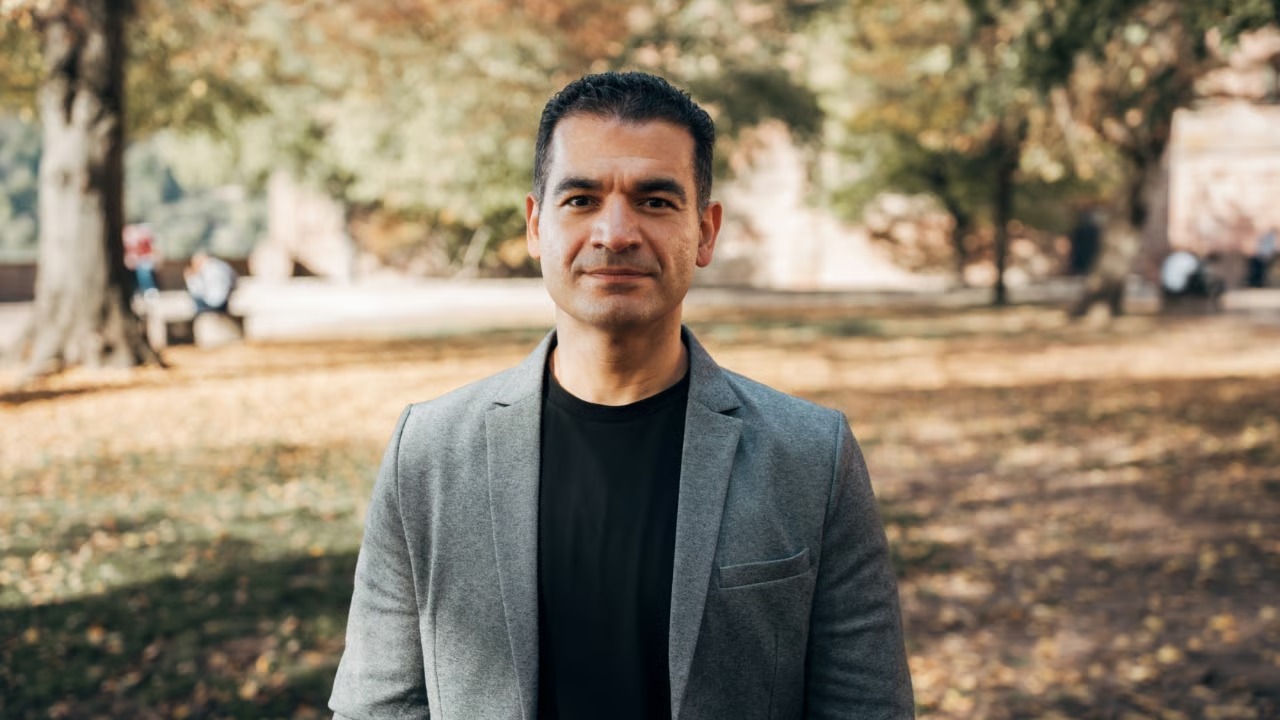
Origin shame describes the feeling of being ashamed of one’s cultural or national origins. In this episode of Project Mindset, Reza Mehman addresses a topic that affects many people with a migration background but is rarely discussed openly. Starting with a LinkedIn post in which someone wrote that they were ashamed of their Chinese roots, and inspired by a previous conversation with Cawa Younosi, Reza explores the question of where this feeling of shame comes from and how to overcome it. He shares personal experiences and shows why one’s origins are not a cause for embarrassment, but can be a source of strength. This episode is for anyone who recognizes similar thoughts and finally wants to shed this emotional baggage. Reza makes it clear: Identity is not a problem, but a gift when one consciously engages with it.
Shame about origins: the episode in brief
In one sentence: Shame about one’s origins is emotional baggage that can be shed by consciously confronting one’s own identity and combining the best of both worlds.
In three sentences: Reza Mehman speaks about origin shame, a phenomenon affecting many people with a migration background who feel ashamed of their cultural roots. He argues that the migration history of their parents demonstrates courage, intelligence, and a willingness to take risks, and should by no means be a cause for shame. Instead of excessively adapting to the new culture, he recommends combining the best of both worlds and understanding one’s own identity as a strength.
In five sentences: Reza Mehman dedicates this episode to the topic of origin shame and addresses all those who feel uncomfortable about their heritage. He refers to a LinkedIn post in which someone wrote that they were ashamed of their Chinese roots, and to a previous conversation with Cawa Younosi, who, as a refugee from Afghanistan, claimed for a time to be from Colombia. Reza emphasizes that the older generation showed tremendous courage in emigrating to a new country and building a better future. He warns against over-conforming to the new culture and instead encourages actively shaping one’s own identity. His motto, “born in Iran, made in Germany,” symbolizes this proud engagement with both cultural worlds.
Context: Who, What, Why
Who is speaking: Reza Mehman, host of the podcast Project Mindset, who himself has Iranian roots and grew up in Germany, also refers to Cawa Younosi, who came to Germany from Afghanistan as an unaccompanied refugee and overcame his own shame about his origins.
What is it about: This is about the phenomenon of origin shame, that is, the feeling of being ashamed of one’s national or cultural origins. Reza explores the causes, personal experiences, and ways to overcome this feeling.
Why is it relevant: In a diverse society, many people with a migration background struggle with their identity. This issue affects not only those directly impacted, but also the next generation, and has long-term consequences for self-esteem and mental health.
Three key questions from this episode:
- Why are people ashamed of their origins and where does this feeling come from?
- How did Cawa Younosi overcome his shame about his origins, and what can we learn from this?
- How can one understand one’s own identity as a strength rather than a weakness?
Table of contents
- Introduction – Why shame about one’s origins is an important issue
- Summary – The episode in brief
- context – Who is speaking and why it is relevant
- Topics and classification – The central topics
- Key messages – The most important messages
- Frequently Asked Questions – Answers to key questions
- Highlight quotes – The most concise statements
- Transcript – The full episode to read
- Keywords – Relevant search terms
- Names and terms – Important references
- Quotable passage – For sharing and quoting
Topics and classification
1. Shame about origins and cultural identity
The central theme of the episode: Why people are ashamed of their origins and what role societal prejudices play in this. Reza shows that shame about one’s origins is a widespread phenomenon that massively impairs one’s identity and self-esteem.
Keywords: shame about origin, cultural identity, migration background
2. Courage of the parent generation and migration
Reza emphasizes how much courage, willingness to take risks, and intelligence it took to leave his homeland and build a new life. He appeals for this achievement to be recognized instead of being ashamed of.
Keywords: Migration, parental generation, risk tolerance, new beginning
3. Over-conformity and pressure to conform
An interesting point Reza raises is that people with shame about their origins tend to adapt excessively to the new culture, which can be unhealthy for their mindset in the long run.
Keywords: Over-conformity, integration, pressure to conform
4. Biculturalism as a strength
Reza argues that it’s possible to combine the best of both cultural worlds. Bilingualism, cultural diversity, and different perspectives are advantages, not weaknesses.
Keywords: Biculturalism, bilingualism, cultural diversity
5. Identity work and mindset
According to Reza, confronting one’s own identity is crucial for a healthy mindset. Those who avoid it will sooner or later be confronted by unresolved questions.
Keywords: Identity work, mindset, self-esteem, personal development
Key messages
- Shame about one’s origins is emotional baggage that one can and should consciously shed.
- The older generation showed enormous courage in emigrating to a new country, and that deserves respect, not shame.
- You are not the country you come from. You carry its culture, but as an individual you are more than a nationality.
- Someone who speaks broken German is fluent in at least one other language at a native speaker level, and that is a strength.
- Over-conformity to the new culture is not a healthy way to compensate for shame about one’s origins.
- Combining the best of both worlds is a smarter approach than denying either culture.
- The issue of identity must be addressed early and actively, otherwise it will catch up with you.
- Children should learn early on to be proud of their roots as they settle into their new home.
- Traumatic experiences in the country of origin are a special case where the feeling of shame has a different dimension.
- “Born in Iran, made in Germany” stands for a healthy, proud approach to one’s own dual identity.
Frequently Asked Questions
What is shame about one’s origins?
Origin shame refers to the feeling of shame about one’s national, cultural, or ethnic origins. Those affected find it uncomfortable or embarrassing to talk about their roots and sometimes try to hide or downplay their origins.
Why are people ashamed of their origins?
Common reasons include negative media portrayals of the country of origin, societal prejudices, the desire to belong and not be reduced to one’s heritage. Low self-esteem and a lack of positive role models from one’s own culture can also play a role.
How can one overcome shame about one’s origins?
According to Reza Mehman, it helps to actively engage with one’s own identity, acknowledge the courage of the older generation, and combine the best of both cultural worlds. It is also important to recognize that one’s individuality is not synonymous with one’s country of origin.
What does over-conformity mean in the context of shame about one’s origins?
Overconformity describes the behavior of excessively adapting to a new culture in order to compensate for one’s own origins. Those affected want to be extremely German and, in doing so, deny their own cultural roots, which, according to Reza, is unhealthy for their mindset in the long run.
Is shame about one’s origins particularly common among the second generation?
Yes, Reza Mehman is specifically addressing the second generation, that is, children of immigrants who grew up in Germany. They often find themselves between two cultures and struggle with the question of where they belong, which can foster feelings of shame about their origins.
What does Cawa Younosi’s story have to do with origin shame?
Cawa Younosi came to Germany from Afghanistan as an unaccompanied refugee and, out of shame about his origin, told others he was from Colombia. He coined the term “origin shame” and was only able to overcome this feeling once he had settled in both professionally and personally.
How does Reza Mehman personally deal with his dual identity?
Reza describes himself as “born in Iran, made in Germany” and is proud of both sides of his identity. He values the politeness and friendliness of his Iranian culture as well as the diligence and hard work he learned in Germany, and passes both on to his children.
At what age should you start talking to children about their origins and identity?
Reza Mehman recommends talking to children about their origins and identity as early as possible. He regularly explains to his own children that they have Iranian roots and live in Germany, and shows them the best of both worlds.
Highlight quotes
“Afghanistan never had such a great reputation. And if you’re here as a refugee without parents, with such a background and hardly any self-esteem or self-confidence, you don’t want to be reduced to just being an economic migrant.”
– Cawa Younosi
“To avoid these discussions, I simply said I’m from Colombia. I chose Colombia because I hoped I wouldn’t accidentally meet a Colombian.”
– Cawa Younosi
“I think that, especially if you’re second generation here, meaning your parents moved here many years ago and mustered the courage to break out of their everyday lives, that requires a lot of courage and a lot of willingness to take risks.”
– Reza Mehman
“If, for example, I come from a country that doesn’t have such a good international reputation, well, I am not the country. I may have the culture of that country. I may have the appearance of a typical local. But I am not the country.”
– Reza Mehman
“If someone speaks broken German, it means they probably have a perfect command of at least one native language. So just because they don’t speak another language very well doesn’t mean that person is incompetent.”
– Reza Mehman
“Let go of that. It’s emotional baggage you don’t need. Focus on your here and now. Examine your identity, because only then can you shed this baggage and work on your own mindset.”
– Reza Mehman
Connecting two cultural worlds
“Born in Iran, made in Germany. I don’t say that without reason. I am proud of the cultural characteristics I carry with me. But I am equally proud of the new things I have learned here.”
– Reza Mehman
The full conversation
Kawa, I once heard you mention in another context that you called it “shame about one’s origins” for a while. I found that very interesting. On the one hand, and on the other hand, of course, a little sad. I think some of the listeners can definitely relate to the feeling of not being entirely comfortable saying where you come from. So, my question is, how did you overcome this shame about your origins, and what advice can you give to all the listeners on how they can overcome it?
Yes, well, in fact, I told many people at the beginning that I wasn’t from Afghanistan, but from Colombia, because that was before the Taliban. But then, in 1996, there were Taliban. Afghanistan never had such a terrible reputation. And when you’re here as a refugee without parents, with a background like that and hardly any sense of Sylt, no awareness of Sylt, you don’t want to be reduced to just an economic migrant and have the Taliban prejudices you had, especially when you’re being judged, even though I’ve never seen a Taliban member in my life.
To avoid these discussions, I simply said I was from Colombia. I chose Colombia because I hoped I wouldn’t accidentally meet another Colombian and then have to explain where in Colombia I was from, etc. Once, though, my story was challenged. I was working at the Vodafone store, and there was a Colombian there, so I had to make up the story. And that all disappeared once I arrived, and also once I had finished my studies to the point where I could admit that it was no longer something that defined me.
A conversation about one’s own origins
Perhaps you remember this excerpt from the podcast with Kawa Yunusi. I had the opportunity to have a short conversation with him earlier this year, as well as with Dr. Daniel Bayers. It was a very interesting conversation for me, and in this context, because Kawa had also mentioned it in another podcast, I started looking into the topic of shame related to one’s origins. I had asked Kawa how this actually came about and how one can overcome it. However, I think that many people with a migration background probably struggle with similar challenges.
They have similar thoughts, that they’re not entirely comfortable or at all right to talk about their origins. And I find that sad, perhaps even embarrassing, about where they come from. I can remember conversations or brief chats from my youth, where I also spoke with friends who weren’t entirely comfortable talking about where they actually came from. And today’s podcast episode is precisely for such people, because I want to convey a completely different message today.
It’s absolutely nothing to be ashamed of where you come from. In fact, I have a very specific opinion on the matter. But before I get to that, as luck would have it, I saw a short LinkedIn post in my timeline a few days ago that I found incredibly interesting, and which also saddened me, because it dealt with the same topic of shame about one’s origins. Let me briefly read what the person posted. They wrote that I was ashamed of my Chinese roots.
If you just want to belong
And then it goes on, but I often hear, “Why? Chinese culture is so beautiful, it’s such a beautiful country.” Then it continues, and I actually don’t have a real reason. I just always wanted to be German. To look German, to behave German, to speak German, whatever that means. And here, too, I was genuinely saddened that people—I mean, they don’t necessarily have to be proud of where they come from—but that they feel embarrassed or even a bit ashamed about it, that really saddens me.
I think that especially if you’re, for example, a second-generation immigrant here—meaning your parents moved here many years ago, for instance—and mustered the courage to break free from their daily lives, leaving behind friends, family, jobs, and so on, to go to another country and build a new home for themselves. And I think that requires a great deal of courage and a great willingness to take risks. And it also demonstrates a great deal of intelligence, I’d say, to say, “Hey, I’m leaving my current place to have a better future for my children and myself.”
Appreciating the achievements of the parent generation
That means, of course, that the children of the second generation might have a kind of shame about their origins. Yes, that’s sad. It doesn’t quite do justice to what the parents, for example, intended when they moved here. I can only really offer this advice: on the contrary, before feelings of embarrassment or shame arise, think about how much courage it actually took for the parents, or if you yourself left your country to start a new life.
Continued
How much courage it actually takes to do that. I mean, even though it was many years ago, back then there was no Google where you could quickly look up a route, book flights, and so on. It was pure stress to get from one country to another. And it’s really, I’d say, a pretty daring undertaking that the parents of our generation undertook. And that shouldn’t be embarrassing at all. You’re not the country you come from here.
So, I’ve always said it, I absolutely love watching the World Cup in football. I’m always a huge Germany fan and I’m there for every match. Of course, I’m happy when Germany wins, becomes world champion, and so on. But ultimately, it’s the eleven players on the pitch who win, not the whole country. Of course, the country has provided the infrastructure so they can train and so forth.
Origin and personal responsibility differ
But ultimately, those eleven people there were the winners. And you really have to keep that distance in mind. If I come from a country that doesn’t have a very good international reputation, well, I’m not the country. I might have the culture of that country. I might have the appearance of a typical native. But I’m not the country. For me, it’s like this: I’m proud of where I come from. But I’m just as proud of the country where I am now. On my social media channels, you can check them out; I also write, I think in almost every bio, “born in Iran, made in Germany.”
I don’t say this without reason. I’m proud of the cultural traits I carry with me. But I’m equally proud of the new things I’ve learned here and brought with me. I’m proud, for example, that politeness and friendliness are extremely important in our culture. I’m also happy that I get to learn here what diligence and hard work mean. These are things I naturally want to pass on to my children. And I try to give them the best of both worlds.
Give children an open mind
Of course, I will tell my children someday—and this shouldn’t be embarrassing—where I come from, for example, or where my children’s origins are. Quite the opposite, in fact; if you come from another country, you can usually speak another language as well. And that’s something I never understood back then. I can still remember a few conversations from my youth. Friends told me they were incredibly embarrassed that my parents didn’t speak German very well, or only spoke broken German.
And I think, and I still think, that if someone speaks broken German, it probably means they have a perfect command of at least one native language. So just because they don’t speak another language very well doesn’t mean they’re incompetent or anything like that. It simply means they can speak at least one other language at a native speaker level. That’s why I’ve always said it shouldn’t be embarrassing at all. I wouldn’t act that way at all.
What I’ve also noticed in this context is that many people who, for example, have a kind of shame and say, “Yes, I’m a little uncomfortable about where I come from,” also exhibit a kind of over-conformity to the new culture. They want to be extremely German, to adapt extremely. That’s all well and good. But I think they’re trying to balance something that was previously out of balance. I think it’s perfectly fine, or even more than right, that they integrate wonderfully into the new society.
Adaptation and own identity
But here and there I’ve also noticed a kind of over-conformity, which I think isn’t healthy, at least not for one’s own mindset. However, I do have one small caveat I’d like to share today. Especially for people who have truly traumatic experiences in their country of origin and therefore, for example, have an extremely high level of shame or something along those lines, I can definitely understand it to some extent. That they might say, “Hey, I don’t want to identify with that country at all anymore.”
Some terrible things happened. Of course, I’m leaving that aside. Those are things that are traumatic, that are awful. You can’t even judge them. For me, today was about the cases where people haven’t had such terrible experiences, but simply that it’s unpleasant which country they come from, because that country might be portrayed negatively in the press, and that they then say, “That’s really uncomfortable for me, I don’t want to identify with that at all.”
Continued
I believe, and we’ve discussed this quite a few times in a podcast, that the topic of identity is extremely important. Anyone who doesn’t confront it will likely find themselves caught up with by it eventually, and it will make them incredibly unhappy that they’ve shied away from certain issues for so many years, closed their eyes to them, and not given them any thought. My motto is: better to address it early enough, better early enough, for example, with my children. I explain to them quite often, “Hey, we’re originally Iranian, but we’re here in Germany.”
That means we are, first and foremost, German. This also means that we naturally embrace, accept, and internalize the cultural customs here because we have chosen to learn here. And there’s absolutely nothing wrong with saying, “Yes, but look, your parents, your grandparents, your great-grandparents, they come from Iran, where there are different customs, and we take the best from that world, combine it with this world, and we can only benefit from that.”
Letting go of emotional baggage
Alright everyone, today’s podcast episode is dedicated to all of you who might be feeling a bit ashamed of your origins and have ever considered how uncomfortable it might be to know where you come from. With today’s episode, I simply wanted to tell you: let go of that. It’s emotional baggage you don’t need. Instead, focus on the here and now. Explore your identity, because that’s the only way you can shed this burden and work on your own mindset.
Thank you so much for listening. Until next time, and don’t forget, mindset is everything.
This transcript was automatically generated using Whisper AI and may contain occasional errors.
Keywords
Tags: origin shame, cultural identity, migration background, overcoming shame, second generation, biculturalism, integration, mindset, self-esteem, Cawa Younosi, personal development, overconformity, born in Iran made in Germany
Names and terms
Reza Mehman, Cawa Younosi, Dr. Daniel Bayers, Project Mindset, Afghanistan, Iran, Germany, Colombia, China, LinkedIn, Vodafone, Taliban, shame about origin, over-conformity, biculturalism, migration background, second generation, self-esteem, identity work
Quotable passage
“Shame about one’s origins is emotional baggage that can and should be shed.”
“You are not the country you come from. You may carry the culture, but as an individual you are far more than a nationality.”
“The parents of our generation did something courageous: they left everything behind to give us a better future.”
“Combining the best of both worlds is not a weakness, but a superpower that should be actively used.”
You can find further personal perspectives on identity and development at Project Mindset.
Prefer listening? Explore the original Project Mindset podcast recordings.