Being authentic despite different roles
Being authentic: why you can be yourself in every role and how to become more authentic: 3 concrete tips from practice.
Introduction
Being authentic is one of the most demanded and yet least understood concepts of our time. In this episode of Project Mindset, Reza Mehman uses a personal experience as a springboard to fundamentally question the topic of authenticity: A good friend confronted him with the accusation that he hadn’t come across as “real” in an Instagram story. This led to a profound reflection on whether one can even be authentic in different roles as a father, friend, employee, or podcaster. Reza shares three concrete approaches that have helped him become more authentic without having to pretend. Anyone wondering how to stay true to themselves despite different areas of life will find valuable insights in this episode. An honest, personal look at the art of remaining genuine in a world full of expectations.
Summary
In one sentence: You can take on different roles in life and still be authentic if you stop worrying about what others think, don’t create a rigid self-image, and have the courage to behave the way you really want to be.
Short summary: Reza Mehman was perceived as inauthentic by a friend in an Instagram story, even though he saw himself as genuine. Using the Japanese proverb of the three faces, he demonstrates that playing different roles doesn’t automatically equate to inauthenticity. He offers three concrete tips for becoming more authentic: indifference to others’ opinions, abandoning a rigid self-image, and the “pretend” principle.
Detailed summary: Reza Mehman received feedback from a close friend that he hadn’t come across as authentic in an Instagram story. This prompted him to fundamentally question the concept of authenticity, drawing on the Japanese proverb of the three faces. He argues that everyone plays different roles, whether as a father, friend, or professional, and can still remain authentic. Three concrete strategies help achieve this: not becoming dependent on the opinions of others, not establishing a rigid self-image, and courageously acting as one truly wants to be. The result is an honest plea to give oneself permission to be genuine in every role.
Context: Who, What, Why
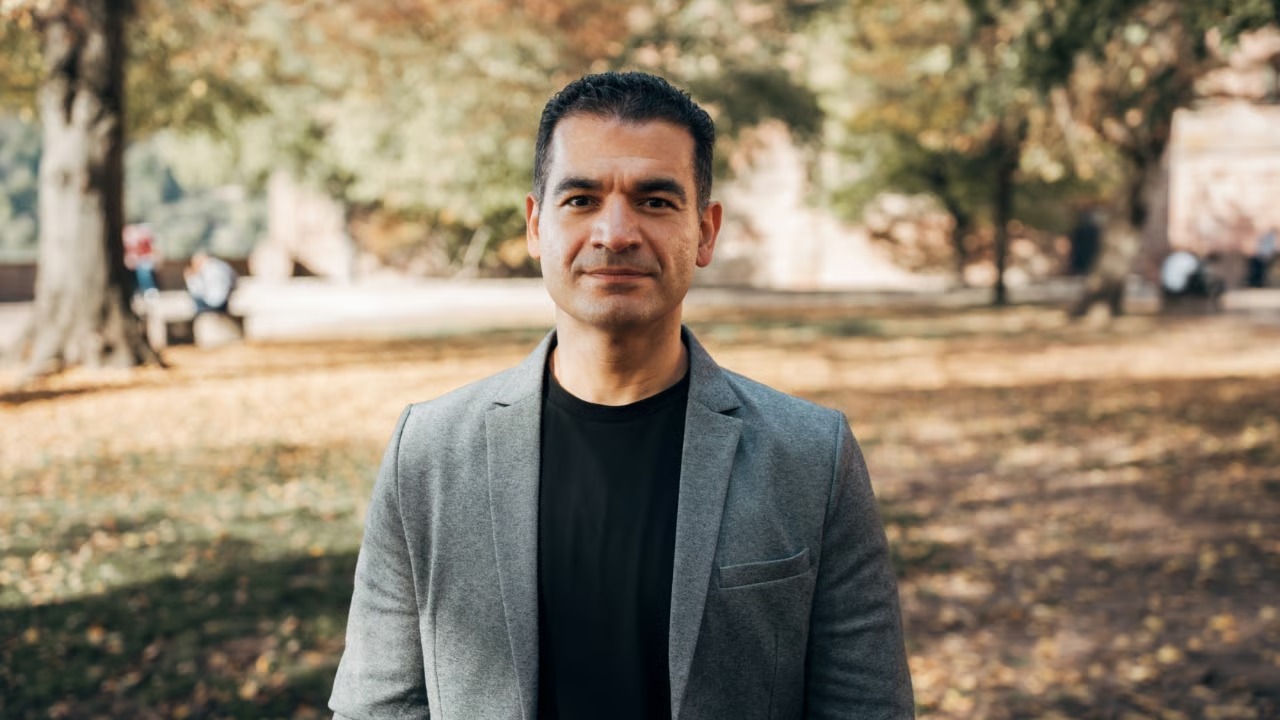
Who is speaking: In this solo episode, Reza Mehman, host of the Project Mindset Podcast, shares a personal experience and his reflections on the topic of authenticity.
What is it about: The question of whether it’s even possible to be authentic in different everyday roles, such as a father, friend, employee, or podcaster. Also: three practical ways to become more authentic.
Why is this relevant? In a world shaped by social media, self-presentation, and societal expectations, many people struggle with the question of when they are being “real” and when they are pretending. This episode offers a relatable, personal perspective on a topic that affects everyone.
Three key questions of the episode:
- Is it possible to take on different roles and still be authentic?
- What does it actually mean to be authentic?
- How can you become more authentic in everyday life?
Table of contents
- Introduction – Why authenticity is so often misunderstood
- Summary – The core message in brief
- context – Background and relevance of the episode
- Topics and classification – An overview of the most important topics
- Key messages – The central messages of the episode
- Frequently Asked Questions – Answers to the most important questions
- Highlight quotes – The most significant statements
- Transcript – Full transcript of the episode
- Keywords – Relevant search terms
- Names and terms – Important references
- Quotable passage – For sharing and quoting
Topics and classification
1. Definition and meaning of authenticity
What it really means to be authentic, and why most people have a distorted idea of it.
Keywords: being authentic (definition), true self, living values
2. Different roles in everyday life
Why every person plays multiple roles and this doesn’t have to contradict authenticity.
Keywords: Roles in everyday life, father, professional role, social roles
3. The Japanese idiom of the three faces
A cultural perspective on the different facets of our personality and their importance for authenticity.
Keywords: three faces Japanese, self-image, public face
4. Social Media and Authenticity
How platforms like Instagram distort the understanding of authenticity and why “appearance instead of reality” is becoming a problem.
Keywords: Authentic social media, Instagram self-presentation, appearance versus reality
5. Three ways to be more authentic
Specific strategies to become more authentic in everyday life: indifference to judgments, a flexible self-image, and the “pretend” principle.
Keywords: tips for becoming more authentic, changing self-image, mindset authenticity
Key messages
- Being authentic means expressing and acting in accordance with one’s thoughts, needs, values, and beliefs.
- Everyone has different roles in life, and yet one can be authentic in each of these roles.
- The Japanese saying goes: Every person has three faces, one for the world, one for friends and family, and one that only appears alone.
- You shouldn’t care what others think of you, because this worry prevents you from pursuing your goals and dreams.
- Most people are so preoccupied with their own problems that they hardly have time to think about others.
- One should not create a rigid, concrete image of oneself, but rather allow oneself the freedom to develop further.
- The “pretend” principle means behaving the way you want to be until it becomes a natural habit.
- Social media usually only shows highlights, which makes it even harder to recognize what is truly authentic.
- Authenticity is not a fixed state, but a process that one must learn and develop over time.
- The loudest critics are usually on the sidelines and are not the people you should listen to.
Frequently Asked Questions
Is it possible to play different roles and still be authentic?
Yes, according to Reza Mehman, one can take on different roles, such as a father, friend, or in a profession, and still be authentic. The crucial point is that one acts in accordance with one’s values and beliefs in each role, even if the behavior differs depending on the context.
What does it actually mean to be authentic?
Being authentic means expressing oneself according to one’s true self, that is, acting and behaving in accordance with one’s own thoughts, needs, values, preferences and beliefs.
What does the Japanese idiom “three faces” mean?
The Japanese saying states that every person has three faces: one that is shown to the world, one that relatives and friends see, and one that only appears when one is alone.
How can you become more authentic in everyday life?
Reza Mehman identifies three paths: First, one should not care what others think of oneself. Second, one should not cultivate a rigid image of oneself, but remain open to change. Third, one can behave as one wishes (“pretend”) until it becomes a habit.
Why should you not care what others think of you?
Because constantly worrying about what others might think prevents one from pursuing their own goals and dreams. Furthermore, most people are so preoccupied with their own problems that they barely have time to form long-term opinions about others.
Why shouldn’t you draw a concrete picture of yourself?
A rigid self-image is limiting and hinders personal development. Those who don’t commit to a fixed identity give themselves the freedom to grow, try out new roles, and still remain true to themselves.
What is the “pretend” principle?
The “pretend” principle means behaving the way you would like to be. For example, if you want to become more self-confident, you start by behaving like a self-confident person until this behavior becomes a natural habit.
Is authenticity even possible on social media?
It’s difficult because platforms like Instagram usually only show highlights, creating a distorted picture. Nevertheless, it is possible to be more authentic on social media by sharing honest insights and not just presenting a perfect facade.
Selected statements from Reza Mehman
“Being authentic means expressing, behaving and acting in accordance with one’s true self, that is, in accordance with one’s thoughts, needs, values, preferences, and beliefs.”
“Every person has three faces: one that they show to the world, one that family and friends see, and one that only comes to light when they are alone.”
– Reza Mehman (Japanese idiom)
“I am absolutely convinced that one can play different roles in life and still be authentic.”
“If I constantly think about what others might potentially think about me, I can’t make any progress with my topics at all.”
“The people who really shout the loudest and try to throw in something negative from the outside are usually the people who are also standing on the sidelines.”
“People who are most admired are usually those who are totally authentic, totally direct, who don’t mince words, who say what they really mean. And yet, interestingly, most people are pretending.”
“I think everyone is so busy with their own things that they can really say, hey, I couldn’t care less what others think of me.”
The full conversation
A good friend of mine recently told me that he found me very inauthentic in a certain situation. I found that a bit strange because I actually thought of myself, or at least felt, that I was being authentic. I took this as an opportunity to reflect on and understand what it actually means to be authentic. Enjoy today’s podcast episode. Hi everyone, and welcome to Project Mindset, the channel for all those who know for sure that with the right mindset, anything is possible in life.
I have a really interesting story to share that happened to me recently. A friend of mine reacted to one of my Instagram stories and said, “Reza, you weren’t being entirely authentic in what you were doing.” To give you some context, I was posting a few Instagram stories about a podcast with a guest I’d visited in person. We were setting everything up. We also took some photos and videos along the way, kind of like behind-the-scenes footage.
My buddy said, “Yeah, but that wasn’t entirely authentic, and he doesn’t understand why I acted that way at all.” I was actually very surprised that he said that to me, because I always try to be authentic. So, I can honestly say that I have different roles in life. I think everyone has different roles. On the one hand, you’re a father or mother, for example. On the other hand, you’re a buddy or friend.
Different roles in everyday life
Then, of course, you’re a bit different at work. There are different situations where you take on different roles. The question, of course, is whether you can even be authentic if you have different roles in life. Before we clarify that, and perhaps get to the question of how to actually become more authentic, I wanted to briefly define what being authentic actually means. I found something really good online. It said that being authentic means expressing, behaving, and acting in accordance with your true self—that is, according to your thoughts, needs, values, preferences, and convictions.
That’s certainly a very interesting definition. I would also argue, and I suspect many would agree, that they behave accordingly in most situations. Of course, there are certain rules and norms that prohibit, for example, reacting excessively emotionally to something. If, for instance, you feel something is totally unfair, it’s obviously not advisable to completely lose your temper. So there are various situations where you might not behave or act exactly as you truly believe you should.
The saying about the three faces
To elaborate on that a bit, because I found it really interesting that my friend pointed out that my role there wasn’t entirely authentic, I found a Japanese saying that fits perfectly. The saying goes like this: Every person has three faces: one they show to the world, one that family and friends see, and one that only emerges when they’re alone. It’s a really interesting saying. I can, I’d say, agree with it 100 percent.
And that, of course, raises the question: if it’s true that you have different faces, not just different roles, but also different personalities, can you even be authentic? I think that even in today’s world, it’s incredibly difficult to differentiate, to distinguish, who is actually authentic, what is genuine, what is truly real. A good example is social media. We all know this on Facebook and Instagram, where everyone, of course, only posts the highlights, or at least most people only post the highlights from their lives.
What they experienced, where they went on vacation, what kind of cool car they drove, and so on and so forth. Of course, that’s more show than substance, because we all know perfectly well that life isn’t just about highlights; there are also lowlights. And that makes it even harder to understand how authentic you should be yourself. I always ask myself, am I being completely honest when I take a selfie and post it online? It’s actually kind of strange, isn’t it?
Self-presentation and the view from the outside
You stand there—I actually do it myself—you stand there, take a picture of yourself, something in the background, and want to show the world, “Look, is this authentic?” At that moment, maybe you want to impress someone, maybe you want to convince someone that everything is great. It’s incredibly difficult to answer. I think everyone has to figure that out for themselves. The tricky part, though, is figuring out what kind of image you’re projecting to others.
Continued
So, what do others think about you, for example, whether you’re being authentic in a given moment? From my perspective, it’s usually the people who are totally authentic, totally direct, who, let’s say, don’t mince words, who say what they really mean and what they want, who are admired the most. These are the people who are admired the most, and yet, interestingly, most people pretend to be someone they’re not and don’t do that.
I think everyone has to find their own middle ground, of course. For me, to come back to the situation with that Instagram story, it’s clear that as a podcaster, I naturally have a certain role in that moment. Namely, someone—my guest—takes the time to talk to me for an hour or an hour and a half. They already have very little time, yet they still take the time, and we talk for an hour and a half, and I naturally have to treat that time with the utmost respect.
This also means, of course, that certain topics might no longer be addressed. It also means that certain behaviors are in place to ensure things proceed as efficiently as possible. And yet, I still believe that this is incredibly authentic, because I am absolutely convinced that one can play different roles in life and still be authentic. I am, in fact, absolutely convinced that, for example, I am referring to the, how should I put it, well, I think that becoming a father or a mother isn’t something that just happens.
Growing into a new role
So, the fact that you’ll become a father is of course there, but you also have to learn the role you’ll take on. That can take some time, of course, but eventually you internalize that role, and as a father, for example, I want to be a role model for my children. That’s a role I consider extremely important, and one I wouldn’t want to portray or behave in any other way. It’s also perfectly clear that when I’m out with friends, I play a completely different role.
And yet, I still think that can be authentic, the way you behave. Nevertheless, the question remains: how does one become authentic, or more authentic? I have to admit, I had to learn that over time. I remember as a child, I adapted to my surroundings as much as possible. That might also have something to do with my background. If you have a migration background and arrive somewhere new, it’s best to initially behave like the majority, to see how things work and so on, what the others are like, and then gradually approach them and then behave accordingly, the way you actually want to.
Origin shapes one’s behavior
Not everyone behaves that way, of course, but I think that one’s background—family, geography, and so on—can have a huge influence on how one behaves at the beginning. I also remember when I started my first jobs after university, that I had to behave differently. A bank was my first employer, and it’s obvious that you behave differently there, you dress differently, and unfortunately, you have to wear a tie every day. That was one of the reasons why I didn’t want to work there anymore.
And accordingly, you’re playing a role there, and you don’t necessarily want to stand out because you don’t want to cause any trouble, and so on. So I think I had to learn for myself what it even means to be authentic. Not that I would do everything differently today, for example, if I were working at a bank now, and walk around like a punk rocker. But I think I would at least be more authentic than before. And one thing—well, I’d like to mention three points in total—that helped me tremendously to be, or become, more authentic, was that I shouldn’t really care at all what others think of me.
What setbacks reveal about self-image
I think that’s the first important step. For example, I founded a startup a few years ago. We were relatively successful at the beginning, but then I unfortunately made a few wrong decisions, and we had to shut the startup down. It was really the case that, during the process of shutting it down, I found myself thinking, “Wow, what are other people thinking about me now?” I felt really uncomfortable. I was like, “Are they all pointing fingers at me?”
Of course, nobody makes it so obvious, but you can’t help but wonder what others might think about the situation, and it’s incredibly uncomfortable. I realized at some point that constantly worrying about what others might potentially think of me prevents me from making any progress with my topics. That was also the case for me at the beginning of the podcast. I kept thinking, “Wow, if I start a podcast now, what will other people think of me? Will they think this is great, this is totally awful, what’s he up to now, and so on?”
Continued
Those were actually my first thoughts. And I tried, and kept telling myself, hey, does it really matter what others think of me? Because it’s holding me back from truly achieving my goals, my dreams, and my wishes. But it should also be mentioned that, of course, not everyone spends all day thinking about what someone else is doing. That is, you also tell yourself a little bit, yeah, so-and-so, or so-and-so, they’re thinking badly of me. So, I think it’s somewhat underestimated; many people are preoccupied with their own problems, and they simply don’t invest that much time in thinking about other people.
When you do that, it’s only for a few seconds because of eye strain, for example, to form an opinion on a certain topic. But ultimately, I think everyone is so preoccupied with their own things that you can honestly say, hey, I couldn’t care less what others think of me. The people who really, really shout the loudest and try to throw in something negative from the outside are usually the ones standing on the sidelines, trying to chime in with their nonsense.
To free oneself from the judgments of others
I wouldn’t listen to them anyway; it’s very, very, very important to internalize this. I couldn’t care less what others think of me. The other, or rather, another important step in understanding how to be more authentic, is realizing that you can’t actually create such a concrete image of yourself. What I mean by that—and I had a very, very interesting podcast conversation about this with a very interesting guest, which will be released soon—is…
I believe it’s possible, and I learned that from this podcast guest. It’s possible to have two, three, or even four different feelings simultaneously in one situation or in one second. I can be happy and unhappy in the same second. Anxiety and aggression can arise at the same moment. I can have so many different emotions in literally the same instant that it’s really hard to describe what “authentic” even means.
Is it authentic to be scared right now and actually want to run away, or is it authentic to be totally aggressive and charge ahead, headfirst into a brick wall? It’s hard to say, honestly. I’ve discovered for myself that I have to accept that I can’t have a clear picture of myself at all. We all want clear pictures. We all want yes, no, one, zero. There’s always a very clear strategy involved. I remember when I was starting my own startup, everyone wanted a very clear strategy.
Stay flexible instead of fixing one image in place
Yes, we do it this way, that way, and that way. And there’s no left or right. Yes, but that’s usually not how it works, because we have to adapt to the situation every day. We also have to try to change our emotions every day. I have a good example of this. It used to be like this for me. I thought that if I woke up in the morning with strange, bad feelings and so on, then the day was ruined for me and I couldn’t turn things around until I understood.
Some mornings, I wake up in a bad mood for no obvious reason. For me, deciding to change that mood can begin in the next moment. I then understood that I can actually change my emotions. We should probably talk about how to do that in other podcasts. But I think it’s perfectly okay to understand that you don’t have a clear picture of yourself. And if you don’t have a clear picture of yourself, then others can’t have a clear picture of you either.
Consciously try out a new attitude
That’s why it’s so difficult for others to judge whether someone is authentic or not. Which brings us to the third point. I think there are situations where you have to pretend to already be a certain person you want to be. Here’s an example: I spent a lot of time thinking about whether the guest was present when I first started podcasting, when I pressed the record button.
Right now, I’m pretending to be a podcaster. This is actually the first recording I’ve ever made. I find it incredibly interesting. I’m recording a podcast, pretending to be a podcaster. But this is the first podcast recording I’ve ever made. Am I a podcaster, or am I not? It’s fascinating for me to understand that in certain situations, you sometimes have to pretend, not follow the typical “fake it till you make it” approach. I’m not a big fan of that. But to say, for example, I’m pretending to be the person I’ve envisioned for myself in the future…
Continued
I already behave like that today. And that can still be incredibly authentic. If you behave the way you imagine yourself. You’ve had those thoughts, after all. I want to be like that. I want to behave like that. A very simple example, almost too simple to include here. But I still wanted to mention it. When you go to sleep, it sounds strange, but when you go to sleep, you’re actually sleeping. You lie down, close your eyes, and pretend to be asleep. In reality, you’re not actually asleep yet, but you’re acting like it.
You stop moving, you close your eyes, you try to breathe more calmly, and so on. That means even then you’re acting as if you already are something, or as if you want to be something. And yet, you aren’t. And still, it’s completely authentic. I know, a super simple example might not be a perfect fit. But I constantly remind myself, whenever I enter new situations, that I want to be as authentic as possible. And that it’s perfectly okay that I might initially have to behave in a way that’s perhaps expected of a future potential role.
Authenticity as personal development
And from my perspective, that’s still not inauthentic. So, folks, that was a very interesting episode for me. I actually had to think about it a lot. I also loved that Japanese saying about the three faces, and the idea that maybe you really only show one face to yourself. And then there’s the point that maybe you don’t even know the face you only show yourself that well, because you can have all sorts of different emotions within a single second.
If you don’t even have a clear picture of yourself, how can you possibly project one to the outside world? How can you really expect others to be able to tell you whether you’re being authentic or not? I hope you enjoyed today’s episode. If so, please give it a like, because that’s the only way the Project Mindset channel can continue to grow. I hope to see you again soon, and until then, don’t forget, mindset is everything.
This transcript was automatically generated using Whisper AI and may contain occasional errors.
Keywords
Tags: being authentic, authenticity, different roles, self-image, social media authenticity, three faces (Japanese), becoming more authentic, mindset, personal development, Project Mindset, Reza Mehman, self-perception, what others think, roles in everyday life, true self
Names and terms
Reza Mehman, Project Mindset, Instagram, Facebook, Social Media, Japanese proverb of three faces, authenticity, true self, startup, migration background, behind the scenes, family man, self-image, “pretend” principle, tie (bank as first employer)
Quotable passage
Everyone plays different roles in everyday life, and that’s perfectly normal.
The Japanese idiom of the three faces shows that we show different sides of ourselves depending on the context.
Being authentic does not mean being the same in every situation, but rather acting in accordance with one’s values in every role.
Those who stop worrying about what others think gain the freedom to truly be themselves.
You can find more thoughts on identity and personal development at Project Mindset.