Saygin Yalcin: Wealth, inner balance, and keeping promises
Saygin Yalcin on wealth, balance and promises: a conversation about happiness, reputation and the values that matter beyond material success.
Introduction
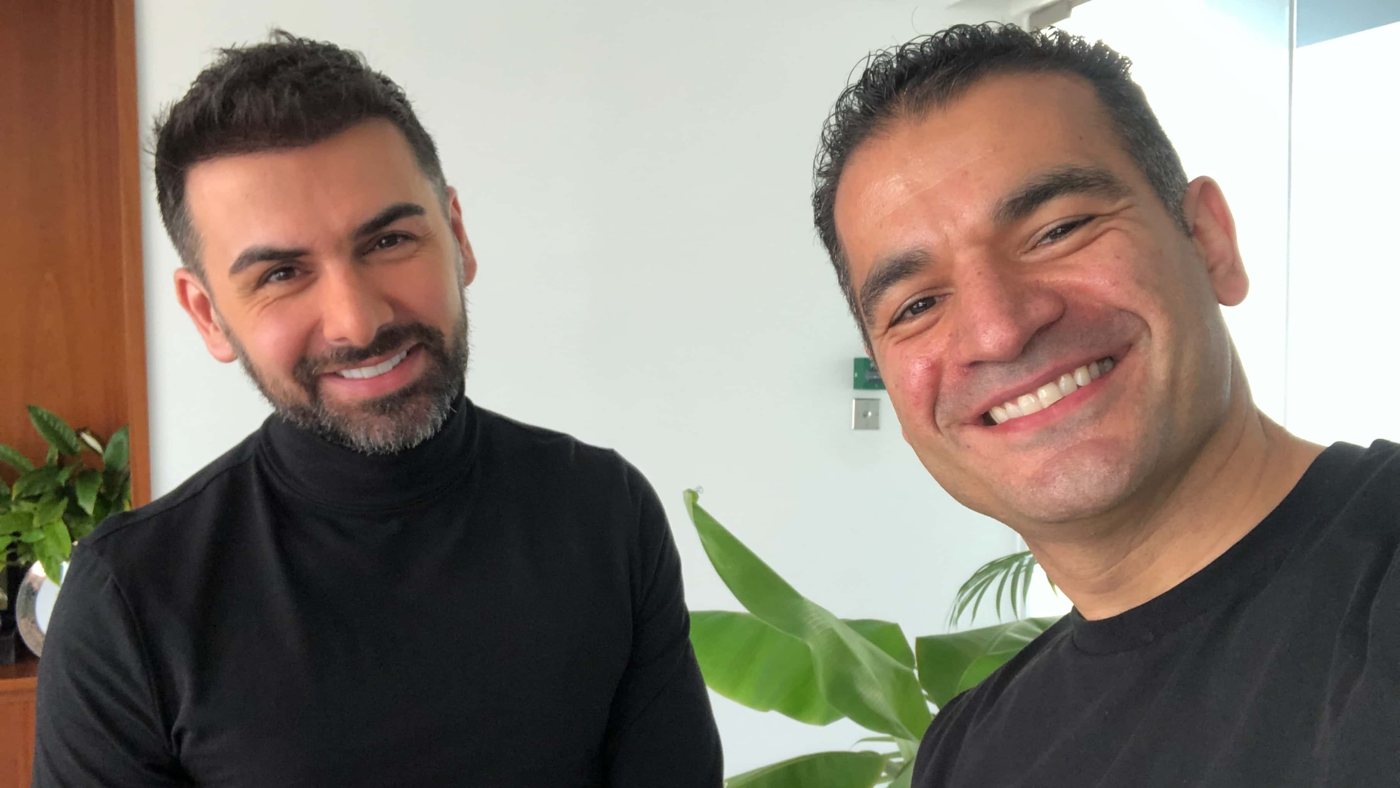
Saygin Yalcin is an entrepreneur, investor, and influencer with an impressive career that began in Bremen and took him all the way to Dubai. In this episode of Project Mindset, Reza Mehman talks to him about wealth, inner balance, happiness, and the importance of keeping your promises. Saygin has founded companies, sold them to Amazon, and established himself as an investor and content creator with millions of followers. But instead of discussing luxury and material possessions, this conversation focuses on personal values, self-leadership, and the right mindset. What truly makes a person happy when they are already financially free? How do you lower your baseline to experience moments more intensely? And why is keeping your promises the most important piece of advice Saygin can give? This episode provides profound answers to precisely these questions.
Saygin Yalcin: the episode in brief
In one sentence: Saygin Yalcin explains why true happiness does not depend on wealth, but on a low baseline, inner peace, and consistently keeping promises.
In three sentences: Saygin Yalcin shares his six success factors for entrepreneurship, including action orientation, reputation, and a standard of excellence. He describes how he radically lowered his personal baseline by giving up expensive cars, watches, and a large villa to rediscover happiness in small moments. His most important piece of life advice is: Keep your promises, because that’s exactly what the world’s most successful people are willing to pay a lot of money for.
In five sentences: In the Project Mindset Podcast, Saygin Yalcin discusses his journey from youth soccer player in Bremen to successful entrepreneur and investor in Dubai. He explains that happiness is purely a matter of chance and that you maximize your happiness conversion rate by consistently performing at the highest level. Three years ago, he consciously chose to radically simplify his lifestyle to lower his emotional baseline and experience moments more intensely. He emphasizes the importance of reputation, inner peace, and the ability to deal with negative people without losing your balance. His central mindset: Keeping promises is the most valuable quality a person can possess.
Context: Who, What, Why
Who is speaking: Reza Mehman, host of the Project Mindset podcast, in conversation with Saygin Yalcin, entrepreneur, investor, and influencer based in Dubai. Saygin is originally from Bremen, studied business administration, founded companies, and sold some of his businesses to Amazon. He has several million followers on YouTube and Instagram.
What is it about: The conversation revolves around personal mindset, the definition of happiness and success, the conscious handling of wealth, inner peace, and the power to keep promises. Saygin shares his success factors, explains his concept of the baseline, and talks about mentors, knowledge transfer, and his personal next level.
Why is this relevant? In a time when success is often defined purely materially, Saygin offers a nuanced perspective. He shows that financial wealth alone does not bring happiness and that personal values such as integrity and reliability create more long-term value than any business shortcut.
Three key questions from this episode:
- What truly makes a person happy when money is no longer an issue?
- What qualities are needed to become an entrepreneurial success?
- Why is keeping promises the most important quality one can have?
Table of contents
- Introduction – Overview of the episode with Saygin Yalcin
- Summary – The most important statements in brief
- context – Background information on guests and topics
- Table of contents – Navigation through the article
- Topics and classification – Central themes of the episode
- Key messages – Key takeaways
- Frequently Asked Questions – Answers to key questions
- Highlight quotes – Key statements from the conversation
- Transcript – Full conversation to read
- Keywords – Relevant search terms
- Names and terms – Important references
- Quotable passage – For sharing and quoting
Topics and classification
1. Success factors in entrepreneurship
Saygin describes six success factors and three failure factors, which he distilled from hundreds of conversations with entrepreneurs. Key elements are action orientation, reputation, and a standard of excellence.
Keywords: Success factors in entrepreneurship, action orientation, standard of excellence
2. Luck and the baseline
Saygin distinguishes between luck as chance and happiness as a conscious state. He explains how he radically lowered his baseline in order to perceive moments more intensely.
Keywords: Definition of happiness, lowering the baseline, hedonic adaptation
3. Wealth, minimalism, and inner balance
Despite his great financial success, Saygin has consciously given up his expensive villa, luxury cars, and watches and lives in a 60-square-meter apartment. For him, wealth and happiness are not the same thing.
Keywords: Wealth and happiness, minimalism, financial freedom
4. Keeping promises and reputation
His most important life tip: Keep your promises. For Saygin, reliability is the quality that the most successful people in the world value most and are willing to pay for.
Keywords: Keeping promises, building reputation, integrity
5. Dealing with negative people and inner peace
Saygin talks about how he learned to deal with negative people without getting flustered, and why inner peace is a conscious process.
Keywords: Dealing with negative people, inner peace, serenity
Key messages
- Luck is a pure form of chance. What matters is the personal rate at which one can convert luck into happiness, i.e., whether one is ready when chance strikes.
- There are three failure factors (wrong country, wrong time, severe disability) and six success factors, including action orientation, reputation and a standard of excellence.
- The goal should not be to earn a billion, but to be able to refuse a billion if it is wrong.
- Happiness arises from vibrations emanating from a baseline. The lower the baseline, the more intensely positive moments are experienced.
- Saygin has deliberately and radically simplified his lifestyle: from a 1000 square meter villa to 60 square meters, selling all his expensive cars and watches.
- The body has a psychological immune system that can transform negative experiences into positive learnings through hedonic adaptation.
- The most important piece of advice Saygin can give is: Keep your promises. That’s the quality the richest people in the world value most.
- Doing the right thing when no one is watching is the true measure of character and reputation.
- One should increase the frequency of happy moments, not the intensity of individual experiences.
- A coach taught Saygin early on to always give his best, because you never know when a talent scout might be watching. He applies this principle to his entire life.
Frequently Asked Questions
How does Saygin Yalcin define happiness?
For Saygin Yalcin, luck is a pure form of chance. It describes a specific constellation of circumstances that must occur in addition to one’s own talent. The crucial factor is the conversion rate of luck: those who consistently perform at the highest level are ready when chance strikes.
What is the baseline and why did Saygin Yalcin lower it?
The baseline describes the fundamental emotional level from which one experiences happiness and sadness as vibrations. Saygin consciously lowered his baseline by giving up his expensive villa, luxury cars, and watches and moving into a 60-square-meter apartment. This allows him to enjoy small moments more intensely.
What success factors does Saygin Yalcin identify for entrepreneurs?
Saygin identifies six success factors, of which he particularly highlights three: a bias towards action (action orientation instead of endless planning), the value placed on one’s reputation (doing the right thing when no one is watching), and a standard of excellence (always giving one’s best, regardless of whether anyone is watching).
Why is keeping promises so important?
According to Saygin Yalcin, keeping promises is the quality that the world’s richest and most successful people value most and for which they are willing to pay a great deal of money. It sounds simple, but is rare in practice. Reliability builds trust and is the foundation for long-term business and personal relationships.
Does wealth make you happy?
No, according to Saygin Yalcin, many people confuse wealth with happiness. Financial freedom can alleviate worries, but happiness arises from moments, not things. He has personally experienced that an expensive car only brings happiness for three minutes before one returns to baseline.
What is hedonic adaptation?
Hedonic adaptation (also called the hedonic treadmill) describes the phenomenon that the body and mind can rationalize negative experiences and transform them into positive learnings. It is a psychological immune system that ensures a return to one’s emotional baseline after setbacks.
How does Saygin Yalcin deal with negative people?
Saygin has learned not to let negative people unsettle him. He emphasizes the importance of inner peace and a conscious approach to one’s surroundings. When possible, he distances himself from negative influences; when that’s not possible, he works on his own reaction to them.
What is the happiness conversion rate?
The luck conversion rate is a concept developed by Saygin Yalcin. It describes how well someone can convert chance opportunities into positive outcomes. Everyone experiences luck as a matter of chance, but not everyone is prepared enough to transform it into something positive for their life. Those who consistently perform at their highest level have a higher conversion rate.
Highlight quotes
“Keep your promises. That’s what the richest people in the world really like to have around them and are willing to pay a lot of money for. It sounds easier than it is.”
– Saygin Yalcin
“Their goal was never to earn a billion, but to be able to refuse a billion if it is wrong.”
– Saygin Yalcin
“I reduced my baseline to the point that I went from a 1000 square meter villa with cars worth several million euros to my smallest apartment, 60 square meters, and sold all my expensive cars and all my expensive watches.”
– Saygin Yalcin
“There are basically two camps in the world. There are people who do things and there are people who talk about them. And there’s not much in between.”
– Saygin Yalcin
“Everyone has luck. It’s just a pure form of chance. It’s just that not everyone turns it into something positive for their life.”
– Saygin Yalcin
“I buy a car for a million euros, wow, that made me happy for three minutes. But then you come back down to earth.”
– Saygin Yalcin
“If you win every game, you don’t need to look at the standings.”
– Saygin Yalcin
The full conversation
Because I think the most important thing, if I could give someone one piece of advice, would be to keep your promises. That’s what the richest people in the world really like to have around them and are willing to pay a lot of money for. It sounds easier than it is. But keep your promises. In today’s podcast episode, I’m talking to entrepreneur, investor, and influencer Saigin Yalcin. Originally from Bremen, he initially wanted to be a professional soccer player or a beauty judge, but then decided to study business administration and immediately moved to Dubai, where he has built an incredible career as an entrepreneur.
He’s built companies, sold some to Amazon, is now an investor himself, and, what I also find remarkable, has become an influencer with millions of followers on YouTube and Instagram. So, a very, very interesting career. Of course, we didn’t just talk about his business mindset, but also his personal mindset. How does he define success? What makes him happy? What’s his next personal level, what he wants to achieve, and all those other topics?
I had the opportunity to visit him at his office in Dubai, which was definitely a highlight for me too. So, enough talk, and enjoy today’s podcast episode. Saigin, thank you so much for the invitation to your office. You’re welcome. It’s super interesting and exciting here. I already had a look around earlier; it’s a really great office. Thanks. In the intro, you already told us a bit about who you are and what you do, and the first question, which I think is quite obvious, is: with your experience, what three qualities does one actually need to become so successful as an entrepreneur?
Factors for success and failure
Good question. I described six factors in my book. I think there are nine factors, three of which lead to failure and six to success. And the three I always mention are: first, you need to have little bad luck, which means not being born in the wrong country, or at the wrong time, with a severe mental disability. We can consider ourselves lucky in that respect. If you are born in Germany, or in many free countries, and are fortunate enough to be born at the right time, then you have already avoided something that is very, very difficult for many people, or rather, they were simply unlucky.
Sometimes you’re not allowed to become an entrepreneur; in some countries, it’s forbidden. It’s a bit of a lottery, really. Exactly. And the ease of entrepreneurship isn’t the same everywhere. You have to realize that when you see how lucky you were, you’re perhaps more grateful to be able to tackle the next six success factors in that sense. And I’ve talked to many entrepreneurs about this; I’ve met what feels like hundreds of them, maybe even more.
We’ll come back to the topic of networking at some point. And I’ve noticed six factors that stand out. The first is a bias towards action. Many entrepreneurs prepare less and prefer to just do things. Not in the sense that they’re unprepared, but they take a specific amount of time to gather a lot of data about their approach and their plans. And then they really get started. This means that at a certain point, there’s simply much less talking.
Take action and set your own standards
Let me put it this way: there are basically two camps in the world. There are people who do things, and there are people who talk about them. And there’s not much in between, really. The second thing I’ve noticed—I’ll just pick three examples. I don’t want to get ahead of myself—is the value they place on their reputation. And that’s what I always say: do the right thing when no one is watching. My goal, and that of many successful entrepreneurs I’ve seen, was never to earn a billion, but to be able to turn down a billion if something was wrong.
And that’s the mindset that drives me. It’s about avoiding these sometimes unethical and illegal shortcuts. And the third thing is a standard of excellence. I very often see that this is mistaken for luck. In the sense that I saw in football that our coach taught us this. I played in the Bundesliga until the U19 level, and there I realized that our coach gave us a standard of excellence. He taught us that we were the best.
One’s self-image shapes decisions
We’d heard it so often that we believed it. And when you set that standard for yourself, you develop a certain image of yourself. This means, for example, that you don’t lie, that as a football player you don’t smoke, or that you don’t go to bed late before a match. The nice secondary effect of having that image of yourself is that other people see that image of you and then adopt it as well. And he never told us, for example, when a talent scout would be watching a national team training session.
Continued
He always just said someone would be here soon, or maybe they were already here. That meant we were always on our guard. We always gave it our all because we never knew when. I later realized that this actually comes from behavioral economics. Or, if you don’t know when someone is watching or when luck will strike, then you’re always playing catch-up. And then you essentially link your best performance to that stroke of luck, and that’s what I call the luck conversion rate.
Everyone gets lucky. It’s just a pure form of chance. That means, as chance is defined, everyone experiences it at some point. It’s just that not everyone transforms it into something positive for their life. And that’s simply because you shouldn’t only perform when you know an opportunity might be just around the corner, but rather maintain a consistent level of performance. I find that incredibly interesting. Could you please elaborate on how you define luck? You just mentioned chance, but could you elaborate on that from your perspective? As I said, for me, luck is a pure form of chance, in the sense that you need a specific set of circumstances to achieve your goal, in addition to your own talent.
Be prepared when an opportunity arises.
So, you can be the best football player, but if no one’s watching, it’s all for nothing. But if you always give your best, then eventually someone will be watching. It’s a matter of chance, in the sense that you don’t know when that will happen. That means you can put yourself in that situation, be proactive, and still consistently deliver. My coach always said that if you win every game, you don’t need to look at the league table. But for me, luck in the sense of happiness is something else entirely.
In the sense that many people confuse wealth with happiness, it’s definitely not the same. You don’t necessarily become happy by being rich, but if you define wealth as financial freedom, then you’re not necessarily happy. Of course, in the book I explain four levels of financial freedom. But I think that’s something completely different, and that’s the last chapter. I’m really looking forward to it. I’ll definitely read the book. Isn’t it available yet? As of today? At least as of today. I don’t know when it will be published, but the German version should be available in the next two or three weeks.
What happiness means personally
The English version is already out. The topic of happiness is incredibly important to me on the podcast. For me, happiness means having a balance in all the important areas of my life. This includes family, sports, friends, acquaintances, and so on – it means I have them all in balance. I can’t dedicate 100% of my time to sports, I can’t dedicate 100% of my time to family; it has to be balanced, and I have to invest the time. This means I can’t just say, “This is important to me, this makes me happy,” but then do nothing to achieve it.
That’s roughly my definition. Something else I recently learned is that there’s a kind of polarity or duality. If you say you’re happy, then there are also moments when you’re unhappy. Or, as I mentioned elsewhere, if you say something is attractive, or someone is attractive, then there’s also the issue of unattractiveness. Could you elaborate on how you personally define happiness? I’m asking quite deliberately because, seemingly from the outside, people say, “Hey, you have quite a lot, you’ve made progress, you have a lot of experience, a large network.” But what truly makes someone happy?
Collect moments, not things.
Yes, I asked myself that about three years ago and realized it was moments rather than things, so I tried to increase the frequency of those moments, not the intensity of individual moments. In other words, I realized that everything that made me happy in those moments was usually just a vibration from my baseline, as I call it. That is, there’s always just a temporary hype—I buy a car for a million euros, wow, that made me happy for three minutes.
But then you come back to the baseline, and if you look at that, the baseline can be relatively high. It’s like this with people: you can actually be happy with fewer and fewer things if you simply lower the baseline. What does that mean? If I become very wealthy, I’ll just buy even more expensive things and have even more expensive experiences. But then it becomes more difficult to experience those upward vibrations because the baseline is already so high that it no longer makes you happy.
Lower your own baseline
That means the exercise I did three years ago is the exact opposite. I reduced my baseline so drastically that I went from a 1000-square-meter villa with multi-million-euro cars to my smallest apartment, 60 square meters. I sold all my expensive cars, all my expensive watches; I only have basic things now. And then I feel these vibrations even more intensely. That is, I now maximize moments that make me happy with friends; little things make me much happier, something I wouldn’t have felt at all before, or even a few years ago.
Continued
And the good thing about happiness is that, as I said, there are these upward vibrations, which we call happiness for those few minutes. But sadness also exists in the other direction; those are also just downward vibrations, and only temporary. And the interesting thing is that the body has a kind of psychological immune system. That means the body can transform these negative events into positive experiences. For example, when I lost a lot of money on March 16, 2020, during the biggest crash of the Dow Jones stock index in its 135-year history, I was naturally sad.
I think it was a 20% drop within a few minutes, and then another crash of almost 40%. That was obviously bad. And then there’s something called hedonic adaptation, or the hedonic treadmill. When the body then says, or in this case, our psyche says, “Yes, this is actually a good opportunity to learn from this.” And you essentially construct a better narrative around it. The body, as I said, is an immune system, so it rationalizes this experience and turns it into happiness.
And the interesting thing is that this feeling of happiness, this return from the vibration back up to the baseline, doesn’t necessarily give you less happiness as a feeling than if you had an upswing, a positive experience. That is, a negative experience can lead to the same feeling as a positive one. Interesting. And it’s interesting that you can then draw an opportunity from every heartbreak. And when you think about it, you’ve usually, or hopefully, learned something in bad times and been able to extract something positive from them.
Consciously manage growing success
And I think, coming back to the topic of happiness, it’s important that the higher you climb the social ladder, the less you erode your baseline. I was never used to being able to afford everything. That is, I let myself be carried along by success and lowered my baseline along with it. Because of this, it became increasingly difficult for me to maintain an upward momentum, because I was already at a very high level. This means you stop appreciating those moments.
And as I said, I did exactly this exercise, completely reducing my living situation. I didn’t have an apartment for a year. At 10 p.m., I would decide where to sleep. I slept in hotels, spontaneously, always living out of a suitcase. My suitcase was also in the trunk of my car. And for me, that meant freedom, flexibility, and simply having arrived. That’s a very unusual path, I would say. I actually have a question about that. On social media, if you follow me, I notice you have a very interesting lifestyle; you travel a lot, and you have an incredibly large network.
Pay attention to your own workload
And then I imagined it’s incredibly difficult—and this would actually be a question now—to pay attention to yourself, to look after yourself, because you’re in so much contact with other people, surrounded by so much noise, so much background noise. How did you manage it then? And I can tell you’re giving this topic of happiness a lot of thought. How did you manage it? Or was there a moment when you said, “I have to focus on myself from now on, I have to find my center,” and initiate exactly the things you just mentioned, like selling the house and so on?
Was there a trigger moment, or how did it all come about? How do you find this peace of mind? Thinking about it? There were several moments. One moment was when I realized I was losing clumps of hair. I don’t have the normal hair loss that many men experience, but rather, it’s like a whole clump just fell out, leaving bald patches. And then I went to the doctor, a dermatologist, and he said, “You don’t need to see a dermatologist, you need to see a neurologist.” So I went to the neurologist, and he said if I continued like this, I would die.
Perceive physical warning signals
And I said, what did I do? He said, you work too much, you never really stop working, because I had explained my symptoms to him. I said I feel tired even when I’m asleep. And then he gave me this device to measure my heart rate. I wore it on my head at night for three days. And then I gave it back to him and he said, did you use the device? Yes, I used it. He says you don’t even beat for 3% of the time you’re lying in bed.
And that, of course, can be fatal. That’s when I realized I couldn’t just focus on business, because I think you can’t build a successful, healthy company if you don’t have a healthy body. So I started working out every day. I changed my diet. I then noticed that I became much more productive. And that was my first physical exercise. The second mental exercise was actually freeing myself from negative and toxic people in my circus.
Continued
Were there some? Yes, there were. I said at some point, if you wake up and everyone around you is someone you pay, then you have a problem. And I’ve drastically reduced my circus. I know a lot of people, but I don’t interact with many of them. Negative people exist. I love all people. The problem is simply that many people have their own story about why they’ve become negative. Unfortunately, I can’t help everyone. In that context, you once mentioned the language of love and that you can learn something from everyone—could you elaborate on that?
So even if someone is negative, how do you deal with them? Because I think many people are familiar with this problem; they inevitably have negative people around them, whether it’s family, business partners, or colleagues. You have to find a way to cope. How do you deal with it? I think the solution above all else is love. In the book, I clearly defined what capitalism creates and what morality creates. And I believe the key to a fulfilling life lies in understanding both. I believe the language of capitalism is mathematics.
The language of morality is love. As an entrepreneur, you have to speak both languages. That’s important. And if you look at the world’s biggest problems, we humans have built three systems to address them. We’ve built a for-profit system, capitalism, which solves problems. Most of the problems we have are solved through capitalism, by creating companies that solve a problem in the market for a profit. And if they don’t solve a problem in the market, they die.
Solving problems that are important to you
That’s a very good mechanism for solving certain problems. Then there are problems that are very close to my heart, problems that no one wants to solve because they aren’t lucrative enough. Rare diseases are one example. My sister has a rare disease that I’ve been working on for years. And I’ve invested in medical research. I can tell you about a man I’m also an investor in. He’s cured cancer, for example. He’s cured arthritis. That’s still in production.
That means it will be on the market in the next few years. And then, of course, I explained to him at that moment that my sister has a rare disease. And I’m sitting with the founder and CEO. That means I can’t get any closer to the front lines of science. I said, can we do something about it? And he looked at it and said it’s not worth it. That’s true. Capitalism can’t help with that. For that, you need the second system, which is non-profit.
Otherwise, we wouldn’t have a beautiful world. For that, we have a great system, as I said, charity. And the third is the system of government. We have that to have police, military, and courts. They also solve problems in the world. The trick is that we have these three systems working together harmoniously and not focusing on just one thing. If you’re a winner in capitalism but a loser in morality, then you’re not a successful person.
The personal “why” in entrepreneurship
And that’s precisely what your “why” should ultimately be. Why you want to start your own business. I believe you won’t succeed with purely capitalist goals. Is that also your definition of success? My definition of success is being a good person. And unfortunately, that’s not solved by capitalism alone. Could you elaborate on that briefly? Are you differentiating between what I understand? There’s no such thing as purely entrepreneurial success, but only in combination with, for example, a certain moral standard.
Could you explain, just so I understand exactly what success means to you? What does success mean to me? I’ve asked myself this question and also asked who the most successful person of all time was. I said it wasn’t the richest person. It wasn’t even the one who lived the longest. It was a person who was never forgotten. After all, there have been over 109 billion people. How many can you remember? Then I said, okay, not being forgotten isn’t so easy.
Create something that lasts
So, tell me, if you want to kill a trend, the best method is simply to stop talking about it. That’s the biggest punishment for someone who wants to be remembered. So, you have to create something that outlives you. That could be a business. And I define that as my ultimate “then what?” I was talking to a friend of mine a few years ago, and he asked me why I work so much. And he said it doesn’t make any sense. I said, okay, I work because I want to be able to afford a house.
Continued
And he said, and then what? I said, yes, a bigger house. He said, yes, and then what? Yes, a car, a sports car. Yes, and then what? And he just wouldn’t stop saying, “and then what.” And then I realized that in the end, my ultimate “then what” is to create something or someone. To create something or someone, okay. Exactly, creating someone is, I believe, purely from a biological perspective, the definition of success. And creating something is something that outlives me. It doesn’t have to be a company.
An ideology is another possibility. It could be a movement. A movement. It could simply be anything that ensures someone is not forgotten. But hopefully in a positive way. And here lies the dilemma. What is the difference between a person who has been forgotten and a person who is remembered, but in a negative way? Who is more successful? This is very, very dangerous because there are many people who have not been forgotten, but are remembered as cruel people.
There are these people who should be forgotten, yet they’re still alive. That’s sad. We really need to move away from that. We need to forget people who were bad. That’s the greatest punishment. And for me, success is precisely that: being remembered positively, remaining in people’s memories. Very insightful. Thank you for that. You’re also active on social media in that you like to share your knowledge. I’ve noticed that. You like to explain things. And does sharing knowledge also count as something you do?
Invest in knowledge
Or why are you doing this at all? So, I asked around. I believe that investing in knowledge is the best investment of all time. Because then, no one can take anything away from you, and you can always rebuild. That’s why material things aren’t worth much. Besides, they can be broken, they can be stolen. But your knowledge is like a set of instructions for your true happiness. If you define happiness as having the ability to achieve your own goals without being dependent on others.
Then that’s actually the best investment. Reading books, for example. Absolutely. What do you still want to learn yourself? You pass on a lot of knowledge, but what do you still want to learn yourself? There are four types of knowledge that I define. And there’s one type that’s very misunderstood. So the four types are known knowledge, unknown knowledge, unknown ignorance, and known ignorance. And what’s very interesting is this unknown ignorance. What don’t I know that I don’t know? That’s where the greatest opportunity for further development lies.
Asking ourselves questions we didn’t know we should be asking. Can you share some insights, some questions with us? A few years ago, I set up a weekly meeting with my engagement team where I said, “In this hour, we’ll discuss anything you want.” You could call it brainstorming. But I approached it in a way that made me say, “We’re not just talking about car sales in this particular case; tell me what could move this company forward.”
Looking at problems from different perspectives
And one exercise involved saying, imagine a doctor sitting here, a brain surgeon sitting here, a cleaner sitting here. We went through almost every profession. We asked ourselves, what could this person contribute to this company? I believe that everyone knows something I don’t, but even more importantly, that everyone has a certain talent, from birth, at which they are much better than others. And it’s a shame that these people usually don’t discover this very talent, and if they do discover it, they don’t capitalize on it and simply say, “Okay, I’ll do something else anyway, because it’s easier to earn a living that way.”
But adapting to that is extremely important. If you look at your circle now and think about any one person, you’ll immediately notice something that person is better at than others, above average. And I then translated this thought experiment into this meeting, asking what a brain surgeon can do better, what a psychologist can do better. And at some point, I pointed out that a psychologist understands human psychology, and we talked about that, and after an hour, we arrived at a topic called behavioral economics.
Putting new ways of thinking into practice
And suddenly we discovered that by applying the principles of behavioral economics, we could address the issue of psychological pricing. Ultimately, we increased our margins by over 10% simply because we started from a completely different angle. We simply—I didn’t even know I should be asking myself this question. I had no idea a psychologist could make a difference in this company. He or she wasn’t sitting here, but we imagined it, then we researched, we asked ourselves a question we didn’t know the answer to, a question we should be asking ourselves, and then we answered it and improved our company as a result.
Continued
Just take this as an example of what I think is important: not only knowing what you can do and basing your actions solely on that, but also looking at what you can’t do. And even more interesting is what you don’t know, what you can’t do. That’s where the greatest opportunities lie. You just said that everyone has a certain skill and ability. Can you share with us where you think your particular skill lies?
That’s talking about myself. Yes, it’s difficult. I can tell you what I hope other people see in me: that I’m an honest person. That I do what I say. For that reason, I make far fewer promises. My most important advice to someone would be to keep your promises. That’s what the richest people in the world really want around them and are willing to pay a lot of money for. It sounds easier than it is.
But keep your promises. That’s so valuable. We were just talking about knowledge, but is there a skill, an ability, that you’d like to further develop for yourself? Basically, I think you never really arrive. You never have 100% knowledge. You only have a certain degree of ignorance. I think I’d like to improve my emotional intelligence. My approach to actions and thinking is very capitalistic. I try to learn a lot from my mother.
Formative experiences from childhood
She taught me a lot. I didn’t know that. For example, when I was a child, she deliberately put me in a group for children with disabilities at kindergarten, even though I wasn’t disabled. She said it was because everyone is potentially disabled. That led to a loss of ignorance towards disabled people. That was very valuable. At least, that’s how she comes across to me as a very easygoing person. You can tell right away that you’re not easily flustered, but very calm. Is that something natural for you?
Or did you somehow learn or train yourself to be calm? Because I think where you move, there’s probably a lot of restlessness. A lot of energy, a lot of hustle and bustle. Yet you’re relatively calm. How come? I learned it. I’ve written down 28 rules for my life here. Rules that are outside of business. I’ve always said that when you’re confronted with opponents, you should wait and smile. Wait and smile? Wait and smile. I believe action is very powerful, but inaction is also very powerful.
If you consider your words as currency, you’ll see that people who talk too much are poor, while those who listen a lot become wealthy. Listening is far more important than talking. Of course, it’s difficult to implement this in a podcast. But generally speaking, I’ve noticed that my business partners, who are much older than me—twice my age, in fact—are very established, very experienced, and very wealthy individuals. I’ve observed that they are the ones who talk the least in my board meetings, for example.
Learning from mentors
But then, when they speak, it carries weight. I can absolutely agree with that. There is also a mentor in my life, you could say. We speak regularly on the phone. I always give him my updates, like, hey, this is what I’m working on right now, this is how things are going for me. I also notice how he just listens for a long time, really until I’ve finished all my thoughts. And only then does he answer. And then he answers with pinpoint accuracy. Speaking of mentorship, do you have any mentors in your network that you can turn to?
I suspect so, but I’d like to know what significance it has for you that one can access certain expertise, certain experiences, life experiences of another person. Yes, I think that having a very strong network is another key factor in the success of entrepreneurs. I don’t have a specific idol, but I admire many qualities in people, qualities I also like to emulate. So, specific qualities? Exactly, as I said.
As I said, there are certain people, certain abilities in every person, that are far above average. And those I admire, I copy and then become my own version of a person, perhaps even the best version, time and time again. And that’s what I’ve done. I’ve been doing that since my time at the WHO, at my university. I was surrounded by many strong people there. And I still am. I learned a lot from them. I think that’s also what I learned at university.
Continued
It’s the people. I really took away two things from university. Maybe even two and a half. A little bit about business administration as a graduate in business administration. But I think most of it was learning how to learn and the people around me. Those were the most valuable things. Yes, as they say, you are the average of the five people around you. In terms of skills, knowledge, and so on. So I’m definitely with you. Now, at where you are today. What’s your next level, what do you want to reach?
Do you know how you’ll get there? That’s a very general question, but I hope you understand roughly what I mean. Well, in business, not much more, really. Sure, companies can still grow. I can build more companies, invest. My ultimate goal is to cure my sister. And I still have a lot to do. We’ve solved two out of three problems: her seizure freedom and the reduction of the medication’s side effects. And the third is restoring her cognitive abilities.
She’s 30, but mentally she’s maybe six. That means I still have a lot of work to do. What you’re doing is incredibly amazing. I just wanted to ask you something briefly; we were talking earlier about how important it is to sort out your social circle, so to speak. How do you manage to end a relationship, for example? I don’t think it’s always easy. Sometimes it’s even people close to you. Do you think that cutting ties is the only solution?
Dealing with difficult contacts
Or do you think there are other ways to deal with it? I’m asking specifically because a few listeners have asked, “Hey, I can’t just cut off contact with a distant acquaintance because we run into each other at family events; it doesn’t work that way.” How can I manage not to be affected by this negativity, this toxic aura that this person radiates? I agree, it’s difficult with family.
I’m lucky I don’t have to do that. But family is also an area where you can help, not just distance yourself. Help? Exactly. Instead of running away, I would help. I might seek counseling. I would tackle the problem together. Negativity isn’t innate. There are two biggest illnesses people face. These are mental health issues. 48% of adults will experience a mental illness at some point in their lives. Many don’t talk about it. And that’s something that can be addressed.
I would help family members heal. Many might not want that, but that’s part of the illness. I wouldn’t label everyone as ill, though. What we should realize is that everyone experiences tragedies, problems, divorces, and illnesses. Not everyone shows it. You have to be very sensitive to these issues. You just have to dig a little; you’ll see it. That’s why it’s important within the family not to run away from it. Unfortunately, you can’t help everyone in that way.
Questioning friendships and boundaries
If these are friends, then you should ask yourself what defines them as friends, why they are friends. Then you have to decide for yourself whether you want to help or break off contact. Breaking off contact is, of course, difficult because you have to say, “This is a problem for me. I can’t cope with it.” If you can’t resolve it yourself, then it’s better if we see each other less often. And if you then contact them less often, that will get through. I understand. I find your approach of starting with love interesting.
We spoke before the recording. I think there’s an interesting question I’d like you to answer. What do you value that others might not? Oh, I can tell you what I value. I do it every morning: my gratitude exercise. I think the brain can’t connect gratitude with fear. Please elaborate. For example, you can’t be afraid and grateful at the same time. The brain can’t combine those two feelings.
So when you do this exercise and ask yourself, “What am I grateful for? What couldn’t be better in my life? What could be better?” I think of my family. Having my freedom is also on my mind. I have friends who went to prison because they had debts. Business debts. Unfortunately, until recently, you could go to prison here for bankruptcy because you had debts. Thankfully, that has changed now. And then you realize how hard it is when you’re no longer free.
Continued
So the freedoms we might take for granted aren’t actually that simple. I mean, this practice of gratitude, and the freedom I have—physical freedom, but also the financial freedom I have, and then having a good family—that’s what makes me happy. And I value that very much. I think other people value that very much too. Unfortunately, that’s often forgotten. I think many people live on autopilot. And the ability to switch off your autopilot requires mental energy.
But at the same time, it’s also an opportunity to truly live your life consciously. It’s sad to see how many people grow old routinely on autopilot. Predictably. It’s like someone telling you when and where you’re going to die. That destroys your life. I think I’m totally with you on that. I think many people are aware of the concept of gratitude, but somehow it’s not put into practice. Personally, I love the idea of gratitude. I think there’s a situation one can imagine.
Let’s say something bad happens to you, or around you, for you personally. And then you’re actually ready to give up everything to get back to that previous state. Conversely, that means that the current situation, when everything is alright, is actually priceless. And I become aware of this through my gratitude training: that the here and now, when everything is right, is actually priceless. Absolutely. In January, my sister was in intensive care, in the ICU, because of Covid and in an induced coma.
When money is no solution
Although she was vaccinated, she had a breakthrough infection. Of course, I was ready to help; I even asked what I could buy to help her get better. The doctor said nothing, absolutely nothing could be done. Incidentally, there are still no medications that cure Covid. But I would have been willing to pay for everything. And then you realize how quickly you become powerless. Of course, I had an army of professors and doctors there. But in the end, nature takes over. That is to say, you realize where the limits are.
Thank you so much for your transparency, for talking about such emotional topics. Thank you for that. I could talk to you for hours, but I know your time is very limited. I’d also like to move on to the last question. Before I ask you, where can people who follow you online find out more about you if they want to? Basically everywhere, be brilliant. I’m active on all social media platforms. And they’ll definitely find me. I think so too. It wasn’t easy not to find you.
Let’s put it this way. Okay, so now we come to the last question. Which mindset has had the biggest and most positive influence on your life? Which mindset has led me here? In my book, I explained three mentalities that I combine, which I also learned from other people and then made my own version of. I call them my No-Need, No-Limit, and All-In mentalities. Combining these three has helped me a great deal. No-Need? No-Need means I’m not needy. I’m not dependent on other ancestors.
Think in bigger possibilities
Inaction can be very powerful. No limits, I don’t think in terms of boundaries. I thought very small when I was still a student. Then I realized, through the people around me, that I had lost myself in trivialities. My father told me back then, “Don’t try to cross the ocean, but drown in a puddle.” And the third thing is my all-in mentality. I learned that from, well, I believe, one of the most legendary hedge fund managers of all time. He was also one of my first investors.
If you believe in something, go all in. But as I said, that’s explained in detail. It’s amazing. Could you briefly explain why you wrote the book? Six years ago, I decided to be active on social media. Simply to help people a little, with a recipe for how I approach business. How do you build a business plan? What does it take to build a team? How do you build a successful company? From my perspective. That answers a lot of questions.
And at the same time, I wrapped it in the cloak of morality. And that’s the combination of capitalism and morality in this book. It answers many questions from my followers, who now number over three million combined. I get a lot of questions, and it’s helpful, of course, to write it all down in a concise way. What I then realized is that writing a book teaches you something about the topic you’re writing about. I researched every single sentence I included.
Continued
My bibliography is very long. I think it contains hundreds of books. That means I’ve learned a lot from this book, too. And I’m still learning. Very cool. Very strong closing words. I truly thank you from the bottom of my heart for your time. You are an incredibly inspiring person to me. And I hope you continue like this for a long time to come. Thank you, thank you so much. Thank you again soon.
This transcript was automatically generated using Whisper AI and may contain occasional errors.
Keywords
Tags: Saygin Yalcin, wealth, inner balance, keeping promises, definition of happiness, baseline, hedonic adaptation, success factors in entrepreneurship, Dubai entrepreneur, mindset, reputation, financial freedom, minimalism, happiness conversion rate, standard of excellence, Project Mindset Podcast
Names and terms
Saygin Yalcin, Reza Mehman, Project Mindset Podcast, Dubai, Bremen, Amazon, Business Administration studies, Dow Jones, Behavioral Economics, hedonic adaptation, hedonic treadmill, happiness conversion rate, baseline, standard of excellence, reputation, financial freedom, talent scout, A-Youth Bundesliga, psychological immune system
Quotable passage
Saygin Yalcin explains that happiness is a pure form of chance and that one maximizes one’s happiness conversion rate by always delivering at the highest level.
He radically lowered his personal baseline, from a millionaire’s villa to 60 square meters, in order to be able to experience small moments more intensely again.
His most important advice is: Keep your promises, because that is exactly what the most successful people in the world are willing to pay a lot of money for.
The goal should not be to earn a billion, but to be able to refuse a billion if it is wrong.
You can find more discussions about values and personal development at Project Mindset.
Prefer listening? Explore the original Project Mindset podcast recordings.