Unleashing potential: Mike Sommerfeld on bodybuilding and mindset
Mike Sommerfeld on bodybuilding and mindset: a conversation about discipline, preparation, personal motivation and deciding who you pursue your goals for.
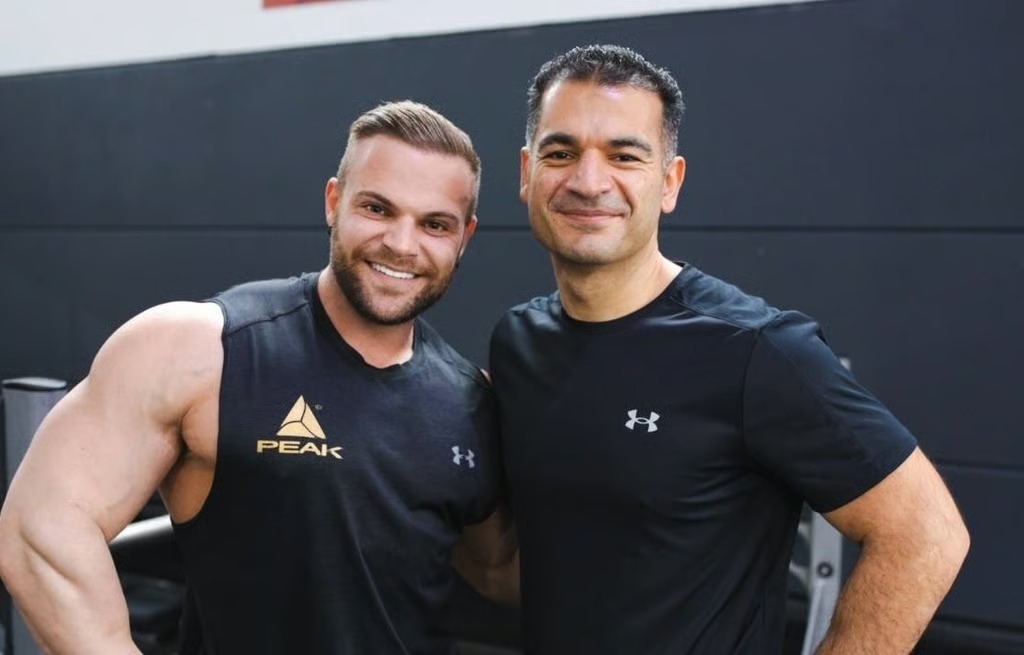
Introduction
Unleashing your potential means constantly redefining your own limits and leaving external constraints behind. In this episode of Project Mindset, Reza Mehman talks with professional bodybuilder and entrepreneur Mike Sommerfeld about the long road to the Mr. Olympia stage, about iron discipline, and the question of for whom you actually pursue your goals. Mike offers honest insights into his daily life, his motivation on tough days, and the role his father played in his career. Additionally, Mike’s partner, Chantal Dahm, shares her experience of living with a bodybuilder during competition preparation. This episode impressively demonstrates that bodybuilding is far more than just lifting weights: it’s a mindset that can be applied to all areas of life. Anyone who wants to understand how discipline, self-reflection, and intrinsic motivation interact will find valuable insights here.
Mike Sommerfeld: the episode in brief
In one sentence: Professional bodybuilder Mike Sommerfeld explains how iron discipline, self-focus and questioning external control helped him to unleash his full potential and reach the Mr. Olympia stage.
In three sentences: Mike Sommerfeld shares his experiences from 16 years of bodybuilding and reveals why discipline and visualization are more important than motivation. The conversation makes it clear that for a long time Mike also competed for his father and had to learn to distinguish between his own passion and being controlled by others. Additionally, his partner Chantal Dahm provides insights into life alongside a competitive bodybuilder.
In five sentences: Mike Sommerfeld describes his structured daily routine during competition preparation, which includes double cardio, training, work, and a strict diet for ten months of the year. He explains how he motivates himself on unmotivated days: through positive visualization or the thought that his opponent is doing exactly what he’s too lazy to do. His journey to Mr. Olympia was an emotional highlight that he describes as indescribable. The conversation reveals that his father plays a central role, and Mike reflects on the extent to which he also pursues the sport for his father. His partner, Chantal Dahm, adds her perspective, highlighting the challenges and strengths that come with a relationship between two bodybuilders.
Context: Who, What, Why
Who is speaking: Reza Mehman (Host, Project Mindset) in conversation with Mike Sommerfeld (professional bodybuilder, entrepreneur, Mr. Olympia participant) and brief insights from Chantal Dahm (bodybuilder and Mike’s partner).
What is it about: The conversation revolves around the mental side of bodybuilding: discipline, self-focus, dealing with competition, the importance of visualization, recognizing external control, and transferring these principles to entrepreneurship and life.
Why is it relevant: Bodybuilding is often reduced to physical performance, but this episode shows that the mental component is crucial. The themes of discipline, personal development, and overcoming external constraints affect everyone pursuing personal or professional goals.
Three key questions of the episode:
- How do you maintain iron discipline for months, even on days without motivation?
- To what extent do you pursue goals for yourself and to what extent for other people?
- Which mindset principles from bodybuilding can be applied to entrepreneurship and everyday life?
Table of contents
- Introduction – What this episode is about
- Summary – The key messages summarized
- context – Background information on guests and topics
- Topics and classification – The central themes of the episode
- Key messages – The most important findings
- Frequently Asked Questions – Answers to the most important questions
- Highlight quotes – The most concise statements
- Transcript – The complete conversation
- Keywords – SEO-relevant keywords
- Names and terms – People, places and technical terms
- Quotable passage – For sharing and quoting
Topics and classification
1. Discipline and daily structure in professional bodybuilding
Mike Sommerfeld gives detailed insights into his daily routine during competition preparation: double cardio, structured training, counted meals and meticulous planning over ten months of the year.
Keywords: Bodybuilding discipline, competition preparation, daily routine of a bodybuilder
2. Motivation and mental strength on difficult days
Mike describes two strategies: positive visualization of one’s own goal and negative motivation through the thought that the opponent is doing exactly what one is too lazy to do.
Keywords: Motivation, bodybuilding, mental strength, visualization of goals
3. Recognizing and overcoming external control
A central theme of the conversation is the question of whether Mike bodybuilds primarily for himself or for his father. This reflection on external control is applicable to many areas of life.
Keywords: Overcoming external control, personal potential, self-determination
4. Mr. Olympia: The Road to the Biggest Stage
Mike describes the overwhelming emotions of his participation in Mr. Olympia, the highest competition in professional bodybuilding, and why he still finds it hard to put the moment into words.
Keywords: Mr. Olympia experience, professional bodybuilding competition, bodybuilding career
5. Transfer from bodybuilding to entrepreneurship
Mike explains how principles such as structure, perseverance and self-focus from bodybuilding can be directly transferred to his entrepreneurship and vice versa.
Keywords: Bodybuilding, entrepreneurship, mindset transfer, discipline in business
Key messages
- No one knows their full potential. There’s always room for improvement, a little more.
- Everything you don’t do today, your opponent will do. At the end of the day, you’ll be facing him on stage.
- Diamonds are formed under pressure. Negative motivation can be just as effective as positive visualization.
- The only thing you truly have control over and can change is yourself.
- Bodybuilding doesn’t collect medals, it collects moments. Memories of people and experiences count for more than trophies.
- Many limitations come from external sources: school, family, or society. One’s own capabilities often far exceed what others believe one is capable of.
- Those who primarily do things for other people should honestly reflect on whether their own motivation is truly intrinsic.
- Bodybuilding teaches that success is the sum of daily, small, consistent decisions.
- Positivity in one’s environment is crucial: those who surround themselves with negative people will be dragged down themselves.
- Fear of performances and competition can be reduced through routine, experience, and focus on one’s own performance.
Frequently Asked Questions
How does Mike Sommerfeld motivate himself on days without motivation?
Mike uses two strategies: First, positive visualization of his goal and imagining where he wants to be at the end of the day. Second, the thought that his opponent has exactly the training and discipline that he himself is currently too lazy to provide. This “negative” motivation creates productive pressure.
What makes bodybuilding mentally different from other sports?
In bodybuilding, there’s no team to compensate for a bad day. Every calorie, every workout, and every hour of sleep counts. Even one bad day right before a competition can undo months of preparation. The entire responsibility rests solely with the athlete.
What does it mean to compete at Mr. Olympia?
Mr. Olympia is the pinnacle of professional bodybuilding. Mike Sommerfeld describes the experience as overwhelming and almost impossible to put into words. Standing on that stage after 16 years of hard work was a moment of pure fulfillment and disbelief for him.
To what extent does Mike Sommerfeld bodybuild for his father?
The conversation makes it clear that Mike’s father plays a central role in his career. Mike openly reflects that part of his motivation is to give something back to his father and make him proud. This realization raises the important question of how much external influence is actually present in one’s own goals.
What lessons learned from bodybuilding are helpful in entrepreneurship?
Mike emphasizes structure, perseverance, self-focus, and the ability to avoid distractions from external noise. In bodybuilding, as in business, success is the sum of many small, consistent decisions. Focusing on what you can control is crucial in both fields.
How does Mike deal with limitations and negativity from the outside?
Mike has experienced many limitations in his life due to school, his environment, and society. He has learned to ignore these external constraints and focus on his own abilities. He emphasizes the importance of a positive environment and the need to consciously distance oneself from negative influences.
What is it like to live with a bodybuilder during competition preparation?
Mike’s partner, Chantal Dahm, offers honest insights in the interview: Competition preparation is intense, every calorie is weighed, and mood can suffer as a result. Since both are bodybuilders, Chantal understands the challenges from her own experience, which fosters mutual understanding.
How does Mike Sommerfeld know that he has reached his full potential?
Mike believes that no one knows their full potential. For him, it’s about getting one centimeter further and one percent better every day. His benchmark isn’t perfection, but continuous improvement and honestly reflecting on whether he gave it his all that day.
Selected statements from Mike Sommerfeld
“Everything I don’t do today, my opponent does. And at the end of the day, I’m standing against the guy on stage, and then I shouldn’t expect to beat him because he did everything that I was too lazy, too unmotivated, or whatever else I was doing.”
“No one knows their potential 100%. It’s always about going 1 cm further, 1% better.”
“Diamonds are formed under pressure.”
“I have never collected medals or trophies in my life, but moments.”
“The only thing I actually have control over, the only thing I can change, is myself.”
“If you concern yourself with things you cannot influence, you will spend all day thinking about things you cannot change.”
“For me, bodybuilding is not just a topic or a sport where you simply lift weights stupidly, but it also involves a whole lot of mindset.”
– Reza Mehman
“I worked hard for 16 years for this. Standing there, I just couldn’t quite believe it.”
The full conversation
Hi everyone and welcome to Project Mindset. I had the pleasure of conducting another interview, this time with bodybuilder and entrepreneur Mike Sommerfeld. A very interesting personality, and you’ll see that for me, bodybuilding isn’t just a topic or a sport where you simply lift weights mindlessly; it involves a whole lot of mindset. We’ll delve into that later, and one theme I observed, particularly with Mike, is that he might be pursuing bodybuilding not just for himself, but also for his father.
And that reminded me, as I’d also discussed in recent podcast episodes, that we do certain things in our lives that are perhaps primarily for someone else, but not for ourselves. And that’s exactly what struck me in my conversation with Mike; he was incredibly transparent and spoke very openly about it, which I’m very grateful for. But anyway, more on that—enough spoilers! You can listen to the podcast here afterward, or you can visit my YouTube channel (just search for “Project Mindset”) or my website.www.projectmindset.de,I’ve also linked it there again.
Discipline as a daily task
Okay, enough talk, enjoy today’s podcast episode. Everything I don’t do today, my opponent will. And at the end of the day, I’ll be standing on stage against that guy, and I shouldn’t expect to beat him because he’ll have done everything I was too lazy, too unmotivated, or whatever. Hey Mike, thanks so much for your time today. Thanks, it’s great to have you here. Yes, thank you. So, I’ve been trying to get in touch with you for months now. I finally managed it, now, between Christmas and New Year’s.
Thank you so much for that. How wonderful that you took the time. Yes, with pleasure. Yes, bodybuilding is a super exciting topic for me. It’s about bodybuilding, I believe it’s one of the sports where you need the most discipline. At least, that’s how I see it. That means you not only have to perform your exercises correctly in the gym and really lift heavy weights, but you also have to pay attention to your diet, how much sleep you get, and your recovery in your private life.
Why many factors need to align
I think that’s what bodybuilding is all about. And what I’ve also noticed is that if you have a competition and you slept really badly the night before, or maybe had stomach problems, then the competition might actually be ruined. Correct. Exactly. And that’s not quite so extreme in many sports. As a soccer player, you can have a bad day, and your team might help out a bit, but you’re always supposed to be 100 percent there, you have to be ready.
That’s right, yes. I’ve had the same experience in recent competitions: if the night before was bad and you have to step on the scales, you can actually be 300 or 400 grams short, weight you didn’t lose because, for example, you didn’t sleep through the night or, as you mentioned, digestive issues, something like that. Luckily, I’m usually spared from that. But I know a few people who, if things don’t go so well, can’t even make it onto the scales and then they have to fly home again.
And we’re talking about weeks and months of preparation that are then thrown away because one day didn’t go well. That’s the crazy thing about bodybuilding for me. What does a typical day look like for you? How would you describe it? Admittedly, it’s very, very unstructured right now, but that’s okay. For the last 20 months, I think I’ve had almost everything perfectly timed, down to the minute. And it starts… for 20 months?
Daily life during competition preparation
Exactly. So, let’s say I was on a diet for ten out of twelve months of the year. Because I always had to qualify for the Olympia, I essentially had to compete twice a year. And then, my routine was to get ready in the morning. My day usually starts between six and eight, depending on how well I slept. The first thing I do in the morning is drink a liter of warm water with lemon juice, a little salt, electrolytes, and things like that. Then I do cardio, and depending on what phase I’m in, that lasts between 30 and 60 minutes.
Breakfast follows. After that, it’s off to the gym for the next workout. I usually work until 10 pm. Luckily, I’m self-employed now and can choose my own working hours. That’s pretty much always the case. And then in the evening, I do my last cardio session around 10 or 11 pm. Then my last meal and then it’s off to bed. So, throughout the day, I structure my training accordingly.
Continued
That means if I have a rest day, it’s actually a bit harder to maintain structure because you’ve built everything else around training. And now you can basically make it completely flexible. But that’s the routine. So basically cardio, training, cardio, and in between, work, eating, and that kind of stuff. I’ll come back to the topic of entrepreneurship later. But what do you do on the days when you’re, let’s say, not so motivated to just go to the gym and stick to your diet?
Because I imagine it’s incredibly exhausting to be so disciplined for 10 months straight. What tips can you give me for when, for example, I just don’t feel like doing anything one day? There are two possibilities. The first is the good one, the second is the less good one. The first is, let’s say, the positive, intrinsic one. Visualizing your goal, where you’ll be at the end of the day, and what steps you’ve taken to get closer to that goal.
That’s a positive thing for me. Then there’s the negative side, which, to be honest, is the one I’ve discovered for myself over the course of my life. Everything I don’t do today, my opponent does. And at the end of the day, I’m standing on stage against that guy, and I shouldn’t expect to beat him. Because he’s done everything I was too lazy, too unmotivated, or whatever. Let’s just say it’s a bit negative, if you want to put it that way, but I always say, pressure makes diamonds.
The relationship with the competition
And how do you deal with your competitors, your opponents? Is it a friendly relationship with them? Yes, by now it is, because, as you mentioned earlier, in football your team sometimes just saves your bacon when you’re having a bad day. But in bodybuilding, you can’t change anything. You see your competition, one has a big arm, another has a big leg, or one is in superb shape. You can’t make your arm or legs any bigger a week before.
Just try to bring your best package to the stage. Therefore, it’s not so much a case of less competition. Sure, it’s always hyped up, in boxing too, but ultimately, you bring your best package to the stage, and there’s absolutely no need to make life difficult for each other. You can tease each other a bit, but there’s no point in getting worked up about it, because in football, if the opponent has a weak defense, your attack has to be strong.
Focus on your own form
Bodybuilding isn’t like that. Either you’re in shape and you’re good, or you’re not. So, it doesn’t really make sense, but admittedly, in the past I would spend weeks studying the competition beforehand, what they were doing, what they were eating, but ultimately, the setup they were using didn’t work for me, and vice versa. That means it’s absolutely unnecessary to observe them. That would have been my next question. To what extent do you pay attention to what’s going on around you, or is it really the case that you—I can already tell—focus more on yourself and don’t look to the left and right as much these days?
It’s actually true now, because the only thing I truly have control over, the only thing I can change, is myself. I can’t influence anyone else, except through manipulation, but that’s dirty, that’s unsportsmanlike, that’s just not right. The fact is, if you dwell on things you can’t influence, you’ll spend all day thinking about things you can’t change. So it’s pointless. And then I prefer to focus on the things I can actually change, and that’s me.
The Road to Mr. Olympia
You were recently at Mr. Olympia. That’s obviously a huge honor, I imagine, absolutely. How does it feel to travel all the way from Heidelberg-Leimen to Mr. Olympia? Crazy. And I’ll be completely honest with you, if I could describe how I felt, I would. I still can’t. Imagine, sticking with the soccer analogy, you walk into the locker room, you see this guy who’s 6’4″ putting on his gloves and he says, “Hey Mike, what’s up?”
And you’re thinking, hey, he means me, he’s sitting in Oliver Kahn’s car, and then Ballack comes along, you put your arm around me and I say, hey, we’re going to have a really awesome show tonight, are you up for it? I was gasping for breath at first, then I thought, okay. And you’re not there because you won the lottery, you’re there because you earned it. It took years of hard work to earn that place. In my case, that meant 16 years of effort. Standing there, I could hardly believe it. Then you’re backstage and it’s simply bigger than any venue you’ve ever been in, the backstage area.
Continued
There’s a gym built right in, just built in, so you could pump iron if you wanted. Unbelievable. Then there are all the tanning stations, huge lights everywhere, the camera crews, and then at some point Schwarzenegger, Sylvester Lohan, and Batista, that wrestler, these huge names, just walk by with a coffee and they’re like that. I’m like, hey, where are you? It’s so many impressions all at once, I still haven’t really processed it to this day, and luckily I made a little film about it with my dad.
Yes. And it’s finished now, and we watched it together and really went over everything in retrospect, and it was truly incredible what happened. Not just the Olympics, but the whole journey there. We traveled to Mexico, stayed with Eduardo for several weeks, went to Orlando with him, and it was such a huge highlight because it didn’t work out last year. There was so much, so if I can ever describe the emotions, I’ll explain it to you, but right now it’s very, very difficult.
Moments as a personal reward
I absolutely believe you. How do you reward yourself after such a success, let’s say? Honestly, I’ve thought about it a lot and I’ve come to the conclusion that I’ve never collected medals or trophies in my life, but rather moments. When I think back on the last few years, I don’t think about the trophies, not the competitions, but everything surrounding them, the people, the moments. My first Arnold Classic—it wasn’t about the trophy or the placement, but about my coach, how I told him I wanted to fly home because I was scared.
Or the celebration afterwards, when he said, “Come on, let’s go for a beer.” I was so excited. It also felt like the last time I ever drank alcohol. But how do you reward yourself? I think the memory is the most important thing. And you invest time in all of that—in cardio, in sports, in food—and ultimately, it’s a trade. You exchange your time for that moment. And I think you should cherish that moment because it’s the only thing that remains.
What lies behind medals and trophies
Sure, a trophy is nice, but it’s just a connection to the memory. Otherwise, it’s just a piece of metal. I think the moments are what’s important. I completely agree with you, and that makes it clear to me, because the trophy is the connection to that moment. You’re absolutely right. How does your close circle of friends and family deal with this? How does your wider circle of friends and family deal with it? There’s this really interesting quote from Arnold Schwarzenegger. I can’t quite remember it.
He said that sometimes people come up to him and say, “I never want to look like that.” And Arnold would say, “You never will.” Like the most skilled bodybuilder, you get both positive and negative reactions? Yes, much, much more often in the past. Nowadays, I think it’s become somewhat established that bodybuilders aren’t necessarily all stupid, but when I talk to people, they realize, maybe this guy actually has something between the ears, and maybe it’s not just about muscles.
Prejudices and first impressions
And then you’re more likely to encounter understanding. But the fact is, when you meet people who don’t know you, the first impression is usually not positive. Very few people see the bigger picture, the discipline and dedication you put into something, whether it’s sports, work, or family. They see the bigger picture, which I’m very grateful for, but unfortunately, there aren’t many people like that. No, I believe that if you engage in conversation with them and show them the bigger picture, the response is much more positive than if you simply present a muscle-bound individual.
And I have to be completely honest with you, the people who are really close to me are the ones who take the whole thing so lightly. My grandma, for example, always says, “Oh my boy, what do you look like again with all those muscles?” Or yesterday we were working out at the gym, and it’s the gym I’ve been going to since I was 14 or 15. And then this guy comes in and says, “Hey, you know what, you’re all pretty good-looking,” and I look at him like this, and he says, “Yeah, yeah, since you’ve been here, everyone’s become more handsome because I’m such an ugly guy.”
Private individual and public role
You know, it’s like this: I can tell these are friends, my close circle. And when people are at the gym and say, “Ah, hi Mike Sommerfeld,” and I call myself by that name, then I know they know, let’s call it the cardboard cutout, the bodybuilder everyone knows, but not the personality behind it. To me, the personality is what is truly fascinating; the result is just the image you see. And what lies beneath the surface is what’s truly interesting, I believe.
Continued
Yes, definitely. I first saw you online on Instagram, then followed you, and I found it really interesting how you tick, because you seem like a very, let’s say, more mindful person. You’re definitely aware of what’s going on around you. You approach positivity in a certain way. I get the feeling you sometimes face a lot of really negative hostility, but overall you have a positive attitude towards life.
I definitely noticed it online. So, huge respect for that. Yes, I had to learn that the hard way. And if we’re being completely honest, I was always the type of person who defined myself by what I did, meaning by positive feedback. It felt like being controlled by others, if you will. A dangerous thing, because when you get negative feedback for something positive you’ve done, the balance is off, and then you feel bad. And that’s what happened last year.
I really tried to give it my all all year to qualify for the Olympics. Not just for myself, but also for my father, who wanted to do it 30 years ago. Then I qualified. Then it didn’t work out, and it wasn’t my fault. What do you mean, not my fault? I could have perhaps focused more on it, but dealing with things you don’t even know exist is pretty difficult. In any case, I then received a lot of negativity, and everything I started was essentially turned into something negative.
Classifying foreign opinions
I first need to learn that only a true anniversary can recognize the value of a precious stone, not just some random person peddling junk on the street. That is, when someone said it was a lie, that Mike was arrogant, blah blah blah, and a whole lot of other negativity, I knew right away that these people didn’t know me. If they really knew me, they’d know I’m not arrogant, and actually, I’m not even a ***. Admittedly, I can be a *** sometimes, but there’s a reason for it. But I’m not inherently a bad person, and if someone has said otherwise, I also need to learn that maybe I shouldn’t take it so personally.
And then there’s this thing, alchemy, so to speak, in plain English, turning shit into gold, and there’s a little bit of gold in every piece of shit, and that’s what I’m always trying to find, and I think that’s where the best learnings come from. I absolutely believe that. Speaking of learning, you’re also, let’s say, an entrepreneur, a successful entrepreneur. What lessons from bodybuilding have you been able to transfer to entrepreneurship, and vice versa?
Wow, that’s a great topic. I’d almost say I’d start with school before we get to entrepreneurship, because that’s where it all began. I learned relatively early on that you can generate attention by doing bad things, bad grades, being conspicuous at school, until I realized that success comes from genuine achievement. And success usually gives better feedback than bad feedback. And then I started to become successful in sports, whether it was in football or not.
Early interests and recognition
So, I played soccer, handball, basketball. There was even a chess diploma along the way. I have no idea. A thousand different things. A chess diploma, interesting. Yeah. And then I thought, hey, if you do cool things, then Grandma and Grandpa will be proud of you for once. That feels good, too. And for once, the whole family isn’t like, “Naughty Mike.” “So, what’s wrong with you now?” And then I was able to apply that from sports to pretty much everything else I’ve done in my life. Exactly, then I went from being a failing student to a straight-A student.
Then I did my apprenticeship there, which I passed successfully. And then I thought to myself, if I can give it my all in sports and if real dedication leads to a successful result, then it works in everything, too. My first, rather naive venture involved buying and selling T-shirts. Then I tried to find ways and means to do it best, just like in bodybuilding. In the beginning, I couldn’t train at every gym and I didn’t have the money for every protein powder and other junk, but you always found solutions.
The first entrepreneurial steps
And then at some point, I just bought a tank top for five euros and sold it for ten. People thought it was cool to wear my tank tops. It felt cool to me that they liked it, being controlled by others and all that. And so it continued. And now it’s like this: Sometimes there are tough days. I now manage several companies. And things don’t always run smoothly. And it’s the same in bodybuilding. Sometimes cardio hurts. Sometimes the workout isn’t great.
Continued
Or maybe the food doesn’t taste good. But at the end of the day, what matters is how much you’ve accomplished. And I usually forgo the small rewards, but in return, I get the big picture. Let’s say if I can’t go to the shisha bar with my friends tonight, eat burgers, smoke shisha, and spend time with them, but instead sit at home until two in the morning and do my work, I know that at some point during the day I can be content and happy because I know I’m one step closer to what I really want.
Spending time with friends is important, no question. But constantly sitting in the same bar, doing the same things, talking about the same topics, I don’t think that’s very productive. But holding on to my own dream at home and working on it, that, I believe, will eventually lead to success. Who knows? Maybe I’ll change my mind about it, but I think I’m getting relatively close to it. Very well said. You also brought up a very important topic: putting horsepower into practice.
For example, I always ask myself, what is my potential, and how can I unleash it? I have a general idea, of course, but I’m always unsure whether, at the end of the day, I’ve actually done everything within my capacity, whether I’ve truly unleashed my potential. Hence my question to you as well: At the end of the day, what do you need to have done to know that you’ve fully utilized your capacity, that you’ve unleashed your potential?
Further explore your own potential
Wow, that’s difficult because I don’t think anyone knows their full potential. I believe there’s always room for improvement, always a bit more. That’s actually why I have the skull tattooed on me. It represents dissatisfaction, the constant striving for more, faster, better, bigger. And I’ve experienced so many times, even with my own clients and customers, who say, “Yeah, so a top 6 finish at a Baden-Württemberg competition works,” and I say, “Dude, you can forget about that, that kind of thing doesn’t happen here.”
We’re going to make it a top 3 German Championship, and I’ll have to kick your ass all the way to Meinheim. And people actually determine the rankings. Whether it’s an amateur competing at the German Championships for the first time, or a professional athlete at the Arnold Classic, they all lack self-belief at first. Whether it’s weight loss, whatever, people don’t see their potential. Why is that? I think it’s ingrained, like the motto “be realistic.” What does that mean? If I tell you to be realistic, it means I’m going to tell you my limitations and show you what they are.
A personal story from coaching
I have a client, Nicole is her name, and she’s lost over 70 kilos. Everyone told her she couldn’t do it, that she should be realistic, that it wouldn’t work. And at the beginning, she didn’t just say she wanted to lose weight, she wanted to be on stage. She wanted to be a competitive bodybuilder on stage. And that’s something that most people find hard to believe, or that she simply doesn’t grasp. Because she was such a huge woman. Now she’s lost 70, 80 kilos, and she’s had her skin tightened. And now we’re at the point where we’re saying, wow, how the hell is that even possible?
And there are still people who say, be realistic, she can’t do it. Nobody believes in her. And yet I’ve always said it will work. We’re working on it, no matter what, even if it takes three extra steps. We’ll get there. I know that because it’s within a person’s power to lose body fat. It’s within their power to build muscle. These are simple things. Only, in the grand scheme of things, it’s a huge mountain to climb. But it’s a great metaphor: the higher the mountain, the better the view.
Accompanying other people on their journey
And we’re slowly getting closer to seeing that we can change people’s minds and that we can bring others along, that is, motivate them. There are now so many people contacting her who need or want help with weight loss. And that’s so much fun. At the end of the day, I think that’s what motivates me too. That you can bring people along and that you can be a positive part of others’ journeys. You put it very well, that we often project our own limitations onto someone else.
How many limitations did you actually experience in your environment, as you… I mean, it’s quite something to say, coming from a small town, “I want to conquer the world of bodybuilding.” That’s also a bit like the Arnold Schwarzenegger story. Oh, it’s so beautiful. How did you deal with the limitations imposed on you from the outside? We’re in Germany, and if you’re loud in Germany, I’ll speak in German for a moment, you’ll get torn to shreds.
Continued
And it’s been like that my whole life, ever since I was eleven. I’ve said I’m going to be a professional bodybuilder. And you tell an eleven-year-old, “Yes, someday, yes, my son, you’re going to be a bodybuilder, no problem.” But then things got serious. I went through with it. I stitched every day at eleven, I watched what I ate. At sixteen, I competed in my first competition and became German champion. And then people realized, “Hey, he wasn’t just talking nonsense. He’d been working hard for five years and he was killing it.”
And there are hardly any people who were German champion at 16. And then I said, I’m going pro. That’s when it started. Oh Mike, yeah, professional bodybuilder, keep going. Then I became the overall German champion. I said, I’m going to be German champion. Yeah Mike, you’re only 18, take it easy. I said, let the baker bake the easy bread, not me. Being open about it brought a lot of pushback. I’d also say that I’m a relatively self-confident person because I know what I’m capable of when I unleash my powers.
Despite resistance, they took to the stage.
Then, as I’ve already said, I really put my mind to it, and then I said I’d take it to the streets if I had to. Then I became the youngest German ever to reach the finals at the Arnold Classic. There had never been anyone younger than me to make the top three. And that was the competition where I admitted I was scared and actually wanted to fly home. But my coach at the time was one of the first to say, “No, you’re going up there, you deserve it. And even if you don’t come in first, or second, or third, you go up there and fight.”
After fighting hard, I got a good placement. From the beginning, he said, “I think you’ll be something really big someday.” And I was sitting at a table with that same guy a few weeks ago, and we were talking about how we used to chuckle about me going to Mr. Olympia 10 years ago. I’d just come from Orlando, I’d brought my trophy and my medal, and I said, “Coach”—well, he’s not even my coach, but I still call him that, “Papa Coach”—look at this.
Years of criticism and own motivation
He said, “Yes, I knew it, even 10 years ago.” But unfortunately, that’s just one of a few. And I have this history; there’s a forum on the internet where, for 10 years, people have been writing about everything I can’t do, how bad I am, where I’ll never get. And every single time, I’ve proven the opposite. Whether it was German Champion, Arnold Classic, becoming a professional, I’ll never be a good professional, I’ll never win a pro show, I’ll never go to the Olympia, I’ll never crack the top 10, blah blah blah.
And every time I’ve proven them wrong. And it’s so much fun to see their faces fall as they say, “Oh crap, okay, what am I supposed to say now?” That people even waste their time on this, go to all that trouble… I just don’t get it. Honestly, it makes no sense to me. But I’ve also learned that it’s just human nature. There are simply people who like to sit and judge others, and that’s their job. And that’s perfectly fine.
Coping with pressure before performances
As long as it’s my job to prove them wrong. Very well done, very good. Now, another question about anxiety, since you brought it up. How do you deal with it? Do you still get anxious before big performances? Maybe “anxiety” is such a harsh word. What I’m imagining is that you spend 10 months preparing for one day. Correct. So, I imagine it… Yes, maybe “anxiety” is a bit of an overstatement, but I do imagine it as a very high mountain to climb.
How do you deal with that? I’m someone who puts a lot of pressure on myself. That means any placement other than first place is a loss. It’s very tough, and I’ve come down from that mindset a bit now because, as I mentioned, the moments don’t collect the trophies anymore. But ultimately, I’m a competitive athlete. In a competition, it’s about winning. And if you don’t win and you’re not in first place, you’ve lost. So second place is the first loser.
Distinguish between fear and excitement
Absolutely clear. And yes, I put a lot of pressure on myself. But you used the word “fear.” Fear is actually a feeling to protect you from death. Like when you have to fight, I don’t know, a lion or a bear. Flight reflexes, that’s the thing. So, fear is actually miscategorized when it comes to achieving goals. I have enormous respect for that. It is a huge ordeal, I know. I know how much can go wrong. But at the end of the day, what really matters?
Continued
What I can do. That means I can do my cardio. I can watch what I eat. Training properly is within my control. I can pay attention to my recovery. That’s all I try to implement 100 percent. There are days when it doesn’t quite work out 100 percent. That’s the case for everyone. But I always try to give as much as I can. And at the end of the day, it simply comes down to the sum of all the things, showing how much I can do or how much I was able to do. If it wasn’t quite 100 percent, it’s my job as an athlete to figure out where I can get even more out of it.
Where do the opportunities lie? How can I make it even easier and better? And then try to be even better next time. And that’s what it all comes down to, I think. You said potential. Where does that potential mean for your future? I’m asking deliberately, you’re only 27. Exactly, meaning “only” is good. Yes, but I think, as far as I can tell, you start a bodybuilding career relatively late in life. That means you still have a lot of potential ahead of you. Where do you see yourself? I always try to challenge myself.
When many tasks demand attention at the same time
Last year was incredibly tough. I was trying to get my first Olympic-quality shot while filming with three cameramen, preparing two athletes simultaneously, and having two companies in turmoil that were then released on the very day of the competition. Everything left me broken. The failure was massive. I completely wrecked everything. Not just companies, but people too. And that was the day I swore to myself that I would never get my qualification at other people’s expense.
To give you an example, a good friend of mine took pictures of me at a competition. And I knew I had a schedule for when I had to upload each picture, which text, which tagging. Everything had to be perfect, down to the minute. And he was 15, 20 minutes late. He said, “I can’t work with people like that who aren’t punctual. Out, next photographer.” And I knew him personally. He was a damn good friend. And other people suffered under this pressure to perform.
Take responsibility for your own reactions
Who knows, maybe he’ll have car trouble, or his phone battery will die, Valer. These are things that can happen. And I mentally punished him for it because I couldn’t get my own things done. And I never wanted that to happen again. So, my next challenge, my next opportunity, was to achieve exactly that with less pressure and less at the expense of other people. I tried it myself this year, and it worked. Because this time I had the necessary tools to build everything the way I wanted it to be.
But I had to learn that lesson the hard way. I always say you have to touch a hot stove to know it’s hot. And it was damn hot. And I’m not doing that again. That’s basically what bodybuilding taught you, too. Am I right? Yes. Do you have any other lessons you can share? What else has bodybuilding taught you? Wow. Well, I can tell you, like I said, I’m 27 now, and I’ve learned quite a lot through bodybuilding. Like, for example, if you just sit around all day, you shouldn’t expect to reach your goals.
Acting in pursuit of one’s own goals
No one comes along and delivers your goals. You have to work for them. And it’s not like big goals are easy to achieve. You really have to—and here’s another great metaphor, which is more my style—the deeper the shit you have to slog through, the thicker your legs become in the end. Or the thicker your skin becomes. And I think my skin is pretty thick by now. So if someone tells me straight to my face that I can’t do it, I can just give a weary smile because that person has no idea who I am or what I’m capable of.
And I believe it’s extremely important to know what you’re capable of. Because that’s what builds self-confidence, and confidence creates a foundation on which you can grow. If you’re never sure what you’re capable of and everything feels a bit shaky, then you won’t progress, and you won’t know what you want or what you need. If you don’t know that, let’s say I wouldn’t know what kind of people I need around me. How am I supposed to perform at my best if the framework isn’t there when it’s truly needed?
Building a supportive environment
This will break. Because if you want to achieve really big things, there’s a lot of pressure, everything is pulling you in different directions, and you really have to stay focused. You need people around you who have your back, who make you strong when you’re not. And there are often days like that. There have been days when I get up in the morning, do my cardio, I’m so shaky, I’ve run out of food, I’ve already eaten my egg whites, my green beans—that’s sad enough. Then you drag yourself to the gym, and you know that 200 kilos of squats are waiting for you.
Continued
And you know, you can’t do it today, and yet you still go for it, put the weight on, knowing you’ll collapse afterward and won’t be able to move an inch, and yet you do it anyway. At the end of the day, you think to yourself, shit, man, why are you doing this? And then comes a really important moment, the people around you who believe in you, you’d be letting them down if you gave up now, like some little… Just because you’re not feeling well today, you’re letting everyone down, how selfish…
No way, never. Especially in this context, you have a very close relationship with your father. Incredibly cool guy, I sometimes see him on Instagram. I think we have a really good time together. But what I’ve been wondering is, to what extent—and I hope this isn’t too personal a question—to what extent do you do things for yourself, and to what extent do you also do them for your father? I’d say that’s a bullseye. A very personal question, but one I’d really, really love to answer.
My father was a bodybuilder before me, and everyone used to dream of competing in Mr. Olympia. And I had the chance; I sensed it before last year, I could get qualified. It had always been my dream as a child. And not only that, not only could I go to this competition, I could also fulfill my father’s dream. And not just as a spectator who buys a ticket, watches, and then goes home in the evening, no, I was a damn part of it.
Take your father along on the trip
Everything. The flight, the Frap, the diet, everything. The cooking, the shopping. He experienced it all firsthand. He was practically on stage himself. And… My father, as you mentioned, is always very, very happy and so open. That’s why I’m always like that. My father has been very, very depressed for years. And he’s also attempted suicide several times. He was a patient in a psychiatric hospital. And I’ve realized, this might sound silly, but I can sometimes fill his day with work that I actually enjoy at the end of the day.
To give you an example, in the mornings, when I notice he’s not really getting going and would rather just hide away at home, I still have my trump card: I can say, “Hey Dad, I’ve got legs, can you help me? I need your support.” And then you suddenly see this fire in his eyes. Then he packs his things, drives to the gym for me, and works out with me. And at the end of the day, it’s been a great day for him too. We’ve done cardio together so often. I’ve taken him with me to Spain, to Romania, to London, to Mexico, to Orlando.
Collecting shared memories
And those are the trips. He’s incredibly grateful for them now because he was able to collect moments that he himself wouldn’t have dared to do. And that’s a really, really powerful motivation. It broke my heart when we were sitting at the airport last year and could not leave, with my father there beside me. Although he did not feel responsible, he was involved, and it affected him just as much as me. And that’s why I wanted to do it even more next year, for him too.
Not just for him, there are many others for whom I’ve gladly done this. But I’ve noticed that my dad gives me a kind of motivation, where it’s not about me, but rather I can do it for him, and I can see that it’s good for him. That gives me so much, so much strength and energy. Especially in this context, thank you for your openness. In this context, I personally often ask myself, when it comes to the topic of Mainz, to what extent I am personally responsible for the happiness of other people.
Expectations of close people
Of course, you always have a sense of responsibility. You also want to meet the expectations of others; you simply want to make your loved ones, your loved ones, happier. But isn’t that also a huge burden for you? Yes. Am I also distracted, for example, from the real issue? Correct. I may also come to that conclusion this year, and I’ll have to make some tough decisions, more or less. I’ve always tried, and that’s what truly makes me happy at the end of the day: to be a positive part of someone else’s life.
Whether it’s, “Mike, can you get me a long barbell so I can train in the basement?” Sure, if you have a long bar, I’ll go down there and do the stuff, because it makes me feel good at the end of the day. But I also had to learn that if I’m juggling 20 things, I might not be able to handle my own. And now we’re at a point where it’s more about living a happy life, competing, and flying around. No, I really need to start delivering results now.
Continued
Like I said, my time is running out. I’m 27 now, still relatively young, but if I don’t start really busting my ass soon and utilize the resources that work in my favor, I won’t be able to compete at this level for long. What do you mean by resources that work in my favor? Let’s say I have five or six people around me who support me. And in recent competitions, it’s always been like this: my dad, for example, has never really had any experience with tanning, like Martin.
But I wanted him to do it because it makes him happy and because he can be a part of it. I know my dad can’t train as intensely as I can. Sure, I take him with me, I enjoy training with him, but I train with him, not the other way around. Now I need people to push me, to say, “What? You can’t go on, you jerk! Now give it your all!” And my dad isn’t like that because it’s really, really exhausting for him. Or, let’s say, my girlfriend—when I’m really struggling and don’t know which decision to make, she says, “Okay, think about it for a second, think rationally, and just like that, you’ll come up with the best solution.”
Support during a challenging phase
And I can calmly say, “Shit, yeah, you’re right,” if I don’t have my own head for it, because entrepreneurship, my own athletes, preparations, cooking—all that stuff is still weighing on me. Sometimes you face decisions when you are not thinking clearly enough to make the right choice. And then you need someone by your side who can take some of that over for you. That means I need to use their resources, their irrational thinking, for example, or the passion of my training partner.
And now I’m trying to train myself to do all of this. Before, I tried to give everyone what I could, to make good decisions for them, for clients, for example, or for friends. But now is a time when I’m trying to use my resources to reach my full potential. It’s a tricky thing, because it feels a bit like taking advantage. On the other hand, I’m also trying to give what I can. And then I think a good flow develops.
Super interesting. You’ve hit the nail on the head. Girlfriend. And I wanted to talk to her again too. Oh, that’ll be interesting. I’m curious. We’ve known each other for a few years now. And funnily enough, I was her first coach a few years ago. And she got into this bodybuilding thing with this really tough approach. Get shit done. And whether you like your cardio or not, you have to do it. And if you’re working at 5 a.m., then you’re doing cardio at 2:30 a.m. or you’re up on Mars at 3:30 a.m.
Independence and mutual support
You don’t want to cook at night? Your problem. Seriously tough. She’s reached a point now, too. Then I’m like, dude, how do you guys manage to do all that? She’s still relatively young and has already accomplished so much. Just think, she’s 23 now and teaches at the university. People who are 30 years old. That’s crazy. While she’s getting up at 4:30 in the morning, while she’s working three jobs, while she’s preparing for competitions, you’re thinking, damn, how does she manage to do all that?
But those are exactly the kind of people who really pack a punch. And I like having those kinds of people around me. Exactly, that’s why I should probably talk to her now. Sure, I’m curious. So, we have a very special situation with you two. You’re Mike’s partner. At the same time, you’re also a bodybuilder yourself, and on top of that, you’re a lecturer at the university. My first question is, how do you manage to juggle all of that? Number one. And the second question is, what’s it like being the partner of a bodybuilder who also trains herself?
So I think it takes really, really good time management to commit to structures and create routines. It wasn’t easy at the beginning. It was a bit chaotic, but you get used to it over time. And personally, I also think that through sports you gain a lot of discipline, which you can ultimately apply to all areas of life. And I also think it works so well for us because of who we are.
As a couple in competition preparation
What I’m wondering is, when you’re both in competition prep, it’s a really stressful time anyway, I think. You know, dieting, training a lot, and so on. How is it for you two? Are you relaxed around each other, or do you get on each other’s nerves or clash a bit? We’re not actually dieting at the same time. Right now, I’m in my competition prep. I just started it again recently. Mike is in the off-season, and once I’m done with my competitions, he’ll start his prep.
Continued
I think both of those things can have disadvantages. But I’m glad that ours are practically the opposite. With a diet, you tend to have that sort of filtered listening experience, and you can support and encourage each other, focusing together on a competition or a season. I’ve come to perceive Mike as a very warm and friendly person. But now, let me ask you, what happens when he’s stressed, or when he’s in competition preparation and things aren’t going so well?
Is he still friendly and nice then, or can he be a bit different? I think you can always tell he’s a little tense, but then he tends to withdraw a bit. Okay, interesting. And as a coach, what’s he like? Honest answer? Yes. Well, he’s very tough as a coach, but personally, I have to say I’ve learned a great deal from him. It’s shaped my entire mindset. I mean, I used to go to the gym maybe three or four times a week, and I didn’t know what a planned meal plan was.
Structure and planning in everyday life
Deciding to get coaching from Mike changed that. He would say, “Here’s your supplement plan, here’s your nutrition plan, here’s how much you drink.” I was running around every day with ten bags and 10,000 shakes in them, thinking, “Oh my God, what’s happening?” But he’s someone who always sees the potential in people and wants to bring it out, even if they don’t see it themselves. Back then, nobody believed I’d ever get this far and be able to compete in the bikini class anywhere.
And then, more and more people started coming up to me during the preparation phase, saying things like, “Hey, you’ve lost so much weight, how did you do that?” And he was one of the few who believed in me from the very beginning. Wow, that’s really cool. Thanks so much for your time, too. You’re welcome. I just had a really great conversation with you. She said that as a coach, you’re sometimes not the nicest thing to do. No, I think it’s pretty harsh. But I wanted to ask you something else. You once said, “Invest instead of consume.”
Use time consciously
I got the impression from the video where you said it that you were very serious. You want to use your time wisely. Consuming less, whether social media or anything else, becomes something you want. You want to invest in yourself. Could you elaborate on that briefly? I wouldn’t necessarily say investing in myself, but rather in things that seem valuable to me and aren’t urgent. But let me first explain the difference for me personally. There are urgent things and important things.
The problem is that some urgent things become more urgent than important things. For example, you have a parking ticket you need to pay, and you’re rushing to do it, and the day before the deadline, it’s your grandma’s birthday. Now you have to decide: do you go to the police station and pay the ticket, or do you go to your grandma’s birthday party? What’s truly important is the time you spend with your grandma, which you now have to rush off to because the urgent things have become too urgent. And I’ve learned that the truly important things are investments, and urgent things are mostly consumption.
And the equation is always in time. That means even when we’re at work, we invest eight hours of our time and get printed paper in return. The question is, can I generate more time or investments with that printed paper than I waste time on? So that’s the circle. And most people—I’d say 80 percent—invest a great deal of time in exchanging money, but they keep the money and spend the rest of their time sitting on the couch watching TV.
Investing in relationships and the future
That’s not a good deal, if you ask me. It means that investments are all things that are important to me, like time with friends, with family, with my girlfriend. Starting a family is something that will happen eventually. Then I’ll really need an expensive necklace. Will that make me happy? I don’t think so. But, for example, going to our cabin in the mountains for New Year’s Eve with my girlfriend and the fireplace… Man, I’m already getting excited about that. I’m really looking forward to it.
I don’t need expensive cars and all that stuff. And also, I can scroll through Instagram all day. Then I lose three or four hours. Those three or four hours could instead go toward remembering what truly makes me happy, because the Instagram feed might be a source of urgent information about what’s going on, but it’s not really important. And I think that’s the difference between investing and consuming. Even if you can look at it from a different perspective.
Continued
Consumption—everyone consumes something in some way. But I always try to, or at least attempt to, put into perspective what’s truly important and what’s urgent. And that’s where I draw a line. Very well said. So, I always say something very similar. My phrase is: consume versus create. Because I think that when you create something, it makes you incredibly happier than just consuming. Especially in the long run. Especially in the long run, exactly. You also just mentioned social media again.
Your social-media work is also very successful. You’ve released a series on YouTube, several episodes titled “Unfinished.” Can you talk about it? Why is it called “Unfinished”? Oh, yes, it’s about that painful topic of the Olympia. I started developing my idea in January 2020. I wanted to go to the New York Pro in May, the first huge professional competition, then to the Puerto Rico Pro to try and qualify. Then, about three weeks before, it was canceled.
And I couldn’t, I’d put so much effort into it and it was so frustrating. And then I persevered with my idea all year long. The parties I threw interested everyone enormously because everyone else had given up. But I just can’t give up. If I haven’t followed through with my project, I can’t put it behind me. Then it was incredibly frustrating at times. Then I really, I clung to it so tightly. Giving up was not an option for me. I kept pursuing the idea and on and on.
Looking back on the competition season
And sometime in August, I flew to Spain and qualified for the Olympics. Then I was in Romania and London, and I just kept going and gave it my all. God forbid, I practically killed myself to get that qualification. And then I couldn’t leave. This had been going on for 10 months, and I always admit, what we were doing wasn’t exactly healthy. We trained for months on end with a huge calorie deficit.
I shot myself in the foot during Paddle to the Medal, my life was shot out of the water, my training. And then I couldn’t leave the country. And that simply wasn’t the catch. It remained unfinished. That wasn’t resolved. And that’s why this whole series of Unfinished films, which was also the title of the movie, came out, and now there’s another movie called Unfinished, because I couldn’t leave the country. And this whole journey to this unfinished story, I essentially titled it with this name, Unfinished. Now comes the follow-up, the sequel, which is called Finished, so to speak, so there’s a catch.
I’m really looking forward to that. Mike, that was incredibly exciting and interesting for me. I have immense respect for the amount of work, discipline, and sacrifice a bodybuilder puts in. So, huge respect. I’ll get to my last question in a moment. But before that, where can people follow you online if they want to learn more about you? On Instagram, on Mike the Badass or Mike Sommerfeld on YouTube. Or you can also find quite a few entries on Google.
Handling public comments
There’s also that nice forum where you can see all the things I can’t do. I think that might be interesting. If I were you, I’d print it all out and hang it on the wall. I’ve been thinking about it, and honestly, I wanted to write a counter-statement to every single thing they say I can’t do. But then you can just tell me, “You waste your time on too much negativity.” People have already seen that you can do it. I’m not wasting any more time on it. How great of you!
Seriously, I’m really cool. Thanks for the opportunity to talk about this, by the way. It’s a huge honor for me. Bodybuilding is often all about rice, chicken, and broccoli. And I think there’s so much more to it than that. And that’s what really helps people. Because I can tell people what I eat. Sure, that helps some people, but this mindset is what drives you forward. Exactly, and that brings us to the last question. What mindset has had the biggest and most important influence on your life?
I already touched on this earlier, saying that I find it selfish to give up when others believe in you. Because you’re putting your own ego above everything else. I don’t think that’s right in itself. Sometimes it’s necessary to protect yourself, but not in this case. The biggest impact—there are two, if you will—is, firstly, my father. But I’ve slowly come to realize that it’s not my life’s purpose; it’s something truly beautiful that I can give my father, but it’s not an obligation.
Continued
Nobody forces me to do this. I really, really enjoy it. And the last thing that pulled me out of the shit on the worst days was my grandpa. He died during preseason training in 2019. And my grandpa used to collect these Excaliburs, these swords. When I turned pro, I got one. My wish was to give it to him while he was still alive: a gift to the head of the family, practically on my knees.
The sword did not arrive for a year, and then he died. Then I took the sword to his grave, and it was always like that, no matter what I did as a child, I went to Grandpa and got my “hey, well done” reward. Maybe that’s where this need for external control comes from. I’d save up something, even if it was just three or four euros, with Grandpa, and he’d put it in a little cash box. My words would be, “Hey, good savings.” Always this “well done, well done.” Bringing him the sword was what I wanted, but I didn’t get that “well done” reward. Then I thought, “Hey, would my grandpa be proud of me?”
A thought for tough training moments
Yeah, yeah. And then I thought to myself, always in those moments when you’re here at the gym, your blood sugar’s low, you’re feeling awful, you’ve probably just thrown your lunch in the trash because you were doing squats, and you feel really lousy. Then I think to myself, hey, you can give up. You can’t do that to your grandpa. Because at the end of the day, he’s the one sitting up there saying, this isn’t my grandson. This isn’t the one I knew. And on the worst days, I’ve tried to remind myself of him sitting in his seat saying, hey, well done.
Or when I start laughing at my grandma and say, “Look what the little one’s up to now.” There were so many moments like that. Two of them are even on camera. One was when I got my first Olympic qualification, and then I was in fourth place, hadn’t qualified yet, and then third. My prayer was: “Look, Grandpa, look!” Then came third place. At that point, I knew I hadn’t done the qualification like that yet, I told her. Winning the last show in Poland brought exactly the same feeling.
Success and personal connection
I really, really focused on that, and then I came in first. It’s always a really cool feeling when you confirm to yourself that you’ve achieved what Grandpa wanted. So it’s less about me, it’s more about Grandpa, about Dad and all that. I think that’s really motivating at the end of the day. Hey, thank you so much for your openness and transparency. I think we really got to the heart of the matter with your meal. Thank you so much for that, Mike. Thank you.
The opportunity means a great deal to me. Thank you so much. See you again soon. Thank you.
This transcript was automatically generated using Whisper AI and may contain occasional errors.
Keywords
Tags: Unleashing potential, Mike Sommerfeld, Bodybuilding mindset, Mr. Olympia, Discipline, External control, Motivation, Visualization, Entrepreneurship, Competition preparation, Self-focus, Project mindset, Reza Mehman, Chantal Dahm, Mental strength
Names and terms
Mike Sommerfeld, Reza Mehman, Chantal Dahm, Project Mindset, Mr. Olympia, Arnold ‘s Classic, Heidelberg-Leimen, Orlando, Mexico, Eduardo, Oliver Kahn, Michael Ballack, Arnold Schwarzenegger, Sylvester Stallone, Batista, Bodybuilding, Competition Preparation, Cardio, Diet, Electrolytes, Tanning, Backstage, IFBB, Professional Bodybuilding, Entrepreneurship, Visualization, External Control, Intrinsic Motivation
Quotable passage
“No one knows their potential 100 percent,” says professional bodybuilder Mike Sommerfeld in the Project Mindset Podcast.
After 16 years of hard work, ten months of dieting per year, and the journey to the Mr. Olympia stage, he has learned that success is the sum of consistent daily decisions.
His most important principle: The only thing you can truly change is yourself.
At the same time, he openly reflects on how external influences from family and environment can unconsciously shape one’s own goals.
This honesty makes his conversation a valuable impetus for anyone who wants to unleash their own potential.”
You can find more discussions about sports and personal development at Project Mindset.
Prefer listening? Explore the original Project Mindset podcast recordings.