Lara Busch: Being authentic on social media
Lara Busch on influencer marketing, personal branding, and the right mindset for social media success
Introduction
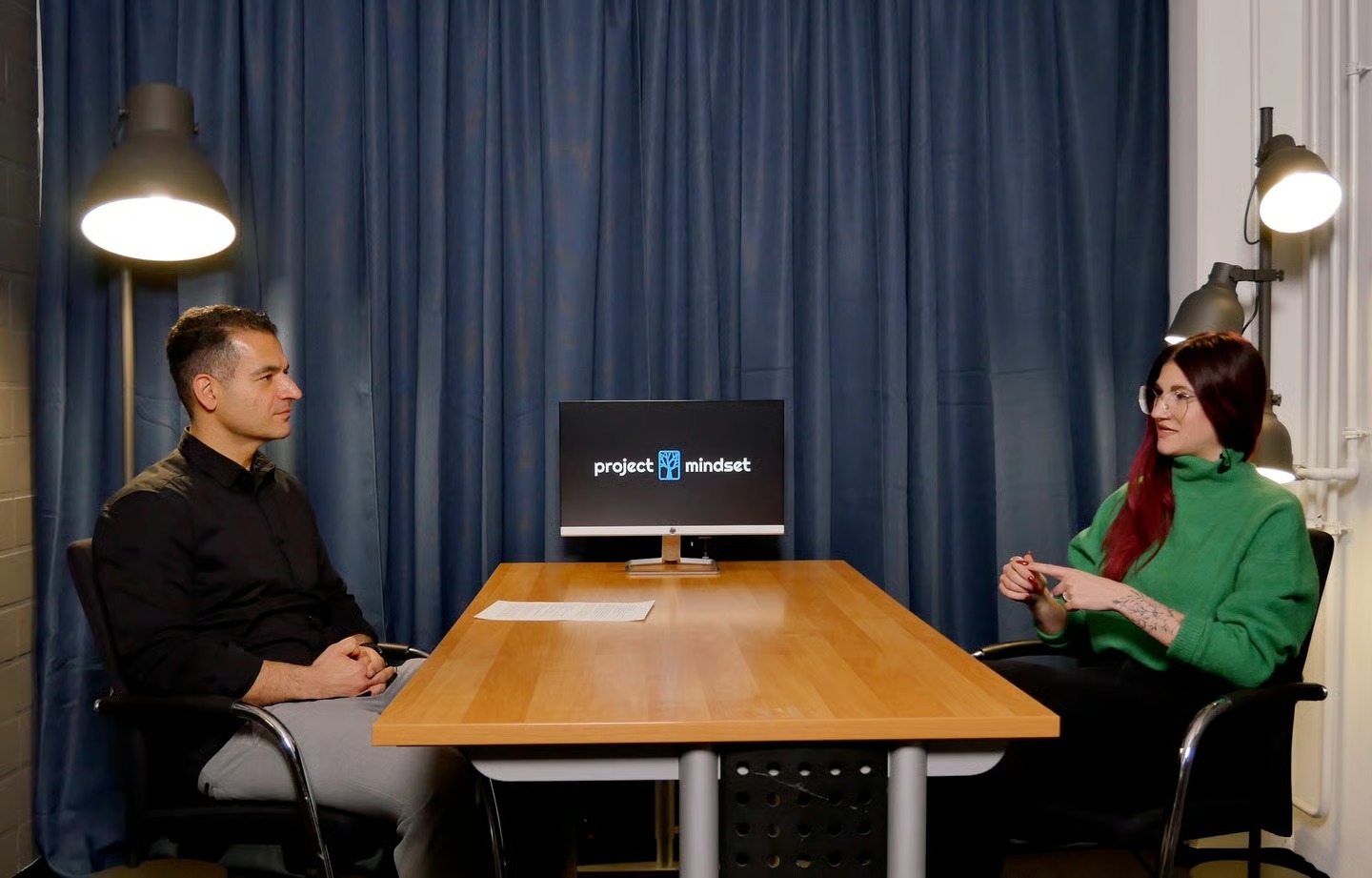
Personal branding on social media is no longer an optional hobby, but a strategic tool for career and entrepreneurship. In this episode of Project Mindset, Reza Mehman speaks with Lara Busch, an expert in influencer marketing and social media positioning, who is currently writing her dissertation on the topic. Lara has built a large following on Instagram herself, advises companies, and manages the LinkedIn channel of a board member in the automotive industry. Together, they clarify fundamental questions: When does someone become an influencer? What distinguishes personal branding from influencer marketing? And why is authenticity the most important success factor on social media? This conversation provides both expert insights and practical tips for anyone who wants to build or improve their own positioning on social networks.
Summary
In one sentence: Lara Busch explains why authenticity is the key to successful personal branding and influencer marketing on social media, and how to position yourself strategically.
Short summary: In her conversation with Reza Mehman, Lara Busch clearly distinguishes between personal branding as a conscious positioning process and being an influencer as a phenomenon of perception within one’s own network. She emphasizes that authenticity, credibility, and clear objectives are the most important foundations for building a social media presence. She also provides insights into influencer marketing strategies for companies and explains why long-term collaborations are more effective than one-off campaigns.
Detailed summary: Lara Busch, a doctoral candidate at the University of Leipzig and a former influencer, shares her expertise on social media, personal branding, and influencer marketing in a conversation with Reza Mehman. She explains the difference between personal branding as a strategic process and influencer status as a perception within a network. Authenticity, she says, is the key to success, because only those who are honest with themselves will build long-term trust with their community. Lara recommends that companies pursue long-term influencer collaborations rather than one-off campaigns, as sustainable relationships generate more credibility and impact. Finally, she offers insights into her personal priorities and mindset, which focuses on quality over quantity and conscious decision-making.
Context: Who, What, Why
Who is speaking: Reza Mehman, host of Project Mindset, in conversation with Lara Busch, PhD student at the University of Leipzig, social media consultant, former influencer and founder of her own textile brand.
What is it about: The conversation revolves around the differences between personal branding and influencer marketing, the role of authenticity on social media, strategies for companies in influencer marketing, and the personal development behind a social media career.
Why is it relevant: Social media has become an integral part of both professional and private life. The question of how to authentically position oneself and use social media as a strategic tool is relevant for freelancers, entrepreneurs, managers, and anyone who wants to advance their career or brand.
Three key questions of the episode:
- What distinguishes personal branding from influencer marketing, and when does one become an influencer?
- Why is authenticity the most important success factor on social media?
- Which influencer marketing strategies should companies pursue?
Table of contents
- Introduction – What this episode is about
- Summary – The episode in brief
- context – Who is speaking, what is the topic and why is it relevant
- Topics and classification – The central themes of the episode
- Key messages – Key findings at a glance
- Frequently Asked Questions – Answers to the most important questions about personal branding and influencer marketing
- Highlight quotes – The most striking statements from the conversation
- Transcript – The full conversation to read
- Keywords – Relevant search terms for the episode
- Names and terms – All important people, organizations and technical terms
- Quotable passage – A concise key message to share
Topics and classification
Personal branding as a strategic process
Lara Busch explains how personal branding works as a conscious positioning process and why clear goals should be the starting point of every social media strategy.
Keywords: Personal branding, positioning, social media strategy
Influencer marketing and the role of authenticity
The conversation highlights why one cannot simply “become” an influencer, but must be perceived as an opinion leader by one’s own network, with credibility and authenticity being crucial.
Keywords: Influencer marketing, authenticity, opinion leaders
Social Media as a Career Tool
Reza and Lara discuss how social media can evolve from a purely consumer medium into a strategic tool for career and business when used consciously.
Keywords: Social media career, LinkedIn, building reach
Influencer strategies for companies
Lara provides insights into successful influencer marketing strategies, explains the difference between one-off campaigns and long-term collaborations, and warns against common mistakes.
Keywords: Influencer collaboration, corporate strategy, campaign planning
Mindset and prioritization
Lara shares her personal approach to prioritization and explains why a clear mindset focusing on quality and authenticity has the greatest impact on her success.
Keywords: Mindset, prioritization, success factors
Key messages
- Personal branding is a conscious positioning process, whereas influencer status depends on the perception of the network.
- Authenticity is the most important success factor on social media: Only those who are honest with themselves will build trust in the long term.
- You can’t just “become an influencer,” you become one through strong communication skills, credibility, and opinion leadership within your own network.
- Social media can be used as a strategic tool to advance one’s career or business.
- Before starting with personal branding, you should ask yourself: Who am I really and what do I want to achieve?
- Long-term influencer collaborations are significantly more effective for companies than one-off marketing campaigns.
- Success on social media should not only be measured by follower numbers, but also by engagement, reach and one’s own goals.
- Negative PR is not automatically good PR: In influencer marketing, it can permanently destroy the trust of the community.
- The main difference between LinkedIn and Instagram lies in the target audience and the type of content shared there.
- Quality over quantity: It’s better to publish less, but high-quality and authentic content.
Frequently Asked Questions
What is the difference between personal branding and influencer marketing?
Personal branding is a conscious process of strategically positioning oneself to be perceived as an expert. Being an influencer, on the other hand, is a matter of perception: one is recognized by one’s network as an opinion leader, primarily through strong communication skills and credibility. The terms overlap, but are not identical.
When does someone become an influencer?
You can’t simply decide to become an influencer. According to Lara Busch, you become an influencer when your network perceives you as an opinion leader and you can influence the opinions and even purchasing decisions of others through credibility and strong communication skills.
Why is authenticity so important on social media?
Authenticity is crucial because the community immediately notices when someone is being disingenuous. Only those who are honest with themselves and demonstrate their true strengths build trust in the long run. Lara Busch emphasizes that content will never be convincing if the person behind it isn’t credible.
How do you measure success in building a personal brand?
Success can be measured by various key performance indicators (KPIs): follower count, engagement rate, reach, and interactions. However, Lara Busch emphasizes that one should set clear goals beforehand and base success not only on quantitative metrics but also on qualitative results such as network quality and expert perception.
Should everyone build a personal brand on social media?
Not necessarily. Lara Busch recommends first asking yourself what your goal is. For freelancers, start-up founders, and managers, conscious positioning can be very useful. However, those operating in a role tied to corporate communications must consider the framework.
What are the biggest mistakes in influencer marketing?
Among the biggest mistakes are a lack of authenticity, publishing unbelievable content, and focusing on one-off campaigns instead of long-term collaborations. The assumption that negative PR is better than no PR can also cause lasting damage in influencer marketing.
Which influencer marketing strategy does Lara Busch recommend for companies?
Lara Busch recommends that companies focus on long-term collaborations with influencers rather than individual, short-term campaigns. Long-term relationships create more credibility and a stronger connection with the target audience. Furthermore, companies should ensure that the influencer’s values align with their own brand.
What is the difference between LinkedIn and Instagram for personal branding?
LinkedIn and Instagram differ primarily in their target audience and content type. LinkedIn is particularly suitable for professional positioning, networking, and professional exchange. Instagram is more visually oriented and is frequently used for lifestyle, fashion, and more personal content.
Highlight quotes
“You can’t just say overnight, ‘I want to become an influencer now,’ it’s also a matter of perception, whether you are perceived as an influencer by your network.”
– Lara Busch
“The most important thing, regardless of who you are, whether you are tall or short, or how you want to position yourself, is to ask yourself, who am I really, and to become aware of that.”
– Lara Busch
“It will never be authentic and no one will ever believe it if you can’t speak to the camera and try anyway.”
– Lara Busch
“Social media can be used in either a healthy or unhealthy way. As a creator, you can use the tool in a way that helps you move forward.”
– Reza Mehman
“It took me a very long time to understand that it’s about reach. And that’s exactly why it’s become a mindset issue for me.”
– Reza Mehman
“An influencer is characterized above all by personal qualities that you don’t necessarily need in a personal branding context.”
– Lara Busch
“What is the goal? That’s something you should always ask yourself when we talk about conscious positioning.”
– Lara Busch
The full conversation
Hi everyone and welcome to Project Mindset. I just have a couple of quick comments. I recently had the pleasure of interviewing Lara Busch again. It was a really interesting interview. We talked about social media. Now, you might be wondering what social media has to do with mindset. I think in this day and age, it’s actually quite relevant. Social media can be used in a healthy or unhealthy way.
I think you could perhaps call it unhealthy if you’re talking about this excessive, this consumption of social media. That is, scrolling through all the social networks all day or half a day. You know the apps, and you disappear into these networks for a lot of time instead of, for example, educating yourself, investing time elsewhere, like reading. And I think that social media is definitely being misused as a resource and as a tool.
But if you want to use it well, in a positive sense, you can, for example, say, “I’m using social media to advance my own career, or my business, or whatever goals you have.” As a creator on social media, you can use the tool or resource in a way that helps you move forward. And that’s precisely why it’s become a mindset issue for me. As I’ll say later in the interview, I used to not understand why someone would spend so much time, for example, posting photos and accumulating friends.
Learn to understand reach
Back then, you remember, I had 4,000, 5,000 friends on Facebook. I didn’t understand it at all; you don’t even know any of these people, so why do you do it? Then at some point, I realized, ah, okay, it’s about reach. And that’s exactly what we’re talking about in today’s interview. I found it very interesting; we didn’t just talk about the technical aspects of social media, but also about the person behind this expertise, Lara Busch herself. She does a lot of interesting things, too.
Her current doctoral thesis explores social media and influencer marketing. She runs her own social media consulting firm. She also lectures on the subject, has her own clothing brand, and is involved in many other interesting activities. Okay, enough chit-chat, and enjoy the interview. Lara, thank you so much for being here today. Thanks for the invitation. Yes, my pleasure. I know it’s really appreciated that you took the time out of your way.
I know you have a packed schedule, a lot to do, but I’m so glad you took the time to talk about such an exciting topic today. Social media and influencer marketing, among other things. I think we live in a crazy world. I was there at the very beginning of social media, back in the days of Facebook and StudioVZ. And I always wondered why people had 4,000 friends, 5,000 friends, when they didn’t even know them.
Your own path into social networks
Until I finally realized, ah, okay, it’s about reach. It took me a long time to understand that. But now I also know that you—we’ll get to your background in a moment—that you’re also a former influencer, so to speak. How did you get to be so active on social media so early, so quickly? Actually, it kind of evolved for me. So, first of all, thank you again for the invitation; I’m very happy to be here.
And to answer your question, it developed that way based on my studies. During my bachelor’s degree—I studied communication science—we worked a lot with blogs back then. I had a practical seminar on blogs, and somehow it piqued my interest. So, on a whim, I created one myself, just for myself, really. And at the same time, Instagram was really taking off and becoming incredibly popular.
From private profile to blog
And I was more like, I used it privately. I shared my personal photos and got like 30 likes, which I was totally fine with. But then, through the blog, I became a bit more self-confident and tried out some more fashionable things, like fancy shoes with glitter on them. I posted them on Instagram and used hashtags like #fashion for the first time, and also, I don’t know, #shoes and stuff. I became a bit more international and finally understood what hashtags were.
Continued
And then suddenly I had 60 likes, and I was like, oh my god, what happened overnight? Complete strangers, people I’d never interacted with before, were suddenly following me. And yeah, then I started doing it more and more. Eventually, I kind of turned my hobby into a profession. I blogged a lot about fashion, went to many fashion weeks, and traveled a lot. And yeah, I was able to continue and intensify that during my studies, after my bachelor’s degree and even during my master’s.
And at some point, I had to decide whether to make money from it or keep it as a hobby. I did make money from it, and now I’ve decided to do it on a consulting basis for companies. So, I always thought I was busy, but I have the feeling you’re super busy. If I may briefly summarize, as a former influencer, you have a huge following on Instagram. You have your own social media consulting company.
You’re basically writing your dissertation at the University of Leipzig in parallel, and it’s essentially an industry-sponsored PhD, in collaboration with Mercedes-Benz, where you also manage a board member’s LinkedIn channel. That’s how I understood it. So, officially, I’m a doctoral candidate. That means I’m employed full-time at Mercedes-Benz in cooperation with the University of Leipzig, and I’m working on my dissertation there. And after my master’s degree, I became self-employed with a management consultancy, where I also have two employees.
Professional positioning on LinkedIn
That’s when I withdraw from day-to-day operations. They’ll continue running it, exactly. I observe this very closely on LinkedIn, among other places—the topic of, let’s say, self-promotion. So many people are doing it. Do you think it’s somehow indispensable these days? Is it simply part of the job if you’re on a company’s board or if you’re running a company? I think it always depends on what you’re pursuing.
So, what’s the goal? That’s always a question to ask when we talk about conscious positioning. If we’re talking about wanting to showcase yourself, to highlight your skills, then that’s actually something that falls into the category of personal branding. Because then it’s about positioning yourself to be considered an expert within a network, a kind of opinion leader. And if that’s your goal, then it’s absolutely worthwhile.
So, what do you want to achieve? If you’re a board member in a company, you can only do this to a certain extent, because you’re still operating within your official role. And that has to align with the company’s communications and philosophy. That’s why you always have to be a bit careful. But if you’re a freelancer or a startup CEO, where there’s a slightly different governance board and a different corporate identity, then it’s a great opportunity to position yourself and definitely build a wider reach.
Personal branding and influencers differ
Can we briefly differentiate between personal branding and, let’s call it, the topic of influencers? When do I become an influencer? When do I have my own personal brand? I’m a bit confused by these terms. Could you elaborate a bit? Yes, it’s definitely not that easy to distinguish. I wrote my master’s thesis on the topic of influencers and found back then that, just like personal branding, it’s often a bit of a catch-all.
So, it’s only used in a very rudimentary way, and often people don’t even know the difference. I would say, for example—this is just my perspective; everyone has to define it for themselves. Personal branding is a kind of process that you consciously approach. If you want to position yourself on LinkedIn and similar platforms to build your network and be considered an expert within it, then you’re engaging in personal branding. You’re highlighting your strengths and making sure you can market them in the best possible way, and if you’re good and lucky, you’ll become a personal brand.
The network’s perception
But that always depends on how your environment perceives you. You can’t just become an influencer overnight; you can’t simply decide, “I want to be an influencer now.” It’s also a matter of perception, whether your network sees you as an influencer. And an influencer is characterized above all by personal qualities that you don’t necessarily need in a personal branding context. In that context, you usually shine through your experiences, your knowledge, and who you are in general. But with an influencer, it’s more about being communicative and, above all, credible.
Continued
There are definitely parallels. You can’t have a good personal brand if you’re not credible, if people don’t perceive you as an expert. But in my opinion, you can’t become an influencer; rather, you become one through your strong communication skills, your perceived expertise within your network, and simply because you’re a thought leader. And then, based on that, you can actually ensure that your followers are convinced, that your network believes you, and potentially even influence their purchasing decisions, for example.
But that’s not the idea behind a personal brand, although you can’t really define the two with absolute certainty. Of course, there are overlaps, that’s clear. The topic of personal branding—I just had to touch on that briefly. I get the impression that many people want to work on their personal brand. But many also have the problem that they don’t dare to appear on camera or write texts. Now, you’re very active in this field, managing the channels for the board of directors or the board members of Mercedes-Benz, among other things.
Start with a clear goal
What advice would you give to people who say, “I want to build a personal brand because it’s important for my business, but I just don’t dare to publish content.” I think the most important thing, regardless of who you are, whether you’re big or small, or how you want to position yourself, is to ask yourself, “Who am I, really?” and become aware of that. It will never be authentic, and no one will ever believe you, if you can’t speak to a camera and try anyway.
But what people love and what they want to see is authenticity. And that only comes when you do what you’re good at. And if you’re not someone who speaks to the camera, then there has to be another format. Then maybe there are good texts you can write, and if there aren’t, then there’s a third option. So it’s not about asking what the best method is, but about who you are and basing it on that. You do that no matter where you go. So if you’re a company and you choose a social media channel, you don’t do it because you say, “I want Instagram now.”
Strategy before individual measures
That will never work. Instead, you have to ask yourself, who am I as a company, where do I want to go, what is my goal? And then you look at what levers you have, what measures you can take, and that’s how it should be done. I would never want to persuade anyone to be inauthentic or to use a format they simply can’t handle. And how do you measure the success of the activities you’ve undertaken? Were you successful in building your personal brand, or not?
Yes, now we’re getting into reputation management, into reputation measurement. That’s a science in itself. The question is always, what’s your goal? Really, your goal is to make it measurable, and then it becomes very, very scientific. Then you have to conduct surveys to see, okay, how are you really perceived? Because what you’re always doing is strengthening your external image, your reputation. And when you then move into surveys, into quantitative research, you conduct surveys of employees or external people on LinkedIn and can find out whether your approach was effective in strengthening your reputation.
Reputation and qualitative feedback
But that’s something you can only achieve over a very long period. Reputation measurement is also a very difficult topic. I would rather try to measure it based on qualitative factors, for example, saying, “I notice it in my environment, that people tell me I come across as much more confident,” or that they perhaps mention that I addressed a particular topic on my LinkedIn channel. Trying to do something like that is a bit more granular. But it always comes down to: what is your goal?
Do you want a lot of followers? Then you can measure it based on the number of people following you. But whether that’s a sensible approach is, of course, debatable. We’ve talked a lot about the framework of influencer marketing and priced branding. Now, I’m naturally interested in you as a person, who exactly you are. So, how do you measure your success if, for example, you’re writing your dissertation, you have your own consulting firm, and you also have a textile brand on the side, as I’ve seen?
So you do an incredible number of things. What actually drives you to pursue your projects so intensely? That’s actually a really interesting question. I’m just a very ambitious person because for me, the most important thing has always been to get the best out of myself. It’s not that I don’t need recognition or anything like that, but rather that I need to be able to go to sleep at night and say, okay, today was a good day. I gave it my all today. That was my goal. I achieved it, but I did it.
Continued
And that’s always my motivation, and I measure my success by whether I can say I’m satisfied, even if that’s not always necessarily a good thing, because I believe I’ll never be truly satisfied with my performance. But yes, that’s one kind of success, and then of course there’s also business success. Sure, that’s financial and customer-related. For example, I’ve never really done much advertising for my self-employment. It all happens through word of mouth. And when you hear through the grapevine, “I heard you could help me out,”…
So, that’s obviously much more valuable to me than some kind of cold calling, yes. And why did you, I’ll say, deliberately use the term “former influencer,” why did you stop with social media, especially on Instagram? You were very successful. So how did that happen? Did you decide to stop and focus on other things? I did it for a very long time, five years. That’s how I built my reach, and I experienced amazing things and met incredibly wonderful people, some of whom I’m still friends with today.
Professional development and doctorate
I simply needed to advance professionally. For me, the doctorate was always the most important thing. I pursued it very, very intensively for a very, very long time, to even be able to do it, to be given the opportunity. I worked for everything myself. And it’s so intensive, it takes up so much of my time. So I want to be able to concentrate on it 100 percent. I simply have to make compromises. And then there’s the fact that, over the long period I’ve been in this field, I’ve also seen how this entire market has developed.
And for me, it’s simply developing negatively. It’s a bubble that’s going to burst because so many influencers have jumped on the bandwagon who aren’t really influencers at all, and so many companies think they can make huge profits with it, but they don’t understand the concept of influencer marketing. And it’s going to crash, and I’m just not interested anymore. It was too annoying and it was taking up too much of my time, because for someone who’s really serious about it, it’s a full-time job.
And that’s where I had to make compromises. Still, I’d say you probably view LinkedIn differently than Instagram. Sure, LinkedIn is a B2B network. So it’s more of a network where you’re active in the business world, in a business context, where you can be considered an expert, but based on your knowledge. And on Instagram, it’s more about your personality, which takes center stage. At least that’s how it was for me. I don’t think I could score points on LinkedIn with my fashion knowledge.
One’s own presence changes
But I don’t want that at all, because I’m still developing myself. I find it incredibly exciting. I’m not really sure how to handle it myself. My videos also appear on YouTube. I get the impression that there are completely different rules on YouTube than on Instagram or LinkedIn. Positioning myself there still feels unclear. I think that’s the problem for most people who want to create something. And my YouTube channel is one of those things; I want to create something.
I also want to share some information I have about myself, for example. But I don’t really know how that works, how the algorithm functions, how I can reach a wider audience. And I’m actually finding that a bit difficult. If I may ask you now, what’s next for you? So, at some point you’ll finish your dissertation. What do you actually want to do after that? That’s a very good question. Well, maybe I can give you a tip before then.
Select the appropriate network
So, if you’re wondering how to position yourself on social media, the most sensible thing to do is always ask yourself: What is your goal? Then ask yourself: Which network can I use? Every network has its own target audience. A LinkedIn audience, for example, functions very differently from an Instagram audience. Many companies make the mistake of trying to share the same content on various social media channels just to be present everywhere. But it’s better to focus on one channel and follow its guidelines, rather than trying to do three different things half-heartedly across the board.
It sounds silly, but it’s true, like you said, YouTube has its own rules. And they’re completely different from LinkedIn’s rules. And they’re also different from Instagram’s rules. As for your question about where I want to go, I don’t really know yet. I mean, it was always clear to me that I didn’t want to be in a corporate world. Now I’m in it. But of course, I also find it incredibly exciting what opportunities it offers. Nevertheless, I can also see myself in teaching in the long term, for example.
Continued
I already have a teaching position and could imagine taking that up again at some point. A traditional academic career is no longer possible for me. I’d have to be in a professorship by now. But perhaps I’ll be more proactive with my consulting work in three to eight years, once I’ve finished my studies. My problem has always been a bit due to being self-employed. I was still very young, just 25. And in my field, you often deal with more established people whom you first have to convince.
Achieving that took me a very long time. And a doctorate is simply another indication of a recognized ability, at least in a sense. Of course, so to speak. Yes, exactly, that fits perfectly. And I’ve always wanted to do that. That’s why I hope it works out. So, I still have to succeed. Yes, amazing, I think I forgot to mention that you’re also a lecturer. Oh, okay. But you brought up something very interesting: that you probably deal with people who know that influencer marketing and personal branding are important topics, but haven’t had any contact with them yet.
Convincing companies of an approach
So, roughly speaking, what’s your process? How do you convince them to say, “Hey, this is essentially your problem, and this is the potential solution I see behind it”? Do they believe you immediately? Or do you have to do some convincing? I once had a major client who hired me to support them in influencer marketing. And I also had a smaller client who wanted the same thing. And those two are actually a good example of how it usually goes. So, either you have someone who already understands the general direction you’re going in…
Or you have someone who simply says, “Go ahead, I want more revenue.” And then I have to address both aspects. But it took me a long time during my time as a freelancer to understand what I’m capable of. Where is my added value for a company? And that added value only exists if the company understands what influencer marketing can achieve from my perspective. It can never be solely about revenue. If it is, you’re doing something wrong. It’s not a long-term strategy and can actually harm your brand.
That means the very first thing I have to do is say, okay, this is how I understand influencer marketing. This is what it can bring them. And then show them, okay, these are the advantages for them if we do this, this, and this. Increased brand awareness. We can also increase conversions. It’s a long-term thing. We generate content. And usually, people are convinced when you present them with numbers. Exactly. Would you generally recommend that everyone develop in this direction?
Building reputation and trust
So, the reason I’m asking is that I really get the impression that nowadays it’s incredibly important to have some kind of reputation if you want to sell something. If you have a product you want to bring to market, it’s obviously much easier if you have a certain reach or if people at least believe you know what you’re talking about. Would you generally recommend that employees and entrepreneurs do this nowadays, or would you say, no, it’s not necessary?
So if someone doesn’t want to be publicly visible, then simply don’t. In the long run, I believe that’s a sound strategy, based on the fundamental idea of influencer marketing: you buy from someone you trust because they’re a real person. I’d trust my best friend if she gave me a recommendation. And this idea of basing it on genuine recommendations works for every company, in my opinion.
Whether I’m a car manufacturer or a cosmetics brand, if I manage to get people to speak positively about me, that’s always a great success. These days, you can actually measure that thanks to influencer marketing. But to do that, you have to do influencer marketing in a way that’s authentic. And that’s a long, demanding process that doesn’t always yield immediate results. The return on investment isn’t always 100% or even positive.
Budgets and expectations for campaigns
It can sometimes be negative, but you have to accept it, and then you can ensure long-term success. The question is always, how much money do you invest in a large influencer campaign versus how much in a billboard campaign? And what can you measure? Most of the time, you can’t measure a billboard campaign. But if you do it well, you can with an influencer campaign. That’s why I think the most important thing is for the company to always ask itself, “Where do I want to go?” And then to look at whether this is a lever that can help achieve that.
Continued
What are absolute no-gos ? If I think about social media, personal branding, influencer marketing, what would you say? Please don’t do that online. I truly believe that the first no-go, and then the others follow, is saying, “I want to become an Instagram star now,” or “I want to be successful on LinkedIn now.” So, the idea of choosing a channel even if it doesn’t really fit your personal brand is, I think, the first mistake.
And then come the subsequent mistakes, based on becoming inauthentic, trying to be something you’re not, or making promises you can’t keep. Like choosing formats that don’t suit you, saying, “I’m just doing this as a hobby,” and not seeing that it’s also a full-time job. So you have to stick with it, and I believe even poorly produced content is still better than inauthentic content, because if people buy into it, if it’s just your style, uploading quirky videos, then they might even celebrate you for it. Whereas if you’re just standing there stiffly in front of a camera, staring into it, that won’t work.
When marketing campaigns trigger criticism
What you’re saying is really interesting. So, I follow someone on LinkedIn. I won’t mention their name. Oh, go ahead. This person, or rather their company, launched a marketing campaign. I thought it was completely out of line, to be honest. I’d better not go into detail. But it felt totally inauthentic to me, and it had such a negative connotation. So, personally, I have absolutely no desire to buy anything from that company, because I know what they did was completely wrong.
Would you still argue that, as the saying goes, negative PR is better than no PR at all, and that it’s something that gets forgiven eventually, or is such potential damage really long-lasting? The question is always, to what extent? For large companies, negative PR usually isn’t so bad because it dissipates relatively quickly, and there’s a machine behind it that can absorb the damage. For a small company, for a personal brand, it can be truly decisive. Just look at that influencer bubble that burst during the pandemic because Oliver Pocher made fun of all sorts of people.
Many of these people have really suffered reputational damage because they’ve become inauthentic. They were already inauthentic before, but many hadn’t realized it, and that’s really detrimental in the long run. You can’t really get out of that situation. That’s why, if you’re a personal brand and stand on your own two feet—we always say personal branding is never about a company, but always about a person, always just one individual—and that can definitely cause incredible damage.
Public criticism and its consequences
Did what Oliver Pocher did have such a big impact? Absolutely. Not just for the personal brands themselves, the influencers, whatever you want to call them, but also for the companies. There was real, measurable negative damage for the companies too, because they sometimes simply chose the wrong influencers, and that had a really negative impact on both sides. Of course, you have people who support you and who eventually made it clear, “Okay, we’re against this kind of haste that he’s trying to promote.”
But nevertheless, you saw the uproar it caused, and everyone was attacked. I was really lucky. It didn’t affect me. I think I got one negative message, and that ‘s it. But because I always kept myself out of it, I never advertised for companies I didn’t believe in, and I never tried to explain a product in 15 seconds, because that just doesn’t work. So the whole idea is that you book storylines or story sequences 3 to 5.
Credibility in product presentations
I don’t know anyone who can explain a product in 15 or 45 seconds. And it’s authentic. But maybe it’s also down to me. I’m just the kind of person, you can tell. I talk a lot and I like to. And that’s why I couldn’t do it so well. From an entrepreneur’s or company’s perspective, I also find it extremely difficult to evaluate. What does an influencer even bring me? For example, I had a case a while ago. I learned that this influencer wanted several thousand euros for a single post, or a certain number of thousands of euros for a story they posted on Instagram.
I can’t really judge. Honestly, will it do anything for me? I’m assuming that posting once probably won’t do much, if anything, for me initially. The very first question you need to ask yourself is, what do you want? What’s your goal? Do you want conversions? Do you want a product to sell? That’s a different goal than simply wanting your brand to get more attention. And don’t forget that the prices influencers usually charge aren’t necessarily reasonable.
Continued
So, for the company, that’s the return on investment they calculate. They say it cost them €3,000, and they earned €5,000. Great. But with an influencer, you’re actually paying for their time and the work they’ve done, not necessarily for the reach you’re buying. Otherwise, you’re looking at the whole business like TV or billboard advertising. You buy a slot, and they predict that you’ll get a certain amount of reach. And if you know what your goal is, then you can develop a strategy.
And the answer is usually that it’s something long-term. You also rarely achieve conversions with a single post. Unless it’s a product that’s just incredibly popular in the community. But making predictions these days, no matter what you can calculate or want to, I think it’s the wrong approach. Nevertheless, what would you generally recommend to a company? I suspect a recommendation for a small business would be different than for a large one, regarding whether or not they should collaborate with an influencer, for example.
Is that correct, as I see it? Or can one say that the strategy, if the strategy is, for example, to increase product sales? Is working with influencers the same for a small company as it is for a large company, or would you see it differently? I think it depends, as I said, sorry for repeating myself. I believe the first issue is the goal. If you say, “My goal is to achieve more conversions,” then you’re essentially pursuing the same strategy, regardless of the company.
Adjust measures to the budget
You probably have different leverage to implement them. Different measures, different budgets. If you say to one company, “I have €100,000,” then you’ll naturally be able to engage completely different influencers compared to someone with €10,000. Nevertheless, even micro-influencers or nano-influencers with a small reach can generate very, very good conversions. In both cases, the strategy and most important thing is that you thoroughly understand what the company is, what it stands for, and also carefully examine the influencers themselves.
So, you shouldn’t just look at the profile and say, “Okay, they have 10,000 followers, that’s my benchmark. I can book them from there.” Instead, you should really engage with the individuals, because these are all small personal brands. They have a personality and an individuality. And you can’t dictate to them how they should speak or what they should say in three story segments. One person might do it with a green background, another with a red one. And you have to decide whether that fits your brand.
I recently heard about some entrepreneurs from Mannheim who, I’m not exaggerating, I think they have 20 people in a single department dedicated solely to influencer management. I was completely blown away. Twenty people, or maybe even more, just taking care of maintaining communication with influencers, looking after them, and so on. That’s when I realized this topic is likely to become even more important.
Long-term relationships with influencers
So, you’re moving away from traditional advertising, let’s say. Okay, how do I engage my influencers? Do you also see this trend continuing to grow in this direction? It’s great that there’s a company that’s really dedicated to this. Because usually, it’s just a part of a marketing department where one person handles it and does research. But if you want to do this long-term, the influencer relationship, this long-term collaboration, is incredibly important and essential for the success of the partnership, for both the company and the influencer.
Because if it works, both sides benefit. On the one hand, the influencer becomes more authentic, both for themselves and for the company. And that, of course, always increases conversions in the long run. So, if I, as a follower, know that the person is promoting XY, and I see that for three years, and then I also know that they’re still wearing it, and I see that they’re wearing those things even without them advertising them—for example, jewelry or clothes—then I believe that person.
Consciously shaping collaboration
And that makes perfect sense for both sides. But then you have to pursue it at least that intensively, because anything less, unless it’s a one-off event, is probably just throwing money away. You also have your own textile brand, right? Yes. Exactly. What do you do with influencer marketing there? Well, it was more of a hobby that we launched on the side, and through my many years of experience in that network, I have a lot of great friends who supported us, who are influencers themselves, have large followings, and so we were able to push it very, very hard at the beginning.
Continued
And it’s still a real passion project, but unfortunately, I just don’t have the time right now to develop it further, even though we have some really cool clothes of great quality. But it was incredibly helpful that I had friends I could rely on, because you help each other out. You mentioned something very important, from my perspective, that you’ve prioritized things differently, as I understand it. That’s also a topic I like to explore in the podcast: prioritization.
Sometimes I’m not quite sure what to focus on because I like to do a lot of things at once. I think a lot of people probably have that problem. How do you focus or prioritize? I understand the dissertation is incredibly important to you. Yes. That’s why you’ve given it high priority. But at what point did you know exactly what you wanted to do? I’m asking because I have trouble with prioritizing myself. Yes, it’s really not that easy.
So for me, there are basically two things. One is the essential stuff, the things that are vital for survival. That’s really about finances, capacity, and health, versus where I want to go and what my dreams are. And my whole life so far, I’ve really only lived around the issue of survival, of somehow being able to create a foundation for myself. And because I didn’t have that, I’ve always been self-supporting and that’s how I grew up. I have no contact with my parents.
Finding focus in one’s own life
And then you have this extreme focus in your life. And at the beginning of the year, I had a lesson learned because I managed to secure my basic financial needs, so I could say, okay, that’s what I’ve always strived for, also with what I studied, and so that I can somehow get a good job. Once I had that, the question became: what do I want next? And then it came to me, well, I actually want to go further. I’m not finished with the academic side of things yet.
I want to challenge myself even further. And then the doctorate came along, which had always been kind of in the picture, but then it really hit me hard. And then at some point I thought to myself, well, I realized that if I don’t start now, I’ll fall too far behind. My master’s degree was two years ago. I have to move on. And then an opportunity arose. And then it was quite clear: this is simply the priority. Yes, I think it’s great that you managed to prioritize like that.
Dealing with decisions and sacrifices
I’ve been told I still struggle with it regularly. It’s not good for me either. So those are things like that. You make a decision, but actually you think to yourself, ah, I’d really like to do that again. And you have to, I really have to keep pulling myself back and saying, “No, I busted my ass to achieve this.” Giving it 100 percent matters to me because I don’t do things half-heartedly. And if it doesn’t work out, then I have to learn from it, just like with Instagram.
I can only do this 100 percent or not at all. A tough decision, yes. There’s a funny way, I think it’s from Boram Buffett, who once said, write a list of 25 important things in your life. And once you’ve done that, cross out the bottom 20 and only focus on the top 5. Be aware that every time you don’t do one of the five, you’re working against those five. And that seemed okay to me, that helped me a bit to know, okay, how do I actually focus properly?
Support with prioritization
Because as soon as I don’t do something that falls within my focus area, I’m actually working against that focus area. For example, something that really helped me—I struggled with this a lot personally—was seeking help. I dealt with this quite often. I’m still in therapy today and talk about these things because it really pushed me to the limit, both mentally and physically, trying to differentiate between everything. But that didn’t work.
So, my Kappa (mentor) just wasn’t there, and I almost burned out in the end because I was working myself to death, really. Because I wanted everything, and then to hear it from someone outside the organization and have them look into it. For example, they did things like this for me: I put the things I wanted to do on imaginary chairs and kept thinking, I have to let go of something, because otherwise I won’t be able to manage, I’m physically unable to do it anymore. And then I had to stand in all those places and look at myself, OK, how do I feel when I don’t have this anymore?
Continued
And that made me even more aware of it. Okay, the thing I’m least emotionally attached to is probably what I unfortunately have to let go of, even if I don’t want to. But that doesn’t mean it’s dead; it just means you might do things differently. But you really have to manage your resources carefully. Yes, thanks for the openness. Yes, of course. It’s so transparent. I think many people have similar struggles, but they don’t talk about them at all.
And one thing I’ve definitely learned is that it’s always really good to just openly exchange ideas with, let’s say, close relatives and friends. Yes. Thank you so much for this openness. And I’d say I learned an incredible amount today about influencers, influencer marketing, and personal branding. I’m still not sure if I can or should even go into this field. In the long run, establishing myself there certainly seems worthwhile. I think it’s really cool that you’re essentially investigating this on a scientific level.
Social media as a professional field
Like I said, for years I completely underestimated this topic, or rather this area of study. Yes. I didn’t understand back then why someone would have 4,000 friends on Facebook. A really silly example. Or I thought they just post photos on social media or just write a few posts. Until I finally realized there’s a lot of work involved. I mean, you want to present yourself in a good light. It takes effort. And what I find fascinating is that you can even break it down scientifically, measure how much success is behind it, and how much isn’t.
I learned from you that board members, for example, also grapple with this topic. I find that incredibly interesting from a mindset perspective. And mindset is, of course, extremely important in the Mindset Postcards project. Before I ask you my last question about mindset, where can people find you online if they want to get in touch, have questions, or follow you? LinkedIn is probably the best place. I think that works best. Exactly, just Lara Bush.
Personal attitude and development
Exactly, just Lara Bush. I’m the one with the red hair. Great. Now for the last question I ask every guest. What mindset has had the biggest and most positive impact on your life? Based on where I come from, I was always at a point where… I could never question things because that would have kind of destroyed me. Instead, I simply accepted at some point that everything has a purpose. I really started to believe that everything I do, everything I’ve been through, where I come from, everything I’ve experienced—that it all has a purpose.
And especially the bad times, that they have a purpose, because otherwise I wouldn’t be where I am today. And even though I still have tough times today, I go back and look at them. Okay, that was a different kind of tough time. But based on that, I did this and that. And that’s why I’ve achieved this and that today. So this idea that everything has a purpose is really fundamental for me. Wow. I’ve never seen it that way before, but I’m definitely taking that on board.
For me, the topic of gratitude is always very present. But I think it’s about firmly believing that it has a purpose. So, thank you so much for this broadened perspective. Thank you. Lara, thank you a thousand times for your time. The pleasure was all mine. I really enjoyed it. Me too. And I hope we stay in touch. Absolutely. Thank you so much. — My thanks to you, too. Bye.
This transcript was automatically generated using Whisper AI and may contain occasional errors.
Keywords
Tags: Personal Branding, Social Media, Influencer Marketing, Authenticity, LinkedIn, Instagram, Building Reach, Opinion Leaders, Content Marketing, Social Media Strategy, Influencer Collaboration, Online Positioning, Lara Busch, Project Mindset
Names and terms
Lara Busch, Reza Mehman, Project Mindset, Mercedes-Benz, University of Leipzig, LinkedIn, Instagram, Facebook, StudiVZ, Oliver Pocher, Personal Branding, Influencer Marketing, Content Marketing, Social Media Strategy, Opinion Leaders, Engagement Rate, Reach, Hashtags, Fashion Weeks, Corporate Communications, Doctoral Thesis, Dissertation, Communication Science, Textile Brand, Freelancer, Start-up, Corporate Influencer
Quotable passage
Personal branding is a conscious positioning process, whereas influencer status depends on the perception of one’s own network.
Authenticity is the key to success: Only those who are honest with themselves can build long-term trust in their community.
Before starting with your own positioning on social media, you should always first ask yourself: Who am I and what do I want to achieve?
Lara Busch recommends that companies pursue long-term influencer collaborations instead of one-off campaigns, as sustainable relationships generate more credibility and impact.
You can find more discussions about communication and personal development at Project Mindset.