Networking: What I only learned late
Why networking is a real mindset issue and how to strategically build and maintain valuable contacts.
Introduction
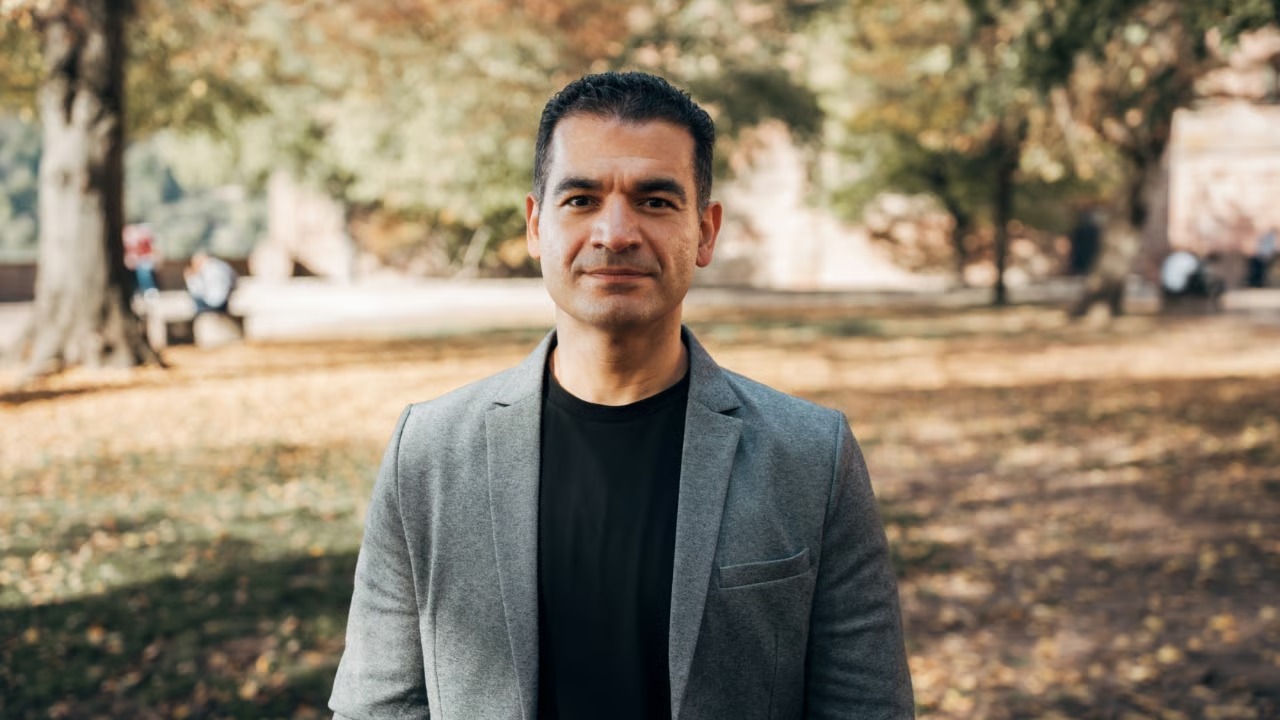
Networking as a mindset topic is underestimated by many, even though a strong network can bring enormous advantages in both professional and private life. In this episode of Project Mindset, Reza Mehman shares his personal experiences and insights on the subject of networking. He openly describes why he only truly understood the value of networking later in life and which specific methods helped him build valuable contacts. From meetups and LinkedIn to discussion groups, he shows practical ways to connect with like-minded individuals. This isn’t about cronyism or corruption, but about the honest exchange of knowledge and experience. Reza explains why quality is more important than quantity and how to strategically cultivate existing contacts. This episode is a call to consciously shape your own network and to take the saying “it’s not what you know, it’s what you don’t know” seriously.
Summary
In one sentence: Networking is a mindset issue that goes far beyond exchanging business cards and must be strategically cultivated in order to progress faster professionally and personally.
Short summary: Reza Mehman explains why he only recognized the value of networking later in life and what role private schools and universities play in this. He shares concrete methods such as meetups, LinkedIn profiles, and discussion groups for building a high-quality network. He emphasizes that friendliness, regular contact maintenance, and a willingness to offer added value are the keys to a functioning network.
Detailed summary: In this podcast episode, Reza Mehman reflects on why networking is a true mindset issue and why he underestimated it for so long. Using the example of private schools and universities, he demonstrates that networks are often more valuable than ranking positions. He describes practical methods for building networks, including meetups, startup networks, LinkedIn, and discussion groups. He emphasizes the importance of not just making contacts once, but cultivating them systematically, for example, using an Excel spreadsheet for regular communication. His conclusion: You often only need one or two excellent networkers in your own circle to gain access to a wealth of contacts and information.
Context: Who, What, Why
Who is speaking: Reza Mehman, founder and host of the Project Mindset podcast, shares his personal experiences and learnings on the topic of networking.
What is it about: This episode explores networking as a mindset topic. Reza explains why networking is important, how to build a network, and how to strategically maintain it to benefit both professionally and personally.
Why is it relevant: In an increasingly interconnected work environment, one’s network often determines career opportunities, access to information, and professional success. Many people invest too little time in consciously building and maintaining contacts.
Three key questions of the episode:
- Why is networking a mindset issue and not just a business strategy?
- What specific methods exist for building a valuable network?
- How can you maintain existing contacts sustainably and authentically?
Table of contents
- Introduction – Why networking is an underestimated mindset topic
- Summary – Key findings in brief
- context – Background and key questions of the episode
- Topics and classification – Overview of the main topics
- Key messages – The most important messages of the episode
- Frequently Asked Questions – Answers to the most important questions about networking
- Highlight quotes – Reza’s most striking statements
- Transcript – The complete episode to read again
- Keywords – Relevant search terms
- Names and terms – Important references from the episode
- Quotable passage – For sharing and quoting
Topics and classification
1. Networking as a Mindset Theme
Reza argues that networking is not just a technique, but requires an attitude. It takes effort, curiosity, and genuine interest in other people to build an authentic network.
Keywords: Networking mindset, learning to network, professional network
2. The value of networks at private schools and private universities
Using the example of private schools and private universities, Reza shows that networking is often less about the degree and more about the contacts one makes there.
Keywords: Private school network, private university advantages, networking
3. Methods for network building
From meetups and LinkedIn to discussion groups and startup networks, Reza presents concrete and practical ways to make new contacts.
Keywords: Meetups, Networking, LinkedIn contacts, Startup network
4. Maintaining contacts and managing relationships
Reza emphasizes the importance of regular contact and shares his personal approach using an Excel spreadsheet to maintain relationships in the long term.
Keywords: Contact maintenance tips, relationship management, network building
5. Quality over quantity in the network
It’s not about having as many contacts as possible, but the right ones. One or two excellent networkers in your own circle can be enough.
Keywords: Network quality, strategic networking, valuable contacts
Key messages
- Networking is a real mindset issue because it requires overcoming obstacles, curiosity, and perseverance.
- Contacts only hurt those who don’t have them. The older Reza gets, the more he understands this saying.
- The true value of private schools and private universities often lies in the network, not in the degree itself.
- Meetups, startup networks and events are excellent places to meet like-minded people.
- LinkedIn is particularly well suited for specifically acquiring expert knowledge and building contacts in a business context.
- Discussion groups and study groups are an underestimated form of networking that deepens connections.
- Quality is more important than quantity: One or two excellent networkers in the environment are often sufficient.
- Contacts need to be maintained regularly, for example through Christmas greetings or short messages.
- Friendliness and genuine interest are the key to getting others to be willing to share their time and information.
- Networking is not about cronyism, but about the honest exchange of knowledge and mutual support.
Frequently Asked Questions
Why is networking a mindset issue?
Networking requires overcoming obstacles, curiosity, and a willingness to adopt different perspectives. It is not just a technique, but an inner attitude that must be consciously developed and cultivated.
How can I start building a professional network?
Good starting points are local meetups, industry events, startup networks, and LinkedIn. It’s important to approach people openly, introduce yourself, and show genuine interest in their topics.
How many contacts do I need for a good network?
It’s not about the number of contacts, but their quality. Often, one or two people with an excellent network are enough to gain access to many more contacts and information.
How do I maintain existing contacts in the long term?
Regular, short messages, such as Christmas greetings or a simple “How are you?”, help keep contacts alive. Reza even uses an Excel spreadsheet to keep track and follow up regularly.
What is the difference between networking and nepotism?
Networking is based on the honest exchange of knowledge, mutual support, and friendly contact. Nepotism, on the other hand, describes the unethical favoritism of relatives or acquaintances. Reza explicitly emphasizes that he is interested in authentic networking.
What role does LinkedIn play in networking?
LinkedIn is particularly well-suited for business contexts, allowing you to directly contact experts, gather information, and build a professional network. A friendly, non-salesy approach is essential.
What are discussion groups and why are they valuable?
Discussion groups are regular meetings with like-minded people on specific topics such as business, startups, or mindset. They deepen connections, facilitate knowledge exchange, and open doors to new contacts through introductions.
What is the best way to approach someone at an event?
You briefly introduce yourself, explain what you do, and politely ask for information or an opinion on a particular topic. Friendliness and genuine interest are crucial.
Selected statements from Reza Mehman
“Contacts only hurt those who don’t have them. And the older I get, the more I understand this saying.”
“I really hadn’t understood why anyone would go to a private school when there’s a normal public school right next door that has a better reputation.”
“With connections or the right network, you can definitely make faster progress.”
“If you are very friendly and don’t want to sell anything at that moment, but really just need help, then it is usually the case that people will respond.”
“It’s not about quantity, but about quality. These one or two people you know usually know so many people that it’s actually sufficient.”
“I have an Excel list where I enter my contacts, and I also try to regularly say, hey, I’ll contact them.”
“Ah, okay, my fellow student at a private university, her mother is probably on the board of some company, and if I ever want to work there, then the commute isn’t quite so long.”
The full conversation
Hi everyone and welcome to Project Mindset, the channel for all those who know that with the right mindset, anything is possible in life. Today I have a bit more of a business-related mindset topic for you. As you know, I don’t just make the podcast for my lovely listeners, but it’s also intended for my little ones to listen to someday—or rather, for me to force them to—and of course, to share the occasional business-related topic where I’ve had some experiences.
It’s about networking. For me, it’s definitely a mindset issue because, in my view, networking itself is about many people enjoying connecting with others, but it can also be quite challenging at times to meet new people, make new friends, or establish new acquaintances, to stay interested, ask questions, consider different perspectives, or even adopt different viewpoints. And that’s why I think it’s definitely a mindset issue.
Even in earlier years, I hadn’t understood what networking was supposed to achieve or how to actually do it. I have a good example from my school days. I went to a regular high school, a general academic high school, and right next door, literally just a few hundred meters away, was a private school. You could also get your high school diploma there; it was relatively expensive, and, well, you know the reputation of private schools.
Previous ideas about private education
People say things like, “Yeah, yeah, it’s all bought and paid for,” and so on. They say you can buy your high school diploma. I can’t really judge that, but that’s at least the reputation, the image, that I picked up back then. Going to a private school made little sense to me when a regular public school stood right next door. The public school had a better reputation and prepared students properly for university. Its subjects weren’t exactly easy, either.
I never understood why anyone would go to a private school and make things easier for themselves, especially when they pay for it. Or even during their studies. I studied business administration at the University of Mannheim. The university was always quite good in the rankings, and even back then I didn’t understand why people went to private universities, like Witten-Herdecke or EBS, essentially buying their way in. It certainly isn’t that simple, but they pay to get their diploma or bachelor’s degree, when public universities, like the University of Mannheim, simply perform much better in the rankings.
Understanding the value of contacts
I didn’t understand at all why anyone would go to a private university. Then, sometime over the years, I realized, ah, okay, if I’m at a private school, then it’s highly likely that my friend’s father is the CEO of some company where I might want to work or do an internship. Or, ah, okay, my classmate at a private university, her mother is probably on the board of some company, and if I want to work there someday, then the commute isn’t quite so long.
I can, so to speak, hand the application over to the right people. And I only realized very late in life that a network, or being active in the relevant networks, can bring many advantages. You probably all know this. It’s said that contacts only hurt those who don’t have them. And the older I get, the more I understand this saying, and the more I try to expand my network. I also invest a significant amount of time in this network.
Networking as a personal attitude
And in today’s podcast episode, I was thinking, hey, how can I explain to you that it’s really a mindset issue? It’s great, of course, to say, “Yes, I’m doing everything on my own. I want to achieve things myself, I want to be able to say at the end, based on my own accomplishments, ‘I made it.'” But you know how the world is today, unfortunately. With connections or the right network, you can definitely get ahead faster, at least when it comes to the jobs or internships you want, or the information you need—with the right network, all of that becomes a bit easier.
You shouldn’t just see it in such a negative light. It’s not about nepotism or cronyism. I’m not actually talking about cronyism or corruption, but simply networking. For example, I had a situation where I was planning to apply to a company called (or still called) Trackspay, and I was wondering how I could get more information about them or the company itself. I didn’t have anyone in my network I could ask. It’s a payments and banking company; it was a startup back then.
Continued
And then I thought I’d just contact some podcasters or bloggers who deal with the topic of banking. I did that. And actually, I got feedback from someone who openly and honestly gave me their opinion about this particular startup, and it was very positive. That definitely helped me to make my decision more quickly and confidently about whether or not to switch to the company.
So, here’s a very small example of how simple information can help you make better, or at least seemingly better, decisions. The question that naturally arises is, how do I build such a network? How does that even happen? There are definitely several methods. For example, I think I have a pretty good method: going to meetups or events that take place regularly in different cities.
For example, in Heidelberg, where I live, there are relevant meetups that I sometimes search for. Hey, what’s happening right now with startups, fitness, or topics that interest me? Technology, for instance. I sign up, go to the meetups, and connect with people who, let’s say, share the same interests as me. Or, something else I’ve done—because it’s business-related—I joined a startup network, went on it, talked to various companies and startup founders, connected with them, exchanged information, and occasionally got an introduction to someone else.
Meetups and direct contact
So, startup networks or meetups, anything with events is always good for connecting with other people. Then, as today’s social media world also allows, you can contact people online. LinkedIn, for example, is particularly suitable in a business context. I actually use it myself when I need expert knowledge or want more information about a company—for various reasons—or, for instance, when I wanted to understand certain processes of a company I worked for, I simply contacted them very politely on LinkedIn and asked if we could exchange information.
And if you’re really friendly, and I mean, if you’re not trying to sell anything at that moment, but simply need help, then people usually respond. Another networking hack is to create discussion groups or study groups. I have a few of these discussion groups, for example. I find them incredibly exciting and interesting. One group is more business-oriented, startup-focused, or entrepreneur-oriented.
Exchange with like-minded people
The other learning group is more mindset-oriented. The great thing about these groups is that you can exchange ideas with like-minded people. And that’s also a form of networking, deepening these connections. But new people should also join these discussion groups regularly, allowing you to expand your network. The great thing is that eventually you develop such a good rapport with people that you can actually ask for introductions.
Hey, you work at such-and-such company, right? Could you connect me with so-and-so? And if you’ve actually met a few times before, then it’s not such a big hurdle to make an introduction like that, because you know, hey, who’s not stupid? Nothing will happen that I’ll regret later. So, like I said, I find discussion groups extremely helpful and I can only recommend that everyone start one. And now, for example, if you’re at an event or a meetup…
Getting into conversation at events
The question, of course, is how best to connect with someone at this event? It can be a bit daunting for me too, but the easiest way is to approach someone, introduce yourself, and say, “Hey, I’m so-and-so, I do this and that, and I need some information on this and that topic. It would be great if you could tell me what you think about it, or maybe you know someone who could help me.” Of course, always be super friendly and polite, because you’re asking someone for something very valuable, namely their time or information, so you should ask very nicely.
Another thing that works, and which many people greatly underestimate, is that everyone typically has one or two people in their network who are incredibly good networkers. It’s usually not that many people you need to know. These one or two people you know usually know so many people that it’s actually sufficient. So then you have a high-quality network. It’s not about quantity, but about quality, and you can approach these people regularly.
Continued
Hey, could you please connect me with so-and-so? I have one or two friends I can ask regularly, and I’m sure he can at least open a few doors for me in some direction. Maybe not with the specific company where I want information and contacts, but he knows someone who knows someone who can at least open a door for me somehow. Exactly, so the important thing, in my opinion, is to always ask politely.
Hey, I have a request. Could you help me with this, or do you know someone who could? Something else I think is really important in this context is that when making new contacts, it’s not just a one-off conversation where you exchange contact details, but rather a regular follow-up. I actually do that. I mean, it sounds a bit nerdy, but I keep my contacts in an Excel spreadsheet and try to remember to contact them regularly.
Warm Christmas greetings are one way I stay in touch. I can give you a good example: I didn’t know everyone I interviewed for my podcast personally beforehand; I contacted them, for instance. I’d say, “Hey, it would be great if I could interview you for my podcast.” And I don’t just leave it at that one conversation; I often get in touch again months or even years later to say, “Hey, in this case, months later, and say, ‘Hey, thanks again for everything back then.'”
Cultivate relationships through appreciation
I wanted to say hello. I really appreciated you taking the time to talk to me. It’s about showing gratitude on the one hand. On the other hand, I don’t want to give people the feeling that I took advantage of them in any way, or that I was wasting their time, but that I was truly, genuinely sincere. My aim was to connect, make contact and exchange information. That way, they would know it wasn’t a one-off thing and that I was truly serious.
Connecting all these connections. Exactly, that was important to me today, not just to help pay for all of this for you, but also for my children someday, when they have to listen to all of this. I still believe it’s truly wonderful when you apply for a job based on your own merit and get it, when you build a company through your own efforts. But as I said before, connections only hurt those who don’t have them. In today’s world, it’s simply a fact that things run a bit more smoothly with the right connections.
Perhaps one more small note on my homepagewww.projectmindset.deI’ve included two links in today’s podcast. Just click on the “Podcast” tab. There you’ll find links to other podcasters who have also shared some very interesting insights on networking. I’ve just added the links. So, if you’d like to delve deeper into the topic, feel free to visit my website. Great, that brings us to the end of today’s episode. I hope you enjoyed the topic.
Consciously integrate networking into everyday life
For me, it’s definitely a mindset issue. And yes, I admit it, it’s more of a business-oriented mindset issue, but still extremely important if you want to get ahead in life. If you enjoyed today’s episode, please give it a like, subscribe to the channel, and tell your friends about it, because that’s the only way the channel can continue to grow. I’ll talk again next week. Have a great day, and until then, don’t forget, mindset is everything.
This transcript was automatically generated using Whisper AI and may contain occasional errors.
Keywords
Tags: Networking, networking, mindset, making contacts, LinkedIn, meetups, building a network, connections, career, discussion groups, maintaining contacts, professional network, startup, project mindset, Reza Mehman
Names and terms
Reza Mehman, Project Mindset, University of Mannheim, Witten-Herdecke, EBS, LinkedIn, Trackspay, Meetup, Business Administration, Vitamin B, Heidelberg
Quotable passage
Networking is a real mindset issue because it requires overcoming obstacles and genuine interest in other people.
Contacts only harm those who don’t have them, and the older you get, the more you understand the true value of a good network.
It’s not about the quantity of contacts, but about the quality: one or two excellent networkers in your own environment can already be enough.
Friendliness, regularity, and the willingness to offer added value are the cornerstones of a functioning network.
You can find more thoughts on exchange and personal development at Project Mindset.