Avoid autopilot in everyday life
How to live more mindfully, consciously experience moments, and truly make your time count.
Introduction
Avoiding autopilot in everyday life is one of the most important skills we can develop in our hectic lives. Do you know that feeling when a whole year has passed and you wonder what actually happened? Many of us “function” in our daily routines, but don’t consciously experience the individual moments. In this episode of Project Mindset, Reza Mehman talks about why our modern lives are practically designed to put us on autopilot. He shares concrete tools and strategies to help you become more mindful and consciously manage your time. From meditation and learning new things to the “Make it Count” mindset, you’ll receive practical tips that you can implement immediately. This episode is a wake-up call for everyone who doesn’t want life to simply pass them by.
Summary
In one sentence: Breaking autopilot requires awareness and regular pauses. Meditation, journaling and deliberately experiencing important moments are tools Reza explores.
Short summary: Daily routines make it easy to act without awareness. That can affect everything from commuting to precious family moments. Reza Mehman uses Adam Sandler’s film “Click” as an example. It shows the danger of fast-forwarding through life while focusing solely on work. The episode explores the “Make it Count” mindset, meditation, unfamiliar experiences and learning new skills. These tools encourage a more conscious life.
Detailed summary: Many people go through phases of their lives on autopilot and only realize in retrospect how much time has passed unnoticed. Our modern everyday life, with its routines and habits, is practically designed for us to function unconsciously instead of actively experiencing life. Reza Mehman uses “Click” as a metaphor. Fast-forwarding through important moments while pursuing only professional goals can cost us meaningful experiences. He presents several practical tools. “Make it Count” helps prepare for important moments, while learning offers mental stimulation. Meditation, mindfulness and unfamiliar experiences encourage conscious living. The central message concerns what matters at the end of life. Love, lived experiences and meaningful moments with others count more than a perfect PowerPoint presentation.
Context: Who, What, Why
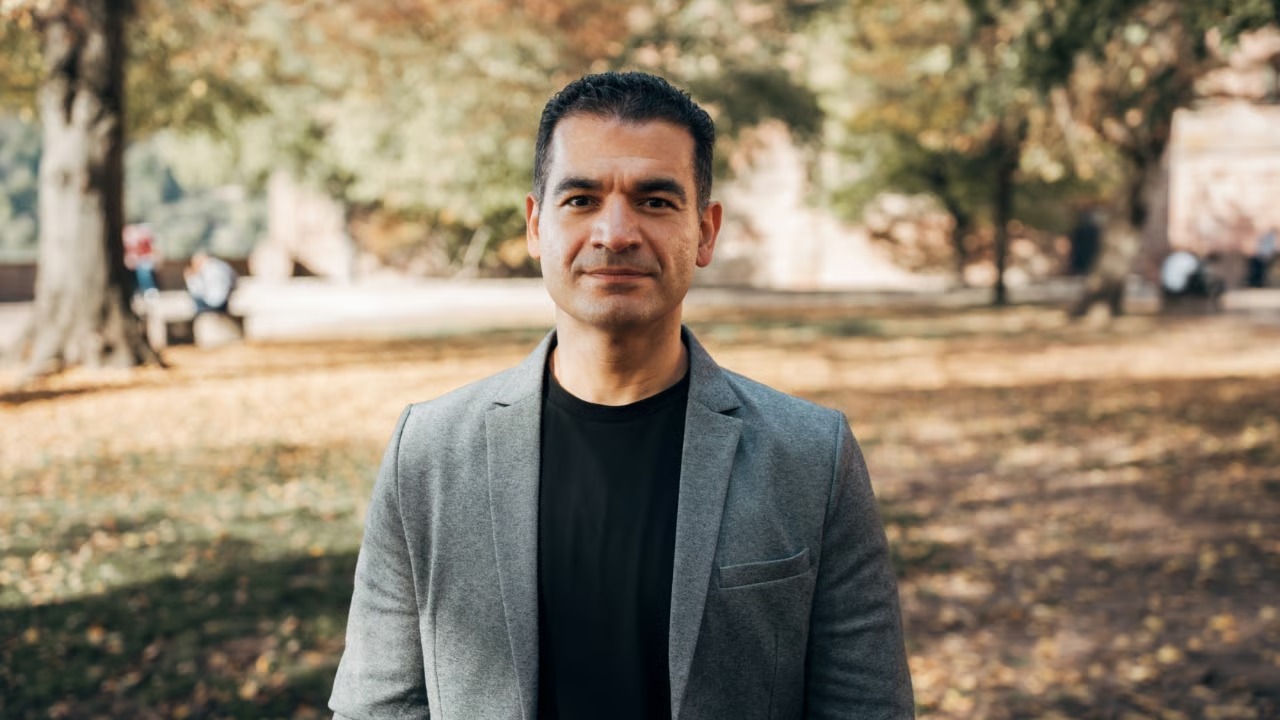
Who is speaking: Reza Mehman, host of the podcast Project Mindset, 38 years old at the time of recording, shares personal experiences and reflections on the topic of conscious living.
What is it about: This episode explores the phenomenon of “autopilot” in everyday life, the unconscious experience of life phases without truly perceiving the moments. Reza presents concrete strategies for escaping this pattern and living more mindfully.
Why is this relevant? In a world full of routines, distractions, and professional pressure, more and more people are losing touch with the here and now. The tools presented are practical and immediately applicable, making this episode particularly relevant and valuable.
Three key questions of the episode:
- Why do we experience so many moments on autopilot, without consciously perceiving them?
- What specific tools help to go through everyday life more mindfully and consciously?
- What really matters at the end of life, and how do we set the right priorities?
Table of contents
- Introduction – Why autopilot is an underestimated problem in everyday life
- Summary – The most important findings in brief
- context – Background information on speaker, topic and relevance
- Table of contents – All sections at a glance
- Topics and classification – The central themes of the episode
- Key messages – The most important messages summarized
- Frequently Asked Questions – Answers to frequently asked questions on the topic
- Highlight quotes – The best quotes from the episode
- Transcript – Full transcript of the episode
- Keywords – Relevant search terms and tags
- Names and terms – Important references and technical terms
- quotable passage – Key message to share
Topics and classification
1. Autopilot and unconscious life
Our daily lives are full of routines that lead us to live many hours, days, and even years unconsciously. The commute, shopping, and even family moments are often done on autopilot, without us truly noticing them.
Keywords: Autopilot everyday life, unconscious living, breaking routines
2. Mindfulness and conscious experience
Mindfulness is the key to switching off autopilot. By consciously perceiving the present moment, meditating, and mentally preparing for important moments, one can counteract this phenomenon.
Keywords: Mindfulness in everyday life, conscious living, meditation, mindfulness
3. Set priorities and identify what is essential
At the end of life, what counts is not professional achievements or completed tasks, but lived moments, the love given, and conscious time spent with family and friends. Prioritizing correctly is essential.
Keywords: Setting priorities in life, what is important in life, work-life balance
4. Leave your comfort zone and learn something new
Learning new skills and consciously stepping outside your comfort zone stimulates the brain and creates vivid memories. New experiences are a natural antidote to going on autopilot.
Keywords: Leaving your comfort zone, learning new things, personal development
5. The film “Click” as a metaphor for life
The comedy film “Click” with Adam Sandler serves as a striking metaphor for what happens when you simply fast-forward through important life moments and focus only on your career.
Keywords: Film Click, Adam Sandler, life metaphor, time passes too quickly
Key messages
- Our everyday lives are designed so that we do many things on autopilot, from our commute to family moments.
- At the end of life, it doesn’t matter at all whether the PowerPoint presentation was beautiful. What counts is whether you loved and lived enough.
- The “Make it Count” mindset helps you to mentally prepare for important moments and to experience them consciously.
- Learning something new stimulates the brain and creates intense memories that counteract autopilot.
- Meditation and mindfulness are powerful tools for consciously perceiving the present moment.
- Having a comfort zone is good and important, but every now and then you have to leave it to avoid getting rusty.
- The remote control metaphor from the film “Click” illustrates that if you fast-forward moments, you miss out on real life.
- It is not enough to simply “function”. Conscious experience requires active decisions and regular reflection.
- The last few years seem to pass faster and faster if you don’t consciously build in breaks and reflect.
- Prioritizing correctly means: family, friends and conscious moments take precedence over professional tasks.
Frequently Asked Questions
What does it mean to go through life on autopilot?
Going through life on autopilot means unconsciously performing routines and activities without truly being present in the moment. You “function,” but you don’t actively experience what’s happening around you. This leads to entire periods of time seeming empty in retrospect.
Why does time pass so quickly on autopilot?
When we do things on autopilot, the brain doesn’t form new, vivid memories. Without special experiences and conscious perception, the “anchors” to which we can attach the past are missing. That’s why it feels as if time has simply flown by.
What tools help to counteract the autopilot in everyday life?
Reza Mehman recommends several specific tools: the “Make it Count” mindset for mental preparation for important moments, learning new skills for mental stimulation, meditation and mindfulness exercises for conscious experience, and regularly leaving the comfort zone.
Was ist das “Make it Count” Mindset?
The “Make it Count” mindset means mentally preparing for important activities and moments so that you can consciously experience and appreciate them. Instead of simply “sitting through” a family celebration or gathering, you prepare to actively participate, listen, and enjoy the time together.
How does meditation help to avoid going on autopilot?
Meditation trains the ability to consciously perceive the present moment. Through regular meditation, one becomes more mindful in everyday life and recognizes more quickly when slipping into autopilot mode. There are various forms of meditation that help to sharpen one’s attention.
Why does learning new things help against autopilot?
When we learn something new, the brain is particularly challenged and forms vivid memories. Unlike routine tasks, which are performed unconsciously, learning something new requires our full attention. This can also include small things, such as using a new program or trying a new exercise.
What is the movie “Click” with Adam Sandler about?
In the comedy film “Click,” Adam Sandler finds a magical remote control that allows him to fast-forward through unpleasant moments in his life. The remote learns his behavior and eventually fast-forwards automatically. By the end, he is old, has lost his family, and has missed out on life, despite receiving a career promotion. The film serves as a metaphor for what happens when you skip over the essential things in life.
Do you have to constantly leave your comfort zone?
No, according to Reza, it’s actually important and good to have a comfort zone, for example, your own home or your usual sport. You don’t have to leave your comfort zone every day. But at regular intervals, you should consciously try something new to remain mentally flexible and counteract going on autopilot.
Selected statements from Reza Mehman
“It’s really not an option in life to simply let time pass by without focusing on what’s important in life.”
“It really doesn’t matter at all at the end of my life whether I made the PowerPoint presentation look good or not.”
“The important thing is that at the end of the day, or at the end of life, you can say, ‘I actually accomplished what was important.’ And that usually means, yes, having lived, having given love, having spent time with people you like.”
“I’m 38 years old now and I really have to say, the last few years have really flown by.”
“I want to be mindful in the moments that matter. I want to actively experience the moment. I want to be truly mindful of my surroundings.”
“Our lives, as we live them today, are actually designed for driving around on autopilot for a relatively long time.”
“It’s good to have a comfort zone. I don’t want to leave my comfort zone every day. But every now and then you have to do something new.”
The full conversation
Hi everyone and welcome to Project Mindset. This channel is for all of you who know that with the right mindset, anything is possible in life. Today’s topic is autopilot. Perhaps you’re familiar with those phases in life where you’re just going through the motions. This means you’re not really paying attention to what’s going on around you. You’re totally focused on the problems, challenges, and obstacles you’re facing. And then, somehow, a lot of time passes, and you don’t really realize what’s actually happened lately.
Or what actually happened in the last twelve months? And why did time suddenly fly by? In several podcast episodes, I’ve already talked about how it’s really not an option in life to simply let time slip away, to not focus on what’s important in life, to prioritize properly. For example, family, friends, and truly experiencing the moments with them. I think podcast episode number two gave a pretty good insight into how I think about this.
Making family time truly count
Make it count. That means consciously experiencing the moments you have with your family and allowing them to count, recognizing them as special moments in life. Nevertheless, I think that our lives, as we live them today, are actually designed for us to spend a lot of time on autopilot. Not literally driving, but actually going through life. What I mean by that is, we all know what that’s like: the commute to work, for example, or certain activities like shopping or going to the gym in the evening.
Most of what we do happens on autopilot. You get in the car, drive to work, and suddenly the 20-minute commute has vanished. Or you get in the elevator, go up, and suddenly those three minutes, or however long it takes, have passed. You just try to bridge the gap and not actively experience it. Perhaps this makes sense for the brain, so that the sensory input isn’t too overwhelming. But I think the problem is that we get used to simply experiencing many things in life on autopilot.
The film Click as a thought experiment
What I mean by that—and there’s a really cool movie I saw a while ago with Adam Sandler—is a comedy called Click. I think it’s fantastic. The humor might not be for everyone, but it’s definitely a comedy with a message behind it. I’ll give you a very rough outline of what it’s about, because it’s super relevant to today’s episode. In this movie, Adam Sandler is married and a father of two. He desperately wants a promotion at work, works incredibly hard, but somehow doesn’t seem to be getting anywhere.
Then he tries to work even harder to get the promotion. As a result, he neglects his family, which is obviously bad. For example, he’s not at family gatherings very often. Or when he is, his mind is elsewhere. He just wants to focus on his work. One day—and here’s a note, as I said, it’s a comedy film—he finds a magic remote control. And with this magic remote, he can simply fast-forward certain moments in his life.
When fast-forwarding becomes a habit
This means that whenever an activity is required, such as taking his children out, to sports practice, or attending family gatherings, he simply fast-forwards. For those two or three hours, he’s essentially on autopilot, present and engaged, and then he essentially wakes up again when he has the opportunity to work. The insidious thing about this remote control is that it learns Adam Sandler’s behavior patterns. In other words, the remote learns, “Aha, he always fast-forwards whenever something family-related is happening,” and consequently, he eventually fast-forwards automatically.
And then one day he gets up, suddenly, I don’t know, incredibly old, the kids have somehow left home, he didn’t really experience how they grew up, he separated from his wife, she has a new man, and so on and so forth, everything’s terrible. But he got a promotion at work, which he’s not even happy about anymore, because he feels like he’s just missed out on his whole life. What I find interesting about this film is that there’s a lot of message behind it, I personally think, because it’s actually about how we all sometimes focus on certain things that we think are important, be it work or a certain activity we do. We lose sight of what’s actually important in life.
What matters at the end of life
Because at the end of the day, it’s actually completely irrelevant, at the end of my life, whether I made the PowerPoint presentation look good or not. Or whether I submitted the proposal for my work or not. Whether I did that activity here or there or not. What’s important is that at the end of the day, or at the end of my life, I can say, “I actually accomplished what was important.” And that usually means, yes, having lived, having given love, having spent time with people I care about.
Consciously experience important moments
I believe that’s what’s important in life. And that’s precisely what this film highlights. That’s exactly what I want to emphasize in today’s podcast episode: that you absolutely have to prioritize correctly for yourself, what’s truly important in life. And I definitely don’t want to go through life on autopilot in these areas. That means I want to be mindful in the moments that matter. I want to actively experience the moment. And in doing so, I want to be truly mindful of my surroundings.
Furthermore, I really want to experience and understand what’s currently happening around me. I notice this in myself from time to time. I’m 38 years old now, and I have to say, the last few years have really flown by. So I try to pause and reflect, using the tools I’ll talk about shortly, to become more aware of these moments. But I also realize that if I don’t pay attention, the next few years will pass just as quickly.
And suddenly I’m incredibly old, and maybe I haven’t even done what really matters. Namely, have I given enough love to my loved ones, have I lived enough, have I had enough, let’s say, moments that evoke a certain memory or have left a lasting impression? I’d like to briefly introduce the tools I use to experience these moments mindfully and consciously, because I think they could be quite helpful for some of you.
Preparing for special encounters
The first thing, and I’ve already done a podcast episode about this – that was episode number 2, the “Mindset Make It Count” episode. As I said, feel free to listen to episode number 2 again. In short, whenever I have, let’s say, important activities coming up for me – not just for me, but also, for example, for my wife – I prepare myself mentally. What I mean by that is, if I know there’s a family celebration on Sunday, and that’s very important to my wife…
I’m mentally preparing myself to be in a good mood at this family gathering, to have lots of conversations with everyone there, to actively listen, but also to share my own stories, to engage in the conversations. So that we all have a wonderful day and that we can all look back on it with a smile, saying, “Hey, that was a really cool family gathering, we had a great time together.” Another tool I like to incorporate is the theme of learning something new.
Staying attentive through new skills
Learning something new usually happens in exceptional situations. Our everyday lives are the norm, like going to work or playing sports, but learning something new can sometimes involve something like podcasting. For me, podcasting is a good example. I had to learn how to use editing software, how to adjust microphones, and how to release podcasts. There are so many things you can learn, and interestingly, I remember having to learn them all. I get a little better at it each time.
Actually, I also try to learn new things regularly. It doesn’t have to be anything big. You don’t necessarily have to learn a language perfectly or regularly get a motorcycle license and take a course. It can be small things, like how to use video editing software or how to manage certain activities on social media. There are so many facets to a topic that you can explore and that stimulate your brain, encouraging you to learn something new.
Rediscovering academic writing
A good example is that I recently wrote a contribution for a book by an acquaintance of mine, Professor Dr. Stefan Lacher. I hold him in high regard. He had asked me if I could write a short piece on a certain topic. I completely underestimated how much work it would take to write such a piece. But I did it, and it was actually incredibly exhausting for me. The last time I had to write what I would call a professional piece—if you can even call it that—was my diploma thesis, 13 years ago. It was incredibly exhausting for me again to write grammatically correct, very good German.
For me, it was like learning something new again. I may have learned it at some point—this, let’s say, academic writing—but it was a kind of relearning of academic writing. That really appealed to me and encouraged me to, let’s say, strain my brain again and delve into it again. I remember quite well how strenuous that was for me. So, once again, something where I wasn’t going through life on autopilot, but actually focused on the moment: okay, I have to learn something again, I have to apply my knowledge, I have to try to make progress with this topic.
Leave your comfort zone every now and then
This, of course, also plays a huge role in the topic of leaving one’s comfort zone. There’s also a podcast episode about this. I think you might already know my opinion on it: it’s good to have a comfort zone, like your own home. Ideally, I don’t want to leave my comfort zone every single day; it’s good that I feel comfortable there, including with my exercise. But every now and then, you have to do something new, whether it’s a new physical exercise, a new sport, or simply trying something out for a while, knowing full well that it’s just an experiment. You don’t have to do it for the rest of your life.
Another tool that I also incredibly value is meditation. I’ve talked about it quite a bit before. There are so many different ways to do it, but for me, meditation means simply being, without wanting or possessing anything. You pay attention to your breathing, for example, you let go of every thought, you focus on the present moment. The advantage is not only that you can concentrate very consciously and mindfully on this moment, but also that you experience the moments that follow, the activities you do afterward, much more attentively and mindfully. So I can recommend it to everyone.
Recognize your own autopilot in time
Alright guys, that brings me to the end of today’s episode. I hope you were able to take something away from it. Here’s a very brief summary: I actually believe that our lives are designed to be on autopilot as much as possible, whether it’s driving, commuting to work, or taking elevators down. There might be some justification for the brain switching to autopilot. But you really have to be aware that autopilot can have a very wide reach and that you mustn’t allow other areas to be affected. That you’re essentially living half your life on autopilot.
Inspiration for a more conscious everyday life
I only briefly mentioned the tools. Make it count, prepare yourself for certain situations that you know are coming and consciously try to experience these situations, be it a family celebration or a meeting with friends, consciously saying, wow, I’m going to take time for this, I’m looking forward to it, I’m going to prepare for it, I’m going to engage in the conversations, I’m going to try to have as much exchange as possible, because these moments definitely stick with you.
The other thing, of course, is to regularly experience something new – here again, the keyword is comfort zone, to leave it every now and then, to do truly new things. It doesn’t have to be anything big; you don’t have to learn a new language every day. Learning something small here and there is enough of a stimulus for the brain to remember that you’ve done something new. And the last topic was meditation, which I can really recommend to everyone: pausing every now and then, consciously experiencing the moment, paying attention to your breathing, not having unnecessary thoughts, reflecting on what’s actually important in life.
Living consciously and passing on love
And I absolutely stand by this: at the end of life, it’s not about how beautiful the PowerPoint presentation you had to make was, but at the end of life, it really comes down to whether I lived the life I wanted to live, whether I consciously experienced what I experienced in my life, and whether I also shared love—all the things that are actually important in life. Great, now we’re already at the end. I hope you enjoyed the episode. If so, as always, please leave a like, subscribe to the channel, and tell your friends about it, because that’s the only way the channel can continue to grow.
Until next time, and don’t forget, until then, mindset is everything.
This transcript was automatically generated using Whisper AI and may contain occasional errors.
Keywords
Tags: Avoid autopilot in everyday life, mindful living, mindfulness, meditation, leaving your comfort zone, Make it Count, conscious living, setting priorities, experiencing time consciously, breaking routine, personal development, mindset, self-reflection, film Click Adam Sandler, Project Mindset
Names and terms
Reza Mehman, Project Mindset, Adam Sandler, Click (film), Professor Dr. Stefan Lacher, Make it Count, Autopilot, Mindfulness, Meditation, Comfort Zone, Journaling, Prioritization, Work-Life Balance, Family Celebration, Remote Control (metaphor), Diploma Thesis, Academic Writing, Editing Software, Social Media
quotable passage
“The important thing is that at the end of the day, or at the end of life, you can say, ‘I actually accomplished what was important.'”
“And that is mostly, yes, having lived, having given love, having spent time with people you like.”
“I want to be mindful in the moments that matter. I want to actively experience the moment.”
“It really doesn’t matter at all at the end of my life whether I made the PowerPoint presentation look good or not.”
You can find more episodes on mindfulness and personal development at Project Mindset.