Habits: How to lead a happier life
How habits and routines strengthen your mindset and contribute to your happiness account.
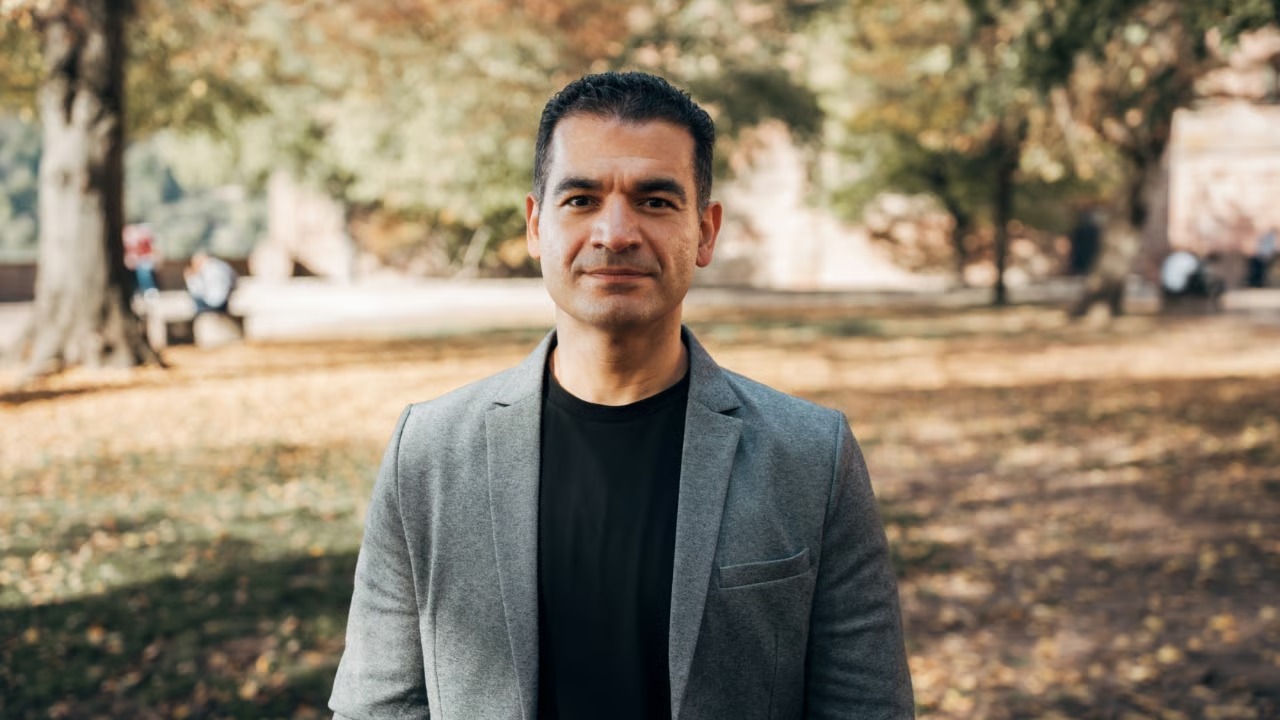
Introduction
Habits, or routines, are one of the most powerful levers for a happier life. In this episode of Project Mindset, Reza Mehman talks about how well-chosen habits contribute to his personal happiness and why they have sustainably strengthened his mindset. He shares concrete examples from his everyday life: from gratitude practices and journaling to meditation and drinking water. Reza explains why habits not only bring structure and security to daily life but also help you become a little better every day. He honestly shares his own story, including the failure of his startup and the lessons he learned from it. This episode is a practical guide for anyone who wants to positively transform their life through conscious habits. Tune in and find out which habits can change your life, too.
Summary
In one sentence: Well-chosen habits such as gratitude, journaling, and meditation strengthen the mindset and lead to a happier, more conscious life.
Short summary: Reza Mehman shares his personal habits and explains why practices like gratitude, journaling, and meditation have profoundly changed his life. He emphasizes that good habits boost self-confidence, bring inner peace, and help one enjoy the process rather than just the result. At the same time, he warns against bad habits and shows how conscious choices can positively shape one’s routines.
Detailed summary: In this episode of Project Mindset, Reza Mehman discusses the power of habits and their impact on personal happiness. He shares his key daily habits, including a morning and evening gratitude routine, drinking plenty of water, journaling, and meditation. Reza explains how these routines have sustainably strengthened his mindset, especially after his startup failed between 2015 and 2018. He distinguishes between good and bad habits and encourages listeners to start with six to seven conscious habits a day. The central message: Happiness shouldn’t depend on external circumstances but must come from within, and habits are the key.
Context: Who, What, Why
Who is speaking: Reza Mehman, founder of Project Mindset, 37 years old, married and father of two children. After the failure of his startup (2015 to 2018), he began to intensively study mindset and personal development.
What is it about: Reza talks about his personal habits, meaning the habits and routines he has consciously integrated into his daily life. He shares concrete examples such as his gratitude routine, journaling, meditation, and drinking water, and explains why these habits contribute to his happiness.
Why is this relevant? In a world full of distractions and external influences, many people are looking for ways to find more inner peace, contentment, and clarity. Habits offer a concrete, actionable approach to strengthening one’s mindset and living a happier life in the long term.
Three key questions of the episode:
- Which habits contribute most to personal happiness?
- How can you sustainably integrate good habits into everyday life?
- Why do habits strengthen self-confidence and mindset?
Table of contents
- Introduction – Why habits are the key to a happier life
- Summary – The episode summarized in one, three, and five sentences
- context – Who is speaking and why this topic is important
- Table of contents – All sections at a glance
- Topics and classification – The central themes of the episode
- Key messages – The most important messages at a glance
- Frequently Asked Questions – Answers to the most important questions about habits
- Highlight quotes – The most defining statements from the episode
- Transcript – The full conversation to read
- Keywords – Relevant search terms and tags
- Names and terms – Important references from the episode
- Quotable passage – For sharing and quoting
Topics and classification
1. Gratitude as the foundation for happiness
Reza describes his daily gratitude routine as the most important habit of all. Morning and evening, he takes two minutes to consciously reflect on what he is grateful for. He says this ritual has completely changed his life.
Keywords: Gratitude routine, gratitude habit, happiness account
2. Journaling and self-reflection
By regularly writing in his journal, Reza records his insights and summarizes them at the end of the month. Journaling helps him organize his thoughts, reinforce insights, and benefit from them in the long term.
Keywords: Journaling, diary writing, self-reflection, monthly summary
3. Physical Habits and Health
In addition to mental habits, Reza emphasizes the importance of physical routines such as drinking plenty of water, avoiding carbonated drinks, and consciously nourishing the body. These habits have a positive effect on energy levels, skin appearance, and overall well-being.
Keywords: Drinking water routine, healthy habits, body and mindset
4. Mindset transformation through personal crises
Reza’s journey to a positive mindset began after his startup failed. He explains how he learned to see the positive aspects in every difficult situation and fundamentally change his mindset.
Keywords: Mindset transformation, startup failure, change of perspective
5. Good vs. bad habits
Reza consciously distinguishes between positive and negative habits. He encourages people to critically examine their own habits and to focus on six to seven conscious routines a day, instead of overexerting themselves.
Keywords: good habits, recognizing bad habits, habit development
Key messages
- Well-chosen habits directly contribute to one’s personal happiness account and strengthen the mindset sustainably.
- Gratitude is the most important habit: Just two minutes in the morning and evening can completely change your life.
- Happiness shouldn’t depend on external circumstances. You have to manage to be happy from within.
- Journaling helps to record, repeat, and internalize insights in the long term.
- Physical habits such as drinking enough water have a direct impact on energy and well-being.
- Every difficult situation has its positive aspects. The perspective determines the outcome.
- Six to seven conscious habits a day are a good starting point without overexerting yourself.
- Habits bring calm and security to everyday life and help you to be fully present every day.
- The failure of one’s own startup can be the starting point for a complete mindset transformation.
- Sharing knowledge is a core value: Personal insights become more valuable when shared with others.
Frequently Asked Questions
What are habits and why are they important?
Habits are habits or routines that one has consciously or unconsciously. They can occur daily, weekly, or even annually. Well-chosen habits strengthen mindset, bring structure to everyday life, and contribute to personal happiness.
What is a gratitude routine and how does it work?
A gratitude routine means consciously taking two minutes each morning and evening to reflect on what you are grateful for. Reza uses calendar entries as a reminder. Over time, you discover more and more things to be grateful for and develop a fundamentally more positive outlook on life.
How does journaling help build a strong mindset?
Journaling involves regularly writing down your thoughts and insights. This makes them visually tangible and easier to remember. Reza also summarizes the most important insights at the end of each month and revisits them at the end of the year, leading to lasting internalization.
How many habits should you have per day?
Reza recommends starting with six to seven conscious habits a day. It’s important not to overwhelm yourself and to keep the habits manageable. You can add more habits over time when you feel ready.
Why is drinking water an important habit?
Drinking enough water, especially right after waking up, helps with headaches, boosts energy, and is good for the skin. Reza has also switched from sparkling water to still water and has noticed a significant difference in his well-being ever since.
What is the difference between good and bad habits?
Good habits are consciously chosen habits that positively contribute to well-being, health, and mindset. Bad habits, on the other hand, are often unconscious patterns that hinder personal development. It’s worthwhile to regularly and critically examine your own habits.
How did the failure of a startup change Reza’s mindset?
After his startup collapsed in 2018, Reza was devastated. Only then did he begin to explore the topic of mindset and realize that every difficult situation contains something positive. This experience became the starting point for his complete mindset transformation and ultimately for the launch of Project Mindset.
Can habits really make you happier?
Yes, according to Reza, well-chosen habits are a key building block for personal happiness. They bring calm and security to everyday life, strengthen self-confidence, and help one to be present each day and enjoy the process, instead of just waiting for results.
Selected statements from Reza Mehman
“Well-chosen habits contribute enormously to my own happiness, to my happiness account.”
“My happiness must not depend on external circumstances; I must manage to be happy from within.”
“The longer you engage with the topic of gratitude, the more imaginative you become about what you are actually grateful for.”
“Every cloud has a silver lining, and with my startup, for example, I gained an incredible amount of experience and met an incredible number of new people.”
“Building habits for oneself has an incredible advantage in that it greatly strengthens my mindset and self-confidence, especially when I consciously pursue my positive habits.”
“It was a game-changer for me.”
– Reza Mehman (on the gratitude routine)
“I love sharing my knowledge. So I’m happy about every listener, but at the end of the day, if no one listens, I’ll still make the podcast.”
The full conversation
Hi everyone and welcome to Project Mindset, the channel for all those who know that with the right mindset, anything is possible in life. Today I thought I’d briefly introduce myself again, as we’re gaining more and more new subscribers and listeners, which I’m incredibly happy about. I’m not even sure if everyone knows who I am, or if everyone listened to the first few episodes where I introduced myself and explained a bit about why I started a podcast in the first place.
Therefore, before we begin with today’s topic, a few words about myself. My name is Reza, I’m 37 years old, turning 38 in a few days, happily married, have two sweet little children, am a proud father of a boy and a girl, and yes, I’ve been exploring the topic of mindset for some time now. There’s a reason for this, because in my younger years I wasn’t fully aware that the right mindset is essential for approaching life in the right way.
Experiences from our own founding days
If you have the wrong mindset, then many things simply seem difficult, hard, everything is so connected with a lot of impatience, with a lot of unavailability, and especially when I had my company from 2015 to 2018, at the beginning I was totally hyped, had a lot of fun, the company was growing and unfortunately it turned out differently than I had hoped, the company had to close, many people, including some friends of mine who were in the company, unfortunately had to leave as well, as did I myself, I had to find a new attitude and at that time I was really, you could say, devastated.
I also didn’t see what the situation could possibly have, anything good at all. My mindset was really all wrong. It wasn’t until after 2018, you could say, that I started to really engage with the topic of mindset, to understand that there are different perspectives in every situation, that there are good things in every bad situation. With my startup, for example, I gained an incredible amount of experience, met so many new people, found new companions, and understood what to do and what not to do..
So, in every fail or every time you fall flat on your face, there are things you can learn from it, and over time I’ve understood that I have to completely change my mindset if I want to be happy in life someday, because my happiness shouldn’t depend on external circumstances; I have to manage to be happy from within.
Why I share my knowledge in the podcast
And that’s exactly why I started the podcast, once I personally understood what mindset means, what happiness means, how to approach happiness. I found it incredibly important, or rather, I always find it incredibly important, to share my knowledge. That’s why I started the podcast. I also said in the first episode that I love sharing my knowledge. So I’m happy about every listener, but at the end of the day, if no one listens, I’ll still make the podcast so that my children, they have to listen to it. So that my children know how their old dad works and ticks.
Nevertheless, I am of course happy about every listener, and as I said, I’ve seen in the online statistics that we are steadily growing. I also have a parallel YouTube channel where I conduct interviews with truly inspiring people about their mindset, how they approached their lives, how they became successful. Success can be defined in different ways, but for me, success primarily means that they have the opportunity to pursue the things they truly enjoy and that make them truly happy.
Further impulses and the introduction to habits
So you can also check out my YouTube channel or my new website.www.projectmindset.de,There’s also a lot of information there about mindset that I’ve gathered, and I’d be delighted if you checked it out. That’s all for now about me. I think I’ll start doing these little intros more often, especially for new guests, and I hope you’ll stick around. Now, on to today’s topic: I want to talk about habits, routines, or whatever you want to call them. Habits have a very special place in my life, habits I’ve developed over time.
I’ve also noticed that habits, well-chosen habits, contribute enormously to my own happiness, to my happiness account. What are habits? Well, I think, to put it simply, they’re certain rules or routines that one has, consciously or unconsciously. They don’t necessarily have to be daily routines—I usually talk about daily routines—but they can also be something one does weekly or annually. Of course, there are also good and bad habits, and that’s what I want to talk about today.
How habits boost self-confidence
But first and foremost, I want to say that building habits for myself, especially for my own sake, has an incredible advantage: it greatly strengthens my mindset and self-confidence, particularly when I consciously cultivate my positive habits. And what are my positive habits? I’ll give you a few examples in a moment, and perhaps afterwards, if you have any other ideas for positive habits, you could simply send me an email and say, “Hey Reza, this and that is also a pretty cool habit, have you ever thought about it?”
So, I’m always open to incorporating new habits. I try to keep them somewhat in check, meaning I don’t want to develop too many habits at once. I think I’m currently at about six or seven rules or habits a day that I follow. That’s a good number for now. But I can imagine it increasing a bit. Let’s start with my first and arguably most important habit of all: my gratitude routine. I talked about it in another podcast episode.
Start the day with gratitude
For me, gratitude is extremely important. I think that if you go through life with gratitude, you truly understand the value of life itself, and someone else actually gave me this idea. Someone on Instagram once said, “Hey, try this for 30 days, morning and evening: take two minutes each day to think about everything you’re grateful for, and after 30 days, I promise you, your life will be completely different.” I thought, “Hey, it doesn’t cost anything, I can give it a try,” so I made a calendar entry for it, relatively early in the morning and relatively late in the evening—always shortly after waking up and just before going to sleep.
For two minutes a day, I really focused on myself, thinking about what I was grateful for. At first, of course, the standard things came up, like being grateful for my health, having a great family, and so on. But eventually, before it gets too boring, you discover other things you’re grateful for, and sometimes really strange things come up, to be honest. I’m even out of touch with some of them. I was talking to a friend of mine recently. He said you become so grateful that your duvet is so soft, for example, or that your smartphone works so well.
Discovering gratitude in everyday life
You might find this strange. But it’s true: the longer you engage with the topic of gratitude, the more imaginative you become about all the things you’re actually grateful for. And when you see this multitude of things you’re grateful for, you realize, wow, life is truly beautiful and wonderful. There are so many things to be grateful for. So, one of my most important habits—I would even say the most important habit I’ve discovered for myself—is gratitude.
I can only recommend that you try it out. I do it with calendar entries. When I see on my phone or watch, “Okay, now I have to do my gratitude routine,” I actually take a minute or two to think about something I’m extremely grateful for. It has truly changed my life completely—it was a game-changer for me. Another habit I like to use is very simple: getting up in the morning and drinking lots of water. I’ve made it a habit to do this right after waking up. I have a Brita filter at home—this isn’t a paid advertisement; I don’t get any money from Brita. But it works really well—and I pump out a glass or two of water.
My experiences with the drinking routine
I’ve also noticed that when you stay hydrated throughout the day, headaches almost never happen anymore, and you feel fitter overall. It’s also incredibly beneficial for the skin, so I feel better overall, fewer pimples and so on. So I can really recommend making drinking water a habit. I drank carbonated water for years until I realized, no, that’s not actually good for me. Then I switched to a Brita filter, and every time I go into the kitchen, I drink at least one glass of water. I actually gulp it all down in one go, and it’s become a very good habit.
Then a third habit I use in the mornings is journaling, so basically a kind of diary writing. I do this almost daily. To be honest, I don’t do it every single day, but every two days, sometimes even only every three days. But it has incredible value for me in terms of mindset, because when I write down my thoughts. I usually do that in the morning, I’m a bit calmer mentally, everything is a bit more relaxed. When you write down your thoughts, what did I experience yesterday, what important insights did I have yesterday, when you write it down and really express it out loud, it becomes visual again in front of your eyes. You can remember it better.
Record findings in the journal
In the long run, you also benefit more from writing things down, and for me it’s not just that I’ve written something down once, done my journaling, but at the end of the month I even summarize the most important insights for myself.
I also talked about this in another podcast episode; feel free to listen if you want to know all the details about journaling. But journaling works incredibly well for me when it comes to insights and revisiting those insights. So I’m incredibly grateful when, at the end of the year, I read through my May summary, for example, and see, wow, that insight I had was really, really good. Or sometimes I even see that I was able to validate an insight, and it’s actually no longer valid for me.
So I can really recommend journaling to everyone as often as possible. Like I said, I try to do it every day, but usually it ends up being every two days. And then it’s not just about writing it down and that’s it, but also about regularly reading it through or making a summary so that it’s constantly brought back to mind. Another habit I really love is meditation. I also have a separate podcast episode about it.
Meditation as a conscious pause
Meditation—I started relatively late, and I don’t do anything particularly special in my meditation practice. I talk about it a bit more in the podcast episode. It’s basically just focusing on your breathing, closing your eyes, and sitting comfortably, or the four-point meditation, which is also a very simple way to meditate. So, inhaling is one point, holding the breath is another, exhaling is another, and the last point is simply letting the breath out..
It works incredibly well for me, and I especially meditate when things are particularly stressful for me. That sounds strange, but sometimes I have so many things to do, whether from work or personal matters, and when everything comes together and I have absolutely no idea what task to tackle next, then I meditate even more.
Three minutes for conscious reflection
I usually only do it for 3 minutes; I have a timer on my watch, which I click to meditate for 3 minutes. I don’t often do it for much longer because then there’s a risk of me dozing off. And yes, I do try to keep my power naps in check, even though they’re healthy. But 3 minutes is a good amount of time to focus on breathing. I also notice every time I’ve been really stressed beforehand, after I’ve meditated for 3 minutes, that the next task is actually much easier for me, or it becomes much clearer to me what the next task should even be.
Then another habit I’ve acquired over time is related to nutrition: no alcohol and no dessert during the week..
About two weeks ago, I think I was out with some friends, we had a bite to eat, and as is often the case, some friends ordered just a beer. I ordered something non-alcoholic, and of course, the first question came up: “Hey, no beer? What’s wrong with you?” I explained, “Hey, I don’t drink alcohol during the week. There are reasons for that.” My friends asked more questions. I explained that I think it’s so easy to consume alcohol these days that you really have to be careful that it doesn’t become a habit. And I personally have simply made it a habit not to drink alcohol.
Personal rules for alcohol consumption
Of course, I enjoy a drink on the weekends. But I also realize that I used to drink regularly. I don’t need it at all anymore. It’s almost like peer pressure to drink alcohol on the weekends. Of course, it’s fun to have a beer now and then, but there are hardly any reasons why one should drink alcohol. I’ve read that it takes up to 40 days for the last drop of alcohol, or any trace of it, to disappear from the body. And yes, I think it’s simply healthier not to do it, knowing full well that a few drinks, a nice glass of wine, can be quite good now and then. But yeah, I’ve made it a habit, and I try to stick to it.
And here’s something I’m particularly proud of: when I’m out with friends during the week and everyone’s having a drink. I’ve stuck to my habit, stuck to my habit, then I’m especially proud of myself for having followed through. It really boosts my self-confidence when I stick to my own rules, my own habits that I’ve set for myself.
My dessert habits
The issue of no dessert is quite simple: I’m someone who can’t resist a burger or a piece of cake and I instantly gain two kilograms. So I’ve gotten into the habit of simply skipping it during the week. Of course, if it’s someone’s birthday, then I would eat a piece of cake. But I usually only have dessert or a piece of cake on Sundays. I have to say, that’s kind of my guarantee against gaining weight.
My experience is that before I started thinking about desserts, I worked for an employer who had a bakery nearby. We would stop by there almost every day after lunch, have a pastry or a piece of cake. I actually gained several kilos without realizing it. I wasn’t even aware of why I had gained the weight until I realized, “Oh, of course, that’s 300 or 400 extra calories a day, and if I don’t compensate with more exercise or less food, well, it’s going to stick.”
This means that these two habits are partly about abstinence in this case. But I am also particularly proud when I don’t drink anything, i.e., don’t drink alcoholic beverages or don’t have dessert..
Maintain your native language regularly
Then I have another habit that I do especially in the evenings, just before going to sleep. It has something to do with my mother tongue; I’m a native Persian, a native Iranian. I’ve somehow noticed over the years, in recent years, that my Farsi, my Persian, has gotten worse. And then I thought to myself, wow, how can I stop this decline? So I got into the habit of simply reading just three or four lines from a Persian book every evening. I think I’ve been doing that for two years now. It’s worked wonders, to be honest, my Persian has actually improved.
So, I not only stopped the decline, but by reading very little – and yes, I think it’s called the compounding effect, a kind of compound interest effect – making something very consistent over a longer period and building on it, then the thing you’ve set out to do can only get better. I can recommend it to everyone: in the evenings, for example, when you’re just about to go to sleep, just do something small that you’ve firmly resolved to do for a long time, be it learning a language, or, as in my case, further developing your native language skills.
Integrate small routines into your day
A few lines a day are really enough to at least maintain a certain level. So, I think that was six habits, let me check, exactly, there were six, those are my standard habits. It might sound very time-consuming at first glance, but it’s not as time-consuming as it sounds. These gratitude routines, I really enjoy them. Drinking water, yes, that’s part of it, you have to drink water. The only thing I do differently is actually pump out the water and be practically energized by mid-morning.
Journaling does take a bit of effort, of course, but I’ve never once thought, “Ugh, journaling was awful today.” Every time I do it, every time I write in my diary, I feel better afterward. Meditation is something that’s incredibly good for me and doesn’t take much time either. No alcohol, no dessert—it doesn’t take up any time at all, just a little bit of willpower sometimes. And reading a few lines of Persian in the evening is just a few minutes a day that I invest in that.
The absolute advantage, of course, is that if I stick to these few things, it contributes incredibly to my happiness. I simply feel good about having done these basic things. Unfortunately, I also have a few bad habits that I still need to break, and I’d like to briefly address those. Perhaps you have some tips for me afterward on how I can overcome them. It’s actually easy to break them, but somehow I always fall back into old patterns.
Question your own mobile phone usage
I manage to stick to it for a while, to not do it, but then I do it again. I have no idea why. So, my first bad habit is checking my phone early in the morning and late at night. I have to say, it’s practically the last thing I see at night and the first thing I see in the morning. I really don’t like doing that. Reading emails immediately means checking what has or hasn’t arrived. That’s a habit I know I need to break.
Doing absolutely nothing for a while is something I can manage now. I think I probably just need to put my phone in another room, and unfortunately, I also use it as an alarm clock. A bad excuse, I know, but I really need to figure out how to stick to this bad habit. Then there’s another habit I find a bit annoying, which is eating way too fast. I don’t know why, it’s just become a habit. I basically eat all at once, way too fast, without a break, and I need to break that habit too.
Recognize bad habits too
I don’t particularly like it either. Another challenge is chewing 30 times before swallowing, for example. I need to think about that. To be honest, I don’t really enjoy how I can just get rid of this bad habit. There are certainly many other habits as well. I’ve really thought about it a lot. I think you have to differentiate a bit between different character traits. For example, impatience is unfortunately not a very good character trait for me.
I can’t say it’s a habit, a set of habits, but rather simply a character trait. I’ve identified many character traits I’d like to improve. Regarding habits, there are certainly a few more. We couldn’t think of any more off the top of our heads. And as I mentioned at the beginning, there are undoubtedly unconscious routines, rules, and habits that we all follow without even realizing it. And yes, I’d need to think a bit more about what other bad habits I might have.
Exactly, there are two ultimate advantages when I think about the topic of habits, and I’ve already talked about one of them. Sticking to my own rules, simply following them, gives me incredible self-confidence, knowing that I’ve adhered to the things I set for myself. It feels incredibly good to be truly mentally strong, to say, “Hey, I actually abstained from alcohol, even though it was a good opportunity to, say, have a beer.”
Valuing conscious decisions
Or I said no to the cake even though I really wanted some. And when you consciously realize that, you feel mentally stronger, because you know, hey, if I set my mind to something, then I can stick to it. And when you have that, that’s the second advantage, building this mental strength. The first advantage, building this mental strength, is that you then know exactly what to do when facing other challenges, tasks, situations, difficulties, whatever it may be, in all the issues you have in life.
With this mental strength, you can approach things very effectively. There’s practically nothing you can’t do. So, for me, those are the ultimate advantages of having habits, if you follow them, and not just for, say, six months or a year, but for several years. And at some point, you internalize it so strongly that you know it’s actually easy. So, if I do something new now, it’s actually easy for me. I can stick to it. If I decide to make saving a habit, for example, putting aside 50 euros once a week, I can follow through.
Choose suitable habits without overwhelming the patient
I also have other habits that I practice and stick to. That’s why I can really recommend that you develop a few habits for yourselves. I’m trying not to let the number of habits grow too much right now, because at some point it could become a burden. If you say, “Hey, I have up to 15 rules a day that I have to follow,” or even 20 rules a day, then yes, that sounds like a lot at first. It could happen that you just don’t enjoy it anymore. That’s why I try to keep the number small, but really stick to the things that are important to me.
Alright everyone, that brings us to the end of today’s episode. I hope you enjoyed it. Hopefully, habits make a little more sense now. I can honestly say, give them a try. Habits help me tremendously in bringing a certain inner peace and security to my everyday life. And they help me become a little better every day, especially with my mental strength. I highly recommend them to everyone. As always, one last little request: if you enjoyed the episode, please let me know.
End of the episode
So please leave a like, subscribe to the channel, and tell your friends about it, because that’s the only way the channel can continue to grow. Thank you for listening, and I wish you a wonderful day. Until next time, and don’t forget, mindset is everything.
This transcript was automatically generated using Whisper AI and may contain occasional errors.
Keywords
Tags: Habits, Routines, Happiness, Gratitude, Gratitude Routine, Journaling, Mindset, Self-Confidence, Drinking Water, Meditation, Personal Development, Project Mindset, Reza Mehman, Good Habits, Bad Habits, Morning Routine, Luck, Quality of Life, Startup Failure
Names and terms
Reza Mehman, Project Mindset, Habits, Routines, Gratitude Routine, Journaling, Meditation, Happiness Account, Mindset Transformation, Startup, Brita Water Filter, YouTube, Instagram, LinkedInwww.projectmindset.de,Game-changer, monthly summary, morning routine, evening routine, self-confidence, change of perspective
Quotable passage
“Habits bring a certain calm and security to my everyday life and help me to become a little better every day.”
“Gratitude is the most important habit I have discovered for myself. Just two minutes in the morning and evening have completely changed my life.”
“My happiness must not depend on external circumstances. I have to manage to be happy from within.”
“Every failure also contains an opportunity. You just have to learn to change your perspective.”
You can find more personal experiences and mindset inspiration at Project Mindset.