
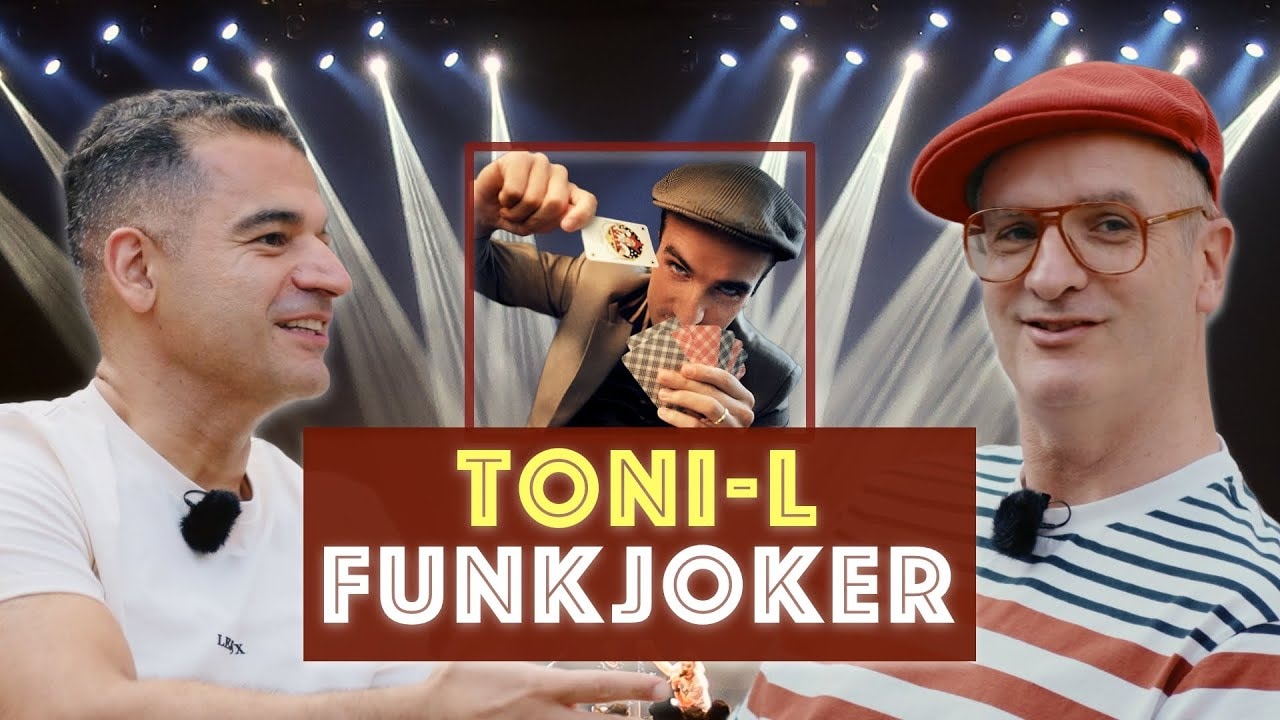

Toni L.: Heidelberg’s hip-hop pioneer on mindset, passion, identity and cultural heritage
Toni L. on hip-hop and Heidelberg
Toni L., one of Heidelberg’s most important hip-hop pioneers and a member of the legendary group Advanced Chemistry, speaks openly in this podcast conversation about 40 years of passion for hip-hop, funk and cultural education. As Toni Landomini — his real name — he is not only a rapper but also a chef, father, host and co-founder of Heidelberg’s Freies Hip-Hop-Institut. We hear how an introverted latchkey kid became an influential voice in German hip-hop through music, dance and the influence of his diverse family roots. He reflects on growth, disrespect, authenticity and what success really means. He also makes clear why hip-hop is more than music to him: it is cultural heritage, a remedy and a tool against hatred and fear in society.
Summary
In one sentence: Toni L. looks back on 40 years of hip-hop and explains how funk, family, friendship and authenticity have shaped his life and mindset.
In three sentences: Toni L., rapper, chef and co-founder of Heidelberg’s Freies Hip-Hop-Institut, talks about his beginnings as an introverted child and his African American stepfather’s influence on his musical upbringing. He reflects on his 40-year friendship with Torch (Frederik Hahn) and their shared journey through the highs and lows of German hip-hop. One thing becomes clear: for Toni L., success means being part of a story rather than being famous — and keeping the child inside him alive.
In five sentences: Born Toni Landomini in Heidelberg, Toni L. discovered funk, soul and eventually hip-hop through guitar, breakdance and his African American stepfather’s record collection. At the Internationale Gesamtschule Heidelberg, he met early hip-hop pioneers such as Linguist, Torch and Gonz, who together laid the foundations for Advanced Chemistry. In the podcast, he speaks openly about moments of doubt, disrespect during generational shifts and finding himself on stage as a solo artist. He explains why he measures success through participation in a cultural movement now recognised in Germany’s Nationwide Inventory of Intangible Cultural Heritage, rather than through record sales or reach. Through the Freies Hip-Hop-Institut, he continues this heritage as a living archive, a place of learning and evidence that hip-hop can offer a remedy for social fear and hatred.
Context: who, what and why
Who is speaking: Reza Mehman, a podcast host from Heidelberg, talks to Toni L. (Toni Landomini), rapper, chef, host and member of Advanced Chemistry. Toni L. is a co-founder of Heidelberg’s Freies Hip-Hop-Institut and an influential figure in German hip-hop history.
What the conversation covers: Toni’s personal journey, his mindset, his friendship with Torch, the importance of passion, dealing with disrespect and doubt, and the cultural responsibility he takes on through the Freies Hip-Hop-Institut.
Why it matters: Heidelberg is regarded as a birthplace of German-language hip-hop. Advanced Chemistry broke new ground musically, politically and socially. Heidelberg’s hip-hop culture and its networks in Germany were added to Germany’s Nationwide Inventory of Intangible Cultural Heritage in 2023 — a milestone in which Toni L. played an important part.
Editorial clarification: the conversation uses “UNESCO heritage” as shorthand. The recognition concerns the German nationwide inventory, not UNESCO’s international lists. See the German Commission for UNESCO’s entry.
Three key questions answered:
- How do you remain passionate about something for 40 years?
- What does success mean to a hip-hop pioneer beyond fame and sales figures?
- What role does hip-hop play today as cultural heritage and a force in society?
Contents
- Introduction — An overview of the conversation with Toni L.
- Summary — The essentials in one, three and five sentences
- Context — Who is speaking, what the conversation covers and why it matters
- Themes and perspective — Topics and keywords from the conversation
- Key takeaways — The interview’s central messages
- Frequently asked questions — Answers to the conversation’s key questions
- Standout quotes — Toni L.’s strongest statements, translated into English
- The full conversation — The edited transcript with section headings
Themes and perspective
1. Biography and background
Toni L. describes growing up in Heidelberg as a latchkey kid whose parents had divorced, the formative role of his African American stepfather, and his journey from guitar through breakdance to rap.
Keywords: Toni Landomini, Heidelberg hip-hop history, founding Advanced Chemistry
2. Friendship, crew and collaboration
His 40-year relationship with Torch (Frederik Hahn) and Linguist (Kofi Yakpo) is described as a pillar of his artistic career — not only on stage, but especially in the periods in between.
Keywords: Torch Heidelberg, Advanced Chemistry, hip-hop crew
3. Mindset, growth and authenticity
Toni L. reflects on introversion, overcoming fear, dealing with disrespect and the importance of authenticity on stage and in life.
Keywords: hip-hop mindset, introversion on stage, rapper authenticity
4. Success, passion and meaning in life
Toni L. defines success through participation in a cultural movement and the ability to make the project he loves his life’s work, rather than through status or sales figures.
Keywords: defining success in hip-hop, passion as a career, Funk Joker
5. Cultural heritage, education and social responsibility
Heidelberg’s Freies Hip-Hop-Institut, intangible cultural heritage and hip-hop’s role as a tool against hatred, fear and social division are central to the middle portion of the conversation.
Keywords: Freies Hip-Hop-Institut Heidelberg, intangible cultural heritage, hip-hop cultural education
Key takeaways
- Toni L. has been active in Heidelberg’s hip-hop culture for more than 40 years and is regarded as a co-founder of the German hip-hop movement.
- His African American stepfather brought funk, soul, rap, jazz and blues into the family home, laying the musical foundations for his career.
- His friendship with Torch (Frederik Hahn) was crucial to his artistic development: Torch recognised Toni L.’s rap skills before Toni could fully appreciate them himself.
- As an introvert, Toni L. found an outlet on stage for expressing his inner depth — and sees a message in that for all quiet people.
- For him, success means having been part of a historic cultural movement and making a living from what he loves, rather than superstardom.
- Toni L. meets disrespect and generational shifts in hip-hop with composure: staying cool shows strength, not weakness.
- For him, hip-hop, cooking and music share the same basic principles: creativity, rhythm, passion and sharing the result with others.
- Heidelberg’s Freies Hip-Hop-Institut was founded to preserve, research and keep hip-hop alive as cultural heritage, beyond commercial considerations and click counts.
- For Toni L., cultural exchange is the most important foundation of social coexistence, and hip-hop offers a remedy for fear, hatred and racism.
- His most influential life motto is to keep the child inside him alive — inspired by Pablo Neruda and exemplified by Nelson Mandela’s attitude.
Frequently asked questions
Who is Toni L. and what is his connection to Advanced Chemistry?
Toni L., whose real name is Toni Landomini, is a rapper, chef and cultural activist from Heidelberg. He is a founding member of Advanced Chemistry, one of the earliest and most influential German-language hip-hop groups. The group became known in the early 1990s for politically conscious rap and calls for German citizenship for people with migrant backgrounds.
How did Toni L. get into hip-hop?
Toni L. came to music through guitar and breakdance. A decisive influence was his African American stepfather John, who brought funk, soul, jazz, blues and early rap into his home. At the Internationale Gesamtschule Heidelberg, he later met Linguist, Torch and other pioneers of Heidelberg’s hip-hop scene.
What is Heidelberg’s Freies Hip-Hop-Institut?
The Freies Hip-Hop-Institut Heidelberg was founded by Toni L., Frederik Hahn (Torch) and Brian Witt. It is dedicated to cultural education, research and archiving relating to Heidelberg hip-hop. Its aim is to preserve hip-hop’s cultural heritage as a living, growing archive and make it accessible. More information is available at freieshiphopinstitut.de.
Why is Heidelberg hip-hop recognised as intangible cultural heritage?
Heidelberg is regarded as a birthplace of German-language hip-hop. Its hip-hop culture and its networks in Germany were recognised in the German nationwide inventory in 2023. Groups such as Advanced Chemistry and its members, including Toni L., Torch and Linguist, shaped the movement from the beginning and spread it nationally and internationally.
How does Toni L. define success?
For Toni L., success means being able to do what he loves and making a living from it in a way that makes him happy. He does not measure success through record sales or fame, but through having been part of a historic cultural movement and continuing to shape it actively today.
How can you stay passionate about something for 40 years?
Toni L. explains that he never tried to reinvent himself. Instead, he kept getting better at what he loves. During difficult periods, support from his family, especially his wife and children, helped him. He recommends patience, avoiding rushed decisions and trusting that the right moment will come.
What parallels does Toni L. see between cooking and hip-hop?
For Toni L., cooking and music share the same basic structure: creativity, rhythm, bringing different ingredients or elements together and sharing the result with others. Both require passion and craftsmanship, and both create moments of happiness — in making something and in receiving it.
How does Toni L. deal with disrespect and criticism?
Toni L. no longer dwells on negativity or engages with it. He believes a calm, composed manner shows strength rather than weakness. Anyone who underestimates him because he stays cool is mistaken. His outlet for negative energy is the stage, where he turns it into positive power.
What influence did Torch (Frederik Hahn) have on Toni L.’s career?
Torch recognised Toni L.’s exceptional rap skills before Toni himself did. He encouraged him, organised his first recording and stood alongside him for decades as a friend, artist and source of support. Toni L. believes his musical career would have taken a different course without Torch.
What does “keeping the child inside you alive” mean to Toni L.?
Inspired by Pablo Neruda’s thought that “a child who does not play is not a child” and by Nelson Mandela’s attitude, it means not sacrificing childhood joy, curiosity and playfulness to adult life. For him, hip-hop originally comes from a childlike energy, and keeping it alive makes the world better.
Standout quotes
“I was more the introverted type, while Torch and Linguist were the extroverts who would stand up and enjoy being in the spotlight. I enjoyed hanging back and letting them do their thing. But when I got to the microphone, I knew there would be fire.” — Toni L.
“If someone thinks that my staying cool is a weakness, they have got it completely wrong.” — Toni L.
“My success lies in having been able to take part in writing this history at all.” — Toni L.
“Cultural exchange is the absolutely essential foundation of everything. Without it, we can no longer come together.” — Toni L.
“A child who does not play is not a child. And I think happiness is wherever children are playing.” — Toni L., referring to Pablo Neruda
“The biggest challenge in life is precisely that: getting to know yourself better and better. The better you know yourself and can assess your strengths and weaknesses, the more that can help you in life.” — Toni L.
“I believe hip-hop is an important tool, a remedy, to help young people — both the young and the older generations — get through it and respect one another.” — Toni L.
The full conversation
Arriving in the castle courtyard: who is Toni Landomini?
Reza Mehman:
Toni, thank you very much for joining the podcast today. Thank you for your time.
Toni L.:
Thank you for inviting me.
Reza Mehman:
A while ago, I had the chance to talk to Torch, to Frederik Hahn, for the podcast, also here at the castle, beautiful Heidelberg Castle. I really hoped the Toni L. podcast would follow directly after the Torch podcast. I waited a long time, and you finally said, yes, we can do it now. So it is a huge honour for me. I am a huge fan of yours. As someone from Heidelberg, I see you as the people who started an entire movement. People know you here. Hip-hop in Heidelberg began through you. You are the beacons here, so to speak.
At some point, I plucked up the courage to write to you and to Torch and ask whether we could talk. Today, I am not really looking to go deeply into hip-hop itself, because I think there is a lot of content about you and with you. I have explored it too, to understand the history, where you come from and how you did certain things. But what interests me particularly today is who Toni is in private, what drives him, what challenges he has faced, what his mindset is — and whom you look up to. Those are some of the questions I want to explore with you.
And the first question, perhaps the hardest one straight away: who actually is Toni L.?
Toni L.:
Do you want to know who Toni L. is or who Toni Landomini is?
Reza Mehman:
Let’s start with Toni Landomini.
Heidelberg, family and music
Toni L.:
OK, Toni Landomini is definitely a really cool guy who very much enjoys giving interviews in Heidelberg’s castle courtyard. No, really, through and through — the greatest thing for him is being a father; he loves his children more than anything. I won’t keep talking about myself in the third person, but yes: I was born and raised here, a Heidelberger through and through. I love my wife. For more than 25 years now, I have been a husband, and I am a family man. There is more to it too: I am a son, and I am happy that my mother and father are also nearby, here in Heidelberg.
I love music, especially funk. That is why people call me — or at some point I called myself — the Funk Joker, and it stuck. I am a big music fan, and of course not only funk, but anything that is funky. It can be any genre: if it is funky, grooves and is good, I can immerse myself in it completely and be happy.
I also like to make a difference in the world, wherever possible. I am very active in different areas, mainly culture and cultural education. Passing on hip-hop knowledge, its history, matters a great deal to me. I am delighted when young people live it and pass it on in their own way. I really enjoy that exchange.
And I like being on stage. I have to say that, by nature, I was actually quite introverted as a child. A latchkey kid, a child of divorced parents, who found his way through hip-hop.
The path to music: guitar, funk and an African American “bonus dad”
Reza Mehman:
How did you get into music? You said it was a very important part of your life.
Toni L.:
I got into music very early, really, by starting to play guitar. This was when I was ten. I had seen someone singing on stage with a guitar, and the girls were screaming. My reaction was, “Hey, I want that too.” So I tried playing guitar, and it worked out pretty well. I formed a band: one classmate played drums, another bought a bass, and I sang and played guitar. We called the group “Defender”.
Reza Mehman:
To put it in context, how old were you then?
Toni L.:
I was twelve or thirteen, something like that.
Then hip-hop came into my life, through dance, through breaking, and it fascinated me. Because my parents divorced, I grew up with my mother, who was a single parent and a nurse working shifts and nights. I was often on my own for quite a long time. Music always gave me something to hold on to.
His stepfather’s musical influence
Then my mother married again, and I gained an African American “bonus dad”. His name was John. That brought all the funk, soul, rap, jazz and blues into our home. Suddenly, I had gone from an Italian-German household into an American-German one, so to speak. That shaped me musically in a big way. James Brown, Rick James, Barry White — everything I list in the Funk Joker Sound song — I soaked it all up endlessly. That beat, that groove.
Then everything good came along naturally too: Kurtis Blow, Whodini, Grandmaster Flash and the Furious Five, the Sugarhill Gang — all those things emerging in the early eighties. Back then, you did not think, “OK, this is hip-hop, this is funk.” You just celebrated anything with a groove. I became friends with the groove. My guitar playing changed too: no longer the Beatles or the Rolling Stones; suddenly you were playing a riff, a funky riff. That rhythm blew me away. Before I continued making music, though, I first got into hip-hop by becoming a dancer.
Reza Mehman:
Can I quickly ask: you said “bonus dad”, which sounds wonderfully positive. Might you never have taken this hip-hop path without that?
Many influences along his own path
Toni L.:
I cannot really say, because everything happened as it did, and so many factors played a part. My Italian father also shaped me musically, of course. He always loved music, culture and art; he drew, and he has always been an artist and someone who knows how to live. He taught me to enjoy life as it comes and make something new from it.
Then there was the fact that I attended the IGH, the Internationale Gesamtschule Heidelberg. We were a very colourful bunch. There was lots of breaking, painting and dancing. I had influences such as Gonzalo Maldonado, later known as G-One and Kane in graffiti, dance and rap, a co-founder of Advanced Chemistry. He came to the comprehensive school with his brother and sister from England and was already very advanced in hip-hop. An inspiring figure.
Then there was Linguist, Kofi Yakpo, who joined my primary school. He had been at school in Ghana for a while, then joined my class. We sat next to each other and became best friends.
Reza Mehman:
So actually Linguist from Advanced Chemistry?
The early friendship with Linguist
Toni L.:
Linguist from Advanced Chemistry — in fourth grade. We were very close after that and loved the music, the funk. He knew that John had brought this treasure trove of records into my home, which was special, of course. We could not really afford records ourselves; it was a very expensive hobby. I was very fortunate to be able to draw on that collection and listen to music endlessly. Yes, Kofi and I made funk tapes together and practised dance routines.
Torch, the pivotal moment and 40 years of friendship
Reza Mehman:
When did Torch come into your life?
Toni L.:
He was at the same primary school, but one year below us. And in primary school, fourth-graders do not play with third-graders. But Kofi — Linguist — and Torch’s family were already close, were friends and knew each other quite well. I think I really connected with Torch around ’84. That was when we found each other, and I was invited to his parties, those spectacular, legendary Hahn parties. Whenever someone there had a birthday, they celebrated in a big way. That came through his mum, Natascha, and the Haitian influence.
I also made a song, “Party 84”, a tribute to that party at Hauptstraße 84. To me, ’84 was a magical year. I was fourteen or fifteen. My birth year was ’69, like the beginning of Heidelberg’s postcode.
Torch played records. He was a DJ early on and played music you did not hear anywhere else in that form. At my home, it was funk, soul, blues, jazz and rap. But that Haitian music, the Caribbean sound, was a Hahn party. It was another special influence, including the food. What they served there — Haitian rice. I got to eat and learn to understand all of it. It was a special time, because every generation celebrated and came together in that 200-square-metre flat in the old town: grandmother, grandchildren and practically great-grandchildren too. The door was always open, literally. You could always ring the bell, and nobody ever asked, “What do you want here now?” It was, “Come in. Would you like something to eat?”
How Torch recognised potential in others
What was inspiring about Frederik was that, however big his ego may be, he saw something in me that I might not have fully realised myself. He teased my skills out of me. I was more the introverted type, while Torch and Linguist were the extroverts who would stand up and enjoy being in the spotlight. I enjoyed hanging back and letting them do their thing. But when I got to the microphone, I knew there would be fire. I let that fire out, and it gave me strength. I grew through it, not just as an artist but as a person too.
The wonderful thing is that he has stayed alongside me and had my back to this day, both on stage and behind the scenes as a friend. I appreciate that enormously. Especially now, after travelling this road together for so long, even more so, right? It is something very valuable, where you see: OK, he has always been by my side throughout my life.
Reza Mehman:
What skills did Torch see in you that you did not see yourself? Did you have to be convinced you had that skill, or did you immediately realise it for yourself?
Toni L.:
I think I already had it before. As the regular bandleader of Defender, I had reached a point as a singer where I thought: OK, I need to get on stage. But the style I then created for myself was so distinctive that Frederik definitely saw and appreciated it in me.
The first recording as a rapper
I made my very first recording, and it was magical. That was the starting point where I realised: OK, I am an MC, I am a rapper. His room was covered in spray paint, like in the film “Wild Style”. The fumes from the spray cans were everywhere. A microphone was set up, he put on an instrumental, and he recorded my first-ever rap recording. I think it must have been ’85. He recorded it with the most basic equipment: a cassette recorder, a beat from a record and the voice on top. Done.
That was the magical moment. The way he danced around me while I rapped — it was pure joy. The way he showed me how happy he was. He shared that happiness with me and pushed me so much that it gave me this energy, where I thought: OK, wow, this is energy, this is hip-hop. Hip-hop thrives on creating something special with your crew, with your people. We could feel it: these things belong together.
Reza Mehman:
Do you think you would have followed this career even without Torch?
Toni L.:
I think I would not have kept going this long without Torch. From ’85 to ’25 — that is 40 years. When you think about staying active for 40 years, that is crazy. If someone had told me that back then, I would have said: no way.
The highs and lows of a long friendship
There were lots of highs, but people only ever see the highs. The lows you go through, when you doubt, when you simply do not know what to do next or doubt yourself — then it is good to have someone beside you saying, “Hey, I am here too. Look at everything I am going through, and we will get through this.” It was always teamwork like that.
I think I have always given him a lot too. Those are the things that happen behind the camera. It is not about the records or videos we released together. It is about the periods in between, which are probably more important and more personal than showtime. Time and again, it proved good for me to have him beside me, believing in me. So yes, I do think my musical path would have been different without him.
Discovering skills, style and an identity of his own
Reza Mehman:
What do you think your skills are? Which abilities stood out in particular, and how did you develop them?
Toni L.:
Looking at it musically, the rap skills. I was always very advanced, in the literal sense, because I was already doing wordplay and developing rhyming techniques with double rhymes at a time when nobody had done it in quite that form. It was completely new.
He saw that, and of course he also saw that I am a great advocate and fan of funk, and that I always believed you could deliver the German language in a funky way, with a funky rhythm.
Then, of course, he saw my driving skills. I do not think anyone drove as many hip-hop kilometres as I did back then — and Torch does not have a driving licence. So that settled the question. He saw: hey, this man can drive. Right, then I can cook; I have cooking skills. Toni, only now am I realising how he exploited me: I cooked for him, drove him everywhere and then rapped for him too.
No, I am joking, of course, but we always complemented each other very well. I never wanted to be the one carrying the torch and leading the way. That is Torch: he is a colourful character. I enjoy him doing that, and I benefit from it. On the other hand, he benefits from my skills: I see things differently and am sometimes the person who handles things another way. I am a completely different being, a completely different character, and I think that is why it works.
Self-image and other people’s expectations
Reza Mehman:
Is there anything people saw in you that made you say: no, that is not it? A message they thought they heard, or an ability where you would say: I cannot identify with that?
Toni L.:
I do not know what people expect of you. All I know is that many people still come up to me today and tell me I shaped them or helped them at a particular stage in their life: to make decisions, find direction or develop an awareness of a particular situation in life, politics or society. Of course, that honours me and makes me very happy.
I think in hip-hop you are more likely to overestimate yourself than to think, “That is not me.” You try everything. When I think of being the Hardcore Gladiator on “Alte Schule 93”, that is a character who makes you picture a particular kind of person, perhaps someone who does not look like me. But I am the Hardcore Gladiator, because who else has the stamina to still be here, in the arena, up against everything happening around you: generational shifts, beef, disrespect? People want to take over and wipe you out. The media cover you, then they stop covering you, then they say hip-hop is dead — meaning that suddenly, in their eyes, you no longer exist.
So I think it is true: I am still the Hardcore Gladiator today. And I will remain that, because I have survived in the arena until now.
Working as a chef and becoming independent early
Then I am the chef — I trained for that too. I was the first in our crew who no longer lived at home, who had to support himself, pay the rent and work in a kitchen as a chef.
And finally the Funk Joker: that is really where I have arrived. I say I am the Funk Joker because all those titles are contained in that Joker. Anyone who has met me in life and knows me knows that I am who I am, I think. Considering myself better than others has never, or never really, been my way. I can still meet everyone I met twenty or thirty years ago in exactly the same way today.
Eras, identity and personal growth
Reza Mehman:
How does that transition from one era to the next happen? How did you realise it was time to change eras, perhaps let go of one identity and take on a new one?
Toni L.:
Go with the flow. It just happened as I developed. I did not invent it. Think of ’93, “Hardcore Gladiator”: we were already defending hip-hop against the huge media and industry monster. It is a battle against windmills that you cannot really win. But at least you can take a position and say where you stand and who you are.
People no longer saw the graffiti artists; they only saw the rappers. Or they no longer saw the dance, which plays a big part for me too, because I think a good rapper is someone who dances with words, who makes words dance. For me, those elements still belong together, even if that may be an outdated, romantic view. But that cultural part was always decisive for me. It has always been the foundation of hip-hop as I live and understand it.
I never tried to reinvent myself, but I always got better at what I love: music, rap, and being a person through all those experiences. When you reflect and look back today, you see many things: what perhaps went really well and what you laugh about now. That is part of developing.
Getting to know yourself better
The biggest challenge in life is precisely that: getting to know yourself better and better. The better you know yourself and can assess your strengths and weaknesses — what you would rather leave to others and where you know, “I am the right person for this” — the more that can help you in life and make moving forward feel better.
Disrespect, composure and the power of the stage
Reza Mehman:
You mentioned disrespect earlier, and that you had experienced it. Do you have specific examples?
Toni L.:
Well, anyone who knows hip-hop history knows there have been so many phases. In the early phase in the eighties, there was nothing. The small scene came together and built a network. I want to say clearly that we were not the only people active in it. There were many people, across borders. Hip-hop is international.
Of course, phases of generational change keep coming along. A new generation arrives and first wants to do things differently from you. They want to write their own story, not stand in the shadow of other historical figures. That is understandable and normal. At times, you may not be respected or may be overlooked, because people think you do not respect them, or they dislike your rap style. I do not want everyone to like me anyway. Everyone has to find their own path.
Reza Mehman:
How do you handle that? I get the impression Torch is more the kind of person who charges headfirst through a wall. You seem the quieter, more settled type. How do you deal with disrespect?
Toni L.:
Well, if someone behaves disrespectfully, I can accept it because I think: if that is how they feel, it is an emotion I cannot change right now. I always say: live and let live. And if someone thinks that my staying cool is a weakness, they have got it completely wrong.
Staying composed with other people
I simply rise above it, and I see much more than people think. They think I do not notice or understand, but I see it clearly. I have also found my formula: I only do things in which I thrive, blossom and experience happy moments in life. Negativity is no longer something I dwell on. I no longer get involved in it. Protecting myself from it matters to me. Because when I engage, explode, react and blow things up — I have had plenty of experiences like that.
People only have stereotypes in their heads. They do not know how you grew up, what you experienced or saw, even as a child, or how you had to defend yourself. They always underestimate you. But I do not have a problem with it. I rather enjoy it: I can stay relaxed. Let them underestimate me; that is OK.
Reza Mehman:
What is being underestimated like for you? I feel I then have to show myself more so people do not underestimate me.
Toni L.:
I have my moments when I shine on stage. That is my outlet; that is where I let it out. I think anyone who has seen me live knows what is what. I do not need anything more than that.
Transforming negative energy on stage
That is how I let certain things out and turn negative energy into something positive. For me, that is the magical thing in hip-hop. I think it is also the formula for many people out there who have found the strength in hip-hop to process negative experiences or events and express them creatively.
For example, in the work I do today, when I meet lots of young people and run hip-hop workshops, I see myself in many of the kids. Their eyes light up, and suddenly they discover something in themselves they would never have suspected. When you witness that moment of them surpassing themselves and growing, you know you have done the right thing.
Growth, a solo career and surviving on stage
Reza Mehman:
Were there pivotal moments when you thought: I really grew through that?
Toni L.:
Hugely important. In Advanced Chemistry, I was always part of the band. I really grew when I became a solo artist: going on stage alone and playing an entire show, without backup, just with a DJ. Two hours by yourself, rocking everything and driving the crowd wild. That makes you grow. Becoming an MC, a Master of Ceremonies, entertaining people without a Torch roaring in from the side and taking over the atmosphere, or a Linguist.
That was when I realised: OK, I can do this. Of course I need them in my life, but I do not need them to play a show.
Another way I saw I had grown was that I became a host, a presenter — a hardcore presenter. You can put me on any stage, in front of any audience, and I will make something of it. I learnt to survive on stage alone, whatever the situation or audience. You grow from one appearance to the next, because every venue, every audience and every date is different. The easiest thing is to perform somewhere everyone knows you and is a fan. But what happens when you perform somewhere nobody knows you? How do you connect with people? I have been through those processes and grown from show to show, event to event.
Reza Mehman:
What would you generally recommend to someone who feels stuck in life: two kids, a job, a house and all the responsibilities?
Experience and personal development
Toni L.:
I think someone who has already come that far perhaps does not need so much advice from me, because they got there themselves. They have a family, children and a home; they have achieved something, after all.
What I can say generally is that in many phases of my life, it helped to be patient, not rush things or believe it was all over. Sometimes you have to let things rest. Then the right moment, the right encounter comes along, and the flame lights up again.
I also think you should focus on everything you have already achieved, rather than what you have not achieved. First appreciate where you are. And define success for yourself. Is it a status symbol you need? Is it really the car that defines you? Are you a worse person because you do not drive a €100,000 car? You have to consider what you are focusing on.
What does success mean to Toni L.?
Reza Mehman:
So what is success for Toni L., the hip-hop artist?
Toni L.:
Being able to do what you love, and doing it in a way that also lets you make a living and be happy.
My success lies in having been able to take part in writing this history at all. In having experienced these different eras, from the late seventies and early eighties until today: witnessing all the musical development firsthand and shaping a part of it, even a small part. That makes me very happy.
Something else many people may misunderstand: I never wanted to be a huge superstar. I did not want people simply running after me in the street; that would be too much for me. I am quite happy with things as they are.
But I also set myself further goals, pursue them and want to keep writing the story. Just think of the people I have met through hip-hop in my life. Greetings to everyone out there who has crossed my path. You know who you are. And for that I am, as my track already said, grateful.
Cultural heritage and Heidelberg’s Freies Hip-Hop-Institut
Reza Mehman:
You played a major part in Heidelberg and hip-hop in Heidelberg being recognised by UNESCO as intangible cultural heritage. Is that something you see as a legacy?
Toni L.:
Absolutely. Torch — Frederik Hahn — Brian Witt and I founded the Freies Hip-Hop-Institut. You can check it out at freieshiphopinstitut.de.
Of course, it is also about cultural heritage, which is a legacy. Hip-hop is on everyone’s lips today. It is marketed; it is a product. But it is not only a product; it is also a cultural asset. The managers and businesspeople in the industry take care of the product: numbers, sales figures, clicks. But what happens to the cultural asset, to the cultural heritage? That is why we founded the institute. It is about cultural education, research and archiving.
Frederik Hahn handed his collection over to the city archive several years ago. We are working on expanding this hip-hop archive with material from other protagonists who might not immediately spring to mind. It is not about fame here. It is also about showing the history: who influenced whom, all the inspiration. So many figures played a part. Our vision is to complete the mosaic so that, later, we can convey a picture that does justice to the history.
Knowledge and experience in hip-hop
Today, there are lots of hip-hop experts. Everyone makes podcasts, everyone knows better, and everyone has an opinion. That is fine too. But not everything is based on facts. An archive tells the story through collections and archival objects: particular equipment, merchandise, old recordings, posters. They already tell a story of their own.
I recently met someone whose name I will not mention here. He is a hip-hop fan and a collector of mixtapes and records. While working as a ship’s cook, he once had a day off in Puerto Rico. He discovered an antiques shop and bought a Tony Touch mixtape there. Then he asked the older gentleman who ran the shop, “Hey, how come you are selling this Tony Touch mixtape?” And he said, “Well, I am his father.” I think that is wonderful. A mixtape like that: you put it on display, and there is a story behind it. Ultimately, that is what hip-hop is about for me.
Our vision is to create something alive. “Archive” sounds so dead, as though things were only being filed away and nothing were happening any more. But our vision is to create something living, where Heidelberg’s hip-hop history can be seen and experienced, and where that history continues to grow.
Honouring the past and looking ahead
It is not just about looking back and thinking about all the wonderful things that happened. I have to say, many people think the older generation believes everything used to be better, but that is not the case. Many things were much harder than they are today. Today, we can make a video, upload it and, theoretically, the whole world can see it. The possibilities available now are special, of course. I believe we should tell the history so that people understand why something exists and that none of it can be taken for granted.
Hip-hop as a remedy, cultural exchange and fear in society
Reza Mehman:
Cultural exchange is extremely important; I agree with you completely. At the beginning of this year, there was that Correctiv investigation revealing these ideas about “remigration” of Germans with migrant backgrounds. If I am honest, it does not affect me personally quite as much. What affects me more is that, really, it means my children.
Toni L.:
Yes, in the crises we are facing now, with the fears people have, there need to be opportunities and outlets that support you or offer perspectives. I believe hip-hop is an important tool, a remedy, to help young people — both the young and the older generations — get through it and respect one another.
Cultural exchange is the absolutely essential foundation of everything. Without it, we can no longer come together. There are people who deliberately plant certain things in your head. Social media have multiplied their opportunities to draw you in. In the end you think: OK, he has so many likes and followers; it must be true. That is the danger.
When you see the shift to the right, how it is all boiling up again, reviving racism and firing everyone up, it is a crazy world. You think: did they not pay attention to everything that happened here? And now we have reached that point again. Everyone has to do everything they can within their own surroundings to prevent certain things from repeating themselves.
What hip-hop can do for society
Hip-hop can contribute a lot towards making the world a little better. When you are balanced, focused on yourself and aware of everything you can do, you do not need to give hatred any opportunity to arise. You have to move towards being content with yourself and finding something in which you can blossom. I think that is at the heart of part of the problem: many people do not know where to find their happiness.
Reza Mehman:
How do you find happiness, then?
Toni L.:
By having a passion for something.
Reza Mehman:
How do I find my passion?
Toni L.:
By trying different things, including things you might not even think would suit you. Just do it. I think: just do it; do not always be afraid. Fear dominates our society.
Reza Mehman:
Where does that fear come from?
Toni L.:
Fear is stoked, it is made, it is — I would say — artificially produced. Now you are really firing questions at me; now you want me to answer all the fundamental questions of philosophy here.
Yes, people are afraid something will be taken away from them. And I believe that fear is removed when cultural exchange takes place.
Passion, low periods and the formula for 40 years
Reza Mehman:
You have been doing hip-hop for almost 40 years. Were there moments in your hip-hop career when you felt the flame had become a little smaller? And how do you manage to stay enthusiastic about one thing for 40 years at all?
Toni L.:
There are phases when you doubt; we have to be honest. Of course, there was that phase when Berlin took over hip-hop and the language changed. I always chose my language consciously: conscious rap. I always say: from the peace-sign generation to the middle-finger generation. But the middle finger belongs to it too. Then you think: OK, do I still have anything to say to them? If I do not use certain terms, they will not even listen to me. Does it still make sense to keep rapping?
At some point, I decided: OK, I am still the same person. I will keep going. I will not let anyone take my story away from me.
“Stopping” is a big word. At what point have you stopped? I have never stopped being active in hip-hop culture, on one level or another. I think that is good advice for anyone who has doubts: do your thing, keep going, believe in yourself.
Reza Mehman:
How do you manage during low periods, when your motivation dips?
Toni L.:
As I said, I am a family man. I have a wife who has my back and believes in me. She is not especially into hip-hop herself, but she understands that what I do is something special, and she respects and supports it. That is my great good fortune. My children give me strength.
Reza Mehman:
When do you stop, and when should you keep at it anyway?
Keeping going or letting something go
Toni L.:
I am not a therapist. But you can sense whether there is a way forward. As long as you can still see a path, try to follow it. And when you have no strength left and it only harms you, you have to let go of it. In my opinion, those are the two options.
And when you are talking about a relationship, a relationship is always more than you think. Once the butterflies in your stomach have flown away, you have to work at it. That is not always easy. It does not happen by itself. It is give and take.
Introversion, authenticity and cooking as a metaphor
Reza Mehman:
You said earlier that you are really an introverted person. Is going on stage still authentic, then?
Toni L.:
Yes, absolutely. I think introverted people — as the saying goes, still waters run deep. There is a lot of truth in that, because quiet people often are not heard. They should become braver, go out and speak from that depth.
It definitely does me good that I managed to find a stage for myself, literally, where I can let out everything bubbling deep inside me. Finding a possibility, an outlet through which you can communicate it, is a great gain for anyone who is creative and thinks about the world.
Reza Mehman:
You mentioned in passing that you see parallels between cooking and hip-hop. Could you briefly go into that?
Toni L.:
That is not something I have only just noticed. I realised it in the late eighties; I trained as a chef from ’86 to ’89. When I became a chef, I knew I wanted to do something creative.
Creativity: cooking is creativity. And then all those different elements, the spices, the components. You have to bring them together; the chemistry has to be right so you conjure up something that makes the dish what it is. It is very similar — actually the same — when putting a song together. The components have to fit there too. When you cook, you also need rhythm. You need passion and creativity. The wonderful thing at the end is that you share the result with others. That is true of music and cooking alike.
The joy of creating something yourself
When you can create something yourself, you become a kind of creator of something that would not have come into being in that way without you.
Three tips for his younger self and the final question
Reza Mehman:
Imagine you could give your younger self three tips. What would those three things be?
Toni L.:
Stay relaxed; everything will be all right. You will make it, and you will experience many wonderful, happy moments. I think I would simply say: believe in yourself. Nothing more is needed.
Reza Mehman:
If someone wants to follow you online, where is the best place to do that?
Toni L.:
Instagram: Real_Tony_L. You can follow me there. And otherwise on the website, www.freieshiphopinstitut.de, which has all the information about what I am currently doing. Together with Frederik Hahn and Brian Witt, I am trying to build something that will endure into the future and help many people.
Reza Mehman:
Then my final question, which I ask every guest: which mindset, which attitude, has had the biggest influence on your life?
Toni L.:
I can tell you which person impressed me, because I followed this very closely in the eighties: Nelson Mandela. May he rest in peace. I learnt a great deal from him about attitude. The situations he was in and how he dealt with them — I find that very impressive. Being imprisoned for 27 years is unimaginable.
Then I would also like to mention a poet from Chile: Pablo Neruda. He said — I do not know whether this is the exact wording — “A child who does not play is not a child.” And I think happiness is wherever children are playing. I have always tried to let the child inside me play, right up to today.
Keeping the child inside you alive
That is what matters to me. I believe all of us, especially those who love and practise hip-hop, should keep that child inside us alive. It makes the world better.
Reza Mehman:
Brilliant. Toni, thank you so much for your time. It was fun, and I have taken a great deal away from it.
Toni L.:
Thank you too.
Watch episode 131 with Toni L. on YouTube. Find more conversations on the Reza Mehman Podcast page.
This is the full English translation of the edited German article and transcript. The original publication date is retained; time references and personal views reflect the conversation as published. The linked video is in German.

