Achieving goals: Why the first step is crucial
Achieving goals begins with a first step. Why waiting, fear and familiar comfort zones can keep us from starting, and how to question those barriers.
Introduction
Achieving goals always begins with the first step, yet this is precisely where most people fail. In episode 77 of Project Mindset, Reza Mehman discusses the one formula that guarantees failure: simply not taking the first step. Whether it’s changing jobs, taking up a new hobby, or submitting a bold application, the mental barrier to starting is the greatest enemy of any goal. Reza shares personal experiences, explains the psychological reasons behind procrastination, and provides three concrete strategies for overcoming this blockage. He addresses comfort zones, fear of visibility, and the illusion of a lifelong commitment. This episode is a wake-up call for anyone who has been planning something for a long time but just can’t seem to get started.
Achieving goals: the episode in brief
In one sentence: The number one reason why people don’t achieve their goals is that they don’t take the first step.
Short summary: There’s no guaranteed formula for success, but there is a guaranteed formula for failure: not taking the first step. The reasons for this range from staying within your comfort zone and fear of making the wrong decision to fear of public exposure. Reza presents three strategies for starting. Do not put the first step on a pedestal. See it as the easiest task ahead. Remember that a decision need not be a lifelong commitment.
Detailed summary: In this episode, Reza Mehman explains why there’s no universal formula for success, but certainly one for guaranteed failure. The key lies in taking the first step, which many people avoid for various reasons. Among the most common obstacles are staying within one’s comfort zone, fear of a worse situation after making a decision, and worry about what others might think. Reza suggests keeping the first step small. View it as the easiest task ahead, and remember that decisions can be changed. He concludes by referring listeners to his newly created Mindset Principles on projectmindset.de, a growing resource for all of them.
Context: Who, What, Why
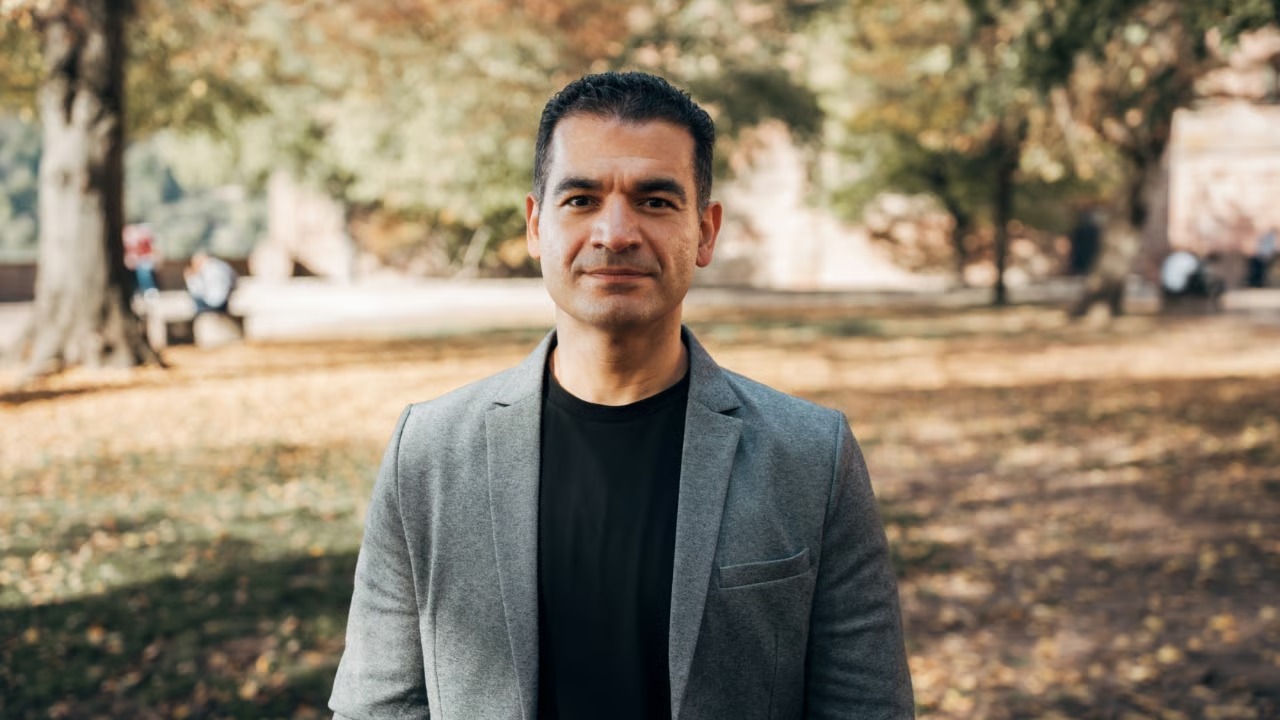
Who is speaking: Reza Mehman, host of the Project Mindset Podcast, shares his personal experiences and insights about mindset and goal achievement.
What is it about: This episode addresses the most common reason for failing to achieve self-set goals: the inability or unwillingness to take the very first step. Reza analyzes the underlying psychological reasons and presents three practical strategies for overcoming this obstacle.
Why is it relevant: Millions of people regularly set goals they never achieve. The problem often lies not in the goal itself, but in the mental barrier to starting. This episode provides immediately applicable food for thought that applies to every area of life.
Three key questions of the episode:
- Why do so many people fail to take the first step, even though they have a clear goal?
- What psychological barriers stand in the way of getting started?
- How can the first step be made as easy as possible?
Table of contents
- Introduction – Why the first step determines success or failure
- Summary – The core message in brief
- context – Background to the episode and the key questions
- Topics and classification – Overview of the main topics
- Key messages – The most important findings of the episode
- Frequently Asked Questions – Answers to the most important listener questions
- Highlight quotes – The most striking statements from the episode
- Transcript – The full episode to read
- Keywords – SEO-relevant keywords
- Names and terms – Key references at a glance
- Quotable passage – For sharing and quoting
Topics and classification
1. The formula for failure
Reza Mehman makes it clear that there is no guaranteed formula for success, but there is a guaranteed formula for failure:not taking the first step. Those who never begin can never arrive.
Keywords: Not reaching goals, avoiding failure, first step
2. Psychological barriers to starting
The reasons for hesitation are manifold: comfort zone, fear of setbacks, and fear of being seen. These mental blocks prevent people from even starting.
Keywords: Leaving your comfort zone, fear of change, mental barrier
3. Three strategies for the first step
Reza presents three practical approaches. Keep the first step in perspective. Treat it as the simplest step. Let go of the idea of a lifelong commitment.
Keywords: Achieving goals, Getting started made easy, Making decisions
4. Practical examples from everyday life
Examples include contacting podcast guests, changing jobs and taking up a hobby. Reza shows how simple the first step can be.
Keywords: Career change, courage, starting a new hobby, writing a job application
5. Mindset Principles as a Reference Work
Reza introduces his Mindset Principles, a collection of insights from almost 80 podcast episodes. At the time of recording, it was available at projectmindset.de.
Keywords: Mindset principles, personal development, calibrating mindset
Key messages
- There is no universally valid formula for achieving goals 100 percent, but there is a formula that is guaranteed to lead to failure.
- The number one reason for failure is not taking the first step.
- Comfort zones, fear of decline, and fear of visibility are the most common reasons why people don’t start.
- The first step shouldn’t be put on a pedestal. It’s usually much easier than you think.
- The first step is actually the easiest task in the entire process of achieving the goal.
- Making a decision does not mean making a lifelong commitment.
- You can always change direction after three or six months if something isn’t right.
- The greatest journey begins with the first step, but only if you actually take it.
- Behind many seemingly great deeds lies often just a simple action, such as sending an email.
Frequently Asked Questions
Why is the first step so difficult?
The first step feels difficult because we mentally overestimate it. This is compounded by our comfort zone, fear of a worse outcome, and worry about what others might think. However, these barriers primarily exist in our minds and can be overcome through conscious rethinking.
What is the formula that guarantees you won’t achieve your goals?
The formula is simple: don’t take the first step. Anyone who never starts writing an application, trying a new hobby, or making a decision will 100 percent fail to reach their goal.
How can I make the first step easier?
Reza Mehman recommends three strategies: First, don’t put the first step on a pedestal. Second, realize that it’s the easiest of all the steps to come. Third, understand that not making a decision means a lifelong commitment.
What does the comfort zone have to do with taking the first step?
The comfort zone is one of the main reasons why people don’t start something new. Everything seems easy and comfortable, and the idea of experiencing stress or uncertainty through change prevents many from taking the first step.
Do I have to stick with a decision forever?
No. Reza emphasises that a first step is not a lifelong commitment. After three or six months, you can change direction if it does not feel right. This realization takes much of the perceived weight out of the first step.
What are the mindset principles of Project Mindset?
The Mindset Principles are a growing collection of insights that Reza Mehman has compiled from nearly 80 podcast episodes and conversations with guests. They are available at projectmindset.de and serve as a reference for personal development and mindset calibration.
Does the principle of taking the first step apply to all areas of life?
Yes. Reza gives examples from work, sports, hobbies, and personal projects. Whether changing jobs, joining a club, or writing a book: the principle that the first step is the crucial one applies universally to every goal.
Highlight quotes
“However, there is one formula that I believe in 100%, and that formula is doomed to failure if you don’t take the first step to achieve your goal.”
– Reza Mehman
“I simply send an email, politely asking if the person has time to talk to me about their mindset. And then the person either agrees, declines, or doesn’t reply at all. But that’s all there is to it.”
– Reza Mehman
“Taking the first step is actually the easiest decision of all the things that are yet to come.”
– Reza Mehman
“I am also aware that I am not making a commitment for my entire life.”
– Reza Mehman
“The greatest journey begins with the first step. That’s such an overused quote from Confucius, which I actually find very good. But the journey only begins when you actually take the first step.”
– Reza Mehman
“It’s simply, I’m just taking the first step now.”
– Reza Mehman
The full conversation
Hi everyone and welcome to Project Mindset, the channel for all those who know for sure that with the right mindset, anything is possible. In my opinion, there’s no one-size-fits-all formula for achieving any goal you’ve set for yourself in life. Anyone who claims otherwise—and I certainly am—is simply lying. If someone says, “This is how you’ll 100% get your dream job,” “This is how you’ll 100% get your dream relationship,” “This is how you’ll 100% get this and that,” and so on, then I definitely don’t believe it.
However, there is a formula I believe in 100%, a formula that is doomed to failure if you don’t take the first step towards achieving your goal. It sounds incredibly simple, but I’m 100% convinced that many people fail to reach their goals simply because they don’t take that first step. Let me give you an example. I’m frequently asked, even by people close to me, how I attract my podcast guests. And I have to admit, there’s no magic to it.
I simply send an email, politely asking if the person has time to talk to me about their mindset. I would be extremely happy and very grateful if the person took the time. And then the person either accepts, declines, or doesn’t reply at all. But that’s all there is to it. So, as I said, no magic involved. The interesting thing is, the only thing I do—and this is essentially the first step I take to achieve a goal—is simply send out an email.
Why the beginning is often missing
And many fail at this first step. Whether they’re looking for a new job or want to start a new hobby. They fail at the very first step of saying, “Wow, I’ve kind of intended to do this, but I’m not going to write the application, I’m not even going to make a CV, I’m not going to start my new hobby, I’m not going to join that club I’ve wanted to go to for ages,” and so on and so forth. They fail at the first step.
Of course, it happens to me from time to time that I set myself a goal and then somehow can’t manage to take the first step because I’ve put up some kind of mental barrier. I’ve also thought about why that is, why I don’t actually take the first step when I’ve set myself a goal. There are, of course, various reasons. I think one reason is familiar to all of us: the infamous comfort zone,which we’re reluctant to leave because everything is so easy and it’s so simple to introduce a little stress, even if it’s for a job change.
Fear of making the wrong decision
I don’t even know if I’ll like the new job. So that’s potentially a second reason. You might even be afraid that you’ll fare worse after the decision you’ve made, after the step you’ve taken. So there are many different reasons. One reason I find very interesting is that when you decide to do something new, to take that first step, it’s somewhat visible, and you’re in the public eye; friends and relatives find out.
And what if they somehow find out that I changed my mind after a while, or didn’t do it after all? There are so many reasons why someone might not want to take the first step. The interesting thing is, and I mentioned this at the beginning, there really is a formula that prevents me from reaching my goal. And that’s the reason, or rather, the point, why I don’t take the first step. I’ve also been thinking, hey, how can I make that first step as easy as possible?
Make the first step smaller
And that’s basically my mindset message to you today. How do you take that first step, no matter what your goal is—for example, a new goal in a relationship, starting an apprenticeship, or whatever it may be? How can I take that first step without it feeling like an insurmountable mountain that I can’t possibly climb because it’s so high? And that’s exactly the first point to say. Hey, it’s just a single step I have to take.
Or, to stay within the context of my podcast, if I want to talk to someone, then all I have to do initially is write an email. If, for example, I want to start exercising, join a club, then all I have to do is pack my things tonight, pack my gym bag, and go. I haven’t actually done anything yet, except go. And that brings us to the second point. The first point is that we don’t place the decision to take that first step on a pedestal.
Continued
But the second point—making ourselves aware that taking the first step is actually the easiest decision of all the things that are yet to come. In the podcast example, when I contact a guest, a potential guest, I haven’t yet coordinated anything with the guest, with my videographer, I haven’t recorded anything, I haven’t edited anything. That means all the stress, all the effort, only comes later. Or when I’ve packed my gym bag and gone for my first workout, I haven’t actually trained at all.
That means taking the first step is super easy. Only after that come the difficult parts. But the important thing is, you have to take that first step to even get there. So I’m aware of that. I don’t put my first step,or the decision to take it, on a pedestal; I realize that it’s actually the easiest step, the simplest decision. And the third point in this context is that I’m also aware that I’m not making a lifelong commitment just yet.
New experiences can change direction
For example, if I’ve decided to do something new, like start a new hobby, and I’ve done it for three months, been consistent, trained, and whatever else is involved, and then after three months I discover, “Hey, I’ve really tried it and it’s just not for me,” then that’s just how it is. I don’t have to do that hobby for the rest of my life. Or if I’ve changed jobs and I’m totally unhappy, and it wasn’t the right job change after all, then I simply change jobs.
These days, it’s relatively easy to get a new job. You don’t even have to fill out an application form anymore, print it out, and send it off. Most of the time, it’s just a CV you put together, and it doesn’t look so bad if I start a new job after three or six months, or even if I’ve changed jobs again. I’m aware that making a decision, taking the first step, isn’t a lifelong commitment.
Starting without a lifelong commitment
It’s simply a matter of taking the first step. That was essentially my mindset message for today, and I think, to sum it up, the greatest journey begins with the first step. It’s such an overused quote from Confucius, which I really like. But the journey only begins if you actually take that first step. So, that’s it for today. I have a personal note today. As I mentioned in the first few podcast episodes, I’d like to summarize all the mindset insights I’ve gained throughout the podcast, especially from conversations with my podcast guests.
I’ve been wanting to summarize these for a while now, to just write them down. I’ve called them Mindset Principles for now – a bit of a grandiose term, but I couldn’t think of anything better at the moment. You can visit my website.www.projectmindset.de.There, under the heading “Mindset,” I’ve compiled and summarized all the principles that I’ve come to understand and recognize in the last 80 or so episodes.
Mindset Principles as an ongoing collection
The list you’ll find here is, of course, far from complete. But it’s a start; I want it to be a kind of ongoing document. I also refer back to it every time I talk about a mindset principle, like gratitude, for example. I discussed it in podcast episode X, or we talked about it with the guest. Here’s the link. I want to create a kind of reference work of these mindset principles, something you can always refer back to, remind yourself of, and calibrate your mindset a little bit.
Hey,I’ve already read and heard something about this topic, so you can look it up there. That’s really it for today. If you enjoyed today’s podcast episode, please give it a like and subscribe to the channel, because that’s the only way Project Mindset can continue to grow. Thank you so much for listening. Until next time, and until then, don’t forget, mindset is everything.
This transcript was automatically generated using Whisper AI and may contain occasional errors.
Keywords
Tags: achieving goals, first step, leaving your comfort zone, mindset, avoiding failure, getting started, mental barrier, career change, personal development, motivation, project mindset, Reza Mehman, making decisions, self-development, overcoming procrastination
Names and terms
Reza Mehman, Project Mindset, Confucius, comfort zone, mindset principles, projectmindset.de, podcast episode 77, CV (resume), commitment, mental barrier
Quotable passage
There is no universally valid formula for achieving one’s goals, but there is one formula that is guaranteed to lead to failure: not taking the first step.
The first step is actually the easiest of all tasks on the way to the goal, because only after that do the really strenuous things come.
Those who don’t put the first step on a pedestal and realize that no decision is a lifelong commitment can overcome any mental barrier.
The greatest journey begins with the first step, but only if you actually take it.
You can find further suggestions for achieving your goals at Project Mindset.
Prefer listening? Explore the original Project Mindset podcast recordings.