Torch, the Heidelberg rapper and pioneer of German-language hip-hop, talks about identity as a mosaic, the philosophical core of hip-hop, and the power to trust one’s own ideas.
Introduction
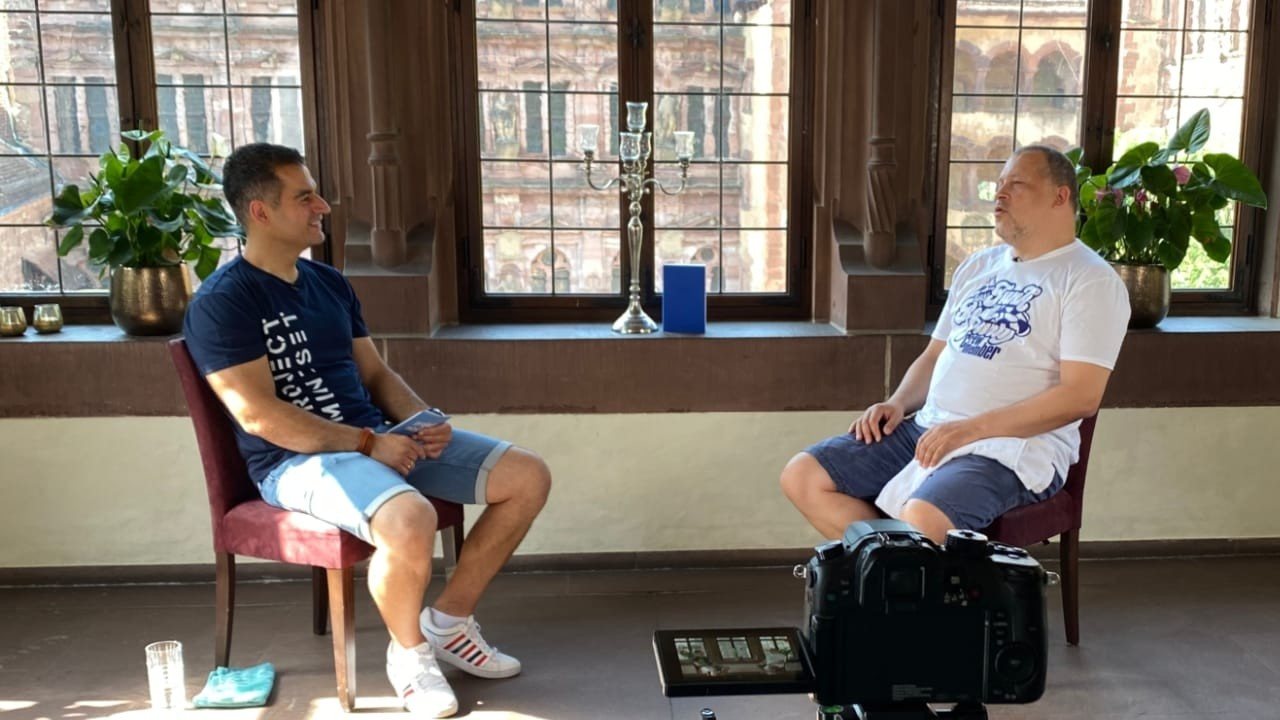
Torch, the Heidelberg rapper and pioneer of German-language hip-hop, discusses identity, mindset, and the philosophy behind hip-hop in the Project Mindset podcast. In this conversation with host Reza Mehman, Torch explains why identity isn’t a clear picture, but rather a mosaic of many layers. He looks back at the cultural influence of “Fremd im eigenen Land” (A Stranger in My Own Country), explains why hip-hop is first and foremost an attitude and not a musical style, and describes how sampling music led him to become a philosopher and researcher. It becomes clear that those who define themselves solely by titles or professions are missing the point. The most important mindset, according to Torch, is to trust one’s own ideas and not let others’ labels derail one’s path.
Summary
1-sentence version: In the podcast interview, Torch explains why identity is a multifaceted mosaic, hip-hop is a philosophical research approach, and confidence in one’s own ideas is the most important mindset.
3-sentence version: Torch, one of the pioneers of German-language hip-hop, describes in the Project Mindset podcast how hip-hop made him not a musician, but a philosopher and researcher. He explains why identity is not a clear picture, but a mosaic that changes throughout life. His most important mindset: trusting your own ideas, even if nine out of ten things fail.
5-sentence version: Torch, whose real name is Frederik Hahn, is one of the founders of the Heidelberg hip-hop group Advanced Chemistry and, with his album “Blauer Samt” (Blue Velvet), one of the defining voices of German-language hip-hop. In conversation with Reza Mehman, he explains why he has never considered himself a musician, but always a researcher and experimenter. For him, hip-hop has always been a philosophical stance: asking questions, challenging boundaries, inventing his own paths instead of adopting pre-existing definitions. Identity, according to Torch, is not a fixed image, but a mosaic of many layers that constantly changes with age and experience. The most important mindset in his life has been to trust his own ideas, persevere through setbacks, and remain flexible, disciplined, and curious.
Context: Who, What, Why
Who is speaking: Reza Mehman is the host of the podcast “Project Mindset” and a longtime fan of Torch. Torch (Frederik Hahn) is a rapper, graffiti writer, DJ, entrepreneur, and co-founder of Advanced Chemistry. He was one of the first to freestyle in German and is considered a pioneer of German-language hip-hop. His solo album “Blauer Samt” (2001) is one of the most important albums in German hip-hop.
What is it about: The conversation revolves around identity, the mindset behind hip-hop, and the philosophical question of who one actually is. Torch explains his artistic approach, how he deals with setbacks, and his understanding of flexibility, discipline, and self-confidence.
Why relevant: In a time when many people define their identity through job titles and roles, Torch offers a deep, unconventional perspective on self-definition, creativity, and confidence in one’s own ideas.
3 key questions of the conversation:
- What is identity really if it is not reduced to profession or title?
- Why is hip-hop first and foremost a philosophical stance and only secondarily music?
- What mindset is needed to pursue one’s own ideas and endure setbacks?
Table of contents
- Introduction – Overview of the conversation and its central topics
- Summary – The conversation in 1, 3 and 5 sentences
- context – Who is speaking, what it’s about, and why it’s relevant
- Topics and classification – The main topics of the conversation
- Key messages – The most concise statements, directly usable
- Frequently Asked Questions – Answers to the most important questions about the conversation
- Highlight quotes – The strongest statements from the interview
- The full conversation – The edited transcript with subtitles
- Keywords – SEO-relevant Tags
- Names and terms – Consistent spellings
- quotable passage – Directly usable paragraph
Topics and classification
1. Identity as a mosaic
Torch explains that identity is not a clear-cut concept, but rather consists of many layers and changes throughout life. People with a migration background, in particular, develop a deeper awareness of this complexity through the constant need to explain their identity.
Keywords: Identity, self-definition, migration background
2. Hip-hop as a philosophy and field of research
For Torch, hip-hop is not primarily a musical style, but a philosophical approach: asking questions, challenging boundaries, and inventing one’s own definitions. Sampling, graffiti, breakdancing, and rap are expressions of a shared mindset.
Keywords: Hip-hop philosophy, sampling, creativity
3. “Strangers in their own land” and cultural impact
The song by Advanced Chemistry (1992) was a turning point in the German media landscape and opened doors for non-Germans in mainstream television. It addresses not only racism, but German identity itself.
Keywords: Stranger in one’s own land, Advanced Chemistry, German identity
4. Mindset: Trust your own ideas and endure setbacks
Torch’s most important mindset is to trust his own ideas, even if nine out of ten things fail. Resilience, self-discipline, and flexibility are the foundations of his path.
Keywords: Mindset, resilience, self-confidence
5. Blue Velvet: Art as a Question Mark
The album “Blue Velvet” and the accompanying book represent Torch’s refusal to provide clear images. Identity and art are question marks, not exclamation points.
Keywords: Blue velvet, art, question mark vs. exclamation mark
Key messages
- Identity is not a clear picture, but a mosaic of many layers that changes throughout life.
- Hip-hop is first and foremost a philosophical stance: asking questions, challenging definitions, inventing one’s own path.
- People with a migration background have an advantage due to the constant need to explain themselves: they engage more consciously with their identity.
- “Fremd im eigenen Land” (1992) was the first song to bring the question of German identity from the perspective of Afro-Germans and people with a migration background into the mainstream.
- Sampling is more than just using pieces of music: you can sample feelings, ideas and concepts and combine them into something new.
- Nine out of ten things fail. Success is the result of countless setbacks that others don’t see.
- The most important mindset: Allowing yourself to believe in your own ideas, even when others are working against them.
- Clear images create trust, but someone who stands by themselves with all their contradictions cannot provide a clear image.
- Rap is the most direct musical language: not hidden behind melodies, but direct and democratic.
- Identity is in flux. Who you are at 20 is different at 50 and at 70, and that’s perfectly fine.
Frequently Asked Questions
Who is Torch and why is he important to German hip-hop?
Torch, whose real name is Frederik Hahn, is one of the co-founders of Advanced Chemistry and one of the first rappers to freestyle in German. With the song “Fremd im eigenen Land” (1992) and the solo album “Blauer Samt” (2001), he is considered one of the defining figures of German-language hip-hop. He is regarded as a pioneer who understands hip-hop as a philosophical stance and a field of research.
What does “Foreign in My Own Land” mean in the context of Advanced Chemistry?
“Fremd im eigenen Land” (1992) was the first song to bring the question of German identity from the perspective of Afro-Germans and people with a migration background into the German mainstream. It addresses not only racism, but above all the question of who is considered German in Germany and who is allowed to define themselves. The song had an enormous social impact and opened doors for greater visibility of non-German people on television.
What is the album “Blauer Samt” by Torch?
“Blue Velvet” was released in 2001 and is Torch’s only solo album under that name. It was accompanied by a book that delves deeper into the album’s philosophical underpinnings. The album represents Torch’s refusal to provide clear imagery: blue and velvet, two seemingly contradictory concepts, are juxtaposed to form a question mark, much like hip and hop merge to create hip-hop.
Why did Torch only release one solo album?
Torch himself questions this question: Why make multiple albums? For him, “Blauer Samt” was a self-contained work. He doesn’t generally commit to a single role: sometimes rapper, sometimes DJ, sometimes entrepreneur, sometimes poet. This refusal to be pigeonholed is part of his mindset.
What does identity mean according to Torch?
According to Torch, identity is not a clear picture, but a mosaic of many layers. You are a different person to your children than to your colleagues, a tax ID number to the tax office, and a frontman in rap. This complexity is not a weakness, but the reality of all people. Furthermore, identity is in flux: it changes with age and experience.
According to Torch, why is hip-hop a philosophy and not music?
For Torch, hip-hop is a field of research and an attitude. It’s not about learning an instrument, but about playing with musical styles, asking questions, and inventing definitions. Much like jazz liberated instruments from their fixed uses, hip-hop liberates the concept of what music, art, and creativity can mean.
What mindset does Torch recommend?
The most important mindset for Torch is allowing yourself to believe in your own ideas. Many people forbid themselves from having ideas before they even allow them to exist. This is complemented by self-discipline, ambition, and flexibility. Resilience is crucial: nine out of ten things fail, but those who persevere and keep going will eventually reach their goals.
What does sampling mean in Torch’s understanding?
For Torch, sampling is far more than simply using musical snippets. You can sample feelings, ideas, concepts. “Blue Velvet” is itself a sample: blue, representing something cool, and velvet, representing something soft, are combined to create something new that is neither element on its own.
Why doesn’t Torch live in Heidelberg anymore?
Torch has moved to Zurich, but still considers Heidelberg his main place of work and his home. The jams and the hip-hop archive take place in Heidelberg. Physically, he has left the city, but mentally, never: As part of his generation, he helped shape a particular image of Heidelberg, which has thus become part of his identity.
What does the quote “I am this, therefore I am nothing” mean?
Torch heard this sentence in a television interview with Klaus Kinski and sampled it for the album “Blauer Samt” (Blue Velvet). The sentence describes the contradiction every artist faces: those who want to be someone in the world must present clear images. But those who embrace themselves with all their contradictions cannot present a clear image. “I am this, therefore I am nothing” is, for Torch, the most honest self-description.
Highlight quotes
“I’m a musician who isn’t a musician.” – Torch
“Identity is a mosaic. Your problem is recognizing your clear picture from these mosaic pieces.” – Torch
“I am this, therefore I am nothing.” – Torch (Klaus Kinski sample on “Blue Velvet”)
“Nine out of ten things don’t work. People only see what works well, but you know the struggle yourself.” – Torch
“The most important thing is to allow yourself to believe in your own ideas.” – Torch
“Clear images create trust. But if you stand by yourself with all your contradictions, a clear image is difficult.” – Torch
“Hip-hop allows me to show all of that. The categories aren’t so restrictive.” – Torch
“Rap is direct. It’s not hidden behind melodies, it’s just pal in your face.” – Torch
“The self encompasses not only multiple people, but sometimes one also speaks of a movement.” – Torch
“I go on stage, just like I take two records and sample them. Everything you are is right here.” – Torch
The full conversation
Introduction: The Essence Researcher
Torch:
Take me as a teenager who spends months scouring record stores and vinyl records, listening to every kind of music imaginable. Rock, jazz, classical, you listen to it all, soundtracks, every kind of music, all Iranian music, you listen to it all, you study it. You don’t just listen to it briefly, you listen to the whole thing, you study the structures, you listen to everything, in order to then pick out a small sequence where you think, that’s the substance, that’s the essence.
So what are you then? An essence researcher. You try to figure out where the power lies, and then you gather up all the elements you think hold the power. You collect them, build like Frankenstein. From these dead parts, from these musical corpses, you try to construct a clunky new piece of music, because you’re not a musician, which then somehow comes alive in some unheard-of way. And then, even though you’re a brilliant researcher who’s spent all day exploring music, you stand there and try to act totally ignorant, pretending: “Yeah, I’m just here, I don’t know anything about anything.”
Intro and Welcome
Reza Mehman:
Hi everyone and welcome to Project Mindset. This channel is for all those who know that with the right mindset, anything is possible. Today we have an interview I’ve been really looking forward to. It’s with Torch, a musician and rapper from Heidelberg. I’ve been a huge fan of his since my early days. He released an album in 2001 called “Blauer Samt” (Blue Velvet). I’ve been listening to it since 2001, and that says something. It’s been with me my whole life.
And today I want to talk with Torch about a topic I think about a lot: my own identity. Who are we, really? I don’t find that question easy at all. Many people define themselves by their job, the roles they play, the title they hold. But I think that’s far too simplistic, and that’s exactly what I want to discuss with Torch. Enjoy the podcast.
To begin: “Blue Velvet” and the question of identity
Reza Mehman:
Torch, thank you from the bottom of my heart for being here today. I’m a huge fan of yours and it’s a real honor for me that you’re here.
Torch:
Thank you, thank you for the invitation.
Reza Mehman:
Yes, absolutely. Well, maybe just to give some context. In 2001 you released an album, “Blauer Samt” (Blue Velvet), which has actually been with me since then. I still listen to it regularly. Interestingly, I keep discovering new favorite songs from the album. I feel like my taste in your album changes a bit with each phase of my life. And I can honestly say that before I even had the idea of asking you to do a podcast, I was listening to it regularly.
Then at some point I rediscovered a song on the album, namely the theme or song “Who am I?” I’d like to talk to you about that in a moment. I find it an incredibly difficult question, who one is. Many define themselves by a job, by their titles, by what they do, their roles. But I believe there’s another approach. I’d like to divide our conversation into shorter sections about the musician Torch, but then much more about the person Torch, Frederik Hahn, and his mindset.
Perhaps we should start with your music career. In 2001, the German rap album that I like the most came out. The question I asked myself was: You were one of the first German-language rappers, you were definitely the first freestyle rapper.
Freestyle in German
Torch:
I was freestyled in German when the others were writing in English. That’s for sure, exactly, absolutely.
“A stranger in my own country”: Societal influence and German identity
Reza Mehman:
And you also released a song with the group Advanced Chemistry that won an incredible number of awards, “Fremd im eigenen Land” (Foreign in My Own Country). I think it had a real impact, even on the culture we have here.
Torch:
“Foreign in My Own Land” has had an incredible impact on society as a whole. Many people have told me that this song gave them the idea to overcome their limitations or to believe in themselves, and that it was through this song that they became managers, politicians, or something similar, because they previously thought they couldn’t possibly rise above their assigned place in Germany.
“Foreign in My Own Land” is the first song to address this theme in this style. It’s not just about racism—it’s often reduced to racism—but it’s about German identity. Of course, there have been books on the subject before, but in this case, it’s Afro-Germans and Germans with a migration background who are presenting their perspective. Not that others are imposing labels on them, but rather that they are defining themselves and expressing their own identity.
Before we exploded into living rooms on mainstream television in ’92 with “Fremd im eigenen Land” (Foreign in My Own Country), there weren’t many non-Germans on TV. The image of Germans was very homogenous. When I was little, there was Roberto Blanco and the dancer from Boney M. It’s only since “Fremd im eigenen Land” that you’ve seen so many non-Germans on television. Before that, there weren’t. Yes, and then we came along and said, here we are. We opened the door for entire segments of the population.
Hip-hop as a philosophy: Musicians without instruments
Torch:
I found out way too late that I have a music career. I actually wanted to be a musician, I don’t even know if I ever wanted to be one. Being a musician was never how I saw myself. I started with hip-hop when I was 11 or 12, which means breakdancing, dancing, graffiti, and scratching.
Reza Mehman:
Actually, what hip-hop is. It’s not just the singing part.
Torch:
Exactly, and the singing came last for me. I worked through all the elements beforehand. I’ve never really seen myself as a musician. Playing an instrument or reading music are not things I can do. I’m a musician who isn’t a musician.
And that’s precisely why I liked this project, or Project Mindset, because hip-hop has a completely unique mindset. Like, hey, you can be a musician even without being a musician. I was born in ’71, I started school in ’77. Of course, there were many movements before that had already loosened things up, the ’68ers, the hippies. But hip-hop brought something else to the table that we were all missing, namely a certain attitude.
For example, I didn’t want to rebel at all. Many people often saw it as rebellion against society. My generation, we didn’t want to be against society; we wanted to be part of it. Or rather, we were actually part of society, but people told us we weren’t. And for me, hip-hop was the opportunity to bring everything I had with me—background, wealth, culture, knowledge, skills—that had no place in the rigid society of the time. In hip-hop, it wasn’t just in demand, it was the thing.
The philosophical core of hip-hop
I actually became a philosopher through hip-hop, because the first thing I encountered in hip-hop was a philosophical approach. For example, what is music? How do you learn music? When do you become a musician? People hardly ever ask themselves these questions. They went to lessons, learned guitar, became guitarists, and I stood there thinking, what’s wrong with this?
When we say that hip-hop isn’t music, it’s not because it’s noise or not good enough, but because it’s not conceived that way at all. It’s a philosophical concept. You can’t reduce it to music. It’s an approach to music, similar to jazz. It’s not about which musical styles result from it, but about the completely new approach to the instruments. Jazz had instruments that were totally stuck in their ways, wind instruments that were used for military marches, and jazz liberated them. And that’s the same spirit as hip-hop.
It’s all about mindset; it’s a philosophical approach.
Barriers, experimentation, and graffiti as art in public space
Reza Mehman:
We’re talking about 20 or 30 years in the past, when you took your first steps and overcame those barriers. In comparison, where do you see barriers today that need to be broken down, in hip-hop, in music?
Torch:
Breaking down barriers sounds like I was thinking about where I need to go and where I need to push. It wasn’t really about a message at all. With “Strangers in Their Own Land,” we had a message because it was something that was part of us, something strongly connected to our identity, and something that simply wasn’t being talked about in Germany at that time.
But the whole point of hip-hop was experimentation. For me, hip-hop was a field for experimentation where I didn’t really know what I was going to release, but rather where I experimented to figure out what I wanted to do.
Painting graffiti, for example, was exactly the same. Back then, I painted the first train with a group in Heidelberg, in early ’87. Hip-hop was also about the philosophical question: what is art? Because it was also said that art is when you learn the techniques or go to art school. The painting happens on a specific surface, nothing to the left or right of it, and then it hangs in a gallery. And we hip-hoppers are the guys who think, OK, that’s one way, but does it have to be this way? Especially when you have different cultural backgrounds and different ideas that just don’t fit in.
Graffiti is changing public space
Graffiti happens in public spaces. You go and paint a train or a wall, declaring the train your canvas and the tracks your gallery. Or even better, the city, the entire public space, is your gallery. Understanding art not just as a product, but as a way of life. The way we style ourselves—a slightly askew cap, shoelaces untied from Dad’s shoes—suddenly it’s Dying Well. The attitude of looking at what we can experiment with, how we can flip this. Style is already art.
Expectations of art: From me, not for you
Reza Mehman:
Do you have expectations for your art? In the sense that you went into “Stranger in My Own Country” with the expectation that this would change things?
Torch:
Great question. I think “Blue Velvet” is perhaps the closest I can come to understanding it. It’s fundamentally less about people and more about coming from within yourself. The most important thing isn’t from me to you, but from me, out of myself. That, I believe, is the most crucial step.
The idea behind “Blue Velvet,” for example, wasn’t to make a rap album and then write a book. The basic idea was to create a work that would be released simultaneously as an album and a book—something not clearly defined. Any businessperson would ask, “Who’s the target audience?” The artist comes along and says, “I don’t care.” It’s about the idea.
As a hip-hop artist, I don’t see myself as a musician or a painter; I am all of that. I’m an entrepreneur. As a hip-hop artist, you’re an entrepreneur; you’re not an employee, you plan businesses, whether it’s a jam, which is what we do. Funkboat Party, 360-Degree Summer Jam—these are events that happen every year where people from all over Europe come together to celebrate hip-hop culture in all its forms.
Reza Mehman:
Do you already distinguish between artists and entrepreneurs?
Texts between literature and music
Torch:
Yes, but I don’t know exactly where the line is drawn, and I don’t even want to know. For example, when I’m writing, what am I then, an author? While I’m writing, I’m just a guy trying to grasp his feelings at 5 a.m. I’m completely alone; it’s like a meditative trance. It doesn’t get more intimate than that. And then you write these texts to tell everyone about them. That’s completely insane.
Then you go into the studio because you’ve decided to rap this. And at this point, you absolutely have to think about an audience. It’s about encoders, decoders. You have to imagine your audience. Ideally, you shouldn’t think of specific people, because you’re not a service provider. You’re creating something that didn’t exist before. A new world is taking shape. You imagine a listener who might be interested, a friend you might not have yet, but would like to have.
I do everything myself. Records, I do everything myself. In the beginning there was a record company collaboration, but I arranged it so that the rights revert back to me.
“Why only one album?” and the question behind the question
Reza Mehman:
You released such an amazing album, “Blauer Samt” (Blue Velvet), back in 2001, and since then you haven’t released any more albums under the name Torch. Why only one album and that was it for a while?
Torch:
I hear that question too. And then there’s the question, when’s the next album coming out? I’m thinking about that myself. Not why don’t I make another album, but why do people think they have to make multiple albums? Hmm, yeah, why do we make albums at all? That’s the first question.
Reza Mehman:
I notice you’re asking some very fundamental questions.
Torch:
What I’m really trying to explain to people is that even as a child, this question, this experimentation, was paramount for me. Figuring out what music is, not by playing with musical instruments, but by playing with musical styles. That’s hip-hop. You take different musical styles and play with them, with their elements. That’s being an explorer, you are an explorer, that’s a field of research.
You’re looking for samples. What is a sample? People have learned that a sample is a piece of music. But who says that’s all it can be? I can also sample the title “Blue Velvet.” I can also sample feelings. The idea that blue is something cool, and velvet is something soft, is a bit contradictory. And that’s the joke: you collect blue and collect velvet and put it together, and then it’s blue velvet, and what is it now? A question mark.
That’s what the book is about. It’s about philosophy, it’s about asking questions, not just throwing around exclamation marks. Hip-hop is fascinating.
Rap as direct language
Rap is a clear, direct language. It’s not hidden behind melodies, it’s not hidden behind verse structures, it’s just plain blunt. And that’s why some people say rap isn’t music; maybe they’re right, just not in the way they think. It’s definitely democratic; anyone can participate directly. You don’t have to go to a conservatory, you don’t have to follow those typical, historically established paths to gain recognition. All those things were founded by popes and kings. And that’s exactly how it’s performed, from the top down, the audience remains silent. And rap has something anarchistic about it, but also its own order.
Failure, resilience, and acknowledgments in the book
Reza Mehman:
Right at the beginning of the book, you wrote: “I thank everyone who has stolen from me, cheated on me, betrayed me, hurt me, sabotaged me, copied me, boycotted me, or forgotten me. You have shown me that one must always work hard on oneself and one’s character.” Please explain that.
Torch:
My life, if I had to sum it up. I’ve achieved an incredible amount. By the time I was twenty, we were already on TV, had successes, toured, and had our own TV show. I’ve achieved far, far more than I could ever have imagined. I never even wanted to be a musician. This hip-hop scene, where I can try everything, even self-taught, self-empowered, where I can pull myself up and get where I want to go, was simply fascinating.
And then at some point you say, “Ah, OK, I have a career, I didn’t even know that.” The truth is, and this is true for many people, you haven’t achieved 9 out of 10 things. People only see that you’re the first, that you’ve made it, but you yourself know that your life, despite having achieved so much, is actually a collection of failures, setbacks, and disappointments.
“Foreign in My Own Land,” as I said, was the first song on this topic. It resonated incredibly and remains extremely important to this day, but it’s never won an award. We’re still waiting. It’s an incredible struggle because there’s no set path for what we’re doing. Everything we create, we simply put out into the void, and people have to deal with it. And you get copied, you get held back immensely. Only others see what works well, but you yourself know the struggle.
Living with setbacks
Not letting these setbacks get you down or break you emotionally – that’s what I’ve learned. You can’t let yourself get distracted; you have to stay focused. Resilience, ultimately. Every boxer will say that it’s not the punches you dish out that win you, but the punches you can take.
Reza Mehman:
Perhaps the following sentence should be added: “I admire everyone who can forgive.” Does that mean you’re not good at forgiving?
Torch:
And who is good at that?
Reza Mehman:
I’ve learned by now that I no longer forgive things in order to forgive the other person, but so that I can be more relaxed.
Torch:
Exactly, but we’re not machines. Emotions—we’re emotional beings, after all—and staying cool, being a cool wall, yet still emotional, that’s a lifelong challenge. I think it’s about not letting negative emotions distract you, not letting them derail you. That’s distraction. You have to stay true to yourself. But I wrote that 20 years ago, when I was younger. At 50, I’ve definitely come a long way.
When you’re younger, you’re more easily swayed by labels. You haven’t achieved much yet, you don’t really know what you want, and then someone tells you you can’t do that, that you’re this or that. And you want to fight back, but you don’t know, maybe they’re right. Whereas, when you’re 50, you have life experience. You know who you are because you’ve walked a path. At that age, you are more in touch with yourself.
Who am I? Identity as a mosaic
Reza Mehman:
You’ve already given the perfect introduction to the topic of “Who am I?” Many people define themselves by their job, their titles, their employer, the roles they have: father, son, daughter, mother. At some point, I realized I wanted to be authentic, but I can’t be equally authentic in every aspect of my life. For my son and daughter, I’m a role model in some ways, and I take on a different role there than at work or with friends. How did you approach this question? What would you say to your children if they asked, “Hey Dad, who am I, anyway?”
Torch:
Yes, I have the whole song about it, and I even have a separate explanation for it. It’s about how many people reduce themselves, limiting themselves to their job or doctorate. It’s nice to be that simple and content with that. I don’t think it’s that simple. You first have to understand that identity isn’t something simple. Identity has many layers because you’re different with different people. You’re a different person with your children than you are at work. At the tax office, you’re a tax ID number. That means identity is a mosaic.
And now you have the problem of discerning a clear picture from all these mosaic pieces, or knowing which part is most important to you. I think that people who come from different cultures—my father is from East Prussia, my mother from Haiti, I grew up here in Heidelberg—have a harder time at first because we have to explain ourselves. But that’s our advantage. Because we have to explain ourselves, we engage with it much more consciously every day.
The complexity of identity
The funny thing is, nobody has a clear-cut identity; they have a multifaceted one. It’s just that they aren’t consciously prompted to grapple with it. And that’s why we have an advantage. If you’re constantly told that this or that isn’t German, you naturally start asking, “What is German?” Which isn’t a question Germans ask themselves, because they simply say, “It is what it is.”
For me, it’s quite clear: identity has many layers. And as you’ve noticed yourself, it changes; things that are important to you at 20 are different at 50. It’s complex. The difficulty is that people want to reduce this complex work of art to a single, clear picture. And that’s what this is about, ironically. People want to know what blue velvet is, what hip-hop is. And the funny thing is, you’re tempted to offer clear images. Rappers, record labels, we all offer clear images. But that’s not hip-hop.
Blue Velvet deals with precisely that. Blue and velvet isn’t a clear image. It’s actually the opposite of a clear image. You hear “Blue Velvet” and wonder, what is that? It’s two things that don’t seem to fit together, much like my supposed origins. They don’t fit together, but they’re mixed together like a mixtape with a funky dude who’s now performing in real life. Just as hip and hop become hip-hop, blue and velvet become “Blue Velvet.”
Feelings cannot always be categorized.
And it’s about feelings. We’re often tempted to define feelings precisely: are you happy, are you unhappy? I believe that most of the time, we’re neither clearly happy nor clearly unhappy. Something or other. And that’s the thing. Business always works with clear images. They sell you happiness or they sell you unhappiness. And you know yourself, when people sell you clear images, I’m wary.
Reza Mehman:
You wrote something really beautiful: Clear images create trust. But if you stand by yourself with all your contradictions, a clear image is difficult.
Torch:
That’s it. That was the point. And interestingly, a sentence you found on Klaus Kinski’s album. It’s from a TV interview. I recorded it on VHS back then and listened to the whole thing, an hour and a half. What I did was, I didn’t watch the interview, I listened to it. I heard the images, not the sounds. And then I heard this sentence, completely out of context: “I am this, therefore I am nothing.”
Exactly, because then it became clear to me that if you want to be someone in the world, you have to sell clear images, sell exclamation marks—people understand that, clear images create trust. But if you’re true to yourself, it’s not a clear image. We all know that nobody is 100% masculine or 100% of anything. You are not a clear image. And you have to make peace with that. It’s in flux.
Reza Mehman:
If I can put it in your words, instead of an exclamation mark, use a question mark.
Why Rap Needs Its Own Language
Torch:
And that was it. Especially in rap, rap is a clear language. Why did we need rap now? And the other question: why is rap the most listened-to music in the world? Musicologists have exhausted all sorts of possibilities, and then suddenly some weird nonsense comes along that pushes everything else aside. Because rap is something that didn’t really exist in the mainstream music scene before. A clear, direct language. Pal in your face. And when I organize a jam, every rap star knows that they could be battled by some guy in the audience at any time. That’s part of the culture. There are no guarantees.
Two sides of the same coin: Hip-hop as yin and yang
Reza Mehman:
I think that’s amazing, this topic—two sides, when you say something is beautiful, there’s also something ugly about it, and that’s true at the same time. It took me a long time to understand that. When did you understand it?
Torch:
The fact that you simply accept both as one thing, that’s what people need to understand. The name hip-hop, what does that mean? It can mean anything. But why does it persist as a name? Because it’s open to interpretation and it’s perfect. It’s hip and hop. Rather than being one thing, hip-hop has that yin-yang quality. It’s something contradictory and constantly struggling with itself.
Reza Mehman:
What kind of person do you see yourself as?
Torch:
You still want to go on with this “Who am I?” I’m someone who’s extremely extroverted. I’m outgoing, I grab the mic, go on stage, yo, what’s up, baba bam. That wasn’t easy in society back then. When I was growing up, self-praise was more like, “Self-praise stinks,” you didn’t laugh at your own jokes. Sorry, that ‘s me.
But at the same time, I’m also a nerd and an observer. Simultaneously. That’s the thing. And that’s why hip-hop was my thing, because I’m not just a frontman, but also a scholar. I’m not just a musician, but also a scientist and a historian. That’s the joke. I am all of that, and hip-hop allows me to show all of that because the categories aren’t so restrictive.
Identity as development: Who you want to be, how you should behave
Reza Mehman:
Let’s say I want to develop in a certain direction, become a certain person, have certain qualities that I don’t yet possess. I once heard that if you have a vision of how you want to be in the future, you should act like it today. I wanted to start a podcast and I’m beginning with the first episode, but I’m not really a podcaster yet. It was already difficult for me to act as if I were a podcaster.
Torch:
When do you become a podcaster?
Reza Mehman:
I don’t know it.
Torch:
That’s exactly the point. If there’s no clear definition of when you truly are someone, you can be someone before you actually are. That’s the thing. We cling so tightly to definitions created by other people, by people who invented them. You have to understand that you can simply invent anything yourself. What is a pope, what is a king, what is a university? We’ve internalized these concepts so much that we don’t even grasp that someone invented them on a whim. That ‘s where hip-hop is at. We’re not musicians, we find music.
As a graffiti writer, the whole lifestyle was almost more important than the artwork itself. When I walk through the city, I see the city as art. I look at every wall and think, “A picture should go there.” The way I look at the wall, even my posture, is part of the whole thing. I’m like an urban planner, I’m an architect. You have to create it in your mind. Everything, absolutely everything, existed first as an idea.
Consciously developing identities
Reza Mehman:
I understand, you adopt so many different identities for yourself. Which of your identities would you like to develop further?
Torch:
So, those are two answers. Up until now, I’ve always done it this way: if I get bored as a rapper, I DJ. As a DJ, if I can’t develop further, I become an entrepreneur. If I realize as an entrepreneur that I need a vacation, I’m a poet. In short, I’m not tied down professionally, I never have been. People say, “Hey, you’re a rapper, you’re a musician,” and I understand that because that’s perhaps the most successful part of me, the one that comes across the most. Maybe that’s what I do best. But personally, I don’t see myself that way; I don’t define myself.
And the second part of the answer has to do with my age. As a child, dancing and painting were the most important things to me. The older I get, the more that shifts. Now I prefer to do things sitting down. Before 50, the idea of working while sitting was unthinkable. After 50, it’s perfect, it’s my thing. Readings and lectures. I wouldn’t have done this interview before, not because I had nothing to say, but because I didn’t understand interviews.
For me, interviews were always a misunderstanding. The artist and the journalist don’t want the same thing. I felt like, as an artist, I was trying to convince the world that I was a magician with a magic trick. And the journalist wanted to expose my magic trick. What you then see is probably just the strained struggle between two different interests. I found it better when we wrote books, made records, or gave monologues.
Location change: Heidelberg Castle and Torch’s home
Reza Mehman:
So, I didn’t choose this beautiful location for no reason, of course. First of all, I love Heidelberg. And anyone who knows Torch knows Torch is from Heidelberg. You left Heidelberg a few years ago and moved to Zurich, even though you have a very strong connection to Heidelberg. What does Heidelberg mean to you, and why did you, as such a dedicated Heidelberger who works at the Hip-Hop Archive in Heidelberg, move away?
Torch:
In the song “Heidelberg” by Advanced Chemistry, I already say that I’m leaving the city physically, but not mentally. It’s my home. And the funny thing is, it’s not just my home that has shaped me, but it’s my home that I have also shaped. Because I, as you said, helped shape the image of this city for a certain generation, it is my city. This isn’t meant to sound arrogant, but rather that my generation helped create a certain image of Heidelberg, and that’s why it’s part of my identity.
Physically, I’ve left, although it remains my primary place of work. It’s my home and the place I’m associated with. It’s perhaps no longer my main residence, where I spend most of my time, but it’s my primary place of work. All the jam sessions are held here, and we create the archive here.
The most important mindset: Trust your own ideas
Reza Mehman:
Torch, we’re now at the end of the podcast, so to speak, and I ask each guest one question: Which mindset has had the biggest and most important influence on your life?
Torch:
So, I think it’s this mix of discipline, self-discipline, ambition, and a lot of flexibility—remaining flexible. Hip-hop is very flexible. I think that’s helped me a lot to get where I am and to realize my ideas.
But before that, there’s an even more important point: trusting your own ideas. I’ve often heard people say they have no ideas, no vision, no concept. That’s not something I believe at all. I think most people have a great many ideas. But they discard them again; they not only lack the confidence to implement the ideas, but many people even forbid themselves from having ideas. From having utopias. They say, “That’s a utopia, it’s impossible anyway,” because that’s what they were taught, because teachers and parents rejected it.
I’m lucky, probably thanks to my parents, or my mother, or my cultural background, that I’ve been encouraged to believe in myself and my ideas. Which doesn’t mean that every stupid idea makes sense. Like I said, 9 out of 10 things don’t work. Not just because the ideas themselves don’t work, but also because you have people working against you. Not everyone is on your side.
Allow and pursue your own ideas
But fundamentally, allowing myself to believe in my own ideas is, I think, the most important part. And then comes discipline, that all comes on top of that. Then pushing forward, but first saying, this could work. Okay, I like the idea, this is part of me, that ‘s me.
Reza Mehman:
Awesome, Torch, thank you so much for your time, it was really fun. I hope we can talk again soon.
Torch:
In any case.
Reza Mehman:
I thank you.
Torch:
Thank you, Reza.
Keywords
Tags: Torch, Hip-Hop, Identity, Mindset, Blue Velvet, Advanced Chemistry, Stranger in My Own Land, German-language rap, Philosophy, Self-definition, Resilience, Sampling, Graffiti, Heidelberg, Podcast Project Mindset, Frederik Hahn, German identity, Migration background, Own ideas, Flexibility
Names and terms
Frederik Hahn, Torch, Reza Mehman, Advanced Chemistry, Blauer Samt, Fremd im eigenen Land, Project Mindset, Heidelberg, Zürich, Klaus Kinski, Roberto Blanco, Boney M, Face Two, Hip-Hop, Graffiti, Breakdance, Sampling, Freestyle, DJ, Decoder, Encoder, Yin Yang, Heidelberg Castle, 360-Degree Summer Jam, Funkboat Party, Hip-Hop Archive Heidelberg
quotable passage
Torch, one of the founders of Advanced Chemistry and a pioneer of German-language hip-hop, describes identity as a mosaic of many layers that changes throughout life.
With the groundbreaking song “Fremd im eigenen Land” (1992), he brought the question of German identity from the perspective of people with a migration background into the German media mainstream for the first time.
For Torch, hip-hop is not a musical style, but a philosophical approach to research: asking questions, challenging definitions, inventing one’s own paths.
The most important mindset in his life was to allow himself to believe in his own ideas, even if nine out of ten things fail.
“Clear images create trust. But if you stand by yourself with all your contradictions, a clear image is difficult,” said Torch in conversation with Reza Mehman at Heidelberg Castle.
You can find more discussions about culture and personal development at Project Mindset.