

Jacob Fatih: Success, Gratitude & Love
Jacob Fatih on success, gratitude and love: the entrepreneur shares the values that guide his approach to people, investments and new ideas.
Introduction
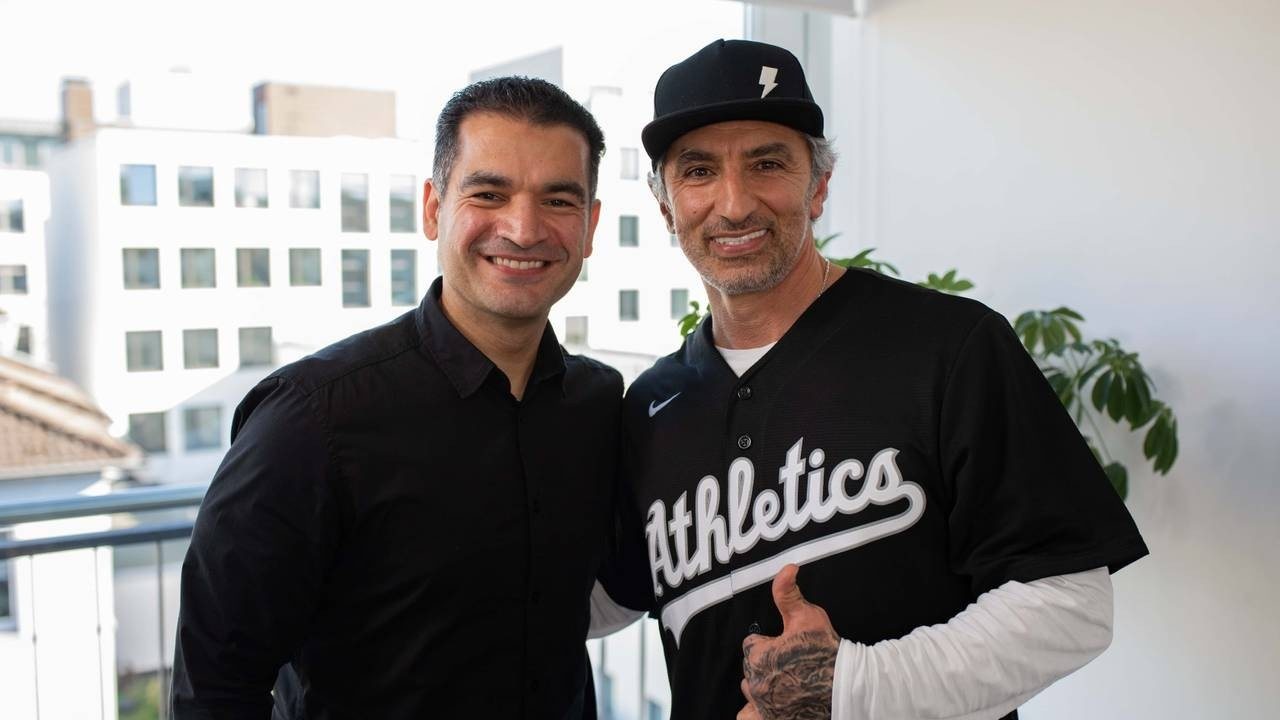
Jacob Fatih is an entrepreneur who has made success, gratitude, and love his core business principles. As the founder of FitX, Germany’s second-largest fitness chain, and YT Industries, an internationally renowned mountain bike manufacturer, he has proven that these values are not just empty words, but deliver real results. In this episode of Project Mindset, Reza Mehman talks with Jacob about his journey from Iran to Essen, his entrepreneurial drive, and why he now invests his money and energy in young startups and talent. Jacob explains why he doesn’t focus on short-term profits when making investments, but rather on the vision and character of the founders..
He shares his personal rituals surrounding gratitude and his so-called “Random Act of Kindness,” in which he gives a small heart to everyone he meets. This episode is an invitation to think about success beyond numbers and key performance indicators and to understand gratitude as a genuine success factor.
Jacob Fatih: the episode in brief
In one sentence: Jacob Fatih, founder of FitX and YT Industries, shows how gratitude, love and belief in people are the true drivers of entrepreneurial success.
In three sentences: Jacob Fatih built FitX, Germany’s second-largest fitness chain, and YT Industries, a globally renowned mountain bike brand. Following his exit from these ventures, he now dedicates himself to investing in young startups, focusing not on quick returns but on the vision and character of the founders. His mindset is based on gratitude, love, and the deep belief that everyone has the potential to achieve great things.
In five sentences: Jacob Fatih fled Iran for Germany in the late 1990s and built a new life for himself in Essen. With FitX, he founded Germany’s second-largest fitness chain, and with YT Industries, an internationally successful mountain bike brand. Today, through his company Queerlize, he invests in young talent and startups, supporting them as an investor and mentor. His secret to success lies not in aggressive business strategies, but in gratitude, love, and the courage to believe in people. Jacob practices “random acts of kindness” daily and inspires others to define success holistically, beyond revenue and profit.
Context: Who, What, Why
Who is speaking? Reza Mehman, host of Project Mindset, interviews Jacob Fatih, entrepreneur, founder of FitX and YT Industries and investor in over 30 companies.
What is it about? It’s about Jacob’s personal journey from Iran to Germany, his entrepreneurial development, his philosophy of gratitude and love in business, and his new mission as an investor and mentor for young founders.
Why is this relevant? In a business world often characterized by short-term profits and tough negotiations, Jacob Fatih shows that values such as gratitude, love and humanity are not only compatible with success, but actually make it possible.
Three key questions of the episode:
- How can gratitude, as a value lived daily, promote entrepreneurial success?
- What does Jacob Fatih look for when he invests in people and their startup ideas?
- How does a successful entrepreneur like Jacob Fatih define success beyond money and status?
Table of contents
- Introduction – Overview of the episode with Jacob Fatih
- Summary – The most important points in brief
- context – Background information on the guest and topic
- Table of contents – Navigation through the article
- Topics and classification – The central topics
- Key messages – The most important messages
- Frequently Asked Questions – Answers to the most important questions
- Highlight quotes – The strongest statements from the conversation
- Transcript – The full episode to read
- Keywords – Relevant keywords
- Names and terms – Key references at a glance
- Quotable passage – For sharing and quoting
Topics and classification
1. Gratitude as a success factor in business
Jacob Fatih lives gratitude not as an abstract concept, but as a daily practice that shapes his relationships and business decisions. From his escape from Iran to his success as an entrepreneur, he sees gratitude as the driving force behind everything he has achieved.
Keywords: Gratitude in business, gratitude as a success factor, gratitude routine
2. Love and humanity in entrepreneurship
For Jacob, love is not incompatible with business life. He treats employees, partners, and founders with genuine interest and appreciation, focusing on long-term relationships rather than short-term profits.
Keywords: Love in business, values-driven entrepreneurship, humanity in leadership
3. Startup Investment and Talent Enablement
After building and exiting FitX, Jacob now invests in over 30 startups. His focus is not on the return on investment, but on the founders’ vision and the potential of the people behind it.
Keywords: Startup investment, investing in people, QueerLize, talent enablement
4. Dealing with setbacks and disappointments
Jacob speaks openly about failures and human disappointments. His strategy: Don’t be bitter, be able to let go, and learn from every setback instead of letting it break you.
Keywords: Dealing with failure, entrepreneurial resilience, processing disappointment
5. Redefining personal growth and success
Jacob’s definition of success has changed significantly over the years. Today, for him, success no longer means money or status, but inner peace, good relationships, and the ability to help other people realize their dreams.
Keywords: Definition of success, personal growth, finding purpose, mindset change
Key messages
- Gratitude is not just a feeling, but a daily practice that directly influences entrepreneurial success.
- Love in business is not a sign of weakness, but a catalyst for genuine, sustainable relationships and results.
- For Jacob, when it comes to investments, it’s not the quick return that counts, but the character, vision and passion of the founders.
- The line between the creation and non-creation of a company is extremely thin. Often, all that’s missing is that one crucial impetus or bridge that someone builds.
- If you want to motivate and empower people, you must first believe in them before they believe in themselves.
- “Random acts of kindness,” such as giving a heart in every encounter, not only change the other person, but also oneself.
- Failures and disappointments are part of entrepreneurship. The crucial thing is not to be bitter and to get back up quickly.
- Success is not defined by money and status, but by inner peace, good relationships, and a positive influence on others.
- Focus is one of the most important success factors. Those who don’t make decisions remain stagnant.
- The best way to pass on values to the next generation is not knowledge or money, but values such as gratitude, love and respect.
Frequently Asked Questions
Who is Jacob Fatih?
Jacob Fatih is a Tehran-born entrepreneur and investor who fled to Germany in the 1990s. He is the co-founder of FitX, Germany’s second-largest fitness chain, and of YT Industries, an internationally renowned mountain bike manufacturer. Today, through his company Queerlize, he invests in young startups and their founders.
Why is gratitude so important to Jacob Fatih in business?
Jacob sees gratitude as one of his key success factors. His experience of fleeing Iran and starting a new life in Germany has taught him not to take anything for granted. He lives gratitude daily, among other things through his “Random Act of Kindness,” in which he gives a small heart to everyone he meets.
What is a “Random Act of Kindness” according to Jacob Fatih?
Jacob’s “Random Act of Kindness” consists of giving someone a small heart every time he encounters them. He does this in restaurants, while traveling, on airplanes, and at business meetings. This simple gesture is meant to express love and appreciation and trigger a positive chain reaction.
What is FitX and what role did Jacob Fatih play?
FitX is the second-largest fitness studio chain in Germany. Jacob Fatih played a key role in building the company. After its successful exit, he now dedicates himself to new projects as an investor and mentor for young entrepreneurs.
What is YT Industries?
YT Industries is an internationally successful mountain bike manufacturer, founded in Essen by Jacob Fatih and his partner Markus Flossmann. The company originated from a shared passion for downhill biking and has developed into one of the world’s most renowned mountain bike brands.
What does Jacob Fatih look for in startup investments?
Jacob focuses primarily on the vision and character of the founders. Instead of maximizing short-term profits, he is interested in the passion, drive, and values of the people behind an idea. He invests in people, not just business models.
How does Jacob Fatih deal with setbacks?
Jacob views failure as a natural part of entrepreneurship. He emphasizes the importance of not being stubborn, letting go quickly, and learning from setbacks. His composure and belief in the bigger picture help him process disappointments and move forward.
How does Jacob Fatih define success?
Jacob’s definition of success has changed over the years. Today, for him, success means inner peace, good relationships, the ability to help others, and a life in accordance with his values. Money and status play a subordinate role.
What is Queerlize?
Queerlize is Jacob Fatih’s investment firm, through which he invests in young startups and their founders. The idea behind it is to build the bridge that talented people need to realize their entrepreneurial vision.
What mindset has most influenced Jacob Fatih?
Jacob identifies two core mindsets: First, deep gratitude for everything he has and is privileged to experience. Second, a belief in love as a transformative force, especially in business. These two attitudes permeate his entire life and his business decisions.
Highlight quotes
“With love, anything is possible! Especially in business!”
– Jacob the Conqueror
“Love can change everything, that you can also solve your problems with love, that you simply don’t have to be so bitter.”
– Jacob the Conqueror
“Simply give a heart every time you meet someone. And that goes down really well.”
– Jacob the Conqueror
“It’s simply how narrow that line is; between something existing and nothing arising.”
– Jacob the Conqueror
“Imagine if you hadn’t been willing to do that back then, YT wouldn’t exist today.”
– Jacob the Conqueror
“Gratitude is probably one of the factors that contributes to his success as an entrepreneur.”
– Reza Mehman
“Imagine if everyone performed a random act of kindness once a day. We would certainly be in a better world with much better relationships.”
– Reza Mehman
The full conversation
Hi everyone and welcome to Project Mindset. It’s great to have you back with us today. We have a very special episode of Project Mindset for you today. I had the pleasure of conducting an interview, this time with entrepreneur and investor Jakob Fati. And we talked about one of my favorite topics—you guessed it—gratitude. I found it incredibly inspiring to hear Jakob’s thoughts on this topic, as well as his views on love, and how he integrates these themes into his daily business life.
I think that, especially in business—and I’ve said this quite a few times in previous podcast episodes—the topic of gratitude is discussed far too little. And with Jakob, you can see that this is probably one of the key factors in his success as an entrepreneur. I also think he justifies his success. After all, he’s the founder of FitX, which is the second-largest gym chain in Germany. He’s also the founder of Whitey Industries, a very successful mountain bike manufacturer.
And as an investor, he’s already invested in over 30 companies. What I definitely took away from this is one of his very, very nice habits. I actually got to experience it firsthand. He calls it a Random Act of Kindness. He gives a small heart to people he meets. The gesture alone is, of course, incredibly kind. And just imagine if everyone performed such a Random Act of Kindness once a day in some form. We would certainly be in a better world with much better relationships.
A first impression of the visit
You can see what this heart looks like, or rather, what the Batman figure looks like that you see right at the beginning when you enter the building, on my YouTube channel. We also recorded the interview as a YouTube video. Just go to YouTube, search for Project Mindset, or…www.projectmindset.deI’ve also linked the video again in slash 63. So, enjoy today’s interview. The second point is indeed this belief in love. That love can change everything, that you can solve your problems with love, that you simply don’t have to be so bitter.
And I’d like to share something with you. This is something really new for me, too. I’ve adopted a random act of kindness: simply giving someone a heart whenever I meet them. And it’s been really well received. I do it in restaurants, I do it everywhere when traveling, and I know I even do it on airplanes. Of course, I have to explain it, because it can easily be misinterpreted. But I believe the world, and all of humanity, can never have enough of it.
Random Act of Kindness. Jakob, thank you so much for taking the time today to talk to me about your mindset. Thank you. Yes, thank you for the invitation. We were just looking around here. The Batman figure is, of course, it immediately catches your eye, as you can see, it’s really cool. Thank you for the invitation to the Kühl-Eleister building. Thank you all for your trust and attention. Yes, absolutely. I actually first heard about you some time ago in another podcast.
How the interest in the conversation arose
And I listen to this podcast fairly regularly. There are other guests on it sometimes. And then it was your turn. And then they said, yes, Jacob Fatih, originally from Iran, has been in Germany for a few years, loves basketball, is, okay, interesting, does boxing, is into fitness, is an entrepreneur, is, wow, okay, what a coincidence. So, a lot of things that, let’s say, are in line with my own interests. And then they also mentioned that you’re very interested in the topic of gratitude.
So, also, let’s say, mentally and spiritually, that you’re grateful to be here in Germany at all, that you feel a sense of obligation to the Ruhr region. Then I thought, no, now I have to write to him. So, thank you so much for your time. So that I can better understand the viewers, could you tell us a little bit about yourself? Where are you from? I’ve already mentioned it, from Iran. How did you end up coming to Germany? And perhaps you could also explain what all of this has to do with the topic or with Simon Rashti’s book.
Childhood and origins in Iran
Yes, well, although I think you’ve probably read this in various media before, I was actually born in Tehran in 1975, this year will be 1947. My father was a university professor, my mother a housewife. Due to my father’s work situation, I came to what was then Yugoslavia at a young age, from 1988 to 1990, and learned Croatian, went back to school, learned Croatian again, then returned to Iran and started attending school there again, then studied, and always worked as an interpreter in Iran during that time.
Continued
Interpreters for Serbo-Croatian or Croatian-Serbian languages are essentially one language with minor differences, and there were no translators or interpreters for these languages in Iran. It was incredibly interesting for me and had a profound impact on me. I met many Croatians, Slovenians, and Serbs who were constantly coming to Iran for various roles, either in industry, politics, or business. And then I met an engineer whom I mentored for a certain period of time.
He was always in Iran for two weeks, then back again for two weeks, and he built a blast furnace for lime production, which was then necessary for the production of lightweight concrete. I remember it so clearly, because I could eat a thousand times. Very detailed, yes. And at some point, he asked me—we were also very close privately, of course—he always came to our house, to my parents’ house, and always got alcohol, you know, alcohol was forbidden in Iran. I said, “Hey, have you read the book The Satanic Verses?”
My reaction was, wow, no, you know how it is: a huge taboo. I don’t know if you know what the taboo was about it. There was actually a $5 million bounty on Salman Rushdie’s head back then, and that was practically unheard of in Iran, if you were to hold the book in your hands alone. Then I said, no, that’s taboo. I said, come on, next time I’ll bring it with me. You know, nobody can read Croatian anyway, not even Shrilik, that other script. And yeah, said and done, I brought it with me.
A book and its consequences
I read it. I was totally extroverted, always telling my classmates at university about it, saying, “Hey, I’ve got this book, it’s cool,” and sharing passages from it. Then one of my classmates said, “Hey, come on, translate the book, type it up, then you can sell it.” So, yeah, I was incredibly business-minded, always had been since I was very, very young. And I did it, and it actually became a huge downfall for me, but also the luckiest accident of my life.
Because that was the trigger for my escape to Germany. I had actually planned to finish my pharmacy studies in Iran, and my idea was to eventually buy a used aspirin production line in Germany, bring it back to Iran, and then build a pharmaceutical company there. That was my plan. And then suddenly everything changed, and I fled Iran by some very unusual means. I don’t know about the book’s translation. I don’t know what would have happened to me if I had been caught, whether I would have been killed immediately or imprisoned soon after, and then…
The restart in Germany
I definitely followed my father’s advice back then. He told me, “I have someone who can help in every situation, and I have to go to my brother. Immediately.” So, I landed in Germany in November 1998, here in Essen, at the train station, via Paris on the TGV. My brother picked me up, and I’ve been in Essen ever since. This is my new home. And yes, I’m incredibly grateful for it. As you mentioned, you were already quite business-minded in Iran. You were looking for business opportunities here and there.
Accordingly, you were very active here as well. I mean, you really can say that. You managed to build the second-largest fitness chain in Germany, FitX. And then you sold it. Now you’re focusing on investment. And we were just talking about that earlier, the enablement of young talent. How did it come about that you said, okay, I’ve built and sold a company. And now I’m focusing on helping other people realize their vision?
Let me give you a bit of background, because the initial spark for the Queerlize idea actually goes back to 2010. Before or alongside FitX, I founded YT Industries with my friend. And Markus Flossmann, my partner, whom I met at MacFit as an employed trainer, was such that after just two weeks I immediately said, “Hey Markus, we have to do something together sometime,” and then we both pursued different career paths at MacFit.
Developing entrepreneurial ideas
I became more involved in management. He became the marketing manager at MacFit. And during that time, we were always brainstorming ideas. We were both interested in bikes, and especially downhill. He kind of got me involved, and I always thought, wow, it would be cool if we opened a bike shop or something. Then, in 2004, I left MacFit as an employee and became self-employed in real estate, earning my first money, which I then invested in our idea.
Continued
And alongside everything else, he in his day job, me in mine, we started YT, which used to be called Sponsory.com and later became YT. We founded it here in Essen. Well, actually in my home office, which is in Burg-Altendorf, a district of Essen. And then we reached a point where we realized, okay, the business can always remain on the side, but if nothing comes of it, or if I eventually have to take care of it. I was fully immersed in my real estate work and couldn’t dedicate myself to it 100 percent of the time.
And then I talked to Markus, “Markus, you have to get out there and do this, otherwise our baby YT won’t amount to anything.” Focus. Focus. And just like with the story about the architect I told you earlier on Record, Markus was also facing the same issue: “Hey, if I just quit my job, which is very well paid, and I just bought a house as a kid, where am I going to support myself? This is my wife, and blah, blah, blah.” And back then I said, “Hey, I’ll do everything I can to make sure you have a bridge, and until we achieve that…”
Backing the first step towards YT Industries
Come on, I spoke up, I gave him courage, I gave him that push, that mindset thing, come on, we can do this. And then I actually signed a guarantee for his wife that he would receive his regular salary for 24 or 12 months and that I would finance it. And that’s how YT Industries, one of the most famous mountain bike brands in the world, came about. So I keep thinking back, and I keep saying to Markus, imagine if you hadn’t been willing to do that back then, YT wouldn’t exist today.
Enabling others to get started
It’s just how fine that line is, between something existing or nothing happening. And that gave me the idea, I said, hey, it’s cool to build a fitness chain myself. It’s cool to develop and drive real estate forward. It’s cool to start a mountain bike brand, too. But the crucial thing in this whole situation was to push Markus, to enable him, and to really motivate him to get involved, with all its risks, all its challenges.
And that’s when I said, a model needs to be developed from this. And I said, branching out people, or rather business models, would be cool. Giving many people this opportunity, building bridges, this and that. And it’s the same for me: when I have an idea, it always ends up in a drawer, then I take it out again. Well, a drawer in my head, so to speak. Then I tinker with it a bit more. And I said, I have to do this for someone. I had no idea about these terms: incubator, accelerator, whatever, VC, private equity.
A home for young companies
Company builder. Zero. So, very naive. In my mind, I’d always thought, “Hey, you have to have a background where you can offer young people the experience you’ve gained as an entrepreneur at a very reasonable price, and then build that bridge for them.” And when things are going well, you’re involved, they participate. And then a movement almost starts within me, because that’s always on my mind. At some point, I was sitting with an industrial designer friend in Cologne, discussing my ideas for this company builder.
And then we came together, and after a lot of back and forth, it all came together. I’ve always said that having ideas is one thing, but implementing them is another. And I wanted to combine these two events into a single concept. Then came Creation, Realization, and Crealize, a name I’m most proud of when it comes to our company, because when a brand becomes a verb, like Crealizing or Crealize, it’s something special. And yes, that’s how it came about. And that’s what I do today with great enthusiasm and passion.
Take risks and encourage others
I think you have a very special relationship with risk. I believe you’re a bit more risk-tolerant than others. How do you convince someone in conversation, or rather, in an exchange, to take a certain risk? Because it’s not for everyone. How do you do that? That’s true. Well, I think I’ve often taken on the risk that should be taken in many things because I’ve said, hey, this is my responsibility. I already have a bit of a backlog, and even if something goes wrong, I can still get myself out of danger here and there.
But by now I think I’m not very good at much, really. I don’t have many gifts or many skills, but one skill comes very naturally to me, and that’s simply being able to connect with people and guide them in the right direction. When did you realize you had this skill, and how did you realize it? Wow, very late. I was always told I was a people person, that I could motivate anyone, this and that. But I have that, wow, what? No, but someone, and actually, for example, my co-founder of Crealize, David Ewald, a marketing strategist based in Hamburg at Schultz & Friends, a large agency, who was on that career path, so to speak, but from Bochum.
Continued
And I tried to get him on board for Crealize because I’m also someone who always needs, or doesn’t need, but wants a collaborator. I think that’s cool. And then I was never able to convince anyone to start with me because he said, “I don’t want to live in a small town, I want Hamburg, a big city, my setup is different here, this and that.” And I had a conversation with him in a café nearby, a sugar bowl at a table, a wall behind us.
Two and a half hours and almost a monologue. Then, and I remember when he brought the conversation to a close, he said, “I’m going to Hamburg and I’m quitting.” Wow. And I said, okay, that’s a tough nut to crack, that takes some doing. And then I said to myself, okay, there must be something to what people are saying. That means you’re a good negotiator, apparently. What I’d like to know is, how do you even recognize someone’s potential? I mean, if you want to convince someone, I understand you invest time, persuasive power, and so on.
Finding the right people
But how do you define such a person? I always ask myself, do I do certain things alone, or, as you said, do I prefer to collaborate with others? You’re not a lone wolf, as I understand it. But I don’t know. I’d say relatively well. As for the other person? I’d say they have the potential I see in them. This was also an issue in my startup; here and there I completely misjudged a person, where I thought, wow, that was really expensive overall, in terms of time, money, and so on.
How do you see someone’s potential? I have to be honest, I don’t always see it 100 percent either. It’s more of an intuitive gut feeling. I’ve paid my dues a lot, but I’ve been right very often. But for me, I have a different standard when it comes to this. I believe everyone, every single one of us, everyone in this room, everyone out there, has potential. We have the greatest weapon in this world, and it’s in our minds. But we can’t activate it.
Believe in your own abilities
So that’s the problem. People are doomed to have a powerful weapon in their heads. But they only use 8 to 10 percent of it. And that’s where I’m talking about mindset again. Where do people fail to reach their potential? Because they simply don’t believe in themselves. It’s not because they can’t do the things. That’s my opinion. No matter who, no matter who out there, no matter their background, from the deepest parts of Africa, the worst war-torn regions. If you can just properly utilize your brain, really crank up your mindset, then you can achieve almost anything, absolutely anything.
How do you personally know at the end of the day whether you’ve reached your full potential? Far from it. Far from it. I’m probably not even at 1 percent. How do you manage that? I believe in it because, you know, I’ve had moments, very many moments, where I’ve stood on the edge of an absolute abyss. I’ve looked deep into the abyss. But simply with the belief, even if it’s naive, this belief, with the belief that, no, that won’t happen.
Confidence in difficult times
You will make it. You will find a way. It will come, and it’s not a plan, not at all. Just strong, constant self-talk. It won’t happen. You move forward. It didn’t happen. I can’t tell you how. I can’t tell you how I managed it, even at the moment when it was all, when it was all too late. And I can give examples. I became self-employed. At the time I left McFidd, I had a top position, earned very good money and managed thousands of people. But I told myself this was not my path, because I wanted to do something of my own.
I had to do something of my own. So I handed in my resignation to my boss at the time. Rainer Schaller said, what? Jakob Vati is leaving Schaller? So yeah, I had to try my luck out there. Without any plan whatsoever. I started in real estate with a partner who was almost 35 years older than me, but we were totally on the same wavelength. And we did our first property together. We applied to 50 banks and didn’t get any financing. That was basically a failure, actually a disaster, because we had to pay the purchase price, and the deadline had already passed.
Overcoming challenges together
And I have to say, I owe him a lot too, because back then he was the one who told me, “We can do this.” I was terrified, he was so down on his luck, this, that. He said, “We can do this.” And we did. And in life, I believe experiences play a role too. You can’t be born with a top mindset just because you’re a pickup artist; it’s the experiences you have, the things you do, the people you meet who tell you certain things, your upbringing, your father, your parents, the people around you—they all determine whether you have a strong mindset or not.
Continued
That’s unfortunately true. But I always say, when we’re out and about with a founder and we have these conversations—and they’re always so insightful, wanting to know this—we say that if we humans were able to utilize 80 percent of our actual capacity in terms of mindset and brain strength, then we could actually—you could become fluid, you could shed forms, you could do everything. You could do anything. What aspects of mindset, abilities, and skills would you like to further develop within yourself?
Yes, actually, mindset is definitely a big issue, even more so… Where do you see your weaknesses right now? I also have moments where I doubt things, doubt people, this, that, and I let myself be influenced by external factors, by external things. That’s when someone says it’s not true, they’re lying. For example, LeBron recently gave an interview because they asked him, “Do you have, or do you think you have, a chance of making the playoffs?”
Moving on with doubts
We’re basically out. He said, no chance. As long as I live, I’ll believe there’s still a chance. But I think he doubts it too. But of course, you have to have doubts to then develop the energy and say, no, this is going forward. I believe I still have so much potential to improve my mindset, to open myself up, not waver in difficult times, show conviction, stand by something, still a lot of room for improvement. At the end of the day, what do you do when you have such a busy daily routine, you have many companies that you coordinate in some way, where you invest?
I always ask myself, when can I say at the end of the day, okay, it was a good day, today I made progress and learned something, or today I did something new, and so on. What has to happen for you to be satisfied with how the day went? I mean, to be honest, I mean, the viewers can take my word for it, or not. But honestly, there isn’t a single day where I don’t say, wow, a million times over. What an awesome day! Because it also includes the crazy stuff, the tough challenges, the construction sites, the difficult things—those are all part of it, too.
Experiencing gratitude in everyday life
But experiencing that, somehow experiencing that, and then breathing at the end of the day, I think that expresses gratitude. It deserves gratitude. And that’s why, for me, there’s no such thing as a bad day. There are days when I’m training, and wow, that was intense. But that doesn’t make it a bad or a better day. It has to do with my physical condition or something like that. Otherwise, I really do wake up every morning with, I think, a big smile and a lot of hope. My nickname in Persian at home—well, my father and mother had different opinions about what each of us should be called.
My mother wanted to call me Jarub, Jacob, and my father Grandma, meaning hope. And as long as there is hope, as long as everything is moving, as long as you can move, you have to be grateful for that. I can’t tell you exactly when that came to me, the precise moment, but it’s so ingrained now that I don’t have a bad day, but rather days filled with pressure, sometimes less so, sometimes positive pressure, sometimes a little negative pressure. But at the end of the day, every day is amazing. The topic of gratitude is incredibly important.
And actually, I want to get to the question of how you became such a grateful person. I’ve heard that before in another context. You’ve mentioned it a few times now. I know that many people don’t appreciate many things around us. Like the fact that we live in such a privileged society where we don’t necessarily have to fear for our safety, where we can freely express our opinions. Unfortunately, many people don’t see that.
Small reminders of the good things
And I was actually asked once in a different context, Mr. Reza, what I can do to become more grateful. And there are always little tricks I use. I’ll briefly touch on them. For example, I have an entry in my calendar in the morning and evening. Each time, a calendar pop-up appears with a simple “something I’m grateful for.” I take two minutes each time to reflect on something I’m thankful for. And it helps me start the day better and end it quite well, too.
And the interesting thing is, and I’ve always talked about this in that context, at the beginning you’re naturally grateful for the big things. Yeah, security, blah blah blah. But at some point it gets boring. Then you start looking at more detailed things. I’m grateful that the sun is shining today, that the coffee tastes so good. So you really delve into the depths. But I also had to develop a kind of tool, a framework, for myself, to figure out how to approach the topic of gratitude.
Continued
My question is basically, how do you approach the topic of gratitude? Do you have any tools you use? Do you have routines you follow? How does it feel at the end of the day? Do you need to be reminded? Do you sometimes forget to be grateful for a while? I’m bringing this up specifically because I’ve done a lot of podcast episodes on the topic of gratitude. I’m interested in your perspective on that. Honestly, for me, it’s become so automatic that I don’t even notice I’m feeling grateful anymore.
But people tell me, “Hey, that’s just excessive, how grateful you are for everything.” And they say thank you, thank you, thank you for everything, and they always write to the people around them at the end of the day, “Hey, thank you for your honest work, your great work, that’s all there is to it.” So I think it’s become automatic and is part of my, actually part of my inner behavior or attitude. And that really became so pronounced after, I think, my escape to Germany.
Why? Because I think we, you and I, as newcomers to Germany, have the advantage of knowing the other side of the coin a little bit. A completely different world with its own positive aspects, but also many negative ones. Security, always something like that, honesty, which sometimes falters. So many things that are simply annoying. Unpunctuality, lack of spontaneity, you know? It’s familiar from our culture. You can judge it however you want, but it’s something we’re familiar with. I know what you’re talking about.
Valuing safety and reliability
Exactly. And then I come here and experience, for me, an enormous degree of honesty, a sense of honor, punctuality, security. You can walk across the street at night. You don’t have to defend yourself. I know that. And then, what do I know? You register as an asylum seeker, your furniture is paid for. And that was totally new to me, even though my brother lived here and had told me a little bit about it, but it was completely new to me. And I said, how is that possible? I was incredibly grateful.
I said, “That can’t be right.” My question was, “Why not pay it back?” I still have contact with Ms. König at the social welfare office in Essen; I was in touch with her recently. She was my caseworker when I first arrived here, when I was still receiving social assistance. And then, at some point, I asked her the question in my very broken German. I said, “Is this money I receive a loan? Does it have to be paid back eventually?” Because I had no point of comparison.
Formative experiences and new opportunities
And so, you know, it’s like, I don’t know, it’s kind of an imprint on you. Or something about you shapes you. And that has had an enormous impact on me. That is why I am incredibly grateful. And I’ve been here for, how many years now? It’s been 23 years, I’m 24 now. You get used to it eventually. But for me, it’s not just a habit anymore. It’s still there. I remember the days when I first came here, how incredibly homesick I was. I was also a mother, a cook, you know, back in Iran, you know how it is.
And then suddenly you arrive and you’re on your own. It was a tough time, but after everything that happened to me, I don’t think anything in my life is impossible anymore. Nothing. Very cool. You can also see the gratitude you have towards Germany in this case. For example, you have the German colors tattooed on your arm. Really cool. I also get the feeling that your tattoos each represent the things that happen to you. Definitely gratitude as well. So, I also have a very good relationship with Brazil and Portuguese.
Love and gratitude as personal values
And gratitude. I have “Obrigado” here with the flowerbed in my hand. I don’t need to remind myself of it anymore, but I look at it sometimes and I say, “Cool.” And yes, this is from my father, this is my father’s handwriting. So, through love, you really can change everything. Through love. I also think that idiot Putin hasn’t experienced much love in his life. That’s why he’s doing such crap now. Otherwise, love is the most important instrument for everything. You can change so much with love.
You can really turn murderers into angels. That’s my belief. So far, it’s served me well. And of course, tattoos too. Like, always El Ajo Maraonde, Que Maraonde. I don’t know if you’re familiar with it. Yeah, yeah. Sort of. It’s the logo from the movie. Very nice. Well, they represent certain milestones in your life. You know, I find you to be an incredibly empathetic person, and also, as you said, you spread a lot of love. Every now and then, I catch myself having a little trouble opening up completely.
Continued
So it’s not necessarily with people I’m already close to, but when I meet someone new, I’m very cautious. That probably has to do with having been disappointed in the past, and so on. Maybe I gave too much love and then realized, wow, no, the other person didn’t appreciate it at all. How do you deal with these kinds of issues on an emotional level? Because I think you interact with a lot of people.
You probably give a lot of love, but I think that inevitably leads to disappointment sometimes. So, you’re asking something I’m really passionate about, because I’m going to give you a small example that doesn’t have anything to do with love, but with something very simple in our lives. Someone approaches you and says, “Can you lend me 500 euros?” I’ve developed this approach for myself. If I have the opportunity and 500 euros isn’t all I have, and I trust them, I’ll say, “Here’s 500 euros.”
Don’t make disappointments a principle
These are metaphorical examples. The first one disappointed me too. But I’ve tried never to turn my bad experience into a principle or a complete manifesto for myself. Okay, I lent money once. It wasn’t paid back. I’ll never lend anyone money again, because throughout my life I’ve lent money to many people, and 90 percent of them paid it back on time. Imagine if, after that first bad experience, I had either completely ignored this behavior or been like, “I have to check, trust, this and that.”
Then maybe 90 percent of people would be in a situation where one problem or another hadn’t been helped. And that’s why I’m someone who says—and I’ve often been disappointed—that there’s always a reason. Even the most malicious person does something that makes you say, “Ugh, that’s just unacceptable.” Is there a reason somewhere? You have to look for it, why, wherefore? And then you can process it properly. That’s what I’ve always done.
Always, without fail. May I ask, do you completely give up on someone who, let’s say, took advantage of you, or do you persevere? No, I’ve also had disappointments and then gotten back together, with open arms again. I want to continue doing that. Very cool. I sometimes catch myself, when I’ve been disappointed, saying, oh no, that’s it, it’s over. Even though I know that everyone makes mistakes. So I think mistakes are simply a part of life.
Talking about forgiveness
Sometimes, in certain situations, you just react completely and don’t actually want to behave that way. But I still have trouble forgiving someone in that sense. So it’s very interesting that you say you don’t make such a clean break, if not incredibly interesting. I still wanted to ask you about the topic of failure, though. Someone who tackles as many things as you do, I imagine, probably doesn’t shy away from failure either. How do you deal with setbacks?
And perhaps for comparison: How did you deal with failure in the past? And now you’ve gained so much more experience. You mentioned that life is also a matter of experience. How do you deal with failure today? Has anything changed, or have you always dealt with it the same way? No, I think for me it was probably an innate, I wouldn’t say, but definitely a learned strength, that even if I lost something or if something in my life broke, it wasn’t people or objects, or any assets, that I lost.
I was able to quickly put it behind me and simply say, okay, let’s move on . Especially when it comes to material things, I believe it’s possible, it will come. Now, of course, I also have self-confidence, all the experience I’ve gained. I say, take everything away from me. Everything I have, and in less than two years I’ll be back with the same, or even a better, life. So I can’t tell you how it developed, but that’s also part of the mindset, how you deal with such negative patterns in your life.
Letting go of difficult experiences
I always managed to get myself out of those situations really well, and that was always coupled with a bit of naivety. Just keep going, keep going, keep going, keep going, don’t think about it at all. And then I was able to quickly just store it away in that mental space I’ll never access again. And I still do that today. So, for me, there are no real failures. There are only learnings. So if you’ve failed at something, it’s not a failure, it’s a learning experience, you’ve still learned something.
Continued
We’ve also done business ventures that cost a lot of money and ultimately came to nothing. But I learned how I would do it again if I were doing it again. And I’ve gained a certain opinion or a certain understanding of this business field, which I can then talk about when people ask me. Knowledge is the most important thing. And I even paid fees for some knowledge from my library. Yes, yes. I’d say you’re a very hands-on type.
Roll up your sleeves, so to speak, and get started. I’m like that in many areas of my life, but in others I tend to plan more. I find it really hard to judge what’s better for me: more planning or more hands-on. What would you generally recommend to someone? I know many of my viewers, too. I think they have an idea in their heads, but they’re not quite sure how to implement it, and maybe they over-plan. Others dive right in and after a while realize, “Wow, no, I should have thought about how to approach this a bit longer.”
So my question is basically, how do you personally manage to jump into something, from planning to rolling up your sleeves? Yes, hands-on is right. You’ve probably figured that out. I’m actually a bit of a mess. So, once I’ve got an idea in my head, and lots of people agree it will work? I just do it. It’s a mentality. Just do it. In our “realize” world, I always call it healthy naiveté. It shouldn’t lead to stupidity, but healthy naiveté.
Responsibility and diligence
And that, coupled with enough effort, but also diligence. So if you’re going to do it, just do it. That was also the formative phase at the beginning in Germany, getting into a responsible job pretty quickly. I was the branch manager of a gym with 10,000 members, practically a small town with 30 people I had to manage, and I couldn’t even speak German very well. I’d still say not very well, but okay. Yes, even worse. And there I always worked hard, went full throttle, was very involved, and simply did a lot.
And “just do it” is also a concept I have. If you ask people close to me who know me well, they’ll say, “Hey, he’s a ‘just do it’ type.” And I always try to fill my many skill gaps with good people. You know? I always thought, “Hey, you can’t do everything alone anyway, and you don’t really know what you’re doing.” But then they bring in the people who can do it and give them responsibility. And that’s what convinced me: it’s a good combination of just doing it, but also bringing in smart people so it doesn’t end in disaster.
Motivation and headwinds
And then it worked out. Super interesting. Regarding motivation: I get the impression you draw your motivation from many things you’ve already mentioned, like gratitude and so on. What actually demotivates you? Like, what happens in your interactions with other people, or whatever it is, something that happens during the day that you’d say demotivates you? Maybe you want to work on it, but you think, “No, that wasn’t so great.” So, for me, demotivation is actually very short-lived, incredibly short.
So, if something bothers me, it’s really only for a few minutes or hours at most, even if it’s a completely different level of demotivation, that I deal with, and I can easily pull myself out of it. I can’t tell you how. I deal with the negative. “Positive First” is also a concept I have in my home, and I even have a big neon sign for it: Positive First. Because I always manage to find a positive perspective in everything negative.
I understand you have negative people around you, but how do you deal with them? Since you’re a very positive person, I naturally figured that out. Yes, there are negative people, and I think it would be presumptuous for you to say that everyone should always go through life with rose-colored glasses, like you. There are also negative people, not that they’re evil, but negative people who always look for something to complain about. I try to counteract that.
Focus on solutions
I say, no man, don’t try to find fault, try making the soup tastier, then you won’t taste the hair, or whatever, just somehow to move people in a positive direction. So I believe that even from the most negative things that happen in life, you can still maneuver yourself positively. Yes, it’s mostly a matter of perspective. 100 percent. What are your personal, let’s call them, meta-goals in life?
Continued
So, your, should I say, your personal “why,” your purpose. What is that for you? Well, I think it exists on several levels, of course, family. I also have two children, two sons, and I want them to make something of themselves, I think that’s one level. On a perhaps broader level, it’s important to me that I’ve played at least some role in making a positive difference in this world, in whatever form that may be. I’m trying to do that through entrepreneurship in the Ruhr area, for which I’m incredibly grateful.
I think this Ruhr area is awesome, the people are so open. We’ve given me so much, and I try to give something back. I think giving back is great. Like, when you give back many times over what you’ve received. On the other hand, of course, I also have two or three, for me, somewhat sentimental ideas, I mean, I want to be a role model for some people, maybe even those in similar situations to me. I’d really like to go into refugee shelters and give a talk, so that people can say, “Hey, I was like you, I was in refugee shelters too, and I made it.”
Anyone can do it. Even, you know, fulfilling a role model function. But I’m incredibly grateful. I simply never could have dreamed of being where I am now, and not just in terms of business success, but acceptance in a society, simply feeling at home, and also developing a kind of patriotism for a completely different country where you weren’t born. Maybe people say to me or us, “Ah, we have their roots.”
Roots and belonging
No, I’m more than aware of my roots and I know where I come from. But I belong here now and I’ll give everything to make this my home, my activities, a reality. And that completely fulfills me. Very cool. You brought up a very important topic, at least for me: children. I often ask myself, and I also learn from my children every day, if I’m honest, what I can, want to, or should pass on to them. It’s a huge question mark, and there are always days when I think, oh yes, that went well, the way it did.
Then there are days when I say, wow, I could have done that differently, should have done it differently. That’s a very generic question. But if you think about raising your children now, what was actually important to you to pass on to them? What were you even able to pass on? What did they perhaps accept, and what didn’t they accept so well? Can you elaborate on that a little? Yes, well, as I said, there are two or one part of my life that I’m not so proud of. And that’s maintaining a family.
So, I have two children by two different women with different backgrounds. Elias is with Sheila, my Persian first love, so to speak, who then followed me to Germany. And I don’t have the same direct influence on their upbringing as their mother does, not as a close-knit family unit. June, well, June is our June, my second son. And they live very close to me. I have a very good relationship with both mothers, and a great relationship with the children.
Family and one’s own role
And I think I also play an important role in their lives, as a role model and all that. But probably not for someone who simply raises children in a stable family. And there’s one thing I’m incredibly proud of. June is three now. Of course, she’s still very much at the beginning of her journey. But Elias is 14, and he’s inherited one or two traits from me completely. And of course, from his mother. I’m also incredibly grateful to his mother because she has so much love, so much love from her and the whole family.
And gratitude. This little boy is so grateful for everything, and totally humble and down-to-earth despite it all. And yes, that’s there. I’m proud of that, I have to say. Despite all the chaos, I haven’t neglected it either; I’ve always fulfilled my obligations as a father, as someone who also had certain obligations as a mother, and yes, despite that, I’m not proud of that part of my life. But I am proud that I managed it somehow. Thank you for being so transparent.
Thank you so much. You’ve touched on the topic of chaos a few times now, from an outsider’s perspective. I mean, as a successful entrepreneur, you have various investments, you build companies, you create companies from scratch, you grow them. It can’t be that chaotic, can it? So somehow you must have everything under control. Could you elaborate a bit on how you prioritize your tasks, where you focus your attention? I struggle with that myself quite often. I’ve learned that there are too many areas I’m juggling in my life.
Continued
I can’t manage it. I need to get some focus at some point. But you have, I think, 30 investments, maybe 40. Yes, 30, so even different startups. We’re founding our own companies. Exactly, pretty intense. How do you manage that? Well, first of all, it’s not me alone, but many people involved. So you really have to learn how to do that too. I’m not against it because of who I am, but I had to get used to not always answering with “I,” but rather “we,” because we are, because everyone, every person who fulfills a function here, contributes.
And I’m just the instigator, the one who got the ball rolling. Why do I say chaos? Because I have a certain tendency to create chaos, but also to organize things. It’s not like I completely stop there; organized chaos isn’t always so bad, because it creates a kind of positive stress, and then people get things done. These are intuitive things I’ve learned over time. But I come from a family where my father was incredibly disciplined, more German than any German here, getting up at 4 a.m., everything on schedule.
Morning routines
I’m like that too. I mean, I’m calling it chaos, but if you take a look at my private life, I have a really, really strict routine for getting up in the morning. Can you elaborate on what your routine looks like? Well, I get up very early, my alarm is always set for 5 a.m., I leave right away, and I get up immediately. I always drink a lime juice mixed with lukewarm water in the morning, take my protein tablets, then I go to my home gym, do an hour-long workout, and that’s it. So it’s totally routine.
Shower, breakfast, and then it’s off to appointments and this and that, and then someone finishes work in the evening, and it’s all very, very organized. But overall, when you see how, how—well, you have to look at the history, how many different businesses, what formats, what directions, with how many people, with how many—it could also seem from the outside, like, wow, what’s he doing? Doesn’t he have any focus? This, that, I call organized chaos. I’m doing well with it, and I’m not obsessed with how many billions success is measured in, but for me, success is also enough if it simply stays the way it is.
Have a positive influence on others
But because of this, many other people also find their way to entrepreneurship, to do something bigger for myself, I’ve also discovered that there’s nothing like having an influence on positive change in people or in other people’s lives, other people’s existences. You know, when you cause someone to—well, for me, it’s a great pleasure that the artist has managed to achieve something beyond an initial conversation and a bit of encouragement. I don’t want him to talk about it. I don’t want to talk about it either.
But that’s the most intense satisfaction for me, deep down. I absolutely know what you mean. For example, if someone writes to me in this context, “Hey, the podcast has changed a lot for me. I feel what you’re saying. I’ve changed my perspective.” When I get messages like that, it’s like, “Wow, cool!” Having such a positive impact is really wonderful. I’m totally with you. You also used the term “success.” I think I’ve roughly understood how you currently define success for yourself, specifically having this positive impact on other people.
How the concept of success is changing
Has your definition of success changed over the years? Was it different back then than it is now? Wonderful. I can tell you about that too. So, what constituted success for me, I remember, I was working for a house clearance and moving company in Germany at the beginning. It was my first permanent job, and I was sitting with my colleague Behatin and Said, a Turk and a Persian, on the way to clear out my belongings to my next apartment. And I can still remember saying things like, “A Golf 3, 3000 DM quota, that would be something.”
I believe that develops over time. It’s not something you’re born with. And for me, it has evolved. And I have to be honest, for me, success isn’t clearly measured in financial terms. That’s also important. I’m a businessman, and I say you have to be able to say, from somewhere along the line, what made sense and what didn’t. But there’s a completely different level of success. And that’s the real impact on society, on people, through the products you offer.
What your own work can achieve
So I’m incredibly proud. I believe that at Fittix, many young people have been drawn to sports instead of going down some wrong path. Many people who perhaps didn’t feel comfortable in their own skin have rediscovered mental strength through sports, and there are probably countless others like them. And that’s it. That’s real success, and everything else is just money. It comes, it goes, it goes, you get out. You lose this, that, you lose it. I’m not someone who knows how much money I have. The amount of money I have is not something I keep track of. I have my CFO for that.
Continued
I don’t know what goes out, what comes in. So I’ve never been that obsessed with money. But I have to say, I admire your easygoing nature and, at the same time, how do you describe it? Discipline combined with chaos. A lot comes together there. I actually think it’s a kind of formula for success. Very interesting. Super interesting. Jakob, we talked for quite a while. I think we also gained some good insights into your life and what makes you tick. Thanks so much for that.
Before I get to the last question, the penultimate one: where can people find you online if they want to follow you, if they want more information about you? Well, I’ve only recently joined Instagram, not for very long, and I’m trying to reflect what these topics are about, not in a super professional way in my posts, but not in my stories. I never actually post myself; Lisa does that on LinkedIn, and generally, I’m working on being more visible.
To make these paths I’ve taken a little more transparent, especially for people in similar situations, for migrants, for people who might simply feel pushed into a corner. I believe there’s a great deal of potential in Germany that’s being lost due to false, perhaps misguided, influences, and so on. And that would also be one of my goals: to try to make my journey more widely known.
Sharing your personal story
Because if you don’t know me, if you don’t know my history, they say, “Oh, a cool dude, probably tattooed, likely born here, this and that.” But if you look back, I came here at 23, a fully developed individual, and I’ve taken this path, and people who were born here, second or third generation, and still don’t feel at home, that’s just alien to me. And so, yes, well, there are two channels now, but maybe there will be other channels in the future.
So, guys, definitely follow this guy. I think if you’re looking for positive vibes and inspiration, Jakob is definitely the right person to be found. Now, let’s get to the last question, Jakob, that I ask every guest. What mindset has had the biggest and most positive influence on you personally? Well, I can say two, because there actually are two. First, it’s something my father taught me very strongly when I was a small child, even six years old: never give up. This sheer, enormous perseverance, no matter what you’re doing.
And the second thing is actually this belief in love, that love can change everything, that you can solve your problems with love, that you simply don’t have to be so bitter. Let me share something with you about that. And this is really very, very new for me right now. I’ve adopted a random act of kindness, namely, simply giving a heart to someone I meet. And it’s really well received. I do it in restaurants, I do it everywhere when traveling, I know that, I even do it on airplanes.
Random Acts of Kindness
But of course I have to say something about it, because it can easily be misunderstood. But I believe the world, and all of humanity, can never have enough of it. Random Act of Kindness. Random Act of Kindness. Very nice. If we all do something nice for each other every day, then everything will be so much better. Jakob, thank you so much for your time today. I’ve learned so much. I’m personally incredibly inspired and motivated by you, and I hope you continue like this for a long time to come.
Thank you. Hope to see you again soon. Thank you. Thank you.
This transcript was automatically generated using Whisper AI and may contain occasional errors.
Keywords
Tags: Jacob Fatih, gratitude, love in business, FitX, YT Industries, startup investment, Queerlize, random act of kindness, mindset, success, resilience, entrepreneurship, project mindset, Reza Mehman, investor, talent enablement, purpose, personal growth, motivation, setbacks
Names and terms
Jacob Fatih, Reza Mehman, Markus Flossmann, Salman Rushdie, Simon Sinek, FitX, YT Industries, Queerlize, MacFit, Tehran, Iran, Essen, Ruhr area, Germany, Yugoslavia, Paris, TGV, Satanic Verses, Random Act of Kindness, Downhill, Mountain biking, Fitness chain, Startup, Investment, Pharmaceuticals, Real estate, Batman figure, Project Mindset
Quotable passage
Jacob Fatih shows that gratitude and love are not soft topics, but hard-nosed success factors in entrepreneurship.
As the founder of FitX and YT Industries, he has proven that great things can be built with heart and attitude.
Today he invests in people and their visions, not just in business models and returns.
His “Random Act of Kindness”, giving a heart in every encounter, is a symbol of his belief: those who give, receive in return.
He defines success not by money, but by inner peace and the ability to help others.
You can find more discussions about personal values and development at Project Mindset.
Prefer listening? Explore the original Project Mindset podcast recordings.

