Unleash your potential: How to use your strengths
Why so many people fail to reach their full potential and what steps can help you to use your skills, resources and capacities effectively.
Introduction
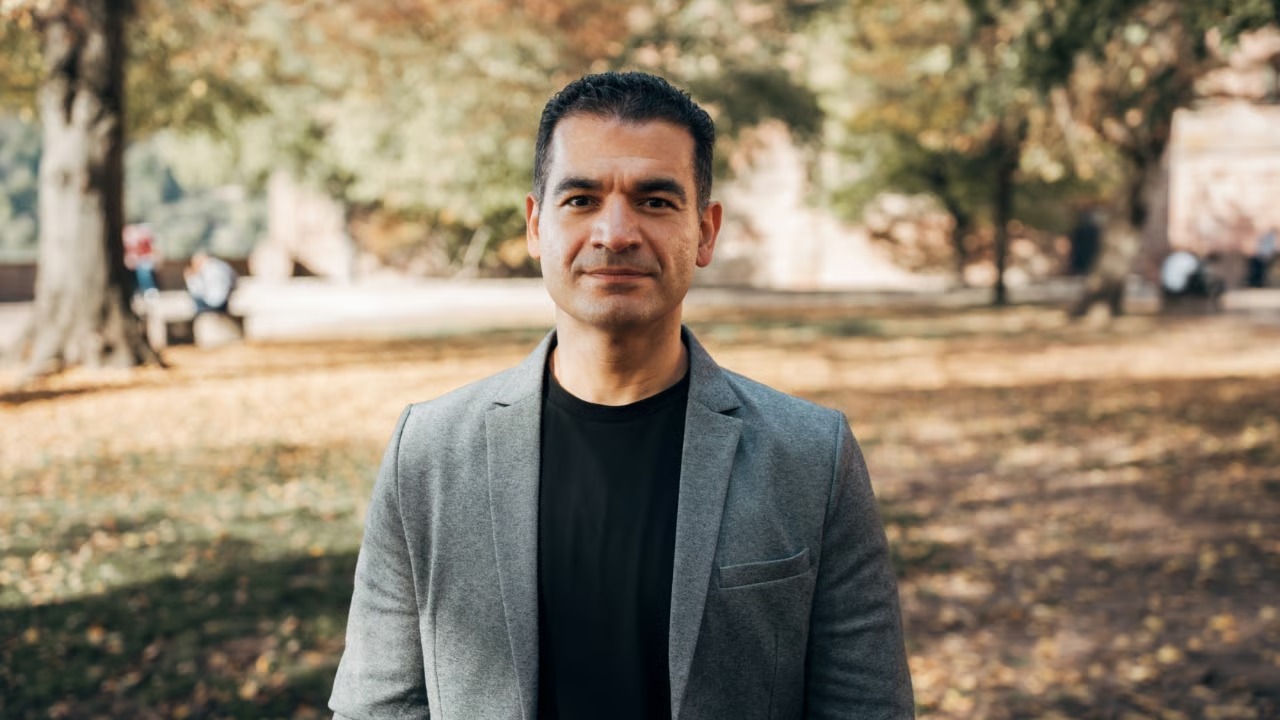
Unlocking one’s potential is a topic that resonates with almost everyone, yet few address it systematically. In this episode of Project Mindset, Reza Mehman explores what potential truly means and why so many people, despite obvious talents, fall short of their full potential. Using personal stories and concrete examples, he demonstrates that potential encompasses far more than just talent or physical abilities. It’s about resources, capacities, self-determination, and the ability to avoid self-sabotage. Reza illuminates how the conscious application of strengths, the effective use of existing resources, and overcoming self-sabotage all intertwine. Anyone seeking to understand their own potential and how to ignite it will find valuable insights in this episode. It’s an episode that invites an honest look at one’s own life.
Summary
In one sentence: Unleashing potential means consciously using strengths, resources and capacities, overcoming self-blockages and shaping one’s own day in a self-determined way.
Short summary: Reza Mehman explains that potential consists of skills, available resources, and personal capacities that must be purposefully utilized. Using examples from sports and everyday life, he shows how people fail despite great talent when they block themselves or fail to use their strengths. The crucial factor is whether one plays the leading role in one’s own life and structures the day in a way that allows for meaningful work, love, and personal growth.
Detailed summary: Reza Mehman explores the true meaning of potential and why so many people fail to fully realize it. He distinguishes between abilities, resources, and capacities as the three pillars of personal potential. Using the example of his friend, who was talented in several sports but never achieved a breakthrough, he demonstrates that talent alone is insufficient. Self-sabotage and self-blocking often prevent people from doing what they recognize as right. The central message: Potential unfolds when one acts autonomously, uses resources effectively, and consistently utilizes one’s capacities.
Context: Who, What, Why
Who is speaking: Reza Mehman, host of the podcast Project Mindset, project manager and mindset coach, who shares personal experiences and observations from his environment.
What is it about: This episode explores the topic of potential in all its facets. It deals with the definition of potential, the distinction between skills, resources, and capacities, and the question of why people block themselves and fail to realize their full potential.
Why is this relevant? Many people sense they have more potential but don’t know how to unlock it. This episode provides food for thought that can be applied in both professional and personal contexts and helps identify personal blocks.
Three key questions of the episode:
- What does my personal potential consist of and how do I recognize it?
- How can I use my resources and capacities effectively?
- Why am I blocking myself and how can I overcome this?
Table of contents
- Introduction – Why unlocking potential is so important and yet so difficult
- Summary – The core message in one, three, and five sentences
- context – Who is speaking, what it’s about, and why it’s relevant
- Topics and classification – The main topics of the episode
- Key messages – The key messages at a glance
- Frequently Asked Questions – Answers to the most important questions about potential
- Highlight quotes – The most striking statements from the episode
- Transcript – The full transcript of the episode
- Keywords – Relevant search terms and tags
- Names and terms – Important references from the episode
- quotable passage – Compact summary for sharing
Topics and classification
1. Identify and define potential
Reza explains why the concept of potential is so difficult to grasp and uses personal experiences to show how one can approach one’s own potential.
Keywords: Recognizing potential, identifying strengths, self-reflection
2. Use resources and capacities strategically
A distinction is made between resources such as money, networks, and mentors on the one hand, and personal capacities such as physical and mental abilities on the other. Both must be consciously utilized.
Keywords: Utilizing resources, maximizing capacity, using the network
3. Overcoming self-blockages and self-sabotage
Many people know exactly what needs to be done, but don’t act on it. Reza discusses how self-sabotage prevents potential and why mental strength is crucial.
Keywords: Self-sabotage, self-blocking, mental strength
4. Self-determination and meaningful daily routine
The central question is whether one plays the leading role in one’s own life or allows oneself to be driven by others. Meaningful work and conscious time management are key levers.
Keywords: Self-determination, daily routine, leading role in life
5. Love, personal growth, and holistic potential
Potential is not limited to one’s profession. Giving love to loved ones and continuous physical and mental development are also part of it.
Keywords: personal development, holistic potential, giving love
Key messages
- Potential consists of the interplay of skills, resources and capacities that must be consciously deployed.
- Talent alone is not enough. Without consistent action, potential remains untapped.
- Those who take the lead in their own lives, instead of letting themselves be driven by others, have the best chance of developing their potential.
- A well-structured day that utilizes strengths is an indicator of realized potential.
- Self-blocking and self-sabotage are among the most common reasons why people do not reach their full potential.
- Resources such as money, network and mentors must be used actively and strategically.
- Potential encompasses not only one’s profession, but also the ability to give love to loved ones.
- Physical and mental development are essential to continuously expand one’s potential.
- The example of Maxi Bogues shows that those who make the most of their limited capacities can achieve great things.
- Those who know their own “why” but do not act accordingly harm themselves the most.
Frequently Asked Questions
What does it mean to develop one’s potential?
Developing one’s potential means consciously and purposefully using one’s skills, resources, and capacities to shape one’s day in a self-determined and meaningful way. It’s about playing the leading role in one’s own life and not being driven by others.
What constitutes personal potential?
According to Reza Mehman, personal potential consists of three areas: one’s own abilities and strengths, available resources such as money, network and mentors, and individual capacities such as physical and mental prerequisites.
Why do talented people often fail to reach their full potential?
Common reasons include self-sabotage and self-blocking. Many people know exactly what needs to be done, but don’t act on it. They make excuses or allow themselves to be distracted by other things instead of consistently using their strengths.
How can I use my resources effectively?
By becoming aware of the resources available to you, be it money, a network, mentors, or family support. These resources should be used actively and strategically instead of being left unused.
What is the difference between resources and capacities?
Resources are external means such as money, networks, or support from other people. Capacities, on the other hand, are one’s own physical and mental prerequisites, i.e., the skills and qualities one personally possesses.
What does the example of Maxi Bogues have to do with potential?
Maxi Bogues, at just 1.60 m the shortest NBA player of all time, made the most of his limited physical abilities and managed to play in the NBA for years. His example shows that it’s not about your starting point, but about making the most of what you have.
How can I tell if I’m blocking myself?
A clear sign is when you know exactly what needs to be done, but still don’t do it. If you instead make excuses, occupy yourself with unimportant things, or constantly postpone decisions, this is an indication of self-sabotage.
Is giving love also part of one’s potential?
Yes, according to Reza Mehman, the potential for love that one carries within and shares with family, friends, and partners is an important component of a fulfilling life. Those who do not live out this potential forfeit a significant part of what makes life meaningful.
Selected statements from Reza Mehman
“I believe potential exists in the sense that one can structure one’s day, that is, largely structure it in the way one considers sensible.”
“Am I actually playing a supporting role in my life? Am I driven by others, or do I play a leading role in my life and can drive what I consider important?”
“Many have friends, family and so on, partners, children and so on, but they have not unleashed their potential for love, which they actually carry within them.”
“Sometimes I know exactly what needs to be done, but I don’t do it. I don’t even know why. I use everything else as an excuse, all the excuses I have, just to avoid doing what is actually the right thing to do at that moment.”
“The 1.60 m tall man used his resources and capacities perfectly, on time, and succeeded.”
“It’s super easy to essentially stop developing, but I believe that physical and mental development is absolutely essential to further develop one’s potential.”
“If you have recognized your own ‘why’ in life and then do nothing to at least slightly accommodate that ‘why’, that is extremely fatal.”
The full conversation
Hi everyone and welcome to Project Mindset. This channel is for all those who know that with the right mindset, anything is possible in life. Today’s topic is potential. Personally, it took me years to realize how incredibly difficult it is to truly understand what potential means. But then I finally sat down and tried to understand what kind of potential I actually possess. And I have an interesting story to tell about that.
I have a really good friend who, back in my youth, or maybe even his, played a lot of basketball. He was a really good player and got pretty far, and everyone thought, “Wow, that guy’s got potential.” He had real talent. Then, for whatever reason, he quit and took up another sport, Mixed Martial Arts. He was also incredibly good at that, got really far, and immediately had the physical attributes to become a real pro fighter, but he quit that too.
Then he played American football for a while, right away in the top league. You have to understand, he’s a huge guy, pretty broad, big hands and all that. So it definitely fits that he played at a pretty high level right away. But even there he didn’t progress any further, and I don’t know the reasons why. But as with all his previous clubs, there was always this thought in the back of your mind when you thought about him: this guy has a lot of potential. Why he couldn’t fully realize it, that’s hard for me to judge personally.
What potential means to me
I believe there are many reasons, of course. But I’ve been thinking, hey, if someone has potential, what do they need to do to unleash that potential? I also ask myself, for example, hey, where does my potential actually lie? Or, of course, I already ask myself about my children, what kind of potential do they have and how can I even ignite that potential? I’ve spent a long time thinking, hey, what can I do differently in my own life to fully realize and unleash my potential?
I still find it difficult; I still don’t have any concrete answers. But what I definitely want to share with you today is that I believe potential exists when you can structure your day, or rather, structure it largely in a way that you consider meaningful. Of course, that’s a very vague way of putting it, because I think it’s incredibly difficult to be super specific, since there are just so many different potentials within a person that simply exist and need to be realized.
Consciously use one’s own strengths
To stick with my example, I think I’m a pretty good project manager. Of course, I have many weaknesses in other areas. But I believe project management is a good thing, and how can I unleash my full potential as a project manager? Or how can I unleash my full potential as a podcaster? And that brings me back to the point: how do I spend most of my day in a way that I can say was meaningful, how did I spend my day because I was able to fully utilize my strengths?
To delve a little deeper into this area, or to explore it further, I’ve also been thinking, hey, it’s mostly connected to whether I can live out and unleash my potential, whether I can do the things that are important to me, that are good for me, where I can fully utilize my strengths. And it’s kind of about whether I’m actually playing a supporting role in my own life. Am I driven by others, or am I playing a leading role in my own life and able to drive what I consider important?
You can imagine who can drive me when I’m not the main focus: sometimes it’s my employer, sometimes my partner, family, friends, business partners, and so on. It all depends on whether I’m driving my own life forward or being driven by others. And of course, work is a factor. I think most people work eight to ten hours a day. I think that’s the most common average.
Meaningful work and self-determination
And you have to ask yourself, do I enjoy this job or not? Is it meaningful work I’m doing, or is it meaningless work? Of course, that depends on your own definition. But I think you know the general idea. It’s mainly about whether I can control my own time and say, “This is meaningful work, and I’ve done it today.” I’ve expanded all my activities in that direction.
Continued
Work is just one aspect of life, albeit a larger one, but there are other aspects to life as well. And I’ve been thinking whether realizing one’s potential also means, for example, giving love to loved ones. What I mean by that is, many people have friends, family, partners, children, and so on, but they haven’t expressed the full potential for love that they actually possess. And that’s a shame, of course, and for me, it’s also an indicator of whether I’ve spent the day in a way that’s truly worthwhile.
And meaningful work is definitely when you can say, “I’ve given love to my loved ones,” or, another point, “I’ve developed physically or mentally.” It’s obviously very easy to just drift along. You do your job, learn nothing new there, come home, watch a little TV, learn nothing new there either, and don’t exercise. So it’s incredibly easy to essentially not develop at all, but I believe that physical and mental development is absolutely essential to further develop one’s potential.
Identify the available resources
The issue of available resources also comes into play. We all have different resources. Some have a lot of money in the bank, which translates to significant resources in a monetary sense. Others have less money, but perhaps they have a large network they can leverage. And I naturally ask myself, for example, have I used my resources effectively? Is the money I’ve saved simply sitting idle, or have I invested it in ETFs? Or, if I take an employee’s mother, have I utilized her effectively? Have I leveraged her strengths, or are she performing tasks where she’s less productive, thus hindering our overall progress as a company?
So, it’s a really interesting question: how effectively have I used the resources around me? And resources can be anything. If I have a network, have I used my mentors or advisors correctly? Have I made good use of my family for a certain project I’m about to undertake? Do I have a house renovation coming up? And have I asked my sister? Have I asked my uncle, and so on, if they can help me? In short, how do I use resources correctly and effectively?
One thing is also clear to me: we not only have different levels of resources available to us, but also different capacities. Physically, we are all different; mentally, we are all different. We have different interests, different character traits. I believe one must also distinguish between whether I have used my capacity correctly, in the sense that I have used my resources correctly.
Potential as exemplified by basketball
What I mean is, I’m a huge basketball fan, which is why I’m including this basketball comparison. There’s this incredibly short player. The shortest basketball player of all time in the NBA, he was 1.60 meters tall, his name is Maxi Bogues. And of course, when you compare him to one of the strongest and tallest players of all time, Shaquille O’Neal , this 1.60-meter man used his resources and abilities perfectly, at the right time, and he succeeded.
I think he was in the NBA for 14 years. Please don’t quote me on that, I think it was a really long time. And he basically got the most out of his height – unfortunately, very important in basketball – playing in the NBA for years and earning the respect of all the other players. He fully utilized his potential. Shaquille O’Neal , also a top basketball player, of course, but he had a poor free-scoring percentage.
Utilizing skills and capacities
He didn’t have the same training mentality as other players. He was incredibly good, but he didn’t fully utilize his potential. And I always ask myself that, too. Hey, I have certain abilities, did I fully utilize my abilities, my potential today, or did I actually prevent myself from doing so by occupying myself with pointless things? Another topic, which I also find really interesting, is that I know many people who I would say have potential. But they don’t realize it because, in my observation, they block themselves or even sabotage themselves in some way.
I find that very interesting too. I’ve even talked to a few people about it. “Hey, it’s been noticed that you’re blocking yourself right now. You actually have huge potential to move forward in this direction, but you’re not doing it.” And indeed, I’ve had a few conversations here and there, and people have actually told me, “Yes, that’s true.” Sometimes I know exactly what needs to be done, but I don’t do it. I don’t even know why. I use everything else as an excuse, all the excuses I have, just to avoid doing what’s actually the right thing to do in that moment.
Continued
That means, here too, it depends on how much I can realize my potential, whether I can, let’s say, mentally cope with the situation and avoid falling into a situation where I feel like I’m blocking myself, sabotaging myself. That’s a crucial point, and I think it’s not uncommon at all; there are quite a few people who basically know what to do but still don’t do it. For example, they know they need to change jobs because they’re not being supported, because they’re not advancing there, but they don’t do it. Instead, they spend half the day surfing the internet, or you know the examples. I don’t think I need to elaborate any further.
I also had a super interesting conversation about this with Daniel Schäfer back then, you might remember it, you can definitely listen to the podcast conversation again and it also touched on the fact that if you have recognized your own “why” in life, i.e. why you are even on this earth, what you actually want to achieve, if you then do nothing to at least get a little closer to that “why”, that is super fatal, so that you can really take off, because you actually know what makes you happy. But you still do it, you still do nothing to get there.
It’s best to listen again then..
Explore your own possibilities further
So guys, today’s topic was difficult for me, as you might have gathered. I’m constantly thinking about what my potential is, where my strengths lie. I always face the challenge of whether to invest more in my strengths or try to further improve my weaknesses. It’s incredibly difficult, and I don’t think there’s a real guide or, as I like to share with you, there aren’t really any “right” tools.
I believe it always depends on whether I play the main role in my life, meaning I drive my important issues forward, or whether I play some kind of supporting role, driven by my employer, my business partner, or whoever else. And I believe this is where the full development of one’s potential lies, because if I can spend my day the way I want to, the way I consider meaningful, because I have used my strengths, then I believe that one has definitely lived out one’s full potential, so to speak.
Finally, a short quote that I find extremely cool, I mean, I really think it’s something that’s made me think a lot. I mentioned it in another podcast episode, but I’d like to do it again today. It’s an anonymous quote, unfortunately, but I find it super interesting. If I translate it very briefly, someone once told me the definition of hell: on the last day you spend on Earth, the person you have become will meet the person you could have become.
A question about untapped potential
I find it incredibly interesting because it implies that perhaps, if I had fully realized my potential, for example, I would have become Chancellor, or President, or I would have founded Amazon instead of someone else. Perhaps that would have happened if I had lived up to my potential, if I had pursued it. So, as I said, the quote has come up before, but I found it incredibly interesting, and I definitely wanted to mention it again. It kind of resonates with me from time to time because I’m always thinking about where my own potential lies and how I can ensure that my children’s potential, for example, is ignited.
Okay everyone, I hope that even though I couldn’t share any concrete tools today, you were able to take away something about the topic of potential. If so, if you enjoyed it, as always, please leave a review, subscribe to the channel, and tell your friends and acquaintances about it, because that’s the only way the channel can continue to grow. Thank you so much for listening, and until next time, don’t forget, mindset is everything.
This transcript was automatically generated using Whisper AI and may contain occasional errors.
Keywords
Tags: Unleashing potential, utilizing strengths, overcoming self-sabotage, employing resources, maximizing capacities, self-sabotage, personal development, self-determination, mindset, project mindset, Reza Mehman
Names and terms
Reza Mehman, Project Mindset, Daniel Schäfer, Maxi Bogues (Muggsy Bogues), Shaquille O’Neal , NBA, Mixed Martial Arts, American Football, Basketball, ETF funds, project management, self-sabotage, self-blocking, resources, capacities, potential, mentors, network
quotable passage
Unleashing potential means structuring your day in such a way that your strengths are fully utilized and meaningful work is done.
It is not enough to have talent. What is crucial is whether resources such as network, money and mentors are used consciously and whether one’s own capacities are utilized to the fullest.
Self-blocking and self-sabotage are among the biggest obstacles on the path to unlocking one’s potential.
Those who take charge of their own lives, instead of letting themselves drift, create the foundation for getting the best out of themselves.
You can find further inspiration for personal development at Project Mindset.