Dennis Siver: Mindset, Motivation and Discipline
Dennis Siver talks about mental strength, fear in the Octagon and his driving force in life.
Introduction
In this episode of Project Mindset, Dennis Siver speaks candidly about his mindset, his motivation, and the discipline required to compete at the highest level in the world’s toughest sport. As the first German MMA fighter to sign with the UFC (Ultimate Fighting Championship), Dennis Siver has demonstrated for years what mental strength means in combat sports. In conversation with Reza Mehman, he offers insights into his emotions before a fight, how he deals with fear, and the balance between body and mind. It quickly becomes clear how professionally and thoughtfully he approaches his career. His motto, “Nothing comes from nothing,” is a recurring theme throughout the entire interview. This episode is not only relevant for combat sports fans but for anyone who wants to understand how to achieve extraordinary goals with the right mindset.
Summary
In one sentence: UFC fighter Dennis Siver explains why motivation and discipline are inextricably linked and how he reached the top of international MMA with the motto “Nothing comes from nothing”.
Short summary: Dennis Siver, the first German UFC fighter, talks about the mental aspect of combat sports and how he switches from a relaxed everyday person to a focused fighter in the Octagon. He emphasizes that motivation and discipline must always work together and that fear has no place in a fight. His approach of specifically training weaknesses instead of focusing solely on strengths can be applied to all areas of life.
Detailed summary: Dennis Siver was the first German to sign a UFC contract and became world-famous for his legendary spinning backkick. In conversation with Reza Mehman, he describes how he prepares for fights over weeks, completing two intense training sessions daily. He explains why fear has no place in the Octagon and how he maintains the discipline to train hard even on bad days. He describes cutting weight before fights as one of the biggest mental challenges of his career. His key piece of advice: You have to earn the best things in life, because nothing comes from nothing.
Context: Who, What, Why
Who is speaking: Reza Mehman, host of Project Mindset, in conversation with Dennis Siver, former UFC fighter and pioneer of German MMA.
What is it about: The interview focuses on the mental demands of professional combat sports. Dennis Siver provides insights into his training philosophy, how he manages his emotions before fights, the balance between body and mind, and his approach to motivation and discipline.
Why is it relevant: The principles that Dennis Siver applies in martial arts can be directly transferred to professional and personal challenges. Anyone who wants to understand how top performers function under extreme pressure will find valuable insights here.
Three key questions of the episode:
- How do you manage the mental switch between everyday life and peak performance?
- What is more important: motivation or discipline?
- How can you specifically train your weaknesses without neglecting your strengths?
Table of contents
- Introduction – What this episode is about
- Summary – The episode in brief
- context – Who is speaking and why it is relevant
- Topics and classification – The central topics
- Key messages – The most important messages
- Frequently Asked Questions – Answers to key questions
- Highlight quotes – The strongest statements from the conversation
- Transcript – The full conversation to read
- Keywords – Relevant search terms
- Names and terms – Important references
- Quotable passage – For sharing and quoting
Topics and classification
1. Mental strength in martial arts
Dennis Siver describes how he switches between everyday life and fight mode, and why fear has no place in the Octagon. He compares fighting to a game, a way to stay mentally free.
Keywords: mental strength MMA, combat sports psychology, fear in the ring
2. Motivation and discipline as a unit
For Dennis, motivation and discipline are inextricably linked. Motivation sets the direction, discipline ensures that you stick to your training even on bad days.
Keywords: Motivation and discipline, training motivation, perseverance
3. Strengths vs. weaknesses in training
Dennis emphasizes that you have to specifically train your weaknesses to be a well-rounded MMA fighter. Those who only train their strengths will fail because of their weaknesses.
Keywords: Strengths and weaknesses, MMA training, holistic training
4. Weight cutting and physical exertion
Cutting weight before UFC fights is an enormous mental and physical strain. Dennis explains how he loses up to 10 kilograms in just a few days and why experience is crucial.
Keywords: Weight cutting UFC, Weight cutting MMA, Fight preparation
5. Philosophy of life: Nothing comes from nothing.
Dennis Sivers’ central life motto has permeated his entire career. He is convinced that you have to earn the best things in life, be it in sports, in your career, or in your private life.
Keywords: Life philosophy, success, nothing comes from nothing, earning success
Key messages
- For Dennis, the transition from a relaxed everyday person to a focused fighter is a matter of work ethic: when the gong rings, it’s full throttle.
- Fear has no place in combat sports. Anyone who is afraid of getting hurt shouldn’t even step into the octagon.
- Dennis views the fight like a game and tries to playfully find out who is faster and stronger.
- Motivation and discipline are not opposites, but always intertwined. Without motivation there is no goal; without discipline there is no implementation.
- You have to specifically train your weaknesses, because opponents will exploit them exactly there.
- The path to the UFC took about four years of hard work in smaller events and organizations worldwide.
- Cutting weight before fights is one of the greatest mental challenges, which is easier to overcome with experience.
- After tough training sessions, Dennis uses active recovery, stretching and meditation for regeneration.
- MMA is a marathon, not a sprint. The body must remain resilient over long periods of time.
- The central mindset: “Nothing comes from nothing.” Life’s best things have to be earned.
Frequently Asked Questions
How does Dennis Siver manage the mental switch from everyday life to battle mode?
Dennis describes the change as purely a work ethic. As soon as the bell rings, he goes full throttle. Outside the octagon, he conserves his energy and remains calm and collected.
Does fear play a role for Dennis Siver in the fight?
No. Dennis emphasizes that you shouldn’t have such thoughts because they block your mind. Instead, he approaches the fight playfully and tries to figure out who is better.
What is more important to Dennis Siver: motivation or discipline?
For Dennis, both are equally important and inseparable. Motivation sets the direction and the goal, while discipline ensures that you stick to your training even on bad days.
How long did it take Dennis Siver to get into the UFC?
Dennis has been practicing martial arts since he was 13 or 14 years old. In MMA, he had to prove himself for about four years in smaller events and organizations worldwide before he received the UFC contract.
How does Dennis Siver handle weight cutting before fights?
Dennis describes weight cutting as one of the greatest mental challenges. He loses up to 10 kilograms in just a few days, mainly through water manipulation. With increasing experience, the process becomes easier for him.
Is Dennis Siver training his strengths or his weaknesses?
Dennis emphasizes that you have to do both. In MMA, you have to be competent in all areas. Anyone who only trains their strengths will eventually fail because of their weaknesses, as opponents exploit those weaknesses.
What is Dennis Sivers’ central motto in life?
“Nothing comes from nothing.” Dennis is convinced that you have to earn the best things in life. Very few things are given to you for free, and those who do nothing reap nothing.
Is MMA a marathon or a sprint for Dennis Siver?
For Dennis, MMA is a marathon. The body has to remain resilient for years, and you can’t give it your all at once, otherwise you risk injury and burnout.
Highlight quotes
“Nothing comes from nothing. You don’t have to earn everything in life; you only get a few things for free, and you have to earn the best things.”
-Dennis Siver
“As soon as a gong rings, it means you have to go full throttle. And then it’s just like a job for me.”
-Dennis Siver
“You mustn’t be afraid, because if you’re afraid of getting hurt in a sport like this, there’s no point in doing it at all.”
-Dennis Siver
“Motivation and discipline, one doesn’t work without the other.”
-Dennis Siver
“If you only train your strengths, your weaknesses won’t improve. And eventually, your opponent will find exactly those weaknesses.”
-Dennis Siver
“I try to see it as if I’m going into a game and just playfully trying to find out who is faster.”
-Dennis Siver
“Body and mind must always work together seamlessly.”
-Dennis Siver
The full conversation
Hi everyone and welcome to Project Mindset. I have a quick note about today’s episode: I had the pleasure of conducting another super interesting interview, this time with mixed martial arts fighter Dennis Siever. We talked about mindset, motivation, and discipline in the toughest sport in the world. Dennis is a former UFC fighter. UFC stands for Ultimate Fighting Championship, which is essentially the Champions League of the combat sports world, and he was also the first German to sign a contract with the UFC.
During my conversation with Dennis, it quickly became clear to me how professionally and disciplined he approaches his topics and his sport. You can listen to the interview here in the podcast or on my YouTube channel, where we filmed a short video. Just search for “Project Mindset” on YouTube or visit my website.www.projectmindset.deClick on the YouTube button and yes, in the video you will also see a little pad training session by Dennis and me, and it was super fun.
More insights into the podcast conversations
I have one small request: if you check out my YouTube channel, it would be great if you could give it a like and, most importantly, subscribe. I’m currently trying to expand the channel and post more videos on mindset topics, including this interview, and I would be incredibly grateful for any support you can offer. Anyway, enough rambling, enjoy the episode! My driving force in life is that nothing comes from nothing. In other words, you don’t have to earn everything in life; you only get a few things handed to you on a silver platter, and the best things have to be earned, whether in sports, in life in general, in your career, or anywhere else.
If you do nothing, you don’t reap anything, and that’s always been my driving force in life. Hi everyone, and welcome to Project Mindset, the channel for all those who know that with the right mindset, anything is possible in life. Today we have a very special guest with us: Dennis Siever, the first German UFC fighter ever to sign a contract with the UFC. He’s incredibly well-known, famously infamous for his spinning backkick, and today I want to talk to him about how he’s dealt with all the successes, defeats, and motivation in the toughest sport in the world.
Encounter in the Octagon
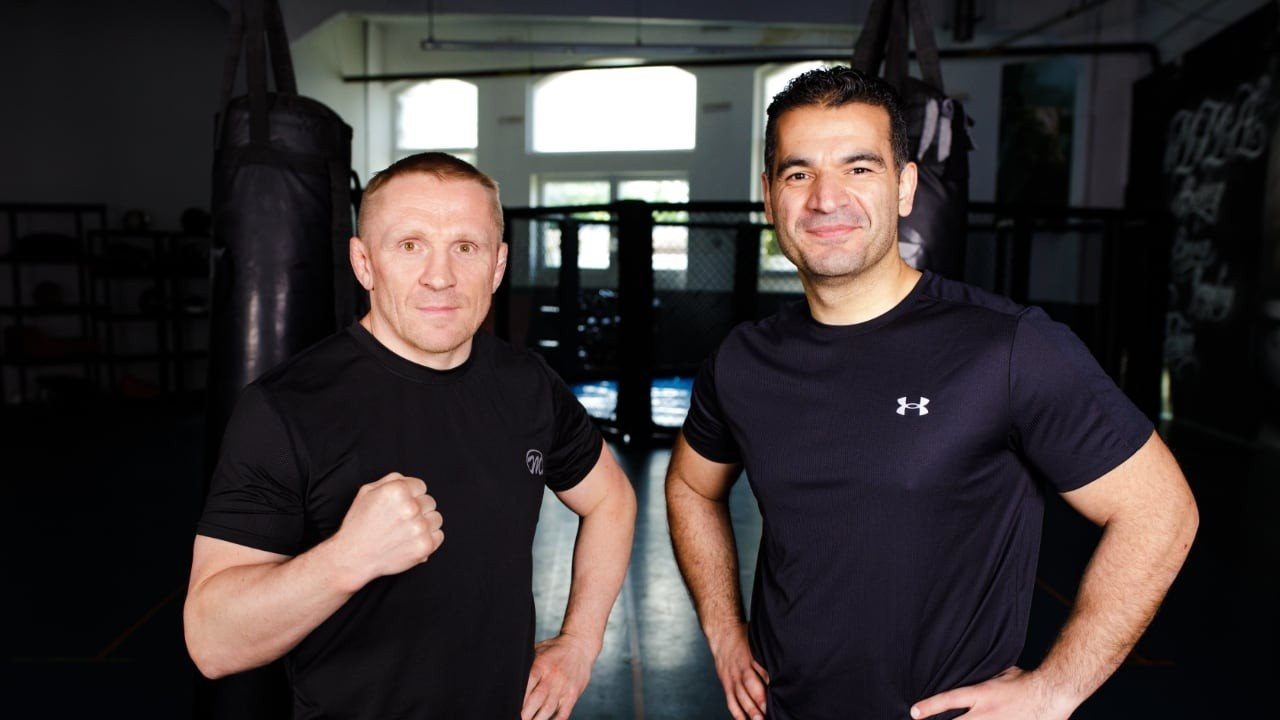
Dennis, thank you so much for your time today. You’re very welcome. And where better to talk to a guy like you than in an octagon? That’s why we’re right here in front of the octagon today. Later we’ll go inside, do some pad work, and I think I’ll start with the first questions. Exactly, let’s do that. First question, Dennis, and that is: you’re a pretty laid-back guy. I know you a little bit outside the ring and the octagon. You’re very easygoing, and you’re easy to talk to.
How do you manage to be such a relaxed, easygoing person on the one hand, and then immediately switch into beast mode in the ring or octagon, giving it your all from zero to one hundred? Good question. I think it’s a work ethic, because as soon as the bell rings, it means you have to go full throttle. And that’s what you always do in the octagon or the ring. So it’s just like work for me. And then I try to give my best and just win the fight.
Switching between competition and everyday life
Of course, that includes aggression, motivation, and action. And in normal life, unless you absolutely need that, you try to conserve it all and approach life normally. Like I said, calm and collected. And what emotions do you have right before a fight? I mean, when you know it’s about half an hour away, and you have to jump right into the fight, so to speak. What do you feel then? How do you deal with your emotions? Well, you’re tense, you’re definitely excited, because you’ve worked hard for it, you’ve prepared, you have a responsibility, you don’t want to lose, you want to show your best side.
That’s why it’s a moment where you’re really focused and trying to give your best performance. You kind of get tunnel vision, you could say. And yeah, it’s hard to describe if you haven’t done it yourself. But maybe people who’ve taken an exam or something can imagine it. It’s kind of like this: you’re doing something you’ve prepared for a long time, and then you give it your all. Does fear also play a role?
Fear and concentration before the fight
So, are you perhaps even afraid of getting knocked out, of getting hurt in some way, or do you completely block that out? No, you shouldn’t have thoughts like that, otherwise you can’t focus on the fight. I try to see it as if I’m going into a game and just playfully trying it out, finding out who is faster, simpler, or stronger, who can do certain things better.
Excitement as part of the competition
And that’s when it works best. Of course, excitement is important, otherwise you’re not focused enough, but you can’t be afraid, because if you’re afraid of getting hurt or risking injury in a sport like this, there’s no point in doing it at all. Do you also train your emotions and your thoughts in any way? Is mindset training relevant for you before a fight, or is it purely physical training that you focus on?
I think it all belongs together, because every tough workout also requires a certain level of concentration. Body and mind always have to be in sync. I don’t do any extra mental training or anything like that; I don’t need it. There are people who need it, and some have even tried it, but I’ve always been able to manage it myself. I can always stay focused and clear-headed, and so far it’s always worked out well. And you mentioned motivation earlier. How important is motivation to you?
Okay, let me give you a little background. I’m not entirely convinced that you need motivation to do the things you want to do really well. I want to be able to perform well even on days when I’m not feeling motivated. What about you? Because I imagine your training sessions are extremely tough, extremely long. I had the chance to train with you once. I know it’s not easy to keep up with you. But do you actually need motivation to do such hard training sessions?
Motivation during preparation
I think you need motivation for everything in life, definitely in general, because if I’m preparing for a fight, that takes several weeks. Of course, there are days when you’re not motivated, but you still have to stick to your training. That’s where a certain level of professionalism comes in. But overall, you absolutely need motivation to prepare for something big. Otherwise, there’s no point in even starting, because, well, without certain goals in mind, which is what motivation is all about, you’ll never achieve anything in life.
That’s just my attitude. But what would you consider important? Motivation or discipline? Both. One doesn’t work without the other, because we’re all motivated to achieve and do things in life, but often lack the discipline to follow through, like daily training, tough workouts, or regular training. Sometimes, though, there’s just a day or a few hours where you simply don’t want to do anything or want to do something else.
But you have to force yourself to go to training and push through tough workouts. Discipline is part of that. Diet plan and all that. It’s not something you achieve through motivation alone; you have to be motivated to stick to it. That’s why I think these two components are always intertwined and go hand in hand. You were the first German to be under contract with the UFC, the Ultimate Fighting Championship.
The first UFC contract as a dream come true
How did it feel for you to be, so to speak, the first person from this country to compete? It was a good feeling, of course. A good feeling. It was my dream come true. I’d worked towards it for a long time, and it was something special. It’s like, I don’t know, like fulfilling a wish you’ve made for yourself at some point in your life. And yes, being the first was definitely something special back then. So, as I said, it was like my wishes coming true. And how long did you work towards it?
Yeah, well, I’ve always done martial arts, ever since I was 13 or 14. UFC and MMA were still relatively new back then. I mean, in MMA, I had to fight my way up for about four years, in various small events and organizations worldwide, before I finally made it to UFC. But otherwise, like I said, martial arts and becoming a professional athlete has always been my dream. Yeah, the commentator Joe Rogan once said about you, “Your spinning back kick is just amazing.”
Proud of one’s own technology
He raved about you. I saw videos about it on YouTube. It’s great, of course, that you’ve also managed to, well, let’s say, leave a name for yourself with your achievements. Is that something you’re proud of? I’d say that you tell others, hey, I’ve already accomplished something that maybe others haven’t. So how do you deal with that situation? Yes, it’s definitely something nice, because, as you said, when you’re mentioned by name somewhere, or even just a little bit in the history books, you could say, you’re kind of written down.
A special moment in the UFC
There are a lot of highlight videos and things like that where I’m featured. Back then, I was one of the first to knock someone out twice, and those were always the knockouts of the night. So it’s something special. Also, like I said, I spent a lot of time practicing, learning, and perfecting the technique, and then it all comes together. That’s something special and a real reward for you as an athlete, for something you’ve been doing for a long time and working towards.
And you just mentioned techniques. MMA, or Mixed Martial Arts, thrives on the fact that so many different sports come together. I think the core sports could be described as wrestling, kickboxing, boxing, and Brazilian Jiu-Jitsu, I’d say. How do you manage all these different sports? Do you focus on one sport or do you do roughly the same amount of everything? The reason I’m asking is that I’m always faced with the same question: do I focus on my strengths or on my weaknesses?
Training in all areas of martial arts
How did you deal with the situation? First and foremost, you have to try to do everything so you get a bit of an overview of everything. You have to be involved everywhere, because the fight shifts from standing to the ground and everywhere else. Just like in life, situations arise, and you have to be able to do something in every situation to survive. And if you only train your strengths, your weaknesses won’t improve. Eventually, people, your opponents, will exploit that because they’re studying you, they’re looking at what you can and can’t do.
And if you only have obvious weaknesses, they’ll be exploited immediately. That’s why I tried to do everything I could and focus on my weaknesses, because there was a deficit there. That had to be compensated for. And of course, the strengths just kind of came naturally, because they were things you were already good at or had learned from before. I started with kickboxing. I brought some things with me simply because I’d already done them, and I tried to balance the rest and develop it to the point where there’s a system where you have seamless transitions, so that you can no longer be said to be a one-dimensional fighter, but rather that you have a complete package and can compete anywhere.
Learning from one’s own career
That was just the goal. Now comes a slightly unfair question, but looking back, what should you have trained more of, and when did you realize that you should have done more of something? Well, if I were to start all over again, I’d probably start with ground fighting and wrestling a bit earlier. I only learned that later. Of course, you don’t learn things as well later in life as you do now as a child, like kickboxing or something.
But otherwise, I wouldn’t change much. Maybe I’d improve a few things, little details, or pay more attention to them, but overall, I’d leave it as it is. Dennis, you have incredibly tough training sessions. You train twice a day, several days a week. How do you manage that, coming back to the topic of motivation? Are there days when you just don’t feel like training, but you know you have to?
And when a day like that comes along, how can you still persuade or convince yourself that you have to go all in on training again? Yes, of course I have days like that too. I think everyone does at some point in their life. But as I said, a certain professionalism compels me to do it, because of the higher goals. You always have to keep your goal in mind and always consider, weigh things up. What’s important to you? What do you want to achieve? And of course, nothing in life comes without effort.
Stick with it even on difficult days.
And as I said, especially at this level, if you have an important fight coming up, you have to train, whether you want to or not. It’s fine if you do a little less one day, ease up a bit, but you still have to force yourself to go to training and give your best that day, because if you stop doing it, you won’t stay at that level for long. And that’s the problem. And since my goal is always to progress, to keep getting better, can I afford to do that?
Just being dependent on your mood and seeing the whole thing as fun. That’s hard work, and it takes a lot. Have you viewed your sport more like, let’s say, a marathon, where you have to consistently deliver your performance over a very long period, or more like a sprint, where you have to deliver at a peak for a certain time and then can take a break? Well, I don’t think you can do that in our sport. We see it that way as a marathon, because our performance curves go up and then down again, because we need a certain break between our preparations and the race, where we train a little less, not completely stop, but maybe take a few days off, but not drop to 20 percent.
Daily training routine and intensive preparation
So, I always try to maintain 60 to 70 percent of my training volume consistently, and then, for the six, seven, or eight weeks leading up to a competition, comes the preparation phase. Then, of course, the intensity increases, the workload rises, you have to cut weight, so you simply train more and try to get your body back up to 100 percent. But, as I said, unfortunately, you can’t do that for a whole year because at some point your body becomes overloaded, then injuries occur, and illnesses arise.
Therefore, as I said, you can maybe maintain your best form for two or three weeks, if that, and then you have to slow down, otherwise something will happen. It’s like that. So I think the body is incredibly important, but how do you manage to keep your mind and body in sync? Well, you obviously have to take care of your body. They say a healthy mind resides in a healthy body. That means you always have to make sure you’re feeling well, that you’re eating right, that you’re taking enough breaks, that you’re resting, regenerating, and sleeping properly.
Physical requirements and mental condition
These are all important factors. And when everything works, you feel completely different. You’re more mentally motivated and in a better mood. Consequently, you perform better in training and in life. And as I said, it’s all interconnected. Or it’s a chain of circumstances you have to pay attention to to make it work. You can’t just work with your mind or your body in isolation. These are factors that, as I said, can’t exist without each other.
And what about mental recovery? Do you do anything specific, like walks, outings, or just a lot of free time? What do you do to let your mind rest from the demands of sports? Yeah, just switching off. Just going for a walk. Or maybe watching a movie or something. Just taking an hour for yourself, once a day when you’re not stressed, just doing something you enjoy.
Finding balance and relaxation
I don’t know, maybe I’ll read something. Just something calm, something to unwind with. That’s usually enough for me to get back in shape and feel motivated for my training again. I have another question, maybe a bit more MMA-related. It’s about weight cutting, which is typical practice. I heard you cut up to 8 kg before a fight. Is that correct? Yes, that’s correct. Exactly, within 24 hours. Of course, a lot of that is due to water loss, but it seems like a huge mental strain for me.
Let me put it this way, just before the fight, which is crucial, you need to prepare yourself physically and mentally, figuring out who you can eat and drink. Is it a mental strain? Such a drastic weight loss within just a few hours? Yes, absolutely, without a doubt. It’s a feat of strength comparable to, or even more energy-intensive and demanding than, the fight itself, because the fight itself lasts 15 minutes. If it’s a title fight, 25 or 30 minutes in total.
The load before weighing
And a process like cutting weight takes days, weeks. You start in the preparation phase with a light diet and lose a few grams, maybe a few more kilograms, and then the rest, as you said, for me it was always around 8 kilos in the last 24 hours before the scale. And that’s quite an effort. And if you’re not mentally focused and clear-headed, then it won’t work, because your body is exhausted.
You’re thirsty, you’re hungry, but you might still have to keep going because you’re still a kilo or two short, and then you just can’t go on. You have to push through that. Completely switching off becomes necessary. You really have to think like a robot, or be programmed to stop thinking and just do what you’re doing, keep your goal in mind, and work towards it. Otherwise, it won’t work because you’ll easily burn out. Especially if, like I said, you’ve lost 8 kilos of water, then all you can think about is drinking.
The battle before the battle
And then you really have to be able to control yourself. I didn’t even know you could actually compare it, that it’s also a fight before the fight, so to speak. That’s worse than a fight. Wow. Yeah, totally intense. Dennis, I’ll get to my last question before this one in a moment, but maybe for our listeners. If someone wants to follow you online, where’s the best place for them to do that if they want to find out more about you, see what you’re up to? Yeah, the usual stuff, Facebook, Instagram, just search for my name.
Dennis Sivers’ defining mindset
There are channels there, I don’t know, pictures, training tutorials, a few videos for people who are interested or who follow the whole thing. The usual stuff, yeah. Great. Definitely worth following. Now let’s get to my last question, which I always ask every guest at the end because it’s personally very interesting to me. What motto has had the biggest and most positive influence on you in your life? Well, my driving force in life would be: nothing comes from nothing.
So, basically, that means you have to earn everything in life. You only get a few things handed to you, and the best things have to be earned. Be it in sports, or in life in general, your career, or anything else. If you don’t do anything, you don’t reap anything. And that’s always been my driving force. Wow. Guys, I hope you enjoyed the interview as much as I did. I really learned a lot. Above all, I learned that nothing comes from nothing.
And the fact that you need hard work to have everything and everywhere that’s worth your time. I think you can definitely learn a thing or two about discipline from Deniz Seber. Two training tutorials a day, several days a week. I’m totally impressed. Deniz, thank you so much. I hope I was able to help. That was really fun. I was able to turn it on. Yes, definitely. And guys, subscribe to the channel. Leave me a like if you enjoyed the episode, and don’t forget, mindset is everything.
This transcript was automatically generated using Whisper AI and may contain occasional errors.
Keywords
Tags: Dennis Siver, UFC, MMA, mindset, motivation, discipline, combat sports, mixed martial arts, mental strength, spinning backkick, Ultimate Fighting Championship, weight cutting, training philosophy, Beast Mode, Project Mindset
Names and terms
Dennis Siver, Reza Mehman, Joe Rogan, UFC (Ultimate Fighting Championship), MMA (Mixed Martial Arts), Octagon, Spinning Backkick, Brazilian Jiu-Jitsu, Kickboxen, Boxen, Ringen, Pratzentraining, Weight Cutting, K.O. des Abends, Project Mindset
Quotable passage
Dennis Siver, the first German UFC fighter, describes his driving force in life with the words: “Nothing comes from nothing.”
For him, motivation and discipline are not opposites, but two sides of the same coin.
Fear has no place in the Octagon: those who allow it block their minds and cannot fight freely.
Instead, he views every fight like a game and playfully tries to find out who is better.
His advice applies not only to fighters: “Life’s best things have to be earned.”
You can find more interviews about athletic goals and mental strength at Project Mindset.