Abundance Mindset: Plenty instead of envy
Why there is enough success for everyone and how you can leave the scarcity mindset behind.
Introduction
The abundance mindset is one of the most powerful thought models for personal growth and a fulfilling life. In this episode of Project Mindset, Reza Mehman explains what lies behind the concept coined by Stephen Covey and why there are enough resources and opportunities for success for everyone. The starting point is a personal story: A friend of Reza’s lands a PhD position at Harvard, but instead of joy, he encounters envy and rejection from some. Reza demonstrates how to shift from a scarcity mindset to an attitude of abundance. This involves concrete strategies such as changing perspectives, sharing knowledge, and consciously perceiving one’s own emotions. Anyone who wants to learn to let go of envy and see opportunities instead of limitations will find valuable insights in this episode.
Summary
In one sentence
The Abundance Mindset means that there is enough success and resources for everyone, and those who internalize this overcome envy and discover new opportunities.
In three sentences
The abundance mindset, coined by Stephen Covey, describes the belief that resources, successes, and opportunities are plentiful. The opposite, the scarcity mindset, leads to feelings of envy and a focus on limitations rather than possibilities. Reza Mehman uses a personal story to illustrate how a shift in perspective, gratitude, and sharing knowledge can cultivate an abundance mindset.
In five sentences
The abundance mindset, a concept developed by Stephen Covey, is based on the idea that resources and successes are available in sufficient quantity for everyone. The opposite is the scarcity mindset, where one believes that the success of others diminishes one’s own opportunities. Reza Mehman recounts how a friend, despite having a doctoral position at Harvard, experienced envy instead of joy from those around him. He describes concrete strategies for combating envious thoughts: becoming aware of abundance, recognizing emotions, changing perspective, and actively sharing knowledge. The central message is that shared joy, love, and knowledge multiply rather than diminish.
Context: Who, What, Why
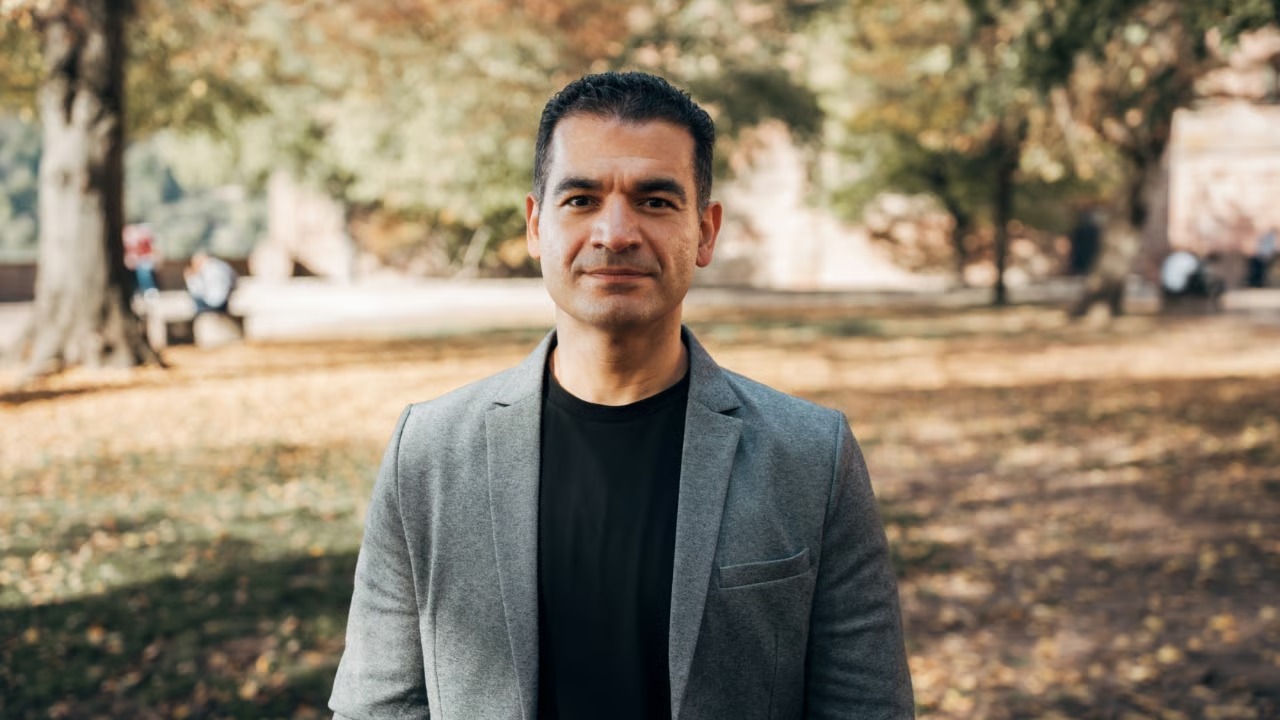
Who is speaking: Reza Mehman, host of the podcast Project Mindset, shares personal experiences and thought models for personal growth.
What is it about: Stephen Covey’s Abundance Mindset and how to move from a scarcity mindset to an abundance mindset.
Why is this relevant? Envy and resentment are widespread and sabotage relationships, careers, and personal happiness. The Abundance Mindset offers a concrete alternative that is effective in both professional and private life.
Three key questions of the episode
- What exactly does Abundance Mindset mean and how does it differ from Scarcity Mindset?
- Why do people react with envy to the success of others?
- What specific strategies help to develop an abundance mindset?
Table of contents
- Introduction – Why the Abundance Mindset Changes Your Thinking
- Summary – The episode summed up
- context – Who is speaking, what is it about, why is it important
- Topics and classification – The central topics
- Key messages – The most important messages
- Frequently Asked Questions – Answers about the Abundance Mindset
- Highlight quotes – The most concise statements
- Transcript – Full transcript of the episode
- Keywords – SEO tags and search terms
- Names and terms – Important references
- Quotable passage – For sharing and quoting
Topics and classification
1. Abundance Mindset vs. Scarcity Mindset
The central contrast of the episode: abundance thinking versus scarcity thinking. Stephen Covey coined the term and describes how one’s basic attitude determines whether one sees opportunities or limitations.
Keywords: Abundance Mindset, Scarcity Mindset, Ueberflussdenken
2. Overcoming envy and resentment
Using a personal story, Reza shows how envy can destroy relationships and why it is worthwhile to actively decide against envious thoughts.
Keywords: Overcoming envy, resentment, recognizing emotions
3. Changing perspectives as a tool
Those who recognize an emotional trigger can consciously change their perspective and derive their own opportunities from the success of others.
Keywords: Change of perspective, change of mindset, personal growth
4. Sharing multiplies value
Joy, knowledge, and love increase when shared. This principle lies at the heart of the Abundance Mindset and is also the motivation behind the podcast itself.
Keywords: Sharing knowledge, sharing joy, multiplication
5. Evolutionary Roots of Scarcity Thinking
Reza classifies envy as a natural, evolutionarily conditioned behavior that originates from times of scarcity but is outdated in modern times.
Keywords: Evolution, scarcity thinking, natural behavior
Key messages
- Abundance means that there are enough resources and successes for everyone in the world.
- The scarcity mindset makes one believe that the success of others diminishes one’s own opportunities.
- Envy is a natural, evolutionarily conditioned feeling, but one can consciously overcome it.
- Those who celebrate the success of others, instead of being envious, discover new opportunities for themselves.
- Joy, knowledge, and love multiply when shared.
- The first step against envy is to consciously perceive your own emotion and recognize the trigger.
- A change of perspective transforms envy into gratitude and inspiration.
- Those who do not support others limit themselves the most.
- Abundance mindset is not innate, but an attitude that can be actively cultivated.
- In today’s world, there is enough objectivity for everyone; one just needs to be aware of it.
Frequently Asked Questions
What is the Abundance Mindset?
The abundance mindset is a way of thinking that assumes resources, successes, and opportunities are plentiful. The term was coined by Stephen Covey and stands in contrast to the scarcity mindset, which is based on scarcity and lack.
What is the difference between an abundance mindset and a scarcity mindset?
With an abundance mindset, one believes that there is enough for everyone and that the success of others does not diminish one’s own opportunities. With a scarcity mindset, one thinks that everything is limited and that the success of others means less to oneself. Scarcity leads to envy, abundance to gratitude and new possibilities.
Who coined the term Abundance Mindset?
The term “abundance mindset” was coined by author Stephen Covey in his book “The 7 Habits of Highly Effective People.” He uses it to describe the belief that there is enough success and resources for everyone.
How can I overcome envy?
Reza Mehman recommends three steps: First, realize that there is enough for everyone. Second, recognize your own envy and identify its trigger. Third, actively change your perspective and consider the positive aspects or opportunities that the other person’s success offers.
Is envy a natural feeling?
Yes, envy is a natural, evolutionarily conditioned feeling. In earlier times of scarcity, hoarding resources was vital for survival. In today’s world of abundance, however, this way of thinking is no longer relevant and can be consciously overcome.
Why does knowledge multiply when it is shared?
Knowledge, joy, and love are intangible assets that do not diminish through sharing. On the contrary, shared knowledge can create new ideas, connections, and opportunities. Sharing is a core principle of the abundance mindset.
How can I train an abundance mindset?
You can cultivate an abundance mindset by becoming aware of your existing abundance, recognizing emotions like envy early on, and shifting your perspective. Furthermore, actively sharing knowledge, joy, and successes with others helps to strengthen this attitude of abundance.
What does an abundance mindset have to do with changing perspectives?
Changing perspective is a key tool of the abundance mindset. Instead of seeing the success of others as a threat, one asks oneself what positive opportunities arise for oneself. In this way, envy becomes inspiration and limitations become opportunities.
Selected statements from Reza Mehman
“Abundance means that there are enough resources and successes for everyone in the world.”
“If someone else gets something, then there’s less for me. So you see limitations rather than opportunities.”
“There are things in life that, when shared, actually multiply. That is joy, or love, or knowledge.”
“When you feel envy and begrudge others their success, you don’t actually think about whether you could benefit from it in any way.”
“Abundance is not something that we acquire, its something we tune into.”
– Wayne Dyer, quoted by Reza Mehman
“I think children are also a very good example of how they always want to have everything immediately and hoard it for themselves. I think that’s a completely natural behavior.”
“There are enough resources from everyone, and it’s better to share resources because potentially more can be created.”
The full conversation
Hi everyone, this is Reza Mehman, and you’re listening to episode 17 of the Project Mindset podcast. I was recently walking along the Neckar meadow here in Heidelberg with a friend, and after a while, he rather sheepishly and shyly told me that he’d finally landed his long-awaited PhD position at Harvard, one of the most prestigious universities in the world, you could say. I was incredibly happy for him, and I said, “Hey, why are you just mentioning this in passing instead of shouting it from the rooftops? It’s something to be really proud of, and I’m really proud of you too.”
He then told me that he’d also shared this with other people in his close circle, and that apparently there were a few among them who were a bit envious of him and obviously couldn’t stand the fact that he could now do something so cool. And apparently, there was even someone who turned away from him after hearing this news. I find it pretty shocking that people just can’t stand to see you achieve things like that, and that’s how today’s topic came about: Abundance Mindset. I first heard about it from an author named Stephen Covey, who said that abundance means there are enough resources and successes for everyone in the world.
Distinguishing between abundance and scarcity thinking
Abundance can best be roughly translated as surplus or abundance, and in my view, this means there’s absolutely no need to be envious when someone else gets a raise, a PhD position, buys a cool car, or whatever, because there’s enough, or rather, an abundance of resources is already there. The opposite of abundance would be a scarcity mindset, a kind of scarcity mindset. You think, or you feel, that there’s simply not enough of everything.
If someone else gets something, then there’s less for me. So you tend to see limitations rather than opportunities. And interestingly, in my friend’s case, this abundance mindset immediately came to mind. Personally, I can say I’m incredibly proud that I know someone, or can call someone a friend, who’s doing their PhD at Harvard. And honestly, I’ll probably even brag about it to other friends here and there, saying, “Hey, I know someone who’s doing their PhD at Harvard.”
Of course, I’m joking, but it makes me incredibly proud. And that’s the complete opposite of a scarcity mindset, in my opinion, and I’ll come back to the fact that I, too, unfortunately suffer from scarcity from time to time, to be honest. But I always try to cultivate this abundance mindset for myself, everywhere I go. In my friend’s case, my second thought was something else that also leans a bit towards abundance, though perhaps even a touch more selfish.
See the successes of others as new opportunities
But I just thought, wow, if my kids ever get the idea, and they have the grades and achievements, to study in the US, and especially at Harvard, then I know someone we can just ask, hey, how do you actually apply to Harvard? What’s the best way to get there? Are there any tips, tricks, and so on? Abundance is exactly that. You tend to see the positive things. You see something that has happened from a perspective that makes you happy, that makes you think about how you might even be able to use it for yourself, and that makes you grateful that you even found out about it happening at all.
But let’s get back to scarcity, to the scarcity mindset issue. I think everyone experiences envy from time to time. I’ll be honest, it happens to me too. And I think that’s perfectly normal for people. I think it has something to do with the fact that we’ve all basically been through a time of scarcity where everything was scarce. Everything was, let’s say, you had to hoard to have enough to live on, and so on. And that probably persisted over the centuries and millennia.
Perceiving one’s own feelings of envy
That’s probably why you still feel a little bit of envy or scarcity here and there. But I think in this day and age, you can really say there’s an abundance of everything. Nevertheless, I’ve been thinking about how I can avoid it altogether. I mean, it’s not about situations like with my friend, where I was extremely happy, but rather how can I prevent myself from feeling even the last vestiges of envy and scarcity? Several things came to mind that I’d like to talk about a bit more today.
And the first thing, which I just touched on a bit, is that I’m always aware of it. I always remind myself that there’s enough of everything in the world. There are simply enough resources. There’s enough information. There are enough people. There are enough opportunities. There’s always enough of everything. You really have to be aware of that. And the second thing, where I think, okay, I don’t need an envy mindset or a scarcity mindset at all. I’ve reminded myself that there are things in life that, when shared, actually multiply.
What becomes more through sharing
You know the best examples. It’s joy, love, or knowledge. When you share these things, they don’t become scarcer; on the contrary, there will be more of them. One of the reasons I started the podcast was precisely this point, something I wanted to make or achieve for myself. The things I observe, I share with other people, and perhaps they will help others. And if all else fails, you know my plan B: my son and daughter have to listen to everything I say here.
But I find it extremely important to share knowledge, share love, share joy, because then there’s more of it in the world. Another thing that came to mind about how to avoid falling into a scarcity mindset is, of course, as always, and I’ve already talked about this a few times, to really become aware of these emotions, that you’re currently experiencing them. You might have an emotion that says, “I’m envious.” Because then you know there was a trigger, and you can react to it to avoid digging yourself deeper into these emotions and never getting out of them.
Start with a change of perspective
Once you’ve recognized this trigger, once you understand, “Okay, I’m feeling a kind of envy right now,” then you can completely try to change your perspective. The perspective could be, for example, like I said to my friend, “He got a cool PhD position.” My perspective is, “Wow, cool! I have a friend in my circle of friends I can proudly tell that he’s doing his PhD. If my kids want to study there someday, I can make direct contact and we can start talking right away.”
So, changing your perspective is, I believe, the best thing you can do in such a situation if you feel envy. Because if you feel envy and begrudge the other person their success, then you don’t actually consider whether you could benefit from it in some way. I’m not saying you could benefit financially or anything like that, but you limit yourself if you simply dwell on these thoughts of envy. I think there’s a very nice quote about this: “Abundance is not something that we acquire, it ‘s something we tune into.” The quote is by Wayne Dyer.
Develop an attitude of generosity
And I believe that’s actually something; an abundance mindset, I think, isn’t something that develops naturally or that you don’t have from the beginning. I think children are a good example of how they always want everything immediately and want to hoard things for themselves, and so on. I think that’s quite natural behavior. But with today’s mindset, with today’s knowledge, we should all try to adopt this mentality. There are enough resources from everyone, and it’s better to share resources because potentially more can simply be created that way.
Okay guys, that was a really short story I just had to share with you. I think the topic of abundance mindset is extremely important, and I can absolutely recommend Stephen Covey on the subject. He’s written a lot of great books. Definitely check them out. I hope you enjoyed the episode. I hope you were able to take something away from it. If so, as always, leave a quick like or a review, and tell your friends about it. I would really appreciate it. See you next time!
It was really fun, and don’t forget, mindset is everything.
This transcript was automatically generated using Whisper AI and may contain occasional errors.
Keywords
Tags: Abundance Mindset, Scarcity Mindset, Stephen Covey, Overcoming Envy, Abundance Thinking, Perspective Shift, Personal Growth, Mindset Change, Knowledge Sharing, Project Mindset, Reza Mehman, Gratitude, Scarcity Thinking, Celebrating Success, Recognizing Emotions
Names and terms
Reza Mehman, Stephen Covey, Wayne Dyer, Harvard, Heidelberg, Neckarwiese, Project Mindset, Abundance Mindset, Scarcity Mindset, The 7 Habits of Highly Effective People, PhD, PhD position, change of perspective, triggers, emotion regulation, abundance mindset, scarcity mindset
Quotable passage
“The Abundance Mindset according to Stephen Covey means that there are enough resources and successes for everyone.”
“Those who feel envy see limits instead of opportunities and limit themselves.”
“Joy, knowledge, and love multiply when shared.”
“Changing perspectives transforms envy into gratitude and opens up new opportunities.”
You can find more episodes and personal insights at Project Mindset.