Find your personal why
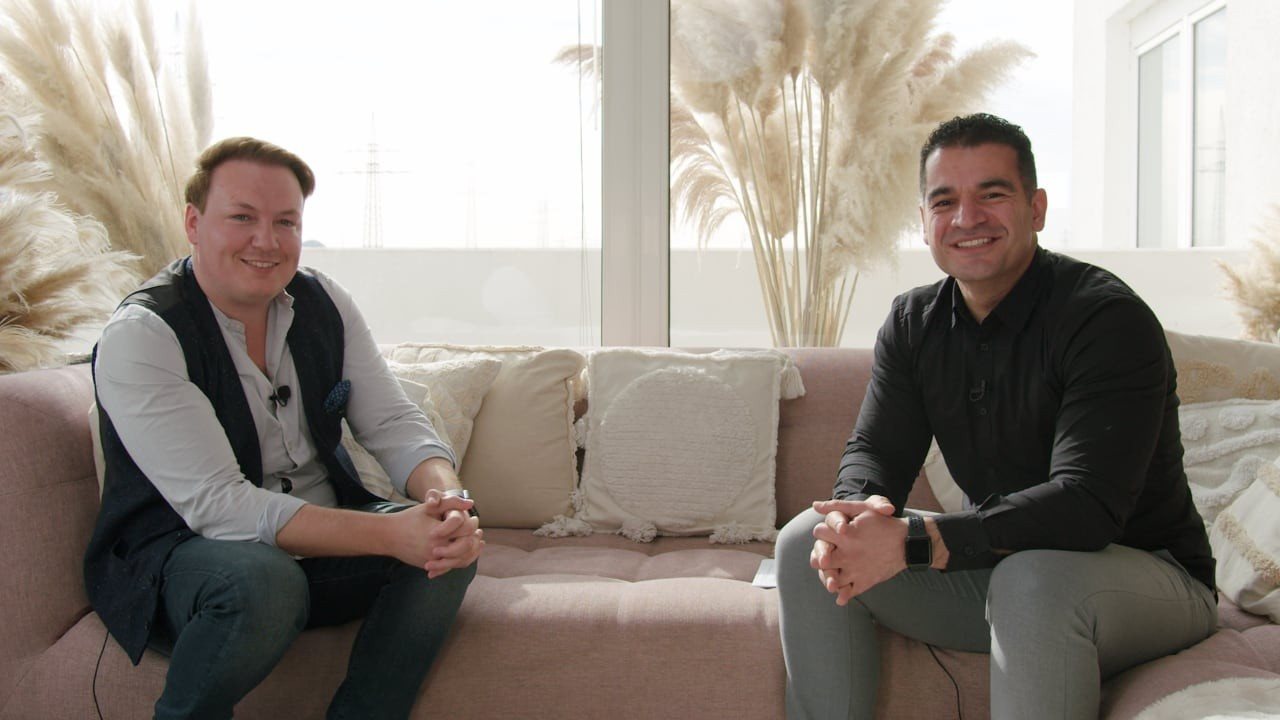
Daniel Schäfer in conversation with Reza Mehman about the purpose of existence, values and life goals
Introduction
Finding your personal “why” is one of the most crucial tasks on the path to a fulfilling and self-determined life. In this Project Mindset episode, Reza Mehman speaks with founder and entrepreneur Daniel Schäfer. They explore how he discovered his purpose and the steps involved. Daniel shares his journey from founding a startup to formulating a personal guiding principle. Along the way, he realized success alone did not bring happiness. It’s not just about business goals, but about the fundamental question of what truly motivates and fulfills you. They also discuss values and whether your “why” can change over time. Another question is how to pass it on to the next generation. This episode provides concrete inspiration for anyone who asks themselves why they do what they do.
Summary
In one sentence: Daniel Schaefer explains how he found his personal “why” through self-reflection, literature and coaching, and why this guiding principle serves as his compass both professionally and privately.
Short summary: Daniel Schaefer describes his journey to discover his personal “why”: to inspire and entertain people. This overarching “why” has helped him make clearer career decisions, such as leaving his first startup and founding a new company. Furthermore, Daniel and Reza emphasize the importance of values as the foundation for one’s “why” and as a basis for relationships and life choices.
Detailed summary: In this episode of Project Mindset, Daniel Schaefer speaks candidly about how he found his personal “why”: to inspire and entertain people. This process wasn’t a sudden epiphany, but rather the result of years of reflection, internal coaching within his startup, and inspiring books like “Coffee at the Edge of the World” and “The Big Five for Life.” Daniel explains how his “why” helped him understand why certain activities come easily to him while others hold him back. They discuss whether one’s “why” can change over the course of a lifetime,the role of personal values, and why a shared value system is so important in relationships. Finally, Daniel offers insights into how to help children discover their own “why” and why curiosity is the most important driving force in this process.
Context: Who, What, Why
Who is speaking: Reza Mehman, host of Project Mindset, in conversation with Daniel Schaefer, serial founder and entrepreneur, who co-founded the start-up Staffbase and is currently developing agile management solutions for SMEs with his new company 2XX.
What is it about: This episode revolves around the question of one’s personal “why,” one’s overarching purpose in life. Daniel Schaefer shares his journey of discovering his guiding principle through self-reflection and literature, and how this principle serves as his compass for professional and personal decisions. The episode also explores topics such as values, changing values, and passing on meaning to the next generation.
Why is this relevant? Many people feel an inner dissatisfaction without knowing its cause. Exploring one’s own “why” can help make more conscious decisions, break free from energy-draining activities, and lead a more fulfilling life.
Three key questions of the episode:
- How do you find your personal “why” and what does it mean in everyday life?
- What role do personal values play as the foundation of one’s “why”?
- Can one’s “why” change over the course of life,and how does one deal with that?
Table of contents
- Introduction – Overview of the episode and its relevance
- Summary – The most important points in brief
- context – Who is speaking and what is it about
- Topics and classification – The central themes of the episode
- Key messages – Key findings at a glance
- Frequently Asked Questions – Answers to the episode’s central questions
- Highlight quotes – The most memorable statements by Daniel Schaefer
- Transcript – Full transcript of the episode
- Keywords – Relevant search terms
- Names and terms – Important references from the episode
- Quotable passage – Key message to share
Topics and classification
1. Find your personal “why”
Daniel Schaefer describes his multi-year process of discovering his personal “why.” Inspired by books like “Coffee at the Edge of the World” and “The Big Five for Life,” he has formulated his guiding principle: to inspire and entertain people.
Keywords: personal why, purpose of existence, finding life’s purpose
2. Values as a foundation
Personal values such as honesty, loyalty, and gratitude form the foundation upon which the “why” is built. Daniel explains why values come before the “why” and how they serve as guiding principles for decisions.
Keywords: personal values, value system, value compass
3. Entrepreneurship and finding meaning
As a serial entrepreneur, Daniel has learned that different phases of a startup contribute to one’s “why” to varying degrees. The founding phase, with its creative energy, aligns better with his “why” than the scaling phase.
Keywords: Start-up founding, finding meaning in one’s work, entrepreneurship
4. Changing values and relationships
Values can change over the course of a lifetime,and a shared value base in relationships is essential. Different value systems inevitably lead to conflict, while shared core values create connection.
Keywords: Changing values, shared values, partnership, value conflicts
5. Passing on the “why” to the next generation
Daniel talks about how he wants to teach his future children to find their own “why.” The focus is not on providing answers, but on fostering curiosity and enabling experiences.
Keywords: Teaching children values, fostering curiosity, education, finding meaning
Key messages
- The personal “why” is an overarching guiding principle that serves as a compass in both professional and private life.
- The “why” doesn’t emerge overnight, but is the result of a reflection process that often lasts several years.
- Daniel’s personal “why” is to inspire and entertain people, which he describes as “making others’ eyes sparkle.”
- One is only “lazy” in those things that do not correspond to one’s own “why,” because one resists them internally.
- Values such as honesty, loyalty, and gratitude form the foundation upon which the “why” is built.
- In startups, the founding phase is particularly focused on the “why,” while the scaling phase is more administrative in nature.
- A shared set of values in relationships is essential, as differing core values lead to lasting conflicts.
- Values can change over the course of a lifetime, for example through formative experiences or new phases of life.
- Children should not be told their “why,” but rather their curiosity should be encouraged and they should be allowed to gather their own experiences.
- Worse than not knowing your why is knowing your why and still not changing anything.
Frequently Asked Questions
What is meant by the personal “why”?
Your personal “why” is an overarching guiding principle that describes what truly motivates and fulfills you. It’s not about individual goals, but about the deeper purpose of your existence,which guides both professional and personal decisions.
How do you find your personal “why”?
Finding your own “why” is a process that takes time. Daniel Schaefer recommends self-reflection, coaching, and inspiring literature such as “Coffee at the Edge of the World” or “The Big Five for Life.” It helps to ask yourself which activities give you energy and which drain it.
Can one’s personal “why” change over the course of a lifetime?
Generally, yes, although a broadly defined “why” is less susceptible to change. However, new issues can arise that contribute to the overarching “why.” Significant life events can also lead to a re-evaluation.
What is the difference between the “why” and personal values?
Values form the foundation upon which the “why” is built. While values such as honesty, loyalty, or gratitude represent the guiding principles of one’s actions, the “why” describes the overarching purpose and motivation. Values, therefore, precede the “why.”
Why is a shared set of values important in relationships?
According to Daniel Schaefer, shared core values are essential for a functioning partnership. If the fundamental values are too different, this leads to persistent conflicts and misunderstandings. A shared value base, on the other hand, creates connection and mutual understanding.
What happens when you know your “why” but don’t act on it?
Daniel Schaefer describes this state as particularly stressful. When you know what’s good for you but act against it anyway, your body rebels: you become irritable, stressed, and angry. According to Daniel, recognizing and changing this state is one of the most important steps.
Which books help in finding one’s own “why”?
Daniel Schaefer particularly recommends “Coffee at the Edge of the World” and “The Big Five for Life” by John Strelecky. Both books deal with the purpose of existence and encourage readers to question and articulate their own “why.”
How can we help children find their “why”?
Daniel emphasizes that children shouldn’t be told their “why.” Instead, their natural curiosity should be encouraged, they should be allowed to try different things, and given the space to gather their own experiences. This way, they can discover their own path and their own motivation.
Highlight quotes
“I always strive for moments that allow me to spark a kind of sparkle in people.”
– Daniel Schaefer
“I actually believe that people are only lazy in those areas that don’t correspond to their own ‘why,’ because they resist them.”
– Daniel Schaefer
“I did things even though I knew what was good for me, things that were just not good for me at all. And my body kept fighting back.”
– Daniel Schaefer
“Values are the foundation on which you build your house. And if the foundation isn’t good, then eventually the house will collapse.”
– Daniel Schaefer
“What’s worse is recognizing your ‘why’ and still doing nothing to get there.”
– Daniel Schaefer
“This overarching theme can be achieved through various and diverse topics. And knowing that for myself really led to me suddenly realizing why I enjoy doing things.”
– Daniel Schaefer
“You have to live curiosity, allow curiosity, and if you remain curious, then you will find your way.”
– Daniel Schaefer
The full conversation
Hi everyone, this is Reza, and today we have a very special episode of Project Mindset. As I mentioned before, I wanted to do an interview with my good friend Daniel Schäfer. That interview has now taken place. The topic was: Find your personal “why.” I think finding your “why” is a very central question in life, and Daniel gives us very honest insights into his personal “why,” how he found it, what goals he derived from it, and what activities he undertook to get closer to his “why” and his goals.
What’s special about today’s episode is that it’s available as a video. So, feel free to go to YouTube, search for “Project Mindset Reza Memann,” and the video should appear near the top. Or, you can visit my website, projectmindset.de, where I’ve included a link that will take you directly to the video. It’s definitely worth watching because we managed to capture some scenes from Daniel and his fiancée’s beautifully decorated home.
A personal introduction to the conversation
I was really surprised by how beautiful the whole thing is in the Bohu style. So I can recommend everyone check it out, but of course you can also listen to the podcast here, the audio-only version, whichever you prefer. Okay, enough rambling, I hope you enjoy it. I did things even though I knew what was good for me, things that just weren’t good for me at all. And my body kept fighting back, and in that defense mechanism you’re constantly irritable, constantly stressed, and constantly angry. I didn’t want that anymore.
Hey Daniel, thanks so much for the invitation today. You have a beautiful home; I’m really, really surprised by all the Bohu-style decor. You’ve obviously put a lot of effort into it. Thank you for that. Yes, thank you for letting me be your guest today. And yes, it’s true,this Bohu-style atmosphere came about because of my girlfriend, or rather my fiancée, who places great importance on the interior design being beautiful. And I always help with weeding all the various types of weeds you see around here.
Thank you so much, and warm regards to your fiancée as well. The reason we’re here today is actually because I find it incredibly impressive how much you’ve grappled with the question of “why.” You’ve given a lot of thought to why you do what you do. That’s exactly what I want to talk to you about today. Could you briefly explain why this question, “why,” is so central to you? Yes, it wasn’t always the case that I gave much thought to my personal “why.”
The question of the company’s purpose
But there were also changes because I started my first startup, and so many things happened during that time. We also brought in a lot of external coaches because we wanted to understand the company’s core values and why it existed in the first place. Up until then, I always thought the company existed because we, as founders, had some idea and pursued a specific goal. But that wasn’t the case at all. The “why” was much bigger than that.
And that was the initial impetus for me to say, okay, I think I need to question my personal “why,” why I enjoy certain topics more, and why others demotivate me. That was the beginning, where, in addition to the internal coaching sessions we had, I also acquired various literature and read books that dealt with the topic. And that’s how it started for me, and gradually the whole thing crystallized for me; it was definitely work.
How the personal “why” became clearer
You just mentioned that when did you gain clarity about your “why” and how did you deal with it from that point on—what did you change in your daily activities? Well, it wasn’t actually that long ago that I became clear about my personal “why.” As I said, it was a process that developed over several years, partly stemming from my last startup in Stafford. And I’d say the final push in that direction, in finding my personal “why,” came at the beginning of last year, when my fiancée and I took a trip to Egypt.
I had the books with me back then. They were *Coffee at the Edge of the World* and *The Big Five for Life*, and the books are about the purpose of existence. That inspired me so much that I said, okay, I actually want to know what the purpose of existence is for me, and then I worked on it and tried to figure that out for myself.
A guiding principle with its own meaning
So it’s not something that suddenly came about and that I just knew was true, but rather I dealt with several topics in the process,which ultimately led me to form what I would call a guiding principle, which, in the interpretation of the whole thing, doesn’t simply contain these words, but really stands for something essential for me. It has actually turned out that this sentence is something I have to follow in order to be happy personally in what I do.
Inspire and entertain people
Now I’m naturally curious. What’s this guiding principle? What exactly is your “why”? Well, for me, there are two key points, two things that are absolutely essential: inspiring people and entertaining them. These are very simple concepts in themselves, but what it means to me is that I always strive for moments that allow me to ignite a kind of spark in people. And this spark—I used to call it euphoria, I always thought I was striving against euphoria—but it’s actually those moments when I manage to inspire people in some way, whether in direct conversations or by evoking joy in them because I get to entertain them in that moment.
And this sparkle, that’s really something that drives me. But I also realized back then that this isn’t necessarily only the case through a specific job or a particular action. But that this overarching theme can be achieved through various and diverse topics. And knowing that for myself really led to a sudden realization of why I enjoy doing certain things, why they come easily to me, and why others completely rub me the wrong way.
The “why” also lives in private life
And with some topics, you always have that “okay, I was lazy there” attitude. But I actually believe that you’re only lazy with topics that don’t align with your “why” or that don’t resonate with your own motivation, because you resist them. But you’re consciously talking not only about your business topics, but also your personal ones. Even in your private life, you seek opportunities to inspire or entertain people. Exactly, and those are the moments of happiness I truly strive for, and I simply try to do things that contribute to that goal.
And if I do that, and if I follow it, then as of today—I can always learn more, of course—I’m certain that I’m balanced and happy. Do you think that “why” can change over time? Yes, I believe the “why,” this overarching theme, can change. Personally, I don’t think it will change too much because I’ve defined it very broadly. However, I’m quite aware that issues might arise that I haven’t considered yet, but which could ultimately contribute to this overarching theme.
For example, I’ve been wondering if I would be happy if I had become a teacher. And I can imagine that’s quite possible, because it can also contribute to that underlying “why” in a certain way. In that position,I could inspire people, I could perhaps even entertain them, I would learn something, and I would have that momentum. The same applies, for example, to becoming an actor; I think I would have the same feeling.
Fulfillment in various professional roles
There, too, I would have had a platform; I could have entertained people, perhaps even inspired them. And there, too, I believe I could have found my personal happiness. For me, it turned out that I found it in entrepreneurship, because—and this was a truly profound realization for me—there are very different phases in a startup. You have this founding phase, where you’re essentially starting from scratch; you have to convince people of things that don’t yet exist. A lot of the “why” comes into play there.
You have to win them over; you basically have to tell them a story that makes them say, “Wow, I think that’s great.” And then you have this scale-up phase, where you’re more involved in the administrative side. For me, in this phase, I was still functioning, but it wasn’t giving me the same satisfaction as in the initial phase. That’s why those are the most exciting phases for me in the startup phase, in this early stage. And that’s where I found my happiness.
Accordingly, towards the end, when I left Staffow, it became clear to me that I wouldn’t be 100% happy there anymore. I simply had to tackle new challenges because that’s what truly fulfills me. This clarity of mind has always impressed me about you. As you mentioned, you’ve already built a very successful start-up, perhaps for our listeners. And now you’re in the process of building something new.
Perceiving one’s own progress
Here too, it’s about inspiring people, accompanying them on their journey. How do you handle that, how do you track your progress now, when you say you’re contributing to this account? For example, doing activities that move you forward with your “why” question. But how do you measure whether you’ve made progress or not? You mean in relation to my personal “why”? Exactly. If I can be a little more specific, do you have a daily to-do list, like, “I have to do these 3, 4, 5 things so that I’ve actually worked on my ‘why’?”
Recognizing fulfillment in one’s own actions
Whether it’s in the business world or in your personal life. Or is it more of a loose, flexible approach for you, with you only tracking your progress every few months? What have I been doing these past weeks and months? How are you progressing? Regarding my personal “why,” I naturally try to tackle topics, especially when I’m starting something myself, that, as I just mentioned, can contribute to this theme.But I don’t track the exact progress of how much they’ve contributed to my “why” in the last week. Rather, it’s more embedded in the activities I’m doing.
For example, with the new company we founded. It’s very much about enabling ideas by empowering people to work freely and independently. And new companies are being formed around this theme. For example, 2XX, my latest startup. It’s really about empowering companies or SMEs through an agile management system. This involves managing directors, fewer meetings, more self-organization. And that’s combined with my overarching personal “why,” which is that I can inspire and entertain people.
Inspiring people with new perspectives
I can see that, because I operate at the C-level. My conversations are with managing directors. I can perhaps introduce them to new topics that they find very inspiring and would like to implement. And that gives me a sense of fulfillment. So, if I achieve that, and if I achieve that with these contacts or managing directors, then it makes me happier. You mentioned earlier that there was a moment when you realized you weren’t entirely happy with the last thing you were doing.
Was it a gradual process? Did you notice it over time, or was it actually a point where you said, “No, now I’ve realized it, suddenly out of nowhere, I have to change something to get back to my ‘why’?” Yes, when companies grow, more and more processes naturally become established within the company, which is perfectly fine. The company develops a life of its own to some extent. That supporting hand you have as a founder at the beginning, where you say you really have to convince people about non-existent issues, you have to guide them onto a path where they say, “That’s what we’re working on now, we see what you see.”
When the role in the company changes
This is naturally more pronounced at the beginning, and once these processes are in place and you’ve established leadership teams, these issues are still there. But they’re no longer as dominant. This is because you’re now focused on operational aspects, figuring out how to achieve the next goals, what you can optimize, and which levers to pull. And this more distant aspect, this issue of what Simon Sinek calls the Infinite Mindset, is no longer present. You’re constantly battling this finite mindset against this infinite mindset.
And I’m very much at home in the Infinite Mindset, and when I realize I’m no longer reaching people with those topics because the timing is different, it drains my energy. I no longer feel balanced; I can’t entertain or inspire anymore because the timing is wrong.
Dissatisfaction as a catalyst for a new path
It may be that this will come back at some point. I also believe that it is sustainably necessary in companies because they always have to reinvent themselves, but in these phases where it is not the case, it is difficult, and for me it was a deep dissatisfaction because I realized that as an entertainer you also have your stage somewhere, which I no longer had in that form.
At some point it became clear to me that I thought I had to do something new, because the company, my own company, no longer needed me in that form, which makes me very, very proud in retrospect, because that was also our goal back then, to become independent. But it was a process to recognize and accept that, knowing full well that that was indeed our goal at the beginning, but when it actually happened, it was still difficult.
Just a quick word about the “why” itself. I’ve also tried to figure out my own “why,” and I’ve noticed that my “why” has changed over time. There was the phase before I had a child, and once the child was there, it was clear that I was doing this because I was able to, for example, take care of my family, etc.
A why for oneself and for others
But what I’ve been wondering is, do we actually need a kind of dual “why”? One “why” is about doing something outwardly, be it family or being an inspiration to others, and perhaps we need a “why” that is totally inwardly directed, where I say I’m doing these things independently of anyone else. So it’s not about inspiring someone else or taking care of someone else. But it’s only about myself.
Have you ever thought about that? That’s a difficult question. I think that even if my “why” is to focus on other people, or to inspire or entertain someone, that’s obviously outward-facing. So it’s supposedly directed outwards in some way, but fundamentally I see it as an inward-facing issue because I’m ultimately the one who benefits from it all. Just because I create the content for others doesn’t mean I don’t ultimately benefit from it.
And so, my goal with this “why” is actually—and I’m selfish enough to say this—that in the end, and really in this case, only I am happy. And so, I don’t know, I can’t tell you if you can handle it that way, if it’s even possible. For me, it’s a single “why,” and this “why” is directed both inwards and outwards. I don’t know if that answers the question. Yes, definitely. It’s definitely heading in that direction. So, for me, the “why” has actually changed over time.
How parenthood can change priorities
As I said,having a child was a very life-changing event for me. Beforehand, I often found myself thinking about the “why.” I have a migration background. My parents came to Germany many years ago. Giving something back was always a bit of a “why” for me, especially to my parents. That was, let’s say, my defining “why.” That changed abruptly with the birth of my child. But I have to say, having clarity about why you do something naturally makes it easier to act in your daily life.
I noticed that about you too. When you left the company, we talked about it, and you were very clear about it. You didn’t want that anymore and you wanted to do something new. And you immediately took the steps to do that new thing. I found that clarity extremely impressive. Another topic I wanted to raise was values. I know that you have a very strong value system, which you use to guide your daily actions.
But also, and this is my impression, you have expectations of others. To adhere to a goal-oriented value system. Could you first please elaborate on what values mean to you? And which values do you personally follow? Well, for me, values are basically a framework within which you can interact with each other or with those in your environment. So, essentially, like guardrails on the path to something. If you picture it, you have a road, and the road leads towards the horizon, and above it, like a North Star, is your “why.”
Values as guardrails on one’s own path
That, in itself or in and of itself, as I would define it, isn’t really tangible. And along this path, you naturally have various milestones. You have a mission you’re pursuing because you say, “That’s my big ‘what.’ That’s where I’d like to be in three to five years.” And then you have these sub-goals. And ultimately, your values are like guardrails on this path. They ensure that you always strive against your “why,” that you don’t stray from this path. That they truly keep you within this framework.
I think that’s incredibly important. On a personal level, it’s important to have that in order to stay true to yourself to some extent and to know where you draw the line and when you’re violating these self-defined and imposed values, and when you’re not. And knowing that, I think, is incredibly useful. Whether it’s on a personal level or not, having that and then communicating with people accordingly is crucial. However, I have to say that if you stand for your own values, then that’s always on your level. You always have to be aware that other people you interact with naturally hold completely different values.
Shared values and potential conflicts
And that’s where conflicts can arise. But fundamentally,I see values as incredibly useful when you can find common ground on certain issues together, where you acknowledge that we can’t all identify 100 percent with everything. That’s simply impossible, because everyone holds their own learned values. But at least you can say, “Now we have this common ground that we can commit to and work within.”
What are your personal values? Can you give us some insight? On a personal level, I haven’t really defined my values that clearly because it’s much more important to me that collaborative work can be defined within a framework. And for me personally—that’s a good point—I should probably write them down to see which values I hold, or if I were to say, these are my three core values, then I should do that.
I haven’t actually done that yet, but at a company level, it’s more about this collaborative work, which also sets the requirements for working together, defining these values, and ultimately communicating them transparently so that everyone can understand their meaning. It doesn’t help anyone if I say somewhere, “We’re innovative” or “We’re eager to learn,” and you say, “That’s what I understand by ‘eager to learn,'” and I say, “No, I understand something completely different.”
Describe values for oneself
I think everyone has a clear understanding of the definition, and everyone can derive it from somewhere. No one has to memorize it, but these are basically the frameworks within which one should work. And personally, it’s similar. I could name a few topics off the top of my head that I consider important, and what I understand by them, but these are really just my own personal issues, and accordingly, it doesn’t really help others much if I share them. But now, with your partner, for example, you must have some kind of shared value system, otherwise it would be difficult to find common ground, right?
Values in personal relationships
We certainly have that, but I can’t define it. As I said, we have it on a personal level. I haven’t written it down in such a way as to say, “Here we have this value,” or “Here we have an overlap between value A and value B.” Shared values seem necessary to me. Without that alignment, certain topics cannot be resolved together. I’m convinced of that, but I couldn’t say that it’s specifically due to value X, Y, or Z. That’s not something I can say.
The topic of values is very interesting to me. I have a kind of non-negotiable set of values for myself. These are my fundamental values, for example, I don’t want to cheat anyone, I really don’t want to cause harm, for example. Then there are also some softer values, I’d say, which aren’t so fixed,because perhaps over time I’ve had the opportunity to validate whether what I’m doing makes sense or not. Have you ever validated, changed, or adjusted your values?
How formative experiences influence values
No, actually not. I am firmly convinced that values cannot be remembered at all, unless there is some kind of formative experience in life, a trauma. That is the trauma of leading a person, that values change, but perhaps only temporarily. So, I don’t believe that they can change significantly during one’s lifetime, because I believe that this imprinting is received very, very early, or in very early years. I believe that it then becomes permanent at some point. Significant changes in adulthood seem unlikely to me.
So, the things you always have to discourage, as you might know, because they simply don’t align with their values, they try to understand it, but deep down it’s just incredibly difficult to convince people of your way of thinking because their values really resist it.
I believe that’s the way it is. You have to understand it, you also have to accept it, I think, and if you do that, it’s much easier to understand why certain people are the way they are, or why they react to certain issues. You can adjust and adapt it, but I think it’s extremely difficult to change people, at least on a value level.
Working together with different values
Have you ever had the experience of working with someone in some capacity, even if it was due to family reasons, where your values were so different that you said, “I can’t continue like this anymore”? Were you able to cut ties immediately, or did you have to find a way to resolve it? It’s difficult, of course. You’re referring to a work context, right? It can also be something personal. Sometimes, perhaps in your family circle—maybe not close family, but a brother-in-law, for example—you have a value system that’s completely different from your own. You can’t just say, “I’m cutting ties now,” because things will inevitably clash in some way, which sometimes happens.
I don’t believe that a relationship can develop that is even remotely similar. I think it’s quite natural that if you hold completely different values, you’ll probably avoid each other. So, my conviction, without knowing what values the other person holds, is that when people always talk about this “chemistry,” I believe that chemistry simply isn’t there. But if we’re talking about a business context, then there’s nothing I can do about it in the short term.
When a collaboration is no longer a good fit
And you know that the values aren’t right? Exactly.How do you deal with that? Then I don’t work with that person. What if you can’t change it in the short term because you’re bound by a contract, whether it’s a partnership where you can’t easily separate, or because you have to see a project through to completion because you signed a contract with the client? There are situations that are quite real where the underlying values might no longer be valid.
I believe this is a collaboration based on a great many compromises, assuming the other person is also willing to make them. But for me, that’s the worst possible outcome for collaboration. Basically, we handled it that way back then, and not at the beginning. It was also a learning process for us, to say, “We’ve now established the values that define the framework within which we want to collaborate.” And to realize that if they don’t agree, then it’s better not to pursue this collaboration—that realization came relatively quickly for us.
But if that’s the case, then you’ll constantly have to make compromises. And you’ll probably also have problems with collaboration. You probably can’t avoid them. That’s a lesson we learned, too. It’s incredibly difficult to keep someone with a misalignment of values in the company. Because that person becomes extremely dissatisfied with themselves. Because they’re constantly going against what the company as a whole stands for. They say, okay, I can understand that, I wouldn’t like that.
Finding a viable solution to conflicts
Then there are also these issues where employees are influenced by this person, intentionally or unintentionally, and perhaps even made somewhat insecure. So you have this situation and it continues. That’s why I would always recommend that if you have values, know those values, and can then compare them with the people involved, you find a short- to medium-term solution that is the best solution for both parties. Then everyone will be happy. I’m currently trying to reconcile the “why” and the “values” in my mind.
How Why and Values are connected
What comes first? I don’t believe it’s a subsequent process. I believe you can have a specific “why,” and the values are something else entirely. To stick with this example, the “why” is your North Star at the end of the horizon; it’s intangible. That’s what you want to achieve. Theoretically, you can pursue this North Star in many different ways or in many different directions. The only question is whether you want to use the horizon and decide how. You might go completely to the left, then completely to the right, or you might say, “I’m focused. I want to get closer to my personal ‘why’ through a very clear process.”
Then comes the point where you say, with these value guidelines, you’re in a pretty good position because you’re no longer using the entire spectrum of the available space. I believe that if you understand values in this way, it helps you to pursue your goals much faster, more efficiently, and more effectively. That’s how I would define it for myself. But I don’t see it as a subsequent process. Imagine you have children one day and you want to help them understand how they can consciously perceive their “why” or their values.
Exploring one’s own purpose in life
What steps would you try to take to help them get there? Oh, that’s a very difficult question. I only recently experienced this myself, and what helped me was that you first have to reach a point where you say, “I want to engage with this topic.” It’s a personal matter for me, getting there. You’re calling it a process of self-discovery. You can’t just say, “Today I’ll find my ‘why,’ and “I need a ‘why’ now. I’m going to do this now,” like with everything else. Instead, you first and foremost have to be ready for it and say, “I have to figure this out for myself.”
And then I think it’s always helpful to discuss it with people, a kind of coaching, who have already gained self-experience in this area, to find it for yourself. There are different paths. For me, it was through literature. I read books that were in that field. Conversations with other people also helped me a lot. I know others who say they got there because they meditate constantly, so they think about it. Others suddenly realized it for themselves during an ayahuasca trip.
Different ways to self-reflection
I didn’t do it quite like that, but there can be many different paths. Ultimately, it’s important that you can say, “I’ve now found this topic for myself. I truly understand—and it feels really good—why certain topics create this feeling of happiness for me, while others completely cause me discomfort and unease.” On your recommendation, I also read the book *The Cafe at the Edge of the World*. I really enjoyed it. There was an interesting point in it: if you’ve identified your “why” but don’t take any actions or steps to get there, it might even be worse than not identifying the “why” at all.
How do you see it? I see it very similarly; that’s exactly the point. If you know your “why” and know which things can contribute to that “why,” and where you actually become more fulfilled and happier, then, I’ve proven, it’s incredibly detrimental if you do things that don’t contribute to that “why” at all. I think a lot of people experience this nowadays,even in their professional lives. For me, it’s a really strong indicator when I get up on Monday morning and say, “Shit, I have to go to work again.” Then they truly perceive their work as work, and it’s something they don’t actually want to do at all.
Questioning decisions made out of fear
From my perspective, we’re always against this kind of work, and I think it really shouldn’t be work at all. We always act very much out of fear. I think Germans generally have this tendency to say, “Okay, I’m taking so many risks. If I stop doing this or quitting, what will happen then? This and that will happen.” And I think that’s the completely wrong approach because if you know what you have to do, then you can earn money again. You’re much more fulfilled. You’re more pleasant to be around, and I believe you’ll also be more successful.
Daniel, that was fantastic, I really learned a lot. Before I ask my last question, just a quick one: if our listeners want to get in touch with you because they have further questions, what’s the best way to reach you? On the other side of my current startup, which is 210x.de, that’s actually the easiest way, and my email address is there too. If anyone has any questions, feel free to ask, I’m always happy to talk and open to questions.
The mindset with the greatest influence
Now to the last question, which is also very central for me: Which mindset has had the most impact on your life personally, and why? “Why” sums it up quite well. For me, it was the question of “why.” Questioning this entire process: Why do I find these things so difficult, why don’t I enjoy them, and why do I constantly get annoyed? That was a very clear driving force for me, where I said, “It can’t be that I wake up in the morning already feeling angry or annoyed about certain things.”
What the search for “why” has changed
Why do I have to get annoyed about these issues, and why am I even annoyed about them at all? There’s really no reason. And that’s why figuring out the “why” was essential for me. Once I had it, I knew, okay, I’m currently doing a lot of activities and tasks that don’t align with what I’ve defined as my “big why.” As we just said, I’ve been doing things that simply aren’t good for me, and my body has been constantly rebelling.
And in this defense mechanism, you’re constantly irritable, constantly stressed, and constantly angry, and I didn’t want that anymore. Daniel, thank you so much for your openness and the very clear words that gave you insight into your life, into your “why.” I’ve taken a lot away from it, I hope our listeners have too, and I hope we see each other again soon.Thanks again for everything. Leave a like, subscribe to the channel, and we’ll see each other again soon. Mindset is everything.
This transcript was automatically generated using Whisper AI and may contain occasional errors.
Keywords
Tags: finding your personal why, why question, purpose of existence, life’s purpose, personal values, finding meaning, start-up founding, Daniel Schaefer, Project Mindset, self-reflection, defining values, Coffee at the Edge of the World, Big Five for Life, mindset, motivation, entrepreneurship, value shift, guiding principle, inspiration, personal development
Names and terms
Reza Mehman, Daniel Schaefer, Project Mindset, Staffbase, 2XX, Coffee at the Edge of the World, The Big Five for Life, John Strelecky, Purpose of Existence, Core Values, Values, Guiding Principle, Start-up, Scale-up, Early Stage, Agile Management, SMEs, Boho Style, Egypt, Coaching, Personal Development, Curiosity, Loyalty, Honesty, Gratitude
Quotable passage
The personal “why” is not a single goal, but an overarching guiding principle that serves as a compass for all areas of life.
Daniel Schaefer describes his motivation as the desire to spark a sparkle in other people’s eyes, whether through inspiration or entertainment.
Personal values such as honesty, loyalty, and gratitude form the foundation upon which this “why” is built.
Those who know their “why” suddenly understand why certain activities give energy and others drain it.
The biggest challenge is not finding your “why,” but having the courage to act on it.
You can find more episodes and personal insights at Project Mindset.