Stop Outsourcing Your Happiness
Why you should never put the responsibility for your happiness in the hands of others
Introduction
Outsourcing happiness means relinquishing responsibility for your own happiness to external circumstances or other people. In the twelfth episode of Project Mindset, Reza Mehman discusses a phenomenon we all know: a single negative interaction can ruin an entire day. Whether it’s a rude waiter, a tailgater, or an unprofessional email, we give other people the power to decide our well-being. Reza shares three concrete mindset tools that can help you escape this trap. The key insight: sustainable happiness can only be cultivated from within. Any dependence on external factors is unsustainable. Those who stop outsourcing their happiness take full control of their own lives.
Summary
In one sentence: Sustainable happiness comes exclusively from within, and those who give external circumstances power over their own well-being have outsourced their happiness.
Short summary: Reza Mehman uses personal experiences to describe how quickly we relinquish control over our emotions to others. He presents three tools: consciously recognizing the situation, avoiding conditional happiness, and independence from even positive external circumstances. The core message is: Stop Outsourcing Your Happiness, because happiness can only be cultivated sustainably from within.
Detailed summary: In episode 12 of Project Mindset, Reza Mehman explores why we give other people and external circumstances too much influence over our well-being. Triggered by a critical email to his second podcast, Innovation Mindset, he realizes he has given a stranger power over his entire day. Using further examples, from everyday racism to a rude waiter, he demonstrates how pervasive this problem is. His three tools include recognizing and stopping external control, letting go of conditional happiness, and consciously striving for independence even from positive external influences. Supported by a quote from Eckhart Tolle, he emphasizes: The cause of unhappiness is never the situation itself, but our thoughts about it.
Context: Who, What, Why
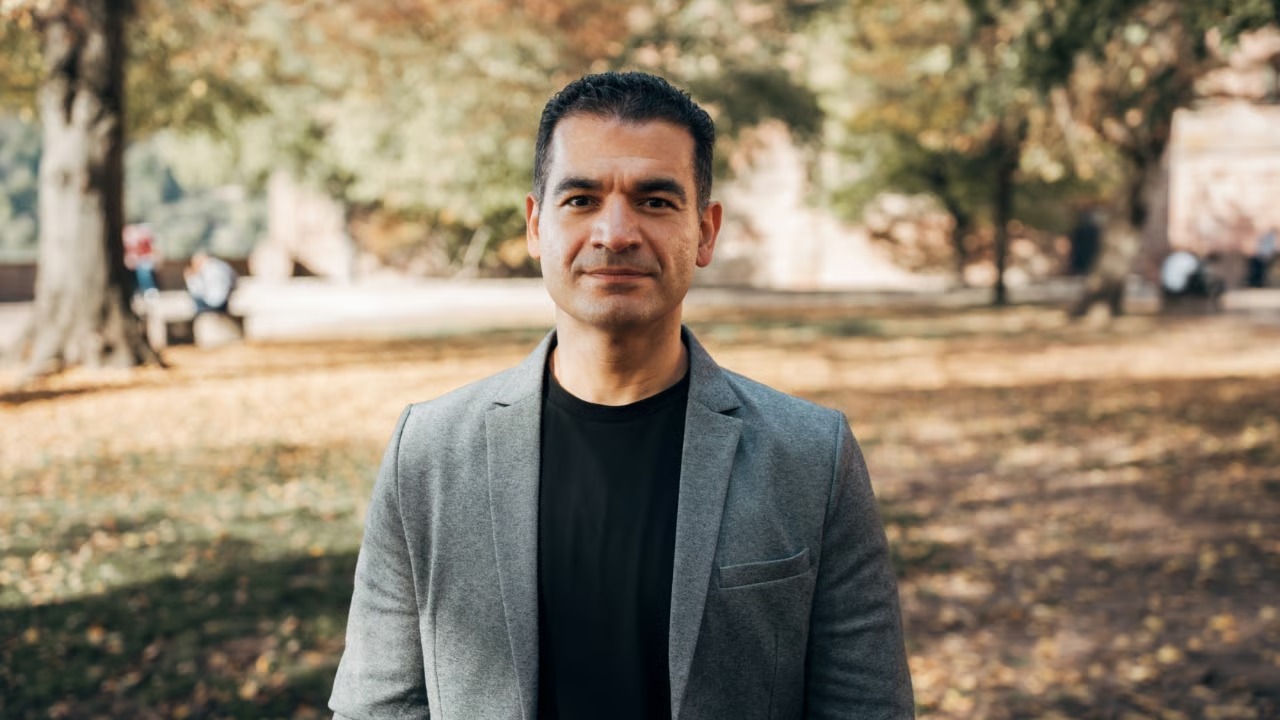
Who is speaking: Reza Mehman, host of the podcast Project Mindset and co-host of Innovation Mindset (together with Professor Dr. Stefan Lacher).
What is it about: It’s about the widespread pattern of making one’s emotional state dependent on external circumstances and interactions, and how to break this pattern.
Why is this relevant? In a world full of social interactions, digital communication, and constant evaluation by others, the ability to cultivate one’s happiness independently of external factors is one of the most important skills for mental strength and resilience.
Three key questions of the episode:
- Why do we give other people so much power over our emotions?
- What specific tools help to stop outsourcing happiness?
- Why should one become emotionally independent even from positive external circumstances?
Table of contents
- Introduction – What this episode is about
- Summary – The core message in brief
- context – Background and relevance of the episode
- Topics and classification – The central topics
- Key messages – The most important findings
- Frequently Asked Questions – Answers to the most important questions
- Highlight quotes – The most defining statements
- Transcript – The full episode to read
- Keywords – Relevant search terms
- Names and terms – List of mentioned persons and concepts
- Quotable passage – For sharing and quoting
Topics and classification
1. Emotional self-responsibility
This episode shows how often we unconsciously delegate responsibility for our emotions to external circumstances and other people. Reza makes it clear that this is a pattern that must be consciously broken.
Keywords: emotional self-responsibility, happiness, inner strength
2. Mindset tools against emotional external control
Three practical tools are presented: consciously recognizing the situation, avoiding conditional happiness, and independence from external influences, whether positive or negative.
Keywords: Mindset Tools, Conditional Happiness, emotionale Unabhaengigkeit
3. Sustainable happiness from within.
Reza argues that happiness is only lasting if it is cultivated from within. Any form of dependence, be it on praise, recognition, or positive experiences, makes happiness fragile.
Keywords: sustainable happiness, inner contentment, cultivating happiness
4. Dealing with criticism and negative feedback
Using the example of a critical email to the Innovation Mindset Podcast, Reza demonstrates how feedback can negatively impact an entire day if allowed to do so. The key lies in consciously dealing with criticism.
Keywords: Dealing with criticism, processing feedback, resilience
5. Everyday situations as a reflection of mindset
From rude waiters to tailgaters in traffic to everyday racism: everyday situations reveal how strongly we react to external stimuli and how much power we give them over our well-being.
Keywords: Everyday situations, emotional reaction, mindset in everyday life
Key messages
- Anyone who gives another person the power to decide about their own well-being has outsourced their happiness.
- Sustainable happiness can only be cultivated from within and should never depend on external circumstances.
- The first tool is conscious recognition and stopping: “Stop, this person has no influence on how I feel right now.”
- Conditional happiness, or happiness that is tied to conditions, is not sustainable and should be avoided.
- Even positive external circumstances should not have an excessive influence on one’s own happiness, because otherwise the brain will generally become conditioned to external stimuli.
- The cause of unhappiness is never the situation itself, but one’s own thoughts about it.
- A single negative interaction can dominate an entire day if you give it permission to do so.
- Criticism and feedback should be evaluated objectively, without destroying one’s own emotional state.
- The ability to maintain one’s happiness independently of external factors is a skill that can be trained.
Frequently Asked Questions
Was bedeutet “Stop Outsourcing Your Happiness”?
It means that one should stop relinquishing responsibility for one’s own happiness to external circumstances or other people. Instead, one should cultivate one’s well-being from within, rather than making it dependent on how others interact with one.
Why do we give other people power over our emotions?
We react instinctively to external stimuli and are emotionally influenced by negative interactions without consciously perceiving this. Only by consciously recognizing this pattern can we break it and regain control over our own emotions.
Was ist Conditional Happiness?
Conditional happiness describes a happiness that is tied to conditions: “I am only happy if something specific happens.” Reza Mehman recommends not making happiness dependent on external conditions such as positive interactions, but rather cultivating it unconditionally from within.
Which three tools help against emotional manipulation?
First: Consciously recognizing and stopping the situation by telling yourself, “Stop, this person has no influence on me.” Second: Avoiding conditional happiness, meaning not making well-being contingent on certain conditions. Third: Becoming emotionally independent of positive external circumstances as well, so as not to condition the brain to external stimuli.
Why should one become emotionally independent from positive circumstances?
According to Reza Mehman, the brain registers that external events influence emotions. If you react exuberantly to positive events, you train your brain to generally react to external circumstances. This makes your happiness fragile in the long run and dependent on things you cannot control.
What does the Eckhart Tolle quote have to do with happiness?
The quote “The primary cause of unhappiness is never the situation, but your thoughts about it” underscores the episode’s core message: It’s not the situation itself that makes us unhappy, but our thoughts about it. Those who consciously control their thoughts don’t give external circumstances power over their well-being.
How can you start in everyday life to stop outsourcing happiness?
The first step is conscious awareness: As soon as you notice that an external situation is negatively affecting your mood, you should pause and realize that you are relinquishing control. Then you can actively decide not to give this situation power over your well-being.
What is the Innovation Mindset podcast?
Innovation Mindset is a second podcast by Reza Mehman, which he runs together with Professor Dr. Stefan Lacher. It discusses innovation and business topics and regularly invites founders to discuss their business models and innovative approaches.
Selected statements from Reza Mehman
“I gave another person so much power that this person could decide how I felt that day.”
“Stop outsourcing your happiness. No, that person definitely has no influence on how I feel right now, because I don’t want that and I’m not doing that.”
“But I don’t make my well-being dependent at all on how I interact with others.”
“I truly believe that happiness can only be cultivated sustainably or permanently from within, for oneself. Any dependence on external factors is, in my view, not sustainable at all.”
“Actually, even positive external circumstances shouldn’t have any influence on my happiness.”
“The primary cause of unhappiness is never the situation, but your thoughts about it. Be aware of your thoughts and your thinking.”
– Eckhart Tolle (quoted by Reza Mehman)
“You’re essentially giving power to external circumstances, and these external circumstances can determine how you feel. And that’s precisely what shouldn’t happen.”
The full conversation
Hi everyone, this is Reza Mehman, and you’re listening to the 12th episode of the Project Mindset podcast. I think I’ve mentioned before that I also host another podcast. It’s called Innovation Mindset, and I run it together with Professor Dr. Stefan Lacher, a good friend of mine. We talk about innovation and business topics, regularly inviting founders to discuss their business models and examine their innovation strategies.
Super exciting! Episode 7 has already been released, and we’ll be diligently releasing more. But why am I telling you this? We recently received an email. The person wanted to give us feedback, and it went something like this: They find it unacceptable that we’ve only had one female guest on the podcast so far. And they find it unacceptable that it’s almost always just three white, privileged men talking amongst themselves about innovation and business.
I have to admit, the email really hit me hard at first, because we’ve always tried, and still try, to find female founders to interview. On the other hand, it’s obvious the person hadn’t bothered to learn anything about us; just from my name, you’d think I’d be obvious that I’m not white. And because of my immigrant background, I’ve never felt particularly privileged.
Feedback and one’s own emotional reaction
Therefore, I found the feedback somewhat unqualified, although the person is definitely right that we should continue to strive to attract female founders. But not only female founders, but also because I know what it’s like to be part of a marginalized group, we continue to try to invite, let’s say, people with a migration background as well. The problem with the whole thing wasn’t the feedback itself, from my perspective, but rather how I handled it in this instance.
I actually spent the whole day, that very day, thinking about it, and I have to admit I was in a bit of a bad mood. And that’s precisely what bothered me most: that I’d given another person so much power, that they could decide how I felt that day, or at least how I felt about the rest of it. That’s also how today’s title came about: Stop Outsourcing Your Happiness. Because it really does happen sometimes that we give someone else too much power, that they can decide how we feel.
A friend of mine recently told me something that I found really interesting. He said he was out for a walk, just a normal stroll, not thinking anything of it. Someone walked past him, and this other person suddenly grabbed his handbag, apparently thinking he was trying to snatch it. And to be honest, my friend didn’t feel good about it afterward, like he was being portrayed as a criminal.
How encounters influence mood
I also noticed that in this case, my acquaintance gave the other person so much power that he felt quite bad about it that day, and even when he told me about it, he still felt bad. And I’m sure you know what I mean; I think everyone experiences situations like this from time to time. You’re in a restaurant, you’ve just had a good meal, and then suddenly the waiter is a bit rude, and you think to yourself, “Oh, what’s going on?” Or you’re driving, someone cuts you off, you get annoyed, and maybe even argue with your partner, who might also be in the car, because you discuss why you’re reacting that way when you’re feeling a bit agitated.
You’re always essentially giving power to external circumstances, and these external circumstances can determine how you feel. And that’s precisely what shouldn’t happen, because I believe that happiness, in its most sustainable form, only comes from within or can only be cultivated from within. You should never relinquish control over happiness. As you probably already know, I’m a big fan of tools, or mindset tools. What tools can you use to counteract such situations?
Recognize the moment and consciously pause
I use very simple tools in this situation. Specifically, if I notice—and this is the first tool I use—that I’m feeling extremely bad because of another person, or that I’m about to have a bad day, I take that as an opportunity or trigger to say, “Ugh, stop, stop outsourcing happiness!” No, that person definitely has no influence on how I feel right now, because I don’t want that and I don’t do that.
The possibilities for one’s own influence differ
This is essentially an acknowledgment that something is happening which I don’t actually agree with. A second topic or tool, which I believe we also discussed in the first podcast, is conditional happiness. This means that if you intend to have a nice or happy day, which ideally you should do every day, then you tell yourself, hey, I’m not going to make my well-being dependent on how I interact with others.
So, I don’t make it conditional; I’m not only happy if I have positive interactions. No, I don’t make it dependent on anything at all—no conditional happiness in this case—so that I don’t have any external influence on my well-being. And number three, I think today’s stories make it very, very clear that external circumstances—which is what this whole thing is about—must not have any influence on me. I’ve almost always talked about negative external circumstances, but I now even think that positive external circumstances shouldn’t influence my happiness either.
Classify also positive external influences
Why? I believe the brain stores it. If something positive happens externally, then I’m happy. Perhaps the brain can’t quite distinguish between positive and negative in that case, but it reacts to something external, and I’ve tried to internalize that a little bit, even if something excessively positive happens, I still try to be happy from within. It probably sounds difficult to put into practice, but I’m really working hard at it. Something positive happens, cool, yes, all good, but I would be happy even without it; at least that’s how I’m approaching it.
I truly believe that happiness can only be cultivated sustainably and permanently from within, for oneself. Any dependence on external factors is, in my view, not sustainable at all. There’s a wonderful quote by Eckhart Tolle about this: “The primary cause of unhappiness is never the situation, but your thoughts about it. Be aware of your thoughts and your thinking.” So, folks, as always, a very short episode. My key message for you today was: Stop outsourcing your happiness.
I hope you can forgive my slightly hoarse voice today. Despite a slight cold, I still enjoyed myself. I hope you were able to take something away from it. Have a wonderful day, and see you next time. Don’t forget, mindset is everything.
This transcript was automatically generated using Whisper AI and may contain occasional errors.
Keywords
Tags: Stop Outsourcing Your Happiness, Happiness, Emotional Self-Responsibility, Conditional Happiness, Mindset Tools, Inner Contentment, Happiness from Within, Resilience, Emotional Independence, Eckhart Tolle, Project Mindset, Reza Mehman, Dealing with Criticism, Well-being, Self-Determination
Names and terms
Reza Mehman, Professor Dr. Stefan Lacher, Eckhart Tolle, Project Mindset, Innovation Mindset, Conditional Happiness, Outsourcing Happiness, Mindset Tools, Resilience, Emotional Self-Responsibility, Emotional External Control, Sustainable Happiness, Migration Background, Diversity
Quotable passage
Sustainable happiness can only be cultivated from within; any dependence on external factors is not sustainable.
Anyone who gives another person the power to decide about their own well-being has outsourced their happiness.
It is not the situation itself that makes us unhappy, but our thoughts about it.
Even positive external circumstances should not determine one’s happiness, because the brain does not distinguish between positive and negative dependence.
You can find more episodes and personal insights at Project Mindset.