Motivation triggers and people who harm you
Motivation triggers: what David Goggins can teach us about inner strength, persistence and responding to people who do not wish us well.
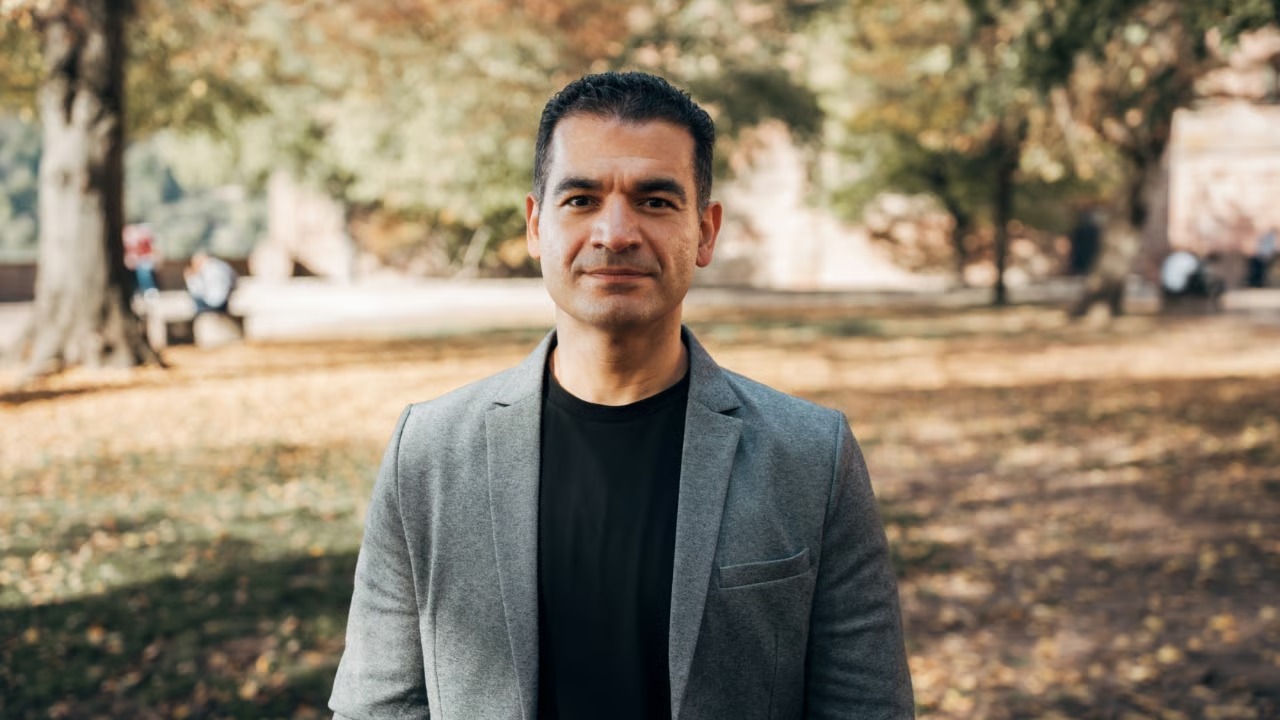
Finding new energy through motivational triggers
Motivational triggers are short, powerful impulses that give us the crucial energy boost in difficult moments. In this episode of Project Mindset, Reza Mehman speaks openly about why there are people who don’t have our best interests at heart and how to deal with this reality. Using a video clip of David Goggins, the former US Navy SEAL, he demonstrates how external sources of motivation can be used strategically. It’s not about relying on motivation, but about using it as a spark when it’s there. Reza shares personal experiences from his school days, professional life, and everyday experiences that have shaped him. He explains why sometimes our biggest opponent is ourselves in the mirror. This episode combines the themes of discipline, self-sabotage, and persistence into an honest plea for perseverance.
Motivation triggers: the episode in brief
In one sentence: Reza Mehman explains how to use motivational triggers like a David Goggins sequence to overcome internal and external opponents with persistence.
In three sentences: Reza Mehman talks about how a video clip of David Goggins motivates him during difficult times and serves as a source of inspiration. He shares personal experiences with people who wanted to harm him, from elementary school to an unfair teacher to colleagues who spoke ill of him behind his back. His core message: perseverance is the best response to adversaries, whether they are external or internal.
In five sentences: Reza Mehman uses a video clip of David Goggins as a personal motivational trigger to tackle challenges with more energy. He emphasizes that motivation is fleeting and shouldn’t be relied upon, but that one should make the most of every brief spark. Drawing on personal experiences, he shows that there are people who don’t have your best interests at heart, and that this reality is often underestimated. He talks about self-sabotage as an inner enemy and procrastination as a form of self-blocking. He concludes the episode with a quote from rapper Torch’s book, affirming that persevering and working on one’s character is the best response.
Context: Who, What, Why
Who is speaking: Reza Mehman, host of the podcast Project Mindset, talks in a solo episode about personal experiences and mindset strategies.
What is it about: The episode addresses three interconnected themes: the use of motivational triggers, dealing with people who want to harm you, and the importance of persistence in the face of internal and external adversaries. David Goggins serves as a central example of an attitude of relentless perseverance.
Why is this relevant? Many people experience situations where they are blocked, sabotaged, or mistreated by others. At the same time, many struggle with self-sabotage and procrastination. This episode offers an honest and practical approach to dealing with both.
Three key questions of the episode:
- How can you use short bursts of motivation effectively without becoming dependent on them?
- How do you deal with people who deliberately don’t want your best interests at heart?
- When do you become your own worst enemy and how do you overcome self-sabotage?
Table of contents
- Introduction – What this episode is about
- Summary – The episode in brief
- context – Background and key questions
- Topics and classification – The central topics
- Key messages – The most important messages
- Frequently Asked Questions – Answers to key questions
- Highlight quotes – The strongest statements
- Transcript – The full episode
- Keywords – SEO-relevant terms
- Names and terms – Important references
- Quotable passage – For sharing and quoting
Topics and classification
Use motivational triggers strategically
Reza explains how short audio or video sequences can serve as motivational triggers without requiring long-term reliance on motivation. He listens to a David Goggins sequence 20 to 40 times in a row and uses this energy boost for upcoming tasks.
Keywords: Motivationstrigger, David Goggins, externe Motivation
People who don’t want to do you any good
From physical threats during his school years to unfair grading by teachers and colleagues who talk badly about him behind his back: Reza shares personal experiences that show that not everyone is well-intentioned. This realization is uncomfortable, but important.
Keywords: toxic people, overcoming enemies, negative experiences
Persistence as a response to resistance
The central message is: perseverance is the best response. Whether the opponent is another person or yourself, by persistently sticking with it, you show that you won’t be defeated.
Keywords: persistence, discipline, perseverance
Self-sabotage and the inner enemy
Sometimes the greatest enemy isn’t outside, but within. Reza talks about procrastination, excuses, and the tendency to sabotage oneself, even when one knows exactly what needs to be done.
Keywords: Self-sabotage, procrastination, inner critic
Strengthening character through adversity
Reza emphasizes, with a quote from rapper Torch, that negative experiences can shape one’s character if one puts them into perspective and moves on.
Keywords: character strength, resilience, personal growth
Key messages
- Motivation is fleeting and cannot be preserved. You shouldn’t rely on it, but use the spark when it’s there.
- Motivational triggers such as a specific video sequence, a piece of music or an audio can be used in a targeted manner to gain energy for upcoming tasks.
- There are people who deliberately wish you ill. This reality should be acknowledged instead of ignored.
- The best answer to external opponents is persistence: continue until the opponent realizes that you will not give up.
- Sometimes you are your own worst enemy. Self-sabotage and procrastination are inner adversaries that you must actively fight.
- If you do nothing to overcome resistance, your opponent won’t simply give up. Passivity is not a solution.
- It is perfectly fine to use unconventional motivational methods, even if they seem “a bit psycho” to others.
- Negative experiences with people can strengthen one’s character if one continues and works on oneself.
- Role models like Joe Rogan and Kobe Bryant also use personal motivational triggers to stay focused.
- The best reaction to adversity: stay the way you are, continue to develop your character and don’t give up.
Frequently Asked Questions
What is a motivational trigger?
A motivational trigger is a short, powerful impulse that propels you forward in difficult moments. This can be a video sequence, a piece of music, a quote, or an audio clip. Reza Mehman, for example, uses a sequence by David Goggins, which he sometimes plays 20 to 40 times in a row to gain energy for upcoming tasks.
Who is David Goggins and why is he cited as a role model?
David Goggins is a former US Navy SEAL known for his extreme discipline and mental strength. He appears on podcasts and talks about topics such as discipline, motivation, and pushing boundaries. Reza Mehman uses one of his segments as a personal motivational trigger.
Should one rely on motivation?
No. Reza Mehman emphasizes that motivation is fleeting and cannot be preserved. One should complete tasks regardless of how one feels. However, when a motivational impulse arises, one should savor it to the fullest and use it to achieve one’s goals.
How do you deal with people who do not wish you well?
According to Reza Mehman, the best response is persistence: keep going, work on yourself, and strengthen your character. If something is important to you, you should stick with it until your opponent realizes you won’t give up. It’s not about violent confrontation, but about persevering.
What does self-sabotage have to do with the topic?
Reza explains that sometimes the problem isn’t an external enemy, but rather self-sabotage. Many people know exactly what needs to be done, but they procrastinate, make excuses, or consciously or unconsciously block themselves. Procrastination is a form of this self-sabotage.
What examples of motivational triggers are mentioned in the episode?
Reza mentions his own David Goggins video sequence, which he repeatedly plays while driving. He also mentions Joe Rogan, who uses a custom video to stay focused, and Kobe Bryant, who used specific pieces of music and audio to keep him on track.
Who is Torch and why is he mentioned in the episode?
Torch, whose real name is Frederik Hahn, is a German rapper whom Reza Mehman interviewed. In the episode, Reza quotes a passage from Torch’s book in which Torch thanks everyone who stole from, cheated, betrayed, or sabotaged him, because they showed him that one must always work on one’s own character.
What does “Keep on attacking” mean in the context of the episode?
It means persistently engaging with one’s own tasks and challenges. Reza explicitly emphasizes that it is not about violent confrontation, but about demonstrating with persistence that one will not be defeated and will see it through to the end.
Highlight quotes
“However, if there are things that motivate you to continue in some way or to do better, you should use those things.”
– Reza Mehman
“I assume that, because I know that motivation is fleeting and cannot be preserved, I will complete the tasks that lie before me, regardless of how I feel.”
– Reza Mehman
“If it’s important to me, I have to keep attacking so long that I simply confront it and don’t give up.”
– Reza Mehman
“If you do nothing, it’s not as if the opponent will stop spouting all that nonsense in any way, but rather he will continue.”
– Reza Mehman
“I thank everyone who has stolen from me, cheated me, betrayed me, hurt me, sabotaged me, copied me, boycotted me, or forgotten me. You have shown me that one must always work hard on oneself and one’s character.”
– Torch (Frederik Hahn), quoted by Reza Mehman
“Continuing is actually the best answer. Staying the way you are, further developing your character, is what actually works best at that moment.”
– Reza Mehman
“Sometimes it’s not an external opponent you have to fight, sometimes it’s an internal opponent. That means the person in the mirror.”
– Reza Mehman
Transcript
The full conversation
When you’re in a fight, you have to attack. You always have to attack. The opponent has to know they won’t give up. You have to break the spirit, no matter what’s in front of you. That’s what I’ve noticed. I’ve never broken the spirit of whatever’s in front of me. If you always want to attack something, nothing wants to stand in front of anything unforgettable. Nothing. When you’re in a fight, you have to attack. You always have to attack. The opponent has to know they won’t give up. You have to break the spirit of whatever’s in front of you.
I’ve noticed that. I never let the mind of what’s in front of me break. If you’re always attacking something, nothing will stand in the way of anything unforgettable. Nothing. This is a clip from David Goggins. David Goggins is a former US Navy SEAL. He appears on podcasts about various topics: discipline, motivation, and so on. I let this clip play for myself when I’m going through a tough time. I have challenges to overcome. Sometimes I’m demotivated or not very ambitious.
I have a lot of energy. I have to complete the tasks ahead of me. When this plays, it triggers me. It triggers me intensely. I’ve talked about project mindset in many podcast episodes. I don’t rely on motivation being handed to me. Completing tasks does not depend on feeling motivated. My own motivation is not something I can rely on. I assume that, because I know motivation is fleeting and can’t be preserved, I’ll complete the tasks ahead of me regardless of how I feel.
Use motivation as a brief spark
There are several podcast episodes on this topic. In today’s episode, I want to expand on it. If there are things that motivate you to continue in some way or to improve, you should use them. Like a spark that ignites. Then you harness that spark. You can then create great things, accomplish great things, overcome challenges, and so on. If you have such small motivators, then I would seize upon them and use them for your own tasks. Float on them as long as you can, soar on them, complete your tasks, and if you can’t continue afterward, then it was a wonderful experience.
But at least I made good use of that time. I think it’s not unusual to have things like that. I first heard that excerpt a while ago, I don’t even know how long ago. What I found funny was how triggered it was for me. Sometimes I listen to it 20, 30, 40 times in a row when I’m driving. I mean, true story, really, completely back-to-back. I’m a geopath, I have to admit, I actually do that. It motivates me to approach a certain challenge differently, to tackle it with more energy.
Personal inspiration through videos and music
I think that’s not entirely unusual. I once heard Joe Rogan do that; he also has a video he plays to get back on track. Kobe Bryant had his music tracks, audios, videos that he would play, replay in his head, over and over again, to keep him focused and doing what he needed to do. So, if you have something that motivates you, that drives you, then you can and should definitely use it.
But what I also want to talk about specifically today is that I find it incredibly interesting that David Gorgons speaks of an enemy, of someone who should be attacked again and again, over and over. So, perhaps a small disclaimer: I’m not talking about violent attacks today, but rather about truly engaging with the tasks and challenges that lie before us. Very importantly, no violent confrontation, but rather that if there is an enemy—and I’ve experienced in my life that there are indeed people who don’t wish me well—if there is an enemy, then you show with persistence, “You know, I won’t let this get me down.”
Why continuing can be important
So whatever it is, I’m going to keep going, I’m going to keep going until you realize he’s not going to stop easily and he’s going to see this through to the end. The reason I think there are sometimes enemies in life is, well, I have to say, from my own experience, I noticed early on that there are people—I want to remind you of a scene—when I was in elementary school, and someone from secondary school, who was probably in 7th or 8th grade, so much bigger than me back then, wanted to beat me up one day during recess. I’ll never forget that, and luckily someone older stood up for me and calmed things down. And I’ll never forget it; I didn’t even understand why he wanted to beat me up.
Then I did it, and he was so triggered that he wanted to beat me up. That was the first time I realized, hey, wow, everyone talks about how we’re all with a girlfriend, that we should only do good things and all that, but there are people who don’t want anything good for you. Scenes like that came up again from time to time as you get older; it’s typical in your teenage years, you might have had some similar experiences, they come back, and other interesting things came along with them.
Continued
I remember, I think I was in 7th or 8th grade, and a teacher obviously had something against me and gave me really bad grades. It was so absurd, I can’t remember the exact grade, but it was so absurd that, mathematically speaking, my written work didn’t even add up to that bad average grade she gave me. It was so absurd that another teacher even went to the principal, even if I got a 6 in oral participation, it still wouldn’t reach that incredibly bad grade. I think it was a 5 or something, I can’t even remember.
And that’s when I realized, wow, I really don’t know why this one teacher had something against me. I hadn’t done anything wrong, I wasn’t a cheeky student, I’d say. At school, I was a normal, average student who simply did his assignments. I think I remember from various work placements that there were also colleagues who talked badly about me behind my back. Hearing about it indirectly made me wonder: why do people do that?
Negative reactions in the professional environment
So why do they, for example, want to promote themselves, to position themselves in some way, at my expense, to speak badly about me or to downplay my tasks, my achievements, my performance, so that they themselves look better? And I know we all are, we all think we treat each other kindly and so on, I’m a big advocate for that, but I’ve simply seen too often that there are people who don’t have your best interests at heart.
And with this short excerpt from David Goggins, I’m addressing precisely this issue: when I sense an enemy in some form, I know I have to attack this for as long as it’s important to me. I’m not talking about being triggered by them in every instance and immediately taking action against them in some way, but rather, if it’s important to me, simply confronting it and not giving up. Because if you do nothing, we know how it is; it’s not as if the opponent will stop spouting all this nonsense; they’ll just keep going.
Now, there’s another point to consider: sometimes it’s not an external opponent you have to fight, sometimes it’s an internal one. This means the person you see in the mirror—you probably know this too; I’ve actually heard it in many conversations—that people, including some in my circle of friends, sabotage themselves. They know exactly what needs to be done to, for example, complete a certain task or tackle challenges.
When we get in our own way
They know exactly what needs to be done, but they don’t do it, they procrastinate, do it intentionally or unintentionally, make excuses, simply don’t do what needs to be done. In doing so, they truly sabotage themselves and become their own worst enemy. And exactly, and I don’t think anyone is immune to this—I believe procrastination was discussed in one of the recent podcast episodes—it’s also a kind of sabotage. Therefore, for me, regardless of who your enemy is, it’s either yourself, an external party, or someone else entirely.
And that’s what I have to address with an opponent. You have to show them, “Hey, I’ll keep going until you finally shut up and we can continue as normal.” And that’s what I find so great about this sequence, what motivates me incredibly. Feel free to use it for yourselves, or maybe you even have something of your own. It’s important to me to communicate today that if you have something like this where you think, “Okay, this is a bit psycho,” then use it to your advantage. Today was a bit like that, I would say, because I also talked about negative things, about the topic that people don’t want anything good.
Consciously use external motivation
I usually tried to avoid talking about negative things in the podcast, focusing more on mindset tools. But it was important to me to simply say, hey, sometimes there are just moments when you feel a kind of external motivation. Something’s happening, and it’s perfectly fine to use it and really savor it for as long as possible, whether it’s with this video sequence, or maybe you have a piece of music you particularly like—experiment with it, use it for yourself, and don’t rely on it completely, but savor it as much as you can.
In this context, you know, I once did an interview with Torch, the rapper Torch, Frederik Hahn, and interestingly enough, since I’m on the podcast today, there are people who don’t mean any good. Right on the first few pages, he starts the book, and I think I’ll read it aloud. I think it’s incredibly fitting for today. Here it is. I thank everyone who has stolen from me, cheated on me, betrayed me, hurt me, sabotaged me, copied me, boycotted me, or forgotten me. You have shown me that you always have to work hard on yourself and your character.
Continued
I admire everyone, I’m incredibly clean. From the many experiences I shared with you today, the realization that some people truly didn’t have my best interests at heart, I’ve also learned that the best response is to keep going. Staying true to yourself and continuing to develop your character is what actually works best in the moment. Great people, as always, a short Project Mindset episode. If you enjoyed it, I would be very grateful if you could leave a like. Apple Podcasts, Spotify, simply rate it, write what you think, because that’s the only way Project Mindset can continue to grow.
Thank you for listening. Don’t forget, see you next time. Mindset is everything. Keep on attacking something. Nothing wants to stand in front of anything. That is relentless. Nothing.
This transcript was automatically generated using Whisper AI and may contain occasional errors.
Keywords
Tags: Motivation triggers, David Goggins, persistence, self-sabotage, mindset, discipline, inner enemy, toxic people, procrastination, perseverance, Navy SEAL, resilience, character strength, Project Mindset, Reza Mehman
Names and terms
Reza Mehman, David Goggins, Joe Rogan, Kobe Bryant, Torch, Frederik Hahn, US Navy SEAL, Project Mindset, procrastination, self-sabotage, motivational triggers, persistence, discipline, resilience, character strength
Quotable passage
Motivation is fleeting and cannot be preserved, therefore one should complete tasks regardless of one’s mood.
However, if a motivational trigger appears, be it a video sequence, a piece of music or a quote, then one should make the most of that spark.
There are people who don’t want to do you any good, and the best answer to that is persistence: keep going until it’s clear that you’re not giving up.
Sometimes the biggest enemy is not outside, but the person in the mirror who is sabotaging themselves.
Continuing on and working on your own character is what really works in the end.
You can find more thoughts on motivation and personal growth at Project Mindset.
Prefer listening? Explore the original Project Mindset podcast recordings.