Fuckup Nights, a culture of learning from mistakes, and €700,000 for Michelle Obama
Why mistakes don’t deserve a party, what Michelle Obama’s salary reveals about envy, and how social impact investing works.
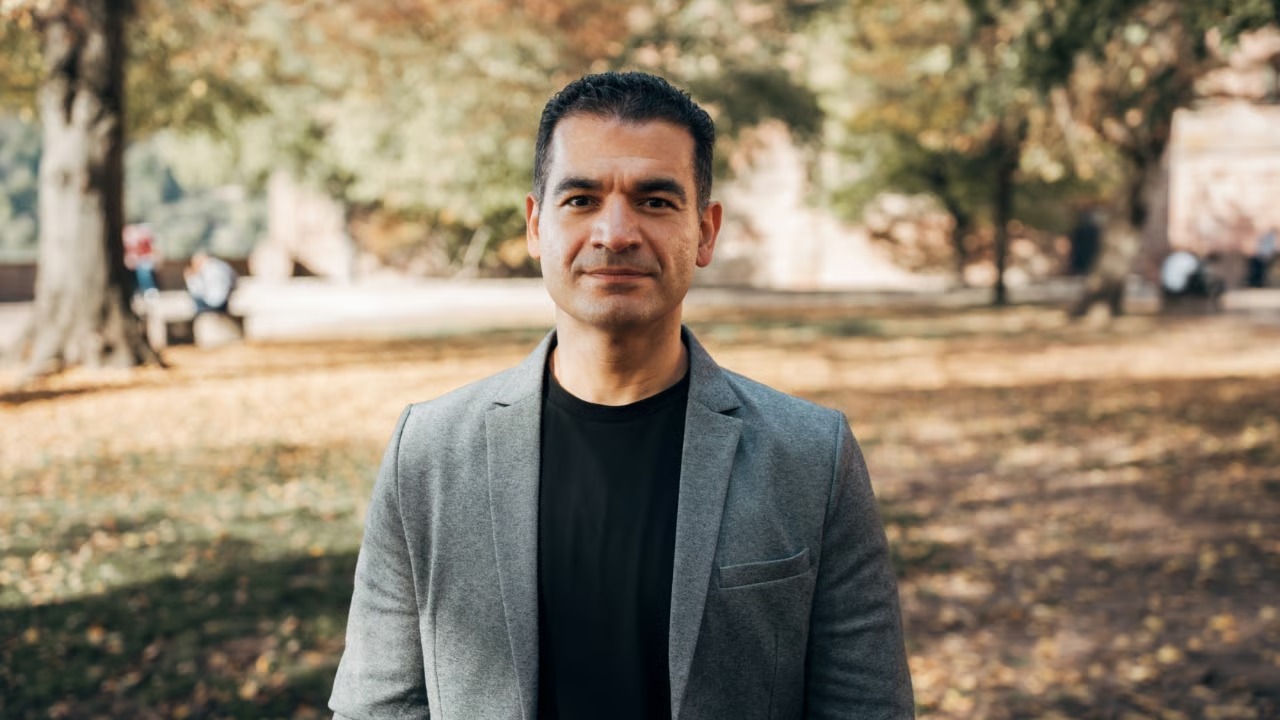
A culture of learning from mistakes and the impetus provided by events
A culture of learning from mistakes in startups is often glorified, but is that really the right way to deal with failure? Reza Mehman shares impressions from Bits & Pretzels in Munich. Oliver Kahn and Michelle Obama were among the event’s speakers. Oliver Kahn summed it up perfectly: Sometimes a mistake is simply a mistake, and there’s no glorious lesson to be learned from it. Michelle Obama spoke about self-worth and the power of being self-sufficient, but her reported fee of €700,000 sparked a debate fueled by envy on LinkedIn. Reza explains why this discussion reveals more about our society than about Michelle Obama herself. The episode also touches on social impact investing and a creatively simple idea that demonstrates how to achieve great things with minimal effort.
Summary
In one sentence: Reza Mehman questions celebrating startup mistakes and discusses reactions to Michelle Obama’s speaking fee. He also explores simple ideas in social impact investing.
Short summary: At Bits & Pretzels, Oliver Kahn expressed a view Reza shares. Celebrating mistakes at Fuckup Nights can overlook their consequences for livelihoods and life paths. The debate surrounding Michelle Obama’s €700,000 fee exposes a German culture of envy, instead of recognizing the value of expertise and demand. At the same time, an example from the field of social impact investing demonstrates that fundamentally simple ideas often have the greatest impact.
Detailed summary: At the Bits & Pretzels event in Munich, Reza Mehman experienced inspiring presentations, including Oliver Kahn’s honest critique of the culture surrounding mistakes. Kahn made it clear that not every error should be turned into a major learning experience, because sometimes you simply should have caught the ball. Michelle Obama spoke about self-worth and prioritizing one’s own life, but the subsequent debate fueled by envy over her €700,000 fee dominated the discussion. Reza argues that this price simply reflects supply and demand, and that the uproar says more about our culture of envy. Finally, he presents an example of social impact that demonstrates how simple, creative ideas can solve societal problems.
Context: Who, What, Why
Who is speaking: Reza Mehman, host of the podcast Project Mindset, entrepreneur and former startup founder, reflects on failure, mindset and social issues from his own experience.
What is it about: Three topics occupied Reza at and after Bits & Pretzels. They were celebrating startup mistakes, reactions to Michelle Obama’s speaking fee and simple ideas in social impact.
Why is this relevant? Reza questions trends around failure and envy of success. He encourages an honest look at our own thought patterns. This episode encourages us to re-evaluate how we deal with mistakes, success, and social engagement.
Three key questions of the episode:
- Is the glorification of failure in the startup scene truly helpful, or does it obscure the real consequences of failure?
- What does the envy-fueled debate surrounding Michelle Obama’s salary reveal about our societal attitude towards success?
- Why are the simplest ideas in the field of social impact often overlooked?
Table of contents
- Introduction – Overview of the episode and its key themes
- Summary – The most important content in a nutshell
- context – Background information on the speaker, topic, and relevance
- Topics and classification – The key topics in detail
- Key messages – The most important messages of the episode
- Frequently Asked Questions – Answers to the most important questions
- Highlight quotes – The most concise statements
- Transcript – Full transcript of the episode
- Keywords – SEO-relevant keywords
- Names and terms – List of all persons and terms mentioned
- Quotable passage – For sharing and quoting
Topics and classification
1. A culture of error and Fuckup Nights in the startup scene
The glorification of mistakes through events like Fuckup Nights is being critically examined. Oliver Kahn and Reza Mehman argue that mistakes have real consequences and are not suitable for entertainment. Mistakes affect livelihoods, jobs, and years of work.
Keywords: Startup culture of learning from mistakes, Fuckup Nights criticism, Oliver Kahn’s mistakes
2. Debate fueled by envy surrounding Michelle Obama’s speaking fee
The controversy surrounding the €700,000 fee paid for a speech by Michelle Obama exposes a societal culture of envy. Reza explains why the price is justified by supply and demand and what the reactions reveal about our attitude towards success.
Keywords: Michelle Obama fee, envy culture in Germany, speaking fees, debate
3. Bits and Pretzels as a source of inspiration
The founders’ and investors’ event in Munich, with 5,000 participants, serves as the backdrop for Reza’s observations. The combination of networking, presentations, and an Oktoberfest atmosphere is highlighted as a successful event concept.
Keywords: Bits and Pretzels Munich, Startup Events Germany, Founders Network
4. Self-esteem and personal growth
Michelle Obama’s message “I am enough” is seen as a valuable impetus, while at the same time the feasibility of some advice is questioned from a privileged perspective.
Keywords: Boosting self-esteem, personal growth, Michelle Obama mindset
5. Social Impact Investing and Simple Ideas
Reza explores simple ideas for addressing social problems. He discusses social impact investing as a connection between entrepreneurship and the common good.
Keywords: Social impact investing, social ideas, social change
Key messages
- Celebrating mistakes and portraying them humorously at Fuckup Nights doesn’t reflect reality. Mistakes often affect livelihoods, jobs, and years of work.
- Oliver Kahn summed it up perfectly: Sometimes a mistake is simply a mistake. You should have caught the ball, and there’s no deeper lesson to be learned from it.
- The statement “There are no mistakes, only learnings” is too general. A cardiac surgeon cannot say that a patient’s death was a “mega learning.”
- Michelle Obama’s fee of 700,000 euros for a speech is simply a market price determined by supply and demand.
- The uproar over Michelle Obama’s fee reveals more about the culture of envy in society than about the value of her speech.
- Michelle Obama’s message “I am enough” is valuable, but not all advice from a privileged position can be directly applied.
- We should talk more about good things we do, such as donating, because that motivates others to do it too.
- There is a false humility in our culture: bad things are talked about, good things are kept silent.
- Simple, creative ideas in the field of social impact are often overlooked, even though they can have the greatest impact.
- Changing perspective is important, but one should remain honest: not every mistake contains a great learning opportunity.
Frequently Asked Questions
What are Fuckup Nights and why are they criticized?
Fuckup Nights are events where entrepreneurs and startup founders openly discuss their biggest business mistakes and failures. Critics argue that these events glorify failure and turn it into entertainment, even though mistakes often have real consequences, such as job losses and livelihoods.
What did Oliver Kahn say about a culture of learning from mistakes?
Oliver Kahn explained at the Bits and Pretzels event that not every mistake contains a great learning experience. Using the Champions League final against Manchester as an example, he essentially said: He simply should have caught the ball, period. Sometimes there’s nothing profound to analyze.
How much did Michelle Obama receive for her speech at Bits and Pretzels?
Reports indicate that Michelle Obama received approximately €700,000 for her appearance at Bits and Pretzels in Munich. Reza Mehman argues that this is a normal market price determined by supply and demand.
What is Bits and Pretzels?
Bits and Pretzels is a large networking event for founders and investors in Munich, held at the same time as Oktoberfest. With around 5,000 participants, it offers presentations, panel discussions and networking opportunities over three days.
What does Michelle Obama’s statement “I am enough” mean?
Michelle Obama emphasized that one shouldn’t compare oneself to others or beat oneself up when others seem to be further along. Her message is: One’s own path, with one’s own resources and means, is sufficient and valuable.
Why is the debate about lecture fees, fueled by envy, problematic?
In Reza’s view, envy distracts from the real issue. He sees a tendency to criticize success and high compensation rather than recognize achievement. Reza Mehman argues that a speaking fee, like any other price, is determined by market demand and is not a cause for outrage.
Was ist Social Impact Investing?
Social impact investing refers to investments that aim to achieve not only a financial return but also a measurable positive social or environmental impact. It combines entrepreneurial thinking with the goal of solving societal problems.
Should we talk about good deeds like donations?
Yes, Reza Mehman advocates for speaking more openly about good deeds. When friends and acquaintances learn that someone is donating or involved in charitable work, it motivates others to do the same. This creates a positive movement instead of false humility.
Selected statements from Reza Mehman
“Sometimes a mistake is simply a mistake. There’s not really anything you can learn from it. Perhaps the attention wasn’t right at that moment.”
“A heart surgeon can’t say, ‘I had a really big learning experience last time; the patient died, but the learning was amazing.'”
“What am I supposed to learn from this other than that I should have caught the ball? It was a simple ball, I should have caught it, end of story.”
– Reza Mehman (on Oliver Kahn’s statement)
“If the figure of 700,000 euros is correct, then it’s a simple price. It’s supply and demand.”
“She herself says: I am enough as I am. That’s great. The path I have traveled, I have traveled with the resources and means that I had available to me, and that is enough.”
– Reza Mehman (about Michelle Obama)
“We should talk about it more when we have done something good, talk about it with our friends and relatives, because I believe that’s how you can create a movement out of it.”
“For example, when I made one or two major mistakes with my startup and we had to shut everything down. I also had to let my people go, I certainly wasn’t in the mood for laughing.”
The full conversation
Hi everyone and welcome to Project Mindset, the channel for all those who know that with the right mindset, anything is possible. Perhaps you heard the previous episode. We discussed a tendency to talk more about bad things than good actions, such as making a donation. In the last podcast, I said that this is perhaps a kind of false humility we carry within us. When we donate something, we don’t talk about it, but when we do something good.
So, most people don’t talk about it at all, but when something bad happens, everyone talks about it. That’s why I think it seems to have triggered something in my listeners. I’ve received a few messages saying that it’s absolutely right. We should talk more about the good things we’ve done or are currently doing. And somehow, the topic of donations has become established here. I mentioned it in the last podcast; I met with someone from a foundation. It’s true that there are, of course, large and small donations, or large donations and small donations.
Talking about good deeds
And they typically don’t even talk about the fact that they just donated something at that moment, and I think we should change that. We should talk about it more when we’ve done something, talk about it with our friends and relatives, because I believe that’s how you can create a movement, if I know that a friend of mine has just donated something to some foundation, for example, because he’s convinced that they’re doing something worthwhile.
That also motivates me to donate something, to do something. And maybe through this podcast we can manage to change our mindset in society a little bit in that direction. So that’s it, very briefly, for the last podcast episode. Today I actually want to talk about my experiences from the last, I would say, two weeks. I went to two or three different events, and I had a blast. One of them was a huge event in Munich called Bits and Pretzels. Incredibly impressive, in my opinion, what the organizers, the three founders, put together there. Huge respect to them.
Encounters at Bits and Pretzels
Basically, it’s a kind of networking event for founders, investors, and companies that want to invest in startups and so on. And the pretzel theme, coinciding with Oktoberfest, was a perfect fit. They carried the pretzel theme through completely, along with the dirndl and lederhosen themes. I thought it was a really cool event. It lasted three days. The first two days were filled with presentations, panel discussions, and so on. Then, on the third morning, everyone met up at the Oktoberfest grounds and had the chance to network.
I thought the idea behind what the founders had done was amazing, and I wanted to get a little inspiration myself. Making connections with specific startups or investors was not my aim. Inspiration was what I wanted. I wanted to see what other people are doing in terms of events. You may have heard about my Heidelberg event series, “Dinner im Schloss” (Dinner at the Castle). It focuses mainly on sustainability. I simply wanted to get some inspiration from what other events are doing. Of course, there’s “Zum Pretzels” with 5,000 people. 5,000 participants is obviously not comparable to my event, which is much bigger. But I have a couple of ideas.
A panel with Oliver Kahn
I picked up some things I absolutely have to share today, even if only briefly, hence this very short podcast episode. A panel discussion with Oliver Kahn impressed me. He is the former German goalkeeper who played for the national team for many years. And Oliver Kahn—I think many of you probably know him, the titan, so to speak—was truly an outstanding football player and goalkeeper. So, in his interview, he talked about how he deals with mistakes. He said something that’s actually always been on the tip of my tongue. I’ve also talked about mistakes here and there in my podcast, about how you can make them, and that’s perfectly okay; they happen.
What mistakes mean for people
But that’s obviously completely stupid, or rather, there’s nothing to celebrate when you’ve made a mistake. You should try to learn from it and then do better next time. But personally, I wouldn’t find that at all. The way the topic of making mistakes and a culture of learning from mistakes is currently being handled is good. I know mistakes themselves still create shame for people who make them, especially in the corporate world, for example. We still have a culture of shame here. But that’s changing in a direction that I find a bit strange: these “f*** up nights,” for example, are being held where entrepreneurs and startups and so on meet and then talk in a totally funny way about some f***-ups they’ve made and, yeah, all the good lessons learned and so on.
My own experiences with failure
I don’t know if you can or should make light of such topics. Major mistakes in my startup led to us having to shut everything down. I had to let my people go, I certainly wasn’t in the mood for laughing. These were mistakes that actually affected entire lives, years of work, and a lot of heart and soul, for example, and ruined them in some way.
Yes, I know, you learn from mistakes and you can also change your perspective and say, okay, for example, on the way there – and that’s what a lot of my podcast is about – I changed my perspective. I made friends, I built a new network, I learned some things about starting a business, and so on and so forth.
But to celebrate the whole thing like that and try to say that every mistake is my biggest learning experience, and even then I think we all have a slight bias and might think that we’ve learned from the mistakes. But that’s not the case every time.
Oliver Kahn’s view of a mistake
And he was asked about it in this context. And he referred to a specific situation. It was about the Champions League final against Manchester. Actually, I don’t really watch Bundesliga football or Champions League or anything like that very regularly; I’m more of a World Cup or European Championship viewer. But I remember that Champions League final against Manchester, and Bayern were leading 1-0 until almost the 90th minute—I don’t even remember exactly—it was really close, and then they still lost 2-1..
And then he was asked what he had learned from the mistake. Apparently, there was a ball he should have caught, and that’s what triggered the whole thing, causing them to lose. He got really worked up about it on stage, saying, “What am I supposed to learn from this, except that I should have caught it sooner? It was a simple ball, I should have caught it, period. What can I learn from this?”.
And I found the way he presented it so funny because he said, yeah, people always want you to do a kind of error analysis at the end, then have all the big lessons learned, and then know what you can and have to do differently next time, and so on. At that moment, he just should have caught the ball.
Not every mistake represents a great learning experience.
I celebrated that to no end. That feeling comes up for me sometimes, too. I also draw my own lessons from things, I try to change my perspective, and so on and so forth. But sometimes a mistake is simply a mistake. And I also know people in my circle who say there are no mistakes, only lessons. Yeah, I see it differently. A cardiac surgeon can’t say, “I had a really big learning experience last time, the patient died, but the learning was amazing.” So, it was a mistake in that moment. There’s not really anything you can learn from it. It’s simply that maybe the attention wasn’t quite right at that moment.
Why failure shouldn’t be glorified
Yes, I think you understand what I’m getting at. Mistakes happen, mistakes are annoying, and sometimes they lead to a huge number of changes that result from them—for example, my startup back then. I might even address the mistake I made back then in a podcast sometime. But it’s not something you can talk about in a glorious way, at least not that I want to, and say, “Oh yeah, it was cool, screw it,” or talk about it enviously and laugh about it. Isn’t it even annoying? It happens, sure, you try to learn from it, but yeah, I don’t really understand this glorification of mistakes. And Oliver Kahn presented it pretty well from my perspective; that was one of the things I found super inspiring about the various presentations.
Michelle Obama on stage
The other thing was also incredible for me: Michelle Obama had a slot where she was interviewed on stage. And I found it incredibly inspiring. It was so interesting to hear her version of what it was like with the White House and how she experienced it all. Of course, not everything is directly applicable; she also tried to share some life lessons. I thought it was great that she did that, but not everything was transferable. For example, at one point she said, “Put your life first on your calendar.” That means she always makes sure that she schedules her personal appointments first, then her work appointments follow, so to speak..
Yes, I’d love to do that too, but unfortunately I also have to earn money from time to time to support myself and my family. So, from a normal perspective, I don’t think it’s so easy to say “put your life first on your calendar” because sometimes you just have to prioritize work because that’s how you earn your living.
Being enough for oneself
There were still many valuable things included. She talked about the idea that you are enough, that you don’t have to beat yourself up when you feel like everyone else is further along, progressing faster, having more than you, and so on. I thought it was great how she described it, that you shouldn’t let yourself get destroyed by it, but rather that she herself says, “I am enough just as I am.” That’s fantastic. The path I’ve traveled, I’ve traveled with the resources and means that were available to me, and that’s enough. I think that’s great.
The discussion about the speaker’s fee
But what I wanted to get at a bit more is the discussion that followed in my link in the bubble. So maybe you’re also on that link; if so, feel free to connect with me. The discussion in my link in the bubble afterwards was super interesting because it was about the fact that she apparently received 700,000 euros or dollars or something like that for this presentation, for this interview on stage. So, basically, for one hour of work. And I found it incredibly interesting that people are even upset that she took the money because that’s apparently the price that’s paid for it..
So, if the 700,000 euro/dollar figure is correct, then it’s an easy price to pay; someone is clearly willing to do that. Then you could perhaps blame the organizers—though I wouldn’t say so—but you could rather question why they paid themselves at all, and not Michelle Obama for accepting it. I found that incredibly interesting within this bubble I’m in.
Envy and the perspective on success
For me, it’s heading in the direction of an abundance mindset. So, what do I get out of it, or how does it affect me that someone else received 700,000 euros or dollars—I don’t know what it was. Did I miss out on anything because of it? Did I miss out on anything? I think this abundance mindset, this debate about envy, isn’t really well represented here. My belief is that someone else receiving 700,000 euros does not remove my chance of earning it. That amount is not being taken away from me. I think we need to work a lot on saying, “Hey, thank God, there’s enough abundance of everything in this world in some form or another, and just because someone else gets it doesn’t mean I don’t.”
What I took away from the lecture
I actually see it this way: thank goodness someone was willing to pay that price because I then had the opportunity to be inspired and take away a few things. While I don’t agree with everything she said, I’m trying to take away at least the most important points for myself. If someone else paid for it, all the better; I don’t have to pay for it myself, but perhaps only indirectly through the ticket price. But I definitely found it super interesting and wanted to allude to this culture of envy again. I hope I don’t even remember which podcast episode I talked about the abundance mindset in, but if you look at the earlier episodes, you’ll see that I sometimes talk over the top in the podcast.
A panel on social impact investing
Then there was another event I attended. It was much smaller; it was more of a panning discussion with a small, select audience. I found this panning discussion incredibly interesting. It was about social impact investing. I hope I’m explaining it correctly. What exactly is social impact investing? Basically, as an investor, you invest in projects that solve a social problem while simultaneously generating returns..
I think that’s good and right. But I also think it’s good that instead of saying, “Hey, I’m just an investor looking for the maximum return, regardless of whether it involves slave labor, regardless of whether it’s filling war chests,” and so on and so forth, sometimes we don’t even know where we’re investing, be it stocks or anything else. But social impact investing is about investing in things and activities that solve a social problem.
Social problems and new ideas
And among those present were a professor and an investor, and they talked about some very good and interesting examples. The professor, for instance, said something I found incredibly striking: when he started studying, there were just over two billion people. Now that he’s been a professor for some time, there are almost eight billion people. So, in a single lifetime, the population has grown so dramatically – our growth and the number of people worldwide – and of course, this creates entirely new social problems. That was, so to speak, the foundation of the discussion.
An example with an orphanage and a retirement home
Then the discussion turned to how to solve social problems. And one thing one of the investors on the panel said that I thought was fantastic. It’s something that also resonates with me in today’s podcast. He said, for example, that he invests in projects. I thought that was a really great example: investing in projects where, for instance, an orphanage is built together with a retirement home. Basically, I think everyone immediately understands that it makes perfect sense because the orphans then have grandparents, so to speak, and the grandparents then have children, lovely grandchildren, or whatever, with whom they can spend time. And both sides benefit from it..
If there’s a return on investment involved, then that’s actually the ideal scenario for both the investor and society. And I didn’t find that particularly creative because it was so obvious, so obvious that you wouldn’t think of it, and the famous saying “you can’t see the forest for the trees” is absolutely fitting. So, I think, as I understood it, he said that he first saw and heard about it in Colombia, and then somehow brought the idea back to Germany.
Simple ideas for social problems
And that’s what I want to talk about today. Sometimes there are such fundamentally good ideas that we somehow never even think of them because they’re so simple. We can’t see the forest for the trees, which plays a bit of a role in what I believe was the second-to-last podcast episode: the topic of self-reflection. I think we’re sometimes so preoccupied with various issues, some of which shouldn’t even be a priority, that we no longer see the simplest solutions to the problems around us. And this whole orphanage with the retirement home makes perfect sense, absolutely..
There were several other examples that I also found very great. But what I wanted to talk about today is that I think sometimes it’s not about overthinking, about forcing yourself to find creative solutions to problems that are actually relevant, but rather about simply looking out the window and thinking, “Hey, wow, the most fundamental ideas, even the simplest ones, can actually change the world.”
Continued
Perhaps as a summary of today’s podcast episode, it wasn’t so much about the mindset tools I usually share, but simply about inspiration I’ve gathered from recent events. Perhaps this serves as a brief summary: I believe it’s truly worthwhile to be inspired by different events. So, if you hear about something happening around you, go and listen to the panel discussion, even if it seems somewhat removed from your day-to-day business.
For me, for example, Bits and Pretzels… I’m not exactly at the stage where I’m looking for an investment, investors, or startups, and so on. It was more about inspiration, what I could take away from it. The whole effort was totally worth it. Driving to Munich and everything else was worthwhile, and even just getting that one small panel on social impact investing was worthwhile because I think it provides so much thought-provoking input that you can then apply to other areas of your life.
Alright guys, that’s it for today’s podcast episode. I hope you enjoyed it. If so, as always, I’d appreciate it if you could leave a rating on Apple Podcasts or Spotify, because that’s the only way Project Mindset can continue to grow. Thanks for listening, and we’ll talk again soon. Don’t forget, until then, my set is everything.
This transcript was automatically generated using Whisper AI and may contain occasional errors.
Keywords
Tags: Culture of learning from mistakes, Fuckup Nights, Startup failure, Michelle Obama speech, Bits and Pretzels, Oliver Kahn, Culture of envy, Speaking fees, Social impact investing, Mindset, Self-esteem, Donation culture, Founder events, Learning from mistakes, Project mindset
Names and terms
Reza Mehman, Oliver Kahn, Michelle Obama, Bits and Pretzels, Munich, Oktoberfest, Champions League Final, Manchester United, FC Bayern Munich, Fuckup Nights, LinkedIn, Heidelberg, Dinner at the Castle, Social Impact Investing, National Team, Bundesliga, Project Mindset
Quotable passage
Mistakes happen, mistakes are stupid, and sometimes a whole host of consequences follow.
A heart surgeon cannot say that the death of a patient was a “mega learning”.
Oliver Kahn summed it up perfectly: Sometimes you just had to catch the ball, end of story.
The glorification of mistakes on Fuckup Nights does not reflect reality, because failure affects livelihoods, jobs, and years of work.
You can find more interviews and personal reflections at Project Mindset.