Frank Krüger: overcome fear and follow your passion
Frank Krüger tells how he went from being a tenured teacher to a successful DIY YouTuber and defied shitstorms.
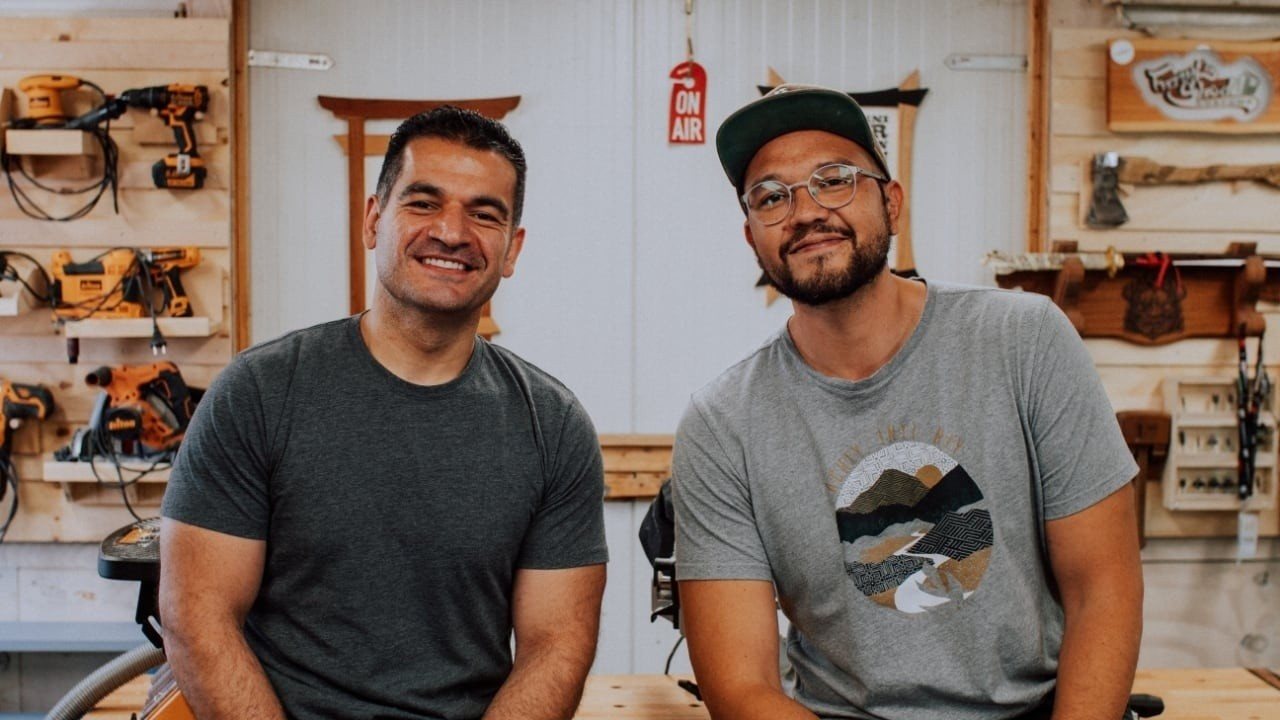
Introduction
Overcoming fear and following your passion sounds simple, but the path is often paved with self-doubt, online backlash, and the pressure to give up a secure job. Frank Krüger, better known as the mastermind behind the YouTube channel “Frank’s Shed,” took exactly that step. He resigned from his tenured teaching position to dedicate himself fully to the DIY sphere on YouTube. In this episode of Project Mindset, Reza Mehman talks to Frank about the beginnings of his channel, the first brutal online backlash, how he deals with negative feedback, and the question of what creativity has to do with happiness. With over 100,000 subscribers and more than 11 million video views, Frank’s Shed is now one of the biggest DIY channels in Germany..
This conversation powerfully demonstrates the mindset required to believe in one’s vision despite resistance. Anyone wondering whether it’s worth leaving the safety net and following their calling will find valuable answers here.
Summary
In one sentence
Frank Krueger tells how, despite a shitstorm and self-doubt, he gave up his secure teaching job to follow his passion as a DIY YouTuber and inspire over 100,000 people.
In three sentences
Frank Krueger, a tenured teacher, started out making DIY videos on YouTube and initially faced a massive backlash that almost made him give up. Instead of quitting, he used the negative experience as motivation, continuously improved his content, and built Frank’s Shed into one of Germany’s biggest DIY channels. In conversation with Reza Mehman, he shares his insights on dealing with fear, the importance of creativity for personal happiness, and balancing family and passion.
In five sentences
Frank Krueger was a tenured teacher for over ten years before deciding to leave his secure job and work full-time as a DIY YouTuber. His channel, “Frank’s Shed,” grew out of a simple passion for woodworking, which began in a garage. The road to success was anything but easy: his first viral video triggered a massive backlash that deeply unsettled him. But Frank decided to persevere, learned from the criticism, and developed a mindset that helped him see setbacks as opportunities for growth. Today, with over 100,000 subscribers, he inspires others to create something with their own hands and experience pride and fulfillment in the process.
Context: Who, What, Why
Who is speaking: Reza Mehman, host of Project Mindset, interviews Frank Krueger, founder and creator of the YouTube channel “Franks Shed”, one of the largest Do It Yourself channels in Germany with over 100,000 subscribers.
What is it about: The conversation revolves around Frank’s journey from tenured teacher to full-time YouTuber, his handling of massive negative feedback, the importance of creativity and creating with his own hands for personal well-being, and the balance between family and professional passion.
Why is this relevant? In a time when more and more people are considering leaving secure career paths and turning their passion into a profession, Frank’s story provides an authentic example of how to overcome fear, deal with criticism, and forge your own path despite resistance.
Three key questions of the episode
- How do you overcome the fear of giving up a secure job to follow your passion?
- How do creators deal with massive negative feedback and shitstorms?
- What does creating something with your own hands have to do with personal happiness and the right mindset?
Table of contents
- Introduction – What this episode is about
- Summary – The episode in brief
- context – Background information on the speakers and the topic
- Table of contents – Overview of all sections
- Topics and classification – Overview of the main topics
- Key messages – Key findings in brief
- Frequently Asked Questions – Answers to the most important questions
- Highlight quotes – The most striking statements from the conversation
- Transcript – The complete conversation to read again
- Keywords – Relevant search terms for the episode
- Names and terms – Important people, places and technical terms
- Quotable passage – Key ideas to share
Topics and classification
1. From a secure job to self-employment
Frank Krueger is giving up his tenured teaching position to work full-time as a YouTuber. This decision shows how important it is to have the courage to leave the beaten path when your passion calls.
Keywords: quitting teaching, venturing into self-employment, giving up a secure career
2. Dealing with shitstorms and negative feedback
Frank’s first viral video triggered a massive backlash that almost made him quit. He recounts how he learned to filter criticism and use it as motivation, instead of letting it paralyze him.
Keywords: Surviving a shitstorm, negative comments, resilience as a creator
3. Creativity and Do It Yourself as a happiness factor
According to Frank and Reza, creating things with your own hands directly contributes to your personal happiness. The pride you feel in something you’ve made yourself is an underestimated factor in satisfaction and well-being.
Keywords: DIY happiness, creativity, well-being, creating with your hands
4. Balance between family and passion
As a father of three children, Frank speaks openly about how difficult it can be to find the balance between family commitments and dedication to his YouTube project.
Keywords: Work-life balance creator, family and self-employment, father YouTuber
5. Authenticity and transparency as a creator
Frank emphasizes the importance of being honest about one’s knowledge and lack thereof. Authenticity builds trust within the community and is a crucial success factor on social media.
Keywords: YouTube authenticity, transparent content, creator trust
Key messages
- You don’t need a background in crafts to be successful with DIY. Frank taught himself everything and proves that passion is more important than formal training.
- The first big shitstorm was a turning point: Instead of giving up, Frank used the negative feedback as motivation to continuously improve his content and skills.
- Creative and artistic people can also be successful in business, even if structure and organization are not their strengths. These skills can be learned.
- Creating things with one’s own hands generates a pride and satisfaction that can hardly be achieved in any other way.
- Balancing family and passion requires conscious attention. Frank admits that he sometimes needs to be reminded when he gets too absorbed in his work.
- Negative comments online are often a sign that you’ve become visible. What matters is how you deal with them.
- Visualizing success can be a powerful tool. Frank describes how he envisioned his goals before they became reality.
- Transparency about one’s own knowledge and lack thereof creates credibility and an honest relationship with the community.
- The decision to give up a secure civil service job requires not only courage, but also a stable family environment that supports this step.
- The motto “Makers gonna make” represents a lifestyle that focuses on doing and creating, not waiting and doubting.
Frequently Asked Questions
Who is Frank Krueger from Frank’s Shed?
Frank Krueger is a German DIY YouTuber who runs the channel “Franks Shed”. He was a tenured teacher for over ten years and gave up this secure job to dedicate himself full-time to his YouTube channel. With over 100,000 subscribers and more than 11 million video views, his channel is one of the largest DIY channels in Germany.
Why did Frank Krueger give up his secure teaching job?
Frank gave up his teaching job because his passion for creating DIY projects and his YouTube channel were taking up more and more of his time. He realized that he could only fully realize his creative potential if he focused on it 100 percent. This decision was a conscious step to follow his passion, even if it meant giving up security.
How did Frank Krueger deal with his first shitstorm?
Frank’s first viral video triggered a massive backlash. People ridiculed his project, saying anyone could build something like that. Initially, he was deeply insecure and wondered if he was really that bad. But instead of giving up, he used the experience as motivation to improve his content and keep going.
What does DIY have to do with the right mindset?
According to Frank and Reza Mehman, creating things with your own hands directly contributes to your personal happiness. The pride of having built something yourself strengthens self-confidence and satisfaction. Creativity and a can-do mindset foster a proactive approach to life, where action is more important than doubt.
Do you need formal vocational training to be successful with DIY on YouTube?
No. Frank Krueger has no formal training as a carpenter or joiner. He taught himself everything, starting with building arches in a shed. His story shows that passion, a willingness to learn, and perseverance are more important than formal qualifications.
How does Frank Krueger find the balance between family and YouTube?
Frank openly admits that balancing his family of three children with his passion for YouTube is a constant challenge. He acknowledges that he sometimes needs to be reminded when he gets too engrossed in his work. His family is his primary motivation, and he consciously works to give both areas of his life their due.
Has Frank Krueger visualized his success as a YouTuber?
Yes. In the interview, Frank describes how visualization played a role in his career path. He visualized his goals before they became reality. This mental imagery helped him stay motivated and believe in his vision, even when external circumstances were working against him.
How long did it take for Frank Krueger to be taken seriously as a YouTuber?
It took several years for Frank to be taken seriously as a YouTuber. He started making videos over five years ago and initially had to overcome setbacks and negative reactions. Only with time and the continuous improvement of his content did recognition from his community and his circle grow.
Highlight quotes
“And then I got the worst shitstorm. People freaked out and said, ‘Are you kidding us? This is a joke, anyone can build something like that, selling something like that is ridiculous.'”
-Frank Krueger
“I was sitting there myself, reading through all that crap, and I was just at the beginning and I really thought, shit, am I really that bad? Fuck, is it really that bad? I was so proud of it.”
-Frank Krueger
“I am absolutely convinced that when you create something with your own hands, it contributes extremely to your own happiness.”
– Reza Mehman
“Why not try to do it as well as possible? Instead of just saying, ‘I’m doing this just for fun,’ let’s see what’s really possible.”
-Frank Krueger
“It’s nice to do what you enjoy. But taking the step to want to make a living from it, to do it seriously and to say straight away, ‘Now I’m just going to go for it.’ Even a chaotic person like me can do that.”
-Frank Krueger
“I do it for the family. So I’m also a teacher on the side. Now I’m a teacher on the side. You can really say I’m a teacher on the side now.”
-Frank Krueger
“You can actually learn a lot about yourself by listening.”
– Reza Mehman
The full conversation
Hi everyone, thank you so much for joining me again today. I’m so glad you’re all tuning in. I just have a quick comment about today’s episode: I had the pleasure of conducting another super interesting interview. This time with a YouTube creator, Frank Krüger from Frank ‘s Shed, which is the name of his YouTube channel. He’s active in the DIY sector and is one of the biggest DIY creators here in Germany. That’s why it was particularly interesting to see what kind of mindset he brings to life.
What I also found interesting is that until recently he was a tenured teacher, but he’s now quit and is essentially working full-time on his YouTube channel. It was a super exciting and inspiring conversation. And now you might be wondering why I interview people every now and then. There’s a very simple reason. I think you can actually learn a lot about yourself by listening. That is, I enjoy talking to other people, especially inspiring people, not to prepare my answers while someone else is speaking, but because I want to listen first, reflect, perhaps gain a different perspective, and then maybe, in a second step, see certain issues, my life, from a different point of view.
Conduct conversations with genuine interest
Either way, I can recommend to everyone to really approach conversations in a way that puts you in pure listening mode. I know more than enough cases where people are only talking because they want to hear themselves speak. It’s obviously difficult in a podcast because I’m usually speaking alone, but believe me, I love listening. I also really enjoy observing, and I’ve noticed that my little one is the same way. He’s four years old now, and I’ve noticed he’s also a little observer.
I found it super interesting. Okay, enough rambling. You can either stay here with the podcast or go to my YouTube channel. I’ve uploaded the video there. You can also go to my website, just click on YouTube, and you’ll be taken directly to the interview. I hope you enjoy it, and I’ll talk again soon. And then I got the worst backlash. People went ballistic and said things like, “Are you kidding us? This is a joke, anyone could build something like that, selling something like this is ridiculous.”
The dynamics of a shitstorm
And then, as is often the case on the internet, it started to spread like wildfire. It snowballed, and more and more people jumped on the bandwagon. And there I was, sitting, reading all that crap, just starting out, and I was really thinking, shit, am I really that bad? Fuck, is it really that messed up? I was so proud of myself. Hi everyone, and welcome to Project Mindset. The channel for all those who know for sure that with the right mindset, anything is possible in life.
Today we have another very special and inspiring guest here at Project Mindset, and I’ll be talking with him about social media and DIY. He has his own YouTube channel with over 100,000 subscribers, over 11 million views, and he’s published around 160 videos in the last five years. So he knows what he’s doing, and DIY has always been an interesting topic for me, because I’m absolutely convinced that creating something with your own hands contributes tremendously to your happiness.
The conversation in Frank’s workshop
And that’s exactly what I want to talk about with Frank Krüger today. Frank, thank you so much for taking the time today. My pleasure, it’s an honor. Thank you for your time, everyone. My pleasure. Where better to talk to a guy like that than in a fully equipped workshop? And from you, Frank, thank you so much for the invitation. Of course, welcome to my home. I’m really looking forward to the conversation, and I thought maybe I could kill two birds with one stone and get a little present for my little one that we can put together today, like a small sword or something, that we can assemble while we’re doing the interview.
Absolutely. So you’re definitely in the right place. Where else would you be? Thank you very much. Then let’s get started. All right. Before we really begin with the questions, perhaps you could briefly introduce yourself again: who are you, who is the private Frank, what do you do in your free time, and how did you get into making DIY videos on social media? Yes, so I’m Frank from Frank ‘s Chat, or Frank from Frank ‘s Chat. Where should I begin?
Family as the most important motivation
Yes, exactly. First of all, I’ll start with the most important things. I’m a father of three, happily married, and have been for a very, very long time. I can already give away some spoilers here. That’s actually my main motivation. I do it for my family. So, I’m also a teacher on the side. Now I’m a part-time teacher. You could really say I’m a part-time teacher now. For, I don’t know, for quite a while now, it’s so crazy, I’ve been teaching for over ten years.
Sports and creative interests
And about five years ago, I started to really let loose here. Hobbies, you know, totally stereotypical. I love sports. We’ve even done sports together before. You really put me through my paces once, I remember that. So sports have always been a really important part of me, even back then. I think that, generally speaking, not really consciously, but subconsciously, I like the challenge, the idea of a challenge, when you’re doing something.
Why not try to do it as well as possible? Instead of just saying, “I’m just doing this for fun,” why not say, “Hey, let’s see what’s really possible”? It’s a similar thing in sports. Exactly, I’m a very artistic person. If there’s anything I’ve learned, like a trade or anything like that, I haven’t learned at all. Neither from my father nor from my father-in-law. I didn’t have any role models in my family who were skilled tradespeople. But I’ve always enjoyed being artistic and creative.
I’ve always been like that. In school, instead of paying attention and following the lessons, I’d take out my blog and tinker with it the whole time. Unfortunately, there were no grades for that. But yeah, exactly, the artistic, the creative side, that’s also a part of me. I’ve also really, really loved making music. I’ve been playing guitar for years. Not so much in the last year, though, because I’ve been focusing so intensely on this project. But I taught myself, too.
Creativity and chaos
Playing guitar is just so artistic, I don’t know. I’m just an artistic type, I simply enjoy doing it. Although, it has to be said that artistic and creative people also tend to be very chaotic, not particularly structured. I still have that problem to this day. But that doesn’t mean you can’t turn your artistic, creative passion into something business-like. You can learn that, too. That was one of the things I’ve learned, yes, actually one of the biggest things I’ve learned in recent years.
It’s nice to do what you’re passionate about, sure. But taking the step to actually want to make a living from it, to really take it seriously and say straight away, “Now I’m just going to go for it.” Even a chaotic person like me can do that. But I mean, you’ve been doing this for a few years now, your DIY channel on YouTube. And like I said before, over 100,000 subscribers. You’re one of the biggest DIY channels here in Germany. Right now, yes. Exactly, but maybe I want to take a step back.
How the first videos were created
How did you get started back then? I mean, how did you make your first videos? How did you even decide to make a video in the first place? Can you elaborate on that a bit? Sure, sure. So, if we stick with the topic of craftsmanship for a moment. As I said, I didn’t learn it formally. I don’t have any carpentry training, I’m not a cabinetmaker. But I remember when I was doing my teacher training, which was very demanding and stressful, I was looking for a way to unwind. And that’s when I first started working with wood.
I remember it was with my godson back then. He was three at the time and said to me, “Make me a bow.” So I was like, “Okay, fine.” I broke off a stick somewhere, stuck some parcel string in between, grabbed another stick, and shot it. I thought, “Cool.” Then I thought, “That’s really boring.” And then somehow I got the idea, “Hey, people used to hunt with these and even survived. There must be a way to make it cooler.”
to immerse oneself enthusiastically in a topic
And then I got into bow making and completely immersed in it. That’s just one of my things, I don’t do a lot of things, but when I do something, I get so incredibly into it. I’m totally absorbed. And sometimes I even forget about my surroundings. So, that’s how I got into bow making. I made five bows, proper hunting bows, and they were really awesome. And that’s when I realized, this working with wood, especially the smell, was something I really loved.
I can still remember the smell to this day, back when I was working in a shed, not really a workshop, just a workbench. It was all cluttered. I cleared it out and then I worked there. And I can still remember that smell, that wood smell, I don’t know, totally awesome. Right, and then I finished my studies. Then there was a long break from woodworking or making, from carpentry. And only then, exactly, the real moment came when I became a father for the first time, did I realize, I think it ‘s okay.
The garage becomes your own workshop
We were still living in an apartment back then. And then I thought to myself, I see, a house would be really cool. I wanted to have more than just one child. So we started looking at houses, and then we moved into one. And there was this garage. I remember exactly, I walked in there and thought, awesome, now that I have a house, I have to be a real dude, a self-dad. And of course, I had to tinker around in the garage again.
And that was basically the beginning. Once I had this place where I could kind of let loose, whether it was an office or something, but just a simple corner where I could pursue my own thing, my hobby—it really was just one hobby left, where I could indulge it. And that was it, really. And from there, during the first four years we lived there, I tinkered around. It was kind of half storage room, half, I don’t know, cheese room, and then right in the middle were my tools.
From personal projects to YouTube
And then came the moment when I thought, because I’d been doing this for so long, I’d also watched a lot of videos on YouTube myself. Because if you want to build things yourself, like, for example, I want to build a table, you go to YouTube or Google and search for “build a table.” And those were my first points of contact, where I saw these videos from other people and thought it was really cool, because you could actually learn something from them. Of course, you could also use Google and, what’s that site called, gutefrage.net, where you’d be totally clueless, asking, “Hey, how do I build a table?”
But videos are so cool. You just click play, you don’t have to read anything, you can just let yourself be entertained and learn something at the same time. And that’s how I learned so many things. At some point, I thought to myself, “The artistic side of things came back to me, and videography has always fascinated me.” And then I thought, “Hey, why not just give it a try?” Screw it. It was n’t about the money for me. I didn’t set up the camera because I said, “I’m going on YouTube now and I’m going to make money.”
Getting started with a borrowed camera
But the beginnings were really just, I’ll give it a try, see what happens. I set up the camera there, borrowed some random camera from my mother-in-law because I didn’t have the money for one myself, borrowed everything, including a tripod. I pressed play, pressed record. And then I just looked at the footage. And then came the first moment, I read the first recordings, and I thought, never ever, never ever will I publish this anywhere. What’s the point?
I thought I looked so incredibly awkward in front of the camera, hearing my own voice. Seeing myself, you think, “Oh my God, kid, get a bag off your head,” it was really awful. But I started anyway, using free video editing software, not like I do today. These days I’m actually a bit better at it than I used to be. I used to do it all with, I don’t know, some kind of weird software I’d just get from somewhere. The main thing was just to try it out. It was all free, and I just had to do it.
And then I edited it all together, and I actually enjoyed the editing process. Because I realized, uh, cool, somehow you can still get something out of this stuff, even if you feel totally silly, even if you think you’re totally cringeworthy, you can still get something out of it. And then in the end, video editing was like painting for me, which I’ve always enjoyed doing. So I thought, come on, let’s do some editing. But I didn’t release the videos back then because it was really unacceptable.
The moment of almost giving up
I was just doing it for myself, privately, and I thought it was kind of cool. And then, yeah, right, there was a moment, right at the beginning of it all, when I really wanted to give it all up. Because that’s when I started out just with photos of my homemade things. They were really simple things, like a shelf with hooks. Or just a box. Just really cheap stuff, actually, but I was so incredibly proud that I’d built them. Then I was like people on Instagram, I took photos of them and just uploaded them.
Back then, there were , or were , I don’t know, I couldn’t use Instagram or Facebook yet, yeah, there were these forums, there were woodworking forums, yeah, or there are forums for all kinds of cars. And then I signed up and uploaded the photos, and spent ages writing the texts. I’m so proud and all, look at this, what do you think? And then I asked her, because I wanted to, well, I had already planned at some point, hey, maybe you could make money with it, with homemade furniture.
The first sales attempts online
And then I opened it, do you remember Davanda? It does n’t even exist anymore. Then I put the stuff on Davanda. And then I posted it in this forum, so to speak. I said, look what I’ve built and I was selling it, so what do you think? And then I got the worst shitstorm. People freaked out and said, “Are you kidding us? This is a joke. Anyone can build something like that and sell it. It’s ridiculous.”
And then, as is typical on the internet, it started to spread like wildfire. It snowballed, and more and more people jumped on the bandwagon. And there I was, sitting, reading all that crap, just starting out, and I was like, wow, shit, am I really that bad? Fuck, yeah. Seriously, is it really that bad? I was so proud of it. And I wasn’t at all trying to sell anything; I was just checking out what I’d done.
Strong reactions in the forum
Yeah, you guys think that’s cool? And then it got completely torn apart. In the worst way. It was really bad. The admin even logged into the forum and closed the thread because he said it was unacceptable. And that was a moment when I thought, I was just so incredibly proud and so incredibly awesome. Startup. I mean, I was at rock bottom. And I thought to myself, look what I’ve got. Everyone’s the same, ugh, shit, get lost.
And then I thought, hey, now I’m supposed to publish videos? If people are already thinking, even on a small scale, “Hey, what kind of crap is this?” And then I really started to think about it and thought about it for a long time. Because I had, I had toyed with the idea of maybe, just maybe, publishing a video sometime. But then, of course, that was the end of it. I thought, forget it. And you ended up doing it anyway?
What negative comments trigger
I was, I was, for a long time, I mean, this sounds really weird now. Yeah, I mean, there are things that make people much worse. My God, when relatives die. Yeah. But back then it really got to me. Just for me personally. Yeah, because I put so much heart and soul into it. Yeah, and then you just get torn down. I talked to my wife, who, by the way, is the foundation for everything. Yeah, yeah. Support from day one, when I didn’t even believe in myself, yeah.
She said, come on, just do it. Just try it. Screw what people think. And that’s what she told me. Then she said, hey, they don’t even know you. You’re actually a nice guy. Yeah, and, and, well, what else would she say, my wife. But she said, no, I think you’re a nice guy. Yeah, and in general, most people like you, actually. Just try it anyway. Just do it. Make it.
Release the first video
Just do it. Yeah. So I did it. Finished editing the first video, uploaded it, and then, like most people do, yeah, clicked upload and then spent hours in front of the PC waiting for the clicks, yeah. Now it’s going to take off. Tomorrow I’ll be famous. Yeah. Right? And then I opened accounts, like, where’s all this money going to go? Yeah. Nothing happened. I uploaded the first video, nobody watched it. Nobody. Yeah. And, but that didn’t even make me that sad, because I actually did that at the beginning.
Yeah, I did it because I just felt like it. Yeah. I didn’t even want to make any money from it. Good thing I sold those few shelves on Wanda. Yeah, I just wanted to try it out. But the videos, I just wanted to make them, yeah, I think I’m a nice guy. Yeah, and I have something I enjoy doing, check it out. Yeah. And, um, right, I also remember it took me 8 months to get my first 500 subscribers. Yeah, so it’s a really extremely long time.
Accept slow growth
Now, nowadays, I don’t know what I’m doing, maybe 2,000 or 3,000 a month or something. Yeah. So, it was a really long time. But I also remember, I can’t recall being particularly frustrated during that period. And I just uploaded videos because I felt like it. It wasn’t about the money. It wasn’t about recognition at all. Yeah, somehow, I just felt like it. I did have the hope, hey, maybe some people would think it was cool. Yeah, otherwise you wouldn’t do it.
The first thousand subscribers
But originally I just felt like doing something like that, sharing something of mine. Yeah, what do you think? Yeah. And that’s how it started. Yeah, and then I think after 12 months I had 1,000 subscribers. Yeah. And that was, I think, the first limit. I don’t know if it’s related to the algorithm. Yeah, where the algorithm kind of says, “Okay, there seems to be something here. People seem to be interested. Now let’s give it a bit more of a push or suggest it more often.”
And, exactly, but lots of people say that too. Generally, if you produce videos over a long period of time, well, no matter how, you’re just making content. Well, eventually, if the content is good, well, even if it’s total garbage, well, eventually there will be a video that kind of, well, kind of goes viral, I’d say. Yeah. And that’s the moment, sort of, where for me too, I think after about eight months, I finally had a video like that, yeah.
Solving a problem from within your own workshop
But where did it all begin? Well, I built a machine myself. Yes, the machine that’s standing here now, yes, such a super expensive piece of equipment, yes, you can build it yourself. So I did, out of wood, yes, totally low budget, everything really, really, not entirely safe, the thing, but it worked, and I built a model of it, and it was the kind of thing where I first realized what people want to see, yes, because they don’t want to see you building furniture, they want to see you solving problems they also have.
Yes, and a circular saw like that can easily cost 1,000 euros, and I thought to myself, I don’t have 1,000 euros, I really didn’t back then, so I gathered up some materials worth 200 euros and built it myself..
From audience interest to business model
Yes, and that was this thing, yes, I show people, hey, I have the same problem as you, I show you my solution, how I did it, yes, and that really took off, yes, and not only did my channel get a growth spurt at that moment, but I also got a boost in motivation, yes, I realized at that moment, wow, yes, hm, you’re interested in this, yes, and apparently I’m doing it quite well, yes, and that was the next moment where I thought, okay, now, do you do it regularly, yes, exactly, the channel grew, and.
Yes, and so it went on, yes, yes, I mean, the further development of, I think, the thousand subscribers, they were, yes, they were already a kind of sound barrier, I don’t know, yes, but then it went on step by step, but with no big leap, but it moved forward, yes, not in a big leap, but the line went upwards, yes, that means something like, ah, people are interested and more and more are interested in it, and, as I said, I continued like that.
The first inquiry from a company
And then came the next step, yes, two years later or so, yes, the first company approached me, and at some point I had the first inquiry in my email inbox, yes, I think I had 5,000 or 10,000 subscribers, yes, when the first company asked me, hey, great work, yes, we have something, wouldn’t you like to try it out, yes, and at the beginning it was just about, very, very small, I would get the tool from them, I would give it away for free, and then I would show it briefly in a video, and that was the deal.
Yes, but as a creator, that’s initially exciting, because you think, wow, now I’m even becoming interesting to companies, and that was the first moment, regardless of the YouTube earnings, where I thought, hey, you can actually make money with this, yes, somehow, yes, what kind of way is this to suddenly make money, yes, actually it was just the YouTube advertising, yes, and that’s when I realized, hm, there’s something else there.
And then I became a bit more professional about it, yes, but that’s also a decision I made with my wife, because pursuing such an intensive hobby for two years is one thing, your wife has to be on board with that, especially with several children, and then I, and I remember this, we wrote everything down, yes, what can be done or what am I doing, what’s possible, yes, is it worth continuing?
The decision will be made jointly
And then we decided together, okay, you already have a main job, you’re already fully booked, if you want to push this even further, well, then I won’t see you anymore, but that was a conscious decision by both of us, because I can’t decide that alone, absolutely not, so, from that moment on we knew, you either go full throttle now, or you try to do this a bit more professionally, I’ll give you the time, I’ll have your back and you can see what comes of it.
And, exactly, then I, we wrote down a kind of business plan, yes, yes, but completely publicly, you know, the kind of thing you do as a person when you have absolutely no idea, you write down some points, but the main thing is to bring in some kind of structure, to visualize what I actually have, yes, can you even do anything with it?
The first paid collaboration
And, yes, yes, and then, I think half a year later, a year later, or, I would say, half a year later, a sponsor approached me who is still my main sponsor today. Yes, they must have had some kind of hunch back then, because I was really just one of many channels, yes, still relatively small, and they said, hey, she’s from the UK, yes, and they said, yes, wouldn’t you like to?
That was the first time it was about money, exactly, exactly, that was the first time it was about money, because before that it was all a bit like bartering, yes, a bit like messing around, yes, and then they said for the first time, yes, so, hey, if you, let’s say, use our machines, in that way, or if, yes, then, then, we’ll give you amount xy for it.
Yes, that’s been going on for a while now, and I just want to say briefly, yes, it shouldn’t sound like that, like two or three years ago, when the community reacted very sensitively to it when I started doing that, because that’s the downside of it, you as a creator, you get such great signals, you think, wow, awesome, yes, but you always have to keep the community in mind, everything always has to be in harmony with the people, yes, who are ultimately the basis for your success.
Transparency towards the community
Yes, and as I said, it’s a balancing act you have to maintain somehow; it’s also about communication, about communicating honestly, not saying something like, “I’m doing this secretly, nobody will notice,” but rather, I communicated it openly and transparently and said at that moment, “Guys, this is how it is, the company asked me, I’m absolutely thrilled, I can’t believe it, what do you think, what’s your take on this?”
Discuss advertising openly with the community
If you ask people transparently and honestly, the vast majority will say, “Sure, if that happened to me, I’d do the same,” and “Yes, then I got the support.” But what influence does, or did, the community have on you? I’m asking this deliberately because I’ve seen you create incredibly interesting content; you’re essentially giving away knowledge for free, and yet there are still people who say, “No, thumbs down, I don’t like that.”
So I always wonder why anyone wastes their time spreading negativity or a bit of hate. How do you deal with that today, and how much does it influence the content you create? Well, I told you, right at the beginning, even before YouTube, I had this crazy experience where I was completely torn apart. I couldn’t handle it at all. But that was the first moment I realized you need a thick skin.
You really need a thick skin for that, because even back then I knew that half the criticism was directed at me personally, not at my work or anyone else, they just got out of bed on the wrong side, I don’t know. But I knew you just needed a thick skin. And, I deal with it, or rather, these days I deal with the criticism very objectively, but actually, like many creators think, I always thought back then it was just a cliché, yeah, so, Alex doesn’t bother me, yeah, so, I read it, but bullshit.
Read comments and gain some distance
I read every comment, and even the really offensive ones, I still take note of them, I’m aware of that. But, actually, I don’t let it get to me that much, which also depends on whether it’s true or not, but you just have to be sure of yourself, you just have to say, no matter what they say, I enjoy doing it, I think it’s good, and there are still some people who like it too, and I do it for them.
I’m not doing it for all the haters you always have; you’ll have them anyway, and the bigger you get, the more there will be, they won’t decrease. But I’m doing it for myself, for the people who like it, and apparently it’s well-received because it’s growing. And those are the things I stick to: self-confidence, and technical mistakes. I’m not a carpenter or anything, I can still accept those. And with some things, I think to myself, “Fuck, I really messed up there.”
Distinguish between objective criticism and attacks
Okay, but I can understand that, and I think I take it to heart a bit, but I can separate the nasty criticism from that pretty well now. I don’t give a fuck, I do my thing, I enjoy doing it, and that’s it. Now, let’s ask it another way: your followers learn quite a lot from you, a great deal. Is there anything you’ve learned specifically from your followers? I mean, that’s how things have developed over the last few years. Yeah, yeah, yeah..
Yes, my view of things isn’t the view of others, yes, if I think something is good, which is exactly what I said, that doesn’t mean that someone else will think it’s good too, yes, and then there are plenty of people who vent about it, who tell you that, yes, many think that way, and then they switch off, yes, but many are there and say, no, I have to let that out now, yes, and I’ve learned from the community, I mean, I’ve learned from my community here, I used the term “carpenter police” earlier, yes, yes, those are these experts, these specialist idiots, yes, the ones who are always out and about, yes, and they immediately pick out every little mistake that I would never notice, yes, they find fault with everything.
How negative comments are amplified
Yes, and then, and then there’s another thing, exactly, I’ve learned that too, when someone starts to criticize in the comments section, if we stick with YouTube for now, yes, when someone starts to criticize, people are very keen to jump on it, yes, so, if someone writes something negative somewhere, you could see that under any YouTube video, if you look at the comments section, sometimes the comments are much better than the video itself, yes, we probably all know that, yes, and, and then you realize, yes, what sometimes goes on there.
Yes, and that’s not because you’re so terrible, but because people simply like to complain, or at least that’s been my experience, or many people do, or like to write negative things. It’s like with reviews on Amazon; you don’t write a review when the product is great, otherwise you’ll never hear from you again. You write a review when something annoys you, and it’s the same on YouTube.
And, basically, I’ve learned from people that no matter what you do, and no matter how correct you are, and you try to please everyone, forget it, it doesn’t work anyway, yes, and I’ve improved a lot, professionally too, yes, but it doesn’t work, you never get 100%, yes, if you get 80% of people to say, “That was cool, awesome,” the other 20% are a gift, yes, you always get those anyway.
Experiences with professional feedback
Yes, that’s quite interesting. I once launched a fitness app, which, for me personally, was one of the best apps you can create in the fitness field. And then, of course, experts came along and said, “Yes, the exercise was done incorrectly in the app.” Then I had to explain that I meant it differently; for example, these muscles are meant to be used.
So I can completely understand that. Of course, there’s valuable feedback, but there are also people who just want to complain, and I agree with you there. Where are you headed? I’ll get to the other important areas of life in a moment, but where are you currently headed with social media? What do you still want to achieve in the area of social media? You’re still a teacher, but I understood from you earlier that you’re slowly phasing out of that area. Exactly, where are Frank and Frank ‘s Chat, your YouTube channel, headed?
The path to career change
So, like I said, I’ve been doing this for 5 years, I just recently had a 100K special, yeah, and I also had, like, 100,000 subscribers, 100,000 subscribers, exactly, exactly, yeah, that’s also a thing, when I say 100K special, yeah, that’s totally 100,000 for me, yeah, but a lot of people like, 100 what, yeah, so, yeah, and I also have, I uploaded my first video 5 years ago, I’ve seen the development a bit, yeah, where I started, kind of damn secondhand embarrassment, more like, okay, that’s quite okay.
Yes, I’m at the point now, as you said earlier, I’m still working as a teacher, yes, but I’ll be stopping soon, not because I love teaching, I love teaching, I think you can tell that from the way I make the videos, I make educational videos, yes, I teach people, yes, what I mean is, I like teaching people things, yes, I just enjoy it, so, yes, maybe if you know, yes, like, oh, he’s a teacher, okay, then everything explains itself.
But I’m leaving, I want to get out of the teaching profession, yes, because what I’m doing is simply what I’m really passionate about at the moment, and I’m saying this quite deliberately. And so, I’m going to, I don’t know, exactly, I’m going to leave the teaching profession for an indefinite period and then try to fully push Frank’s chat and social media and everything, full-time.
YouTube as a career prospect
Yes, because I didn’t know that either, but running this YouTube channel, yes, you can really build it up as a full-time business job, yes, and with that, and I have to be very clear about this, I’m a father of three children, yes, I can’t afford big adventures or big risks, yes, and being self-employed is the complete opposite of being a civil servant, a teacher, yes, a gilded cage, you don’t have to worry about anything, yes, I know that, yes, and that’s why, but it’s totally possible, yes, I’ve really noticed in recent years, yes, and especially in the last year, what’s all possible.
Taking responsibility for the family
On the one hand, it’s exciting, yes, it triggers me personally, this challenge, yes, but also, yes, as I said, I’m doing it for the children, for the family, I have to do it, yes, somehow it all has to be kept running, and at the moment I see that, I see myself, yes, I don’t forget the work that’s behind it, but I also see myself as quite blessed, yes, that I simply had the opportunity and seized it, and now I’m where I am, with a pretty good foundation, yes, and I’m also looking to the future with confidence and optimism, yes, that it’s simply growing, yes, just like in the analog economy, yes, that the digital business is also growing, yes.
Okay, let’s talk about DIY. For me personally, it’s a super exciting topic. I’ll tell you why. A lot of my work involves digital things. I mainly work in IT. What I create at the end of the day is something I can’t really touch, so it feels incredibly good when I do something at home, like sawing a piece of wood or drilling a hole in someone. I’m really proud of it, and it’s true that when I assemble, say, a cabinet we bought from some big furniture store, I’m really proud at the end of the day, no kidding, I show it to my family, show it to my parents, show it to my mother, show it to my wife.
Pride in things you’ve created yourself
Are you just as proud of it? I’m proud of everything I ultimately build. Because I totally agree with you there, that feeling of having made something yourself. For me, it’s not that big of a difference whether it’s something you hold in your hand, a picture you’ve painted, or whether you pick up a guitar and play a few notes and know you’re making them yourself. It doesn’t come from a sound system, but every vibration, every stroke on the paper.
Every word you write. Somehow, if you’ve done it yourself, I think you’re always proud of it. But I also have to admit that I can totally understand the profession of architect, or carpenter, or joiner, and if I could only travel back in time, I would probably learn one of those trades. Building things is something else entirely, because not only can you touch them, but wood also smells incredibly good.
Experience wood with all your senses
I’ve definitely developed a bit of a fetish for it, yeah. I can almost distinguish the different types of wood by their smell now. But it’s just so simple, you end up with something you not only built yourself, but also, for example, if you’re building something for your son or for yourself at home. For instance, one of my favorite pieces of furniture that I’ve built is the dining table. I poured a lot of time into that one. It’s a really awesome piece. But seriously, I’m always happy when I sit there with my family, when friends and family are over.
Everyone sits at the table, and they don’t even notice the table. I sit there every time, do this, stroke it like that—I know that feeling, yeah. Hey, I know that feeling too, yeah. That’s mine, I made that. And everyone sits there and enjoys it. It’s a place of joy, somehow. And if you then make others happy with those things, or someone draws a picture, they stick it on the wall, I don’t know. That’s probably why the kids draw scribbles for us, and we just hang them on the fridge, and they think that’s cool.
Why creativity can make you happy
Because, oh, I made that. Hey, people like it. And when, like I said, it’s also appreciated or used, yeah, that’s just an amazing feeling. I can absolutely relate. So when I create something, it really boosts my happiness. So I think I’m probably right, but it’s the same for you. Absolutely. Exactly. Is it also important to you that you work on certain topics with DIY projects, or let’s say with handicrafts, and that you want to pass that on to your children?
Passing on knowledge and personal style
Yes, well, the videos have a nice effect. I want to teach people something, of course. But sure, I’m also passing on knowledge, so to speak. But back to the videos. I also share a lot of my personal style. Because, as I said, I’m not an expert. I think if you tell an expert to build a table, ten experts will build the same table in the same way. When I build a table, I simply approach it completely differently.
And I think, exactly, I kind of pass that on to people, my personal style. Of course, I like it too. And I do here as well. I love it. So many messages arrive by email and Instagram, with people sending me photos. I recreated it. That’s also a moment where I think, so cool. Yeah, like that. Yeah, like that. You’re inspiring people. You’re motivating people. And I like motivating people. My children, for example. Like I said, I didn’t experience it myself as a child.
Children and their interest in crafts
I never had a grandfather, or anyone who wasn’t always around, who was always in the workshop. And I think if your own parents are doing that, the children aren’t really that interested. Quite the opposite, in fact. If Dad is busy with it all day and it’s his job, then the children automatically develop a kind of aversion to it. So, if I then say, “You’re coming with me now, and I want to teach you,” if there’s this “must-do” mentality behind it, I don’t think that works.
I don’t have one of those either. I just do it one way or another. For example, when I’m working on big projects in the garden, like my last one, this huge roof I spent four weeks building, the kids are playing in the garden with their friends. And their dad is right there with them the whole time. Dad’s working, Dad’s making noise, Dad’s doing it himself. And then these moments happen when they come to me and say, “Can I help?” And that’s what it’s really about. I mean, as a teacher, I know that too.
You can’t ignite a flame in another that doesn’t burn within yourself. And I believe the best way to teach others is still to just do it. Don’t talk a lot, just do it. You can have many good ideas and talk about them endlessly, and then you think, “I should have, I should have, I should have.” Just do it. And then people will come along because they see it and say, “Hey, cool.” Then they’ll become interested. And then, for example, there will be moments like this—I don’t force my children to learn this.
Leading by example instead of pushing for participation
But when they see me working, they often come up to me and say, “Can I help?” That’s much cooler. So, I don’t really encourage it, but I am interested in it. But I think the way I do it is the best. And anyone who wants to copy me or finds it interesting, come along. Sure, we can do something together. But for everyone else, I don’t force anyone. You told me that, let’s say, a single video you published requires quite a bit of work.
So, starting with the recordings, all the way to post-production and so on. That all sounds like a huge time commitment to me. I mean, the combination of your hobby, which has almost become a profession, your current job, and then a family with three children. How does it all work? How do you find the balance? What, let’s say, is crucial for you to manage all three areas, or perhaps soon just two, in such a way that you yourself remain balanced, happy, and able to continue on your path?
Balancing work, canal and family
I sort of stumbled into it. The work didn’t just happen overnight. Like, “Wow, now I have two jobs and a family.” It’s more of a gradual process. There are milestones where you realize, okay, from now on it’s going to be more work. You’ve set yourself certain goals, and to reach them, you just have to put in a bit more effort. But right now, I’m thinking I’ll be leaving my teaching job soon because it’s just too much at the moment.
So, I’m really at a point right now where it’s all just too much. Yes, I can still manage it all, but it’s not easy. It’s a huge balancing act, which is why I get comments like that. I know it from my father, who was also self-employed. He had a travel agency, was gone for ten hours a day, and looking back, I have the feeling he was working all the time. And that’s exactly the thing my children are increasingly saying to me now, like, “Well, you’re always working anyway.”
Guilt towards the family
Ah, you’re back at work again. And I don’t really like that, because I’m such a family person. Do you feel guilty about it? Yes, I do. Absolutely, yes, I’m a family person, and again, I do all this for my family, and in the end, I don’t have any time left for them because I’m constantly focused on the goal, on what I’m doing for them, and I kind of lose sight of that. Yes, I do feel guilty, and that does hurt, yes, but on the other hand, I also think to myself, it’s not like I’m not there at all.
Yes, for example, now because of Corona. Before, I traveled a lot, I was often in the UK, went to Berlin, to Hamburg, and so on. It was even more extreme then, because I was sometimes gone for a few days or even a week. But that’s also the cool thing about it. I’m self-employed. That means I can manage my own time. However, that also means working full-time on Saturdays and Sundays. Those are my workdays, just like Monday to Friday. But I can be flexible; I’m not bound to fixed working hours. If I make time for the children, which I always make time for, and for my wife too, then I know I’ll have more to do elsewhere, because the work doesn’t do itself.
Consciously plan time together.
But I gladly accept that. I think you have to accept it, because I believe if you’re only chasing after this goal, which is actually very honorable—I’m doing it for my family, I’m doing it for several people—then, as I said, you should, you must, always stay a little grounded and never lose sight of what’s essential, even if it’s accompanied by a guilty conscience. At least, I’d say, you have a guilty conscience and haven’t lost sight of it, and you know something’s missing.
I can’t neglect that. Do you need to be made aware of it, or do you eventually realize on your own, “Hey, I need to shift my focus again”? It varies. So, during peak times or peak periods, I’m really away from home for hours at a time, or even ten hours every day. I go out in the morning and don’t get back until the evening, when the kids are almost in bed. That’s when I really notice it, and that’s when I especially need my wife’s support, because with three kids, I know how exhausting it is; I see it every day.
Appreciating the partner’s achievements
From my perspective, it’s the hardest job in the world. Absolutely, absolutely. And what I do here isn’t any better or any more than that. I actually have the opposite feeling; she’s doing way more than me all the time. I’m always just a little bit like that. That’s exactly what you mean. A little bit like that. Just look at what she does. That’s part of it. Also a trigger. She goes all out because she doesn’t really have a choice. When you’re in a job, you can always ultimately decide to say, “I don’t feel like it today.”
A mom or parents don’t have that. They don’t have the option, not one day a week, to just say, “Let me cry it out.” And yeah, exactly, exactly. And that’s the thing with kids. When you have kids, you realize, “Hey, what did I have before? How did I chill out? What didn’t I have time for? What couldn’t I have done?” And then you have kids and you realize, “Wow, now you’re missing out on so much time.” You’re constantly on the go. But that’s when I really started to get going.
Bringing each other down to earth
It’s so, so strange. Only when you barely have any time do you start thinking, “Now I need so much.” But all in all, my wife always brings me back down to earth and often reins me in. Because, to be honest, if it had just been a hobby that didn’t pay the bills, no woman in the world would approve. She’d say, “Son, you come home. What do you think you’re doing?” Yeah, I’ve got all this crap at home.
But it’s also true that if you bring something home, if it’s lucrative and your family benefits, then of course it’s also a give and take, I don’t know. And if things are going well, then it’s nice in that way. Then you’re more accepting of things like, “Now it’s gone for 3 or 4 days. That’s okay. I can manage that.” Because it’s worthwhile in that way. And that’s also a nice support, which I had to work towards, to get to the point where my wife truly accepts it 100%.
Anchoring the new profession within the family
This is your job now. And it’s cool. And it’s good for all of us. So you’re allowed to do it. You have to earn it, too. And I did. I achieved it; that was one of my goals, that it would be 100% acceptable to my family and friends. Because if you say you’re a YouTuber, then it’s, well, okay, kind of funny. It’s not taken seriously at all. But the moment you’re successful, when suddenly people see, oh, he’s doing well.
To be taken seriously with the new approach
How long did it take until you were taken seriously? Four years. Well, I started five years ago. For the first two years, it was just, yeah, so-so. I didn’t show it to anyone because I was so ashamed. It felt reassuring that the viewers didn’t know me. I didn’t want people who didn’t know me to approach me about it, for God’s sake. No, I mean, the profession of, well, being a YouTuber was definitely ridiculed back then. It was always associated with, oh God, some teenagers who are just a bit of a buffoon.
Very few people even knew how to make money with it. Huh? So what the fuck? Yeah, I mean, nobody works for free. It definitely took time. But even then, I wasn’t actively seeking compliments or constantly showing it off, and so on and so forth. I just kept working and working and working. And eventually, I reached a point where things were really going well. For example, here too. I’m now also supporting my mother and my relatives in Indonesia. That’s another goal of mine.
Being able to support other people
If I can ever afford it, I want to support as many people as possible, I want to support them. That’s just how it is. And now, like I said, I support my mother, I support relatives in Indonesia. People see that and think, wow, okay. And those are the moments when people start to accept it. But they only accept it when you can show some success. I mean, success is defined in so many ways. What even constitutes success? Especially as a YouTuber, where everyone already thinks from the beginning, oh my god, how cute.
You have to present a bit more to really get people to accept it and say, “Wow, okay. Win-job, like a normal job.” I think it’s absolutely incredible what kind of perseverance you’ve shown. I mean, if you say that for the first four years people didn’t take it so seriously, only now, after the fourth year, do they? That also shows the discipline you’ve shown. You believed in something. And if I elaborate a bit, I almost feel like I’m doing DIY myself, because you’re visualizing something.
Developing goals and ideas
This is what it should look like in the end. Then you work towards it, building the individual components on top of each other, and then you have what you previously visualized. Was that also a bit like your journey, where you say, four or five years ago I visualized that I would get here? Did you have it in mind like that? No, well, I made my first videos five years ago, and for the first year and a half, I did it completely without any profit motive. I’m passionate about it. And it’s also something I think I can recommend to many people, as a teacher for example, to my students, if they find out that their teacher is a YouTuber, that their teacher has 100,000 subscribers.
So, this is for the final year of high school. They think, “That can’t be real!” Then they come up to me and want photos. Oh my god! It’s all very, very funny. But I always say, “Sure, they dream about it.” If you ask young people today, in a career counseling context, what they want to be when they grow up, influencer comes up a lot. In recent years, we’ve had career preparation days where students can present different professions. The profession of influencer came up so often as a dream job.
Take a realistic view of the move to social media
And I always say, because I even gave a presentation at a career day at school about the profession of influencer, and I said this: if you start out, if you decide to do it, at least from my experience, the profit motive shouldn’t be your primary motivation; passion should be. Because YouTube is about broadcasting yourself. That means you have to have something you love doing. It’s not about whether people like it, but if you have something you’re passionate about, then just do it.
Then upload it. Passion has to come first. Then success will follow naturally. Because I have to be completely honest, I have enough examples where channels started way too early in my niche, trying to make it big right away, with advertising partners and all that, and they crashed and burned, if you can put it that way. They didn’t last long. That wasn’t long-term thinking. Because I’ve already—I’ve discussed this with the other two—I think I’m now the third-largest DIY channel in Germany.
Finding your own style
And my trademark is my style. I know that now. And it took a long time to figure that out, because I often chased after trends. I always wanted to be correct. Doing that always mattered to me. I wanted to live up to everything people criticized. But now I’ve learned that most people like my work because they like my style, because maybe they like me, because they like my personality. Some have even suggested I should do audiobooks because my voice is so pleasant.
Stay authentic instead of pretending.
And I think that was also the moment when I thought to myself, it doesn’t matter what I do, but as long as I’m myself and just keep going or don’t pretend, then it’ll be alright. Whether that will actually be successful, I don’t know. But in the long run, I won’t be happy if I say, “Now I’m going to pretend. Now I’m going to be a clown and do clickbait and act all sorts of weird stuff everywhere, shouting, shouting, shouting.
You can be successful that way. Probably even. But that’s just not my style. I have a question that might be a bit of a social commentary. When I think about today’s youth, and also when I talk to younger people, I sometimes get the impression that, let me put it this way, anything that doesn’t involve self-employment, being an influencer, and so on, is immediately considered slavery. A nine-to-five job automatically means I’m in slave labor. Unfortunately, many people have this mindset now.
Have you ever had, let’s say, influencers—I don’t want to say you specifically, you as an individual—but has there been too much of that in recent years, so that even young people think too much like, “I have to go into social media to make good money,” and so on. I definitely have the feeling that the perception of the value of a normal job has faded a bit. Do you have that impression too? As a teacher, you might even have better insights into that.
Career guidance from a teacher’s perspective
What’s your take on this? Personally, I think that career guidance for our students—I teach at a secondary school and a middle school—focuses heavily on vocational training or further education. All these opportunities offered to them in recent years are provided by people, and this is important to understand, the typical teacher is a civil servant. A civil servant doesn’t have to worry about anything. They have no ambition to become self-employed or anything like that. I don’t want to generalize, but they have less ambition to say, “I’m going to do something different someday.” Instead, they have this idea that you learn something, you go to university, and then you have your job and you do it for the rest of your life.
And that’s kind of the prevailing attitude taught in schools regarding vocational training. Actually, quite the opposite. I think they aren’t motivated enough for self-employment, let’s say, not even a little bit. Ultimately, it’s always about this: no matter what you do, and I’m all for this, going straight into business for yourself after school is nonsense. You should have completed some kind of training or university degree. But that doesn’t mean it’s impossible without it.
Taking new job profiles seriously
Of course, as a teacher, I can’t say that, and I think it’s sensible. But as I said, to really think beyond that, and even if you say, “Influencer,” okay, not to dismiss it so easily, as a teacher, let’s really look at it realistically, what does it take? And if you were to do that, many would probably say, “Okay, maybe that’s not for me after all.” Because it’s just this dream.
They see the subscriber numbers, they see the clicks, they see the money, they see the cars. Just like it’s always been with the superstars, with Ronaldo, awesome. Oh, he trained for 20 years for that. I didn’t know that. And that’s about being a bit more open-minded. Taking risks. That’s something I’ve always taught my students, at least in my classes. There’s more to life than that. And if you have a cool idea, if you’re passionate about something, you should definitely pursue your dream.
That’s okay. But as I said, laying a good foundation, an education or something, is always important, in my opinion. But then, don’t stop dreaming, go ahead and do it. I just think that’s important. Like I said, a spark. Maybe not that the person immediately gives up and says, “Yes, now it’s starting.” But simply planting a seed. A thought, perhaps creative, open-minded, creating something of their own. Exactly. I think that’s very important. One more thing I noticed in your YouTube videos.
The limits of one’s own knowledge are revealed
You’re incredibly transparent about your skillset, your knowledge. In many videos, you say things like, “Hey guys, this is a topic I’m not very familiar with.” For example, electrical work, you said you’d call in an expert, and you’re completely open about it. Is that kind of transparency in your DNA, being able to say, “That’s where my limits are, and that’s when I get help from outside”? I do that anyway, especially when it comes to electricity. And that’s definitely true in general, especially regarding tools.
Responsibility in hazardous work
Everything here can be very dangerous to use. You just have to be careful, not afraid, but respectful. Especially with electricity, that’s where my expertise comes in. And with electricity, you can very quickly either ruin everything or kill yourself. That’s just how it is. You’re getting a strong current when you touch it. And then you’re alone here, too. That’s just another safety aspect. If something happens to me here, but whatever. We don’t want to talk about that.
Yeah, sure, so if I lack the expertise somewhere and it’s important in that particular situation, I often just skip it because I think, who cares whether the board goes on this way or that way? But sure, sure, that’s perfectly healthy and normal. And I think, especially on YouTube, for example, the topic of electricity is a very, very, very common one. The internet is full of master electricians who are totally, well, a lot of them are incredibly pedantic, just really annoying people.
But the topic of electricity remains extremely dangerous. And I want to convey this to my community because I know I’m a role model to some extent, even if I don’t intend to be. Many people with a large following always distance themselves from the term “role model,” but I’m not one, whether I like it or not. And I think this responsibility should be acknowledged, not in everything, but in the important matters. Regarding electricity, I want to explicitly point out that I’m not an expert on it.
Get support if you have technical questions.
And if you don’t do it yourself, then get a professional. I have absolutely no problem with that. I think I’d have more problems if I’d done it myself and done what you showed in the video, than if I’d hired a professional. That’s incredibly honest and transparent of you. Unfortunately, I often get the feeling that people tend to exaggerate their abilities when they’re good at something and don’t want to admit when they’re not. So, your complete transparency and honesty are fantastic.
That was quite a few questions, and we’re slowly approaching the end of the interview. Yes, it was really interesting talking to you. And before I ask you my last mindset question, where do people, your listeners, find you if they want to follow you online? Well, I’m mainly on YouTube and on the go. For example, “Frank ‘s Chat” is enough to find me there. But it’s also enough to just type “Frank’s” with an “s” at the end into the YouTube search bar .
I’m the first search suggestion. Because many people don’t know how to spell “chat.” But just type in “Frank” and I’ll be the first result. That’s right, that’s where you can find me. I’m also on Instagram, franks.chat. But you can always find me there too if you visit my YouTube channel. Just look in the video description. There you’ll find all my links to my website under each video. Instagram, YouTube, that’s right. I’m also on Facebook, but well, I’m not that active anymore.
Where to find Frank’s content
Exactly, and that’s where you can ultimately find me. Also on Etsy, but just go to my homepage. You’ll find all the other links there. Seriously, follow me! I’ve watched some of the videos from here, and there are so many hacks included that make things easier, faster, and better. I’m very grateful for that. But now let’s get to the last question. This is my signature question, which I like to ask all my interview guests because it’s something I personally find interesting to understand.
What motto does a person live by? And that’s why I’m asking you: What mindset has had the biggest and most positive impact on your life? I have one too; it’s also one of my channel mottos: Makers gonna make. You can even shorten it to: Make. Just make it. Don’t overthink what could go wrong, but take the risk that something might go wrong. Of course, work towards making sure it doesn’t go wrong. But definitely also have the certainty that something can go wrong, and that’s okay too.
Mistakes as part of learning
And it sounds so cliché, like it’s a mistake. You simply learn so much more than if everything always goes well. And nobody gets better without mistakes. So don’t overthink it. Of course, you should be aware of what you actually want to do. But then, when it really comes to implementation, don’t always dwell on what might happen. Instead, just do it and then we’ll see what happens. And usually, if you’re passionate about what you’re doing, you’ll do it anyway, because you simply can’t help yourself.
What remains from the conversation
And then it gets better. Not always, but usually it does. Wow, Frank, thank you so much for your time today and the conversation. I learned so much. I also found it incredibly interesting that you almost didn’t start. Because so much hate was thrown at you at the beginning. And the issue of guilt, too. “Are we giving it to our families, even though you’re actually doing it for them?” I know that feeling all too well, I can honestly say. What I also really liked was your motto: “Make is gonna make.”
I’ll definitely take that with me. Thank you so much for your time today, Frank. You’re very welcome. I also have to thank you. Because I also found it very beneficial for me. Just talking about what we’re always doing, but never really thinking about. So I also found it incredibly interesting. Thank you for that. Yes, as I said, I have to thank you, and I’ll add one more small thing: this is originally from Frank ‘s shed. Thank you so much for taking the time to build that.
Completion of the workshop
Absolutely! This is right up my alley. And I hope your son enjoys it too. And watch out! I can hardly imagine anything else. So, guys, I hope you enjoyed the episode as much as I did. I had a blast making it. I learned so much. Frank was incredibly transparent. I really appreciate that. Thank you so much! And if you liked the episode, please give it a like. Subscribe to the channel. I would be extremely happy about that. And see you again soon.
Don’t forget, mindset is everything.
This transcript was automatically generated using Whisper AI and may contain occasional errors.
Keywords
Tags: Overcoming fear, Following passion, Frank Krueger, Frank’s Shed, DIY YouTube, Do It Yourself, Surviving a shitstorm, Teacher quits, YouTube Creator, Mindset, Creativity, Self-employment, Negative feedback, Work-life balance, Project mindset, Reza Mehman
Names and terms
Frank Krueger, Frank’s Shed, Reza Mehman, Project Mindset, YouTube, Do It Yourself, DIY, Makers Gonna Make, Bow Making, Woodworking, Civil Service Appointment, Teaching Profession, Shitstorm, Creator Economy, Content Creator, Community Building, Visualization, Resilience, Work-Life Balance, Instagram, LinkedIn
Quotable passage
Frank Krueger was a tenured teacher for over ten years before he went all in and became a full-time YouTuber.
His first viral moment brought not applause, but a massive shitstorm that deeply unsettled him.
But instead of giving up, he continued, steadily improved, and built one of the biggest DIY channels in Germany.
His story shows that those who follow their passion and see setbacks as opportunities for growth can achieve extraordinary things.
You can find more interviews about courage and personal development at Project Mindset.