Boian Videnoff: Be present and live in the moment
Boian Videnoff on presence: how the Mannheim Philharmonic conductor makes gratitude, passion and living in the moment guiding principles.
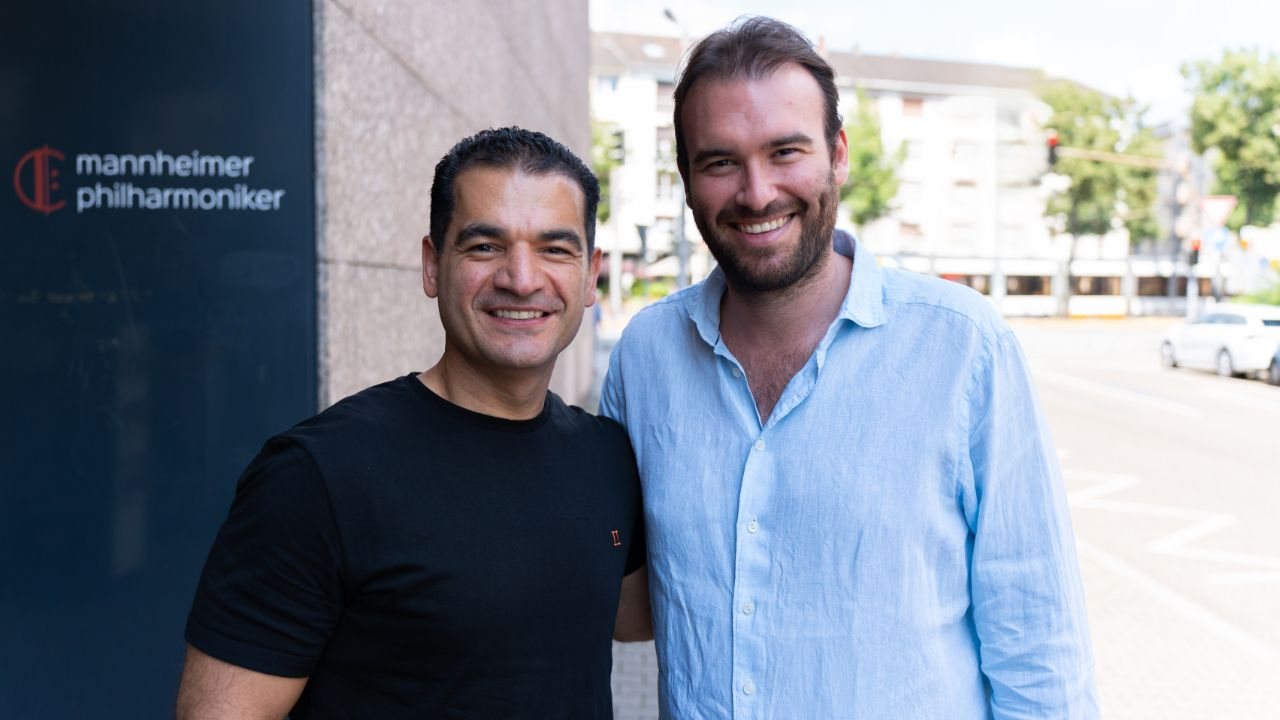
Presence and passion: A conversation with Boian Videnoff
Boian Videnoff is a conductor, founder of the Mannheim Philharmonic, and a person who embodies presence in a truly unique way. In this episode of Project Mindset, Reza Mehman speaks with the artist about the power of the moment. Other topics include gratitude, passion, and dealing with criticism. Boian was born in Bulgaria and grew up in Italy and Germany. At just 23, he founded his own orchestra and has since pursued an impressive vision without losing sight of the here and now.
The conversation offers profound insights into the conductor’s mindset. For him, purity of thought and genuine passion for the cause lead to true presence. How does one remain grounded in the present moment despite grand visions for the future? This episode offers valuable insights into this question. This interview powerfully demonstrates that the ability to be present is crucial not only on stage but in every aspect of life.
Boian Videnoff: the episode in brief
In one sentence: Conductor Boian Videnoff explains how passion, gratitude, and purity of thought lead to true presence and a fulfilling life.
In three sentences: Boian Videnoff, founder and conductor of the Mannheim Philharmonic, speaks about his life’s journey from Bulgaria to Italy and then to Germany, and how his multicultural identity has shaped him. He shares his conviction that true presence arises from passion, gratitude, and the willingness to honestly confront mistakes. Besides conducting, he is also driven by his entrepreneurial endeavors in the field of music technology, always striving to live in the moment.
In five sentences: In this podcast episode, Reza Mehman speaks with conductor and founder of the Mannheim Philharmonic, Boian Videnoff, about presence, mindset, and passion. Boian recounts his childhood in three countries, an identity crisis in his teens, and the moment at age 23 when he took the bold step of founding his own orchestra. He describes how purity of thought and genuine passion for a cause have carried him through all adversity. He also shares his perspective on gratitude as a daily practice,constructively dealing with criticism, and the importance of not letting one’s ego take over. The conversation offers practical inspiration for anyone who wants to learn how to remain grounded in the present moment, even with grand visions.
Context: Who, What, Why
Who is speaking: Reza Mehman, host of the Project Mindset podcast, in conversation with Boian Videnoff, conductor and founder of the Mannheim Philharmonic Orchestra and co-founder of the music technology startup Enote in Berlin.
What is it about: The conversation revolves around the ability to be present in the moment, passion as a driving force in life, gratitude as a daily practice, dealing with one’s own ego, criticism and competition, and the question of how to build an orchestra from scratch as a young person.
Why relevant: In an increasingly fast-paced world, Boian’s perspective as a conductor and founder offers unique insights into how to stay grounded in the here and now while pursuing grand visions. His experiences are applicable to every area of life and work.
Three key questions of the episode:
- How does one, as a conductor and as a person, build true presence?
- What role do passion and gratitude play in a fulfilling life?
- How can one deal constructively with criticism, ego,and competition?
Table of contents
- Introduction – What this episode is about
- Summary – The episode in brief
- context – Who is speaking and why it is relevant
- Table of contents – Overview of all sections
- Topics and classification – The central topics
- Key messages – The most important messages
- Frequently Asked Questions – Answers to key questions
- Highlight quotes – Notable statements from the conversation
- Transcript – Full conversation to read
- Keywords – Relevant keywords for the episode
- Names and terms – List of important mentions
- quotable passage – For sharing and quoting
Topics and classification
1. Presence and living in the moment
Boian Videnoff describes how he learned as a conductor to be fully present in the moment, and why this ability is crucial for every human being.
Keywords: presence, mindfulness, living in the moment
2. Passion and purity of thought
According to Boian, genuine passion for a cause and purity of thought form the foundation for overcoming adversity and acting authentically.
Keywords: Passion, authenticity, intrinsic motivation
3. Entrepreneurship and entrepreneurial courage
Founding an orchestra at the age of 23 required courage, naivety and a hands-on mentality that can also be applied to other founding contexts.
Keywords: Entrepreneurial mindset, Mannheim Philharmonic Orchestra, entrepreneurship
4. Gratitude and humility
Boian practices gratitude as a daily attitude and sees humility as a crucial factor for growth as a person and artist.
Keywords: Gratitude, humility, personal growth
5. Dealing with criticism, ego, and competition
The willingness to admit mistakes, apologize,and accept criticism constructively is a central component of Boian’s mindset.
Keywords: Critical thinking, ego, competition
Key messages
- Purity of thought and genuine passion for the cause are the key to overcoming any adversity.
- One should only start a business if one has absolutely no other choice, because the consequences of starting a business are far greater than can be foreseen.
- The ability to be present in the current moment is fundamental to one’s own well-being and the effect on others.
- Multicultural identity may initially trigger a crisis, but in the long term it leads to a richer and more balanced self-understanding.
- The willingness to admit mistakes and apologize is a sign of strength and essential for good leadership.
- Leading an orchestra requires equality, shared growth, and the ability to give the musicians space.
- Professionalization is necessary, but the original naivety and enthusiasm of the beginning must not be lost.
- Gratitude is not a one-off gesture, but a daily practice that changes the entire mindset.
- The ego must be kept in check in order to truly serve the cause and the community.
- All endeavors should stem from genuine passion for the cause, not from strategic calculation.
Frequently Asked Questions
Who is Boian Videnoff?
Boian Videnoff is a conductor born in Sofia, Bulgaria, who grew up in Italy and Germany. He founded the Mannheim Philharmonic in 2009 at the age of 23 and is also a co-founder of the Berlin-based music technology startup Enote.
What are the Mannheim Philharmonic Orchestras?
The Mannheim Philharmonic is an orchestra founded by Boian Videnoff with around 90 rotating musicians from across Europe. It is predominantly privately funded, with only about 10 percent of its budget coming from public funds.
Why did Boian Videnoff found the Mannheim Philharmonic?
The impetus was the realization that many young musicians had too few opportunities to gain experience at a high level. Boian wanted to gain experience on equal footing with fellow students and therefore founded the orchestra.
What does presence mean to Boian Videnoff?
For Boian Videnoff, presence means being fully in the present moment, with purity of thought and genuine passion for what one does. He sees the moment as the only thing one truly possesses.
What role does gratitude play in Boian’s mindset?
Gratitude is a daily practice for Boian Videnoff and a central part of his mindset. It helps him to maintain perspective and act with humility, even in difficult situations.
How does Boian Videnoff deal with mistakes?
Boian emphasizes the willingness to admit mistakes and apologize to colleagues and others. He sees this openness as essential for good leadership and positive human interaction.
What is Enote?
Enote is a music technology startup co-founded by Boian Videnoff and colleagues in Berlin. It combines his passion for music with innovative technology.
How did Boian Videnoff deal with his multicultural identity?
Boian experienced an identity crisis during his teenage years because he couldn’t categorize himself among his Bulgarian, Italian, and German roots. Around the age of 18 or 19, he found inner peace and accepted that he embodies all three nationalities.
When did Boian Videnoff know that he wanted to become a conductor?
Boian began to fantasize about becoming a conductor as early as six or seven years old. He was fascinated from an early age by the enormous range of sounds and the dramatic possibilities of an orchestra.
Highlight quotes
Selected statements from Boian Videnoff:
“Purity of thought and action. That is, that one is truly passionate about the cause and burns with dedication, then one can overcome almost anything.”
“I’m truly passionate about what I do. And I could never do something I’m not passionate about.”
“Having this willingness to admit a mistake and to apologize to colleagues is very, very important.”
“If you can’t do it intrinsically, if you can’t do it any other way, don’t do it.”
“Of course, you start out with an idea very naively, and that’s also what’s so great about it. And that’s probably also the fuel you need to get through all the adversity.”
“I need experience, you need experience, let’s create an orchestra where we can all gain experience together on an equal footing.”
“Am I German, am I Italian? And then at some point to truly put that down in absolute peace, to say, I am everything, all these three nationalities.”
The full conversation
Above all, purity of thought. Purity of thought and in what you do. That is, that you’re truly passionate about the cause and burn with dedication; then you can overcome almost anything. And that’s what has always driven me. I’m truly passionate about what I do. And I could never do anything I wasn’t passionate about. Honesty matters in everything I do. And if mistakes happen, mistakes happen, and I try to recognize them and then apologize.
This willingness to admit a mistake and apologize to colleagues or people is also very, very important. But this mindset is what actually guides me most in life. Ojan, thank you so much for your time today. Yes, I’m very pleased. It’s a great honor for me to be able to speak with you today. I’ve seen, heard, and watched a lot about you online, on YouTube and so on. So, it’s a great honor for me to be speaking with an artist, if I may say so.
Boian’s life path and artistic mindset
And there are a few topics that particularly interest me, like how you approach life as a conductor, as an artist. What your mindset is. And before we get to that, I’d like to briefly discuss your life path, your career, for our viewers. I know you grew up in three countries, so to speak. And what I find incredibly interesting is that you founded the Mannheim Philharmonic in 2009. So, at a very young age. And before we delve into how someone comes to do something so significant at such a young age…
Can you tell us a little about yourself? Yes, well, I was born into a family of musicians. My father was an opera singer, my mother is a violinist. And I was born in Sofia, Bulgaria. When I was one year old, my family emigrated to Italy and spent the first six years of my life there. My grandparents also moved to Italy. But then my mother got the position of concertmaster at the Saarbrücken Radio Orchestra. So we moved on to Germany.
My grandparents stayed in Italy, though. So we basically spent every vacation we had back in Italy. And I really did grow up between Germany and Italy, and these two countries have become part of my identity. Which do you prefer? Oh, it’s hard to say. If I spend too much time in one of the two countries, I really miss the other. Every time I land in Italy, I think, “Ah, home.” But then, after I’ve been there for two months, I think,”A little more order wouldn’t hurt.”
Between Bulgaria, Italy and Germany
So I really think it’s very balanced. And yes, that’s how it came about that I went to school in Saarland and spent my first years as a more mature person there, and that’s where my identity matured within me. I remember, especially during my teenage years, that it was also an identity crisis because so many nationalities raise questions. And that was something that preoccupied me a lot until I was about 18 or 19 and finally found inner peace with my identity.
How did that manifest itself? Well, if you say, for example, that it manifests in small things, like being ashamed as a child to speak Bulgarian with your parents on the street, or that you’re constantly talking to other people, especially at that age, with so many languages in your head, and the word comes to mind in one language but not in the other you’re currently speaking. And you simply start questioning yourself, who am I really? Am I German, am I Italian? And then at some point, you can truly make peace with that, say, I am everything, all three of these nationalities.
Identity takes time
That’s a process, though, and it takes time. It’s incredibly interesting, so maybe I’ll come back to it later. I’ve had several podcast guests where we talked about this very topic of identity. You don’t really know where you belong. Eventually, you make peace with it and can then approach the topic in a more relaxed way. But it’s also super interesting to see that this is the case for you. And I think you’ve learned to play a lot of instruments, I saw that too. Yes, I started with the violin.
That was natural, since my mother is a violinist, and I also sang a lot because my father is an opera singer. Then I found my way to the piano, and briefly dabbled in the oboe. But that was more from the perspective that I wanted to become a conductor. Did you know that relatively early on? I knew it relatively early. I was six or seven years old when I at least started toying with the idea of that profession. And certainly, parents influence you, logically.
Continued
My parents’ circle of friends included many musicians. For me, the conducting profession simply symbolized this vast repertoire. The orchestra, its entire palette of colors, all these possibilities of timbre and expression—that fascinated me. And I’ve always loved opera, its dramatic aspects as well. And because my father was also a baritone, I had a strong connection to it. That was what really attracted me to this profession.
And how did it come about that you were, if I may ask, 23 in 2009 when you did the Philharmonica? Wow. 22, 23. How did it come about that you made this bold move, I would say,at such a young age? Is that typical in this artistic scene? Well, I don’t know if it’s typical or not. I just know that you do what you can’t help yourself to, a little bit. This might be a comparison, but I think Elon Musk once said that many friends ask him, should I start a company or not?
The courage to found one’s own orchestra
And then he says, so if you can’t do it intrinsically, if you absolutely can’t do it any other way, don’t do it. I would also give that advice, because starting something has so many implications. And of course, you begin with an idea very naively, and that’s also the beauty of it. And that’s probably also what you need as fuel to get through all the adversity. Because only this essence, only this pure something, is what you need to bring something into being, which then brings with it a whole host of bureaucracy and other tasks that you couldn’t have possibly foreseen.
I believe you. How tall were you with the Philharmonic when it was founded, and how tall are you now? So, if you look at the last few years… 1.93 meters. So, how did you start? How many people? How big was the orchestra? It all began in my living room. I had a colleague back then, Adam Schmidt, who is now also a conductor himself. At the time, we worked together; he was the orchestra manager, and I was the artistic director of nothing. But we already had the titles. Exactly. So, it all started in the living room, with many discussions, of course, many spreadsheets, calculations, how it could all work, and naturally, many conversations with colleagues and musicians.
The situation of young orchestral musicians
At the time, a crucial point was that I had many conversations with fellow students who all told me about their audition experiences with orchestras, how difficult it is to even get an invitation, or, if you are invited, how immediately it’s obvious whether you have experience or not. And that they have so few opportunities to gain truly high-level experience. Even though there are many orchestral academies and practical opportunities within orchestras, there is still a significant need in Germany and across Europe.
And that was the decisive moment for me, when I thought, okay, I need experience, you need experience, let’s create an orchestra where we can all gain experience together on equal footing. Super interesting. And how big are you now? Well, now it’s an office, eight people work on the project, there are four and a half part-time positions, and of course the musicians of the orchestra, who travel from all over Europe; in total, that’s almost 90, who rotate a bit. Yes, so it’s a relatively large operation.
Yes, also a coordination of effort, I believe, right? Of course. Generally speaking, the event industry is very demanding,that simply has to be said. And hats off to my colleagues in the office, who calmly accept and resolve every problem that arises. That’s certainly not easy, and especially since, at the beginning of a project like this, you can really move mountains with a lot of effort and energy, but that’s not sustainable for 13 years. Of course.
Organizing the first concerts themselves
So, I remember, we started out. My dad had a Chrysler Voyager back then, and we converted it. He built these wooden pallets that we used to slide the timpani into the car, and I drove back and forth three times in an A-Class Mercedes with the double basses. Real entrepreneurial spirit. It was all very hands-on, but doing that for 13 years isn’t sustainable. Of course, such an operation becomes more professional, and professionalization usually means it gets expensive, so naturally, it needs backers, and it’s all a very, very big operation.
Did I understand correctly, 90 musicians? Yes, approximately, who of course rotate regularly, so there are usually around 50 on stage, but within a season, there are about 90 who play regularly. Is that an average size for you? That’s the pool of musicians who regularly participate with us. I mean, compared to other orchestras. It varies quite a bit; there are symphony orchestras with over 100, and in Germany, they’re even categorized into A, B, and C categories, which actually says more about the size of the orchestra than its quality.
Continued
Often, these terms are used synonymously, but in reality, this categorization is more about size, meaning how many permanent positions the respective institution has, ranging from very small chamber orchestras that might only have string players, for example, all the way up to very large opera houses that employ orchestras, choirs, and everything else that goes with them. I think what’s special about yours is that it’s essentially run by you as a priority, meaning it’s not publicly accessible. It’s not a public institution; we receive roughly 10 percent of our budget from public funds, specifically subsidies from the city of Mannheim. The rest comes from ticket sales, guest performance fees, and contributions from private donors.
That’s a really interesting setup. Before I get into the mindset topic, I believe you’re also involved in entrepreneurship. That’s actually true; all my ventures have stemmed from a passion for the subject matter. So, in this case, I founded the orchestra because I wanted to found an orchestra, and that’s what interests me: the rehearsal process with the musicians. From that, a business emerged, and now I’m also the managing director of that company.
Orchestral work and music technology
That’s not really my main focus, and if I could,I’d give up the job immediately. But it’s not that simple. It also involves budget and so on. And it’s a similar situation with E-Note. In Berlin, I founded an IT/music IT tech startup with colleagues called E-Note. It’s actually the largest music digitization project in history. We digitize sheet music and apply artificial intelligence to create a new way for musicians to work with it.
So, practically speaking, it’s a tablet app that offers functionalities you simply don’t have on paper or in other apps, making life much easier and more modern. The idea is that, in the long run, it can support children with their practice, orchestras with their rehearsals, and automate certain processes in theater. This AI is very, very powerful and ultimately opens up completely new worlds. And again, this didn’t come about because I necessarily wanted to start a company.
And I’m very grateful to have a colleague who’s co-managing director and actually oversees the operations. Because that’s really not what I enjoy most; I’m a product person. For me, the product is what matters. I love immersing myself in the product. I think that’s normal for artists. We’re perfectionists, and it makes our hearts sing when we can work on it. And then, when a business develops around it, it’s more of a necessity, so to speak.
Daily life between rehearsals and organization
How many performances do you conduct per year? I actually have one or two every month, roughly. That’s about the current situation, so around 20 to 30, depending. How do you divide your time between, I mean, this artistic life, the artistic persona you embody as a conductor, and the surrounding tasks, your business ventures, administration, and so on? How much time do you set aside for artistic freedom, for the artistic act itself? Yes, that’s actually something you have to learn, and I think many friends, for example, have children.
I don’t have any yet. I hope to soon, but I don’t have any yet. And yet, many friends who have children say that I actually learned to practice because suddenly I have much less time and have to squeeze everything into much smaller time slots, and that’s when I suddenly realized that I became much more productive. I think I also learned that quite early on out of necessity, because my time has always been very limited, and of course, with the second venture, it’s even more so now.
And that has led to me working much more productively in the moments when I block out that time for it. My day is actually structured relatively according to the needs that arise at any given time. That means sometimes there’s a lot of administration, a lot of e-notes, or a lot of philharmonic music when projects are coming up, or if I happen to be learning a difficult piece,then I have to take the time to work through that piece for myself first.
How a conductor works on a piece of music
So, it’s always very flexible and agile, I’d say. Out of interest, how long does it take you to learn a piece of work like that? It varies quite a bit. If it’s something you’ve perhaps heard of before, but never really studied properly, it goes much faster. And of course, there are different levels of knowledge, naturally. So, roughly how long does it take? Well, it depends, but sometimes, if it’s something you really need to learn quickly, it can even be learned overnight. But then, of course, it’s a rather superficial learning experience.
Continued
That’s why the beauty of our profession lies in the constant discovery of new things. Each time you open a score, you discover something new. Many of my colleagues, the big names and great artistic personalities of our time, say that even at 90, they still discover something new when they open a score, and I believe that’s the truly wonderful thing about the profession: that it never gets boring. But if necessary, for example, when stepping in at short notice, you have to learn quickly overnight and be able to conduct a good, thorough rehearsal from the very next day. And that’s something you naturally learn during your years as a student, and hopefully, something you’re taught by your teachers.
Super interesting. Now let’s move on to a part that I find mind-blowing, namely the profession of conductor. From my observations, when I watch a conductor, typically the orchestra is seated first, before the conductor arrives, and then the conductor enters. I find that incredibly interesting. You feel the conductor’s absolute presence, and I find it fascinating that the person performing this role—perhaps you could even speak of an aura—everyone knows, okay, now I have to be present, it’s about to start, there’s someone up front who isn’t just giving the beat, but also dictating everything around them. I find this theme of presence incredibly interesting.
What constitutes personal presence
I think, based on observations in my personal life and professional life, that certain people have a presence, while others have less. Some people enter a room, and you notice it immediately; they have a presence. It’s the same with you, as I’ve seen online. You have a presence when you step in front of the orchestra, and my question is, is it something you can practice, building that kind of presence? Does it come naturally, or does it develop naturally?
How can you speak to this based on your own observations? Well, I think it’s definitely a matter of character, and the people I’ve met who have that kind of aura, as you describe it,I find it hard to imagine they’ve trained it, like by looking at themselves in a mirror or something. What you can certainly train is how you handle situations and perhaps work on your weaknesses, because everyone has strengths and weaknesses in their character, and these weaknesses can cause the aura to become negative or even toxic.
Developing one’s own personality
There are people who have a very strong aura, but this can fluctuate wildly depending on their mood, and I believe that’s something you can actively work on. Working on becoming an interesting personality always strikes me as very artificial, because either you are one, or you are someone else, or vice versa. You can work on your competence, you can work on your knowledge, you can work on your interests, and all of that together, whether you want it to or not, will shape and develop an interesting personality, and then you will be one.
How extroverted or introverted someone is has little to do with the kind of aura they project. I know people who are extremely introverted and perhaps don’t stand out, but the moment they speak, they command attention. This stems from their competence and the incredibly interesting knowledge they have to share, which suddenly takes people’s breath away. Therefore, I believe that working on one’s aura happens by working on oneself, on who one wants to be as a person, and then everything else around it happens automatically—things we can’t describe.
Mood and concentration in the orchestra
Do you notice it yourself, that when you’re, for example, in an orchestra, that something changes in the atmosphere within the orchestra, or does something like that strike you? Absolutely, without a doubt. So, when I’m rehearsing with an orchestra and I have something to say, if what I have to say is truly profound and moving in that moment, a mood or an idea that really resonates with you, that will attract the audience. Conversely, if I have less to say about a certain passage, then it comes across as more superficial and less engaging.
And I believe that the more you’ve shaped yourself and the more interesting things you have to share with people, the more people will want to listen. And I’ve noticed this myself; of course, when I started as a young conductor, I had a lot to communicate intuitively, but now I think I’ve reached a point where I’m very consciously aware of what I’m doing in rehearsals, and I also know in that moment when I have something truly good to say, I know that was good.
Conducting as mediation and teaching
And I can feel in that moment how genuinely interested the orchestra is. Things happen much more consciously. That’s why I think teaching is so important. My job is actually a teaching job, if you will. As conductors,we’re constantly teaching, and teaching forces you to analyze processes or your own intuitions and put them into words in order to convey them. And that’s why you improve yourself. Anyone who teaches can attest that they’ve become better at what they do because they have to teach it.
Continued
And that’s why I highly recommend passing on your knowledge, because it leads to you becoming better at what you do. Is it more of a craft for you, or is it something very emotional, like when you’re learning a score and going through it with your orchestral musicians? How do you experience that? Well, both. There are moments when I sit in front of a score and cry. There are moments in the music itself. I mean, music is something that conveys incredibly powerful emotions.
And when you simply let it wash over you. Certainly, some personalities are more suited to reacting that way than others. But I still believe that music resonates with everyone in some way. And those are, of course, very, very emotional moments when you simply listen to this music and let it wash over you. If it’s somewhat sad, it might also be that it perfectly reflects the situation you’re in. It’s no wonder that some of the most beautiful love songs have been created after these artists have perhaps just gone through a truly heartbreaking breakup.
Emotion and craftsmanship in music
And when you hear something like that, and maybe you’re going through something similar yourself, it hits you very, very hard. Those are the kinds of moments where the emotion is incredibly strong. But it’s also a craft, because you can only achieve perfection through a lot, a lot, a lot of practice. And that’s a sport. It’s a craft, playing an instrument. And conducting is also a craft, because ultimately, showing a phrase and painting with your hands can be done beautifully or not so beautifully.
And that then leads to the question of whether it’s more choreographically appealing, which will result in the musicians playing it more beautifully, or whether it’s less appealing and perhaps doesn’t convey the intended idea as well. I find it incredibly interesting that, as a conductor, you essentially make the music visual at the front. Not just audible, but also visually represented. It’s not incredibly interesting. And what I also wanted to say is that live orchestral music emanates from the whole body.
So, I recently had the chance to hear the orchestra perform unplugged, without any digital embellishments or anything like that. And it resonates throughout your entire body. It’s so interesting. But what I wanted to ask you is, when you study a score, for example, you’re interpreting what the composer was thinking hundreds of years ago, and you can’t ask him anymore. What were you thinking? Now,I find it interesting that—and this sounds to me like a very emotional input from you.
Dealing with criticism from the orchestra
But if someone from your orchestra, for example, comes along and says, “Bojan, I see this completely differently than you do,” and perhaps criticizes you a bit harsher in this context, how do you take that? Because you’ve put a lot of emotion into it, you’ve given it a lot of thought, you’ve poured your life experience into it, so to speak. How would you then deal with such criticism? Well, the very first thing I would do is question where the criticisms might have some merit. Quick question, is that already the case?
Constantly. Constantly, okay. That’s perfectly normal. We all have our own ideas, and when you, as a conductor, stand in front of 60 musicians and try to establish a vision that everyone is supposed to pull towards, then moments inevitably arise where someone might have a completely different perspective. And of course, the more the orchestra wants to follow that perspective because they feel similarly, the more positive energy is generated. If you feel the whole orchestra against you, then it can logically turn into a pretty bad week.
But there are always exceptions, and you really have to question yourself and examine what your colleague is suggesting—to what extent are they 100 percent right, or only in certain aspects? Often, simply making concessions on certain points will satisfy your colleague and simultaneously enrich your own idea. And then, a much better result is usually achieved. Is it also a question of ego in that moment? I think ego has no place in music.
When the ego takes center stage
Sure, it might look that way because we’re standing up front on stage and getting applause. Even as an artist, it’s easy to slip into that. But I think that the moment ego comes into play and it’s just about doing things your own way, it becomes less meaningful. But it does happen. Of course it does. We’re all human. We all have our needs and insecurities. Ego usually goes hand in hand with insecurities. But fundamentally, the first thing I always try to do with criticism is to filter out how much of it has the real substance and how much is perhaps just superficial.
Continued
That happens too. Depending on who’s giving the criticism, it might be someone who’s actually quite well-disposed towards you. If it’s a colleague with whom I generally have a wonderful working relationship, and they suddenly criticize me very vehemently, I’ll naturally view that very differently than if I know that person has never been able to stand me, no matter what room I walk into. But even then, I’ll try to think, okay, they don’t like me. There’s a reason why they don’t like me.
Sometimes it’s about energy, but there must be something where he’s right in certain respects. I see that more as an opportunity for me to grow, to figure that out. But ultimately, you have to make the decision about how it’s done. Yes, and ultimately, they play it. That is, it’s this beautiful balance, this give and take. In the end, I don’t sound like myself, yes. But still, there’s this mystical quality, something you really can’t describe, how much you can inspire a musician to play in a certain way, just through gestures and thoughts.
Thoughts and their effect
So, it’s mainly about thoughts. If you think about something really, really hard, it happens. That’s just how it is in life. You think about something, you want it, you want that, and then it happens. You’ll provoke it, whether you want to or not. That’s why you shouldn’t think about things you don’t want, because you create the things you don’t want. Yes, and that’s difficult anyway. You often think about things, “I don’t want that to happen,” and then exactly that happens. Because you invest far too much of your thoughts in what you didn’t want.
And it’s the same with us. If I think very intensely about how I want the sound to be, and suddenly the horn plays louder, even though I never told it to, but I simply imagined it so vividly, that somehow the idea, that spark, has crossed over. That’s something I still can’t explain, how that’s possible, and perhaps thankfully, I can’t explain it. And that’s what ultimately gives me a bit of strength, in that even if something isn’t perfectly tuned, but in that moment, when the flow is right, when the energy is right, then the musicians will often play it, perhaps even unconsciously, exactly as I imagine it in that moment.
Perfectionism and dealing with mistakes
Does anything ever go wrong? Of course, all the time. But is there anything where you say, “Oh no, that was a complete disaster”? I generally think that the more of a perfectionist you are, the more relaxed you have to be about mistakes. Because you don’t want to make mistakes anyway. Perfection isn’t possible. Perfection isn’t possible, but I think that striving for perfection is possible, and you have to do it. At least, that’s what I’m talking about.
So, the ambition to achieve the best possible outcome with whatever I do is extremely important to me. It might be that, objectively speaking, it’s not perfect at all and is full of flaws, but the ambition at the moment of creation was to make it as good as possible. That’s extremely important. I find that’s a driving force for me when I work.Does this ambition come from within you? Or did you learn it?
You come from a family of musicians. Definitely a combination of everything. I also remember when I was younger—well, it’s both a positive and a negative thing to come from a musical family. The positive thing is, you’re simply given so much, unconsciously and consciously. I remember how my mother would drag me away from the orchestra during rehearsals and then analyze with me afterwards what was good and what wasn’t. As a seven-year-old, I had completely different ideas than looking at why I didn’t like a particular phrase.
High standards and honest feedback
I always tried to say, “Yes, yes, I liked it,” but “liked it” was the wrong answer because then I had to spend a long time analyzing with her what wasn’t good. Those are the positive and negative aspects, but another negative aspect is, of course, that growing up in a musical family means you’re essentially trapped in that world and perhaps other options aren’t as readily available. And yes, all of that together creates a mix that then reflects her character.
Genetics plays a role, of course, logically. And that determines whether someone is a perfectionist or not. But practice, of course, pushes you to achieve a certain level of precision in what you do. A certain level of craftsmanship simply has to be cultivated, even if it’s a piece of furniture, a carpenter’s work requires a certain degree of perfection for it to even be recognizable as a chair. And I think that’s true of any job that involves craftsmanship. Actually, it’s true of everything you do. You simply have to strive to do it well.
Continued
If I may return to the topic of presence for a moment. From our preliminary conversation, I know that you also tend to look very far into the future and, of course, envision what you want to happen in the future. We briefly discussed how it’s possible that one might then no longer be truly present in the present, but rather live in the future, which, frankly, isn’t ideal. Before we delve into this topic and return to the subject of presence…
How do you manage to be so incredibly present in the moment, especially before a big performance you’re currently undertaking? I mean, as a managing director and conductor, as an artist, but also as the businessman behind it all, you have a thousand other things on your mind besides the art. But how do you manage to be so focused right before a performance, so to speak, so completely present, because you know exactly how much depends on it being a success? Do you meditate? Do you use any tools or techniques? How do you achieve that?
To be completely in the moment in front of the orchestra
That’s always come very easily to me.I’ve always been able to abstract myself very deeply in the moment I step in front of the orchestra and have to rehearse; then it’s all about the music, or when I have a concert. You’re conscious of that in that moment, and you’re thinking of nothing else? Nothing else interests me; it’s like the world is falling apart. In that moment, I’m only concerned with this story, with this music we’re making right now, which is usually a story we’re telling. And actually, it’s almost like a haven for me, an emotional haven in the moment I can make music, because it’s about the purest thing, the purest form of the soul and its states.
Wow, I think I totally feel what you’re saying right now. And that’s why, in that moment, nothing else matters to me at all. And maybe actually, because it’s so beautiful, it’s almost something I look forward to, being able to simply say that everything else is completely irrelevant, because that’s what it’s all about for me. That makes it easy in those moments to switch off and concentrate fully on the present. And I also think that has little to do with future visions and plans and all that stuff, because in that moment, that’s actually why you do all of this, that’s it, yes, and sure, the more of it you can have, the better it is, but in the end, you’re right in the moment and you’re not thinking about the future.
Combining presence and future visions
So, I don’t think about the future. Conversely, do you think about what I’m doing right now, something I’m not really present in? That’s actually something I should probably avoid, because it doesn’t interest me, doesn’t move me emotionally. Well, there are always tasks outside of music, like accounting or whatever, all the things I’d rather not do. Yes, of course, it’s clear, there are lots of tasks that have absolutely nothing to do with my passion, and I consider them a very tedious chore that I would immediately delegate if I knew there was someone I could trust with them.
Are there moments, outside of music, when you think, “Ah, I’d really like to be more present right now”? Is there anything in your free time, or in your interactions with other people, or whatever, where you notice you’re not really present? And do you recognize this in some way, and then do you change it? If so, how do you do that? So, as you can see, I want to delve very deeply into the topic of presence. Personally, I try to enjoy my life. That means I try to live in the moments I’m actually in.
Consciously spending time with others
When I’m with friends, I try very hard to be present in the conversations, or when I take some time out with my wife and we maybe rent a boat and go out on the water,I really just try to be in that moment, the sunset, or whatever it is. Do you have to remind yourself? No, that’s just how I am, yes. And at the same time, it’s difficult for me, and that’s where I keep reminding myself not to get lost in the future, not to drown in the future.
Because that’s a huge difference in ambitions, desires, and also dissatisfaction with where you are today compared to where you actually want to be. And that can really drag you down, and social media is a major contributing factor, because it’s like a fake glass screen of everyone’s life. Everyone only posts the good parts; nobody posts what wasn’t so good. So, very few people do that, and those who do don’t really get much exposure anyway because it doesn’t get enough likes.
And that leads to a completely distorted perception of the world around you. Everyone else is doing well, except you, and things like that – that’s extremely dangerous. Especially if you’re someone who’s always looking to the future and constantly trying to change the status quo, it can, of course, lead to a failure to realize where you actually stand objectively compared to ten years ago and compared to the timeline you might be following in life and your goals.
Continued
And in the end, it’s also true—I don’t know if you’ve experienced this too—but when you’ve achieved a goal you’ve set for yourself, you sometimes have a feeling of emptiness afterward. That is the worst feeling of all. And that’s why, actually, achieving a goal isn’t pleasant. Because as soon as you reach the goal, you feel empty afterward. And I’m saying this now, and yet at the same time, I’m still thinking about the goal and I want the goal. But maybe it’s good that you strive for the goal, but still remember, you have to simply enjoy this process, no matter how difficult it is, no matter how many sleepless nights it brings you, and simply embrace it with ease.
It’ll all work out somehow, as long as you keep the big picture in mind; life will sort itself out. And just don’t try to reach the goal completely, because then you won’t know what to do next in life. I know exactly what you mean. So, if you achieve a major goal and don’t immediately set your sights on another one, you might even learn a lesson along the way. What you’re saying is really interesting. What I also find very valuable is the concept of lightness. I believe the lighter you are on the journey you’re currently on, the better.
Putting financial challenges into perspective
And that’s not easy. Yes, exactly. It’s also not easy to tell yourself, okay, there’s a huge financial gap, and how do we close it? And it’s very easy to get completely bogged down in it, thankfully.And the more tensely you look at a problem, the less likely it is to solve itself, logically. The more relaxed you look at it, the sooner it will. And then the wildest coincidences come along that solve the problem. Life is full of contradictions. Yes, that’s what being a guru is all about.
May I ask what your major personal goals are? And also, my name is Philharmoniker, so where is your guiding star, where are you striving to go? Well, for me, the goal is—and here one simply has to say that in a sense the goal has been achieved, and in another sense it is far from being reached. What I wanted to achieve here was to create a platform where, in a very warm and almost familial way, a safe space is created where only music matters.
And I have to say, we’ve achieved that. People come here from all over Europe, and they love being part of it. They hug each other, and everyone calls it family. And I’m not usually one to say a company isn’t a family, but this isn’t a company. Yes, I agree, a company isn’t a family. It’s great when there’s a fantastic team spirit, but it’s a company, it’s not a family. As long as you can fire someone or part ways with others, you can’t fire your parents.
An orchestra as a community
Yes, that’s right. And that’s exactly how it should be. But what’s special here is that even if someone was involved once and then has a job, they still come back and support the group as tutors or continue playing with them. Something develops that shapes these personalities forever. Namely, the love of music and the love of making music together. And that’s something that sounds very superficial when put like that, but I mean it in its true depth. Here, when people come together here, a very, very strong feeling of love is felt.
The love for what we’re doing right now. That’s a truly great achievement. A really, really great one. And I have to say that, as I also work as a guest conductor in many other orchestras. The moment it becomes just a job, and you simply earn your living from it, in the sense that it’s your daily bread, that kind of love is quickly lost in orchestras. And I can also say that the moment it’s no longer the guiding principle, but essentially just about finding good colleagues to fill a position, that’s when it really matters.
Appreciate what has been achieved and see potential
Then that’s no longer the orchestra’s main principle, and we’ve achieved that here. And that’s wonderful. It’s incredibly inspiring and enriching. On the other hand, of course, that’s not enough for me, because I see the potential and I see how we live from month to month with our finances. As a privately funded orchestra, it’s very, very difficult. Especially now, after the pandemic and this inflation,which is eating everything up. Everything has become much, much more expensive, and it makes it incredibly difficult to run a cultural program in an environment that is very much driven by economics.
Even just talking about the concert hall, everyone’s thinking very economically. It has to be profitable. Culture doesn’t just pay off. Culture pays off in a much, much bigger way. We even tried, and the University of Heidelberg conducted a study, to determine whether culture pays off financially. And yes, it does. Every euro the city of Mannheim invests in this orchestra results in 29 euros that benefit the local economy.
Continued
I believe that. The surrounding circumstances. It’s simply a lot of money that’s suddenly being spent again in the city. And it’s even the case that even if the orchestra were 100% state-funded, it would still show a positive balance. And that’s true for very, very, very few municipal enterprises; these are universities, some museums, and, of course, orchestras. Yes, and that’s why theaters, of course. Many other enterprises always have a negative financial balance. That doesn’t mean they aren’t good.
But here, they even have a positive financial balance. And yet, it’s always a topic of discussion. Is it worth it or not? And this economic thinking in an environment that isn’t actually economical, or is as far from economical as one can imagine, is very stressful. And that’s naturally something where my goal is to find resources, financial resources, that will allow this orchestra to truly flourish and fully realize its potential.
We are incredibly fortunate that the greatest artists of our time now come to Mannheim to perform with us. Yes, they really do come; it’s not an exaggeration when I say, yes, Marta Agerich, Misha Majski, Sonja Jonscheva, one of the greatest sopranos of our time, Daniel Trivonoff will be here. So these are truly the names of our time, the artists who come, feel incredibly at home here, and love to return again and again. That’s something we’ve achieved. But now, more on that.
Music and education for children
That’s the goal. More of what we have on a smaller scale, more of it on a larger scale, because it can inspire even more people, can do even more good. We do so many educational concerts for children. Last time, we had a thousand children with their parents in the hall, free of charge. That, for me, is what culture should be free. This whole concept of ticket sales bothers me. We do it because we have to. Logically, it has to be co-financed, and what costs nothing is worth nothing.
This mentality in people is unfortunately perverse. If you’re incompetent, then price is the only criterion you can use to determine whether something is good or not.If I give you a diamond and you don’t know anything about diamonds, and I say, “Here, 10 euros, do you want it?”, you’ll doubt it. If I give you the same stone and say, “This one costs a million,” you’d say, “Of course, it’s the same stone.” You can’t judge the value, and that’s why you’ll always choose the more expensive one if you’re incompetent in this area.
Making cultural work accessible
Wow, you’re absolutely right. That’s something I find really unfortunate, and all the more important, that orchestras, especially in areas involving children and education, provide their services free of charge. It’s not about buying things, but about inspiring children, truly surrounding them with culture, allowing their minds to grow, developing, and opening up new horizons. I find that so amazing. You essentially had an idea 14 years ago that has now become a reality.
As you said, very big, well-known musicians come to Mannheim to play your music. So, I have enormous respect for that, I really must say. Now, if we get to your personal goals—not family-related, that’s your business, but for yourself personally—what’s your vision for the future? Perhaps your vision for growth? What do you want to learn? Where do you want to develop? Well, I want to be able to live out my passions. That’s what’s important to me.
When I discover new things and have the time, I want to pursue them. I want to learn to enjoy the moment more, even more so, although I already do, I still don’t think it’s enough. How do you want to learn that? Yes, through gratitude. We were just talking about that a little bit. I think that’s something I often forget and need to remind myself of: be grateful for what you have. It’s not something to take for granted. And also, how far you’ve come, you just need to acknowledge that for yourself.
Consciously perceive one’s own path
Just patting myself on the back and saying, “You’ve accomplished something”? I don’t know, “patting myself on the back,” but just a quick snapshot and an objective look at the situation. I think that’s enough for me. Praise from others is not something I need. I much prefer criticism. Sometimes it even motivates me, but still, I grow from it. But a snapshot and an honest, objective look at the situation is what I need, because I’m often completely subjective and don’t realize what kind of situation we’re in, or what I’m in, and think, “Ah, I’d like this and that and that right now,” and just to look at it objectively.
Continued
Where are you from? Where is your family from? What have you done and where are you today? As a person, as an individual.So you also mean the path you’ve taken? Yes, of course. It’s different whether you were born in Bulgaria and your family emigrated twice and started from scratch twice, or whether you were born into circumstances where, for example, finances were never an issue. That presents completely different challenges, logically. So, what I’ve always strived for, others might be born with it and have to find their own meaning in life.
So, I have many friends who are on the other side, where they simply don’t know what to do with their lives because they know it will never be a problem. And I mean, you can have so many passions, like sailing and maybe flying or whatever, but if all of that doesn’t involve some kind of sacrifice, giving, or self-sacrifice, then it’s not worth that much anymore. If you have this dream—I have the dream of learning to fly—yes, but I can’t just go and immediately fork over 20,000 euros and learn to fly.
Enjoy the process, not just the goal.
That’s the daily process. Yes, exactly. And then I can take a flying lesson here and there. And then I appreciate it so much more, the moment when I’m perhaps one day flying a rented Cessna, then my own plane. It’s a completely different feeling of satisfaction, of having achieved something, compared to when it was never even a question that I could do it. Completely different problems. And that’s why I think it’s important to always put yourself in perspective, to consider where you are in life, if you were able to enjoy an education, if you were able to study at Harvard and always had the best schools and the best teachers.
Or maybe you were born in India, perhaps even a slam poet, and now work at Google. Well, that’s quite something. Amazing. Yes, that’s a completely different path. And that’s not meant to be judgmental. We humans are all different, and we all come from different backgrounds, and the question is, what do I do with that? Where do I end up? And what happens to me personally as a person? Some people are born into environments where there was rape and violence at home, and today they are incredibly wise people who perhaps even inspire others and take on a mediating role.
Comparisons and social media
And that’s just as important to think big. This comparison you’re talking about is wrong. And unfortunately, it’s very much a part of our human nature, and social media has triggered it even more. Because we’re constantly bombarded with images of how things could be different. And we very rarely compare that to the environment we were actually born into and come from. And that’s something I’d like to be able to deal with better, and for myself. That’s a goal. Are you personally competitive,meaning competition-oriented?
The background to this question is that I often observe that, for example, when two business leaders meet, there’s a certain competitiveness. It’s about who’s more successful, who makes bigger pronouncements, and so on. Now, on the one hand, as a business owner, you have your company, but on the other hand, there’s also the artist. If you meet another conductor who is also very, very good, what emotions and feelings arise within you?
I’m actually not competitive with others at all. That has become clear to me quite a few times. I don’t like competitions, I don’t like races or anything like that. So that’s just not my thing. I’m incredibly competitive with myself. If I know I could do something, but I can’t right now, I’m incredibly competitive. Does that trigger you, so to speak? It triggers me a lot. If I see a colleague I like, I feel joy. Quite honestly, I mean, completely unvarnished honesty.
Admiration for the skills of others
I know this isn’t the case for everyone, but I feel absolute joy when someone is there, and then I can listen and watch them for hours. Admiration. It makes no difference to me whether the achievement belongs to someone else; the admiration is still there. Of course, if I really like something, I try to learn it. What do I like about it? What does he do so well? And maybe I can learn something from it too. Not necessarily because I want to do it too, but because it is my passion and my profession.
And if I like something, then I want to be able to convey it well. But not out of envy. I also have this feeling of envy, which I’ve actually never felt before. Yes, I do have it, I’m not envious. I’m genuinely happy for other people. The success of other people makes me happy. Where I might sometimes feel sad is when I know, okay, I have, I might deserve that too. That’s something I need to work on, to simply tell myself, let go of that thought.
Continued
The world isn’t fair. It’s not some kind of centralized economy where everyone’s equal, so you all get the same. That’s why you all get the same. That’s not how the world works. We expect it to be fair, but it isn’t, and it’s full of misunderstandings. You just have to make peace with that idea. But I don’t see that as envy; it’s not envy. It’s more of a feeling for justice, something I’ve always had, an inner need for justice.
So, if someone wrongly claims that they said this or that, and it’s not true, then it burns inside me because I want to prove to the whole world that it’s not true. And that only makes things worse, because then you chase after them, saying, “You see, if it’s so important to them, then something’s wrong, something’s not right.” But actually,it’s exactly the opposite. You can’t make it right, and you have to free yourself from this idea of creating justice.
To detach oneself from external judgments
And especially when something is very, very important to someone, it’s a very, very difficult struggle. I completely understand what you’re saying. What you just said was incredibly interesting. Bojan, I don’t want to take up too much of your time, of course, so I’d like to slowly bring this podcast to a close. I also hope that we can talk again sometime, because I could talk to you for hours. Before I ask my last question, my final “My Time” question, where can people who follow you online get in touch with you or with your Mannheim Philharmonic Orchestra?
So, Mannheimer Philharmoniker.de, then you’re right there with us at the concerts, and we also have a circle of friends you can join. It doesn’t cost much, and then you always have the opportunity to get to know each other at our lovely receptions after the concerts. You can also find me on my website, bojanwiedenow.com, which has a contact form where you can write to me. Great, thank you so much. Now I come to my last question, which I’m asking you, just as I ask all the other guests.
The most important mindset for Boian
Which mindset has had the biggest and most positive influence on your life? Yes, that’s a great question, and there are of course many aspects to consider. For me—I know that for you it’s gratitude. And that’s something I want to work towards, but it isn’t. Yes, a mindset—for me it’s honesty in what you do. That’s what has always driven me, honesty and fairness. I’ve probably tried to let go of that, but it’s really true.
Honesty and, above all, purity of thought. Purity of thought and of action. That is, if you’re truly passionate about what you do and burn with dedication, then you can overcome almost anything. And that’s what has always driven me; I’m truly passionate about what I do. And I could never do anything I wasn’t passionate about. Honesty matters in everything I do. And if mistakes happen, mistakes happen, and I try to recognize them and then apologize.
Having this willingness to admit a mistake and apologize to colleagues or people is also very, very important. But this mindset is what actually guides me most in life. Being honest about things, honest in what you do. Out of pure intrinsic necessity. Amazing. Bojan, thank you so much for your time. Thanks, Reza. And I hope we talk again soon. Yes, me too. Thank you very much.
This transcript was automatically generated using Whisper AI and may contain occasional errors.
Keywords
Tags: Boian Videnoff, Mannheim Philharmonic, presence, conductor, mindset, gratitude, passion, entrepreneurial spirit, living in the moment, mindfulness, critical thinking, ego, leadership, orchestral conducting, enote, identity, multicultural, Project Mindset, Reza Mehman
Names and terms
Boian Videnoff, Reza Mehman, Mannheim Philharmonic, Enote, Adam Schmidt, Elon Musk, Sofia, Bulgaria, Italy, Germany, Saarbrücken, Saarland, Mannheim, Berlin, Radio Orchestra, Chrysler Voyager, Conductor, Orchestra Academy, Concertmaster, Baritone, Oboe, Violin, Piano, Opera, Symphony Orchestra, Chamber Orchestra, Project Mindset
quotable passage
Boian Videnoff, conductor and founder of the Mannheim Philharmonic, emphasizes in conversation with Reza Mehman the importance of purity of thought and genuine passion.
He describes how, through genuine passion for a cause, one can overcome almost any adversity.
At the same time, he emphasizes that the willingness to admit mistakes and apologize is a sign of true strength.
For Videnoff, the present moment is all we truly possess, and the ability to be present is the key to a fulfilling life.
You can find more interviews on the Overview page of Project Mindset.
Prefer listening? Explore the original Project Mindset podcast recordings.