Motivation vs. Discipline: What will get you further
Discipline helps when motivation is missing. Why routines matter for exercise, friendships and the things we tend to neglect during busy times.
Introduction
Motivation and discipline often feel different in practice. Reza discusses Muhammad Ali and Usain Bolt persevering despite disliking training. On most days, he does not feel like exercising either. Still, he does it. Busy periods can push important parts of life aside. Exercise, nutrition, friendships and hobbies are often the first things we neglect.
Reza shares experiences from his startup days, when he almost lost important friendships. He also questions what balance really means. Waiting for the perfect motivational boost is not his answer. Routine and discipline help him keep going. This episode explores why they can matter more over time than short bursts of motivation.
Discipline: the episode in brief
In one sentence: Motivation is fleeting, but discipline and routine are the true drivers for long-term success in sports, friendships, and all other areas of life.
Short summary: Reza Mehman explains why he considers the concept of “motivation” massively overrated and instead relies on discipline and routine. He shares personal stories from his startup days, during which he neglected friendships, and from the COVID-19 pandemic, when a lack of exercise led to physical ailments. His message: Don’t wait for motivation, but consistently do the important things in life, even when you don’t feel like it.
Detailed summary: Reza Mehman reflects on a pattern from his own life. During stressful periods, people tend to cut back on exercise, nutrition and social contact. A friend wanted someone to motivate him to exercise, but Reza believes this is the wrong approach. Even world-class athletes like Muhammad Ali and Usain Bolt hated their training sessions, but they completed them nonetheless. Reza shares his own experience: during his startup phase, he neglected his friendships so severely that three close friends confronted him. His core message is that motivation is fleeting and comes and goes, while discipline and routine form the true foundation for a fulfilling life.
Context: Who, What, Why
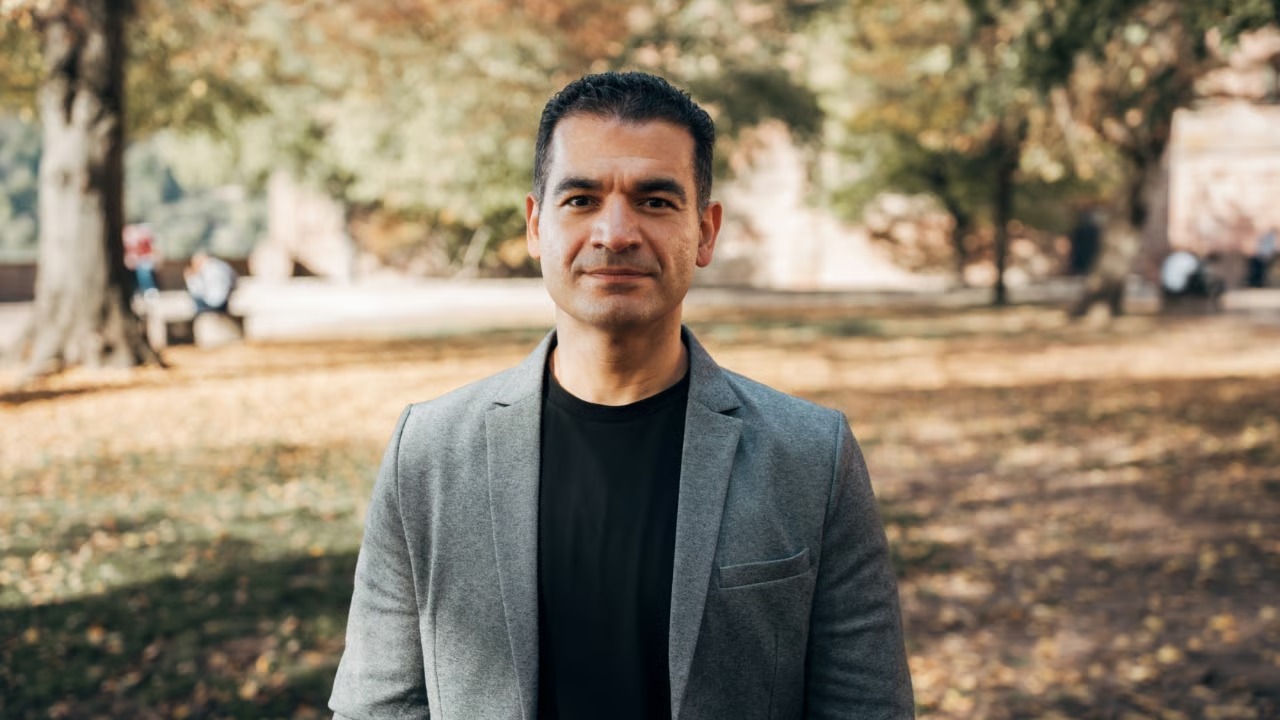
Who is speaking: Reza Mehman, host of the podcast Project Mindset, 39 years old, with experience as a startup founder and passionate basketball player.
What is it about: The episode asks why motivation alone may not sustain the important things in life. It explores discipline and routine as an alternative.
Why is this relevant? Building a house, raising children, work pressure and rising prices can all become burdens. Yet people often cut back on the things that give them strength. This episode offers a change of perspective.
Three key questions of the episode:
- Why do we cut back on exercise, nutrition, and friendships first during stressful times?
- Why is it a mistake to wait for motivation instead of building discipline?
- What does “balance” really mean and why is the common understanding of it problematic?
Table of contents
- Introduction – What this episode is about
- Summary – The episode in one, three, and five sentences
- context – Background information on speaker and topic
- Topics and classification – The central themes of the episode
- Key messages – The most important messages at a glance
- Frequently Asked Questions – Answers to the most pressing questions
- Highlight quotes – The strongest statements from the episode
- Transcript – The full episode to read
- Keywords – Relevant search terms for the episode
- Names and terms – Important references from the episode
- Quotable passage – For sharing and quoting
Topics and classification
1. Motivation vs. Discipline
Why motivation is a cursed feeling and discipline the more sustainable way to achieve goals. Reza argues that most days you simply don’t feel like it, but you still have to take action.
Keywords: Motivation is overrated, build discipline, develop routine
2. Sport and health as an investment
Sport is not a luxury, but an investment in one’s future. Reza compares every training session to putting money into a piggy bank.
Keywords: Sport as an investment, physical health, regular training
3. Maintaining friendships in stressful times
Friendships aren’t just a nice-to-have; they’re essential for mental health. Reza recounts how three close friends confronted him because he kept canceling plans with them.
Keywords: Maintaining friendships, mental health, social contacts
4. The Misunderstanding of Balance
Balance doesn’t mean investing the same amount of time in every area of life. It means consciously setting priorities and not completely eliminating the seemingly “unimportant” things.
Keywords: Work-life balance, setting priorities, life balance
5. Body language and self-confidence
An intriguing side story about a study that shows criminals choose their victims based on body language and gait.
Keywords: Body language, self-confidence, demeanor
Key messages
- Motivation is fleeting and comes and goes. Discipline and routine are more reliable than any motivational boost.
- In stressful times, we tend to cut out the things that are best for us: sports, nutrition, and friendships.
- Even Muhammad Ali and Usain Bolt hated their training sessions, but they completed them anyway.
- Sport is an investment in one’s own health, comparable to saving for the future.
- Friendships are not a luxury, but essential for mental health, especially during stressful periods.
- It’s a mistake to wait for someone else to motivate you. The responsibility lies with yourself.
- The feeling after training is great in 99 percent of cases, even if you didn’t feel like it beforehand.
- Balance does not mean investing the same amount of time everywhere, but rather consciously avoiding neglecting any important areas of life.
- Physical inactivity during the Corona period led to knee pain for Reza, which only disappeared with regular exercise.
- Someone who only does something when they are motivated will not do it most days.
Frequently Asked Questions
Why is motivation alone not enough?
Motivation is a fleeting feeling that comes and goes. You have no control over when you’re motivated and when you’re not. Those who only act when they’re motivated will accomplish nothing most days. Discipline and established routines are more reliable because they function independently of your current mood.
What do Muhammad Ali and Usain Bolt have to do with discipline?
Both world-class athletes have openly admitted that they hated their training sessions. Nevertheless, they completed them again and again. Even top performers do not always feel motivated. Reza sees discipline and a belief in the long-term value of training as important drivers.
Why do we cut back on sports and friendships first during stressful times?
Because exercise, nutrition, and friendships are the things you can most easily cut out without immediately having negative effects on other areas of your life. You can’t quit your job or neglect your children, but a workout or a get-together with friends is easy to cancel. The negative consequences only become apparent in the long term.
How can I build discipline if I have no motivation?
According to Reza Mehman, it’s about recognizing that the feeling after an action is almost always positive. In 99 percent of cases, you feel great after exercising or meeting up with friends. This knowledge can serve as motivation, even when current motivation is lacking. It helps to establish consistent routines that you stick to regardless of how you feel that day.
What does balance really mean?
Balance doesn’t mean investing exactly the same amount of time and energy in every area of life. Rather, it means not completely neglecting any important area. Even if you’re putting more energy into your job at times, you shouldn’t completely abandon exercise, friendships, and your own health.
Why is sport an investment in the future?
Reza compares each training session to putting money into a piggy bank. Regular exercise helps you stay healthy, fit, and pain-free in the long run. When he hardly played basketball for a year and a half during the COVID-19 pandemic, he developed knee pain that only disappeared with regular training.
Why are friendships important for mental health?
Friendships offer emotional support, fun, and the opportunity to relieve stress. Reza emphasizes that there’s hardly an evening when he’s regretted meeting up with good friends. Especially during stressful times, social connections are an important counterbalance that strengthens mental health.
What did the study on body language and criminals reveal?
The study showed that criminals unconsciously select their victims based on body language. People who walked uncertainly and fearfully were identified as potential victims significantly more often. Those who walked confidently and upright were chosen as targets less frequently. According to Reza, this explains why young people in certain neighborhoods intuitively develop a deliberately casual gait.
Highlight quotes
“I very often have absolutely no desire to go to sports, even though I’ve been doing it for years. There’s hardly ever a day when I say, ‘Yes, now I’m extremely motivated to do something.'”
– Reza Mehman
“The topic of motivation is greatly overrated. Only doing something when you’re motivated… How many days a week are you motivated to really see it through the whole thing the way you should actually do it?”
– Reza Mehman
“Exercise is essential. It’s an investment in your own health. Every time, it’s like walking to a piggy bank, putting in a little money to save for the future.”
– Reza Mehman
“Hey, listen, you’ve cancelled on us so often now, it’s not cool anymore. It’s not cool at all anymore.”
– Reza Mehman (about his friends)
“Motivation is so fleeting for me. It comes and goes. And I have absolutely no influence on when it comes and when it goes.”
– Reza Mehman
“There’s hardly an evening where I say, oh no, it was really stupid to meet up with good friends. You have fun, you eat something, you drink something, you chat a bit.”
– Reza Mehman
“The very first thing we do in stressful situations is to avoid the simplest things that can be eliminated without it hurting immediately.”
– Reza Mehman
The full conversation
Hi everyone and welcome to Project Mindset, the channel for all those who know that with the right mindset anything is possible. So, I took a short break, I think it was about two or three weeks where I didn’t release a podcast. This was partly because I didn’t want to force any topics on myself. I had the impression that I was getting into a rhythm where I wanted to release content regularly, but…
I realized, no, hey, if I’m not yet that close enough to a topic or haven’t quite grasped it well enough, I don’t want to force it. That’s why I took a short break. I’m feeling better now, though. As far as mindset is concerned, it’s still affecting me. Maybe it’s noticeable in my voice. It feels like everyone around me is a little sick, everyone’s feeling under the weather. I’ve caught it too, but I hope you can still understand me today.
Body language and personal memories
Before I get to today’s topic, something really interesting came up. I grew up in a district of Heidelberg that wasn’t exactly the best area of Heidelberg. The district is called Boxberg. Yes, there weren’t necessarily a lot of jerks there, but it wasn’t exactly a nice district where, let’s say, the upper middle class or something like that lived.
Something struck me back then—I think I lived there until I was about ten or twelve—was that teenagers always had such a wide gait, trying to look as cool and laid-back as possible. I always wondered why they did that. Another thing that happened was that I adopted it myself. I didn’t even know why; I strolled around trying to look cool too, with such an easy, casual gait. That continued throughout my youth. I never really understood why I did it. It felt like as a teenager, you wanted to be cool, fit in, and let others know, “Hey, yeah, I’m a really, really tough guy,” and so on.
An observation on the occurrence
I recently heard about a study that examined how criminals determined whether or not to rob someone on the street, for example. The criminals themselves didn’t really know for sure, but they were shown various people on the street, and they said about certain people: “Yes, I would rob this person,” “I wouldn’t rob this person,” “Yes, I would steal their handbag,” and “I wouldn’t do anything about this person.”
And somehow she figured out that it mostly depended on how the person walked, whether they walked confidently or whether they walked somewhat anxiously and not quite comfortably, not quite casually, and the more insecure a person walked, the higher the probability that the criminal would say, “Yes, in that case, I would rob that person.”
Super interesting: Now, in retrospect, it all makes sense to me, why do these wannabe cool people strut around so casually, probably to give the impression that they’re not interested in me, and if they are, there’ll be trouble. I found it interesting that you might do certain things subconsciously and only understand years later why you did them. Just a little side story, it has nothing to do with today’s topic. I found it incredibly interesting, and I didn’t know how to incorporate the podcast, so I thought I’d just throw it out there.
Stress in everyday life and lack of time
Okay, in today’s episode I want to talk about a very interesting phenomenon in my surroundings. So, I’m 39 years old now, and it feels like everyone around me has one or two children, is currently building a house, has had stress with the house construction or games, or is right in the middle of it. Of course, stress is involved in everything related to decisions concerning the house, everything related to stress concerning the children, and so on. Job security and rising prices are also factors. So, these are very uncertain and stressful times, that much is clear.
And I was talking to a friend of mine recently, and he brought it up. He said, “Hey, I don’t get around to doing any sports anymore.” My efforts to exercise regularly surprise him, because he cannot manage it himself. He’d really like to find someone who motivates him to do it regularly, someone who says, “Hey, come on, let’s go to the gym, let’s just do something for our bodies.”
What we cut out in stressful times
I found that interesting because I think he’s not alone, and I believe the very first thing we do in stressful situations, when we have a lot to do, is to forgo the simplest things that can be eliminated without it immediately causing pain, and that’s usually something related to sports or good nutrition—things that can be easily given up without it having a major impact on other areas of life.
Of course, you can’t just say, “Hey, I’m quitting my job to go all in on building a house,” or “I’m not going to take care of the kids anymore,” or “I’m not going to do this or that anymore.” The simplest thing, as I said, is to leave out things like sports, nutrition, friendships, hobbies, going out with friends, having fun, and having nice evenings. Those things can be easily omitted, and they don’t immediately affect other areas of life.
Sport as an investment in the future
Of course I have an opinion on this, and guess what it is? I think it’s just as important to invest in yourself all the time, even if it’s more stressful than doing everything else. So, when my buddy brought up the topic of sports, no, sports are a must. It’s an investment in your own health every time, like going to the piggy bank and putting in a little money to save for the future. That’s exactly how I see it with your own body.
For example, during the corona period, for about a year and a half, it wasn’t possible to play regularly because the halls were closed and so on, and somehow I developed knee pain over time, and it was really annoying knee pain. I’d never had knee pain like that before, I can’t remember having knee pain like that in the rest of my life.
Back to regular exercise
And when I started playing basketball again, the first few times were really difficult, my knee still hurt and so on, but over time it got better and better, and I realized, okay, hey, I really can’t stop playing sports because somehow it helps to reduce my pain, to make me feel fitter, and so on and so forth.
So I regretted that I hadn’t played basketball for about a year and a half, or had played very irregularly, and I decided that no matter what the future holds, I would definitely not give up my sport.
Waiting for motivation
And the mindset here, but the interesting mindset of my friend, was that he said, “I wish there was someone who could motivate me to do things like sports, hobbies, and so on,” and that’s something I really didn’t understand at all.
The last time I felt really, really motivated to do sports was probably when I was 15 or 16, and since then sports have been such a big part of my life, and I really have to say that I very often have zero motivation to go to sports even though I’ve been doing it for years. There’s hardly a day when I say, “Yes, now I’m really motivated to do something.”
Develop routine and discipline
It’s more the routine and discipline that drives me to go to sports, and I also know that no one else will motivate me to do that, just as no one will motivate me to say hey, someone else then pursue hobbies or meet up with friends.
I noticed, especially since I had been going through a stressful time in my life, during my startup I had invested a lot of time in my startup and neglected my friends, my friendships, my important friendships.
Friendships during the startup phase
And I won’t forget, I wasn’t even aware that I was neglecting my friendships. I kept canceling plans with friends, saying things like, “Hey, take care, things are too stressful for me right now, I need some peace and quiet this week,” and so on.
And then at some point, three of my very good friends actually came. We’re in a WhatsApp group of four, and three of my friends came, so we met up. They told me it was important to them that we meet, and I said I went.
An honest warning shot from friends
And then we said to them, “Hey, listen, you’ve canceled on us so often now, it’s not cool anymore, it’s not cool at all, it’s no fun at all.” And they didn’t say something like, “Either we meet up again and the friendship is over,” or anything like that. They just said, “What you’re doing isn’t cool. Of course, it’s important—job, start-up, whatever it is you’re doing—but they don’t think it’s cool at all that I don’t have any time at all for the friendships I’ve had since my youth, really since early adolescence.”
That was a bit of a warning shot back then, and I won’t forget it. And whenever another friend of mine is in the same situation, where I might have received a few rejections from him, I tell him, “Hey, don’t be so cool. Please don’t forget that friendships are important, also for your own health, for your mental health, especially during stressful times.”
Consciously cultivate contacts
And to be quite honest, that’s also a kind of discipline. There are even get-togethers with friends where I decide in advance—I won’t say who I want to meet—but there’s no evening, or hardly any evening, where I say, “Oh no, it was really stupid meeting up with good friends.” You have fun, you eat something, you drink something, you just chat a little, you talk about the early days, and so on and so forth.
And it’s the same with sports. I’m not lying, most of the time I really don’t feel like doing any sport, even shortly before training, be it in the gym, basketball, or other things. Until shortly before, I really don’t feel like doing it at all.
The good feeling after training
I do it because I know for sure that the feeling afterwards is actually very, very good. I think 99 percent of the time I feel great that I did it, and I also know that it will benefit me in the long run.
And this point, I think the topic of motivation is highly overrated, meaning only doing something when you’re motivated. How many days a week are you actually motivated to really follow through with everything the way you should? For me, motivation is so fleeting, it comes and goes, and I have absolutely no influence on when it comes and when it goes.
Taking responsibility for one’s own routines
Therefore, perhaps a small appeal to everyone: I wouldn’t rely on motivation; I wouldn’t rely on someone else showing me what to do, when to do it, how to do it, and so on. Instead, I simply need the discipline in my mind. It’s not about “it has to be done.” It’s important that I meet up with friends now because I haven’t seen anyone else for maybe a month, except for family and colleagues. Exercise matters to me because I feel more flexible, more agile and fitter overall. Mentally, I’m also much more agile than if I didn’t want to do any sports at all.
We already discussed this in episode 31, and it was about “do you then speak frankly?” I’m still one of the most interesting episodes for me in terms of mindset.
Choosing your own challenge
And very roughly, it was about going into sports being hard, but not doing sports and having physical ailments being also hard, or having everything financially under control being hard, but being broke is also hard, so choosing this hard really counts in all areas of life from my point of view.
And I wouldn’t start saying I would always make sure that I’m balanced, it might sound a bit strange what I’m saying, but always make sure that I’m balanced in that sense, because I think my best balance right now, for example, is not doing sports today. I feel unbalanced then. You might also know from the last few episodes that the topic of balance is extremely important to me; I want to be balanced now.
What balance means to me
But there’s this false sense of balance that you create for yourself, or you say, “Hey, for my inner balance it’s best if I don’t do any sport for, say, two weeks.” And I think that’s exactly where this misconception lies.
Being balanced doesn’t necessarily always mean doing what feels comfortable; sometimes it also means really swinging to one extreme in order to be truly balanced.
Training and peak performance
Extreme examples, really extreme. The ones that came to mind—I’d also talked about them before—Muhammad Ali and Joseph Bolt, the most extreme, greatest athletes of our time, both said independently of each other that they hated every second of their training. I can imagine it; they trained hard, even to the point of collapse, trained to the point of exhaustion, and so on. I’ve watched some of their work; it was really tough.
With them, you really can’t speak of balance; nothing was in balance. This is an extreme example, but it illustrates quite well: On the one hand, they did a lot, and on the other hand, for example, in other areas of their lives, they perhaps did a little less in order to maybe eventually find their balance somewhere.
Finding personal balance
What I mean is, I’m not even sure if that came across well. I always try to be balanced, of course, but I know perfectly well that sometimes I have to swing in a certain direction, be unbalanced, so that I am balanced overall.
Today, it was important for me to talk about motivation, about being tough, about being balanced. I hope I was able to make my points somewhat clear. No one is going to come and motivate you or guide you by saying anything. As I said, the last time I felt someone told me what to do was probably during my school days when I was told, “Hey, you have to do this and that now, and these are your homework assignments, and these are the things you have to learn.”
Make your own decisions and take action
Since finishing school, you have to decide for yourself what you do, whether it’s university, vocational training, or something else – how you do it, how much energy you put into it, and so on. So I would quickly get out of the head of the idea that someone tells me what to do, someone motivates me, someone picks me up and carries me to training, or that my friends are responsible for us meeting regularly, or that my wife is responsible, or that my husband is responsible for me somehow going through life in a balanced way.
So, you have it completely in your own hands, and from my point of view, there is no other option besides holding it in your own hands.
Preview of upcoming episodes
Great guys, I hope you enjoyed today’s episode. If so, please give me a like and subscribe to the channel, because that’s the only way Project Mein Zeit can continue to grow. We’ll definitely be talking more regularly again now. As I said, I’ve taken a short artistic break. I didn’t want to force any themes on myself. I needed a little distance, not exactly, but just a little time to reflect and re-evaluate my topics.
What have I actually learned in the last few months? Which things mattered to me? What has become unimportant? These are also very important things. Not everything is important throughout life; some things you simply have to let go of. And I’ve discovered a few topics that I’d like to talk about in the near future.
Regularity and relevant topics
And I will now try to post my podcast at least one day a week. I’ve actually been asked several times why I’ve been posting the podcast so irregularly, and that’s the same reason: I only want to post when I really have something to say.
Number one and number two, if I’m feeling correctly, so I don’t want to force myself to listen to the podcast every Thursday just because my timeline tells me to. I’m always very careful to listen regularly, of course, but I also have to have really grasped and understood the topics. I simply don’t want to tell you any nonsense, I’m being completely honest about that.
Sharing one’s own perspective
And I only say things that apply to me, and you might have noticed that too. I always speak from my own perspective, meaning something that works for me from my point of view. Not with that finger-pointing attitude, like, “That’s just how it is in the mindset area, you have to do it this way or that way.” So, for me, it’s important to only talk about things that work for me, and maybe there’s something in there for you too. So that’s it for today. I hope we’ll talk again next week, and don’t forget, until then, mindset is everything.
This transcript was automatically generated using Whisper AI and may contain occasional errors.
Keywords
Tags: Motivation vs. Discipline, Building Routine, Sport as an Investment, Cultivating Friendships, Mental Health, Work-Life Balance, Discipline Instead of Motivation, Muhammad Ali Training, Project Mindset, Reza Mehman, Self-Discipline, Habits, Mindset, Personal Development
Names and terms
Reza Mehman, Muhammad Ali, Usain Bolt, Project Mindset, Heidelberg, Boxberg, Corona pandemic, basketball, startup, WhatsApp, work-life balance, discipline, motivation, routine, body language, mental health
Quotable passage
Motivation is fleeting. It comes and goes, and we have no control over when it appears.
Even Muhammad Ali and Usain Bolt hated their training sessions, but they completed them anyway, every single day.
In stressful times, we tend to cut out the things that are best for us: sports, nutrition, and friendships.
The truth is: The feeling after training, after meeting friends, is great in 99 percent of cases.
Don’t wait for motivation. Build discipline and routine, because they will carry you even when motivation has long since disappeared.
Further inspiration regarding discipline and personal development can be found at Project Mindset.
Prefer listening? Explore the original Project Mindset podcast recordings.