Recognizing positive and negative friendships
How to tell if your friendships are good for you or holding you back: indicators, examples and practical tips.
Introduction
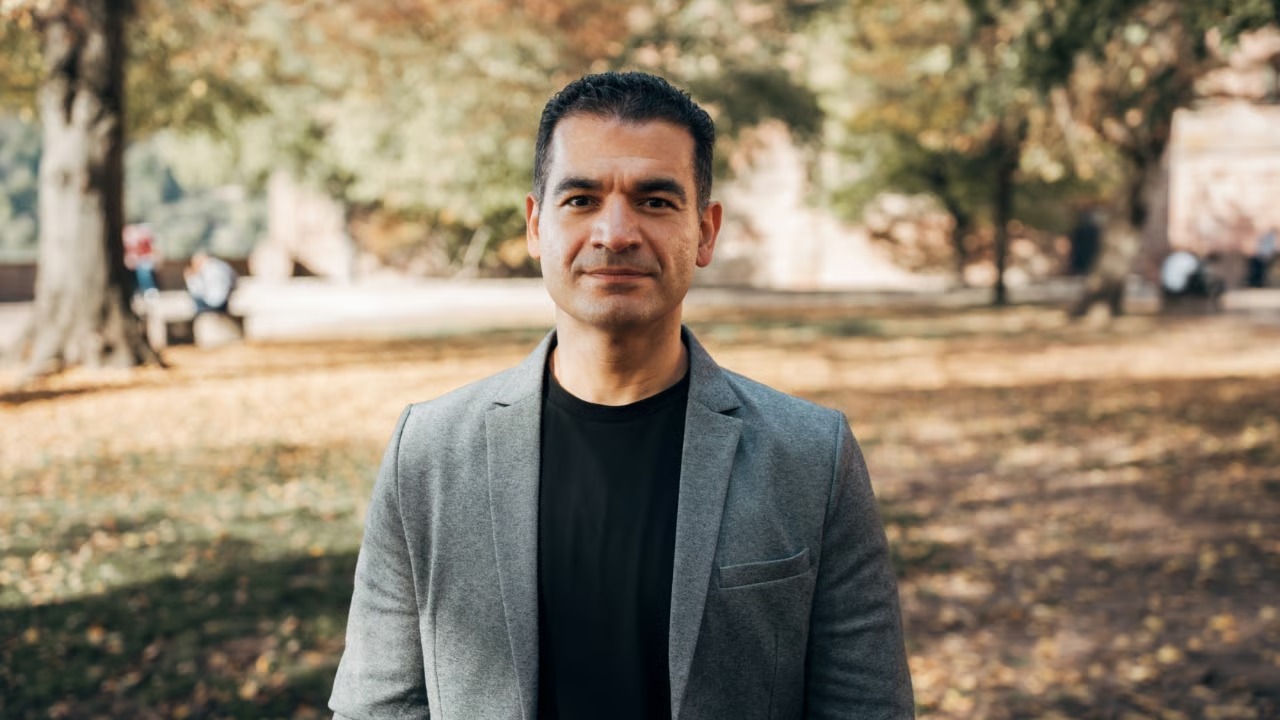
Recognizing negative friendships is often harder than you think, because not every bad friendship is toxic at first glance. In this Project Mindset episode, Reza Mehman explores the signs of positive and negative friendships. He asks how they affect personal development. Reza shares personal experiences of unhealthy competition and a lack of loyalty. His examples also explore why some people struggle to celebrate others’ success. He discusses the idea that your five closest contacts shape who you become. He also asks how to use that principle consciously.
This episode provides valuable insights for anyone who wants to honestly reflect on their relationships and actively shape their environment. Anyone striving for personal growth cannot avoid the question of the quality of their friendships. Tune in and find out which signals you might have overlooked.
Summary
In one sentence: Reza Mehman explains, using concrete indicators, how to recognize positive and negative friendships and why one’s environment is crucial for personal development.
Short summary: In this episode, Reza Mehman describes the subtle differences between positive and negative friendships, which are often not immediately apparent. Using examples such as a lack of shared joy, a lack of loyalty, unhealthy competition, and disrespectful handling of disagreements, he highlights typical warning signs. Friendships can change as life changes. He encourages listeners to shape their social environment consciously.
Detailed summary: In episode 45 of Project Mindset, Reza Mehman explores how to recognize whether friendships are beneficial or detrimental. He describes personal experiences where friends weren’t happy for good news or spoke negatively about you behind your back. He identifies key indicators such as genuine shared joy, loyalty, healthy rather than destructive competition, and respectful handling of differing opinions. Reza reflects on how your five closest contacts influence you. His advice is to actively manage that social circle. Friendships can change with different phases of life, and consciously letting go of negative relationships is an important step for personal growth.
Context: Who, What, Why
Who is speaking: Reza Mehman, host of the Project Mindset podcast, shares his personal experiences and insights on the topic of friendships.
What is it about: The episode discusses indicators that can be used to distinguish positive from negative friendships. Reza draws on personal experiences. One concerns a friend’s reserved reaction to a PhD position at Harvard University. Another involves disparaging comments about an interview with a Marvel actor.
Why is this relevant? One’s environment significantly influences personal development, self-confidence, and motivation. Many people fail to recognize negative friendships because the signals are subtle and lie below the threshold of obvious toxicity.
Three key questions of the episode:
- What indicators reveal whether a friendship is positive or negative?
- Why are subtle negative friendships often more damaging than overtly toxic relationships?
- How can you consciously shape your environment to promote your own personal development?
Table of contents
- Introduction – Overview of the topic of friendships and personal development
- Summary – The most important points summarized
- Context: Who, What, Why – Background and relevance of the episode
- Topics and classification – Overview of key topics
- Key messages – Key takeaways from the episode
- Frequently Asked Questions – Answers to the key questions on the topic
- Highlight quotes – The most concise statements by Reza Mehman
- Transcript – Full transcript of the episode
- Keywords – Relevant search terms and tags
- Names and terms – Important references from the episode
- Quotable passage – Key idea for sharing and quoting
Topics and classification
1. Indicators of positive and negative friendships
Reza identifies specific characteristics that indicate whether a friendship is beneficial or harmful. These include shared joy, loyalty, how disagreements are handled, and competition.
Keywords: recognizing negative friendships, toxic friendship, indicators of friendship
2. The influence of the environment on personal growth
A central idea is that the five people closest to you shape who you become. Reza uses it as a guide for reflection. Consciously shaping one’s own environment is crucial for personal development.
Keywords: shaping the environment, personal development, average of five people
3. Envy and lack of shared joy as warning signs
Using personal stories, Reza shows how a lack of joy in the successes of others is a clear sign of a problematic friendship.
Keywords: Envy in friendships, shared joy, jealousy among friends
4. Unhealthy competition in relationships
Reza describes how a once close friendship was strained by excessive competition in sports and everyday life, and why it is important to distinguish between healthy encouragement and destructive competition.
Keywords: competition, friendship, healthy incentive
5. Life partners and changing friendships
Friendships can change at different stages of life, and that’s perfectly fine. Reza encourages accepting changes in one’s circle of friends as a natural part of life.
Keywords: Life partners, friendships change, circle of friends, life phases
Key messages
- A true friendship is shown by whether the other person can sincerely rejoice in your successes and good news.
- Negative friendships are often harder to recognize than obviously toxic relationships because the harmful signals are subtle and insidious.
- Loyalty means that a friend stands by you even in your absence and doesn’t jump on the bandwagon of gossip.
- Unhealthy competition in a friendship, where the only goal is to be better than the other person, is a clear warning sign.
- Respectful handling of differing opinions is an important indicator of the quality of a friendship.
- You are the average of the five people you spend the most time with, and you can consciously control this environment.
- Friendships can change with different phases of life. Not every friendship has to last a lifetime.
- Small acts of manipulation, rudeness, and disrespect that are allowed to go unchallenged can be more damaging in the long run than open conflicts.
- It is permissible and important to remove people from your environment who constantly bring you down.
- Anyone who wants to grow personally should actively surround themselves with people who pursue similar goals and provide positive support.
Frequently Asked Questions
How can I recognize a negative friendship?
A negative friendship often manifests itself through subtle signals: your friend doesn’t celebrate your successes, they gossip behind your back, there’s constant competition, or differing opinions aren’t respected. These small warning signs can be more damaging in the long run than overtly toxic relationships.
What is the difference between a negative and a toxic friendship?
Toxic friendships are easy to spot because the negative influence is obvious. Negative friendships, on the other hand, are more subtle: small manipulations, a lack of genuine enjoyment, or hidden disrespect aren’t immediately noticeable, but can be just as damaging in the long run.
Why is loyalty so important in a friendship?
Loyalty is especially evident when you’re not around. A loyal friend doesn’t join the chorus of gossip, but takes a stand and defends you. This is a key indicator of how much trust and respect truly exist in a friendship.
Is competition always bad in friendships?
No, a certain amount of encouragement and mutual challenge can be healthy. It becomes problematic when competition is solely used to prove oneself superior. Then, the friendship is characterized by rivalry rather than support.
What does “you are the average of the five people you spend the most time with” mean?
This saying means that the people in your immediate circle have a significant influence on your thinking, behavior, and development. Therefore, it’s important to consciously choose with whom you spend the most time and surround yourself with people who positively influence you.
Is it okay to let go of friendships?
Yes. Friendships can change with different phases of life, and that’s perfectly natural. Not every friendship has to last a lifetime. It’s okay, and even important, to distance yourself from people who constantly bring you down.
How do I deal with envy among friends?
If you notice that a friend isn’t happy about your successes or even reacts with envy, that’s a serious warning sign. It’s worth having a conversation with them. If the behavior doesn’t change in the long run, you should reconsider how much space you’re giving this person in your life.
How can I consciously shape my environment in a positive way?
Consider what your goals are and actively seek contact with people who pursue similar goals or support your development. Consciously build connections with people who inspire and motivate you, instead of bringing you down.
Selected statements from Reza Mehman
“You are the average of the 5 people you spend the most time with.”
“There are negative friendships that you have where you don’t even know that they are negative or that they are not good for you.”
“I think any joke that I can’t tell in front of that person, I’ll leave out.”
“It’s okay to encourage someone, to push them a little, but simply starting a competition to show your boyfriend or girlfriend that you’re better than them, that becomes very unhealthy at some point.”
“We have different opinions, and that’s fine. We don’t need to delve into it further.”
“Different phases of life simply bring different friendships.”
“He told me that he was happy that I was happy, but he realized that many people in his circle hadn’t reacted positively at all.”
The full conversation
Hi everyone and welcome to Project Mindset, the channel for all those who know that with the right mindset, anything is possible in life. Today I want to talk about friendships. There’s a saying that you’re the average of the five people you spend the most time with. I think many people are in friendships that can either be good for them or, unfortunately, bad for them. And I’ve been thinking about when a friendship becomes particularly positive for me and when it becomes negative.
There is a distinction to be made, though. There are negative friendships you have where you don’t even realize they’re negative or that they’re not good for you. you can’t distinguish them as easily as, for example, highly toxic friendships. With toxic friendships, you know for sure, hey, this is someone I really don’t want to hang out with at all, because this person is so negative or because this person simply has, let’s say, a really bad influence on me.
That’s super easy to spot. But there are friendships that are negative, not in a way that makes you immediately realize they have a really bad influence, but rather it’s little things, like manipulation, for example, or rudeness or occasional disrespect, that you just let slide and don’t even realize that such a friendship is actually much worse than a toxic friendship, where you immediately know you don’t want any more contact with that person.
Share good news with friends
What’s my point? In another podcast episode, I mentioned that I was walking along the Neckar meadow here in Heidelberg with a friend. He gave me a little update on what he’s been up to and then, somewhat reservedly, told me that he’d been offered a PhD position at Harvard University. I was incredibly happy for him, so I have huge respect for him and his achievements in being accepted to Harvard and being able to pursue his doctorate there.
That’s really cool news! I congratulated him and was really happy for him. But at the same time, I noticed that he was a bit reserved about it. He didn’t really want to express it openly, he seemed a little hesitant and even a bit intimidated. So I asked him what was going on. It was such great news! He had told me that he was happy I was happy. But he’d noticed that many people around him hadn’t reacted positively at all, but were, let’s say, a bit jealous or envious that he’d gotten the job.
When successes are recounted discreetly
Accordingly, he was a bit reserved about the fact that he now has a PhD position there. Unfortunately, I also know similar stories from my own circle, where certain people reacted with envy and negativity when someone had good news. For example, I myself recently—perhaps you heard the interview I did with Florian Mutteranu, an actor who’s in a new Marvel film—and for me, that was a huge deal.
That made me incredibly proud. I was really happy to be talking to someone from the film industry. I didn’t have any network in that field before, so it was fantastic that Marvel approached me about collaborating with them. It was clear to me that Florian wasn’t one of the main actors in the film, but a supporting actor. He was one of the villains, so to speak. But I was still extremely proud that he had even managed to get there, coming all the way from Germany. that I now had the opportunity to speak with him.
Shared joy instead of devaluation
A friend of mine, in a conversation—and he was really the only one who had anything negative to say—said something like, “Hey, he hardly had any lines in the movie, it was just a minor role, and on the movie poster, his name was just tiny and a bit of a joke.” He was kind of making light of it. He was really the only friend of mine who reacted that way; everyone else was happy about it.
Whether they meant something else by it is, of course, another matter. But he was the only one who so explicitly expressed his opinion. From my perspective, it wasn’t feedback; he just wanted to make fun of it a little. In that context, and also because of a few other things that happened, I started thinking about what actually constitutes a good friendship. In other words, when does a friendship become a good, positive friendship for me?
Continued
And the first point—and I’d like to go through several points now, but the first point, in my view, is whether a friendship is truly good or not: can the person be happy when I tell them something, for example, or tell them that I’ve made progress, that I’ve achieved something new, and so on? Can the person then, I say this from the bottom of my heart, be happy for me that this has happened? I believe that’s what makes a good friendship.
If that’s not the case, I think it’s difficult to build a close relationship, and I believe that’s precisely the point about this friend—it’s somewhat negative. People often overlook the fact that a good friend isn’t happy for them, but I think that’s a very strong indication that it’s not actually a positive friendship. Another point, or rather another indicator of how good or bad the friendship is, in my view, is how loyal this friend is to me.
Loyalty can be defined in various ways, but from my perspective, it’s about this: if I’m not around and someone else, for example, is gossiping behind my back, and my friend is there, do they jump on the bandwagon, do they gossip too, or do they speak up and say, “Hey, what you’re saying isn’t okay. I don’t want to discuss it.” So, I think the topic of loyalty is very important, and also a good indicator of how good or bad a friendship is.
Loyalty even in absence
I’m not talking about making the occasional joke about someone; I do that about friends and so on, usually only when they’re around. But I think any joke I can’t make in front of that person, I’ll leave out. I definitely won’t make it behind their back. So, as I said, a second good indicator is how loyal the friend is when I’m not around. A third thing, which I unfortunately learned late in life, is how competitive or rivalrous the friendship is.
I had a very, very good friend for a very long time, and we were, as I later realized, ultra-competitive in the things we did. We happened to have very similar or even the same sports, like basketball or some martial arts and so on. And we were always begging to see who was better at what. Always. You can ask my wife. We actually created competitions for really ridiculous things. For example, who could do more exercise in a day, who burned more calories on their Apple Watch. We created some truly ludicrous competitions like this, and we were really serious about it, at least until the very beginning.
Classifying competition among friends
And it was only later, or after many years, that I realized it’s not healthy at all to constantly push things to the extreme, to see who’s better at what. I think—at the time, I thought—it was good to have a friend who challenged me like that, who pushed me, who challenged me, who pushed me to my limits, and so on. Even today, I believe it’s not entirely wrong to spur someone on to perform better or to be better at something. But it’s definitely not healthy if it’s solely about proving that you’re the better one.
So, it’s okay to encourage someone, to push them a little, but simply starting a competition, being competitive to show your friend, “I’m better than you,” or “My figure is better than yours,” or “I can do this or that much better than you”—I think at some point that becomes very unhealthy. that’s also an indicator for me that it’s not a good, positive friendship. Another good indicator, in my view, is how respectfully you handle differing opinions.
Respect different opinions
I think it’s perfectly fine if the other person has a different opinion than me. I’m really good at handling it, but of course, I also expect that if my opinion is different, the other person will respect that and, after we’ve exchanged our opinions, simply let it go. “Hey, we agree to disagree,” as the Americans say, and I think that’s great. So we simply say we have different opinions, and that’s that.
We don’t need to delve into it further. We can move on, have a beer, a coffee together, everything’s fine, and it doesn’t leave any negative vibes at all. It’s okay, we agree to disagree, and for me, that’s a respectful way of dealing with different opinions. If that’s not the case in a friendship, but rather if the other person tries to impose their own opinion or says, “No, that’s wrong,” and “That’s not right at all,” and keeps going back to the drawing board, I find that completely unacceptable.
Continued
Respectful handling of differing opinions is, in my view, also a good integrator, whether the friendship is positive or negative. Another thing I’ve learned in life is that there’s a concept of a companion for a specific phase of life. I believe this applies to friendships as well, perhaps not in all cases—there are lifelong friendships—but I think different phases of life simply bring different kinds of friendships.
I have some good examples of this myself. During my school years, I had completely different friends, or mostly different friends, than during my university studies. During my studies, I had completely different friends than at my first job, and now, after a few years in my job, I have yet another set of friends. I still have my old friends from school, we’re still in touch and all that, everything’s great, but close friendships can change, and that’s perfectly fine.
The saying I mentioned earlier, that you are the average of the five people you spend the most time with, is absolutely true. You can also control who you spend the most time with. For example, if my goal is to make progress with mindset, then I seek out people who are also working on this topic, try to build a connection, a relationship, a relationship, so that we can talk about it.
Allow new connections
These don’t necessarily have to be my other friendships; they can be completely new friendships that I’ve made by chance or met through a network. It only dawned on me later in life that it’s perfectly fine to make new friends. For a long time, I was very busy, and my friends from back then—I still hang out with them, which is extremely important. It’s good that I still have them, but it’s at least as important that I continue to develop myself, learn new things. For example, if I want to advance in the field of entrepreneurship, then I need to find other entrepreneurs with whom I can, well, maybe grab a bite to eat, have a beer, and exchange ideas.
Exactly, perhaps a different perspective. I used to think that good friendships were the ones where you knew you could call someone at four in the morning and they would definitely be there for you and help you with your problems. That’s certainly how I used to view friendships, or good friendships. But now I’m not so sure if that’s even meaningful. Because if I turn the tables, if someone calls me at four in the morning, I’m actually, or can I already say, quite helpful.
Helpfulness and closeness differ
I would help if the person was in need; then, of course, I would help. But it doesn’t mean it has to be a close friend; it’s more about simply being helpful. And I believe many people are helpful, even though we hear a lot of negativity in the world. I truly believe many people are helpful. that doesn’t automatically mean you have a good and positive friendship, but simply that in that moment, someone has a problem or is in a difficult situation, and the other person is simply trying to help.
Exactly, so calling at four in the morning. I think it’s good to have people like that in your life, but it doesn’t automatically mean you’re good friends or that you can always rely on that friendship. Another point, of course, is about those different phases of life I mentioned earlier. I think friendships develop at different speeds. The people in a friendship develop at different rates.
It’s possible that my friend, for example, wants to develop further in a certain area. I don’t actually want to get involved in those areas because I currently have other priorities. This means that this person develops in a different area, perhaps even much faster than I do. it’s perfectly fine that our current friendship drifts apart a little, because people develop differently or in different directions.
Friendships are allowed to change.
And I only understood and experienced that later in life. I always thought I had to grow at the same pace as my old friends, so to speak. That you always have to take each other along with you in everything. No, it’s not like that. You can also say, and be open and honest about it. Hey, we’re developing in different areas right now. That’s why we don’t see each other as often anymore. That might not be a very good indicator of whether it’s a positive or negative friendship.
Continued
But I wanted to at least mention that friendships can develop at different speeds. So, folks, today I really just wanted to talk specifically about friendships. What I’ve learned in recent years, about when I knew it was a positive friendship or a negative one—as I said at the very beginning—a negative friendship, which isn’t so obvious, can cause much more damage than, for example, certain relationships where you know it’s absolutely toxic and you don’t actually want anything to do with that person. With these negative friendships, it’s more about little jabs and digs.
People make fun of each other. Loyalty is lacking. They gossip amongst themselves. The competition goes too far. They don’t respect other opinions. Often, they let individual things slide. But if you listen very closely and look at each point carefully, it’s not actually a positive friendship. And then these indicators come together. Let’s say, “Hey, Resa, you should stop that. That’s causing negative consequences. It’s not getting you anywhere.” And accordingly, you need to address it with your own time.
This isn’t a good friendship for you. It will likely hold you back in life. Instead of helping me move forward. Okay, folks, as always, a short Project Meinzeit episode. I hope you enjoyed it. If so, as always, please leave a review or tell a friend or acquaintance about it, because that’s the only way the channel can continue to grow. I wish you a wonderful day and see you next time. Don’t forget, until then, Meinzeit is everything.
This transcript was automatically generated using Whisper AI and may contain occasional errors.
Keywords
Tags: recognizing negative friendships, positive friendship, toxic friendship, friendship loyalty, envy among friends, shaping one’s environment, personal development, competitive friendship, life partners, mindset, Project Mindset, Reza Mehman, average of five people, friendship indicators, letting go of friendships
Names and terms
Reza Mehman, Project Mindset, Harvard University, Florian Mutteranu, Marvel, Neckarwiese, Heidelberg, Apple Watch, life partner, loyalty, toxic friendship, competition, mindset, agree to disagree, personal development
Quotable passage
Not every negative friendship is immediately recognizable as such, because the most damaging signals are often the most subtle.
True friendship is shown by whether someone can sincerely rejoice in your success and support you even in your absence.
Those who consciously shape their environment and surround themselves with people who support them rather than hinder them lay the foundation for genuine personal growth.
Different phases of life bring different friendships, and letting go of negative relationships is not a loss, but a gain.
You can find more personal thoughts on relationships at Project Mindset.