Are you investing enough time in your personal development?
Personal development: why time investment is the key to progress in mindset, fitness, finances and relationships
Introduction
Investing time in your own development is one of the most important levers for a fulfilling life. In this episode of Project Mindset, Reza Mehman poses the crucial question: Are you investing enough time to truly move forward? Whether it’s mindset, fitness, finances, relationships, or raising children: progress doesn’t come from one-off actions, but from consistent, high-quality time investment. Reza shares personal experiences and explains why he consciously uses the word “investment” to refer to friendships and family as well. A single workout or conversation has limited impact on its own. Hours invested over months and years add up. It’s an honest reflection on where we invest our most valuable resource and whether the result will satisfy us in five years.
Summary
In one sentence: Anyone who wants to have developed further in five years must consistently invest time today in mindset, health, relationships and finances.
Short summary: Reza Mehman explains why time is the most valuable and irreplaceable resource we possess. His examples cover sport, nutrition, parenting and friendship. He emphasizes consistent, quality time over years rather than isolated actions. For him, progress is a cornerstone of happiness, and those who don’t invest stagnate.
Detailed summary: Reza Mehman addresses the question of how we can use our limited time to make progress in all areas of life. He emphasizes that time is the scarcest and only irreplaceable resource we possess. Examples from fitness, nutrition, relationships, parenting and friendships illustrate his point. Consistent investment matters more than a single action. He reflects on weaknesses such as holding grudges. He also explains his positive use of “investment” across different aspects of life. The central message: If you don’t know where you want to be in five years, you’re already there today.
Context: Who, What, Why
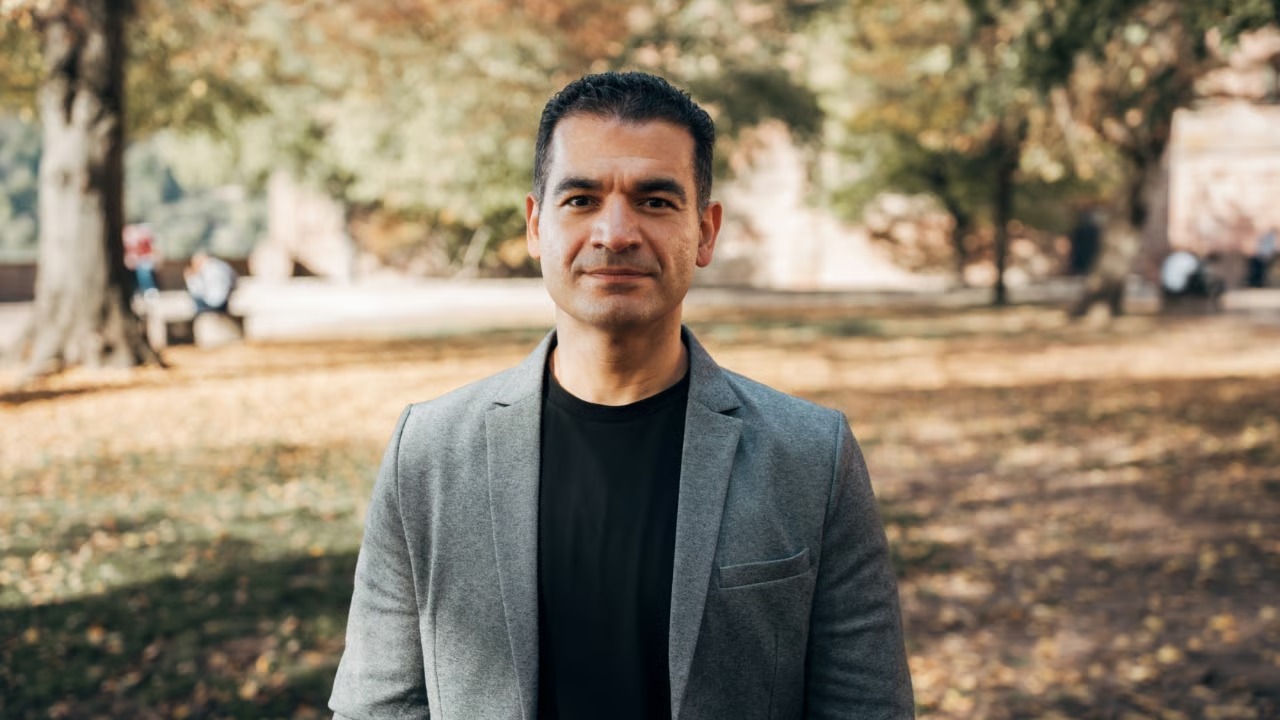
Who is speaking: Reza Mehman, host of the podcast Project Mindset, shares his personal experiences and approaches to conscious living.
What is it about: This episode explores the concept of time investment as a key strategy for personal development. Reza highlights how consistently investing time and energy in areas such as fitness, nutrition, relationships, finances, and raising children leads to long-term progress and satisfaction.
Why is it relevant: Distractions and time pressure compete for our attention. Many people struggle to prioritize how they use their limited time. This episode provides a clear framework for examining and actively shaping one’s own time allocation.
Three key questions of the episode:
- Where am I today and where do I want to be in five years?
- Do I consistently invest my time in a high-quality manner in the areas that are important to me?
- Why is it not the individual action that is decisive, but the sum of all investments over time?
Table of contents
- Introduction – Why investing time is the key to progress
- Summary – The core message in one, three, and five sentences
- context – Who is speaking, what it’s about, and why it’s relevant
- Topics and classification – An overview of the most important topics
- Key messages – The central messages of the episode
- Frequently Asked Questions – Answers to the most important questions on the topic
- Highlight quotes – The most concise statements by Reza Mehman
- Transcript – The full transcript of the episode
- Keywords – Relevant search terms and tags
- Names and terms – Important terms and people
- Quotable passage – For sharing and quoting
Topics and classification
1. Time as the most valuable resource
Reza explains why time is the scarcest and only irreplaceable commodity, and why conscious prioritization is crucial for progress.
Keywords: Time management, scarce resource, prioritization
2. Consistency beats individual actions
Reza uses fitness and nutrition as examples. Consistent effort over weeks, months and years matters more than one session or meal.
Keywords: consistency, long-term progress, habits
3. Time investment in relationships
Friendships, partnerships, and raising children need high-quality time to grow and last.
Keywords: Relationship building, quality time, friendships
4. Progress as a cornerstone of happiness
Reza argues that personal progress is one of the most important factors for long-term satisfaction, and that stagnation leads to dissatisfaction.
Keywords: Personal development, happiness, progress
5. Honest self-reflection and resentment
Reza openly reflects on his own weaknesses, such as holding grudges, and explains how he is working to overcome them.
Keywords: self-reflection, resentment, personal growth
Key messages
- Time is the scarcest commodity we have, and the only one that cannot be recovered.
- Progress is one of the cornerstones of happiness. Those who stagnate will become dissatisfied in the long run.
- A single training session is almost irrelevant to overall fitness. What matters is the consistent investment made over months and years.
- Eating junk food once won’t make you sick. Your health today depends on how you’ve eaten over weeks, months, and years.
- Raising children is a time investment that is not meant unemotionally, but aims for long-term positive benefits for both child and parents.
- Quality time in relationships doesn’t mean sitting next to each other in silence, but rather actively working through issues and creating shared experiences.
- Friendships require a conscious investment of time. Those who never make time for each other lose valuable connections in the long run.
- Resentment often arises because one feels that a lot of time and energy has been invested without being appreciated.
- If you are no further along in five years than you are today, you have either not invested enough or you mistakenly believe you are the measure of all things.
- Anyone who doesn’t know where they want to be in five years is already there today.
Frequently Asked Questions
Why does Reza Mehman describe raising children as an investment of time?
Reza doesn’t mean that raising children is unemotional. He discusses consciously investing time and energy in parenting. The intended long-term benefit is for the child and the parent-child relationship. High-quality time spent together strengthens the bond and promotes development.
Why is a single training session almost irrelevant according to Reza?
Reza explains that current fitness levels don’t depend on a single training session, but are the result of consistent training over months and years. Individual sessions have little measurable impact, but the sum of all sessions makes the crucial difference.
What does Reza understand by quality time in relationships?
For Reza, quality time involves more than sitting together. It includes conversation, working through important topics and planning shared activities. It’s about being consciously present and investing in the relationship.
Why does Reza consider progress a cornerstone of happiness?
Reza is convinced that stagnation leads to long-term dissatisfaction. According to Reza, if you think the same way in five years as you do today, you can hardly be happy. Progress in all areas of life gives you the feeling of developing further and realizing your full potential.
How does Reza deal with his resentment?
Reza speaks openly about being able to hold a grudge after major disappointments. He has realized that this feeling often stems from having invested a lot of time and energy in a friendship that wasn’t appreciated. He is actively working on overcoming this trait.
What does the sentence “If you don’t know where you want to be in five years, you’re already there today” mean?
Reza means that without clear goals and a conscious investment of time, no progress can be made. Anyone who doesn’t actively consider where they want to develop will be in the same place in five years as they are today. The question is intended to encourage self-reflection.
How can you prioritize time investment in different areas of life?
Reza recommends consciously asking yourself where you want to be in five years. This will reveal which areas deserve priority. You have to accept that time is limited and actively decide how much time to invest in sports, relationships, career, finances, and personal development.
Selected statements from Reza Mehman
“I think time is practically the scarcest commodity we have and the only commodity that can never be restored in any form.”
“I actually think that progress is one of the cornerstones of happiness.”
“Today’s training session is completely irrelevant, actually, if I look at it from a global, galactic perspective, my fitness. But the interesting thing is, my fitness today can only really be derived from the time I have invested in my sport over the last few years.”
“I need to make a time investment, and in a consistent manner.”
“If I eat junk food once in a while, it won’t make me sick immediately. My current health depends entirely on how I have eaten in recent weeks, months, and years.”
“It’s not enough to just say, hey, yeah, that’s great. I have a wife and we just chat and let life come to us.”
“If you don’t know where you want to be in five years, then you’re already there today. Is that enough for you?”
The full conversation
Hi everyone and welcome to Project Mindset, the channel for all those who know that with the right mindset, anything is possible in life. Today we’re talking about investment, not in a monetary sense, but in a time sense. I believe time is practically the scarcest resource we have and the only resource that can’t be replaced in any way. Therefore, I personally invest a lot of effort, time, and thought into how I can invest in just my time.
Where do I invest my energy? Where don’t I invest my energy? What do I actually want to have in five years if I invest time in something? Because I’m certain of one thing: I want to keep developing myself. I want progress in my life, I want to see advancements in my life. In five years, two years or even tomorrow, I want to have progressed. That applies to my mindset, fitness and health.
This is not an end in itself or a self-improvement craze for me. I genuinely see progress as a cornerstone of happiness. If my mindset is still the same in five years as it is today, then I can’t imagine being happy then. That means I want to continue developing. Many people say you should be happy with what you have today, and I completely agree. I think it’s extremely important to be grateful and happy with who you are today, with what you have today.
Looking back on one’s own development
But actually, looking back at the time, at the racer I was two years ago, there were a few moments that I find a little uncomfortable, or even embarrassing—some conversations I had, some statements I made. I can sometimes recall the discussions I had two or three years ago, for example. Some of those memories even make me feel a little ashamed. I’m happy that I’ve grown since then and no longer have those thoughts or behave the way I did back then.
I think that’s why progress is important. That’s why it’s always important for me to ask myself from time to time, where do I actually want to be in the future? Because I want to develop further, I want to improve my fitness, I want to expand my knowledge in certain areas, I want to develop my expertise, I naturally want to continue managing my finances, I want to improve my fitness and my health, and all of that requires a resource that is extremely important. That is time.
Time for the relationship with your own child
I recently had an interesting conversation with someone about raising children. I said that for me, raising children—and I don’t mean this negatively at all, but very objectively—is also an investment of time. The other person didn’t quite understand; it sounded a bit unemotional. How could I say so bluntly and unemotionally that it’s an investment of time? And I actually thought about it. I didn’t mean it negatively at all. If I’m going to invest a lot of time, leisure, effort, and, let’s say, real brainpower into raising my children, then of course I’m hoping that it will be good not only for the child in the future, but also for me, because I want to further develop my relationship with my child.
And that’s precisely what happens when I invest time—and in my view, that can only happen if I ensure that the time I invest is of high quality. So that either the child’s skills are further developed or my own skills are further developed. It’s an incredible challenge for me to have the patience with a 3- or 4-year-old. I mean, to undertake certain activities, because you really need time and patience to avoid losing your temper or, let’s say, being too impatient at certain moments, wanting to push too hard.
Make conscious decisions and prioritize
It simply takes time and patience. And that’s why I told myself, or rather, I told the person, at that moment, that for me it’s an investment of time. I like to invest time on weekends, for example, to specifically go out with my little one and do certain activities. And I don’t mean it in a bad way at all, because I also have to divide my time between my hobbies, my job, my relationship, and time for myself and my physical fitness. No matter what, I always have to decide and prioritize where I invest my time.
And here’s an interesting thought: I think time also has something to do with the attitude you bring to the day, especially when you’re trying to make progress on something. I also spend a fair amount of time, a lot of thought, on the time I invest in sports. From an outsider’s perspective, I sometimes get the impression that I invest too much time in my sport. Let’s say the whole process takes a bit longer—getting changed, exercising, warming up, cooling down, showering, and so on—easily an hour, an hour and a half, if not two hours, is gone.
Regularity makes the difference
And if you do that several times a week, it really takes up a lot of time. And actually, generally speaking, considering my current fitness level—and exercise is really just one example here; I’ll come up with other examples—it doesn’t really matter whether I invest an hour or two in exercise today or not. It has hardly any impact on my current fitness. That’s interesting to me.
So, today’s training session is completely irrelevant, actually, if I look at it from a global, galactic perspective, it doesn’t really matter my fitness. But the interesting thing is, my current fitness can only be derived from the amount of time I’ve invested in my sport over the past few years. And that also applies to another topic, for example, nutrition. If I eat junk food once, it won’t immediately make me sick. That one time is almost irrelevant. My current health, from a nutritional point of view, my current health depends entirely on how I’ve eaten over the past months, weeks, or even years.
Continuously working on important issues
And that was interesting for me to understand. I have to make a time investment, and in a consistent way. Regularity is essential. I have to work on my fitness regularly. I also have to work on my finances regularly, to give one example. It’s not enough to just pick a stock once, invest in it, and that’s it forever. I have to think about whether my portfolio still fits at this moment. My exercise routine also needs reviewing.
I need to think about how to maintain my relationship. It’s not enough to just say, “Hey, yeah, it’s great. I have a wife, and we just chat and let life happen.” No, I think it’s important to invest quality time. And investing doesn’t mean sitting next to each other and not talking; it means trying to work through certain issues. You talk about topics that are important to you or that are important to your partner.
We try to organize activities, whether it’s going out for a meal or shopping together. Things we simply do together, where we can also spend quality time together. And that’s why, as you might already gather, when I say I invest time in a certain topic, I don’t mean it unemotionally at all. I invest time in a topic because I hope it will have a positive impact in the future. Be it for me, for the person I’m with, for my children, or even for my friendships.
Friendships need shared time.
It’s true, I’m someone who likes to work quite a lot. My wife could tell you a thing or two about that, but I’m aware that I also need to invest time in my friendships. I have a few very good friends, and I’m very grateful for that. But what’s obviously unacceptable is when they get in touch, want to meet up. I say, “Hey, sorry, I don’t have time right now.” I have to invest enough time in friendships if those friendships are important to me.
Because I know perfectly well—and I don’t hold this against anyone—it would be the same for me if I spent weeks, months, trying to meet up with a friend and he canceled on me every time. Sure, of course, I wouldn’t contact him again for a few weeks or months afterward if I realized he wasn’t making any time for me at all.
That’s why, folks, investment, time investment, is extremely important. And perhaps I should also address the fact that I was criticized a bit negatively for using the word “investment.” Investment, by its very nature, means investing effort, energy, money, or whatever, in something so that you have a positive outcome or benefit from it in the future. Therefore, I would actually see it as a positive thing if someone said to me, “Wow, I’m really up for it, it’s time to invest in a good conversation with you so that we can, for example, deepen our connection and remain good friends.”
When expectations are disappointed
I don’t see it negatively at all. In fact, I discovered a crucial point about it, and it was actually quite interesting for me to understand that I’m wired this way. Unfortunately, I can be—and I really mean unfortunately—a resentful person. I’ve spent a long time, or rather, I’m still trying to work on not holding grudges. And yes, I’m usually not resentful about small things, but I can be resentful about bigger, more serious matters.
Especially when it comes to, for example, absolutely, let’s say, unacceptable behavior from someone, where I say, wow, I just can’t stand that, and then, unfortunately, I’m the kind of person who breaks off contact. And that’s what happened. And I’ve also thought about it; a few of my friendships have kind of drifted apart in recent years. Not because of arguments. I generally don’t argue with friends, but these friendships just drifted apart.
Disappointments about time invested
And I think one of the main points is that even those friends did try to intensify contact. But it just didn’t work for me. Unfortunately, I hold grudges. I now understand why I do, because for years—or so I thought—I invested a lot of time and energy into these friendships. And as I’ve already said, I think time is an incredibly important resource because I have to decide whether—and I don’t mean this in a bad way—I invest two hours of my time and energy in a friendship, or two hours of my time and energy, for example, in my romantic relationship, or in raising my children, or in other areas.
And if, of course, I’ve invested years of that into a friendship, for example, and then a situation arises where, in my view, the right thing was done and my friendship wasn’t valued at all, then, well, that leaves such a super negative aftertaste for me. So that I said, wow, somehow, you’re not supposed to have any regrets in life, but somehow I regret that I invested so much time and energy in this and didn’t invest it elsewhere. That’s why I’m now so resentful that I don’t even want the friendship anymore.
Question your own reactions
Guys, I’m not saying this is the right way, so maybe you want to work on not holding grudges so much. I unfortunately do. I’m trying to change, but when it came to investing time, I actually realized why I hold grudges in the first place. But like I said, I’m working on it. I’ve also realized that I’m not really offended or resentful because there was an argument or a discussion, but rather, I’m kind of disappointed that I went all in on a friendship and then realized the friendship wasn’t really worth it, because, for example, I wasn’t appreciated.
Okay, that was a little digression, and now back to the actual topic: our time investment, or rather, the investment itself. And I’d like to broaden the topic of investment a bit to include a financial investment. Not now, you certainly won’t get any stock recommendations from me, but what I mean by financial investment is that certain topics require not only a time investment but also a financial investment. And in particular, when I think about a body and mindset, I naturally have to think about nutrition as well.
As I said earlier, and I absolutely stand by it, eating junk food once doesn’t make me sick. It only makes me sick if I eat it regularly or too often. Junk food is a very interesting topic for me. As a student, I often ate burgers at certain burger joints, for example, and that has completely changed for me..
What we spend money and attention on
I also realized at some point that this is a small trigger: many people invest a lot of money, for example, when it comes to their cars. They only use the best oil, the best gasoline with a high octane rating, or the best car wash, and so on. They make sure that the car is in good condition, so to speak, and spend a lot of money on it. But when it comes to their own machine, their own body, they only buy the cheapest things: the cheapest meat, the cheapest vegetables. They don’t pay attention to quality; they order cheaply instead of cooking well.
And I have to say, on the one hand, it’s certainly expensive. Good nutrition and organic shopping aren’t actually as cheap as you might initially think. But I think the investment is extremely important so that you feel good in the long term.
And I actually do tests from time to time, for example, when I say I’m going to buy something a bit cheaper, I compare it with the slightly more expensive meat, for example, the cheap meat with the expensive meat. I actually notice differences in preparation, taste, and so on. And I think you also have to pay attention to looking at the topic of investment from a financial perspective. If I invest something somewhere, then it also has a long-term advantage for me, and for example, a good diet also brings me a healthy body in the long run.
Considering body and mindset together
Perhaps you can also, or perhaps you have already seen, the quote from Dennis Deaver that I received from him in the interview: “A healthy mind resides in a healthy body,” and I absolutely stand behind that. It’s all well and good to always work on your mindset, I really enjoy doing that. But I know it’s just as important to work on your body as well. Of course, that’s not easy, as I said, it requires an investment of time or money, but in the long run it’s definitely worth it.
Okay everyone, as I mentioned, today’s topic is investing. I hope I made my point clear enough. If you enjoyed the episode, please give it a like and subscribe to the channel, because that’s the only way the channel can continue to grow. Sorry for repeating myself, but I’m really happy when the Project Mindset channel continues to grow. I hope you enjoyed the episode and I’ll talk again soon. Until next time, remember, mindset is everything.
This transcript was automatically generated using Whisper AI and may contain occasional errors.
Keywords
Tags: Time investment, personal development, mindset, progress, personal development, consistency, fitness, relationships, child rearing, self-reflection, happiness, prioritization, time management, finances, project mindset
Names and terms
Reza Mehman, Project Mindset, Time Investment, Mindset, Happiness, Progress, Consistency, Fitness, Nutrition, Child Rearing, Relationship Maintenance, Resentment, Self-Reflection, Finances, Portfolio, Quality Time, Self-Optimization, Patience, Prioritization
Quotable passage
Time is the scarcest commodity we have, and the only one that cannot be recovered.
Progress is one of the cornerstones of happiness: Anyone who thinks the same way in five years as they do today will hardly be satisfied.
A single training session is almost irrelevant, but the sum of all consistently invested hours over years makes all the difference.
Anyone who doesn’t know where they want to be in five years is already there today.
You can find more episodes about personal development at Project Mindset.