Choose your hard
Choose your hard: why the difficult path often delivers better results and how you can consciously choose your “hard” path.
Introduction
“Choose your hard” is the central message of this episode of Project Mindset. Reza Mehman addresses a topic that resonates with many people: Why do some people seem so disciplined, almost tense, even though they’re actually making conscious decisions? Using concrete examples from areas of life like relationships, exercise, nutrition, finances, and career, Reza demonstrates that both sides of a decision are tough. Those who don’t put effort into their relationships will find a breakup just as difficult. Those who don’t exercise suffer the physical consequences. The crucial difference lies in choosing a tough process with a good outcome or an easy process with a bad outcome. This episode is a plea to consciously choose the right kind of challenge. Reza shares honest insights from his own daily life and explains why personal rules and consistency are the key to success.
Summary
In one sentence: Life is full of hardship, but those who consciously choose the difficult process with the good outcome ultimately live happier and more successful lives.
Short summary: Reza Mehman uses examples from relationships, sports, nutrition, finances, and career to show that both options in life are always difficult. The difference lies in whether you choose the arduous process with a positive outcome or the seemingly easy path with a negative result. Personal rules and consistency help you make the right decisions in the long run.
Detailed summary: In this episode of Project Mindset, Reza Mehman explores why others sometimes perceive him as uptight, even though he has consciously chosen certain life rules. He uses concrete examples to show that a happy marriage is just as tough as a divorce, regular exercise is just as tough as being sedentary, and financial discipline is just as tough as money worries. The core message is: You have to consciously choose what “tough” you want. It’s not about making life unnecessarily difficult, but about choosing the process whose results contribute to your own “happiness account.” Breaking one rule puts you dangerously close to breaking the next two and three,which is why consistency is so crucial.
Context: Who, What, Why
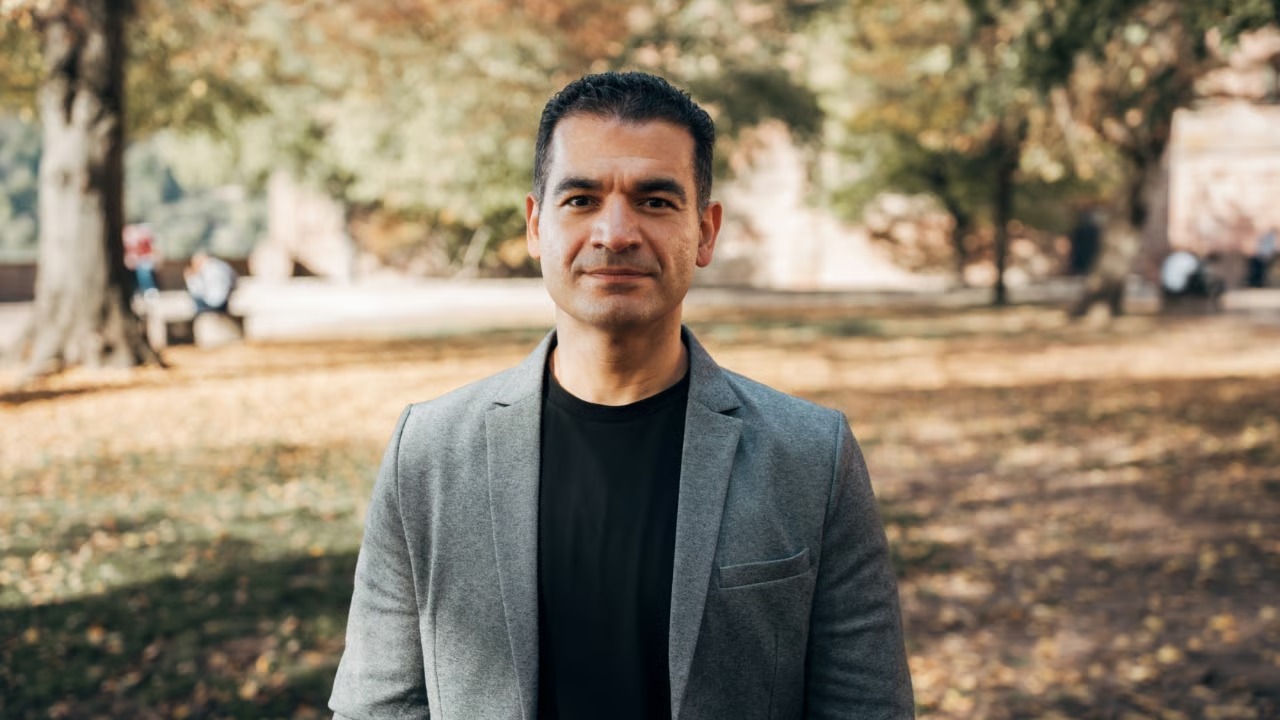
Who is speaking: Reza Mehman, host of the podcast Project Mindset, shares personal experiences and reflections on discipline, self-leadership and conscious life choices.
What is it about: It’s about recognizing that virtually every option in life comes with challenges. Whether it’s relationships, fitness, nutrition, finances, or career: you’re always faced with a choice between a difficult process with a good outcome and an easy process with a poor outcome.
Why is this relevant? Many people avoid exertion without realizing that the alternative is often just as burdensome. This perspective helps to make more conscious decisions and to understand discipline not as a burden, but as a deliberate investment in one’s own well-being.
Three key questions of the episode:
- Why are both sides of a life decision always difficult?
- How does one consciously choose the right harsh process?
- Why are personal rules and consistency so important for long-term success?
Table of contents
- Introduction – What this episode is about
- Summary – The core message in brief
- context – Background, speaker and relevance
- Topics and classification – The central topics
- Key messages – The most important messages
- Frequently Asked Questions – Answers to typical questions
- Highlight quotes – The best quotes from the episode
- Transcript – Full transcript of the episode
- Keywords – Relevant search terms
- Names and terms – Important mentions
- quotable passage – For sharing and quoting
Topics and classification
1. Conscious decisions and discipline
Reza explains why he sets personal rules for himself and consistently follows them. Discipline is not an end in itself,but a conscious tool for better results.
Keywords: Discipline, self-leadership, conscious decisions
2. Partnership and Communication
A happy relationship requires hard work, open communication, and a willingness to compromise. However, the alternative of a breakup is at least as stressful.
Keywords: happy partnership, communication in relationships, relationship work
3. Fitness and Health
Regular exercise is strenuous, but so are the consequences of a lack of exercise, such as back pain and reduced performance.
Keywords: regular exercise, fitness motivation, healthy lifestyle
4. Diet and habits
Paying attention to your diet requires willpower, but unhealthy food leads to dissatisfaction and weight gain. Reza shares concrete examples from his everyday life.
Keywords: healthy eating, dietary guidelines, changing habits
5. Finances and Career
Financial discipline and professional commitment are challenging, but money worries or job dissatisfaction are the equally difficult opposite.
Keywords: managing finances, self-employment, professional success
Key messages
- In life, both sides of a decision are always hard: both the effort and the consequence of inaction.
- One must consciously decide which “hard” process to choose: the hard process with a good result or the easy process with a bad result.
- A happy partnership requires hard work, but a breakup is at least as stressful.
- Regular exercise is strenuous, but so are the consequences of lack of exercise, such as back pain and the use of painkillers.
- Paying attention to your diet is hard, but being overweight and unhappy is the other side of the same coin.
- Financial discipline requires sacrifice, but being permanently broke or paying off debts is just as stressful.
- Anyone who breaks one rule is dangerously close to breaking the second and third. Consistency is crucial.
- It’s not about making life unnecessarily difficult, but about approaching your goals with the right seriousness.
- Personal rules are not a sign of being uptight, but of consciously shaping one’s life.
- The result behind the hard work is what pays into the personal “happiness account”.
Frequently Asked Questions
What does “Choose your hard one” mean?
The message is that in life, both options are always difficult. Whether you put in the effort or not, both have their price. Therefore, you should consciously choose the hard process that leads to a good result, instead of taking the easy way out, which will ultimately lead to dissatisfaction.
Why is discipline not a sign of being tense?
Reza Mehman explains that personal rules and discipline are often perceived by others as rigidity. In reality, however, they are conscious decisions that lead to better results and contribute to one’s long-term well-being.
Which areas of life are addressed in the episode?
Reza examines the topics of partnership and marriage, sports and fitness, nutrition and health, finances and money management, as well as career and self-employment. In each area, he demonstrates that both engagement and passivity bring their own unique challenges.
Why is it dangerous to break a rule?
According to Reza, breaking a rule once is dangerously close to breaking it a second or third time. Consistency is therefore so important because every exception lowers the threshold for further exceptions, and one quickly falls back into old, unproductive patterns.
Should one deliberately make life difficult for oneself?
No, Reza explicitly emphasizes that he is not a fan of unnecessarily creating obstacles for oneself. Rather, it’s about having the necessary seriousness for the things that are important to you, without artificially making life difficult.
What is the “Happiness Account”?
The “happiness account” is an image Reza uses to express that conscious effort and discipline contribute to personal happiness and satisfaction in the long run. Every consciously made decision, however difficult, is an investment in one’s own well-being.
How does Reza Mehman handle feedback?
Reza takes feedback very seriously, especially from people close to him. He reflects on whether the feedback is justified or based on a misjudgment and uses it as an opportunity for personal development.
Selected statements from Reza Mehman
“Maintaining a happy marriage or partnership is not easy, but actually really hard. It requires a lot of work, you have to put a lot of energy into it.”
“There are moments when you simply have to choose the difficult process. The process is tough, but the result is something you really like.”
“I know perfectly well that if I break one rule, it’s super close to breaking the second rule, breaking the third rule, and so on.”
“I’m not a fan of making things unnecessarily difficult, but I still believe that you should simply follow the rules you’ve created for yourself, where you know they have a purpose.”
“If you are too relaxed and let everything slide too much, it gradually affects all areas of life.”
“Without hard work, it’s naturally difficult to be successful. Without paying attention to your diet, it’s naturally difficult to have a figure that you like.”
“Personally, I believe I really love food. But it’s clear to me that I can’t eat it every day.”
The full conversation
Hi everyone and welcome to Project Mindset. This channel is for all of you who know that with the right mindset, anything is possible in life. Lately, I’ve been told a few times that I’m not entirely relaxed in certain situations or with certain topics. It wasn’t meant maliciously; it was simply that I could be a bit more relaxed. The topics were quite varied. One time it was about raising children, another time it was about my diet.
I have quite a few rules for myself. One was about my sport, and another was about my job. And I’ve actually thought about why I give others the impression that I’m so uptight. Like, why someone else thinks I’m not really enjoying it, or that I’m taking it way too seriously and could be a bit more relaxed. And as you probably know from previous episodes of Project Mindset, feedback is extremely important to me.
Take feedback from your own environment seriously
I do take things to heart when someone says something to me, especially if it’s someone close to me. My response is to consider whether there’s any truth to it or whether it’s simply a misjudgment. I also happened to see a screenshot on Instagram that fits quite well. It’s relevant to today’s topic, and I’d like to address it now. The point was that, for example, let’s start with the topic of marriage or partnership, having a happy or fulfilling marriage or partnership isn’t easy; in fact, it’s really tough..
It takes a lot of work, a lot of energy, discussions, clarification of misunderstandings, and consideration of each other’s needs—which isn’t always easy. Above all, transparency is key, and open communication about your own needs is essential. And who hasn’t experienced this? It’s much easier to avoid communication altogether, to say, “Hey, I don’t feel like talking,” or “Ugh, not today,” and so on, instead of communicating and engaging in the discussion..
Interestingly, a happy marriage, as I just mentioned, or a happy partnership is certainly difficult,but it’s just as hard to be unhappy in a marriage or to go through a separation or divorce. The same applies to exercise—regularly exercising and challenging your body—which is tough. But being out of shape and unable to perform simple physical tasks well is just as difficult.
Effort and its alternatives
I mean, it’s obvious that getting up three or four times a week in the evening after work, changing clothes, going to the gym, showering afterwards, and so on, is tough at first. It takes a lot of time, and the effort required is significant overall. You also have to think about your training plan, maybe adjust your diet, and so on. So, exercising itself is hard, but what’s the alternative? Just sitting at a desk all day, somehow managing back and neck pain, and then trying to cope with it using painkillers?
That’s at least as tough. Or take the topic of finances. Keeping an eye on your finances, putting money aside, setting budgets for how much you can spend each month on what – that’s tough, of course. But in my opinion, being broke, constantly broke, or having to pay off a huge loan is just as tough; both are hard. I mean, on the one hand, if you want to manage your finances properly, you have to think about whether to invest in stocks, invest in ETFs, or somehow forgo that new smartphone because you already have one. And I even have a very specific example: I’m really keen to buy the iPad Pro with that cool stylus.
Desires and actual needs differ
I’m really super excited about it. But do I really need it? Sometimes I feel like it would be easier for me to just spend, I don’t know, 900 or 1000 euros and have it. But to be honest, I don’t think I really need it. Or take the whole nutrition thing. I talked about this in an earlier podcast, how I set quite a few rules for myself, like no alcohol during the week, no sweets or desserts, no sugary foods, and so on.
It’s obviously tough to pay attention to that. But on the other hand, it’s just as hard to be overweight or to be completely unhappy with your own figure. And personally, I believe I really love food. And there are things I absolutely love to eat. For example, watermelon, ice cream, especially spaghetti ice cream with extra whipped cream or Kugizeis, and so on. Or a really delicious burger with fries. I can really stomach that kind of thing.
Decisions regarding nutrition
But it’s clear to me that I can’t eat that every day. And these days, it’s so much easier to eat something unhealthy than to stand in the kitchen, cook something healthy, go shopping, and so on. With a delivery service, you can have the unhealthiest things at your door in 10-15 minutes, and it would be super easy to call up, order something unhealthy for cheap, and just fill up. But of course,at the end of the day, you’re unhappy.
I don’t know anyone who’s ever said, “Wow, that was really good,” after eating a really heavy, fatty meal. Most people—I’d guess almost everyone—feel a little bit guilty about having eaten something really unhealthy. Or, to give you a small example, I remember at one of my previous jobs I had a really great team, and we used to go to a bakery right outside every afternoon and get some pastries. Every day I was consuming an extra 400 or 500 calories from those pastries, and I wasn’t paying attention. Then at some point I realized, “Wow, that’s crazy, I’ve gained a few kilos!”
Everyday decisions and their consequences
Otherwise, nothing has changed in my diet or exercise routine, but those 400 or 500 calories—I only realized this afterward—really did have an impact on my weight. It was really hard to say, “Hey, I’m not coming to the bakery with you,” or “I might come along, but I won’t buy anything. While you all enjoy your sweet pastries with a cup of black tea, I’ll just have a banana or something.” The issue of collaborating with others is also tough, of course. Constantly having to compromise within the team, constantly figuring out who wants to proceed in which direction, but my decision is completely different; you have to communicate what’s right and wrong.
Making decisions as a team is tough, but it’s just as hard to have to do everything alone. Or take the topic of jobs. I know many people who want to leave their 9-to-5 jobs because they’re so incredibly unhappy there. Of course, a 9-to-5 job that you absolutely hate is hard to do, but it’s just as hard to become self-employed, try to grow your business, earn money, pay your employees, and I can attest to that, I’ve tried it myself, so I also find it incredibly hard to grow your own business, and it took an incredible amount of energy.
Consider the process and the result together.
So you see, there are so many things where you might say it’s hard to do one thing, but just as hard to refrain from doing it, for example. And personally, I’ve realized there are times when you simply have to choose the difficult process. By difficult process, I mean something that might seem a bit harder at first, but the result is something you really like. That is, the process is tough, but the result is good. And then, conversely, there are easy processes, but the result is bad.
Of course, I could say, “Hey, I’m not going to put that much work into this, so I’ll take the easy way out,” but then the result is either failure or just being really unhappy. And I think you really have to ask yourself which hard option you’re choosing. Do you choose the hard process and the good result,or the easy process and the bad result? That said, I’m not a fan of making things unnecessarily difficult for yourself or putting obstacles in your way to make it even harder than it already is.
Seriousness without unnecessary harshness
I’m all for approaching things in a relaxed way. But I do believe that certain results simply require a certain level of seriousness in the process you’re undertaking. Without hard work, it’s obviously difficult to be successful. Without paying attention to your diet, it’s difficult to have a figure you like. Or without putting hard work into a relationship, perhaps seeking compromises, and understanding the other person’s needs, it’s difficult to have a happy partnership.
So, guys, I can only recommend that you choose your partner very carefully. I personally need to talk to the people who told me I seem tense. I really think I’m actually quite relaxed, but I need to reflect a bit more, look at it, and ask again in which situations I came across as tense. For me, it works best when I have my own set of rules.
Why personal rules help me
I know, for example, I don’t do that during the week, or my training plan says I have to train today. If I don’t, it’s just bad luck, because I know perfectly well that if I break one rule, it’s a very close call to breaking the second, the third, and so on. That’s why it might look from the outside like I’m uptight and maybe a bit too hard on myself. But it’s really just because I try to be consistently the way I feel is best for me, and also the way I think will give me the best results.
Consciously choosing your own rules
Alright everyone, that’s it for today. I hope I was able to explain the topic clearly and effectively. I hope you were able to follow along with my points. My point is that many things in life are hard. It’s easier said than done to be relaxed, because I think if you’re too relaxed and let things slide too much, it gradually affects all areas of your life. I’m not a fan of making things unnecessarily difficult, but I still believe that the rules you set for yourself, where you know they have a purpose and the result behind them—the result of all the hard work you put in—that’s what you really want, because I think, or at least assume, that they contribute to your happiness.
Yes, that you simply follow these rules. As always, folks, I hope you enjoyed the episode. If so, please leave a like and subscribe to the channel. I would be extremely happy if we could continue to grow together. Thank you so much for listening, and see you next time. Don’t forget, my Z is everything.
This transcript was automatically generated using Whisper AI and may contain occasional errors.
Keywords
Tags: choose your hard work, hard process good result, discipline in everyday life, making conscious decisions, mindset, project mindset, Reza Mehman, partnership work, sports motivation, nutrition rules, managing finances, self-leadership, changing habits, happiness account, personal rules, consistency success
Names and terms
Reza Mehman, Project Mindset, Happiness Account, Marriage, Partnership, Separation, Divorce, Sports, Fitness, Training Plan, Nutrition, Abstinence from Alcohol, Sweets, Spaghetti Ice Cream, iPad Pro, ETF Savings, Stock Investing, Delivery Service, 9-to-5 Job, Self-Employment, Teamwork, Feedback, Rules, Consistency, Discipline, LinkedIn, Instagram, YouTube
quotable passage
In life, both sides of a decision are hard: Maintaining a happy partnership is hard, but so is a separation.
Exercising regularly is hard, but so is being unathletic and suffering the consequences.
One must consciously choose the difficult process that leads to a good result, instead of choosing the easy way that makes one unhappy in the long run.
Because anyone who breaks one rule is dangerously close to breaking the next one.
You can find more thoughts on decisions and personal development at Project Mindset.
#Mindset #Discipline #SelfLeadership #ProjectMindset #ConsciousDecisions –>You can find more thoughts on decisions and personal development at Project Mindset.
#Mindset #Discipline #SelfLeadership #ProjectMindset #ConsciousDecisions –>You can find more thoughts on decisions and personal development at Project Mindset.
“Reza Mehman” } } –>You can find more thoughts on decisions and personal development at Project Mindset.
“Reza Mehman” } } –>You can find more thoughts on decisions and personal development at Project Mindset.