Intensity and focus: Why multitasking slows you down
How to get through everyday life more relaxed and productively with deep work, full attention and less multitasking.
Introduction
Intensity and focus are two of the most underestimated success factors in both professional and everyday life. In episode 16, Reza Mehman reflects on approaching tasks with too little intensity. Over time, that left him dissatisfied and exhausted. Multitasking, or handling several tasks simultaneously, may seem time-saving at first glance, but it comes at a significant cognitive cost. Whether in an online meeting, while exercising, or chatting with friends: those who aren’t fully present ultimately pay the price with exhaustion and poorer results. Reza explains how deep work sessions, consciously blocking out calendar time, and genuine attention make all the difference. This episode invites listeners to reconsider constant multitasking. Reza explores working and living with more focus, productivity and ease.
Summary
In one sentence: Those who concentrate fully on a single task produce better results and feel significantly more relaxed afterwards than when multitasking.
Short summary: Multitasking is not a strength, but a cognitive cost factor that can lower our IQ by up to 15 points. Reza Mehman uses concrete examples from work, sports, and leisure to demonstrate that full focus on one task leads to better results and greater relaxation. Deep work phases and conscious calendar blocking allow you to specifically train intensity and integrate it into your daily routine.
Detailed summary: In this episode, Reza Mehman describes how a lack of intensity left him feeling dissatisfied and exhausted for a long time. He explains why multitasking in meetings, sports, and conversations not only yields poorer results but is also extremely cognitively draining. Studies show that our brains aren’t wired for multitasking and that we can lose up to 15 IQ points as a result. Reza recommends deep work periods, during which you block out specific times in your calendar for individual tasks and block everything else out. His core message: Doing one thing with full intensity can leave you more relaxed and satisfied afterwards. That applies to work, basketball or a cinema visit.
Context: Who, What, Why
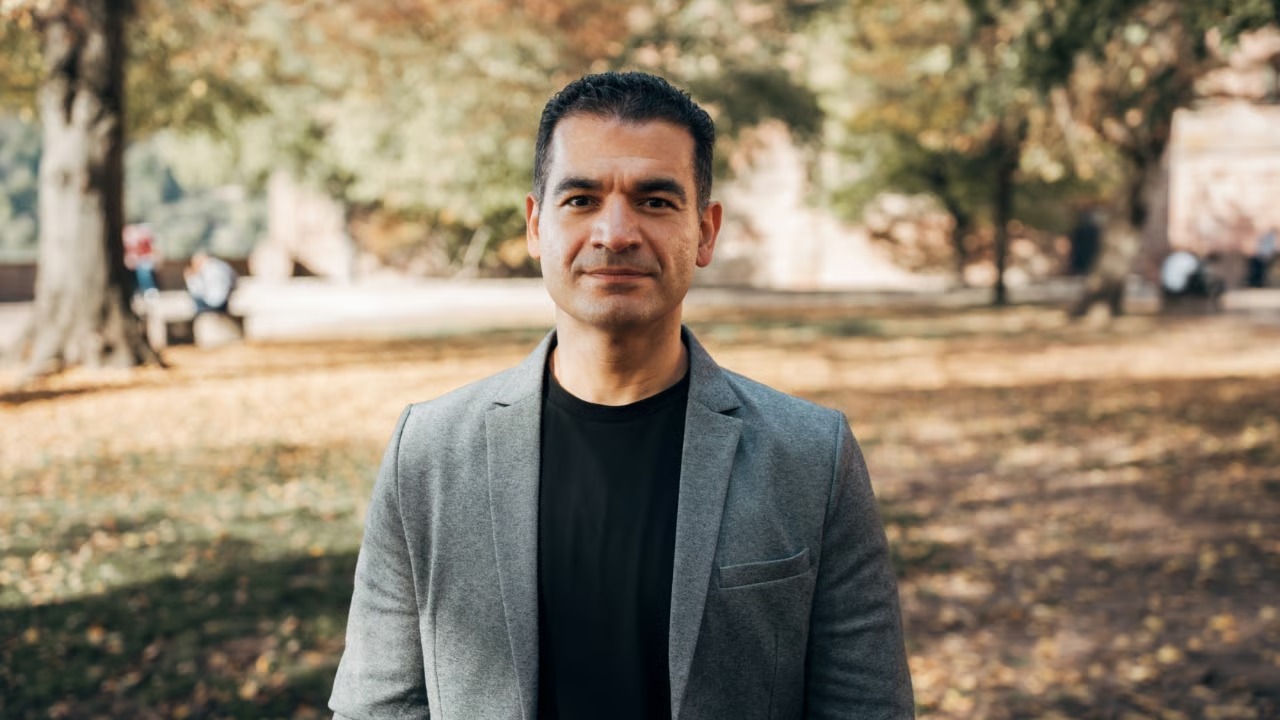
Who is speaking: Reza Mehman, host of the Project Mindset podcast, shares personal experiences and insights about productivity, focus, and mental strength.
What is it about: The central insight concerns giving each activity full attention. Reza contrasts the resulting satisfaction with the exhaustion and delay of multitasking.
Why is this relevant? Digital distractions, constant availability and endless online meetings compete for attention. Focusing on one thing has become a valuable skill. Zoom fatigue, burnout, and declining productivity are widespread problems for which intensity and focus offer a concrete solution.
Three key questions of the episode:
- Why does multitasking make us more exhausted instead of more productive?
- How can deep work phases be specifically integrated into everyday life?
- What influence does full attention have on satisfaction and relaxation?
Table of contents
- Introduction – Why intensity and focus are so crucial
- Summary – The episode in one, three and five sentences
- context – Who is speaking and why this topic is relevant
- Topics and classification – Overview of the main topics
- Key messages – Key findings at a glance
- Frequently Asked Questions – Answers to the most important questions about focus and multitasking
- Highlight quotes – The most memorable statements from the episode
- Transcript – The full episode to read
- Keywords – Relevant search terms for the episode
- Names and terms – Important people, concepts and technical terms
- quotable passage – The episode summarized in a few sentences
Topics and classification
1. Multitasking and its cognitive costs
Multitasking is not only inefficient, but has also been proven to harm our cognitive performance. Studies show that we lose up to 15 IQ points when multitasking and are more exhausted afterward than when working in a focused manner.
Keywords: Multitasking, cognitive costs, IQ loss
2. Deep work and focused work
Deep work phases, meaning consciously blocking out time for a single task, lead to better results and greater relaxation. Reza describes how he uses this method in his daily work.
Keywords: Deep work, calendar blocking, focused work
3. Zoom Fatigue and Digital Exhaustion
The constant strain of online meetings, combined with reading emails on the side, leads to a specific form of exhaustion. Full attention during meetings is the antidote to Zoom fatigue.
Keywords: Zoom Fatigue, Online Meetings, Homeoffice
4. Intensity in sports and leisure
From HIIT training to basketball games: Those who fully concentrate on their sporting or leisure activity experience more satisfaction and genuine relaxation afterwards.
Keywords: HIIT Training, High Intensity, Sport und Fokus
5. Attention in interpersonal relationships
Genuine presence in conversation, eye contact and undivided attention strengthen relationships and make moments with family and friends more valuable.
Keywords: Attention, Relationships, Make it Count
Key messages
- Multitasking is not a productivity strategy, but an energy drain that leads to poorer results and exhaustion.
- Our brains are not neurobiologically designed for multitasking. Studies show an IQ loss of up to 15 points when working on several tasks simultaneously.
- Deep work phases, in which you block out fixed times in your calendar for a single task, lead to better results and more relaxation.
- Zoom fatigue is not solely caused by too many online meetings, but primarily by a lack of focus and working in parallel during the meetings.
- Intensive exercise with full attention leaves a better feeling than half-hearted training where the mind wanders.
- A lack of focus becomes visible in conversation. One example is avoiding eye contact with the person speaking.
- The Confucius quote “A man who chases two rabbits catches none” perfectly sums up the problem of multitasking.
- Not only special moments with loved ones, but every activity in life deserves full intensity.
- Those who are fully focused at the cinema, during sports or at work emerge from the activity more relaxed and satisfied.
- The practical recommendation is: consciously block out calendar time once or twice a week for focused work without distractions.
Frequently Asked Questions
Why is multitasking bad for productivity?
Multitasking is bad for productivity because our brains aren’t wired to process multiple tasks simultaneously. Studies show that we can lose up to 15 IQ points when multitasking. Furthermore, constantly switching between tasks leads to cognitive fatigue, poorer results, and a feeling of being completely drained.
What is Deep Work and how does it work?
Deep work refers to a method of focused work in which fixed time blocks are reserved in the calendar for a single task. During this time, all distractions such as emails, messages, and notifications are switched off. The goal is to produce a concrete result in this focused phase.
What is Zoom Fatigue and how can it be avoided?
Zoom fatigue describes the tiredness and exhaustion that results from too many online meetings. It is exacerbated by reading emails or performing other tasks during meetings. To avoid Zoom fatigue, you should fully concentrate on the conversation in each meeting and avoid multitasking.
How does focus help in sports?
Full focus during exercise ensures a more intense training session and a significantly better feeling afterward. Similar to HIIT workouts, which deliver maximum results in a short time through high intensity, every other sport also benefits from undivided attention. If your mind is elsewhere during exercise, you’ll find the session less satisfying and recover less effectively.
How can you train your attention in everyday life?
Train attention by consciously focusing on one thing at a time. Try eye contact in conversation, closing other windows during meetings and putting your phone away during leisure activities. A concrete method is calendar blocking, where you schedule fixed times for focused work once or twice a week and eliminate all distractions.
How much IQ does one lose through multitasking?
According to studies cited by Reza Mehman in the episode, multitasking can lower IQ by up to 15 points. This means that when working on several tasks simultaneously, cognitive performance is significantly worse than when working on a single, focused task.
Was bedeutet “A man who chases two rabbits catches none”?
This quote, attributed to Confucius, means that you ultimately achieve nothing if you pursue two goals simultaneously. It illustrates the core problem of multitasking: those who don’t concentrate on one thing at a time make real progress on neither task.
What is the difference between intensity and productivity?
Intensity describes the depth and quality of attention one devotes to a task. Productivity, on the other hand, measures the output per unit of time. This episode links productivity to intensity. Reza describes how full concentration can help produce better results in less time and leave you more relaxed.
Selected statements from Reza Mehman
“I discovered that for a long time I had been doing the things I had to do or tackled with little intensity. And that somehow left me totally unsatisfied and even made me unhappy at times.”
“I always notice that when I don’t look someone in the eyes, I immediately know, okay, I’m not focusing on the conversation at all.”
“You don’t even realize that the lack of attention to what’s at hand means you have to pay the cognitive price for it.”
“A man who chases two rabbits catches none.”
– Confucius, quoted by Reza Mehman
“I now actually think that everything you do in life needs to be done more intensely in some way.”
“When multitasking, we have approximately up to 15 points less IQ, or intelligence quotient, when we multitask.”
“I notice every time I approach my tasks this way that I can complete the task in a totally relaxed manner, and when the time is up and I have produced a result, I can also go into the rest of the day feeling super relaxed.”
The full conversation
Hi everyone, this is Reza Memann, and you’re listening to the 16th episode of the Project Mindset podcast. Today I want to talk about intensity. I’ve discovered that for a long time, I was doing the things I had to do or tackled with very little intensity. And that left me feeling totally unsatisfied and even unhappy at times. Intensity also means, for example, not multitasking. Everyone multitasks now and then; it starts with conversations with other people, where your mind is, for instance, somewhere else entirely.
I always notice it when I’m not looking someone in the eye; I immediately know, okay, I’m not focusing on the conversation at all. Working from home means many online meetings for me. With low intensity, I move between online activities and read emails instead of fully listening. Multitasking seems to reduce what you take in overall. It also leaves you completely exhausted afterwards.
I notice this when I exercise and fully focus on it, when my attention is completely in the sport. Then I feel relatively good afterward. Thinking about other things while exercising makes the workout less enjoyable for me. Afterwards, it feels different from a session where I stayed focused.
When meetings and side tasks become exhausting
There are even individual terms for these topics I’ve mentioned, for example, when it comes to online meetings, people talk about Zoom fatigue. Everyone probably knows the online tool Zoom. It actually means that you’re not focused on the current meeting, or because you have so many meetings, you squeeze in other topics during the meetings, and afterwards you’re completely exhausted, and at first you don’t even know why you’re so exhausted.
You may not notice the consequences of that lack of attention. They can include exhaustion or making less effective decisions. In another podcast, I discussed time with loved ones, close family and friends. My point was to focus on the experience you share in that moment. I summarized this in the “Make it Count” episode.
Attention in all areas of life
That idea now extends beyond savoring time with loved ones for me. I think intensity matters in some form for everything we do in life. We’ve also noticed this in our work with sports. Everyone’s probably familiar with HIIT, High-Intensity Interval Training. It’s been suggested that a HIIT workout, for example, where you perform a high-intensity 20-minute session, essentially going all in, is much more efficient than doing light cardio two or three times a week.
I actually think that humans, in terms of brainpower and physical capacity, are probably better suited to doing one thing with high intensity because they produce even better results that way, and because I think it’s probably less taxing on the brain to focus on just one thing. I’ve even tried this out in my work environment. I thought about how I could, for example, take on just one task and block out everything else coming in—news, emails, and so on—and focus solely on that one task, committing myself to producing a concrete result within that time.
Reserve time for focused work
Then I also read that this is sometimes called deep work phases, and I think the concept or method is actually quite good. You block out time in your calendar for a very specific task. The advantage is that when that time arrives and you tackle the task, you know, hey, I thought about why I should do this task beforehand. So it seems to have a certain relevance. Now I switch everything else off and focus only on what’s in front of me.
I notice every time I approach my tasks this way that I can complete them in a completely relaxed manner, and once the time is up and I’ve produced a result, I can also go into the rest of the day and tackle the remaining tasks with a super relaxed attitude. This relaxation, when I’ve focused on just one task for a long time, is something I’ve also noticed in other areas of my life. A very simple example, at least for me, is when I go to the cinema and watch a film for about an hour and a half; I’m completely focused on that film.
Why a trip to the cinema can be relaxing
Whenever I go out, I feel good and relaxed every time, I think I can vouch for that. My thoughts are focused on one thing for an hour or an hour and a half, whatever it is. You come out of the cinema and think, okay, now I’m totally relaxed, now I can wind down the evening or whatever, and whatever comes next. It’s the same with basketball, I love playing basketball. When I’m playing for an hour and a half on a team, we play 5-on-5 all over the world. I’m really focused on not making mistakes, passing the ball correctly, scoring baskets, and so on, because if I don’t, I’ll lose.
Intensive training and conscious concentration
When I did that for an hour and a half, it was obviously super intense, but on the other hand, I always felt great afterward. Conversely, if I tried to do two things at once—watching a movie or talking on the phone, having an online meeting and reading emails simultaneously, for example—I was always exhausted afterward. I can definitely relate to that. There’s an interesting saying by Confucius, which I love to quote, that goes, “A man who chases two rabbits catches none.”
I absolutely believe that. That is, if you’re always trying to do two things at once, well, in the end you definitely won’t make any progress with either of them. Interestingly, there are also studies I’ve come across here and there that say our brains simply aren’t wired for multitasking, and the problem isn’t just that when we do it, we don’t produce good results. But that it comes at a cognitive cost.
That means that when we multitask, we have roughly up to 15 points less IQ, or intelligence quotient, when we multitask. I’m not surprised that science can practically prove that multitasking isn’t good, but quite apart from that, I’ve noticed for a while now that multitasking is something that simply exhausts me. That’s why today’s episode was about intensity. Ask yourselves how many tasks you truly approach with full focus.
Stay fully engaged in the conversation
From conversations with others—do you look them in the eye, are you fully focused on the conversation—to leisure activities: Are you truly doing one thing at a time, or is your mind elsewhere? This topic of focus and multitasking will actually come up again in the next episodes. I have a super exciting interview coming up soon with a very successful golfer. It will also cover how to control attention, how to train your attention, how to improve your concentration.
I’m really looking forward to the episode, but until then, maybe I can give you a little something to think about: how intensely do you actually approach your tasks? I actually think about it every day; I block out time to do certain tasks and only those specific tasks. And maybe you could consider blocking out time in your calendar once or twice a week to do your tasks and not try to do two or three things at once.
Alright everyone, as always, a short episode. I hope you enjoyed it. Please subscribe to the channel, leave a like, and tell your friends about it. That’s the only way the channel can grow. Thank you so much for listening. See you next time. Don’t forget, my set is everything.
This transcript was automatically generated using Whisper AI and may contain occasional errors.
Keywords
Tags: Intensity, Focus, Multitasking, Deep Work, Zoom Fatigue, Attention, Productivity, Concentration, HIIT Training, Calendar Blocking, Cognitive Cost, Singletasking, Home Office, Relaxation, Project Mindset
Names and terms
Reza Mehman, Project Mindset, Konfuzius, Deep Work, Zoom Fatigue, HIIT (High Intensity Interval Training), Multitasking, Singletasking, Kalender Blocking, kognitive Kosten, IQ Verlust, Homeoffice, Make it Count, Online Meetings, Zoom
quotable passage
Multitasking is not a strength, but a cognitive cost factor: studies show an IQ loss of up to 15 points when working on multiple tasks simultaneously.
Those who concentrate fully on a single task achieve better results and feel significantly more relaxed afterwards.
Deep work phases, in which one consciously blocks out time for focused work, are a concrete tool to integrate intensity into everyday life.
As Confucius said: He who chases two rabbits at the same time catches neither.
You can find more episodes and personal insights at Project Mindset.