Ban social media? Is social media making people ill?
Social media and young people: Reza Mehman and Karsten Kammholz discuss whether a social media ban makes sense, its potential harms and what schools need to do.
English translation of the article published on 4 February 2026, including the complete transcript. Statements about research and health reflect the speakers’ discussion, rather than an independent review of the evidence. The conversation begins mid-thought, as in the original.
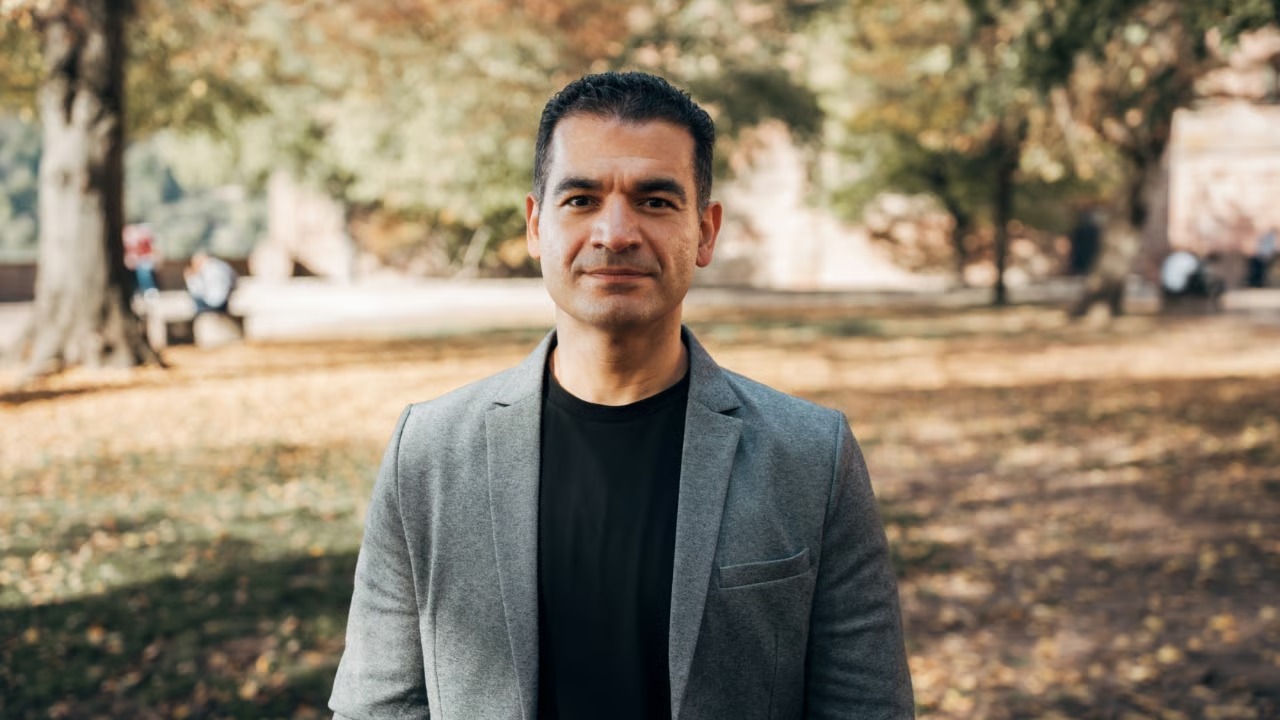
Social media ban or better education?
Is social media making people ill? Should it be banned for under-16s? In this podcast episode, Reza Mehman and Karsten Kammholz discuss research on social media and mental health, why they believe a ban would not solve the problem and what schools should do instead. Reza draws a comparison with smoking: that, too, was once considered normal, until people recognised its health risks. He suggests social media could follow a similar path.
Summary
One-sentence version: Reza Mehman and Karsten Kammholz discuss whether social media makes people ill, why a ban would not help and what schools need to do.
Three-sentence version: Reza describes research as showing negative effects of social media on mental health, though relatively small ones. He argues that a ban would not solve the problem and calls instead for rigorous education that schools treat as a priority. He compares social media with smoking, which was once considered normal until its health risks became widely recognised.
Five-sentence version: Reza describes research as showing negative effects on depression and mental health, though relatively small ones. He opposes a social media ban because he does not believe it would solve the problem. Instead, the speakers call for rigorous, prioritised education in schools, arguing that media literacy is missing. Reza compares social media with smoking, once considered normal until its health risks became recognised. Kammholz stresses that screen time alone is not the issue: violent content appearing in ten-year-olds’ feeds is, in his view, the real catastrophe.
Context: who, what and why
Who is speaking: Reza Mehman and journalist Karsten Kammholz.
What the episode covers: A social media ban for under-16s, research on social media and mental health, and education in schools.
Why it matters: The conversation follows Schleswig-Holstein’s Minister-President Daniel Günther’s appearance on Markus Lanz’s programme. Social media and its effects on young people are a major social issue.
Three central questions in this episode:
- Is social media making people ill?
- Would a ban solve the problem?
- What do schools need to do?
Contents
- Introduction
- Summary
- Context
- Themes and analysis
- Key points
- Frequently asked questions
- Highlights in quotes
- The complete conversation
- Keywords
- Names and terms
- Passage for quotation
Themes and analysis
1. The evidence: does social media make people ill?
Reza describes studies as finding negative effects on depression and mental health, though relatively small ones. He also says young people can feel better when they use less social media.
Keywords: social media, mental health, depression, studies, young people
2. A social media ban: solution or illusion?
Reza opposes a ban because he does not believe it would solve the problem. School mobile-phone bans are not automatically a blueprint for social media bans.
Keywords: social media ban, under-16s, Daniel Günther, Markus Lanz
3. The comparison with smoking
Reza compares social media with smoking: once considered normal, until people recognised that it made them ill. He thinks social media could follow a similar path.
Keywords: smoking, social media, comparison, society, health
4. Content versus screen time
Kammholz stresses that screen time alone is not the problem. In his view, content showing killings and violence in ten-year-olds’ feeds is the real catastrophe.
Keywords: content, screen time, algorithm, children, violence
5. Schools and media literacy
The speakers argue that schools lack media literacy education, just as they lack education about democracy. They say the responsibility cannot simply be shifted onto parents.
Keywords: schools, media literacy, democracy education, parents, cyberbullying
Key points from the discussion
- Reza describes studies as finding negative effects of social media on depression and mental health, though relatively small ones.
- He says young people can feel better when they use less social media.
- School mobile-phone bans are not automatically a blueprint for social media bans.
- Reza opposes a ban and instead advocates rigorous education that schools treat as a priority.
- He compares social media with smoking: once normal, until its health risks became recognised.
- Reza: “I believe social media really does make people ill. Perhaps a little less intelligent, too.”
- The discussion follows Daniel Günther’s appearance on Markus Lanz’s programme, but Reza thinks the debate is still too limited.
- Kammholz argues that screen time alone is not the issue: violent content in ten-year-olds’ feeds is the catastrophe.
- The speakers argue that schools lack both media literacy education and education about democracy.
- Cyberbullying should be discussed as early as primary school.
Frequently asked questions
Is social media making people ill?
Reza describes research as showing negative effects on depression and mental health, though relatively small ones. He also says young people can feel better when they use less social media. His own view is emphatic: “I believe social media really does make people ill. Perhaps a little less intelligent, too.” He compares it with smoking, which was once normal until its health risks became recognised.
Should social media be banned for under-16s?
Reza Mehman opposes a ban because he does not believe it would solve the problem. Instead, he advocates rigorous education that schools treat as a priority. School mobile-phone bans are not automatically a blueprint for social media bans. The discussion follows Daniel Günther’s appearance on Markus Lanz’s programme, but Reza thinks the debate remains too limited.
What should schools do about social media?
The speakers argue that schools lack media literacy education, just as they lack education about democracy. Kammholz stresses that children need not only to recognise what appears in their feeds, but also to discuss it with one another. Cyberbullying should be addressed as early as primary school. Responsibility cannot simply be shifted onto parents, who work long hours and cannot constantly monitor their children.
What is the real problem with social media for children?
Kammholz argues that content, rather than screen time alone, is the central problem. A ten-year-old may see images that he himself did not encounter until around twenty, without knowing how to cope with them. He describes depictions of killings and violence on social media as commonplace and calls this a catastrophe. In his view, children become desensitised without having time to adjust.
How does Reza Mehman deal with hostility on social media?
Reza says he is now relaxed about insults on social media. He believes the resulting comments make the algorithm favour his content, and he has learned to cope with them. But he had time to get used to this. Children, he argues, do not have that time and encounter content they are not yet ready for.
Highlights in quotes
“I believe social media really does make people ill. Perhaps a little less intelligent, too.”
— Reza Mehman
“Just as smoking was completely normal at first, and a few years later people said: hang on, this is unhealthy. I see parallels.”
— Reza Mehman
“A ten-year-old today who sees images I perhaps did not see until I was twenty, images I did not want to see either, has no idea yet how to deal with them.”
— Karsten Kammholz
“Depictions of killings and violence on social media are commonplace now. It is a catastrophe.”
— Karsten Kammholz
“If I say we have no democracy education in schools, I would equally say we have no media literacy education in schools.”
— Karsten Kammholz
The complete conversation
The evidence: what do studies say?
Reza Mehman:
And I also asked “Chatty Beauty” to give me a summary. So the effects are there, but relatively small. That is a very broad summary. There apparently are effects from social media: negative effects on depression, mental health and so on. But apparently the effects are relatively small. Nevertheless, they are not zero. It also said that it can help, for example, that young people feel better when they use or consume less social media and so on. The other point was that school mobile-phone bans are not automatically a blueprint for social media bans. I found that interesting too. I have thought a lot about my own view. And my position is that a social media ban really would not solve the problem.
Education rather than a blanket ban
I am actually against it. What I do support is rigorous education in schools, treated as an important priority. I am certain that, at some point — it is a strange comparison — society will also come to recognise that social media use is actually unhealthy. I firmly believe that. Just as smoking was completely normal at first, and a few years later people said: hang on, this is unhealthy. I see parallels. I believe social media really does make people ill. Perhaps a little less intelligent, too. In any case, I am very pessimistic about this issue right now. That is why I am grateful that we are finally having this discussion.
To be honest, it was introduced in a rather muddled way, through Schleswig-Holstein’s Minister-President Daniel Günther’s appearance on Markus Lanz’s programme. Several issues got mixed together. I do not want to get into the other issue at all. But a social media ban for under-16s was mentioned. It is finally on Germany’s political agenda, but in my view it is still far too small a part of it.
Content versus screen time
Karsten Kammholz:
They have a much, much, much, much bigger impact than screen time alone. A ten-year-old today who sees images I perhaps did not see until I was twenty, images I did not want to see either, has no idea yet how to deal with them. Absolutely, we are becoming completely desensitised. Depictions of killings and violence on social media are commonplace now. It is a catastrophe. We adults may be able to cope differently because of our emotional immune system. But that is why I think we simply need to start addressing this now. I said last time how disappointed I am by what schools actually do in response to developments in society: too little. If I say we have no democracy education in schools, I would equally say we have no media literacy education in schools. And I do not know why that is.
Parents cannot solve it alone
Karsten Kammholz:
It cannot simply be shifted onto parents either. We are a society in which parents work a lot and are not always at home. They cannot constantly monitor their children and say: hey, hey, hey, what are you looking at? And somehow explain to the children… It is completely unrealistic to believe that parents can always see and know what their children are doing. Of course, children can listen to their parents when they tell them to be careful about what they look at. And of course there are now plenty of tools for blocking certain apps on children’s smartphones.
All of that is technically possible. But talking about it, understanding what content is actually being pushed into children’s feeds — children need to be able to discuss that too. I think children need not only to perceive it, but also to have a setting in which they can discuss it with one another.
Cyberbullying and dealing with hostility
Reza Mehman:
I agree with you one hundred per cent. What really saddens me is that I also have to think about cyberbullying. I recently raised it at our primary school. I said I support talking about it with children even at primary-school age: if someone attacks you verbally, whether online or elsewhere, how can and should you deal with the situation? The issue I see is that we had time to get used to the internet. What I mean is that today, for example after the last podcast about Iran, if someone insults me — really viciously insults me — I am completely relaxed about it. It does not bother me.
I am so relaxed about it now because I know, first, that the algorithm will favour my content even more because someone has commented. And second, because I can handle it, it does not bother me at all. That was not always the case, but I am relaxed about it now. I also had time to get used to it.
Keywords
Tags: social media ban, young people, mental health, depression, smoking comparison, media literacy, schools, cyberbullying, Daniel Günther, Markus Lanz, Karsten Kammholz, Reza Mehman, algorithm, content, screen time
Names and terms
Reza Mehman, Karsten Kammholz, social media, Daniel Günther, Markus Lanz, Schleswig-Holstein, media literacy, democracy education, cyberbullying, algorithm, screen time, depression, mental health, smoking
Passage for quotation
Social media and mental health: Reza describes studies as finding negative effects, though relatively small ones.
Reza Mehman: “I believe social media really does make people ill. Perhaps a little less intelligent, too.”
His comparison with smoking: once normal, until people recognised that it made them ill.
He argues that a ban would not solve the problem and that schools need media literacy education instead.
Kammholz: “Depictions of killings and violence on social media are commonplace now. It is a catastrophe.”
Find more conversations about digital change on the Reza Mehman Podcast page.
Listen to the original German programme in the podcast feed.