Equal opportunities: a conversation about lived experience
Equal opportunities in practice: Danyal Bayaz and Cawa Younosi discuss background, integration, education and the gap between promise and lived experience.
Introduction
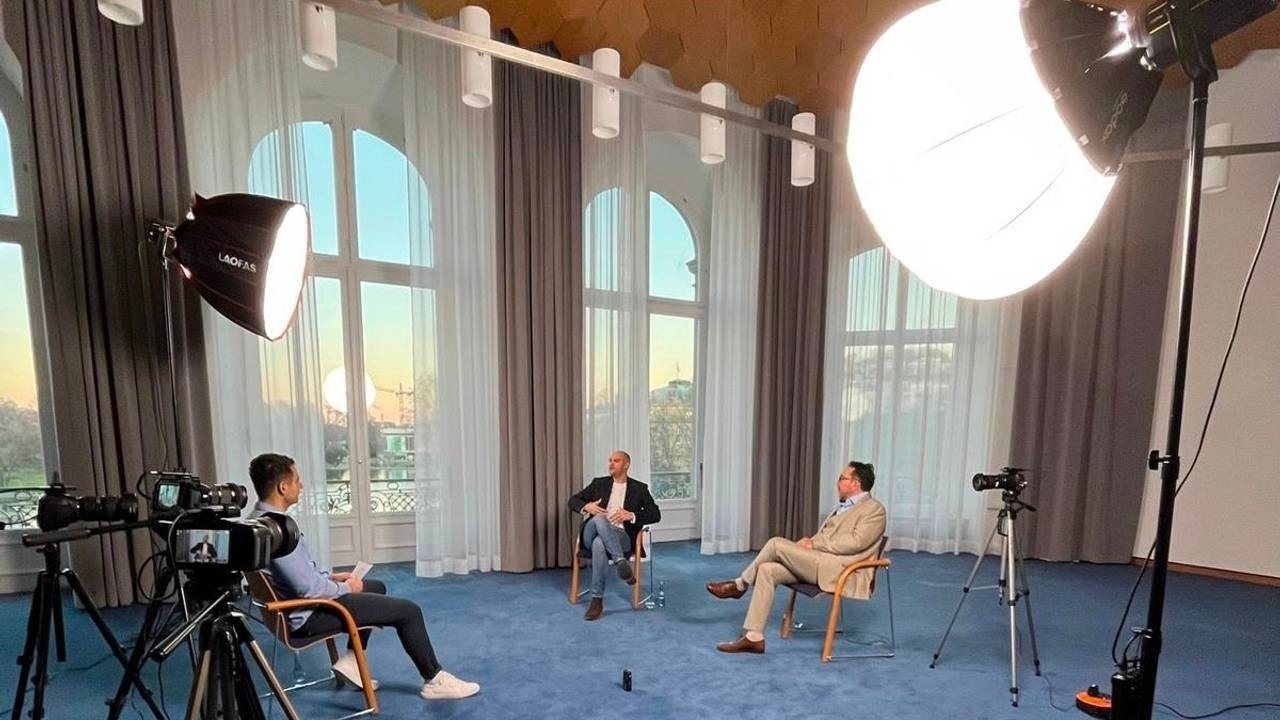
Equal opportunities and integration are central themes that shape and challenge our society in Germany. In this special episode of Project Mindset, Reza Mehman speaks with two outstanding figures: Dr. Danyal Bayaz, Finance Minister of Baden-Württemberg, and Cawa Younosi, Head of People at SAP Germany. Both know the realities of migration and integration from their own experience and examine the topic from the perspectives of politics and business. How do we decouple educational success from parents’ background? What role does language play in integration? And how much equality of opportunity truly exists in Germany? The conversation offers personal stories and food for thought. Its focus is a society where your destination matters more than your origins. A conversation that inspires courage and stimulates reflection.
Equal opportunities: the episode in brief
In one sentence: Dr. Danyal Bayaz and Cawa Younosi talk about their personal journeys, equal opportunities in Germany, and the difference between the promise and the reality of integration.
Short summary: Dr. Danyal Bayaz and Cawa Younosi share experiences of reaching senior positions with migration backgrounds. At the time, Bayaz was Finance Minister of Baden-Württemberg and Younosi led HR at SAP Germany. Both emphasize that while Germany formally offers equal opportunities, a significant gap still exists between this promise and the reality of equal opportunities. The discussion explores topics such as diversity in management, the use of terms like “migration background,” and how educational success can be decoupled from origin.
Detailed summary: In this episode of Project Mindset, Dr. Danyal Bayaz and Cawa Younosi, two role models, meet to discuss integration and diversity from different perspectives. Bayaz, whose father is from Turkey, describes his journey from a politically engaged young man to Finance Minister and emphasizes that immigration must be viewed positively. Younosi, who came to Germany as a young refugee,speaks openly about “shame about one’s origins” and the importance of education and networks for career advancement. Both critically discuss the use of terms like “native German” and “migration background,” as well as how diversity is practiced in business and politics. The central conclusion: Both individual effort and structural changes are needed to ensure that equal opportunities exist beyond mere words on paper.
Context: Who, What, Why
Who is speaking? Reza Mehman (Host, Project Mindset) in conversation with Dr. Danyal Bayaz, Finance Minister of Baden-Württemberg (Alliance 90/The Greens), and Cawa Younosi, Head of People at SAP Germany. Both guests have a migration background and represent successful integration into top positions.
What is it about? The conversation explores equal opportunities and fairness in Germany. Topics include background, education, careers and diversity in politics and business. The guests also discuss integration and cultural identity.
Why is this relevant? Germany is a country of immigration, yet the question of how equal participation actually works remains highly relevant. From the search for an apartment to the boardroom, structural differences emerge that extend beyond individual experiences. This conversation connects personal perspectives with socio-political issues.
Three key questions of the episode:
- How can we decouple educational success from parental background?
- What is the difference between equal opportunity and fairness in reality?
- How is diversity actually practiced in leadership positions in politics and business?
Table of contents
- Introduction – Overview of the episode and its guests
- Summary – The most important points in brief
- context – Background information on speakers and topics
- Table of contents – Navigation through the article
- Topics and classification – Overview of the main topics
- Key messages – The most important messages of the episode
- Frequently Asked Questions – Answers to key questions
- Highlight quotes – The most concise statements from the guests
- Transcript – Full conversation to read
- Keywords – Relevant search terms
- Names and terms – List of important references
- Quotable passage – For sharing and quoting
Topics and classification
1. Integration and equal opportunities in Germany
The central question is whether Germany actually delivers on its promise of equal opportunities. Both guests share personal experiences and discuss the structural barriers that exist between the formal aspiration and reality.
Keywords: Equal opportunities, fairness, integration Germany
2. Language, concepts and social affiliation
The discussion surrounding terms like “ethnic German,” “migration background,” and inclusive language demonstrates how language defines or excludes belonging. Both guests critically reflect on the use of such terminology.
Keywords: Migration background, inclusive language, native German
3. Diversity in leadership positions
Diversity in management positions still has room for improvement in both politics and business.Cawa Younosi reports on SAP’s approaches, Danyal Bayaz on the political landscape.
Keywords: Diversity Management, Fuehrungspositionen, SAP Diversity
4. Education as the key to participation
Decoupling educational success from parental background is identified as one of the key tasks. This applies not only to people with a migration background, but also to socially disadvantaged families.
Keywords: Educational equity, social background, educational success
5. Personal stories and role model function
The individual biographies of Bayaz and Younosi demonstrate how personal values, family background, and mindset have paved the way to top positions. Both emphasize the importance of role models for young people with a migration background.
Keywords: Role models, migration, personal development, mindset
Key messages
- It is not crucial where you come from in Germany, but where you want to go. The Basic Law guarantees all people equal rights and freedoms, regardless of origin or religion.
- In reality, there is a large gap between the formal claim to equal opportunities and actual equality of opportunity, for example when looking for housing or in the world of work.
- Educational success must be decoupled from parental background. This is not only a social issue, but also an economic one.
- Immigration must be understood and communicated as something positive, especially in light of demographic trends and the shortage of skilled workers.
- Terms like “ethnic German” or “migration background” can be exclusionary and should be critically examined.
- Diversity in leadership positions is not yet sufficiently represented in either politics or business.
- “Shame about one’s origins” is a real phenomenon familiar to many people with a migration background. It takes courage and self-confidence to overcome it.
- Career paths cannot be planned linearly. Networks, commitment, and openness to unexpected opportunities play a crucial role.
- Companies like SAP are increasingly focusing on diversity and inclusion, but there is still much to be done, especially in terms of ethnic diversity.
- Every person possesses talents and potential that should be fostered. This is a shared responsibility of politics, business, and society.
Frequently Asked Questions
What is the difference between equal opportunity and fairness?
Equal opportunity describes the formal principle that all people have the same rights and opportunities. Equal opportunity goes further, asking whether people actually have the same prerequisites to take advantage of these opportunities. As Cawa Younosi emphasizes in the episode, there is a significant gap between the two in reality, for example, when it comes to finding housing or in the job market.
Why is decoupling educational success from social background so important?
In Germany, children’s educational success still depends heavily on their parents’ background. Dr. Danyal Bayaz emphasizes that this is not only a social but also an economic problem: untapped talent means a shortage of skilled workers and lost tax revenue. Educational equity is therefore a key factor for social cohesion and economic strength.
What does the term “ethnic German” mean and why is it problematic?
The term “bio-German” is used colloquially to refer to people without a migration background. It is problematic because “bio” evokes positive associations such as “better” or “higher quality,” thus implicitly creating a hierarchy between people with and without a migration background. Dr. Danyal Bayaz argues for questioning such categorizations.
How does SAP promote diversity and integration within the company?
According to Cawa Younosi, SAP is focusing on various measures such as diversity programs, inclusive language in corporate communications,and the targeted promotion of diversity in management teams. However, he concedes that ethnic diversity, in particular, still has room for improvement in management positions and that companies as a whole still have a long way to go.
What is “shame about one’s origins” and how can it be overcome?
Origin shame describes the feeling of shame about one’s origins, culture, or family history, especially in the context of migration. Cawa Younosi speaks openly about this and emphasizes that it takes courage and self-confidence to accept one’s own history as part of one’s identity. Role models and an open social climate can help with this.
Is a career in top positions possible for people with a migration background in Germany?
Yes, as the examples of Dr. Danyal Bayaz and Cawa Younosi show, it is possible. However, both emphasize that the path is not always straightforward and that structural barriers exist. Networks, education, commitment, and the willingness to seize opportunities play a crucial role. At the same time, society must dismantle structural barriers.
Should the term “migration background” be abolished?
This question is the subject of controversial debate. Dr. Danyal Bayaz points out that, according to the current definition, the term also includes people who were born and raised in Germany. He argues for reconsidering the definition and focusing more on where people want to go, rather than on their origin.
What is the size of Baden-Württemberg’s budget?
According to Finance Minister Dr. Danyal Bayaz,the annual budget of the state of Baden-Württemberg amounts to approximately 57 billion euros. These funds are invested in areas including education, the police, climate protection, and the future of young people.
Highlight quotes
“In this country, it’s not where you come from that matters, but where you want to go.”
– Dr. Danyal Bayaz
“There is a huge gap in reality between equal opportunity and fairness.”
– Cawa Younosi
“I believe we need career changers, we also need people who perhaps haven’t spent their whole lives in politics.”
– Dr. Danyal Bayaz
“Career is skill, competence, power and chance, fate or luck, depending on what you believe in.”
– Cawa Younosi
“We also need to get much closer to understanding immigration as something positive, to interpreting migration positively.”
– Dr. Danyal Bayaz
“Every young person has talents and potential that simply must be fostered.”
– Dr. Danyal Bayaz
“I want us to live in a society where our children, regardless of where they come from, have the same opportunities as everyone else.”
– Reza Mehman
The full conversation
Hi everyone and welcome to Project Mindset. As I mentioned in the last podcast episode, I had the opportunity to conduct a very special interview. This time, it was with the Minister of Finance of Baden-Württemberg, Dr. Daniel Bayers, and the Head of Human Resources at SAP Germany, Kawa Yunusi. It was a super exciting and interesting interview. We talked about integration, diversity, and also Daniel and Kawa’s personal stories. And so I’m really happy that such a great episode came out of it.
It wasn’t easy getting them both in front of the camera. So I’m really happy it all worked out. You can either continue listening directly here in the podcast, or you can find a short video about it on my YouTube channel.www.projectmindset.deI’ve also linked it again. Okay, enough talk. Enjoy today’s podcast. Hi everyone and welcome to Project Mindset.Today we’re talking about a very special topic that’s very close to my heart.
My wish is a society where our children have the same opportunities as everyone else. Their origins and religion should not stand in the way. That’s exactly what I want to talk about with my two guests today. Come along. Daniel Kawa, thank you so much for your time today. Talking with you about integration means a lot to me. How do we want to live together? What kind of society do we want to leave our children?
Political responsibility explained simply
And in preparation for this conversation, I was talking to my son yesterday about who my guests would be today. My introduction described you as someone who takes care of our state’s money. You manage it, save it and spend it. Accordingly, he plays a very important role. And he asked me two questions that I’d like to pass on directly. He asked me, “How does one become finance minister?”
And how much money does he actually manage? That was a good point, because we’re currently discussing saving, so we’re trying to teach him something. That’s why I’m asking you directly. How old is your son? Four and a half. Four and a half. Children ask the toughest questions in politics, I’ve noticed time and again. Well, one of them is very easy to answer. The annual budget for the state of Baden-Württemberg is around 57 billion euros. I’m convinced that you can do a lot of good with money.
Equipping schools, ensuring the police force is well-equipped. Investing in climate protection and, above all, investing in the future of your son and many other young people. That’s the task we have. It’s not always easy during the pandemic, because our tax revenues have also plummeted. And we’re currently spending a great deal of money on vaccinations, testing, and economic aid. But I hope that we can eventually put this chapter behind us and dedicate ourselves more to the future and our strategic goals.
The path into politics
The other question is a bit more difficult to answer. You don’t just wake up one morning and say, “I’m going to become a politician.” And my state premier always says it so nicely: the office has to come to a man or a woman. And I believe the office of finance minister is a big task, a great responsibility, which I gladly accept. But I never planned a political career on paper. I come from a political family. My father is from Turkey. My mother comes from a Catholic, yes, even conservative CDU family.
So, we always discussed and talked about politics a lot at home. And I am a political person, but I came into it relatively late.I only got involved in party politics around the age of 20, initially as a volunteer. And then at some point, the opportunity arose to run for the German Bundestag. After one term in the Bundestag, the Minister-President asked me to take on this role last year. Now I am here in Stuttgart as Finance Minister.
Responsibility and different life paths
I see this as a great privilege, but above all as a great responsibility, which I gladly accept. There is no automatic path into politics, and I think that is good. We need people from other fields, too. They should not all have spent their entire lives in politics. I believe that’s what enriches politics; diversity, including a variety of backgrounds, is very important. We should attract more people into politics, both as volunteers and in paid roles. Then I am confident we can tackle future challenges effectively.
Continued
Very well said. Kawa, you have a completely different background, but you’re at least as much of a role model as Daniel for many young people. And I think many young people, especially those with a migration background, are wondering, “How can I actually have a career like Kawa’s?” You came here as a young refugee and are now, let’s say, very advanced in your career. So the question is, is your career so easily replicable if a young person says to themselves, “That’s what I want to achieve too?”
No, well, I’ll reveal the secret: I inherited everything from my father. No, career, I always say, it’s about ability, diligence, being a go-getter, chance, fate, or luck, depending on what you believe in. Of course, it’s important to pursue your training, whether it’s a trade or university studies, whatever suits you, with genuine passion. And goals, long-term goals, where you want to go and in what direction. But otherwise, you should really rely on having the right networks, being in the right environment, and getting involved, whether through volunteering, internships, etc.
And then opportunities arise. It’s unlikely that you say, “I want to be Head of HR at SAP,” and then you become that or CEO. Instead, opportunities might come up along the way that you hadn’t even considered, and those might be an even better fit. I ended up in labor law. I hadn’t studied labor law, nor had I been interested in it. In my last placement during my law studies, I landed in labor law at Deutsche Telekom, and suddenly I realized, wow, what an amazing field!
Unexpected career opportunities
I completely neglected that. And that’s essentially where the rift came from.I’m not even thinking about the possibility of working with the corporation at all, let alone anything beyond law and labor law. That’s interesting. You just mentioned opportunities. Now, my question for you, Daniel: Does having a foreign-sounding name, for example, affect what kind of career one can pursue, or even what’s possible, in politics? My children should have the same opportunities as everyone else. That should not depend on where I come from or whether their names sound foreign.
What about you? Our aim is that it shouldn’t matter. I believe that in this country, what matters isn’t where you come from, but where you want to go. And our constitution, our Basic Law, says so, granting everyone complete freedom and opportunity, regardless of origin, religion, or cultural background. That is, that’s our aim, and on paper, it’s true. Looking at the realities, we know we can and must improve. That applies to politicians, German boardrooms and institutions such as the police. Diversity matters in all these areas.
Understanding immigration positively
So, we are an immigration country – this has been debated for a long time: is Germany truly an immigration country? I think, by the way, that we need to move much more towards understanding immigration as something positive, interpreting migration positively. This is especially important given our demographic trends. I believe companies like SAP depend on top talent from all over the world. We in Baden-Württemberg are an export-oriented state, so we need to embrace and live that fact naturally again – that’s where we’ll take a step forward.
We also need to ask how educational success can be separated from parental background. To me, that is a central political question. Incidentally, this isn’t just about migration background, yes or no, that also plays a role, but it’s also about social origin. Some families have lived in Germany for a very long time but remain in modest or socially disadvantaged circumstances. Their children may not achieve the educational success they could.
And I’m convinced of this because I regularly visit schools. Every young person has talents and potential that simply must be nurtured, and that’s where the focus should be. That would help us understand what holds society together and make better use of people’s talents and potential. This is both a social and an economic question.
Skilled workers and economic opportunities
When a company like SAP says, “We’d actually like to hire even more people, but we can’t find the skilled workers,” it’s an economic issue. Incidentally, it’s also in the finance minister’s interest, because ultimately it means more tax revenue, which can then be reinvested, for example, in a good education system. A strong state and education system are closely connected with opportunities for young people. Considering that relationship matters greatly.
Continued
Absolutely. There’s another thing I’m interested in hearing about as well. I think you basically mentioned that integration is, of course, the benchmark for us. We want it for everyone, and that’s absolutely right. And integration starts with language. I recently listened to a podcast with you, which I found incredibly interesting. And I’m not suggesting any ill intent on the part of the interviewer, the podcaster. But he said something like, “Yes, Daniel, you’re not a native German, but…” and so on and so forth.
I’m not suggesting any malicious intent. But how do you deal with such terminology, which isn’t exactly conducive to integration? Because I think “organic” is usually associated with something better, higher quality, and a bit more expensive. But you didn’t really address that point; you just gave your answer. But how do you personally deal with such minor details in everyday life, where perhaps it’s still necessary to clarify things? There might be a slight difference between a non-organic German—I’ll use the term now—and an organic German.
That’s a really difficult question. And you did ask about language. So, let me give you an example. My move from the Bundestag to Baden-Württemberg’s Finance Ministry was announced. A daily newspaper described it as Kretschmann bringing in a German-Turkish Finance Minister. It was a quality newspaper, no less. If you do not know me, that can sound misleading. It almost suggests someone has been brought from Ankara to help out.
Origin and affiliation
Of course, something like that suggests false impressions, and I said, hey, I was born in Baden-Württemberg, I’m a native of Heidelberg, I come from Baden-Württemberg, I can even speak dialect if I have to. The fact that this is the first colonization mentioned in the headline is, well, a bit bizarre, to say the least. I can shrug it off, I even chuckle about it, but I think what we should always remember is that language also shapes reality.
And I’m not a fan of excessive political correctness either. If we all only speak in a way that’s careful and avoids offending anyone, then we’ll just end up with these plastic sentences, and we won’t even know what Reza actually means, what he wanted to say. But—and here’s the but—it depends very much on the context. For example, someone asking you, “Where are you from?” That can be genuine interest, because you might be thinking, “Well, maybe you don’t look like someone whose ancestors have lived in Baden-Württemberg for 150 years.”
Use language with sensitivity
But it could also be meant this way: I first want to clarify who actually belongs and who doesn’t. And that’s why language is something where we need sensitivity, and where I, by the way, learn something new every day, because language, especially in the areas of gender and diversity, creates a reality that requires us to be very careful and empathetic with one another. If someone says to me, “By the way, ‘bio-German’ or some other word isn’t very nice because I feel this way or that way,” then I always think it’s perfectly fine not to feel attacked, but to say, “Hey, I’ll take that point on board, I’d like to think about it,” because I believe we all still have something to learn.
And if we all go through life with our eyes open and always consider how others feel when we use certain terms, then I think we’ll be a step further along in terms of integration and understanding what constitutes a pluralistic society. You said that very well; language creates reality. And I think SAP is a great role model in this area. I recently learned that you’ve also abolished the terms “master” and “slave” in your technical language, for example.
Inclusion in corporate culture
Kaber, could you elaborate a bit on what SAP actually does in this area? Yes, in terms of inclusion or an inclusive culture, that’s our core DNA; it’s something we identify with. Incidentally, even before diversity and inclusion became such a hype—now partly a marketing tool—we’ve been doing it since our founding. And that also includes addressing the people you have in the company appropriately. And, as I said, we’ve also started with language; the topic of gender is another area we’re working on.
So how does SAP handle gender-inclusive language? We don’t have a guideline, no rule. Of course, I use gender-inclusive language when I speak for myself as Head of HR, but also personally, because I want to include everyone. But it’s not mandatory for my colleagues to do the same. And I think that’s the right approach. Everyone is free to use gender-inclusive language if they want to, but no one has to if they don’t want to. And conversely,we shouldn’t dictate to others who criticize gender-inclusive language.
Continued
Why use gender-inclusive language? Because sometimes the discussion gets a bit skewed. This shouldn’t just apply to our internal communication, nor to our marketing materials, but also to the language we use in documentation and programming. And I believe we launched an initiative two years ago to remove all these terms that have discriminatory undertones or associations from our programming language.
I totally agree with you. You said that, of course, you shouldn’t speak to each other in such a vague way. You have to clearly and explicitly state what you think. But I think language really does have a huge impact. Here’s an example. I recently looked up the definition of the term “migration background” again. I was curious about it. Do my children still have a migration background? Because my parents have been in Germany for 36 years. I’ve been here in Germany since I was two years old.
I have German citizenship and am married to my wife, who is half German and half American. And yet, according to the definition, a person has a migration background if they themselves or at least one parent did not acquire German citizenship by birth, so my children also have a migration background. I find it incredibly interesting that even though almost 40 years have passed since we arrived here, my children, for example, still have a migration background in this case.
Questioning the term “migration background”
I’m interested to know, for example, what the political perspective is on the continued use of this term after all these years, especially here in Germany. First of all, it’s a statistical, demographic description of society. And it involves, to put it somewhat flippantly, categorizing people. The rich, the poor, women, men, native Germans, people with a migration background – these are all categories we somehow need to measure our society.
And we see, by the way, that this pigeonhole for people, like your child for example, is getting bigger and bigger. This shows how diverse society is. But we also realize that these pigeonholes sometimes no longer fit. And when these pigeonholes lead us to discriminate against some people or make them feel that no matter how hard they try, no matter how long they’ve been here, no matter what their dad does, they somehow still don’t belong, then it becomes a problem. Then it becomes a problem.
It’s interesting that you brought up that statistical definition again. I also have a son who’s six months old now. I’m also a dual citizen; I have Turkish and German citizenship. The child’s mother, my partner, is German. So I really don’t know if he actually has a migration background or not.And I think that should be the goal, that over the generations, it shouldn’t really matter anymore. That’s why I said earlier that a positive attitude towards migration should be taken for granted.
Understanding diversity as an enrichment
Perhaps not even as a matter of course, but perhaps as something positive that truly enriches our society. If we reach the point where someone asks, “Where are you from?” or “Where are your parents from?”, then I’m convinced it’s genuine interest, because they find the person fascinating and say, “That’s part of your story, part of your culture, I want to understand that.” But we also see—and this is evident in the polarized society we unfortunately experience to some extent—that we’re not there yet.
And Aladdin al-Mafalani found a great image for it. He says that German society should be imagined as a table, with people sitting around it. And over time—we’ve had 60 years of recruitment agreements with Turkey, because we have so many people of Turkish origin or descent in Germany—more and more of these people are taking their place at this table. That’s a positive thing, but it naturally also creates tensions, because these people say, “We want a say, we have rights, market issues, and distribution issues are also raised there.”
And because we’ve made such progress with integration, the conflicts are becoming more visible, even though it’s actually a sign of progress. I actually find it a very beautiful image, more and more people at this table. And we have to work towards making it the norm someday, so that we no longer have to sit here and perceive becoming a board member or minister as something special, but rather that it’s simply a normal process in a normal, colorful, diverse society.
Continued
But the truth is, we’re not there yet, but we’re working on it every day. That’s why I’m optimistic; I have the impression we’re on the right track overall. There are always setbacks, but overall we’re headed in the right direction. Absolutely right, very well said. Thank you, Kawa. I once heard you refer to it as “shame of one’s origins” in a different context. That struck me as very interesting, but also a little sad, of course.
I think some of the listeners can definitely relate to the feeling of not necessarily wanting to say where you come from. So, the question is, how did you overcome this shame about your origins, and what advice can you give to all the listeners on how they can overcome it? Yes, well, actually, I told many people at the beginning that they weren’t from Afghanistan, but from Colombia, because even before the Taliban, but there were Taliban, in 1996 after that. Afghanistan never had such a great reputation.
And when you’re here as a refugee without parents, with a background like that, and barely aware of any sense of national identity, you don’t want to be further reduced to the status of an economic migrant. And then there are the Taliban prejudices you might have had, the justifications you receive even though you’ve never seen a Taliban member in your life. To avoid these discussions, I simply said we’re from Colombia. I chose Colombia because I hoped I wouldn’t happen to meet a Colombian and then have to explain where in Colombia we were, etc.
Personal experiences with shame about one’s origins
I was caught once; I was working at Vodafone, in the store. There was a Colombian guy there, and I had to make up a story. That all disappeared once I arrived and had finished my studies to the point where I could stand by the fact that it was no longer something that defined me. And the issue of having a migration background, especially regarding one’s name, is still a huge topic, particularly in the workplace. I recently wrote a commentary on it in Handelsblatt; it’s still a new study.
It makes a huge difference whether someone named Ali, Kawa, or Reza applies for a job elsewhere, or someone with a first or last name like Michael or Stefan. They still face enormous discrimination and disadvantages. That’s why what you said is so important: we need positive role models so that people don’t only associate a foreign-sounding name with negative things. Just as there are negative examples among Germans, there are also among people with a migration background, so that we don’t have negative prejudices in the back of our minds.
Recognizing one’s own prejudices
And the same opportunity, as you said, for a son like any other. But unfortunately, we’re still a long way from that. Interestingly, I sometimes have a kind of stereotypical thinking myself. I mean, I think we all have a bit of a stereotype in our heads, a kind of clichéd thinking. For example, I know that if I meet an Iranian, he’ll be 15 minutes late, guaranteed. Really? The Turk will be 30 minutes late, if I may be so blunt. Exactly, so there really is this kind of, let’s say, clichéd thinking, it’s something we all have in our heads.
And sometimes there’s also this kind of, I don’t know exactly how to call it, kind of reversed stereotypical thinking. You said earlier that if someone asks where you’re from, it can be genuine interest in where you’re really from, or it can actually be a bit exclusionary. And sometimes I’ve had it in my own mind, too. I was recently in a completely routine traffic stop, I was pulled over, and they asked me where I was from. And I immediately thought,why is that relevant?
If a question is meant differently
I said, “I’m from Iran.” And then the policewoman said, “That’s nice for you, but where are you coming from right now? Are you coming from a bar? Have you been drinking?” Yes, exactly, that was actually the background to the question. So, you had the prejudice in mind that she might be prejudiced? Exactly, I caught myself doing that. And that made me think a lot, that in the future… But you reflect on it, that’s the crucial point. Absolutely, because I didn’t like that I immediately had prejudices against her.
I didn’t think that was okay of me either, so I resolved to be more open about it. Do you ever have similar prejudices, not in a negative way, but are there also funny examples where you’ve experienced something like that and thought, “Yeah, I see it the same way.” For example, Afghans are like that, or I recently did a podcast with someone where we talked about stereotypes, and a whole bunch of funny stereotypes came up.
Continued
Have you ever experienced anything similar? Yes, well, I think it’s unavoidable. But it’s important to be aware that these are stereotypes. Every individual is different; just because an Iranian is 15 minutes late doesn’t mean you should apply that to everyone. But sure, I think that’s how our brains work, whether it’s based on cultural backgrounds or on Swabians here, how they supposedly tick, or Rhinelanders, etc. We have a certain idea about this cultural environment, and that’s no different for me.
What kind of question is that, “Where are you from?” Personally, I wouldn’t mind if someone asked, “Where do your roots come from?” instead of “Where are you from?” Because that always suggests I come from somewhere outside of Germany. Okay, I come from outside of Germany, I was born somewhere else, which isn’t the case for you, for example, since your roots are in other countries. I think these are things that, as you said, are sometimes just curious; they don’t mean any harm.
Learning from each other through conversation
But because these questions have also become politicized and polarized, and we’ve become more sensitive, I think it’s also important. If we, as those directly affected, can offer others some guidance on how to ask such a question in a less discriminatory and exclusionary way. And speaking of culture again, because I find it particularly interesting how much of my own culture I want to pass on to my children, and how much of German culture, which I value highly, I want to instill in them right from the start.
Perhaps a small example: among us Iranians, for instance,you don’t sit with your back to someone else if they’re also visiting. This isn’t so common among Germans, for example, which isn’t a bad thing at all, because there’s no ill intent behind it. But I do wonder, of course, how much of my own culture I bring with me and how much I say, no, we have to leave that out and completely adapt here. I think adaptation is very important, but I find cultural diversity at least as important.
Culture and child rearing
How do you see this, for example, in raising your children? That’s a good question, and a difficult one at that. Actually, when I think about myself, I sometimes find it hard to say, “This is my father’s culture” or “This is my mother’s culture.” My mother comes from a Catholic family, my father is Muslim. For me, that was always the most natural thing in the world, and yet, it was never very clear-cut. The fact that we celebrated Christmas together was perfectly normal, and that it should continue to be called Christmas and not be redefined as a winter festival or something like that, is just taken for granted. And I think, if you consider your son or your children, I think they’ll have an even harder time drawing these lines.
Furthermore, SAP could certainly relate to this; we now live in a global society, so culture is experienced globally, and you probably already had a video conference today where colleagues from the USA and China were connected from their home offices. This means that this culture is now being brought to your home in some way, so I think a lot is happening in this area..
Shared values in a pluralistic society
To answer again from a political perspective, and very seriously, I believe that ultimately I am convinced that a diverse, pluralistic society with different cultural backgrounds enriches us. It’s important because the question always arises: what is your stance on religion, and are you capable of integration? For me, the answer is quite clear: anyone who adheres to the values of our constitution—tolerance, human dignity, freedom, fundamental rights, the treatment of women, and many other things that define our society—is warmly welcomed. And if someone brings their own culture with them, then that enriches our society. I think it can be summed up in such a simple formula.
Culture, by the way, is also something that one really enjoys experiencing directly, for example food. I also love Persian food, if I may say so. That’s something we all benefit from, something that not only enriches us culturally, but from which we all literally benefit, because it’s also something we enjoy. Spätzle and Maultaschen are delicious, but seven days a week, we’d get sick of them eventually, if I may put it very simply.And I believe that if we can better understand and appreciate this diversity as diversity, and if we can anchor that more firmly in our society, then we will have truly taken a step forward.
Everyday encounters and language
It’s funny that you mention Persian food, because something very interesting happened with the language there. When I was a teenager, a friend of mine was visiting me at home. My mother had cooked something, very delicious food. My friend ate it and said, “Yeah, it doesn’t taste bad.” In Persian, saying something doesn’t mean it tastes good, so it wasn’t meant to be a slight insult to my mother. But then I explained, “No, for a German, it doesn’t mean it tastes bad; it actually tastes very good.”
So, it’s quite funny. You saved it too. Yes, yes, I definitely saved it, exactly. But I also wanted to bring up the topic of diversity again. You talked about it a bit earlier. Companies like SAP are very focused on diversity. But how well do you see it represented, for example, in SAP’s management teams? Yes, indeed, last year we naturally had the issue of women and men, which is easy to report from the system, but diversity is more than just women and men. Sexual orientation plays a role, cultural background plays a role, and of course, we don’t have that data in the system, quite rightly so, for data protection reasons.
Making diversity in leadership positions visible
So we surveyed the managers to get a self-assessment about their backgrounds and demographic makeup, in order to identify any blind spots – where there might be insufficient representation at the management level, and where this differs from the overall workforce or even society as a whole. And to our delight, what we found actually reflects society – the company population, to begin with – is indeed represented in terms of LGBTI members. However, even in terms of representation in management positions, the representation of people with a migration background is somewhat lower, or rather significantly lower. We have approximately 20 percent of our colleagues who are not German nationals, plus a few more who have a migration background but German nationality, which is why we can’t accurately track that.
Continued
So, we do indeed have an issue where we want to invest and will invest, and we’re going to do that again right now with our colleagues to see what the representation looks like. This is important to us, not because we want to measure everything, but because ultimately—and this is important to me—everyone should have the same opportunities. As you mentioned, there are huge gaps in reality between equality of opportunity, which is enshrined in constitutions and laws, and justice of opportunity.
And for me,our work is about identifying structural disadvantages, and once we’ve found them in the workplace where our influence extends, eliminating them so that everyone has the same starting point and only performance truly matters, not whether someone has a migration background or their social origin. Speaking of the social origin of education judges, I think I posted this graphic once: of 100 children, both academics and non-academics, starting primary school three years ago, only one with a doctorate made it.
I saw the latest results yesterday, six at least, so things are moving in the right direction. Of 106, only those whose parents aren’t academics achieve a doctorate, while the number is significantly higher for those with academic backgrounds. So you can see that social background plays a huge role in whether children have the chances… about four times higher, they say, roughly. Yes, sometimes even higher for certain positions. And this isn’t about glorifying university studies; not everyone should study. It’s about those who didn’t, not choosing to do vocational training, but rather other factors playing a role.
Better utilize educational potential
We’ll miss those skills later in the business world. And there are opportunities we as a society are squandering, opportunities we could have leveraged, especially if we finally implemented the existing knowledge within the education system. So, I believe our problem in the education system isn’t one of recognition, but rather one of procrastination. We’re not fully utilizing potential. What’s the situation in politics? I must admit, I was a bit surprised that the Federal Cabinet doesn’t have that many representatives with a migration background, apart from Mr. Özdemir.
Can you give us some insight into how things look from your perspective, generally speaking, outside the Federal Cabinet? Well, perhaps—you just put it so casually—may I pick up on it again. I know and greatly respect someone who is my fellow countryman, specifically from Baden-Württemberg. I think it was a very important signal, also for the wider community, to show that after 60 years of recruitment agreements—and his parents came here back then, too—and that he wasn’t given anything for free, that someone like him could actually become a Federal Minister.
Performance and equal opportunities
And not because of any quota system or because someone said, “Yes, we need someone who brings diversity to the table, and we’ve found someone,” but through their own merit. That, I think, is the crucial point. I believe we can all be proud of that, and I think it was an important signal. But—and here’s the but—we’re not where we should be yet. The obvious question is always,do we need quotas for that? We Greens have had very positive experiences with quotas, especially when it comes to addressing what has been, incidentally, a centuries-long injustice against women.
We ensure gender parity in our lists and committees to utilize the potential we have and to prevent political circles from becoming, to put it bluntly, a closed shop of old men. And it has brought many fantastic women to the forefront—women who, I believe, wouldn’t even need their quotas today—so that we now have, for example, our first female foreign minister. That’s something I believe we’ve also contributed to.
Now comes my “but.” I don’t believe we can regulate every issue with a quota. Our society is simply too diverse for that, because there are so many different characteristics. There’s gender, cultural background, sexual orientation, and perhaps people with disabilities. If we have a quota for everything, we’ll end up with micromanagement, and I don’t think we’ll be happy with that. And yet, as you said earlier, this is a blank spot, literally a blank spot.
Diversity in political parties
Incidentally, this is also something I’m always happy to criticize within my own party, the Greens, of which I am a member. We are a party that has made diversity its political mission. I would argue that there is no other party that consistently advocates for a diverse and open society. But we must also represent this within our own ranks. And if you look at our committees, our executive boards, where people assume top political responsibility, we can and must improve in this area.
Continued
We also have a responsibility to set an example. We take that very seriously. And as a party, we did adopt a diversity statute last year or the year before, and we’ll see whether that leads to more people with multicultural backgrounds being represented in these bodies in the future. And if we realize in two or three years that we’re not making the progress we should be, then we might have to seriously reconsider. Are there other options?
I think that’s how you deal with an issue. You have a problem, you try to find a solution, perhaps one that isn’t yet a completely strict quota system, but that at least forces us to engage with it more deeply. Take Cem Özdemir, for example, but I could name many other people in our party. Take, for instance, Aminata Touré, the Vice President of the Schleswig-Holstein State Parliament, a Black politician who is doing an amazing job, which I believe is also true for us Greens, but not only for us Greens, but for society as a whole.
Representation and social change
She’s also vice president, a very important role. It also has an impact on the Afro-German community. Then you see, things are happening.And that makes me optimistic that things are also changing in the political sphere. But things move slowly. And I believe we have to persistently fight every day to ensure we continue working in this direction. Very well said. Kava, I have a very personal question. I’d be interested to know if there was a key moment for you, or a key moment of integration, when you said, okay, I feel at home here, this is where I want to continue growing, this is where I want to live, this is where I want to expand my life.
Let me give you a little context and background. When we first arrived here in Germany in ’98, a German family who took great care of us welcomed me. I’ll never forget that. She was a very friendly lady from Weinheim, which is quite close to where we live. And I’ll never forget that she took us to the cinema with her children. I even got to play the drums with them. So that was a kind of pivotal moment for me, a key to integration. And that’s when I knew I felt at home here.
People who support you along the way
Did you experience something similar? I mean, the people who really took me in, actually, were my in-laws. I met my friends from 11th grade here in Germany. And then, right after graduating from high school, we got married. They gave me guidance, they provided support. And I think everyone—if you look at successful biographies—knows someone like that, like a surrogate mother or father, as you just mentioned. Because that’s incredibly important for integration, namely having a sense of direction.
Because when you come to a new country, you know very little about it; the country offers so much more. And if you lack orientation—which I lost for many years during my studies, and even after graduating from high school, because I had no idea why I’d even bothered with high school—and what opportunities were available, then you’re lost. So, I found support with my in-laws. But that moment, I think, was around 1998 or 1999. I came to Germany in 1990. My parents were still Afghans, and they’re still there. Then we came, the Russians had left, and then the Taliban arrived.
Arrive and build a future
And until then, I still believed I’d go back. Because I didn’t actually want to stay here in Germany. But when the Taliban came, that was in 1998 or so, there was no turning back. But at a time when I realized that going back wasn’t going to happen anymore, I’d already been in Germany for almost eight or nine years. And then something subconsciously clicked in my head: now I have to make sure I build a life here. And if something ever comes of it in Afghanistan, it will probably be something like visiting family and so on.
Unfortunately, that’s how it turned out in the end. And from then on, which was also the time when I finished high school, started working,and was about to begin university, I said, “Now I’m going to focus completely on this.” Very interesting, especially what you said about providing guidance. I think that’s incredibly important for integration. Yes, incredibly important. That’s why we try—and I try too, you know my projects—to offer mentorships for young people with a migration background or from disadvantaged backgrounds, both children and teenagers. By the way, your colleague from Hamburg, who is also a Green Party member of parliament, is involved in this.
Recognizing opportunities through role models
And from personal experience, I know that when you realize what you can become, what options are available beyond what you experienced at home—because perhaps your parents didn’t pursue a career, didn’t study, weren’t entrepreneurs, or anything like that—then you become aware of the doors open to you and the paths you can take. And when you offer this kind of inspiration, my experience has always been that it clicks for others, and then they have a goal and want to achieve it.
Continued
And regarding representation, quotas are one thing, but we absolutely need to broaden the concept of diversity, because otherwise we keep coming back to the diversity debate, always talking about women, gender diversity, there are so many women and so many men. But people with a migration background are still seen in isolation as a diversity factor, but if you have, say, three men, three Germans, and three people with a migration background, then you’re more likely to say that it’s just “men-only,” “girls-only,” where they represent a diversity factor.
Yes, of course, gender is missing as a diversity characteristic, which is also an important characteristic. But the fact that diversity-like or equivalent contributions are made isn’t perceived as such. And I’m trying to contribute to that with various programs, also ensuring that we immediately address these people when we’re assembling boards, leadership positions, etc., taking them into account, not just gender. And according to McKinsey studies, etc., even show that the cultural or ethnic contribution in teams is higher than the gender contribution.
But we don’t want to communicate; it’s simply about working together to create formats like this that raise awareness among these people. You said “work together,” and I think that’s definitely a very important point. So, we’ve said and discussed a lot of really interesting things. And now we’re slowly coming to the end of today’s podcast. As you know, the podcast is called Project Mindset. That’s not without reason, because I’m naturally interested in the mindset behind the people I talk to.
Influential attitudes towards life
I got a really good sense today of what kind of mindset, what kind of way of thinking you all have. But still, one last question, perhaps for you first, Daniel. Which mindset has had the greatest and most important influence on you in your life? That’s difficult, it’s difficult to reduce it to one message. But if I had to, I’m a big fan of Muhammad Ali. He would have turned 80 recently. There was a lot of coverage and such in the press.
I just came across another great quote from him. He said, “Don’t count the days, make the days count.” I think that’s especially true for us in politics, where we always take small steps, but that’s okay as long as we’re moving in the right direction and we have to keep motivating each other. You mentioned your son earlier; I mentioned mine too. I sometimes wonder how I might explain to him why we didn’t do enough back then in the fight for greater climate protection.
Because I know we face enormous challenges in education, in the entire climate sector. The steps we really need to take aren’t as significant as they should be. Nevertheless, I’m convinced that it’s worth fighting a little bit every day for a better world. It’s worth it. And you put it beautifully: inspiring others to do the same. I think everyone should shape their environment in such a way that they surround themselves with people who inspire and empower them, rather than dragging them down.
Include different perspectives
And that’s where diversity comes into play again. I believe diversity of perspectives, diversity of different backgrounds. I try to manage things that way in my political environment as well. Even people who disagree with each other. I think the days when the boss knew everything and knew best are thankfully long gone. Instead, it’s about actively encouraging dissent, about being able to discuss controversial approaches to solving a problem. And if we do that, and work on it a little bit every day, making the most of the day, as Adi said, and making it count, then I believe we can be optimistic that we can tackle the major challenges that lie ahead together.
Very well said. Thank you so much. Kaba, if I may ask, what mindset has had the greatest influence on you? Yes, that sounds a bit silly. Everything will be alright. Well, looking back has often helped me a lot, especially since I’ve frequently faced enormous challenges, particularly financial ones, but also living without parents and having no support system, etc. But in the end, it always turned out well. And that’s incredibly reassuring for me, especially when I’m going through a crisis.
Confidence and readiness to act
Then I remember that in past crises,things always turned out alright in the end. And as far as my professional life and implementation are concerned, my mindset is definitely positive. I think the word sums it up perfectly, although unfortunately there isn’t a direct equivalent in English for this mindset – meaning approaching a topic not by focusing on risks, but on opportunities. It’s about approaching the topic with this mindset and not looking at what problems might arise along the way.
Continued
This helps me move forward, and I also notice it within the company—internally we even call it “sub,” meaning hashtag is app, to approach new ideas and things, the fundamental questions that keep coming back, with this mindset. I’ll manage it, rather than focusing on the problems first. Very, very well said, I’ll definitely take that on board. I want to thank you both sincerely. Perhaps just a little something from my side. You two are absolutely inspiring role models for me.
I hope you continue in this way, because I think many of your listeners need a kind of inspiration boost every now and then and wonder, “Hey, what can I actually achieve if I put in enough work?” And I believe you are absolute role models in that regard. Please keep it up. Thank you so much. Your time means a great deal to me. Thank you very much. You’re very welcome, and I hope to see you again soon.
This transcript was automatically generated using Whisper AI and may contain occasional errors.
Keywords
Tags: Equal opportunities, fairness, integration Germany, diversity, migration background, Danyal Bayaz, Cawa Younosi, SAP, Baden-Württemberg, educational equity, inclusion, role models migration, immigration, skills shortage, project mindset
Names and terms
Persons: Dr. Danyal Bayaz, Cawa Younosi, Reza Mehman, Winfried Kretschmann (mentioned as Minister-President)
The organization: SAP, Ministry of Finance of Baden-Württemberg, Alliance 90/The Greens, German Bundestag, Deutsche Telekom, CDU
Locations: Baden-Württemberg, Stuttgart, Walldorf, Germany, Turkey
Technical terms: Equal opportunities, fairness, migration background, integration, diversity, inclusion, native German, shame on origin, educational equity, skills shortage,demographic development, career changers, immigration country
Quotable passage
Germany is a country of immigration, but there is still a long way to go between the promise of equal opportunities and the reality of equal opportunities.
Finance Minister Dr. Danyal Bayaz and SAP Chief Human Resources Officer Cawa Younosi demonstrate with their personal stories that success is possible regardless of origin, but structural barriers must be further dismantled.
Decoupling educational success from the parents’ background is not only a social but also an economic necessity.
Both guests offer encouragement: It is not crucial where you come from, but where you want to go.
You can find more discussions about society and personal development at Project Mindset.
Prefer listening? Explore the original Project Mindset podcast recordings.