Moritz Lampert: mental training in sport
Golf pro Moritz Lampert on meditation, visualization, failures and mental strength in professional sports.
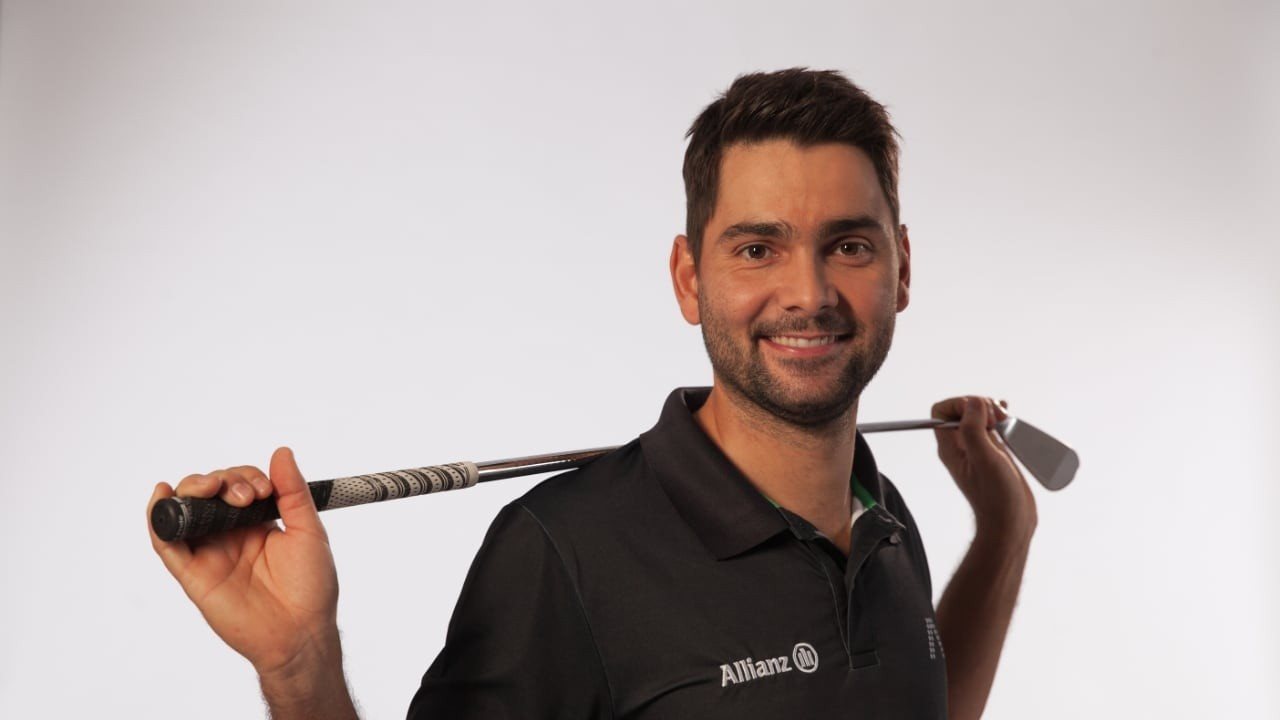
Introduction
Mental training in sports is one of the crucial factors that distinguishes top performance from average. In this episode of Project Mindset, host Reza Mehman talks with German golf pro Moritz Lampert about how he has systematically integrated mental strength into his daily training routine. Moritz is one of Germany’s best professional golfers and has been playing since he was five years old. At 28, he has already experienced all the highs and lows of professional sports: from the European Tour to painful defeats and the annual struggle to maintain his playing rights. The conversation makes it clear that golf is not just about physical abilities, but above all about emotional stability, self-focus, and long-term planning. Moritz shares concrete methods such as meditation, visualization, and consciously dealing with setbacks, which can be applied far beyond the sport of golf.
Summary
In one sentence: Golf pro Moritz Lampert explains how mental training, meditation and the right attitude towards failures accompany him on his way to the top of the world.
Short summary: Moritz Lampert describes his journey from amateur to the European Tour and the mental challenges he faced as a young professional. He explains why focusing on one’s own strengths is more important than comparing oneself to others and how he integrates meditation and visualization into his daily life. His central credo: setbacks only derail you if you don’t have a long-term plan.
Detailed summary: In this episode, professional golfer Moritz Lampert shares his experiences with mental training in competitive sports. As a young player on the European Tour, he initially became distracted by his idols and lost focus on what had made him successful. Through working with a mental coach and the targeted use of meditation and visualization, he rediscovered his own strength. He speaks openly about dealing with setbacks and emphasizes that a long-term plan is the best protection against mental slumps. This demonstrates that the principles from professional golf are universally applicable to both professional and private life.
Context: Who, What, Why
Who is speaking: Reza Mehman, host of Project Mindset, in conversation with Moritz Lampert, one of the best German professional golfers, who has been playing golf since he was five years old and is active on the European Tour.
What is it about: The conversation revolves around mental training in professional sports, focusing on one’s own strengths instead of comparing oneself to others, the use of meditation and visualization, and the constructive handling of failures and setbacks.
Why is it relevant: Mental strength is crucial not only in sports, but in every area of life. Moritz Lampert uses concrete examples from professional golf to show how anyone can improve their performance and cope better with pressure through mental training.
Three key questions of the episode:
- How does a professional athlete integrate mental training into their daily routine?
- Why is focusing on one’s own strengths more important than comparing oneself to others?
- How can one deal constructively with setbacks without losing sight of the long-term plan?
Table of contents
- Introduction – What this episode is about
- Summary – The episode in brief
- context – Who is speaking and why it is relevant
- Topics and classification – The central topics
- Key messages – The most important findings
- Frequently Asked Questions – Answers to key questions
- Highlight quotes – The best statements from the conversation
- Transcript – The full conversation
- Keywords – Relevant search terms
- Names and terms – Important references
- quotable passage – For sharing and quoting
Topics and classification
1. Mental training and mental coaching in competitive sports
Moritz Lampert describes how he works with a mental coach and which specific techniques he uses to achieve peak performance under pressure. He emphasizes that mental strength is just as trainable as the golf swing.
Keywords: mental training, mental coaching, competitive sports, mental trainer
2. Focus on your own strengths instead of comparing yourself to others
One of the key lessons from Moritz’s career: Comparing yourself to idols and competitors can obscure your own abilities. Only by reflecting on what made him successful did he turn things around.
Keywords: Self-focus, own strengths, avoid comparison
3. Meditation and visualization in sports
Moritz uses meditation and visualization as integral parts of his tournament preparation. These techniques help him to stay calm and focused on the golf course.
Keywords: Meditation in sports, visualization, mindfulness in sports
4. Dealing with failures and setbacks
In professional golf, playing rights must be earned anew each year. Moritz explains why a long-term plan is the best safeguard against the emotional impact of defeats.
Keywords: Coping with failure, overcoming setbacks, resilience
5. Discipline, willingness to sacrifice, and long-term planning
From being in bed at 9:30 on Saturday nights to consistently prioritizing sports: Moritz shows what sacrifices professional athletes make and why long-term goals are crucial.
Keywords: Discipline in sports, willingness to sacrifice, long-term goals
Key messages
- Failures only throw you off track if you don’t have a long-term plan.
- At a tournament, you should focus on your own strengths instead of looking left and right and copying others.
- Mental training is just as trainable and important as physical training in sports.
- Meditation and visualization are concrete tools that professional athletes use to perform under pressure.
- Going to bed at 9:30 on Saturday evening, when everyone else is going out, is part of the daily routine of a professional athlete.
- In professional golf, you have to earn your playing privileges anew every year, which creates enormous mental pressure.
- Comparing yourself to idols on the driving range can lead to losing focus on your own game.
- Changing your training doesn’t mean that what you did before was wrong, but rather that you are developing further and fine-tuning.
- Sport and mental strength are directly related: Emotional stability is just as important as technique in golf.
- The path to the top requires overcoming resistance to advice and learning from one’s own experiences.
Frequently Asked Questions
What is mental training in sports?
Mental training in sports encompasses techniques such as meditation, visualization, and mindfulness exercises, which athletes use to stay focused under pressure, cope with setbacks, and consistently deliver peak performance. Moritz Lampert uses these methods specifically in his tournament preparation.
How does Moritz Lampert use meditation in professional golf?
Moritz Lampert integrates meditation as a regular part of his daily training routine. It helps him to stay calm on the golf course, maintain focus, and avoid being distracted by external influences.
Why is comparing oneself to other athletes counterproductive?
Moritz Lampert describes how, as a young professional on the European Tour, he looked too much to the left and right and tried to copy his idols. In doing so, he lost focus on his own strengths, which had brought him to that level in the first place, leading to a decline in performance.
How do professional athletes deal with setbacks?
According to Moritz Lampert, setbacks only derail you if you lack a long-term plan. A clear plan and long-term goals help to put individual defeats into perspective and focus on the future.
What does visualization mean in a sporting context?
Visualization means mentally rehearsing movements, game situations, or moments of success. Moritz Lampert uses this technique to mentally rehearse shots and tournament situations before putting them into practice on the court.
How does the playing eligibility process work in professional golf?
In professional golf, playing rights for the European Tour must be earned anew each year. At the start of the season, all cards are reset, and each player must accumulate enough points through their tournament results to retain their eligibility. This creates enormous pressure to perform.
What sacrifices does a professional golfer make for success?
Moritz Lampert describes how he goes to bed at 9:30 on Saturday evenings, when others are going out, so he can train on Sunday. Sport comes first, and social activities are consistently subordinated to training.
When should you make changes to your training?
Moritz doesn’t see changes as a sign that something was wrong before, but rather as a natural process of development. A change of coach or a new method is more of a “fine-tuning” than a complete restart.
Can mental strength be trained?
Yes, according to Moritz Lampert, mental strength can be trained just like physical fitness or technical skills. Through regular mental training, meditation, and visualization, one can systematically build up their mental resilience.
Highlight quotes
“Failures only throw you off track if you don’t have a long-term plan.”
– Moritz Lampert
“It was simply never up for discussion for us; sport was our number one priority. And that also includes going to bed at 9:30 on Saturday night when everyone else is out, so I can train on Sundays.”
– Moritz Lampert
“I lost focus on what brought me to this level in the first place within a year.”
– Moritz Lampert
“To beat them or to compete against them, I might have to do things like that. That simply led to me losing focus on my own game.”
– Moritz Lampert
“These are experiences that I believe you have to make yourself, then you learn more about them.”
– Moritz Lampert
“Changing something means that what I did before doesn’t work. For me, it’s more about fine-tuning.”
– Moritz Lampert
“Golf is not just about physical skills, but also about mental and emotional stability.”
– Reza Mehman
The full conversation
Hi everyone and welcome to today’s episode. I just have a quick heads-up: today we have another interview. I had the pleasure of interviewing a professional golfer. His name is Moritz Lampard, he’s 28 years old, and a really great guy. He told me a bit about how he incorporates mental training into his daily routine to improve his performance in golf. It was fascinating to learn how he uses meditation and visualization, and how he deals with setbacks.
So, really super exciting topics, and one quote in particular has stuck with me. He said that failures only throw you off track if you don’t have a long-term plan. I found it incredibly interesting, and you can watch the whole thing on YouTube. Just search for “Project Mindset with Moritz Lampard.” Or you can go to projectmindset.de, where I’ve embedded the video. Okay, enough rambling. Now I hope you enjoy the episode. It was simply never up for discussion for us; for us, sports were number one.
Welcome and insights into professional sports
And that includes going to bed at 9:30 on Saturday nights, when everyone else is out. So I can train on Sundays. Welcome to Project Mindset. The channel for all those who know for sure that with the right mindset, anything is possible in life. Today we want to talk about mindset with a very special guest. He is currently one of the best German professional golfers. He has been passionate about golf since he was five years old, travels the world, and tries, as he puts it, to hit a small, white ball.
At 28, which is relatively young in professional golf, he’s experienced pretty much all the highs and lows of the sport. Sometimes his outstanding performances earn him a spot on the top European tour, the European Tour, while other times, setbacks unfortunately force him to compete on lower-level tours. Today, I’ll be discussing with him how he copes with the pressure to succeed, the highs and lows, and the mental challenges he faces both in the sport and in his personal life.
We’ll definitely see fairly quickly today that golf isn’t just about physical ability, but also about mental and emotional stability. But what’s at least as important to me as his fantastic athletic performance is that Moritz Lampard is simply an incredibly friendly and kind person. So, Moritz, thank you so much for being here today. And thank you for taking the time to be with me. And for giving me the opportunity to talk a little about a topic that’s very close to my heart.
The private Moritz Lampert
And when I hear words like that, I get quite touched. That makes me very happy. Thank you again. But, Moritz, before we delve into the various mindset topics, perhaps you could tell us a bit more about the private Moritz Lampard, something that isn’t so readily available online. The private Moritz—I have to say, we’ll definitely get to that later. I’m usually traveling a lot. So, I would say the private Moritz is very relaxed.
He simply enjoys spending time with his girlfriend and my family. I’m a very family-oriented and home-loving person. And he simply enjoys going for walks and hikes here in Sandhausen or Heidelberg, and he’s a total sports fanatic. Whether it’s Formula 1, tennis, gold medals, football, you name it. Basically, whenever there’s sports on TV, I want to be there. And yes, that’s true. I’m a very laid-back, relaxed person in my everyday life and don’t mind simply sitting down to a long dinner with friends and family.
That’s cool. I have to say, the few times I’ve seen you, you seem like an incredibly friendly and relaxed guy. Thanks, I’m glad to hear that. I’d also like to start with a very interesting moment in your golfing career. In one of your first professional golf tournaments, you were standing right next to your idols at the time on the driving range, on the golf course. You once told me about the whole situation—the professional tournament, the hustle and bustle, so many successful professional golfers on the course with you—which distracted you from your own game relatively quickly.
Why comparisons distract from your own game
And unfortunately, you didn’t do so well at that tournament. But then you said something really interesting about the situation, in my opinion. Namely, that you had been looking too much to the left and right. You tried too hard to copy the other professionals, to imitate their swings and playing styles. And you completely neglected to look at yourself and to consider what had brought you to the tournament in the first place – and I especially like this part.
Focus again on one’s own abilities
So, your abilities, your skills. Can you briefly elaborate on that situation back then? When and how did you understand that you really only need to focus on yourself and not let yourself be distracted by external circumstances? Well, I have to go back a bit. It was the Qatar Masters 2013. That was in January, I think. I was an amateur the whole time and then worked my way up through various stages of Qualifying School, that’s what it’s called, to get onto the European Tour.
Back then, I was the only amateur to make that leap. And what’s more, I was 20 years old at the time, and in 2012—we’d have to check the exact year, but I think it was one of the most successful seasons an amateur in Europe has ever had, playing exclusively in Europe. I won several tournaments, even at a low level, and won a professional tournament, finishing third at the Amateur World Championship. So I was really in the zone, and then Qualifying School came along, and I just kept playing, playing at my own level, at the level I knew I could do, and then at the end of November, I was standing there with that European Tour card in my hand.
Eligibility to play on the European Tour
We call it a European Tour card. That’s the playing license for this top league. You can think of it as being similar to football, perhaps, for someone from Zurich. I had, for example, Tayski Hoffenheim, which is just around the corner, a playing license for the first Bundesliga for a year. I could play there, but I had to achieve a certain ranking in the table to retain it. That’s what’s so special about golf: we essentially have to earn our playing licenses anew each year.
And it’s not easy for us, unless you win a tournament, or a big one. Every year, when the season starts anew—for us, next week—everyone starts from scratch, and in the end, the team with the most points is in first place, and those with the fewest points are at the bottom. So, you have to prove yourself anew every year. Exactly, that’s what makes it so difficult for us sometimes, to find the right balance between training and competition, because every competition counts.
That’s why I’m already feeling quite tired and still need enough time to recover and train. Finding that balance is difficult. And back then, in 2012, I flew home from Barcelona, Spain, on Thursday for that qualifying tournament, and then flew straight to South Africa two days later for the European Tour opener. I played well there, was happy, then it was Christmas, oh yes, and things settled down a bit. Because before that, I was just playing in that flow.
As a new player on the professional tour
I played well, so I continued. Then, at the end of January, there was this tournament in Qatar, where I initially traveled as a reserve player. That’s usually how it is at professional tournaments; if they have a full field, 156 players participate, and they’re sorted according to their playing eligibility. I was new, so I had a lower eligibility rating. Being the first reserve meant I had to hope, so to speak, that one of my competitors would get sick, injured, or something would happen and not show up, allowing me to take their place.
But in those four weeks beforehand, everything I’d achieved in the previous year really sank in, and then suddenly I was standing on the grassroots course between Justin Rose and Martin Keimann, two of my true idols. I remember standing there thinking, “They’re really good.” And they are, man, they’re the best players in the world. Ryder Cup winners, major winners, multiple European Tour winners, PGA Tour winners—they’ve achieved everything I still want to achieve. And that just led me, as a 20-year-old fresh rookie, to constantly think, “Just imagine what they can do.” I thought, “To beat them, or even just compete against them, I might have to do things like that.”
It started when Justin Rose was doing certain push-ups at the gym, and I texted someone at the gym, “Why don’t I do that?”
Losing sight of one’s own successful path
If one of the best players in the world can do it, it must be good, that’s the kind of thinking I had, and as you just said, I lost focus on what got me to this level in the first place within, let’s say, a year. Then it was like a snowball effect; it just kept growing, then my technique deteriorated, and of course, with failure, my self-confidence also dwindles a bit, heading down a downward spiral.
Unfortunately, I didn’t really notice it until a good year later, and I had experiences that my friends and coaches at the time had told me about: how good the players on the Rippin tour are, how much harder the courses are than what we were used to in amateur golf. But my 20-year-old, who had already made it, was resistant to advice and stubborn, saying, “Yes, you can do it, you want to tell me that, look how good I am.” But, well, I think those are experiences you have to go through yourself to learn more. Nevertheless, it was always a really tough year back then.
Change through a change of coach
So, I find it interesting that you basically thought to yourself, okay, I need to focus on myself, I need to understand what actually brought me here, because if I now make a very short fast-forward jump, you changed coaches again a few years ago, so as an outsider, I understand that you may have realized that you need to change something, perhaps your training methods, in order to maybe reach the next level.
New paths for the next stage of development
That’s what I was thinking, and there’s a really interesting quote, I think I said it here before: “Your hustle brought you to this level, but it won’t take you to the next level.” I find it interesting in this context that at a tournament you essentially had to rediscover for yourself what got you there in the first place, to recall what you had learned, but at some point you also understood that you needed to change something to reach the next level.
Yeah, well, I don’t know if I should even call it a change. I think changing implies that what I was doing before isn’t working. That’s what changing means to me. For me, it’s more about fine-tuning the skills I already have. The coaching change at the time was because I’d worked with my coach, Ted Long, for eight years, and I simply felt that my game hadn’t developed in the right direction in that last area during that final year. And also, well, that trust kind of fades.
Trust in the most important advisor
My coach and golf coach is my primary contact when it comes to golf, and even though I’m the CEO of my company, he’s my most important advisor. What we were doing simply wasn’t working anymore, and then the trust disappears. That’s why this change of coach was important for me, to have a completely fresh start in my career. What we’re actually doing, what we’re doing now in training, is very similar technically to what I’ve always done.
I’m 28 years old now. My swing ID, my technical ID, is there, and it will always stay there. Of course, it’s about developing that a bit further and making it more consistent, but the biggest difference after changing coaches is actually my training. My training is now very, very specifically tailored to me. What I mean by that is, I meticulously analyze round statistics to see what I’m good at and where I can improve. That’s what it’s about, and then we select very specific drills that will improve me in that area.
The demands of the big tours
Now, and this is quite interesting, something I didn’t know before, is that to compete on the European Tour, because the golf courses are longer and the holes are longer, you have to be good off the tee to be competitive on the European Tour, the PGA Tour, or the American Tour. That means getting the ball into play and being very good on the approach loop between 120 and 175 meters. Anything below or above that is practically nonexistent. The conclusion I draw from this is that I focus the majority of my approach game, my ball-to-shot experience, on the 120-175 meter range, because that’s exactly what I need, and that’s where I see the greatest improvement in my score.
And I wasn’t aware of that before, and it’s largely thanks to my coach. We also work with a performance coach who coaches both of us, and my trainer also coaches us. It’s a very good trio, where the mental aspect plays a major role, so that we—well, I—put myself under so much pressure in training, so much performance pressure, that the tasks I set for myself are almost impossible to complete. Which might sound strange to someone at first—what kind of self-confidence do you have if you fail every single time in training?
Consciously set higher demands in training
But the idea behind it is to make it so difficult that the tournament slips away easily. And that’s how I train. Of course, I also train with easier exercises now, just before the tournament; the tasks will be easier this week, but still, I try to push myself to the limit in training, and that’s all thanks to my new coach. You’re bringing up something really interesting there, namely, pushing yourself to your limits. Is it actually a fine line for you between, okay, maybe I’ve even crossed the line now, there have been too many failures for me, and between, yes, pushing myself to the limit has actually helped me progress, and it also demotivates me to stop.
So, I might get demotivated briefly after a disappointing tournament, but I’ve always been someone who looks ahead and is very solution-oriented. So, if I see a problem, okay, it’s a problem, and I might initially find it annoying, but my next thought is immediately, how can I solve it, what can I do? And it’s the same in my golf training or in tournaments. I tend to push myself to my physical and mental limits by training so intensely and for so long that I eventually realize I’m running out of steam, and then I take a one, two, or three-day break from golf to focus on recovery, and I notice that I emerge from that fatigue much stronger.
Focus on progress rather than individual results.
And for me, even if I initially experience a setback because I didn’t complete the task, seeing my performance curve consistently improve is where I draw my self-confidence from, and not necessarily from a completed task in training. Can you give some examples of mental training? I once heard you use the example of when you miss a shot, where you impose a kind of forced break, where you’re not allowed to do anything else for five minutes except think about that shot.
A challenging training task
Is this a kind of mental training for you? Exactly, it’s one of my favorite exercises, as you can imagine. It’s about practicing my drives. And that’s difficult for us in winter because I can’t use the indoor course, as it’s closed due to frost or snow. So, I practice on the 3M driving range, and the exercise is to hit ten drives into a 28-meter corridor. So, the zero line here, then 14 meters to the left and right. And if I hit it, I get another one. If I hit that one, I have to wait five minutes.
I’m not allowed to use my phone, so I just stand around doing nothing, basically. This immensely increases the pressure on every shot because you don’t want to stand around like that for five minutes. But what it does achieve is that these ten shots, in the best-case scenario if I hit every single one, are played with maximum focus. Exactly the focus I want on the golf course. And if this corridor is chosen so narrowly, if I can hit every three balls within this 28-meter corridor for the next ten years, then I’m absolutely world-class.
Practicing mental strength under time pressure
So, nobody can do it. The normal deviation is about 50 to 60 meters to the right and left, between the worst right and worst left. That’s why this corridor is so small, but when I do manage it, it’s amazing, but we usually set a time limit of 45 or 50 minutes. And if I don’t manage it, well, I find that really annoying. And that’s mental training for me on the golf course. Funny. I actually developed a strategy for myself: if I have certain thoughts about a particular topic, which have a slightly negative effect on me, I immediately do ten push-ups and use these negative thoughts as a trigger to do something that isn’t fun in the long run.
And at some point, I actually became afraid of having negative thoughts about it because I knew, oh no, I’ll have to do ten push-ups again. Seriously, it’s funny. But what I’m wondering is, I understand from you now that you, Meticulously, track your progress in golf. Are there also tools or methods you use to track your, well, your mindset progress, your mental strength? That’s unfortunately very, very difficult.
How mental progress becomes visible
Look, tracking results and strokes is easy. Tracking this mental progress is very difficult. And I think you often don’t even notice the difference yourself. Because it’s an ongoing process. I work with a psychologist, a mental coach, and our zonal team, as well as with the performance coach I mentioned earlier. This exchange is important, this sharing of ideas. And it’s in these conversations that I notice when something has developed.
This is actually the best example right now. We had a phone call yesterday, and in the middle of the pandemic we’re in, I had a really, really hard time last year. Because, yes, many concerts were canceled. There was no certainty. When will we play again? What will the situation be? Anyway. And I let myself be completely intimidated by it. I didn’t want to go away. Going away held no appeal. Staying home felt preferable. I wanted to be safe. But that’s just not possible anymore. Last year, I think, was a new experience for all of us.
And now, this year, it’s about who handles this situation best. And the situation is, the Generations tournaments can be canceled. We have to, we’re staying in this kind of bubble where we’re tested and then not allowed to go out at all, only to the golf course, the hotel, and eat at the hotel, and we’re tested regularly. These are all things that are unpleasant. But whoever can handle it best will also perform best. And I realize for myself that I’m not taking this lightly at all.
Dealing with the conditions of the job
But for me, it’s kind of part of the job. If I want to have an impact on my profession, well, you know. Practice it? If I want to pursue my profession, practice it, exactly. Flying around the world is part of it. And if I don’t do that, then I might as well be stuck in my colleagues’ basements and end my career. And I’m realizing now that my approach is, okay, I’m going to tackle this head-on. I’m protecting myself as best I can, and I’m going to the tournaments and trying to play my best game.
Hiding from everything is no longer my approach. Instead, I deal with it openly and try to make the best of it. I believe that because of this, our chances at tournaments will increase significantly, allowing me to actually perform to my potential and not just wander around anxiously. Yes, things are definitely very challenging right now. I also understood that you’re a big fan of meditation, visualization, and creating moments of happiness.
Meditation and happy memories
Can you elaborate on that? How often do you do something like that? How do you do it? What do you get out of it? Well, I do it. I use guided meditation, or self-meditation, as I’ll call it for now. In guided meditation, I use an app. The sessions are 10 minutes, 15 minutes, or 20 minutes each. Or when I do it on my own, it’s also about 10 minutes or 15 minutes. And when I do it on my own, it’s always very much about breathing, because I can regulate everything I want through it, and in this self-meditation, I actually recall the best shots I’ve ever made in my life, the ones I’ve made in specific tournaments.
And what I find so fascinating are completely random shots. These aren’t necessarily shots that won me a tournament, but it might have been the third or fifth shot in the first round of a tournament, which was perhaps insignificant overall. And when I put myself back in that situation, how it felt, what the grass was like, where the wind was coming from, and look at it from a bird’s-eye view, simply recalling those positive moments again and again, is something that’s fun and, of course, builds confidence.
Meditation between tournament and everyday life
It’s much, much easier for me to get into this rhythm when I’m not at home. I meditate every day then, and maybe three times a week when I’m at home. I’d like to do it a bit more often, but I think everyone knows how it is—everyday life gets in the way, and it always seems to get pushed aside. There’s definitely room for improvement there. I want to work on making time for it at home, too; it’s just a lazy excuse.
When we say, “I don’t have fifteen minutes a day to meditate,” that’s just a lame excuse because something else is more appealing or important at the moment. I’m honest about that. Yes, I know that feeling myself. I also love meditating, and there are days when I don’t get around to it, and then I think to myself, “Wow, it can’t be that I didn’t take those five or ten minutes to just go inward and meditate,” because I definitely have that time during the day.
Waves in a sporting career
So I’m totally with you. But what also interests me is, you said that every year, every season, it’s basically a clean slate and you have to go all in, give it your all. It seems to me, and I think you mentioned this in another podcast I listened to, that you had a bit of a rollercoaster career at times, and that this can create a kind of pressure to perform. What I then wondered was, are you actually afraid of losing?
For example, if you make a really important shot, do you also think about the negative consequences that could happen if you don’t play well, or do you completely block that out and only look ahead and focus on the positives? I mean, if I could only think about the positives, I’d sign up to that immediately for the rest of my career. I believe that’s a skill that simply allows you to perform at your best, whether in sports, your job, or whatever.
But golf, above all, is about dealing with failure. I don’t know, I think for me it’s one of the toughest sports, so multifaceted, with so many factors at play, playing on different grass every week, on different continents, everything that goes with it. And failure is part of that. It’s about dealing with it in the best way possible. Whether that’s with a miss, a setback, a poor result, those things will always happen.
A long-term plan provides orientation.
What I’ve come to understand a bit over the last few months is that I believe failure only derails you if you don’t have a long-term plan for where you want to go. I know where I want to be in five, in ten years. I know, athletically speaking, I know, roughly speaking, what I want to do technically, directly with my game. And if I experience a slight dip in my form, or even several, as long as I know I’m developing in a positive direction in the long run, that’s fine.
It’s quite similar to a Formula 1 race; it’s not always solely in the driver’s hands. If they’re always in pole position, no one ever hits them, their tires don’t burst, their engine doesn’t break down, and, let’s say, the pit dust works, then the one in pole position usually wins. But there are so many variables. And if a driver gets incredibly frustrated every time someone hits him or whatever – anything can happen – then you can’t achieve peak performance. It’s really about the long term.
A single tournament in a larger context
And we play 25 tournaments a year, 26 tournaments a year, hopefully over a career that lasts 25 years. In that context, one tournament is relatively insignificant. As long as you can take something positive away from it, learn something, and simply keep the long term in mind and don’t just get incredibly frustrated because one shot doesn’t work out. And that’s because everything I’ve mentioned so far is based on experience. It often sounds very easy, but putting it into practice in everyday life is more difficult.
And that’s an experience that, I believe, athletes especially need to have a lot of firsthand. I have a lot of contact with younger players at our golf club or on the national team who ask me what it was like. These are my experiences, and these are the ways I try to deal with them. But everyone has to find their own way and learn from their own mistakes, from their own experiences. A mistake, and only a mistake, is when you don’t learn from it, and that’s the kind of thinking I’m trying to emphasize.
The next chance for good performances
Next week I’m playing in South Africa; I’m playing in three tournaments there now, and I’m flying there on Saturday. I expect a good performance from myself, but I’ve adopted a strategy where even if things don’t go as planned, I’m okay with that. Because then the good performances will come. That’s the beauty of our sport, that there’s always next week. So, I’m afraid I’ll have to borrow this quote from her. If you have a long-term goal, then setbacks can’t throw you off course so easily.
That’s great. I’ll also say who I got it from. Yeah, awesome. Yes, but it’s still important to analyze things carefully. What I mean is, I see many athletes, or in golf, that people look at their own game through rose-tinted glasses and sugarcoat everything. That’s not the way to go. But somehow, we need to find a healthy balance, to examine the things that might not be going so well. And then there’s also a right time to examine them.
Choosing the right time for the analysis
The right time isn’t after the fourth hole during a round. Nor is the evening the right time of the tournament, once it’s over. The right time is somehow the day after, or when you’re a bit more rested and don’t react as emotionally as you might want to immediately after a round. Wow, super interesting. So Morris, I definitely took away how important mindset is to you, how you train it, and how you practice it. I see many things the same way you do.
Tracking progress in mindset seems incredibly difficult. I completely agree. But what I’m definitely taking away is that regular mindset training, and what you also mentioned about meditation and visualization, is incredibly important. Morris, before I ask my last question, where can our listeners find you if they want to get in touch or follow you? Well, the easiest way, as is the case everywhere these days, is through social media.
I’m active on Twitter, Instagram, and Facebook, and I think you can find me there relatively easily under the name Moritz Lampert or Moor Lampert. I try to respond to messages as quickly as possible and maintain contact with my followers. That’s important to me, keeping that personal connection alive. And that’s why, perhaps, if someone checks out my Instagram or Facebook page, it’s very sport-specific, but I also try to present myself a bit as a person, the experiences we have in what I consider the best job in the world.
Insights behind the scenes of everyday golf life
I turned my hobby into my profession almost nine years ago. There’s nothing better. So that’s it. And getting a little glimpse behind the scenes. I hope it’s interesting, but if anyone finds it interesting, of course I’m happy. Feedback comes in regularly, too. I’m a regular follower of yours on Instagram and I can only recommend it to everyone. Ah, right, something else I noticed. I think your sister is also a professional golfer. Yes, and she’s your younger sister.
Just one more question. Who wins when you two play together? The little sister or the big brother? Me, of course, always, obviously. Yes, well, that’s a bit about our background. I was born in ’92, and then there’s my older brother, born in ’89, and Kara was born in ’95. We got into golf through my parents, through our grandparents, and then we got into it too. So, we’ve all been playing golf for ages. My brother is also a really good golfer.
Training with your own sister
He made a sensible choice; he became a doctor, while my sister and I chose professional sports as our careers. And I’m really proud of my favorite training partner because I think we can really benefit from each other, and of course, because of our sibling relationship, we’ve been able to spend a lot of time together, exchanging good advice and even some good games. Winning is difficult. It really depends on the golf course, you have to say.
Generally speaking, I’d say that golf courses, especially here in Germany, are easier for men than for women. Therefore, I’d say that if we were playing in Germany, I’d be more likely to win. Although she’s been significantly more successful in recent years. I believe she’s been among the top ten players in Europe for three of the last four years. So, if I could achieve that on the men’s tour, I’d be pretty close to what I’d like to achieve in my career.
Not bad at all. I’m really happy about that. And that you’ve practically found each other’s ideal training partners. That’s great. Yes, and we train together quite often. Of course, more often in winter, because we’re simply home more often. From now on, we’ll see each other very irregularly in the summer. It just sort of happens when I’m traveling and she’s traveling; it sort of works itself out. Sometimes we don’t see each other for two months, even though we’re just two minutes from the London boat. But that’s just the life of a professional athlete.
Role models and their influence on mindset
I believe you. So now we come to the last and final question, which I always enjoy asking my guests. Which mindset has had the greatest and most positive influence on your life? Well, this isn’t directly from my own life, but from two of my role models. First, Martin Keimer as a golfer. The best German golfer at the moment. And then there’s Bernhard Langer. I was fortunate enough to spend a lot of time with him a few years ago and still consider him one of my mentors.
And I have the feeling that I can talk openly with him about certain things, and he can stop these training sessions he has. I’ve never seen this unwavering will to improve in anyone like him before. Or in any other athlete. Just when his whole day, his whole life, is geared towards playing better golf, I find that incredibly impressive. And I think that’s also a bit of a German virtue, that we say we work hard, and that we Germans are known for always being the first on the golf course and the last to leave.
What hard work and ambition can achieve
So we’re probably the nation that works the hardest compared to the others. Maybe a little more relaxation wouldn’t hurt. But this is truly impressive. And another thing, I think this attitude of Michael Jordan’s, the one he had when he played, is in this documentary, you’ve probably seen it, The Last Dance. It’s, and I also interview him, this grit, this unyielding will to win, no matter what. He says, I think at the end of episode 7, it’s like, if you don’t give it your all, then don’t come.
Something like that. I know the exact quote he says, where he gets tears in his eyes and says, “I give my all, every single day, so I expect the same from my teammates.” Of course, it’s different for us because it’s an individual sport. But that’s also the standard I set for myself. Whether I’m training, at a tournament, or recovering, taking a walk with my girlfriend, or lying on the couch, I want to be fully present in that moment and give it my all.
Make good use of the available training time
Of course, time is limited during the day with sleep, personal life, and everything else. That’s why, especially in a sport like ours, where the days are extremely long, a typical training day when we’re playing lasts seven or eight hours, during which we’re solely focused on golf, is crucial. It’s simply about getting the most out of every single moment. And that’s the kind of mindset that I think makes Michael Jordan unbeatable. Kobe Bryant was the same. But I believe that the best athletes, the best businesspeople—this unbridled will to win and to get the absolute maximum out of themselves—is something they all have in common.
And I’ve been fortunate enough to be in contact with many other athletes from different sports, whether they’re racing drivers, weightlifters, tennis players, or hockey players. I have the feeling that even though we all play in different sports, somehow we’re all the same. And the relationship among athletes is something very special because, when I talk like this, many people who don’t know any athletes think, “He’s crazy, there’s something wrong with him.” But when you sit with athletes, everyone—the best athletes—thinks the same way.
Aligning everyday life with sport
And the whole day is geared towards being better at your sport. I’m often asked, “I graduated from high school in Heidelberg in 2011.” And one of my best friends was on the national freestyle skiing team. Another friend of mine has now competed twice in freestyle skiing at the Olympics. And we were a close-knit group, and we also had national rugby players as rugby high-flyers, and Heidelberg hockey players. And that was normal for the world. We were now different from other people; didn’t you miss going out so often in the evenings?
And that was simply never up for discussion for us; sport was our number one priority. That includes going to bed at 9:30 on Saturday nights, when everyone else is out, so I could train on Sundays. And I wouldn’t want to miss that. It’s an absolute dream job. And that’s part of it. And for me, going to training is never a chore. Every day I look forward to it, I can truly say that, every day I look forward to getting up in the morning and finally being able to go mentally back to training.
That’s amazing. Wow. It’s so great to get to know the mindset of a sportsman, an athlete. I can really see the discipline in you, going to bed at 9:30 on a Saturday night. Moritz, thank you so much for the conversation. I learned so much. I think everyone listening did too. And I’d love to get back in touch with you sometime and maybe, if it’s possible, go to the driving range with you. Perhaps you could show me some cool moves there.
Conclusion and Outlook
I’d be extremely happy about that. Absolutely. And we can definitely do that once this whole mess is hopefully over soon. Exactly. And the really great thing is that we can see each other in person again. I’d be very happy about that. Guys, I hope you had as much fun as I did. I really learned a lot. Some notes went down on paper. I’ll listen to the interview a few more times to really understand how an athlete, a sportsman, functions and what kind of mindset they have.
And I hope you’ll tune in again next time, and don’t forget, mindset is everything.
This transcript was automatically generated using Whisper AI and may contain occasional errors.
Keywords
Tags: mental training in sports, Moritz Lampert, professional golf, meditation in sports, visualization, dealing with setbacks, mental strength, European Tour, mental coaching, resilience, discipline in sports, mindset, golf, competitive sports, Project Mindset
Names and terms
Moritz Lampert, Reza Mehman, Project Mindset, European Tour, PGA Tour, Qualifying School, Justin Rose, Martin Kaymer, Ryder Cup, Qatar Masters, Sandhausen, Heidelberg, Barcelona, South Africa, Driving Range, Professional Golf, Mental Training, Meditation, Visualization, Rookie, Amateur, Playing Eligibility
quotable passage
Golf pro Moritz Lampert describes how, as a young player on the European Tour, he lost focus on his own strengths because he oriented himself too much towards his idols.
Through targeted mental training, meditation and visualization, he found his way back to his own playing style and systematically built up his emotional stability.
His central credo is: Failures only throw you off track if you don’t have a long-term plan.
This insight applies not only to professional sports, but to every area of life where performance under pressure is required.
You can find more episodes and personal insights at Project Mindset.