Shang-Chi Interview with Florian Munteanu
Hollywood star Florian Munteanu on mindset, hard work and the power of chi in the Marvel Universe
Introduction
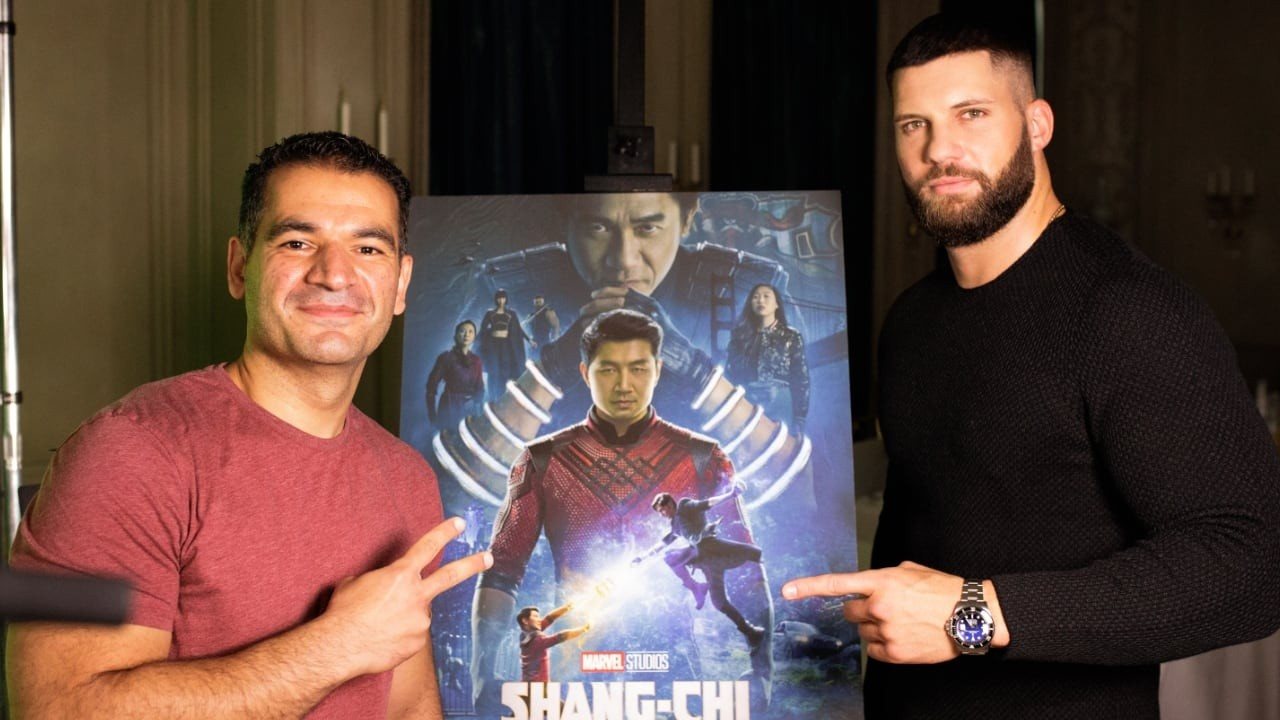
Florian Munteanu grew up in Bavaria and built a career in Hollywood. In this podcast special, he discusses mindset, preparation and his career. After playing Ivan Drago’s son in Creed II alongside Sylvester Stallone, Michael B. Jordan, and Dolph Lundgren, he took on the role of Razor Fist in the Marvel film “Shang-Chi and the Legend of the Ten Rings.” In an interview with Reza Mehman on Project Mindset, the actor offers insights into his work methods, his strengths and weaknesses, and the importance of consistency and discipline.
The episode also connects the concept of Chi as life energy with the question of inner balance and personal growth. Anyone who wants to understand how to achieve ambitious goals with the right mindset will find valuable insights in this conversation. This episode is a must-listen for Marvel fans, those interested in mindset, and anyone curious about the journey of a European actor to Hollywood.
Summary
In one sentence: Florian Munteanu discusses mindset and preparing for Shang-Chi. His central message is that success has no shortcut.
Short summary: In this interview, Florian Munteanu recounts his journey from boxer to Hollywood actor and the mindset that drove him along the way. He emphasizes that hard work, discipline, and consistency form the foundation of his success and that there is no “magic pill.” Reza Mehman connects the conversation to the concept of Chi as life energy and the importance of balance in life.
Detailed summary: In this special podcast episode, Reza Mehman interviews Hollywood actor Florian Munteanu, who plays Razor Fist in the Marvel film Shang-Chi. Munteanu describes his journey from Bavaria to Hollywood, beginning with Creed II alongside Sylvester Stallone and Michael B. Jordan. He offers candid insights into his preparation for fight scenes, the difference between boxing and martial arts, and his personal growth as an actor. His central credo: “There is no magic pill,” meaning that only hard work, consistency, and discipline lead to success. Reza Mehman concludes the episode by reflecting on the concept of Chi as life energy and the importance of balance in life.
Context: Who, What, Why
Who is speaking: Reza Mehman, host of the Project Mindset podcast, interviews Hollywood actor Florian Munteanu, known from Creed 2 and the Marvel film Shang-Chi and the Legend of the Ten Rings.
What is it about: The conversation explores Florian Munteanu’s career, mindset and preparation for Shang-Chi. He also discusses his strengths and weaknesses. Additionally, Reza Mehman reflects on the Chinese concept of Chi and the importance of balance in life.
Why is it relevant: This episode uniquely combines pop culture (Marvel), personal development, and mindset. Using the specific example of a European actor, it demonstrates how discipline and the right attitude can help achieve great dreams.
Three key questions of the episode:
- What mindset does one need to conquer Hollywood from Bavaria?
- How does an actor prepare for a Marvel movie?
- What does the concept of Chi mean for personal growth and balance?
Table of contents
- Introduction – Overview of the podcast episode and the special guest
- Summary – The most important content summarized in a compact format
- context – Background information on the speakers and the relevance of the topic
- Topics and classification – The central themes of the episode
- Key messages – The most important messages at a glance
- Frequently Asked Questions – Answers to the most important questions about the episode
- Highlight quotes – The most significant statements from the conversation
- Transcript – Full transcript of the episode
- Keywords – Relevant search terms for the episode
- Names and terms – Important people, places and technical terms
- Quotable passage – Key message for sharing and quoting
Topics and classification
1. Hollywood career and acting
Florian Munteanu’s journey from Bavaria to Hollywood, his roles in Creed 2 and Shang-Chi, and the challenges of being a European actor in the US film industry.
Keywords: Hollywood Karriere, Creed 2, Marvel Shang-Chi
2. Mindset and discipline
The central role of hard work, consistency, and discipline in achieving great goals is summarized in Munteanu’s credo, “There is no magic pill.”
Keywords: Success mindset, discipline, hard work
3. Martial arts and physical preparation
The switch from boxing to martial arts for the film, fight scenes in confined spaces and the physical preparation for an action film.
Keywords: Martial arts, boxing, film preparation
4. Chi and life energy
The Chinese concept of Chi as life energy and its connection to mindset topics such as inner balance, equilibrium and personal well-being.
Keywords: Chi Lebensenergie, Balance, Tai Chi
5. Personal growth and self-reflection
Munteanu’s honest reflection on his strengths and weaknesses as an actor and the importance of continuous learning and development.
Keywords: personal growth, self-reflection, strengths and weaknesses
Key messages
- “There is no magic pill”: Success comes exclusively from hard work, consistency and discipline, not from shortcuts.
- Florian Munteanu has managed to conquer Hollywood from Bavaria, starting with Creed 2 alongside Sylvester Stallone.
- The transition from boxing to martial arts requires a complete rethinking of body movement and technique.
- Filming fight scenes in a cramped bus, as in Shang-Chi, presents particular physical and choreographic challenges.
- Chi, as life energy, represents the search for balance in the outer universe and in the inner being of man.
- Balance in life means giving adequate space to all important areas of life, such as family, sports, work, and friendships.
- Feedback and recognition are also important for disciplined people and can serve as motivation to continue.
- Sometimes feedback arrives later than expected, but is all the more valuable and significant for it.
- Knowing your strengths and honestly acknowledging your weaknesses is the foundation for targeted personal growth.
- The path to success requires constantly dedicating oneself to new skills and leaving one’s comfort zone.
Frequently Asked Questions
Who is Florian Munteanu?
Florian Munteanu is a German-Romanian actor and former boxer from Bavaria. He became known as Viktor Drago in Creed 2. He also plays Razor Fist in Marvel’s Shang-Chi and the Legend of the Ten Rings.
What role does Florian Munteanu play in Shang-Chi?
Florian Munteanu plays the role of Razor Fist in Shang-Chi and the Legend of the Ten Rings, a fighter with a distinctive bladed hand who is one of the film’s antagonists.
What does Chi mean in the context of Shang-Chi?
Chi is a Chinese concept for life energy that permeates the entire universe. In the context of Shang-Chi, it represents the search for inner and outer balance, as well as the force that drives the protagonist.
What does “There is no magic pill” mean?
Florian Munteanu uses this phrase to express that there are no shortcuts to success. Only through hard work, consistency, and discipline can one achieve their ambitious goals and visions.
How did Florian Munteanu prepare for the fight scenes in Shang-Chi?
Munteanu had to switch from boxing to martial arts, which required a complete rethinking of body movement and technique. He intensively trained choreography and had to learn to execute precise fight scenes in confined spaces like a bus.
What is the Project Mindset podcast?
Project Mindset is a podcast by Reza Mehman that deals with mindset topics, personal development, and principles of success. The show is aimed at anyone who is convinced that with the right mindset, anything is possible in life.
Why is balance a central theme in this episode?
Balance is key because the concept of Chi emphasizes the search for equilibrium. Reza Mehman connects this to his conviction that all important areas of life, such as family, sports, work, and friendships, must be given balanced space in order to be happy and successful in the long term.
Which films has Florian Munteanu directed?
Florian Munteanu rose to fame with Creed II (2018), in which he starred alongside Sylvester Stallone and Michael B. Jordan. He then played Razor Fist in the Marvel film Shang-Chi and the Legend of the Ten Rings (2021). Further film projects have been announced.
Highlight quotes
“There is no magic pill.”
– Florian Munteanu
“He managed to conquer Hollywood from Bavaria.”
– Reza Mehman
“Sometimes it’s enough to simply change your perspective and deal with certain issues or things that happen in life differently.”
– Reza Mehman
“You simply have to put in hard work, consistency and discipline if you have big goals, big visions, big wishes for yourself.”
– Reza Mehman
“The meaning of Chi is the search for the balance of man in the universe and also in his inner being.”
– Reza Mehman
“I am happy if listeners can take away even just one thing from one of my podcasts. That thing changes their lives, for example.”
– Reza Mehman
“Sometimes you get feedback a little later, but perhaps it’s all the better for it.”
– Reza Mehman
The full conversation
Hi everyone and welcome to Project Mindset. This channel is for all of you who know that with the right mindset, anything is possible in life. Today we have a podcast special for you. As always, it’s about mindset, but today we’ll also be discussing other topics. First, the new Marvel film, Shang-Chi and the Legend of the Ten Rings. And second, a super interesting and, for me personally, a real highlight interview with actor Florian Monteano, who plays Razorfist in the film.
Great character, great role in this film. And it’s about the topic of Chi, the Chinese word for life force or life energy. Now, you might be wondering what these topics have to do with each other and why I’m so passionate about talking about them. So, let me give you some context first. I personally really enjoy podcasting. I love talking about mindset topics and my experiences, how I’ve dealt with certain situations in my life, when I’ve had a huge failure, and how I managed to get back up and keep going.
What a podcast can achieve
And to be honest, I’m happy if listeners can take away even just one thing from one of my podcasts. That thing changes their lives, for example. Then I’ve done my job, so to speak. Because I know very well that sometimes it’s enough to simply change your perspective. You deal with certain topics or things that happen in life differently. Because, as I’ve said before, in many things or topics that happen in life, even negative things, there are, I would say, almost always positive aspects that you can learn from them.
As I mentioned, I really enjoy podcasting. Unfortunately, it does have one drawback: the discussion is relatively one-sided. Podcast platforms are typically structured so that the podcaster talks, produces their content, shares it, and feedback usually only comes through a review on the platform, such as Apple Podcasts. Please don’t forget to leave a review yourself, or send me an email. I usually share my email address as well: halloatprojectmindset.de.
Occasionally, personal feedback also comes from people close to me. I really appreciate that, of course, but still, the communication is relatively one-sided. So it’s all the more gratifying when I simply receive feedback. But what was a real highlight for me recently was an email I received. I have to admit, at first I didn’t take it seriously; I didn’t really read it properly. It sounded a bit like spam to me.
The inquiry regarding the Marvel film
It was something about a new film and whether I could imagine somehow connecting my podcast mindset theme with it. To be honest, I didn’t really pay attention to it at first. A short time later, I think it was actually a week or two, I received a reminder email. “Yes, dear Mr. Mehman, can you imagine actually talking a bit about the podcast, saying something?” Well, I thought to myself, okay, I’ll read the email very carefully now. Maybe there’s something to it, maybe there’s something I’d really enjoy.
And indeed, it was about the new Marvel movie Shang-Chi, and for those who don’t know, I’m a huge Marvel fan. I mean, seriously, I’ve seen every single movie in the MCU, the Marvel Comic Universe, at least once. I absolutely love watching them. My little one is also a huge Marvel fan, even though he’s never seen a movie. But we play with the characters, we talk about how strong the Hulk is, how awesome Captain America is, and so on. Even he’s a Marvel fan, despite never having seen a movie.
How the interview came about
And after reading through the email, I thought, okay, give it a try, I’ll call and find out exactly how it would work. I actually spoke with a super friendly woman. We talked about whether it would be a good fit, especially since I’m completely unpaid – I really want to be transparent here, everything I did was unpaid – and whether I could imagine talking about it. And I also think the topic is an extremely good fit, because the name Shang-Chi, as you can already tell, incorporates the concept of Qi, or life energy.
So, on the one hand, it was clear to me: hey, I can do something for Marvel, how cool is that? And on the other hand, the mindset theme fits extremely well. Then, the woman also told me that if I wanted, I could interview one of the actors from the film, Florian Monteano, because there are a few videos on my YouTube channel where I’ve done interviews. I was like, yes, absolutely! That really interests me, so I’d love to do it.
From Creed 2 to Shang-Chi
I already knew the actor from another film, Creed 2, also a fantastic film, you all have to see it. He acted alongside legends like Sylvester Stallone, Michael B. Jordan, and Dolph Landgrain—really, I’d say top-tier Hollywood talent. That’s how I already knew Florian Monteano. So it was absolutely clear to me that I would love to do this interview. But, I’ll get back to the interview in a moment. What was also really cool for me, and what I really appreciated, was getting feedback on my podcast.
As I’ve already mentioned, I’ve had a podcast for a while now. I really enjoy producing the content. But I haven’t gotten much feedback. And as is often the case when you’re releasing a podcast every week—I try to stick to a weekly schedule—and occasionally making a YouTube video with interviews, well, you naturally need some motivation yourself, even though I’m quite critical when it comes to motivation.
I think discipline is much more important than motivation, but to be honest, it feels good to just hear that someone sees it, that someone hears it, that they think it’s cool. That you can somehow continue from there. So, perhaps a little message here for everyone who is currently working on certain things in their life and maybe hasn’t received direct feedback yet. Yes, sometimes you get feedback a little later, but perhaps it’s all the better for it.
Feedback on your own podcast
I really have to say, as I just mentioned, the feedback was incredibly gratifying – the fact that people find my podcast when searching for “mindset,” that they appreciate the quality. That they like the YouTube videos. That really did me good. But now back to the interview and the film. We had arranged with the PR firm that I could see the film in advance. I did that in Munich. It was a fantastic film. It’s in theaters now.
I can really only recommend watching it. And after the preview, so to speak, where I got to see it in advance, I was then able to do the interview with Florian. That took place the following day. The whole thing was in Munich, at the Bayerischer Hof. It was a lot of fun. Florian Mutterano is a really, really nice guy. We had a great conversation. I had 20 minutes. I asked all the questions that were important to me. He also gave really inspiring answers. One of the sentences that stuck with me the most was, among other things, “Where is no magic pill?”
Hard work, discipline, and consistency
And what that means for me, or rather, what I think Florian understood it to mean, is that you simply have to put in hard work, consistency, and discipline if you have big goals, big visions, big dreams for yourself. And with him, I definitely believe that. Because, when you consider that he took Hollywood by storm, coming from Bavaria. And I think that’s actually not so easy. His first film was Cree 2. That was already a really, really good film.
With Sylvester Stallone. His second film, the new Shang-Chi Marvel movie. His third film is coming soon. So I think if anyone can talk about big dreams and visions, it’s him. He actually achieves the things he sets out to do. And in the podcast, we also talk about the skills you need to achieve these dreams and visions. I highly recommend everyone give it a listen. And just a quick word about the film, or rather, the character of Shang-Chi. I was also wondering, hey, what does Chi actually represent?
And I’d had contact with friends before who were involved with Chi or Tai Chi. From a mindset perspective—and I’ll get to that in a moment—there’s a very important point about Chi that I completely understand and fully support: what it actually means, what it means to me. But perhaps we should briefly define what Chi actually means. Chi is essentially like life energy that flows through the entire universe, affecting and flowing everywhere.
Chi and the search for inner balance
So, personally, that’s how I understand Chi. The meaning of Chi is also—and this is incredibly interesting to me—the search for human balance within the universe and also within one’s own inner being. And I think that’s one of the topics that’s particularly relevant to me: equilibrium, or, as I call it, balance. I also talked extensively about balance in another interview. It’s a recurring theme for me, both in a podcast and in the interview with Bill Schlichter, which you can also find on YouTube or here on the podcast channel.
What balance in everyday life means
For me, balance really means—or let’s start from that perspective—balance is important because I believe that having too much of one thing can lead to unhappiness. What I mean by that is that, for me, family comes first. Family is truly the most important thing in my life. But that doesn’t mean I have to, or should, be spending 24 hours a day with my family. Because, aside from the fact that you’ll eventually drive each other crazy, being happy in life also means taking care of other important things—perhaps not as your top priority, but maybe even as a second or third.
For a healthy life, you should exercise, you should pay attention to nutrition, and you should examine your habits. That means something can be incredibly important, like family, but on the other hand, there are other topics that are also extremely important in life. And there really are many such topics. So, for me—and I think anyone who listens to me knows this—exercise is important. My wife would chime in, “I’m a workaholic,” and work is important, yes, it is, but meeting up with friends is also important.
Friendships as part of the balance
Many people underestimate how good it feels to simply drink a glass of wine or a beer with friends outside, to just have a good time, to be distracted, and even to have deep conversations. That’s at least as important, for me, as exercise, even though I do exercise much more often than I meet up with friends. But that’s the interesting thing about Chi: it’s all about balance in life.
As I said, you can listen to the interview episode with Bill Stichter again, because it’s also about him having three children, his startup, he’s incredibly busy, doing sports at the same time, and of course taking care of his wife – exactly the kinds of issues I’m familiar with and try to juggle without feeling guilty, for example, thinking, “If I work too much, my family will suffer.”
Even the YouTuber from the last episode, you might remember him, Frank Krüger, also gave a super interesting interview, where they talked about how to balance everything. And I think that’s also one of the themes in Chi, or rather in a Marvel film. The film was super, super emotional for me. It was very much about family, and also about, well, about themes, about relationships between father and son, father and daughter. So, for me, it was a really great film.
The conversation with Florian Munteanu begins
Exactly, and then of course the highlight in Munich, the interview with Florian Monteano, which was really exciting and interesting. And before I play the podcast or rather the interview here, you can also check out my YouTube channel, because I’ve published a short video there with behind-the-scenes footage, which I think looks really interesting and exciting. You can choose whether to listen here or on YouTube; just search for “Project Mindset” on YouTube, or you can also…www.projectmindset.deslash 730 go.
Why 730? Because it’s the 37th podcast episode today. The video will be linked there. So, enjoy the interview with Florian Monteano. Here we go . Florian, thank you so much for taking the time to talk to me about the film, about the mindset. I’m so glad I can be here. Yes, thank you very much. I got to see the film yesterday, it’s an amazing film, so many emotions, so many fight scenes that were really, really good. And when I saw you in the film for the first time, in the bus scene, my first question was, how can such a tall person even fight in such a small bus?
Fight scenes in a confined space
So, how did that work? You must have bumped and scraped all over yourself, right? Yeah, that’s a question I get asked a lot lately. To be honest, that bus was exactly what you described. Small, cramped, and for a big guy like me, it’s obviously really, really hard to move around in general. And when you have to fight your way around, it’s even harder. And I’m telling you, I was constantly hitting poles, chairs, and walls.
I was often up against the ceiling. I can’t even count how many times we ended up at the doctor’s or physio’s because we were injured so often. But in the end, I think those are just the things you have to do to create such epic fight scenes. And I think we managed to do that in the end. Absolutely. It was definitely epic. The word fits perfectly. Something else I was wondering about, you’re a boxer, a southpaw.
From boxing to martial arts
That was a completely different movement for you. What you’ve always done is more like martial arts. And as a southpaw, you’re used to initiating the swing from the right. Was it a bit challenging for you, from a Fighting AQ perspective, to say, “I have to learn something new, I have to move differently”? Yes, as a southpaw, you naturally work a lot with your lead hand, which is my left hand. And in this case, because the blade, the weapon, was also on my right hand, the entire focus was naturally on the right hand.
Normally, if you box as a southpaw, you probably use your right hand 20% of the time and your left 80% of the time. That’s how you control the fight. So this was definitely an adjustment, because I only really needed my left hand to control the distance or to stabilize myself in that cramped bus so I wouldn’t lose my balance. And of course, it was an adjustment, absolutely. I mean, I’ve boxed my whole life. But this film is so heavily inspired by martial arts that it was clear from the start, okay, I’m definitely going to have to learn some new things here.
New movements outside the comfort zone
And I was very grateful for that, because you never stop learning. Whenever you want to reach a new level, not just as an athlete, but also as an actor, and as a person in general, you have to step out of your comfort zone and try to learn new things. The training was strenuous, but on the other hand, it was also just plain fun. And I think—and this was very important to me, if you compare it to Creed—I absolutely didn’t want people to say, when they see Razorfist fighting, “That’s Drago.”
I wanted to create something completely new, to break free from that old role. And I think that’s worked out really well for us. In any case, as I said, as a boxer, I think it’s a completely different movement than being a martial artist now, it’s amazing. I’ll come back to the topic of learning in a moment. But I got the impression that there was a very special relationship between you and your mentor, the Mandarin, so to speak. And I also get the impression that you’re not just loyal in the film, but in general.
Loyalty and gratitude
I think your loyalty has a lot to do with gratitude. Gratitude is an important theme for me. So, in this case—I believe you mentioned this in another interview—you also described how you were essentially raised by him, by Mandarin in the role. To what extent is there something of yourself in Razorfist, and to what extent is there something of Razorfist in you? Generally speaking, I would say that every actor tries, when they go into a film, to give the character a personal touch.
You want to make it your own, so that no one else can play it. And of course, in consultation with our director, I tried to convey my own values to the character, to transfer them, so to speak. Accordingly, a lot of Razorfist is in me. It’s a give and take. And from the very beginning, I was very, very grateful that this character isn’t just a one-dimensional character. But that he has depth, that he has, let’s say, certain layers that don’t just represent the soldier’s role or side. He’s much more complex and has many more facets that you see and, thankfully, reveal.
Razor Fist and film history
I also think we’ll be seeing a lot more of him in the future. This was really an origin story. It was very important that we saw Shang-Chi as the first Asian superhero and also explored his backstory. And I think with everything that’s coming in the future, we’ll have more time to work through all the other characters’ backstories. For example, in Razorfest, I noticed you conveyed a lot of emotion through your face. So, when you look at you, you seem like a solid guy, all right, but you communicated a lot through your facial expressions.
I thought that was incredibly good, honestly. Especially regarding your physique. I imagine it must have been quite a challenge for you, both in terms of preparation, maintaining your physique and then dealing with the mental strain of the film itself, the shooting. How do you prepare for something like that and how do you get through the shoot without, let’s say, becoming completely exhausted in the end? That’s a very good question. Well, I do have this sports background, which is always helpful.
Physical preparation for a role
Especially when I have to prepare for physically demanding roles, I naturally have a certain amount of basic experience and I know exactly what I’m doing. I simply need the director’s instructions. If it’s purely about appearance, about the visual aspect, what do you want me to do? How do you want to portray the character? Once I know that, then I also know exactly how I have to train, how I have to adjust my diet. And in this case, he simply said that if we were to focus solely on the visual aspect, without any background information about the character himself, then he wanted to portray this character as very, very massive.
Fitness and muscle building for the film
Accordingly, I… You succeeded. Yes, thank you. But accordingly, it was also very hard for me, because I’m actually more of a conditioning athlete than a strength athlete, even though I do carry around a certain amount of weight and am a certain height. But I’m used to always preparing myself in top physical condition, running, boxing, swimming. That’s always part of my general training. I skipped that this time, and I’ve definitely never weighed as much in my entire career as I do now, around 113 kilograms.
It was a lot, a lot, and it was simply very unusual because you move completely differently with that much weight. Handling all that weight was a new experience. Maintaining that weight was very hard for me. With all the cardio training, my body and metabolism were used to weighing less. The weight would drop again without me doing anything, because that was familiar to my body.
That’s why maintaining that weight was so difficult. Then we had Covid on top of it. We had to stop for three months, and even during those three months when we weren’t doing anything, I still had to maintain that weight, because once I lose weight, it’s incredibly difficult to gain it back. It was very, very exhausting. I think you asked another question. That’s basically it. I believe the body eventually finds its own balance.
Food and training for the role profile
He’ll get used to it eventually, sure, but you have to eat a lot and very frequently, and I’m just not used to that. I usually eat when I’m hungry, and otherwise I don’t eat, and with that, it was really like this: every two or two and a half hours, I had to wolf down some kind of meal. I wasn’t even hungry. That was really, really exhausting. Yes, I definitely think so. You also mentioned the topic of studying earlier. I’m guessing you’ve studied a tremendous amount over the last few years, learned a lot of new things.
What did you learn from the film Shang-Chi? I mean, mentally, in terms of mindset. How did it help you grow as a person? Well, generally speaking, it’s a privilege for me to act in such big films because you have the chance to work with incredibly talented people. Whether they’re in front of the camera or behind it, they’re usually the best in the business. So, I mean, as soon as you surround yourself with people who are on your level or even better than you, you automatically become a better person.
Personal development as an actor
That’s a completely normal process. That’s why I’m so, so grateful for it. I’m definitely not the same person I was three and a half years ago when I was making Greed. And like you said, development never stops; your skill set keeps growing. As a person, I can obviously handle pressure much better now. I’d also say my social IQ has definitely improved. My interpersonal skills, how I interact with other people. Exactly. Yeah, that’s something. And if you’re saying I want to continue growing as a person, I think that’s absolutely true.
Perhaps the first question is, what are your greatest strengths right now, and then, if you’re willing to share, your greatest weaknesses? What’s important for you to learn next, for yourself as a person? That’s a very good and insightful question. It’s also very difficult to summarize it in a short answer. I would definitely say that, from a human perspective, strengths and weaknesses are key. If you highlight a strength, it could, of course, also be a weakness.
Strengths also depend on the opponent.
And whether it’s actually a strength or a weakness, in my opinion, is interpreted that way or depends on the people you’re dealing with. If we’re talking about loyalty, for example, as you just mentioned, then it’s naturally a give and take. If you decide for yourself—and I’m the type of person who’s all or nothing—meaning, if I decide, okay, I like someone, are you committed?
Committed, loyal, and I don’t doubt that person. But if that person then abuses my way of thinking and my way of being, then loyalty can also be a weakness, because you’re being used and doing things for someone who doesn’t appreciate it at all. So it always depends on the point of view, on the perspective. But I do think that the values that are most important to me, like loyalty, family, and brotherhood, are the values that come first for me.
Staying true to one’s own values
I’ve lived by that philosophy since day one, practically since, I don’t know, kindergarten. I don’t let it throw me off course, even if things go wrong, maybe even because of other people. In that respect, I feel grounded and on a good path. Dwelling on other people’s mistakes would not help. I shouldn’t look in the mirror and then blame myself, because at the end of the day, I can only do my own thing right, and everyone has to decide for themselves which path they want to take.
Your own personality and happiness shouldn’t depend on other people. And if we get back to the point, which skill would you most like to develop? Well, the skill I’d say I’ve learned the most during the production of Shang-Chi, and which is also a skill I’ve been trying to improve for about a year and a half to two years, is patience. I’m the kind of person who has the biggest goals, the biggest dreams. There’s a reason I’m in this position now, because I never let anyone destroy my dreams, no matter how big they were, no matter how far away they seemed.
Ambitious goals and one’s own impatience
And of course, I want to get things moving quickly; I want things to happen fast. Hard work is part of who I am. I don’t want to waste time on that either, because if I have big dreams, who knows how much time I’ll actually have to realize them in the end? And patience is definitely something I’ve learned in recent years; sometimes it just takes time. Perhaps you, too, aren’t yet in a position to realize the things you actually intend to do.
And even now, during the Corona pandemic, it was also a test of patience, where you were practically forced into it, because everything slowed down. All the processes that arose alongside everything else—the testing, the masks, all the routines that developed as a result, the safety measures—all of that slows down processes, and then it takes even longer. That’s why you need more patience. And that was very difficult for me to learn. But it also showed me what I meant before: sometimes taking your time, maybe even taking a step back, is the right thing to do.
Patience as a challenge
Yes, patience is definitely a very, very strong, but also difficult skill. Anyway, I think we need to thank you very much, we also need to slowly come to the end of the interview. But I noticed something earlier, when you just mentioned patience, I once heard a great saying: you can’t bake a cake faster by simply increasing the temperature. It takes as long as it takes. Similarly, in fitness training or sports in general, many people come to me and ask, “Okay, can you give me some training tips?”
Exactly, it just takes time, you have to practice. You have to make time, like you said. The last question, I always ask my guests at the very end, because it’s also incredibly interesting for me personally to understand what kind of mindset this person I’m talking to has, and therefore also, what mindset, what attitude has had the biggest and most important impact on your life? You mean by attitude? Actually, many people, for example, follow quotes, there is no magic pill, and many also embrace gratitude as a mindset, as an attitude.
What has had the biggest and most important impact on your life?
There is no magic pill
So, if I apply this to my whole life, then I would definitely say that there is no magic pill, simply because without hard work, without dedication, without a certain sacrifice for something, and of course consistency, you won’t achieve anything. And no matter how big your dreams are, you have to get off your butt, you have to get your act together. That’s something that I think many people underestimate because they want quick success. But that’s just not how it works.
And if I now, I’m with Creed, we started back in 2018, that’s three and a half years now, where I’ve basically put my foot in Hollywood, if I add one new thing to that, then it’s definitely that failure, falling down, also failing sometimes, is simply part of it and definitely makes you stronger.
You just can’t give up there, you know that famous Rocky quote from Rocky VI. Get up one more time than you fall down. Exactly, when he’s teaching his son that lesson and says, you can fall down as many times as you want, the important thing is that you get back up and keep going. And during that time, I mean, in the public eye, it always seems like everything in my career has gone very smoothly. But it hasn’t. We had a lot of setbacks, but my team and I always kept going because we all believed in this dream, we all believed in my abilities, and in the end, those setbacks only made you stronger.
Learning from setbacks
That’s definitely something I’ve added to my mindset. Florian, you’re incredibly inspiring to me. Thank you so much for your time, and I hope we see each other again. Great, thank you. So, that was the interview. I hope I didn’t overpromise. What he said was incredibly inspiring to me, and I have to say, he has a truly admirable career. I think what he said, “Whereas No Magic Pill,” is something I can absolutely endorse.
Why effort is part of the journey
So, the topic of hard work has always been important to me, because I think people too often think, “Well, smart work is all it takes.” That might actually be true to a certain extent. But I think many things in life are hard, or many things in life are hard work. I’ve already released podcast episodes about this. Unfortunately, “hard” is also associated with negative things; at least, people tend to associate it with something negative. But I think hard can also be something positive. If you remember, I think having a good marriage is also hard work.
But what’s harder, going through a breakup or putting a lot of hard work into a marriage? The same goes for friendships, and the same goes for jobs. I think hard isn’t automatically bad; rather, it actually shows that you have to invest energy. And that’s exactly the point I personally get in the interview with Florian..
As you probably already know from my YouTube interviews, I can’t help myself, I always have to get hands-on. So, for the interview with Florian, I also had my focus mitts and boxing gloves with me, because I always like to participate or do something with the people I interview, whether it’s playing basketball, kickboxing, or even, as in the last interview, actually using a saw – doing something together. With Florian, I knew I had to do a little focus mitt training with him, so I brought my focus mitts and boxing gloves. And you can actually see a short scene in the YouTube interview afterwards of us doing just that very, very short focus mitt training session.
A personal conclusion to the interview
I only know one thing: he’s incredibly strong, and my hands practically flew off! It was really cool; you should definitely check it out. A huge thank you to Amelie Auerhahn from Friendly PR for organizing the interview, and of course, thank you to Disney, specifically Birgit Seidel, for letting me see the film in advance. I had an absolute blast being a part of it. So, that’s all for today. Talk to you again soon, and until then, remember, mindset is everything.
This transcript was automatically generated using Whisper AI and may contain occasional errors.
Keywords
Tags: Florian Munteanu, Shang-Chi, Marvel, mindset, chi, life energy, Creed 2, Razor Fist, Hollywood, discipline, balance, hard work, martial arts, Project Mindset, Reza Mehman, personal growth, success, acting, self-reflection, motivation
Names and terms
Florian Munteanu, Reza Mehman, Sylvester Stallone, Michael B. Jordan, Dolph Lundgren, Razor Fist, Shang-Chi and the Legend of the Ten Rings, Creed II, Marvel, MCU (Marvel Cinematic Universe), Ivan Drago, Viktor Drago, Hollywood, Bavaria, Munich, Bayerischer Hof, Chi, Tai Chi, Life Energy, Project Mindset, Bill Schlichter, Captain America, Hulk
Quotable passage
Florian Munteanu made it from Bavaria to Hollywood through discipline and hard work, and plays the role of Razor Fist in the Marvel film Shang-Chi.
His central credo is: “There is no magic pill”, because only consistency and commitment lead to great goals.
The concept of Chi as life energy teaches us that the search for inner and outer balance is the key to a fulfilled life.
A balance between family, work, sports and friendships is not a luxury, but a necessity for sustainable success.
You can find more interviews about personal development on the Project Mindset Page.