Self-sabotage: Why we sabotage our own success
Self-sabotage can begin with our expectations. How self-fulfilling prophecies influence our behaviour and why it helps to question familiar beliefs.
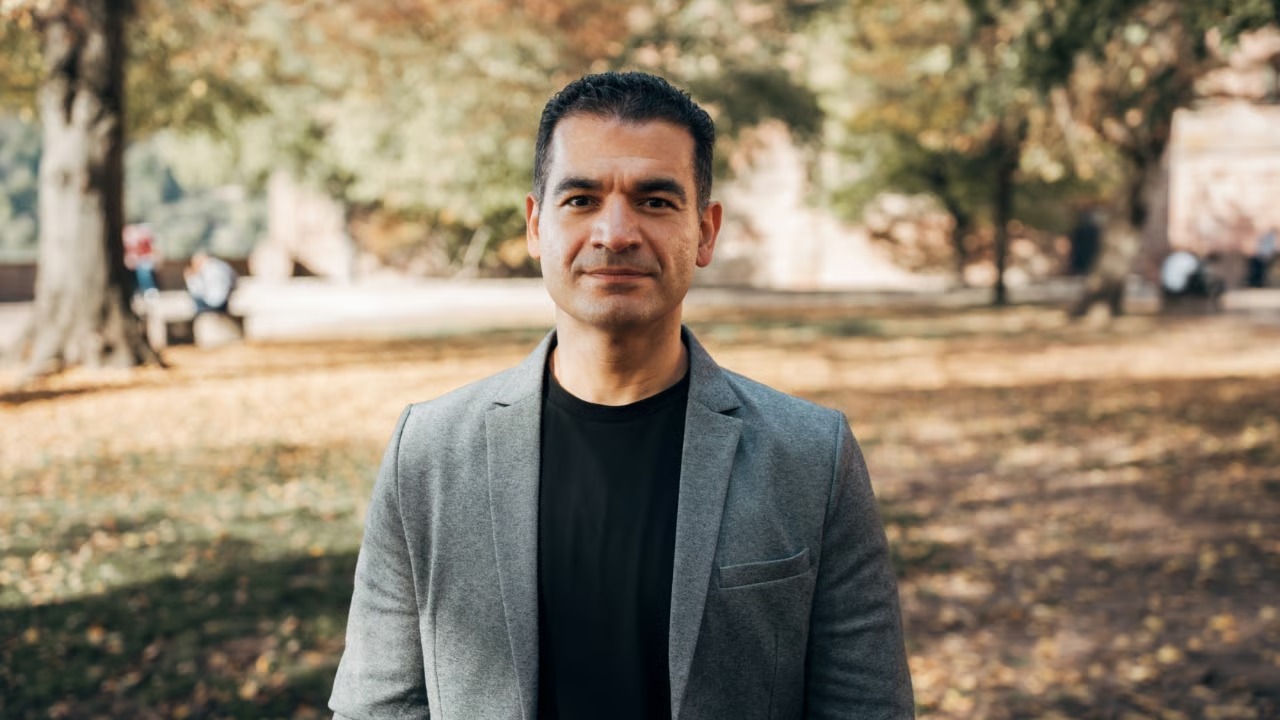
How our expectations influence behaviour
Self-sabotage through self-fulfilling prophecies is one of the most common patterns preventing people from reaching their full potential. In this episode of Project Mindset, Reza Mehman discusses how our inner beliefs control our behavior in such a way that we produce the very results we actually want to avoid. Using Will Smith and his Oscar night as an example, he powerfully demonstrates how deeply ingrained beliefs like “I’m not good enough” can become a self-destructive mechanism. Reza also explores the role of visualization in sports, the debate surrounding free will, and the question of whether a university education is truly the best path to entrepreneurial success. This episode provides valuable food for thought for anyone who wants to recognize and break their negative thought patterns. Understanding how self-fulfilling prophecies work allows you to consciously counteract them and program your mindset for success.
Self-sabotage: the episode in brief
In one sentence: Self-fulfilling prophecies lead us to control our own behavior through negative beliefs, thus actively sabotaging our success.
In three sentences: The concept of the self-fulfilling prophecy states that we link our behavior to our beliefs and thereby produce precisely the results we expect. Reza Mehman uses the example of Will Smith to show how his deeply ingrained belief, “I will never be good enough,” led him to sabotage himself on the evening of his greatest award. The episode makes it clear that awareness of one’s own beliefs is the first step to breaking out of the cycle of self-sabotage.
In five sentences: Self-fulfilling prophecies are a psychological phenomenon in which our expectations influence our behavior in such a way that the anticipated outcome actually occurs. In this episode, Reza Mehman explains how this mechanism works both positively and negatively, for example, in the context of visualization in sports or destructive beliefs. The prominent example of Will Smith illustrates how someone can destroy their own success despite receiving the highest acclaim if they are internally convinced that they are not good enough. Reza also touches on the philosophical question of free will and whether our decisions are truly free or predetermined by unconscious patterns. The central message is: Those who consciously reflect on their inner beliefs and align them positively can break the cycle of self-sabotage.
Context: Who, What, Why
Who is speaking: Reza Mehman, host of the podcast Project Mindset, business graduate and entrepreneur, who deals intensively with mindset, personal development and success psychology.
What is it about: This episode explores the phenomenon of the self-fulfilling prophecy and how negative beliefs can lead to self-sabotage. It also discusses the value of academic study versus practical experience.
Why is this relevant? Self-sabotage affects almost everyone in some area of life. Understanding this mechanism is crucial for personal growth, professional success, and emotional well-being.
Three key questions of the episode:
- How do self-fulfilling prophecies influence our daily behavior and decisions?
- Why do we sabotage ourselves precisely at the moments of our greatest success?
- Is practical experience more valuable than theoretical knowledge when it comes to entrepreneurship?
Table of contents
- Introduction – What this episode is about
- Summary – The core message in brief
- context – Background information on speaker and topic
- Topics and classification – The central topics
- Key messages – The most important messages
- Frequently Asked Questions – Answers to key questions
- Highlight quotes – The most concise statements
- Transcript – Full transcript of the episode
- Keywords – Relevant search terms
- Names and terms – Important references
- Quotable passage – For sharing and quoting
Topics and classification
1. Self-fulfilling prophecies and self-sabotage
The central theme of the episode: How our inner beliefs control our behavior and ensure that exactly what we expect or fear comes to pass. Negative beliefs become a self-reinforcing reality.
Keywords: Self-fulfilling prophecy, self-sabotage, negative beliefs
2. Visualization and Success in Sports
Reza explains how visualization techniques work in sports and why the mental image of a successful throw directly influences its physical execution. This principle can be applied to all areas of life.
Keywords: Visualization, sports psychology, success mindset
3. The Will Smith Example: Success and Self-Destruction
Using the example of the 2022 Oscar night, it is shown how Will Smith’s deeply ingrained belief “I am never good enough” led to self-sabotage at the very moment when he received the highest recognition of his career.
Keywords: Will Smith Oscar, self-destruction, not good enough
4. University studies versus practical experience
The debate about the value of a university degree versus practical business experience. Reza argues that five years of practical experience are more valuable for aspiring entrepreneurs than five years of pure theory.
Keywords: Study value, practical experience, learning entrepreneurship
5. Free will and decision-making
A philosophical examination of the question of whether our decisions are truly free or whether unconscious patterns and beliefs predetermine our actions.
Keywords: Free will, decisions, subconscious
Key messages
- Self-fulfilling prophecies mean: If we expect a certain outcome, we ourselves contribute to making that outcome happen.
- Negative beliefs like “I am not good enough” lead us to unconsciously behave in ways that sabotage our own success.
- Will Smith’s slap at the Oscars is a prime example of how someone can destroy their greatest moment of success through deeply ingrained self-doubt.
- Visualization works both positively and negatively: those who imagine success align their behavior accordingly; those who expect failure do the same.
- Five years of practical business experience are more valuable for aspiring entrepreneurs than five years of purely theoretical study.
- A university degree is most valuable when combined with practical applications and real-world business experience.
- The question of free will is closely linked to the issue of self-sabotage: Are our destructive decisions truly freely chosen or controlled by unconscious patterns?
- No one will remember that Will Smith won an Oscar, but rather that he slapped another person on stage.
- It is crucial to consciously reflect on one’s own inner beliefs in order to break negative self-fulfilling prophecies.
- The basketball analogy illustrates that practice beats theory, both in learning and in visualizing success.
Frequently Asked Questions
What is a self-fulfilling prophecy?
A self-fulfilling prophecy describes the phenomenon of linking our behavior to our expectations and beliefs. If we expect a certain outcome, we unconsciously behave in ways that bring about precisely that outcome. This works with both positive and negative expectations.
How does self-sabotage prevent us from achieving success?
Self-sabotage occurs when deeply ingrained negative beliefs like “I’m not good enough” control our behavior. We then unconsciously make decisions that undermine our success, even when we’re on the verge of reaching our goal. The Will Smith example illustrates how someone can destroy their greatest moment of success through impulsive, destructive behavior.
What does Will Smith’s slap at the Oscars have to do with self-fulfilling prophecies?
Will Smith had said in previous interviews that he never felt good enough, neither as an actor nor as a father or husband. Reza Mehman argues that this very belief led Smith to sabotage himself on the night of his Oscar win. The slap against Chris Rock turned his greatest award into his greatest embarrassment.
How does visualization work as a tool against self-sabotage?
Visualization means mentally imagining a desired outcome before taking action. In sports, for example, you imagine the ball going into the basket, unconsciously adjusting your entire body posture accordingly. This principle can be applied to all areas of life: those who visualize success are more likely to act in a success-oriented manner.
Is a university degree beneficial for aspiring entrepreneurs?
According to Reza Mehman, a university degree is a sensible safety net, but not the most effective path for aspiring entrepreneurs. He recommends combining studies with practical business experience, as five years of real-world business experience imparts more entrepreneurial knowledge than five years of pure theory.
Is it possible to consciously break self-fulfilling prophecies?
Yes, the first step is to become aware of your own negative beliefs. Those who recognize that they are sabotaging themselves through inner convictions can begin to actively change these patterns. Techniques such as visualization, positive affirmations, and conscious reflection help to reprogram one’s expectations and thus one’s behavior in a positive way.
What role does free will play in self-sabotage?
The question of free will is closely linked to self-sabotage. When unconscious patterns and deeply ingrained beliefs control our behavior, the question arises whether we truly decide freely or whether our decisions are predetermined by these patterns. Awareness of one’s own beliefs is the key to gaining more control over one’s decisions.
What is the basketball analogy in this podcast episode?
Reza compares someone who studies basketball theory for five years to someone who actually plays basketball for five years. In a direct comparison, the practitioner would always win. He applies this analogy to the topic of academic study versus entrepreneurial practice: Real-world action trumps theoretical knowledge.
Highlight quotes
“If we expect a certain behavior or outcome, we ourselves contribute to making that behavior or outcome happen.”
– Reza Mehman
“It is much more effective to spend five years trying to build your own company and bring your product to market instead of five years of studying.”
– Reza Mehman
“I’m the kind of person who’s always dissatisfied with myself. I’ll never be smart enough, a good enough father or a good enough husband.”
– Will Smith (quoted by Reza Mehman)
“Nobody will remember that he received an Oscar, but that he was the only person who slapped someone else in front of everyone that evening.”
– Reza Mehman
“When I imagine the ball going in, I decide how I hold my hand, how I jump, so that it actually happens that the ball goes in.”
– Reza Mehman
“In reality, things always turn out differently than you expect.”
– Reza Mehman
“He apparently believed so strongly that he wasn’t good enough that he made sure he wasn’t good enough.”
– Reza Mehman
The full conversation
Hi everyone and welcome to Project Mindset, the channel for all those who know that with the right mindset, anything is possible. Before we get to today’s topic, which is self-fulfilling prophecies, I have a short story to tell that I found super interesting. I was talking to an acquaintance about the value of a university degree. The topic interests me personally. In 2008, I graduated from the University of Mannheim with a diploma in business administration.
I’d say it was a good university, very demanding, incredibly difficult, and of course, it helped a lot with the first jobs I applied for, getting them in the first place. Because the university’s reputation for business administration was, and still is, very good. Looking back, though, I would recommend that my children study something. I find it really difficult to answer this question, specifically regarding security, so that you can get a job somewhere. Yes, I would recommend a university degree.
Study or start a business directly?
But if, for example, someone wants to study business administration, like me, and eventually wants to own their own company, then I have to say it’s much more effective to spend five years trying to build their own company, bringing their product to market, and understanding how to sell it, how to market it, and how to handle sales, than to spend five years learning theory. I have a good example of this: if I were to give someone the task of spending five years studying the complete rulebook of basketball, watching videos, analyzing them, figuring out what the rules are, how exactly to play, what size ball is needed, and so on and so forth.
He does this for five years, even writes his thesis on it, and then, for the first time in five years, he picks up a ball and plays against someone who’s been playing basketball for five years already, someone who might not know anything about the theory, but just plays basketball. It’s perfectly clear who would win in this matchup: the one with the practical experience. And that’s precisely the problem I have with university studies. You study something for years, but have little to no practical experience, because, quite honestly, you also have to consider internships.
What practical experience teaches
I also did a lot of part-time work on the side. I was also an intern at several companies. You’re naturally kept busy with various tasks. You learn something through these jobs, but if you want to become an entrepreneur, for example, I would say you should focus on studying while simultaneously trying to build your own business, understanding all the processes, what it actually means to create a proposal, and how to do sales.
These are the core topics, or follow-up topics such as accounting, reconciliation, tax advisors, etc. There are many issues, many tax-related aspects that only arise in reality and aren’t something you learn by simply trying to understand what a balance sheet is, for example, how to prepare one, and so on. In reality, things always turn out differently than expected. Therefore, to summarize briefly, yes, I think studying is a good idea, but preferably in combination with truly practical applications, like starting your own business.
I also find it amusing that someone might study something 30 or 40 years ago and still say, “Yes, I’m a biologist.” Maybe I’ve done something completely different for the last 40 years, but I’m still a biologist, chemist, or whatever. On the one hand, that’s good for the people who hold those degrees. They can always present their certificate: “I’m a business graduate,” “I’m a biologist,” and so on. But on the other hand, it can be completely out of touch with reality. In the meantime, they’ve done everything but the subject they studied 30 or 40 years ago.
Educational pathways and the value of a title
And yet, people still say, or can still benefit from, this title. I find that a bit odd, or rather, not entirely realistic. Okay, so there are many arguments for and against. My acquaintance and I couldn’t find common ground on this. He was all for the degree, I was for something in between. But anyway, that’s another topic. What I actually want to talk about today, though, is… And sorry for throwing in these little anecdotes here and there. I always find them very interesting from a mindset perspective.
How you think about your life, about learning, and so on, and immediately. That’s why I include stories like this here and there. But back to the topic of self-fulfilling prophecies. I talked about this in a very early podcast episode. I absolutely believe that if you have an opinion or a mental image of how something will play out in the future, the probability is very high that it will happen exactly that way. Both positively and negatively. And self-fulfilling prophecies mean something like linking your behavior to the beliefs you hold.
Continued
I also read a pretty good definition online. Basically, the core idea of a self-fulfilling prophecy is that if we expect a certain behavior or outcome, we ourselves contribute to making that behavior or outcome happen. I definitely think that’s true. If I imagine that something will happen in the near future, then I’ll already be acting that way today. Especially with my decisions, I’ll make sure that’s how it will come about.
There are many excellent examples of this in sports. I personally find visualization very relevant in sports. When I’m throwing a ball towards the basketball hoop, it’s a little trick for me to imagine the ball going in, because then I decide how to hold my hand, how high to jump, and so on, so that the ball actually goes in. But if I imagine it definitely won’t go in, well, obviously…
Then, of course, my entire body posture is probably different and not even designed for me to hit the target. In sports, I find it incredibly easy to understand and visualize, and that visualization then manifests itself in the result that actually comes. But now, let’s consider other topics. I have to say, I’ve been a huge Will Smith fan. I think many of you know what I’m getting at. Will Smith released something about a year ago, I believe.
A look back at Oscar night
During the Oscars, during the ceremony, he punched the host, Chris Rock, a comedian. Chris Rock had made a joke on stage about Will Smith’s wife. Then he went up on stage and punched him right in front of everyone. It certainly didn’t look like a gentle punch. My first thought was that it was all an act. It wasn’t real, because why would you punch a comedian—that’s his job, to make a joke at other people’s expense—why would you punch him after 30 or 40 years in show business?
I was very surprised, but apparently it was all very real. It wasn’t prearranged, it all seemed very genuine. The crazy thing is that Will Smith knew that evening that he was most likely going to win an Oscar. He played the role—I hadn’t seen the film, but it was about him playing the father of the Williams sisters, Serena Williams, the tennis player. And apparently it’s a pretty good film, I believe it.
Success, recognition, and personal expectations
I think Will Smith has made some very good films, but maybe some not-so-good ones too. But I do believe he’s a good actor. And winning an Oscar that evening was a kind of crowning achievement for him. I think every actor, every good actor, dreams of winning an Oscar someday. But now comes the part where I see the theme of a self-fulfilling prophecy, really on point, live in action. I remembered seeing an interview with Will Smith years ago where he talked about how he’s always dissatisfied with himself in everything he does.
That quote was still possible to find. I did a little searching online, and the quote goes something like this. He said, “I’m the kind of person who’s always dissatisfied with myself. I’ll never be smart enough, a good enough father or a good enough husband. Even as an actor, I won’t feel good enough for myself. I just won’t be. I just have to get used to waking up every day and trying to become a little bit more the person I’ve always dreamed of being.”
A personal assessment of self-sabotage
I’m not trying to make any kind of armchair psychological diagnosis here. Psychology is not my profession, nor do I intend it to be. I don’t want to pretend that I am one. This is really just my impression of someone thinking that way. And sure, there are many other issues. I didn’t even know he was like that, for example; I only found out later that he has such a seriously toxic relationship with his wife. I don’t know, I’m not that deeply involved.
Others probably know more about this than I do. But apparently, the relationship is also very strange, let’s just say that. But I remembered that quote. I thought he said it back then more for sporting reasons. Something like, “I have to get better every day. I work on myself every day.” But if someone is truly convinced that they’re simply not good enough, no matter what they do, even acting, then for me it’s actually a self-fulfilling prophecy that on the evening they receive the crowning, the proof from everyone around them that they’re a top actor, they’ll be sabotaging themselves in that very moment.
Continued
I even believe—and I hope I’m not sticking my neck out here—that it was bound to happen that he sabotaged himself. Because he predicted it himself. He’ll never be enough. And unfortunately, that’s how it will be for him. He did get the Oscar that night, but at the same time, as far as I can see, he was banned from attending the Oscars for ten years. And no one will remember that he got an Oscar, but rather that he was the only person who, that evening, in front of everyone on stage and a worldwide broadcast, gave someone else—a much smaller, much weaker person—a lesson for a joke that, I believe, was only meant as a joke because the person in question was a comedian.
Exactly, and for me, that’s a prime example of a self-fulfilling prophecy. He apparently believed so strongly that he wasn’t good enough that he himself ensured he wasn’t good enough to be, for example, a good actor. This naturally leads to other questions, which are also very complex for me personally, namely the topic of free will. I’ve read up a bit on whether we humans even have free will. Many would say, of course we do.
Belief systems and the question of free will
Yes, but perhaps we are so influenced by our beliefs, by our convictions about ourselves, about who we are, about what we are, that we might not even have free will. I find it super interesting, many technologies are like that too; I catch myself doing it as well. For example, I think about myself, whether I have free will or not. My thought is also, what do others think about me? And sometimes I catch myself behaving the way I think others think about me.
I definitely don’t want to talk about that today. It is a very complex topic. I’d really like to discuss it with an expert, and I’m currently looking around to see if I can find someone. Your suggestions would mean a great deal to me. I also think there won’t be a universally accepted definition of free will. Some will see it one way, others another. I’m not entirely sure how I see it myself yet, but discussing it would be extremely interesting.
Anyway , today it was important for me to talk about the self-fulfilling prophecy. It’s like in this example with Will Smith, where what we think about ourselves is extremely important. That means if I think positively about myself, if I have a positive opinion of myself, then I’m most likely to make decisions that will lead in a positive direction. So, folks, as always, a short Project Mindset episode. I hope you still enjoyed it.
To conclude the episode
If that’s the case, leave me a like, subscribe to the channel, talk to your friends and family about it, because that’s the only way Project Mindset can continue to grow. And don’t forget, until then, mindset is everything.
This transcript was automatically generated using Whisper AI and may contain occasional errors.
Keywords
Tags: self-sabotage, self-fulfilling prophecy, mindset, preventing success, beliefs, visualization, Will Smith Oscar, negative thought patterns, personal development, entrepreneurship, theory vs. practice, free will, self-doubt, project mindset, Reza Mehman
Names and terms
Reza Mehman, Project Mindset, Will Smith, Chris Rock, Serena Williams, Williams sisters, University of Mannheim, Business Administration, Business Administration degree, Oscar, 2022 Academy Awards, Self-fulfilling prophecy, Self-sabotage, Visualization, Free will, Sports psychology, Comedian, Show business, Entrepreneurship, Practical experience, Studies, Diploma
Quotable passage
Self-fulfilling prophecies show that our inner beliefs control our behavior more strongly than any external situation.
Those who believe deep down that they are not good enough will unconsciously behave in such a way that exactly this result occurs.
Will Smith’s slap on the evening of his Oscar win is a striking example of how self-sabotage can destroy the greatest moment of success.
The key lies in consciously questioning one’s own beliefs and creating new patterns through positive visualization.
You can find more personal thoughts on mindset at Project Mindset.
Prefer listening? Explore the original Project Mindset podcast recordings.