Take full responsibility instead of shifting blame
Why taking personal responsibility is the key to a happier life and how you can leave the victim mentality behind.
Introduction
Taking responsibility instead of shifting blame is one of the most effective mindset concepts for a fulfilling life. This Project Mindset episode explores a familiar pattern. When something goes wrong, we look for someone else to blame. Is your relationship struggling? Your partner isn’t investing enough. No promotion? Your boss has something against you. But it’s precisely this victim mentality that leads to long-term dissatisfaction and a feeling of powerlessness. Reza shares personal experiences from sports, entrepreneurship, and everyday life, explaining why it’s worthwhile to take full responsibility for yourself in every situation. He provides concrete mindset tools that can be applied immediately: from situational awareness and communication to creative problem-solving. Those who internalize this principle will not only solve problems faster but also be happier in the long run.
Summary
In one sentence: Those who take full responsibility in every life situation instead of blaming others solve problems faster and are happier in the long run.
Short summary: Reza Mehman explains how shifting blame can bring short-term relief. Over time, however, it can foster a victim mentality and dissatisfaction. He presents a three-stage framework: situation awareness, communication with those involved, and active (creative) action to solve the problem. The central message is that taking personal responsibility is not an additional source of stress, but rather the direct path to greater empowerment and satisfaction.
Detailed summary: Reza Mehman uses personal examples from basketball, entrepreneurship, and relationships to describe how easily people fall into the trap of blame-shifting. He shows that this behavior has a compounding effect: one becomes accustomed to the victim role and increasingly feels controlled by others and powerless. His antidote is a three-step framework. First, recognize when you are about to shift blame. Then communicate openly and take action, ideally using creative problem-solving. His own studies provide an example. Despite a lengthy foundation course, creative strategies helped him complete his degree within the standard period. His core belief: those who take full responsibility for their lives solve problems early and build inner strength that leads to long-term happiness.
Context: Who, What, Why
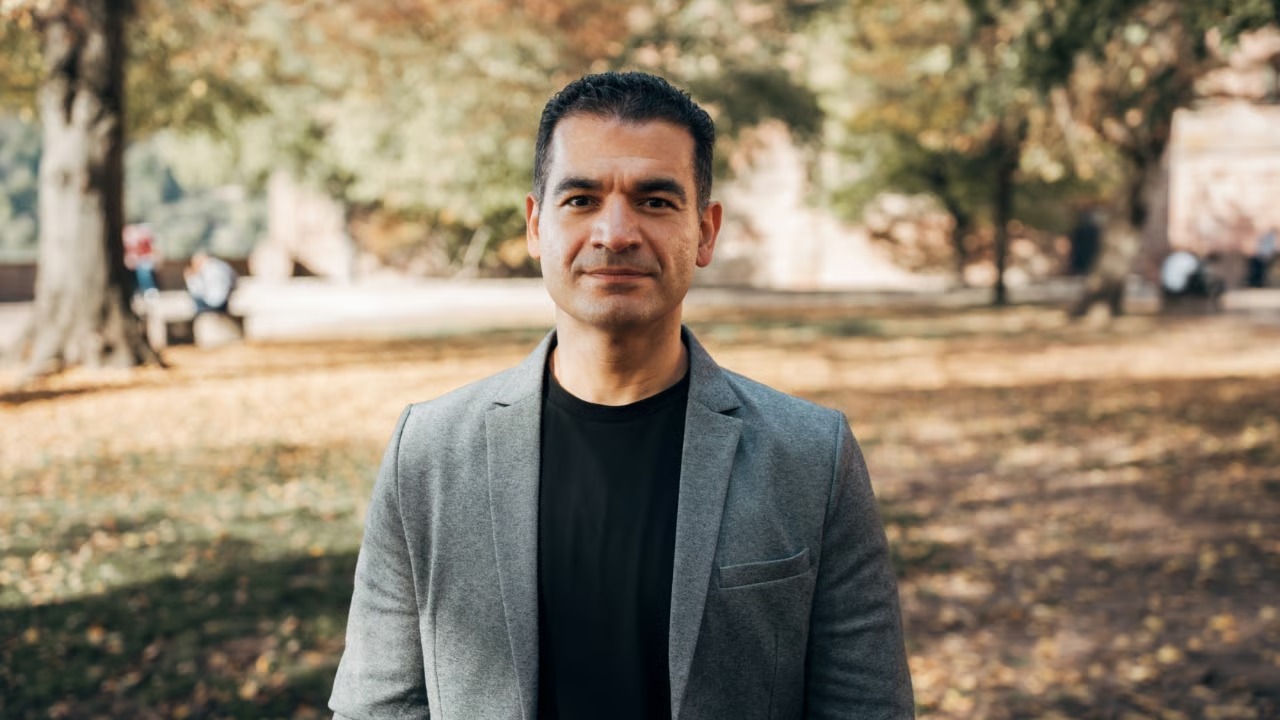
Who is speaking: Reza Mehman, host of the Project Mindset podcast, entrepreneur and mindset coach, who shares personal experiences and practical concepts for personal growth.
What is it about: It’s about the concept of full personal responsibility in all areas of life. Reza describes why shifting blame onto others is a destructive pattern and presents a concrete framework for taking responsibility and actively solving problems.
Why is it relevant: The tendency to shift blame is a universal human pattern that sabotages relationships, careers, and personal growth. In a world full of external influences and distractions, conscious self-responsibility is a key skill for a self-determined and fulfilling life.
Three key questions of the episode:
- Why does shifting blame ultimately lead to dissatisfaction and powerlessness?
- How do you recognize the moment you slip into a victim mentality?
- What specific steps help to take responsibility and actively solve problems?
Table of contents
- Introduction – What this episode is about
- Summary – The core message in brief
- context – Who is speaking and why the topic is important
- Topics and classification – The central themes of the episode
- Key messages – The most important messages at a glance
- Frequently Asked Questions – Answers to the most important questions
- Highlight quotes – The most striking statements from the episode
- Transcript – The complete episode to read again
- Keywords – Relevant search terms
- Names and terms – Key references at a glance
- Quotable passage – For sharing and quoting
Topics and classification
1. Victim mentality and shifting blame
Reza describes how people constantly shift blame into a victim role, making them feel controlled by others and powerless. This pattern has a compounding effect and leads to increasing dissatisfaction in the long run.
Keywords: victim mentality, shifting blame, external control
2. Personal responsibility as a mindset principle
The concept of full responsibility means looking for causes and solutions within oneself in every everyday situation before blaming others. It’s not about self-flagellation, but about taking action.
Keywords: personal responsibility, taking responsibility, self-responsibility
3. The Three-Step Framework: Awareness, Communication, Action
Reza presents a practical framework: First, recognize the situation (situation awareness), then communicate with those involved, and finally take action, ideally creatively. This system prevents problems from escalating.
Keywords: Situation awareness, communication, problem solving
4. Creative problem solving
Based on his own studies, Reza demonstrates how personal responsibility leads to creative solutions. Those who accept that they themselves are responsible for the solution become inventive and discover new paths.
Keywords: Creativity, creative solutions, problem solving
5. Long-term effects on relationships and career
Unresolved problems in partnerships and at work grow over time. Taking responsibility early and addressing problems prevents escalation and builds stronger, healthier relationships.
Keywords: Resolving relationship problems, career, personal growth
Key messages
- It’s the easiest thing in the world to blame someone else for a situation, but in the long run, that’s exactly what leads to dissatisfaction.
- Shifting blame has a compounding effect: one gets used to the victim role and increasingly feels controlled by others and powerless.
- The first step towards taking responsibility is situation awareness: recognizing that you are about to shift blame.
- Communication with the people involved is crucial. Problems should be addressed without immediately assigning blame.
- One should consciously say “It’s my fault” because that forces one to take action.
- Creative problem-solving is a powerful tool when you have taken responsibility for a situation.
- Taking full responsibility sounds stressful, but actually leads to less stress because problems are no longer postponed and allowed to grow bigger.
- Unresolved problems in relationships are guaranteed to get bigger over time; they never disappear on their own.
- It is not about self-blame in the face of completely external events, but about taking responsibility in rational, everyday situations.
- Our responsibility lies not only in what we do, but also in what we fail to do.
Frequently Asked Questions
What does it mean to take full responsibility?
Taking full responsibility means looking for causes and solutions within yourself in every everyday situation, instead of automatically blaming others for problems. It’s about regaining your own agency and actively working on solutions.
Why does shifting blame lead to long-term dissatisfaction?
According to Reza Mehman, shifting blame has a compounding effect. One becomes accustomed to playing the victim, increasingly feeling controlled by others and powerless. Problems are not solved, but postponed, causing them to grow larger over time.
What is situation awareness in the context of personal responsibility?
In this context, situation awareness means consciously perceiving the moment when you are about to shift the blame for a problem onto someone else. This recognition is the first and crucial step in breaking the pattern and taking responsibility instead.
How can one put personal responsibility into practice in everyday life?
Reza recommends three steps: First, create awareness of the situation and recognize that you are currently trying to shift blame. Second, communicate openly with the people involved without making accusations. Third, take action and look for solutions, ideally creative ones.
Isn’t it stressful to take responsibility for everything?
At first glance, it might seem that way, but Reza argues that the opposite is true. Those who take responsibility solve problems immediately instead of postponing them. This prevents small problems from escalating into major crises, ultimately causing far less stress.
Does this principle also apply to things that one cannot influence?
No. Reza explicitly emphasizes that the concept is about rational, everyday situations, not about completely external events like natural disasters. It’s about situations in which one could actually have acted or acted differently.
What does creative problem-solving have to do with personal responsibility?
Anyone who takes responsibility for a problem is forced to look for solutions. Creativity can help in finding unconventional paths. Reza uses his studies as an example. Creative strategies helped him finish within the standard period despite an excessively long foundation course.
What is the compounding effect in shifting blame?
The compounding effect describes how the pattern of blame-shifting builds upon itself. Once someone starts blaming others, they increasingly do so in more and more areas of life. This leads to feeling increasingly controlled by others and becoming generally more dissatisfied.
Selected statements from Reza Mehman
“It’s the easiest thing in the world to say that someone else is to blame for the current situation.”
“It builds on itself and you become increasingly unhappy because you automatically fall into a victim role in every situation.”
“I deliberately say that I am to blame, whether it’s true or not, because that forces me to take action.”
“You feel better because you simply don’t get into that mode where you put off problems and just let them get bigger.”
“I’ve never experienced a problem simply disappearing at some point.”
“It is not only what we do, but also what we do not do, for which we are accountable.”
– Molière, quoted by Reza Mehman
“At that moment, I wasn’t even aware that it was actually my responsibility to make sure that a problem didn’t arise.”
The full conversation
Hi everyone and welcome to Project Mindset. This channel is for all those who know that with the right mindset, anything is possible in life. Today, we’re talking about a very interesting topic, or rather, a concept that I recently discovered for myself. It’s about the concept of taking full responsibility in every situation in your life. What I mean by that is… It’s the easiest thing in the world to say that someone else is to blame for your current situation.
When something isn’t going well, it’s easy to say, “Yes, the relationship isn’t going well.” “Yes, because my partner simply isn’t investing enough in the relationship.” “I won’t get the promotion,” “Yes, because my boss has something against me and I just can’t stand up to him anymore.” “I’m not where I want to be in life,” “Yes, because I have so many obligations and somehow can’t work on my actual goals.” Everyone wants something from me.
Wife, kids, friends, family, and so on. That’s why I just can’t move forward. It’s incredibly easy to shift the blame, and at first, it even seems like you’re happier because you think, “Wow, I’m not to blame.” But I’m absolutely certain that, in the long run, this leads to a compounding effect, so to speak. It builds on itself, and you become increasingly unhappy because you automatically slip into a victim role in every situation. You fall into a victim mentality.
My own experiences with blame
You become a victim of the situation and feel controlled by external forces. It seems you have no influence and cannot make progress in life. I actually went through phases in my life where, let’s say, if something didn’t go well, I immediately blamed someone else. Basketball gave me an example: winning made everything feel great. I was happy, the team had won and everything seemed perfect.
When we lost, I immediately looked for someone to blame. Yeah, you could have passed better, you should have passed at that moment, you should have made the basket, and so on. It was incredibly easy in that moment to say, “It’s your fault.” I never looked for the fault in myself. Beyond team sports, I noticed the same habit elsewhere in my life. When something went wrong, I looked for someone to blame.
For example, at my own company. We were working on client projects. In one situation, an employee failed to satisfy a client, at least from my perspective then. I was in a certain mood then, so I confronted the employee and said, “Hey, why did you do that? You’re to blame for the client being unhappy, for the fact that we might even lose them in the long run. Why didn’t you tell me sooner? I could have resolved it.”
Responsibility within the company
At the time, I wasn’t even aware that it was actually my responsibility to prevent a problem from arising in the first place. And if a problem does arise, I don’t want or need to find someone to blame right away; I need to solve the problem immediately because it’s urgent. Despite this, I then increasingly looked for someone to blame in other areas of my life—whether in my romantic relationship, friendships, or family. Whenever something went wrong, it was always someone else’s fault.
And that’s the compounding effect. You build everything up on top of each other, and at some point, you just feel like you’re being controlled by external forces. You’re a victim of the situation, you have this victim mentality, everyone else is to blame, the world is so evil. It’s not your fault. At some point, I realized that I was actually overdoing it with the blame-shifting, and after listening to various podcasts, I personally discovered the concept that I simply think I’m fully responsible for every situation.
Limits of one’s own responsibility
Of course, it can’t be anything, to put it bluntly, idiotic. If a bomb goes off somewhere, or a mindset takes hold, then I’m not to blame. I’m talking about rational situations. For example, something goes wrong and I could have avoided it. As always, I’ve prepared a few mindset tools for myself, which I’d like to share with you again today. First and foremost, I think it’s incredibly important to recognize the situation and awareness. Something is going wrong, and I need to acknowledge that I’m slipping back into the mode of shifting blame.
Identify problems and talk about them
I didn’t get the promotion. For example, we have performance reviews once a year, I didn’t get the promotion, and somehow my boss is to blame for not being promoted. Or something’s going wrong in a relationship; my expectations weren’t met, and I immediately blame my partner. Once I’ve recognized this for myself, once I’m aware of the situation, then it’s crucial. If, for example, I realize that another person is involved in this situation, then the most important thing in that moment is to say, okay, I need to communicate with this person.
For example, with a partner, I might say, “Hey, I actually thought this and that would happen, but you behaved like this and that. How did that happen?” And then I try not to immediately blame someone, but rather say, “I thought that would happen, but something else happened. How did that happen? What can I do to prevent us from getting into a similar situation again in the future?” And I also consciously say that I am responsible, whether it’s true or not, because that forces me to take action. That’s the next point: I do something about it.
Actively seek solutions
I won’t let the situation simply happen and then nothing more be done about it, letting it get worse. Instead, I’m taking a step to say I’m going to do something about it. And you can even take it a step further and say I’m going to do something creative about it. I have a really cool or interesting example, some of my friends still remember this from back in the day. For my undergraduate studies—back then, the diploma program had basic and advanced studies—I took quite a long time to complete the basic coursework, which was very uncomfortably long. But I still wanted to finish my degree within the standard period of study.
At first, I had to acknowledge that I’d taken far too long. But I didn’t want to say, “Okay, it doesn’t matter now, I’ll just let it slide.” Instead, I thought, “Okay, I want to finish my main course of study as quickly as possible, much faster than the university originally planned. So that I can complete it within the standard period of study.” I forced myself to be creative; Choosing courses strategically helped, including scheduling them around the first or second exam date. I researched when the exams were, and so on.
Creativity in the face of challenges
Creativity became necessary. I can recommend this to everyone: when a situation arises, don’t just accept it, but also commit to approaching it creatively. Creativity, of course, can’t be planned, which is why it’s incredibly difficult to give you a template or a plan. Instead, try simply saying, “I’ll try to solve this creatively,” whenever a problem arises or simply occurs. Once you’ve taken these steps—situation awareness, recognizing that there’s a problem or a challenge in a particular situation, and perhaps even refraining from blaming someone else—you’ll need to consider other options.
This situation, awareness paired with communication—I talk to the other person about it if another person is involved—and then in the third step, to say, okay, we’re going to do something about it now, or especially, I’m going to do something about it. That’s the key; we’ve discussed this several times in this podcast. You take action, and if possible, even creative action, because that challenges you mentally to solve situations creatively. This also brings a positive mood, which is helpful for future problems as well.
Regaining the ability to act
But once you’ve taken these steps, you no longer have the urge to say, “Everyone else is to blame for me being in this situation.” Instead, you take full responsibility at all times. You know only you can solve the problem, and believe me, you’ll be much happier because of it. I’m absolutely convinced that if you don’t do this, if you just let things slide, let problems slide, thinking everyone else is taking care of it, that you can’t do anything about it, adopt a victim mentality, and so on—it all builds on itself, and in the long run, you’ll become incredibly unhappy.
I was recently talking to someone about this whole “taking full responsibility in every situation” thing. They told me, “Yeah, it’s totally stressful when you always think you’re responsible for everything that happens—for raising the kids, for the relationship, for the job, and so on and so forth.” So, I think it certainly sounds stressful at first, but quite the opposite is true: you feel better because you don’t get into that mode of putting off problems and letting them grow bigger. Instead, you solve the problems directly.
Address relationship problems early
I have a problem in my relationship. Before blaming my partner, I first examine my own role. Problems left to fester in a relationship tend to grow over time. I’ve never experienced a problem simply disappearing; instead, after years, you talk about it, and then the bomb explodes, and you’re totally unhappy. It seems as if it can’t be solved anymore, even though it was originally just a small problem.
Therefore, it might sound stressful at first to take full responsibility for everything in life, but believe me, it’s incredibly good and helpful to identify problems from the beginning and solve them, to look for the root cause within yourself first, to find the solution within yourself before completely projecting everything onto others. Perhaps a contrasting perspective: I’m only talking about, let’s say, meaningful problems here. If, to put it bluntly, a method works somewhere or a bomb explodes, I’m not to blame for that. I’m really only talking about, let’s say, everyday situations.
What we can influence
Of course, there are external factors over which I have absolutely no influence. But I’m 100% certain that in everyday life, most problems can be approached by saying, “It’s my fault. I want it solved as quickly as possible.” There’s a great quote I’d like to share with you: “It is not only what we do, but also what we do not do, for which we are accountable,” by Molière. I find this quote incredibly interesting because it perfectly captures the essence of the matter. It often refers to the things we don’t do. That’s usually the case with problems: we simply shift the blame and do nothing about them. We’re stuck in this victim mentality.
Taking personal responsibility in everyday life
Alright everyone, as always, a very short Project Mindset episode. I hope you enjoyed it. It was important to me to simply share with you today that you can take full responsibility in any situation and that thinking this way isn’t stressful. On the contrary, once you acknowledge that you are responsible for this situation, for this problem, and immediately address it, you will definitely be happier in the long run. As always, I hope you enjoyed the episode. If so, please subscribe to the channel and tell your friends and family about it, because that’s the only way the channel can continue to grow.
Thank you for listening and until next time, don’t forget, mindset is everything.
This transcript was automatically generated using Whisper AI and may contain occasional errors.
Keywords
Tags: Taking responsibility, personal responsibility, shifting blame, victim mentality, mindset, situation awareness, problem solving, creative problem solving, self-responsibility, personal growth, project mindset, Reza Mehman, compounding effect, relationship problems, career mindset
Names and terms
Reza Mehman, Project Mindset, Molière, Compounding Effect, Situation Awareness, Victim Mentality, Personal Responsibility, Self-Responsibility, Undergraduate Studies, Graduate Studies, Diploma, Standard Period of Study, Performance Reviews, Promotion, Partnership, Team Sports, Basketball
Quotable passage
Shifting blame is convenient at first, but in the long run it leads to a victim mentality that makes us feel controlled by others and powerless.
Those who instead take full responsibility for every situation in life regain their ability to act and solve problems before they escalate.
The key lies in three steps: Recognizing that one is trying to shift blame, communicating openly, and then taking active, ideally creative, action.
For, as Molière once said, we bear responsibility not only for what we do, but also for what we fail to do.
You can find further inspiration for personal responsibility at Project Mindset.