Kindness is being exploited: Here’s how to set boundaries
Kindness needs boundaries. How to stay helpful while responding clearly when others take your support for granted.
Introduction
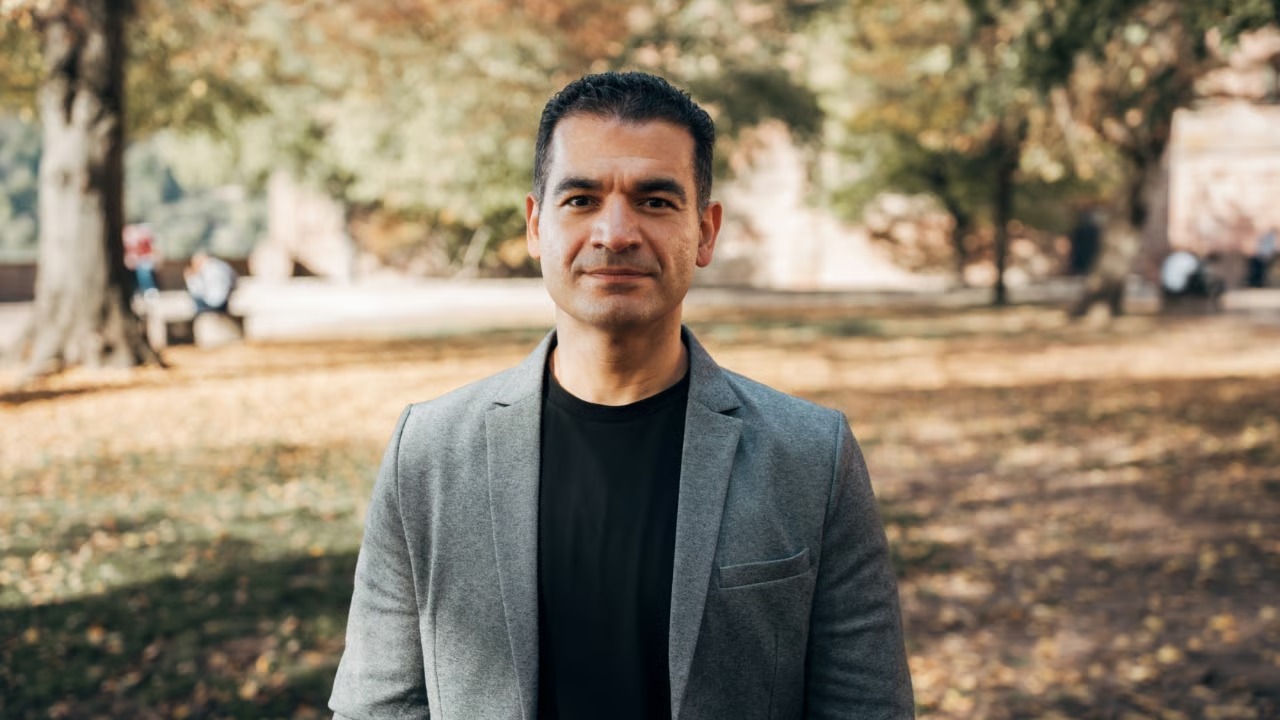
Kindness is exploited: a problem that people who crave harmony encounter particularly often. In this episode of Project Mindset, Reza Mehman speaks openly about how others shamelessly take our helpfulness for granted and why kind people often remain silent for far too long. Using concrete stories from everyday life and the workplace, he shows why subtle hints don’t work with brazen individuals. Instead, directness is needed, and sometimes even the same rudeness that you yourself have experienced. Reza explains why kindness is unfortunately often perceived as weakness and how to defend yourself against it. He shares experiences from a conversation with former Wu-Tang Clan manager Eva Ries, who had to stand up to aggressive band members. This episode is an honest wake-up call for anyone who wants to learn how to set boundaries without feeling bad about it.
Kindness: the episode in brief
In one sentence: If your friendliness is taken advantage of, often the only thing that helps is consistent directness and the willingness to act just as assertively as the other person.
In three sentences: Many people who crave harmony allow others to exploit their kindness for months because they avoid confrontation. Reza Mehman uses real-life examples to show that subtle signals don’t get through to brazen individuals and that only clear, direct communication works. Sometimes, you have to respond in kind to regain respect and set healthy boundaries.
In five sentences: Kindness is interpreted by some as a weakness and shamelessly exploited. Reza tells the story of a friend who drove a coworker for months, even though she didn’t want to, but never said a word. From a conversation with Wu-Tang Clan manager Eva Ries, he learned that you can only stand up to aggressive people if you are equally assertive yourself. He demonstrates, through his own experiences with a cheeky acquaintance and an uncooperative colleague, how directness has an immediate effect. His conclusion: You should build a circle of respectful people and not be afraid to speak your mind when confronted with brazen behavior.
Context: Who, What, Why
Who is speaking: Reza Mehman, host of the Project Mindset Podcast and expert in personal development and mindset.
What is it about: The episode addresses the widespread problem of friendly and harmony-seeking people being taken advantage of by others. Reza provides concrete strategies for defending oneself against brazen behavior through directness and consistent boundary setting.
Why is this relevant? Millions of people know the feeling of being too nice and being taken advantage of. This episode provides practical answers to a universal problem and shows that setting boundaries is not rudeness, but self-protection.
Three key questions that will be answered:
- Why don’t subtle hints work on brazen people?
- How should I react if someone takes advantage of my kindness?
- Is it okay to answer like with like?
Table of contents
- Introduction – Why kindness is so often exploited
- Summary – The core message in brief
- context – Who is speaking and why the topic is relevant
- Topics and classification – The central themes of the episode
- Key messages – The most important messages at a glance
- Frequently Asked Questions – Answers to the most pressing questions
- Highlight quotes – The most concise statements by Reza Mehman
- Transcript – The full episode to read
- Keywords – Relevant search terms for the episode
- Names and terms – Key references at a glance
- Quotable passage – For sharing and quoting
Topics and classification
1. Friendliness as a weakness
Why nice people are often perceived as naive or weak, and how this misunderstanding arises.
Keywords: Friendliness seen as a weakness, being nice is exploited, helpfulness has its limits.
2. Setting boundaries and directness
How clear communication and unambiguous instructions help to stop brazen behavior immediately.
Keywords: Learning to set boundaries, direct communication, daring to confrontation
3. Respond with like.
Why only the same type of communication works for certain types of people that they themselves use.
Keywords: An eye for an eye, countering impudence, assertiveness
4. Need for harmony versus self-protection
The inner conflict between the desire for harmony and the need to protect oneself.
Keywords: Overcoming the need for harmony, conflict avoidance, and people pleasing
5. Toxic relationships in everyday life and at work
How to recognize when a favor becomes exploitation, and which people you should keep in your circle.
Keywords: Recognizing toxic people, exploitation at work, healthy environment
Key messages
- Subtle hints and indirect signals don’t work with brazen people. Only absolute directness has an effect.
- Friendliness is perceived as a weakness by certain people and is deliberately exploited.
- Sometimes you have to respond just as cheekily or firmly as the other person, because that’s the only form of communication that they understand.
- Harmony is a desirable goal, but it doesn’t work with every person and in every situation.
- A one-time favor shouldn’t turn into a long-term obligation. You have to set boundaries early enough.
- It is not impolite to tell someone clearly that their behavior is not okay.
- Those who act directly and decisively usually encounter not resistance, but respect.
- One should consciously create an environment of respectful and harmony-seeking people.
- In a professional context, it is particularly important to set boundaries because it is not about pleasing others, but about professional collaboration.
- Avoiding confrontation leads in the long run to giving up more and more of oneself and becoming dissatisfied.
Frequently Asked Questions
Why is my kindness constantly being taken advantage of?
Some people interpret friendliness as weakness or naivety. If you never set clear boundaries and always say yes, you unconsciously signal that the other person can always go further. Only through direct communication and consistently setting boundaries can you change this dynamic.
How do I set boundaries without seeming rude?
Setting boundaries isn’t rudeness, it’s self-protection. You can clearly and objectively state that a certain behavior is unacceptable to you. According to Reza Mehman, it’s important not to be afraid that the other person won’t be able to handle this directness.
Should one really respond to like with like?
Not in every situation, but with particularly brazen or aggressive people, it’s often the only form of communication they understand. Reza emphasizes that he’s not generally a fan of fighting fire with fire, but with certain types of people, this is the only method that works.
How can I tell if someone is taking advantage of my willingness to help?
A clear sign is when a one-time favor turns into a long-term obligation, without the other person making any effort to find their own solution. Like in the example of the colleague: a single ride turned into a routine lasting for months, without the colleague bothering to find an alternative.
What do I do if a colleague responds rudely to my request?
Reza recommends addressing the situation immediately and making it clear that such a reaction is unacceptable. In his example, he directly told his colleague that they would have a problem if he didn’t cooperate. This led to the colleague correcting his behavior and even apologizing.
Is a need for harmony a bad thing?
No, a need for harmony is a positive trait. It only becomes problematic when, out of fear of conflict, one completely suppresses their own needs and is consequently taken advantage of. It’s about finding a healthy balance between harmony and self-protection.
How did Wu-Tang Clan manager Eva Ries prevail?
Eva Ries stood up to the sometimes aggressive band members by being equally assertive and direct. She made clear consequences clear, for example, by refusing to continue a tour until stolen items were returned. Despite her calm demeanor, she was thus able to command respect.
What happens if I never set boundaries?
If you never set boundaries, you’ll lose time, energy, and self-respect in the long run. Like the example of my friend who lost almost an entire workday a month because of her daily commute—a day she could have spent with her family instead. Furthermore, you’re signaling to others that they can continue to take advantage of you.
Highlight quotes
“You have to be very, very, very direct and you also have to not be afraid that the other person won’t be able to cope with this directness.”
– Reza Mehman
“Some people simply take advantage of someone’s kindness.”
– Reza Mehman
“If someone comes across as aggressive, then unfortunately you have to act aggressively yourself. Fight fire with fire.”
– Reza Mehman
“Friendliness is also perceived as a weakness in some form. I’m definitely not interested in that anymore.”
– Reza Mehman
“I’ve made it a habit that if someone is cheeky, I answer cheekily back, that’s clear.”
– Reza Mehman
“At the end of the day, I personally only want to have people in my environment with whom I get along well, who also have a certain need for harmony like I do.”
– Reza Mehman
“But with such a cheeky answer, we’ll quickly have a problem with each other.”
– Reza Mehman
The full conversation
You have to be very, very, very direct, and you also have to be afraid that the other person won’t be able to handle that directness. Of course, you also have to be aware and understand that harmony and a perfect world don’t exist everywhere. I’m also a person who craves harmony, but that just doesn’t work with everyone and everywhere. Some people simply take advantage of your friendliness. Hi everyone, and welcome to Project Mindset, the channel for all those who know for sure that with the right mindset, anything is possible.
Today I want to talk about a topic that I feel many people struggle with, specifically those who crave harmony and aren’t usually looking for confrontation. It’s about dealing with aggressive, unfriendly, or even rude people. To illustrate what I mean, I have a good story to share. A friend of ours recently told me that she was asked one morning to pick up a colleague, drive her to work, and then drive her back home again in the evening.
When a favor becomes a habit
One of our colleagues wasn’t very mobile, so our friend said, “Yes, I’d be happy to do that, no problem, I’d really be happy to.” And then it all worked out really well. In the mornings, she drove there—it was about a five-minute detour. She had to drive past her workplace to pick her up, then back again, and in the evenings, she drove in the opposite direction and then all the way home. I think it was five minutes each way, so a total of four times five minutes, or 20 minutes out of the way.
It’s something you do willingly, no problem at all, especially if you get along well with your colleagues, or in this case, your female colleague. Then, interestingly, it continued. The one-time occurrences became two, then three, four, five, and so on, until it settled into a pattern that went on for several months. I found it interesting that our friend didn’t say anything to her colleague at all, but simply accepted it.
Take your own efforts seriously
Although she didn’t want to do it at all, or so she told us, although she really didn’t want to do it, she still did it every single day. I also told our friend, hey, if it’s 20 minutes a day, that’s just over seven hours a month, almost a whole workday that’s just gone, and you have less time with your family, with your children, and so on and so forth. So I think that goes way beyond a favor, and I mean, if it’s only five minutes, the colleague can figure out how to get to work herself.
I then realized that our friend wasn’t really looking for a confrontation. She preferred to let things play out, like saying something like, “Hey, dear colleague, you’re taking advantage of my kindness, and that’s not okay. It’s been going on for months. We need to find a solution.” But no, in this case, she didn’t say anything; she just let it go. I find this topic very interesting because I experience it quite often: someone’s kindness, or in this case, my kindness, is taken advantage of by others in some way, and you’re often left wondering, “Wait a minute, I’ve given some hints that I’m not okay with this anymore.”
Clear words instead of subtle hints
Why doesn’t the other person understand that at all? I’ve always noticed that you have to be very, very, very direct, and you also have to be afraid that the other person won’t be able to handle that directness. Of course, you also have to be aware and understand that harmony and a perfect world don’t exist everywhere. I’m also a person who craves harmony, but that just doesn’t work with everyone and everywhere. Some people simply take advantage of your friendliness.
I also had a very interesting conversation with Eva Ries about this, or rather, in this context. The podcast about it will be released soon. She’s the former Wu-Tang manager. She did that for over 25 years. So she really has a lot of experience with them and told some very interesting stories about the escapades and so on involving the Wu-Tang Clan. But what I personally found very interesting, because Eva came across to me as a very calm and collected person, was how she actually managed to prevail against such a chaotic group, chaotic band, like the Wu-Tang Clan.
There were some pretty aggressive and rude people there, who told stories on tour and so on, and some of them even stole things. She said, “No, we’re not leaving until you return the things you stole.” She managed to stand up to some really aggressive people, and I found it interesting to understand how she did it. And she basically said what I already suspected.
Continued
Namely, that you sometimes have to behave exactly the way the other person behaves. So, if someone comes across as aggressive, unfortunately, you have to act aggressively yourself. Fight fire with fire. I’m not a big fan of fighting fire with fire, but I think if someone is incredibly rude, then the only thing that works is to be rude to that person yourself. I’ve even done a few tests here and there to see if that works.
Recently, well, a while ago now, sorry, an acquaintance of mine was over for a barbecue with some other friends. Not a close acquaintance, but he was kind of in the group. I like him, he’s a really nice guy, and we were all sitting together in the evening after we’d grilled. And then, quite loudly in front of everyone, he asked me, “Hey, how much did your house cost?” And I don’t usually have a problem telling good friends how much I’ve spent on things, like my house or certain other things. I normally don’t have a problem with that with good friends.
Make a personal boundary clear
But we didn’t have the kind of relationship where he could or should just ask me, from my perspective, how much I spent on my house. I mean, let’s be honest, it’s really none of his business. So I took a test and then said in front of everyone, “Hey, that’s none of your business. Period.” I mean, really, period, and that was that. I don’t want to talk about it anymore. And then I noticed that he said, “Yeah, okay, no worries.” I almost thought he might react with some kind of perplexity and maybe ask, “Hey, why this or that?”, but he realized that I gave him a cheeky reply.
And that was apparently perfectly fine with him. Even in a different context. I mentioned it once in a podcast. I was having a bit of a disagreement with a colleague. One day, I needed a presentation from him because I had to prepare one myself, and I wanted to, so to speak, “borrow” a few of his slides to use in my presentation to save some time. I looked for him, but he wasn’t at his desk, so I went to the coffee machine.
A request among colleagues
He was there, making himself a coffee. And at that moment I asked, “Hey, could you please give me these slides? I have a presentation coming up soon, and it would save me a lot of work if you could send me the slides so I can just copy a few things.” He was standing at the coffee machine and said, “Nope, no time.” My first reaction was, “Okay, that’s weird. You’re at the coffee machine, making coffee during work hours, and you’re telling me you don’t have time.”
That doesn’t make any sense to me at all. He said, “Yeah, it’s not possible right now. I can’t right now.” Inside, I felt a little annoyed. I didn’t say anything outwardly, but I said, “Hey, hold on a minute, you’re working hours, and I’m asking you, as a colleague—not a buddy, not a friend, or anything like that—but as a colleague, please send me a document while you make yourself a coffee. If you don’t send it to me now and don’t tell me when you’ll be able to do it…”
Demand binding agreements
It doesn’t have to be right away. You can tell me, hey, this afternoon, this evening, or tomorrow, or whatever. But such a cheeky answer, and we’ll have a problem very quickly. I realized the story continued a bit further, but in short, in the end, after I became aggressive in some way, he realized that it wasn’t okay of him either, apologized, and then sent me the presentation.
So it was okay then, but then I realized, hey, you politely ask someone for something, not even a favor, because I mean, we work together and it’s just not possible anymore, or rather, we used to work together, it’s not about doing favors at all, it’s about work time, you politely ask someone for a certain task and they rudely say, no, it’s not possible. At that moment I realized, no, if someone reacts super unfriendly or is super rude or whatever, sometimes you have to react the same way, because apparently that’s the only communication method they understand.
Weighing directness and de-escalation
As I said before, I don’t think you should always fight fire with fire, fighting fire with fire. Of course, there are many situations where you should perhaps try to de-escalate the situation, but unfortunately, friendliness is sometimes portrayed as, well, as if you’re stupid or don’t get something or whatever. I feel sorry for others when it happens to them, at least it happened to me. I’m actually a very friendly person, and I realized that friendliness is also perceived as a weakness in some way.
Continued
I’m definitely fed up with that, which is why I’ve made it a habit that if someone’s rude, I’ll give them a cheeky reply, plain and simple. My aim is to reply just as cheekily, or a little more so, because that sometimes seems to be the only communication that works. I know not everyone will probably agree with me today; it’s not always about being neck and neck with someone and constantly competing with them. But at the end of the day, I personally only want people in my life that I get along with, people who also have a need for harmony like I do. I want as little to do with people who are aggressive or rude anyway, at least in my private life.
Alright everyone, I hope you enjoyed today’s episode. If so, please leave a like and subscribe to the channel, because that’s the only way Project Mindset can continue to grow. Thank you so much, I hope to see you again soon, and until then, don’t forget, mindset is everything.
This transcript was automatically generated using Whisper AI and may contain occasional errors.
Keywords
Tags: Friendliness is exploited, setting boundaries, directness, need for harmony, people pleasing, toxic people, assertiveness, confrontation, being nice weakness, assertiveness, communication, respect, self-protection, Project Mindset, Reza Mehman
Names and terms
Reza Mehman, Project Mindset, Eva Ries, Wu-Tang Clan, need for harmony, people pleasing, setting boundaries, assertiveness, directness, like with like, conflict avoidance, assertiveness, toxic dynamics, female colleague, coffee machine anecdote, barbecue anecdote
Quotable passage
Friendliness is perceived as a weakness by certain people and is deliberately exploited.
Subtle hints don’t work with brazen people; only absolute directness has an effect.
Sometimes you have to be just as assertive as the other person because it’s the only language they understand.
Setting boundaries is not a sign of rudeness, but of self-respect and healthy communication.
You can find more personal thoughts on how to treat each other at Project Mindset.
Prefer listening? Explore the original Project Mindset podcast recordings.