Why “What if” is blocking you
How the question “What if” prevents you from living your dreams, giving love, and forgiving.
Introduction
The “what if” question is one of the most insidious thought patterns that accompany us in everyday life. In this episode of Project Mindset, Reza Mehman explains why this very question actually prevents us from making important decisions and pursuing our dreams. This question can block many parts of life. Examples include starting a business, opening up to love and forgiving others. Reza shares personal examples from his own life and shows how he almost didn’t launch his podcast because this very thought pattern held him back. The episode is complemented by insights from a Japanese hospice worker who documented what people regret most shortly before their death. This episode is a powerful impetus for anyone who finally wants to take action and no longer be paralyzed by hypothetical scenarios.
Summary
In one sentence: The “what if” question can become a destructive thought trap. It can obstruct dreams, love and forgiveness.
Short summary: Reza Mehman explores questions about both past and future. Either form can leave us feeling stuck. A Japanese hospice worker discovered that people shortly before their death primarily regret three things: unfulfilled dreams, unfulfilled love, and a lack of forgiveness. Reza recommends immediately stopping this question as soon as it arises and instead acting courageously, because nothing in life is guaranteed.
Detailed summary: In this episode, Reza Mehman explores the destructive effects of hypothetical rumination, which blocks and paralyzes us in everyday life. He distinguishes between past-oriented rumination, such as “What if I had studied differently back then?” and future-oriented rumination, such as “What if nobody is interested in my podcast?” He draws on a Japanese hospice worker’s account of end-of-life regrets. They include unfulfilled dreams, unshared love and a lack of forgiveness. He shares personal examples, including his own insecurity before launching his podcast and the estrangement from a friend. His conclusion: Nothing in life is guaranteed, which is why hypothetical fear-mongering is a pure waste of time, and one should instead act courageously.
Context: Who, What, Why
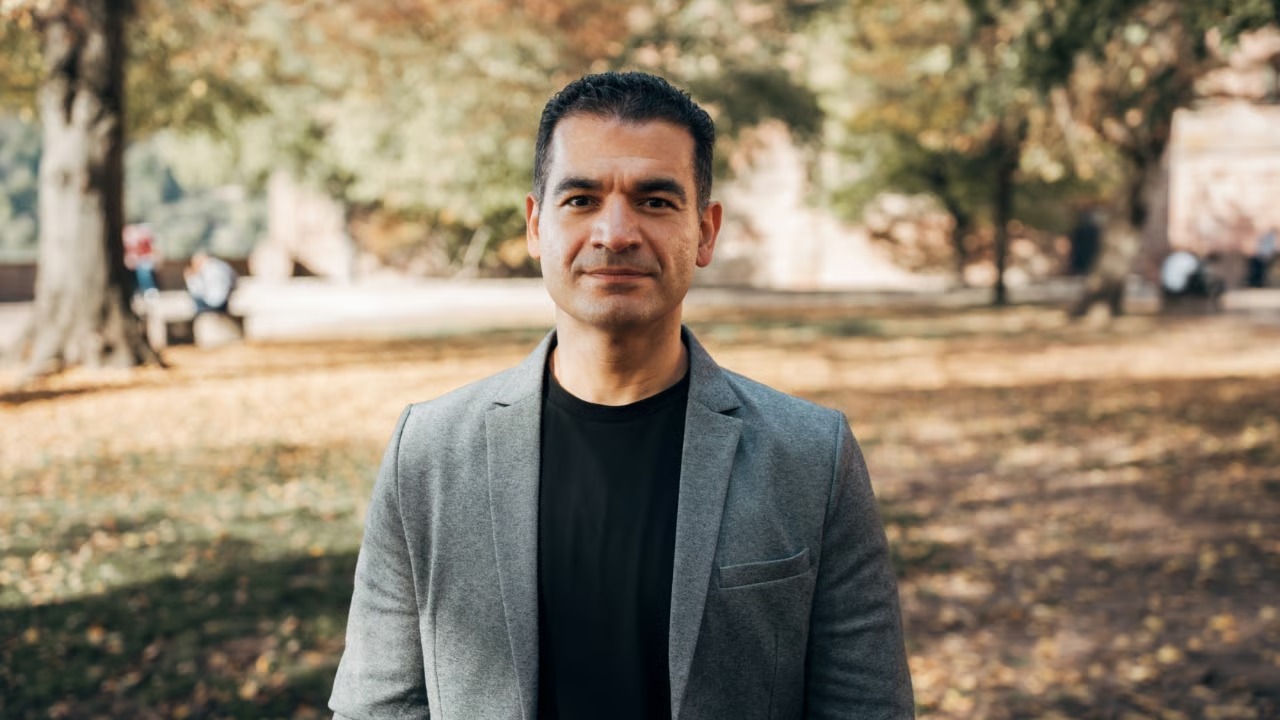
Who is speaking: Reza Mehman, host of the podcast Project Mindset, which deals with personal development, mindset and self-leadership.
What is it about: This episode explores mentally rehearsing alternative outcomes. That habit can become destructive and block progress in life. Reza combines personal experience with a Japanese hospice worker’s account. He explores how repeated questioning can prevent important decisions and actions.
Why is it relevant: Self-doubt and hypothetical rumination affect almost everyone. Whether it concerns career decisions, relationships, or personal conflicts, the ability to recognize and break destructive thought patterns is crucial for a fulfilling life.
Three key questions that will be answered:
- Why is the “what if” question so destructive and paralyzing?
- What do people regret most at the end of their lives?
- How can we break through the “what if” thought pattern and take action?
Table of contents
- Introduction – Why the “what if” question is so dangerous
- Summary – The core message in brief
- context – Background and relevance of the episode
- Topics and classification – Overview of the most important topics
- Key messages – The central messages of the episode
- Frequently Asked Questions – Answers to the most important questions
- Highlight quotes – The most influential statements by Reza Mehman
- Transcript – The full episode to read
- Keywords – Relevant keywords for the episode
- Names and terms – Important people and concepts
- quotable passage – For sharing and quoting
Topics and classification
1. Destructive thought patterns and self-sabotage
This rumination is identified as one of the most debilitating thought patterns, which can occur both backwards and forwards and prevents people from making important decisions.
Keywords: Breaking thought patterns, overcoming self-sabotage, stopping rumination
2. Insights from end-of-life care
A Japanese hospice worker’s account highlights three recurring regrets: unfulfilled dreams, unshared love and a lack of forgiveness. These insights underscore the importance of taking action in the here and now.
Keywords: Regret at life, end-of-life care, insights, regret at the end of life
3. Courage to implement and entrepreneurial mentality
Reza uses examples from startups and his own podcasting journey. He explores how this mindset can block business ideas and subordinate dreams to security.
Keywords: Entrepreneurial mindset, startup courage, realizing dreams
4. Love, forgiveness, and interpersonal relationships
This episode explores how this thought pattern can be destructive in relationships and friendships. Those who invest less love out of fear of being hurt again, or who refuse to forgive out of pride, ultimately harm themselves.
Keywords: Learning to forgive, overcoming fear of relationships, investing in love
5. Personal growth and mindset
The overarching theme is the conscious control of one’s own thoughts. Reza describes his personal strategy of immediately stopping the distressing question as soon as it arises and instead taking active steps.
Keywords: Mindset training, personal growth, thought control
Key messages
- The “what if” question is one of the most depressing questions one can ask oneself, and is destructive both in retrospect and in the future.
- Dying people most regret three things: unfulfilled dreams, unfulfilled love, and lack of forgiveness.
- Many founders would rather give up their dream than financial security, even though money is ultimately just a means to an end.
- Those who invest less love in a new relationship because they have been hurt in the past punish themselves and their new partner.
- Nothing in life is guaranteed, nobody can see into the future, therefore the “what if” question is a pure waste of time.
- As soon as the “what if” question arises in your mind, you should immediately block it out and not engage in hypothetical scenarios.
- Reza almost didn’t start his podcast because the “what if” question almost stopped him.
- If you have something to forgive someone, you should do it, because it’s not worth being angry with someone for a lifetime.
- One should learn from past mistakes and experiences and act better in the future instead of brooding.
- If you are deeply convinced of something, you shouldn’t even ask yourself the “what if” question and instead take action.
Frequently Asked Questions
Why is the “what if” question so destructive?
The “what if” question creates hypothetical fear scenarios that paralyze us and prevent us from making decisions. It can be both retrospective (regret over past decisions) and forward-looking (fear of future mistakes), and in both cases, it blocks our action.
What do people regret most at the end of their lives?
According to the findings of a Japanese hospice worker, dying people regret three things above all: they did not fulfill their dreams, they did not pass on their love. They did not forgive or pardon other people.
How can you stop the “what if” question?
Reza Mehman recommends immediately blocking out the question as soon as it arises in your mind. You should be aware that nothing in life is guaranteed and hypothetical scenarios are a pure waste of time. Instead of brooding, you should take action and learn from past experiences to act more effectively in the future.
Why do many founders forgo their dream rather than money?
Many founders ask themselves what would happen if they invested a lot of work and time and ultimately got nothing out of it. The fear of financial loss is often stronger than the desire to realize their dream. According to Reza Mehman, however, money is ultimately just a means to an end, while an unpursued dream can lead to genuine regret at the end of one’s life.
How does the “what if” question affect relationships?
People who have been hurt in a previous relationship often invest less love and energy in new partnerships for fear of further disappointment. This reluctance harms the new relationship and prevents them from experiencing true intimacy and fulfillment. Reza recommends giving all the love you can, despite past hurts.
According to this episode, why is forgiveness so important?
Lack of forgiveness is one of the three biggest issues in the care of dying people. Those who don’t forgive out of pride or fear carry these negative thoughts with them for a lifetime. Reza emphasizes that it’s not worth holding a grudge against someone and recommends taking the first step toward reconciliation.
What almost stopped Reza Mehman from starting his podcast?
Reza asked himself what would happen if he invested a lot of time and energy into a podcast and no one listened. This fear almost stopped him from starting Project Mindset. Ultimately, he decided to do it anyway because he knew he would regret it in 15 years if he hadn’t at least tried.
Can the “what if” question also refer to the past?
Yes, this question often arises in a past-oriented way. Typical examples are: What if I had studied a different subject? What if I had accepted a particular job offer? What if I had resolved a conflict with a friend differently? These backward-looking questions lead to regret and are just as paralyzing as forward-looking versions.
Selected statements from Reza Mehman
“For me personally, it’s practically one of the most depressing questions you can ask yourself.”
“What I find interesting is that most people would rather give up on the dream than on the money.”
“Nothing in life is guaranteed. Nobody can see into the future and nobody can say with 100% certainty what will happen tomorrow.”
“At the end of the day, it’s not worth being angry or resentful towards someone for a lifetime.”
“I wanted to start a podcast and unfortunately I asked myself this ‘what if’ question and I was very close to not doing it.”
“If I am truly convinced from the bottom of my heart that I should do something, then I don’t even ask myself the ‘what if’ question.”
“The ‘what if’ question can actually prevent you from doing things that might actually be really good for you.”
The full conversation
Hi everyone and welcome to Project Mindset. This channel is for all those who know that with the right mindset, anything is possible in life. Today we’re talking about the question, “What if?” For me personally, it’s practically one of the most depressing questions you can ask yourself. I actually ask myself this question every now and then. I catch myself doing it and I’m really unhappy when it pops into my head—wow, that’s intense. Actually, I didn’t want to ask myself this “What if?” question at all.
There are situations, of course in the past, that we still ponder today: what if I had decided differently back then? What if I had dared to do something specific? What if I had invested more energy or passion into a particular endeavor? In fact, this “what if” question can also be framed in a future-oriented way: What if I put so much work into something now, and in the end, nothing comes of it?
And in the end, it wasn’t worth it. What if I go all in on something and it turns out to be a complete waste of time? I think everyone has had moments like that in their life. I have some very specific examples from my own experience. For instance, I often say that I studied business administration. I’m actually quite happy with that decision. But every now and then, I’d wonder, “Wow, what if I had studied computer science back then?”
What if: Past and new plans
I’m actually more involved in IT these days, and I probably could have made better use of my computer science skills. So, what if I had pursued that? Or, I unfortunately had a falling out with a friend once. We broke off contact. What if I had handled things differently with my friend back then? Or, there was a job offer I turned down that I also considered. What if I had accepted that offer? Where would I be today?
I actually catch myself asking these kinds of future-oriented questions from time to time, especially when I’m about to start something new. A very specific example is my own podcast. When I wanted to release my first podcast, this one about Project Mindset, I also wondered what would happen if I started a podcast, invested a huge amount of time, energy, and passion, and no one listened. No one was interested in what I was doing. Or when I uploaded my first YouTube video, I also thought, wow, I’ve put so much energy into this.
What if nobody cares, or people say, “Wow, that’s a really bad YouTube video”? Unfortunately, questions like that pop into my head every now and then. But I try to deal with them. As soon as I realize I’ve started asking myself a “what if” question, I try to immediately block it out and say, “No, I’m not even going through that ‘what if’ scenario.” Speaking of which, I recently read a short article about a Japanese woman named Tenzin Kiyosaki.
Thoughts on regret at the end of life
She had accompanied people in hospices for years, and in one of her books, she described the thoughts that the dying had shortly before their death. There were mainly three things, three thoughts they had. First, I didn’t fulfill my dreams. Second, I didn’t give my love away. And third, I didn’t forgive or let go of people. These are all things that, yes, I believe, actually make you unhappy at the end of life, when you have these things in your head, these “What if I had pursued my dreams more?”, “What would be more?”, or “What would be different if I had given more love?”
And that’s why I’m trying to connect these two topics. These three things that people have in their minds, especially in this hospice setting shortly before they die. This “what if” question that kind of accompanies you throughout your life. For example, when it comes to unfulfilled dreams. A typical question. I know many in my circle who ask themselves this, many founders, startup founders, who say, “What if I put an enormous amount of work and time into something and in the end it’s not worth it at all?”
What if my dreams fail?
It would have been better if I had worked as an employee somewhere. But the dream, for example, was to become self-employed with a business idea. And this “what if” question, in this specific case, usually leads the founder not to pursue their dream. What I find interesting is that most would rather give up on the dream than on the money they would miss out on. In that sense. And I find it incredibly interesting in this case because, at the end of the day, money is really just a means to an end.
Love despite the fear of disappointment
Nevertheless, many would rather give up their dream than the money. Or the other, the second issue the woman mentioned: I haven’t shared my love. I know several people who, for example, have been deeply hurt in a relationship and are then unwilling to invest at least as much love, energy, time, and passion in their subsequent relationships because they don’t want to be hurt again. Here, too, the question is: what if I had invested an enormous amount of love now, and at the end of the day, I would be disappointed again?
Or the third thing the Japanese woman said, what she found out. I haven’t forgiven people, or rather, I haven’t gotten over them. I think we’ve all had that one discussion with someone close to us where we were extremely annoyed afterward and said, “Ugh, no, I’m done with that person.” And then maybe you regret saying, “No, I may have broken off contact. But I can’t forgive them, and even now, after all this time, I don’t know how to go back to that.”
So I think the question here is also, what if I apologize now? Will I then appear weak? Have I perhaps even lost in this situation? Will something new happen? So here, too, people often ask themselves an unnecessary “what if” question. Perhaps you’ve also noticed that the “what if” question can actually prevent you from doing things that might actually be really good for you.
Learn from experience and still take action
The most important thing, in my view, is to learn from your mistakes and past experiences and try to do better and act more effectively in the future. If I’m truly and deeply convinced of something, I don’t even ask myself the “what if” question. And I think, as I just said, it actually holds me back; it even prevents me from making the right decision. And one thing I’ve truly learned in recent years—I really believe it—is that nothing in life is guaranteed.
No one can see into the future, and no one can say with absolute certainty what will happen tomorrow. Therefore, this “what if” question is really just a waste of time. Personally, if I have a dream, I try to make it a reality. And that’s not a joke; it’s a concrete example. I wanted to start a podcast. Unfortunately, the “what if” question came up. I was very close to not doing it at all.
But then I thought to myself, no, hey, I’ll probably regret it in 15 years if I just didn’t do it. And I would ask myself this very specific question: What if I had started a podcast? Or if you have a love in your life, then put as much love into it as you possibly can. That’s what I would personally do, as much as I possibly can. Even if you’re afraid, maybe at the beginning, that you’ll be disappointed or that nothing good will come of it in the end.
Forgive and be open again
But that would be the completely wrong approach. Saying, “No, I’m not going to put that much energy into my new relationship because I’ve already been hurt once” doesn’t make sense to me. Or, in this case, she needs to take a good look at herself, or I need to take a good look at myself. If you have something to forgive someone, then you have to forgive them. At the end of the day, it’s not worth being angry or resentful of someone for the rest of your life. You save yourself a lot of worry if you simply say, “Hey, let’s forget about it, I forgive you,” or “Please forgive me.”
And we’ll just keep going. So, folks, you know I always try to keep the Project Mindset episodes short. Today’s topic was, “What if?” And I hope you don’t ask yourselves that question. I try to completely shut it off as soon as it pops into my head. And I hope I’ve explained why I think you shouldn’t ask yourself that question. I would definitely be happy if you subscribed to the channel and gave me a like, or told your friends and acquaintances about the Project Mindset podcast.
That would help me tremendously to grow the channel further. Guys, I hope you enjoyed the episode. I hope we’ll talk again soon. And don’t forget, mindset is everything.
This transcript was automatically generated using Whisper AI and may contain occasional errors.
Keywords
Tags: What if, self-sabotage, breaking thought patterns, mindset, personal growth, pursuing dreams, forgiveness, fear of relationships, stopping rumination, overcoming self-doubt, end-of-life care, regret, entrepreneurial mindset, taking action, Project Mindset, Reza Mehman
Names and terms
Reza Mehman, Project Mindset, Tenzin Kiyosaki (Japanese hospice worker), hospice, end-of-life care, business administration studies, computer science, startup founding, self-employment, podcast, YouTube, “what if” thought patterns, self-sabotage, forgiveness, regret, pursuing dreams, mindset
quotable passage
The “what if” question is one of the most destructive thought patterns that accompany us in everyday life.
It can actually prevent us from doing things that would actually be really good for us.
Dying people most regret not having pursued their dreams, not having shared their love, and not having forgiven others.
Nothing in life is guaranteed, and those who allow themselves to be paralyzed by hypothetical scenarios waste the most precious resource they have: their time.
Instead of asking “What if”, we should act courageously and learn from our experiences.
You can find further inspiration for courage and personal decisions at Project Mindset.